

In the years following the pandemic, the legendary doujinshi retail chain Toranoana has been steadily closing its physical locations. Today, only two brick-and-mortar stores remain: one in Ikebukuro, Tokyo, and one in Taipei, marking the decline of a once-dominant force in fan culture.
Recently, Japanese commentator Fumito Setagawa (@setagawahuhito) sparked a discussion on X by analyzing the reasons behind Toranoana's dramatic downturn. He argues that the company's struggles aren't due to a single market factor but rather a long-term "disconnect between its management philosophy and doujin culture," a theory that has resonated with fans across Japan.

Setagawa, who claims to have insight into the company's internal situation, suggests that Toranoana's current predicament stems from its management gradually losing its "love" for doujin culture. He clarifies that this "love" isn't just about passion for the works or creators, but also encompasses understanding and respect for its employees and the culture itself. However, he adds that this viewpoint includes personal speculation and should be taken as such.
Toranoana's core business was built on doujinshi consignment alongside sales of commercial books and media. The consignment system was considered a highly successful model, offering low inventory risk and stable profits. Because the products were deeply rooted in otaku culture, the company initially attracted a workforce of passionate fans, fostering an enthusiastic and driven operational atmosphere.
However, as the company expanded, its management reportedly began prioritizing revenue growth, creating a rift with frontline employees who understood the culture. At the same time, employee compensation and benefits failed to keep pace with the company's growth, leading to a steady talent drain. It's pointed out that many former employees went on to work for competitors like Melonbooks, Animate, DMM, and Surugaya, becoming key figures in the industry.
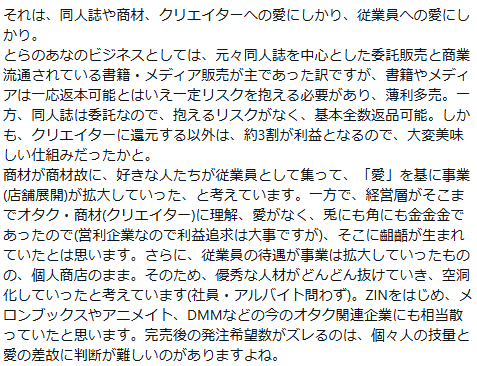
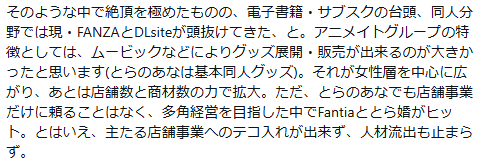
Beyond the talent exodus, the market itself was undergoing a seismic shift. With the rise of e-books and subscription models, digital doujin platforms like FANZA and DLsite became major players. Meanwhile, the Animate group expanded its empire by focusing on merchandise and the female-oriented market. In contrast, Toranoana remained heavily invested in physical doujinshi and brick-and-mortar stores, gradually falling behind in the industry's digital transformation.
In response to these changes, Toranoana launched new ventures like the creator support platform "Fantia" and the otaku matchmaking service "ToraCon" in an attempt to diversify. While some of these new businesses found success, critics argue that they failed to address the fundamental problems plaguing its core retail operations, and the ongoing talent shortage limited the effectiveness of these reforms.
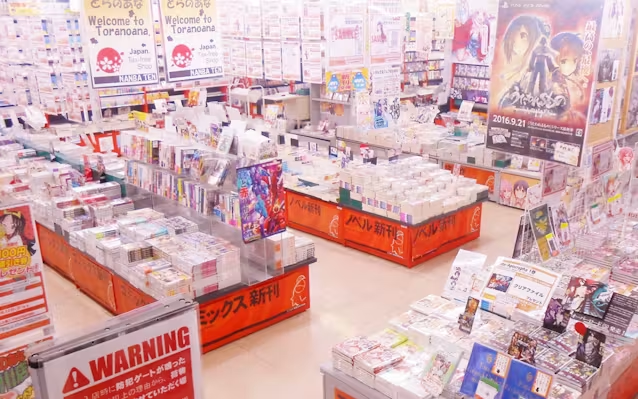
The COVID-19 pandemic delivered a devastating blow to the already-strained physical retail business, pushing most stores into the red. With the exception of a few locations in areas with a high concentration of female-oriented fandom, such as the Ikebukuro Building A store, the company was forced to close its doors across the country and downsize significantly. While it managed to stay afloat during the pandemic, a lack of manpower and resources made it impossible to rebuild its former retail network.
▼ The only remaining Toranoana physical store in Japan is now the Ikebukuro Building A location. It's a relatively small shop primarily focused on doujinshi for a female audience.
The discussion online has drawn a flood of responses, with many users expressing a mix of nostalgia and disappointment: "I never thought it would decline this badly," "A clear case of riches to rags," "You can't get that old cultural vibe back," and "I knew something was wrong when the sales staff kept quitting."

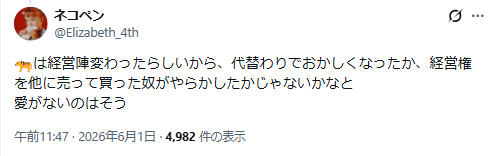
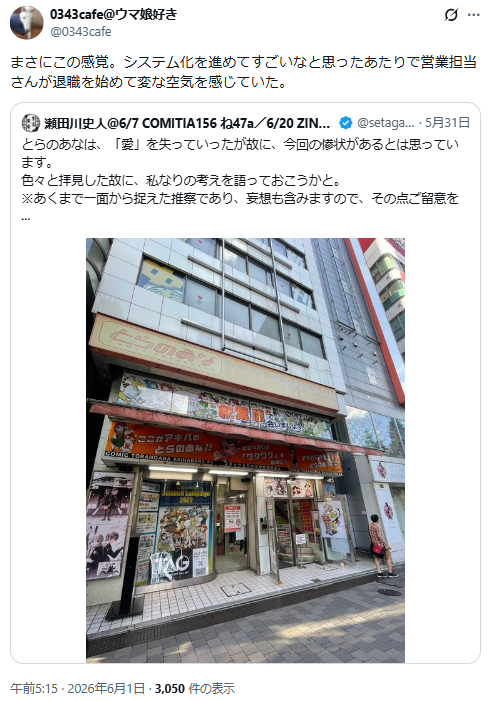
One user, who claimed to have previously worked at Toranoana, suggested that as the company grew and capital flowed in, the president began associating with people from other industries, leading to friction with the original departments and signaling a crisis within the company.
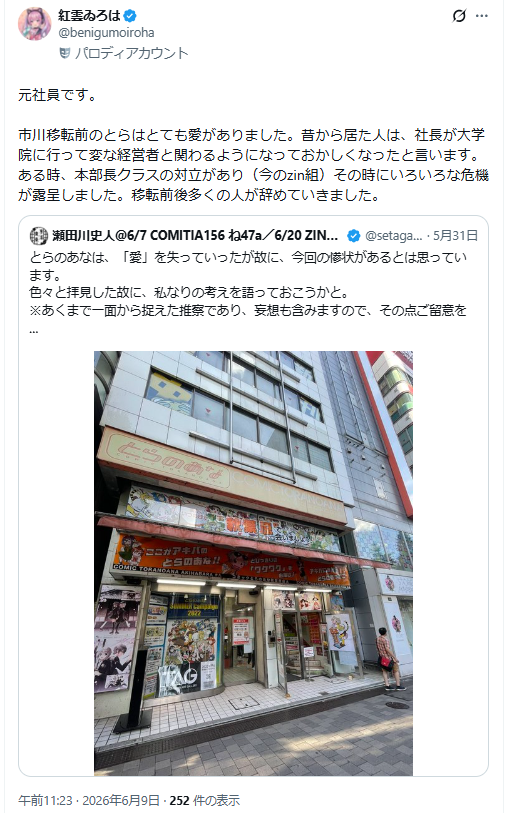
Of course, other users pointed out that with the rise of digital platforms and diverse creative outlets, physical doujinshi are no longer the only medium for creators. Compounded by a declining birthrate and the pandemic's impact, the entire market and creative landscape have changed. Although Toranoana may have had several opportunities to adapt, it ultimately couldn't keep up with the rapid pace of change.
Today, it's clear Toranoana can't return to its former glory. Correspondingly, doujin creators no longer need to rely on physical stores for exposure, with most shifting to online sales. This shift itself is a testament to how much the doujin world has evolved.
via: X@setagawahuhito