

"A manga artist's changing art style actually proves they're the one drawing it themselves." This mind-bending concept, recently dropped by manga artist Junichi Inoue (Hiyuma-ya) on X, has set the internet ablaze, sparking a fiery discussion across the Japanese manga industry and social media.
Several industry heavyweights, including Tsukasa Kotobuki and Takami Akai, have jumped in to back him up, making "why do manga artists' art styles change?" a hot topic once again.
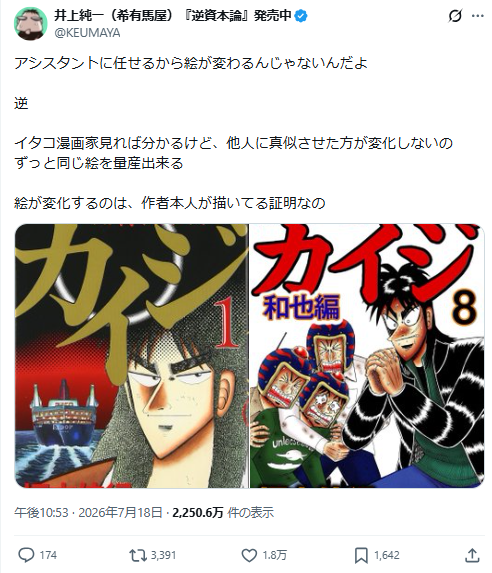
Inoue explained that a common misconception is that a changing art style means the artist is relying more on assistants, but the reality is totally flipped. "It's not because they hand it over to assistants that the art style changes," he stated.
He broke it down, pointing to what he calls "itako manga artists" (mimic artists) who specialize in copying others' styles. He noted that when someone else is tasked with imitating a style, the work tends to remain consistent for a longer period. This is because the imitator simply needs to continuously replicate the existing style to churn out endless copies.
Therefore, he concludes: "A changing art style is proof that the author themselves is personally putting pen to paper."
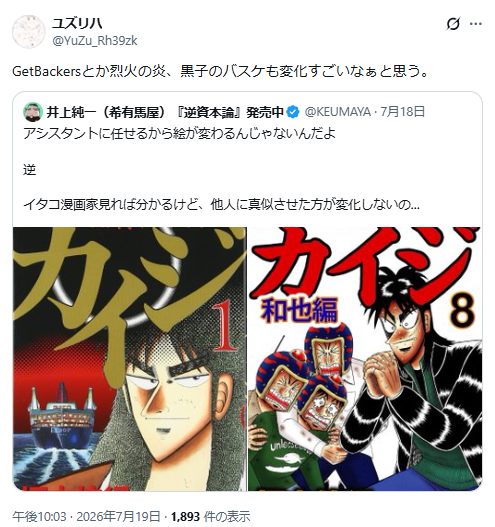
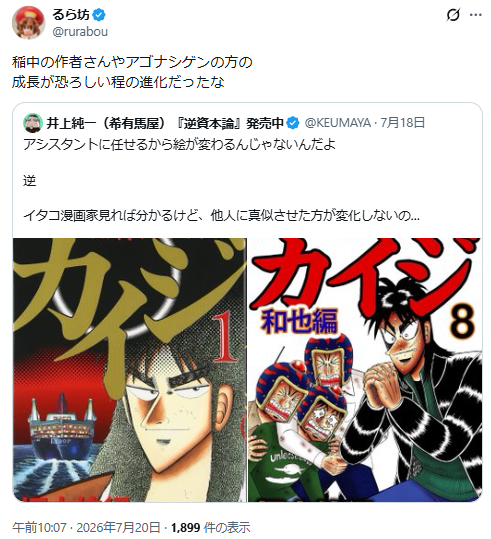
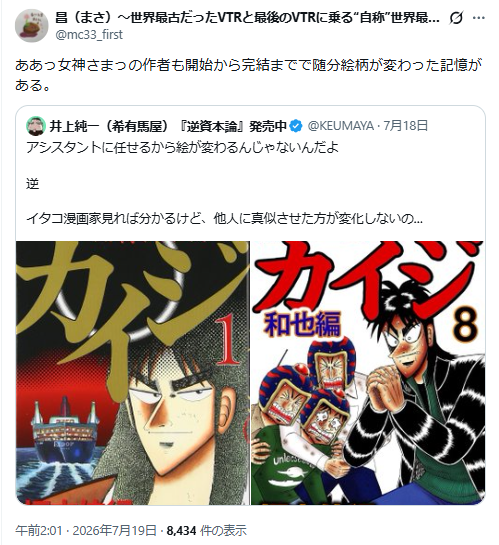
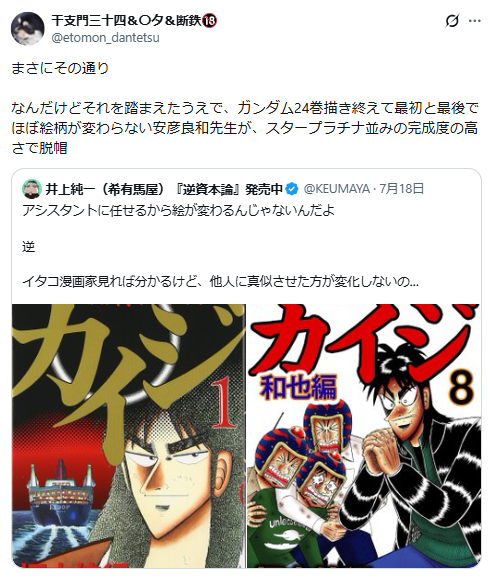
▼ He used Nobuyuki Fukumoto's "Gambling Apocalypse Kaiji" as a prime example, showcasing its early and later art styles.
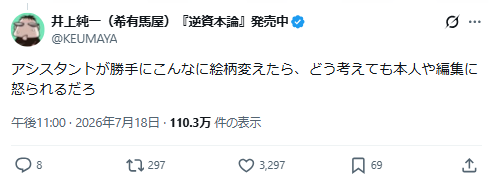
He later added, "If an assistant dared to change the art style like that without permission, wouldn't they definitely get an earful from both the author and editor?"
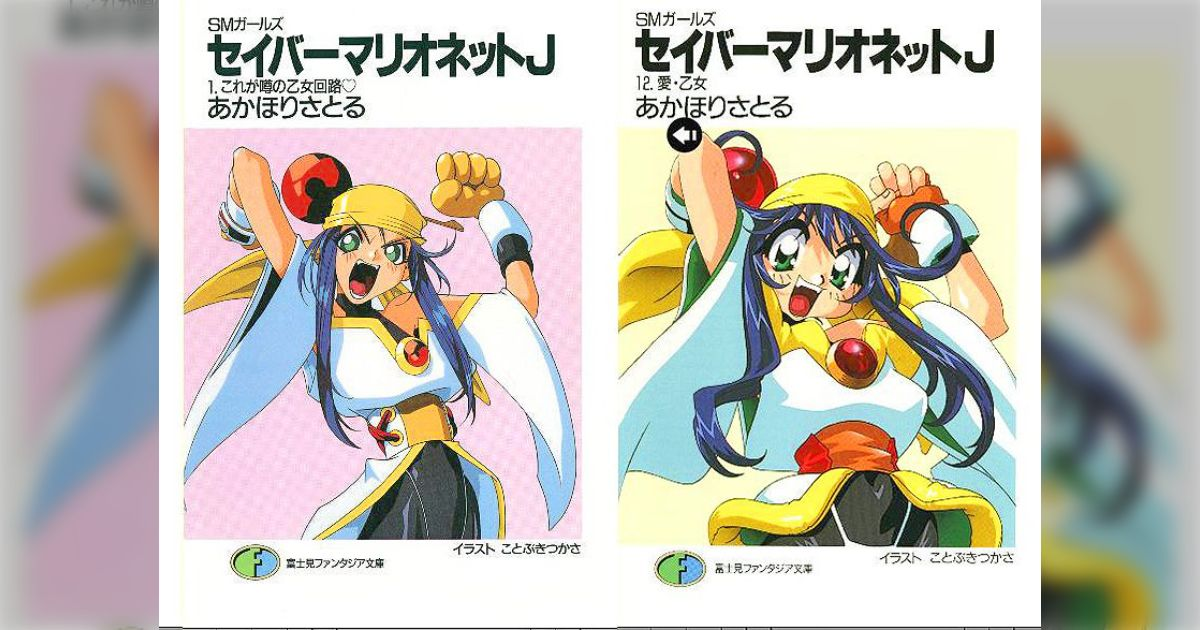
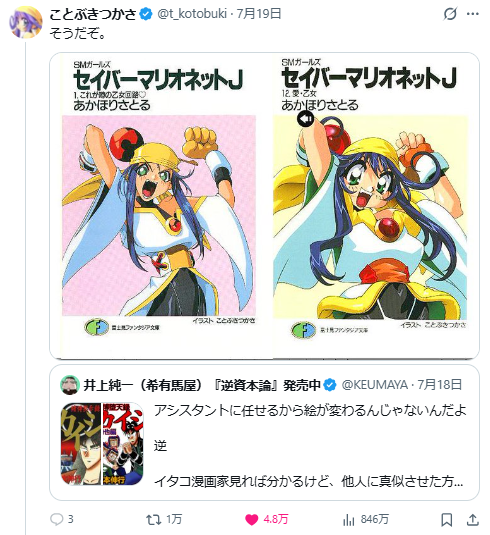
This statement quickly resonated with many manga artists. Tsukasa Kotobuki, known for "Mobile Suit Gundam" manga, shot back with a resounding "Exactly!"
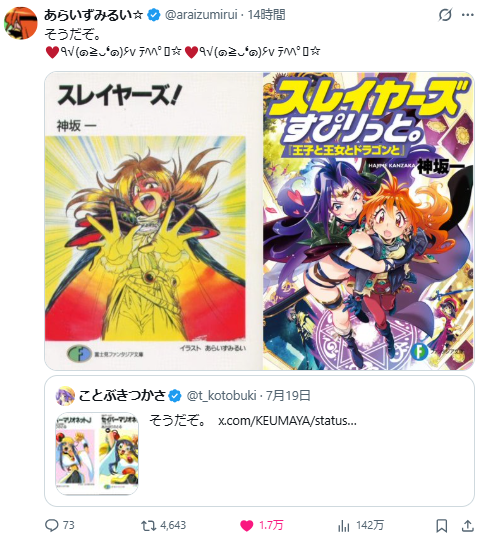
Rui Arai, the illustrator for "Slayers," also retweeted the post, nodding along and highlighting how styles clearly shift over many years.
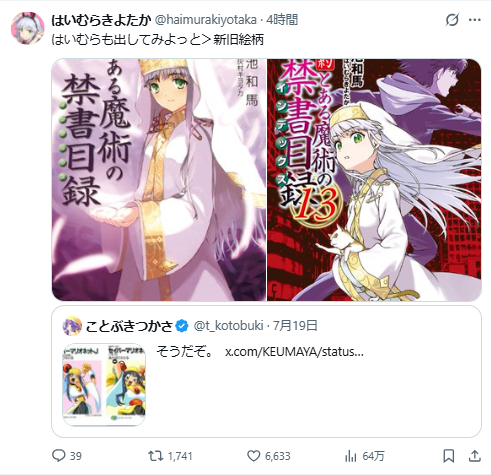
Kiyotaka Haimura, the illustrator behind "A Certain Magical Index," also threw his hat in the ring, agreeing wholeheartedly with the perspective.
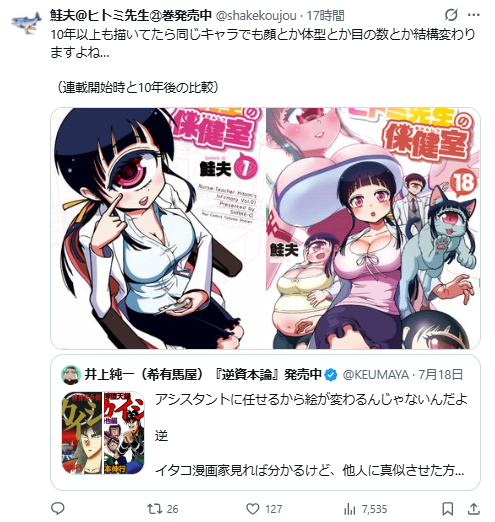
Many manga artists also shared examples of their own work's evolution. Sakeo, the creator of "Hitomi-sensei's Infirmary," dropped this gem: "When you're drawing the same series for over ten years, even the same character's face shape, body, and even eye drawing style can totally transform."
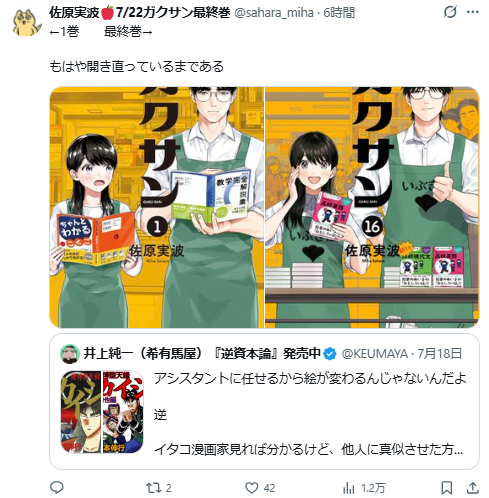
Manga artist Minami Sahara went even further, directly posting a comparison of characters from the first and final volumes of her work "Gakusan," jokingly admitting: "Yeah, I've pretty much given up trying to hide it now."
Many netizens also rattled off a ton of iconic series as examples, including "Flame of Recca," "Kuroko's Basketball," "Ping-Pong Club," "Oh My Goddess!," "One Piece," and "Rurouni Kenshin," noting that in almost any long-running series, the art style visibly morphs and grows over time.
But wait, there's another side to the coin! Fans also heaped praise on manga artists who have rocked an incredibly consistent art style over many years. Notable figures mentioned in the comments include: Mitsuru Adachi, Yuichi Hasegawa, Nozomu Tamaki, Mitsuteru Yuzuki, and Yoshikazu Yasuhiko. Many believe that being able to maintain a highly consistent art style for decades is a whole other level of mastery.
Yoshikazu Yasuhiko, in particular, completed the 24-volume "Mobile Suit Gundam: The Origin" with barely a flicker of change in his art style from start to finish, a feat so polished it's "like JoJo's Star Platinum – mind-blowing!"
Due to the post gaining massive traction, Junichi Inoue later spilled the tea on his original intention. He stated that he had seen someone comment on Nobuyuki Fukumoto's "Akagi: The Genius Who Descended into Darkness" art style, claiming: "The author just got bored and handed it all off to assistants, which is why the art got worse." He felt this statement was totally missing the point.
Inoue doubled down: "It's the exact opposite! Seriously, the *exact* opposite!" He even mentioned that some people dragged Rumiko Takahashi into it as an example, but the truth is: "Art styles change because the author themselves is actually doing the drawing. Hand it to an assistant, and it's *less* likely to change."
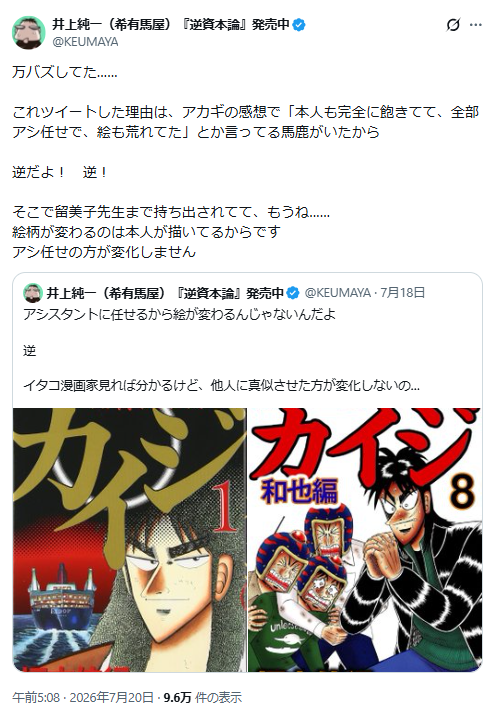
This argument struck a chord with countless fans. If an artist is constantly drawing themselves, their style naturally shifts and sharpens, thanks to new techniques, experiences, or even just different projects; only the copycats tend to stay stuck in the same groove.
Of course, such changes, whether they get cheers or jeers, are all just footprints on a manga artist's epic creative journey and accumulated experience.