

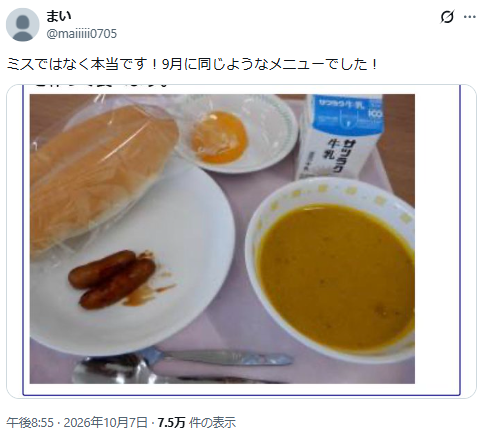
A user on Japan's X/Social Media recently shared a photo of a school lunch served to sixth-grade students in Sapporo, Hokkaido. The portions looked so shockingly small that some wondered whether something had gone wrong when the food was divided up.
After the post surfaced, numerous parents and commenters said the portions children actually receive at school are indeed too small. Others argued that one day's menu is not enough to judge the entire program, fueling a heated online debate.
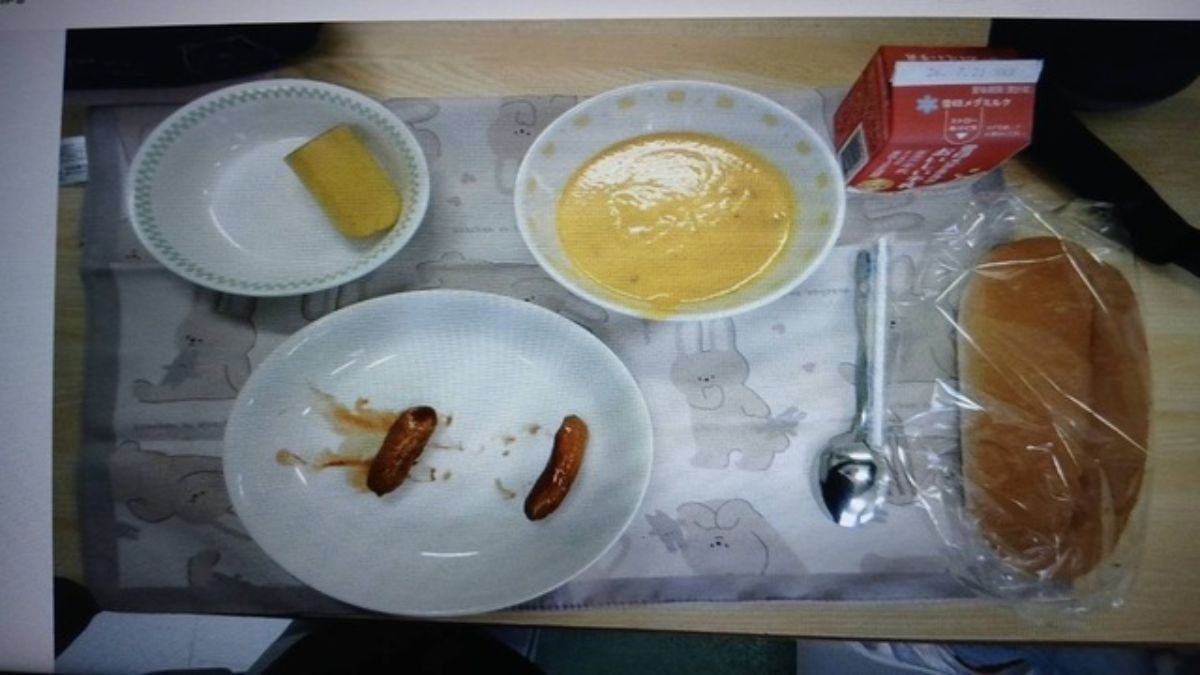
The photo was initially shared by an account called “Sapporo Life,” which said the lunch served to sixth-graders in Sapporo looked like the result of a serving mistake. The image had reportedly been submitted by a member of the public to Hokkaido broadcaster HTB. The menu was strikingly limited: apart from soup and a drink, it included only bread, melon, and two small sausages. It is difficult to imagine that being enough to keep schoolchildren full while also meeting their nutritional needs.
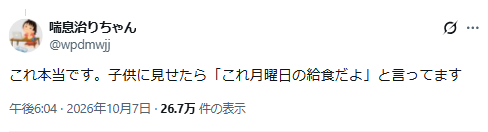
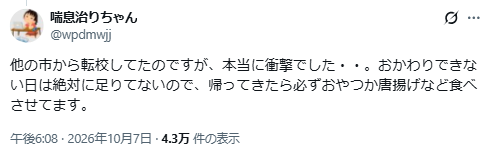
The post drew responses from many users. One parent said they showed the photo to their child, who recognized it as the lunch served that Monday. The parent added that after transferring to Sapporo from another city, the child was shocked by the size of the local school lunches. Because seconds are not always available, the child often comes home hungry, forcing the family to prepare extra snacks or foods such as fried chicken.
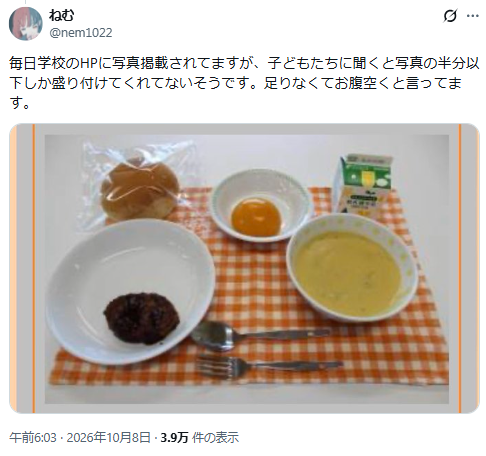
Another parent noted that the school posts daily lunch photos on its official website, but according to their child, the portions actually handed out are sometimes less than half of what appears in the photos, frequently leaving students hungry.
One user said they had seen a similar menu in September, suggesting this was not an isolated serving mistake but an ongoing issue.
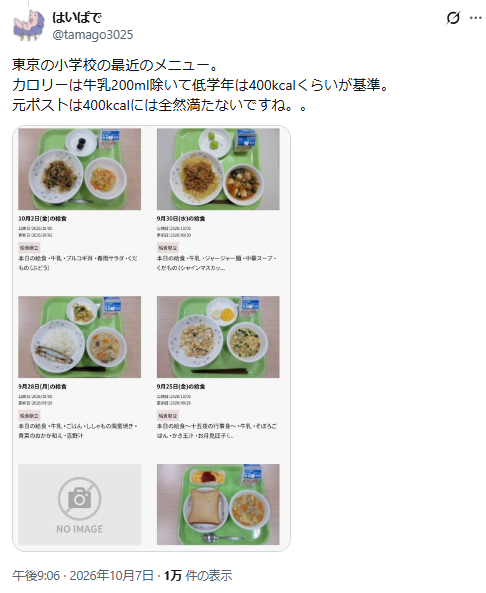
Many commenters questioned whether the meal shown contained enough calories for older elementary school students. One person compared it with lunches served at Tokyo elementary schools, claiming the standard for younger students is around 400 calories, excluding the calories in 200 milliliters of milk. They argued that the Sapporo meal may fall well below that level.
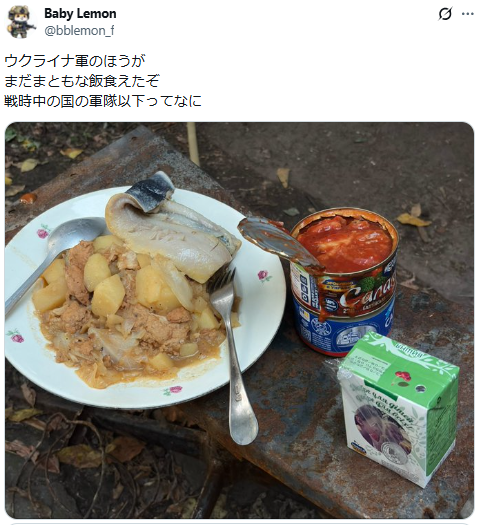
Others joked that students apparently had to rely on the milk and creamy soup for most of their calories. One commenter even claimed the meal looked worse than food served to Ukrainian troops during the war—though military rations and meals for schoolchildren are obviously not a meaningful comparison.
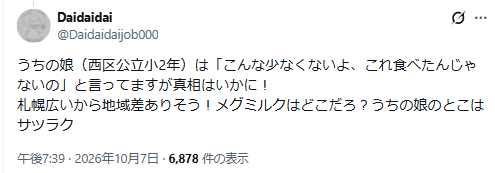
Not everyone agreed that a single photo proved Sapporo's school lunches were generally inadequate. One parent said their second-grade daughter, who attends a public elementary school in Sapporo's Nishi Ward, did not think her school's portions were nearly that small. The parent suggested that serving sizes may differ between schools or areas.
Another user posted school lunch photos from other dates showing menus and portions that appeared perfectly normal. They stressed that nutrition should be assessed over time and across a student's overall diet, rather than judged from one day's menu alone.
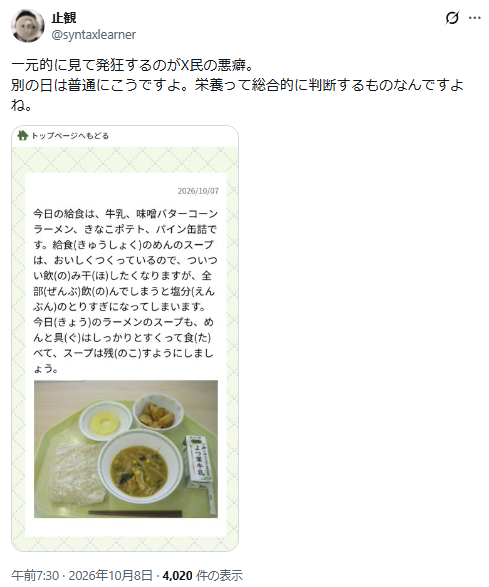
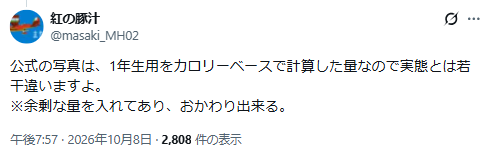
Some commenters offered another possible explanation for the meal shown in the photo. They suggested that the lunch images posted on school websites may be portioned according to the calorie requirements of younger students, meaning the photographed serving might not match what older students actually receive.
That explanation did not entirely ease parents' concerns. Some continued to report that their children received much less food than what appeared in the photos and could not always get seconds. The actual serving arrangements therefore remain unclear.
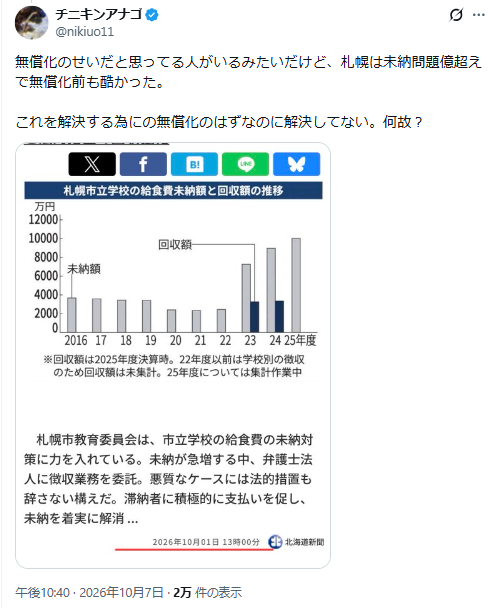
One commenter also pointed out that Sapporo had already faced serious problems with unpaid school lunch fees before introducing its free lunch policy, with outstanding payments reportedly reaching several hundred million yen. The free meal program was originally introduced to address related issues, but with portion sizes now under scrutiny, commenters are questioning whether the policy has improved the underlying situation.
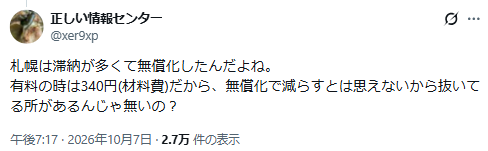
Another user noted that ingredients for Sapporo school lunches previously cost 340 yen per meal, arguing that making lunches free should not directly result in smaller portions. They suggested that rising ingredient costs or problems in the serving process may instead be responsible.
The controversy over portion sizes in Sapporo elementary school lunches has drawn sharply divided reactions from parents and social media users. For now, much of the discussion is based on shared photos and personal experiences. More concrete information is needed to determine the actual amount of food being served, whether students can reliably receive seconds, and how the free lunch policy has affected meal contents.
This is not the first time elementary school meal portions in Japan have come under scrutiny, and differences in local government finances may contribute to regional disparities. The central question raised by the controversy is how schools can manage ingredient costs while still ensuring that students receive meals that are both filling and nutritionally balanced.