
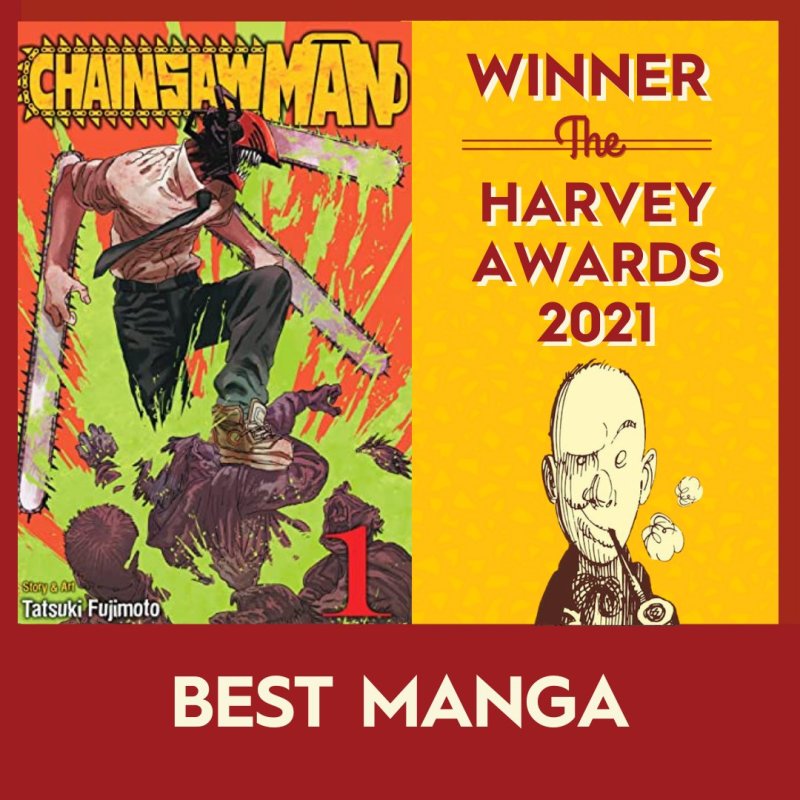
The Harvey Award is a renowned accolade that recognizes outstanding professionals and works in the global comic industry. This American comic award established the "Best International Manga" category for non-English comics. Unsurprisingly, Japan, a powerhouse in manga, has consistently dominated this award. Past winners who have held the title for many years include Katsuhiro Otomo with his "Akira," Gekiga master Kazuo Koike and Goseki Kojima's collaboration "Lone Wolf and Cub," and the God of Manga Osamu Tezuka's "Buddha," among others. In 2017, the Harvey Award directly established the "Best Manga" award, a category named after Japanese comics (Manga), naturally creating an independent battleground specifically for works from the Japanese market. And a Japanese manga artist, under 30 years old, has already won this award for two consecutive years (2021, 2022).
"Chainsaw Man" wins the Harvey Award for Best Manga Image credit:Twitter
His age and experience certainly cannot compare to manga masters like Otomo, Koike, and Tezuka, but his groundbreaking creativity has been enough to astound international judges, consecrating him as a true Japanese luminary for two consecutive years. In fact, among the many "Weekly Shonen Jump" manga artists and masters I've introduced, he is the most deserving of being called a "genius." Readers marvel at the creativity of his works, and the animated adaptations of these works have attracted even wider audiences. He is Tatsuki Fujimoto (藤本タツキ), a comet in the Japanese manga industry currently traveling at warp speed, shining with an unprecedented brilliance.
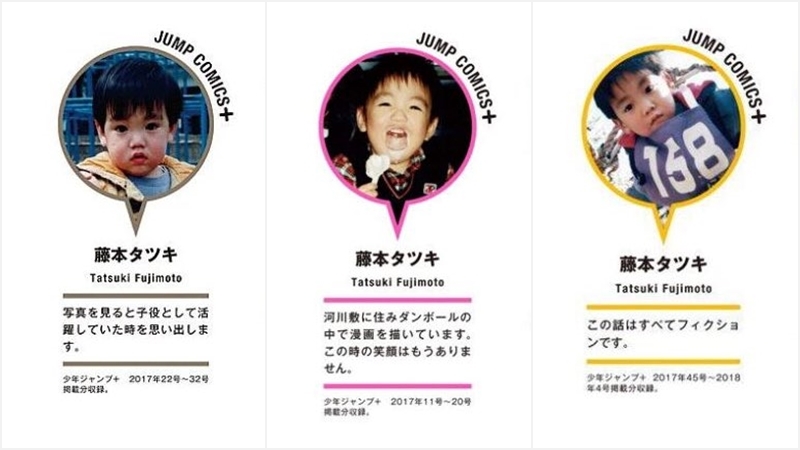
Tatsuki Fujimoto's true identity is quite mysterious; the author's section in his tankobon always features childhood photos and humorous, prankish content. Image credit:Twitter
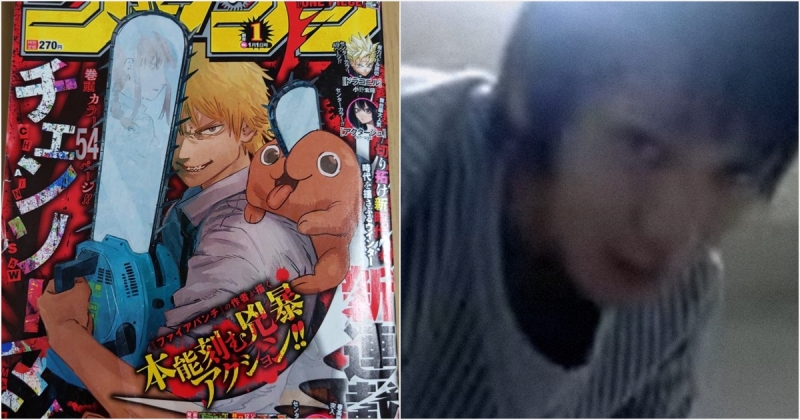
▼ In July 2011, Tatsuki Fujimoto, under his initial pen name "長門は俺" (Nagato is Me), uploaded a strange video of himself floating desperately on Niconico Douga.
"Weekly Shonen Jump" was once the dream of many Japanese boys; they loved this weekly manga magazine, wanted to become "Weekly Shonen Jump" manga artists, and create great works that would captivate even more young readers. At one point, this weekly magazine, which once gathered the creativity of Japan's most elite manga artists, gradually began to show "fatigue"—this fatigue was purely a result of self-comparison and does not mean that "One Piece" is no longer read. However, when "Weekly Shonen Jump" is placed alongside "Shonen Jump+", the online manga platform established by the same publisher, it undoubtedly makes one feel that "Weekly Shonen Jump" is a product of the last century.
"Shonen Jump+" Image credit:少年ジャンプ+
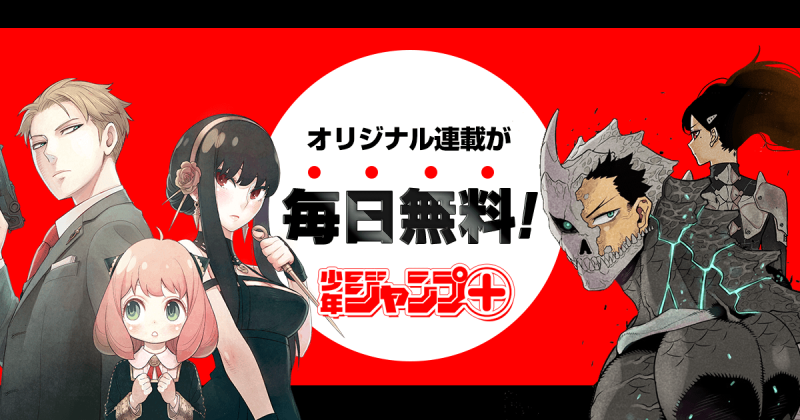
"Shonen Jump+" was originally intended as the online "facade" for "Weekly Shonen Jump": readers could access the current issue of "Weekly Shonen Jump" through "Shonen Jump+", which would also feature previews of new "Weekly Shonen Jump" serializations and even allow readers to browse the first few chapters of new works for free. Concurrently, "Shonen Jump+" also served as a starting point for nurturing new manga artists; it would host new artist competitions and publish free-to-read one-shot works by new talents. "Shonen Jump+" was not just the magazine's facade but also akin to "Weekly Shonen Jump"'s "bullpen." Compared to the lofty, master-filled "Weekly Shonen Jump," "Shonen Jump+" was more welcoming to new manga artists and provided more resources, allowing inexperienced new artists to gradually grow into promising professionals.
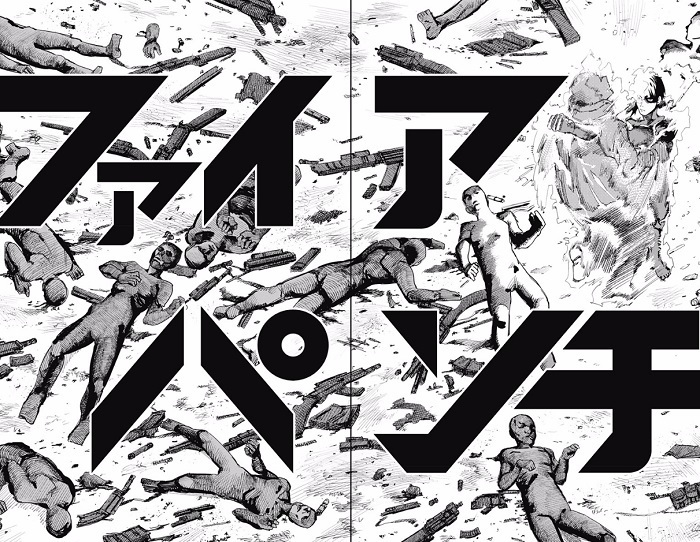
The problem is, not all newcomers are willing to take it slow. Tatsuki Fujimoto is one such example. In 2016, his work "Fire Punch," which had been rejected by the Jump-affiliated monthly magazine "Jump SQ.", was moved to "Shonen Jump+" for publication. Fujimoto immediately exploded with astonishing brilliance, much like the protagonist in "Fire Punch," whose entire body is engulfed in unceasing flames. This instantly propelled "Shonen Jump+" to rapid growth, transforming this online manga service, originally conceived as a facade and bullpen, into a highly sought-after platform for original web manga.
"Fire Punch" Image credit:メンズノンノ
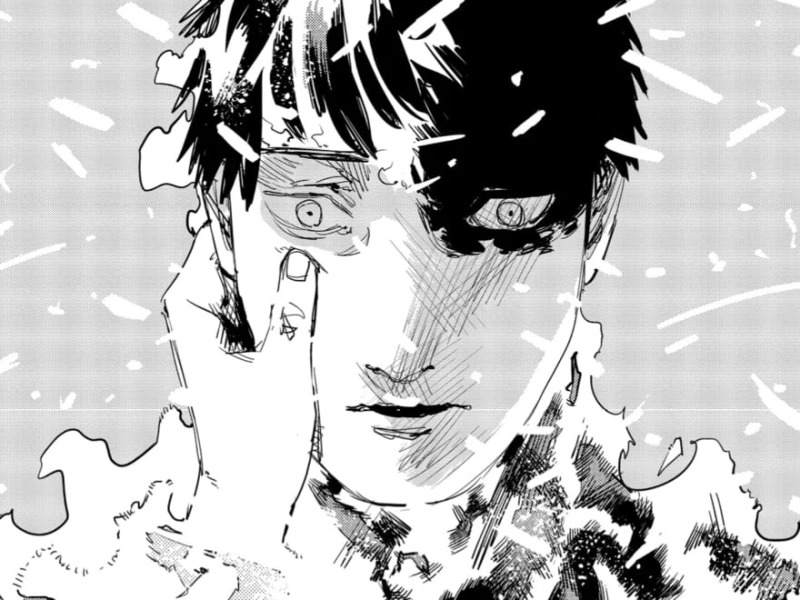
It's difficult to describe what kind of work "Fire Punch" is: A pair of loving siblings, Agni and Luna, live in a hopeless world of frozen earth. They possess a miraculous superpower called a "Blessing," and their Blessing is regeneration. This ability is incredibly useful in a low-temperature world where all life withers – Agni daily cuts off parts of his body to provide as food for the starving villagers. However, the village's unavoidable dark secret was discovered by the army. The captain, possessing a flame Blessing, burned down the entire village with fire as punishment for their cannibalism. All the villagers were burned to death, and Luna, whose Blessing was weaker, also perished. However, Agni, having lost his beloved sister and filled with immense hatred, found his Blessing strengthened by his rage, causing him to regenerate endlessly. This also meant the flames on his body would never extinguish. Ultimately, Agni became an immortal fire-man, constantly burning, and later known as "Fire Punch" Agni, he embarked on a journey of revenge against his enemies.
"Brother! Let's make babies together!" "Fire Punch" immediately laid down a bombshell in its first chapter. Image credit:mangayomuzou
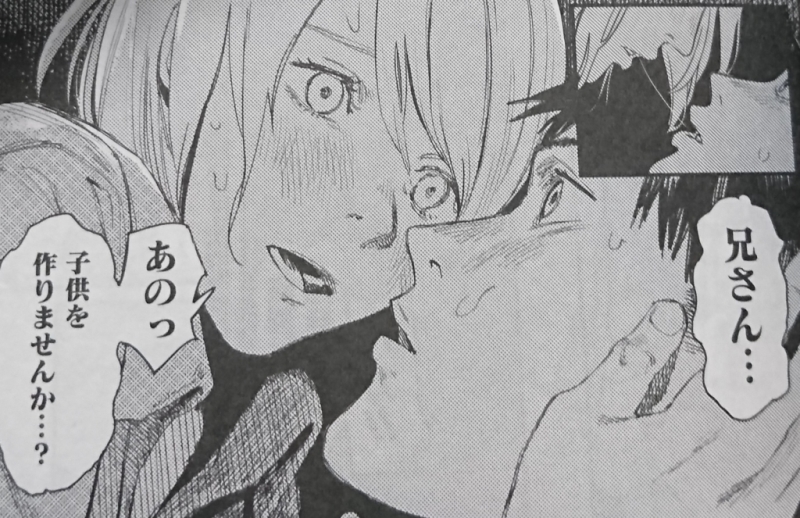
This is not a complete plot summary of "Fire Punch." This short, 8-volume manga features drastic plot changes in almost every chapter, ultimately developing in bizarre and unpredictable directions. Just when you thought it was a revenge story, the manga suddenly transformed into a "road movie" about "filming a movie." "Fire Punch" broke the fourth wall, shattered shonen manga's conventional plotlines, dismantled the hero-villain formula, broke shonen manga's language, and then allowed the story to grow wildly in a chaotic yet free manner... Behind it all, it seemed to tightly embrace the theme of "cinema," even extending the plot to the creation myth of Adam and Eve... and continuing tens of millions of years into the future. "Fire Punch" seems to disregard its readers' age groups, yet also appears to trust that readers can grasp the true meaning of the work within its subversive and unconventional worldview.
"Fire Punch": The line "I am the protagonist" instantly expanded the scope of the manga. Image credit:ちー兄のホンマでっか!?blog
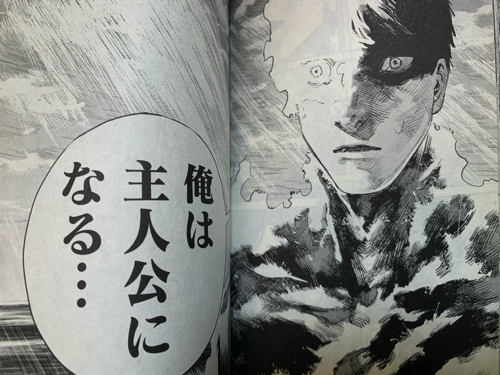
Before "Chainsaw Man" garnered unanimous praise from Asian readers, the 2016 "Fire Punch" already showcased the talent and madness within the then 24-year-old Tatsuki Fujimoto... You can only describe him with the very broad term "genius," but such a term, when applied to Fujimoto, almost carries a derogatory connotation: he doesn't merely surpass all contemporary manga artists, nor is he simply superior; rather, he opened a dimensional portal accessible only to himself, stepping into another indescribable space-time, distinct from everyone else. No, in fact, even before "Fire Punch," someone had already noticed Fujimoto's uniqueness: Shihei Lin, one of the founders of "Jump SQ." and currently the Deputy Editor-in-Chief of "Shonen Jump+," a Japanese-Taiwanese editor.
Shihei Lin, current Deputy Editor-in-Chief of "Shonen Jump+". Image credit:bizSPA!フレッシュ
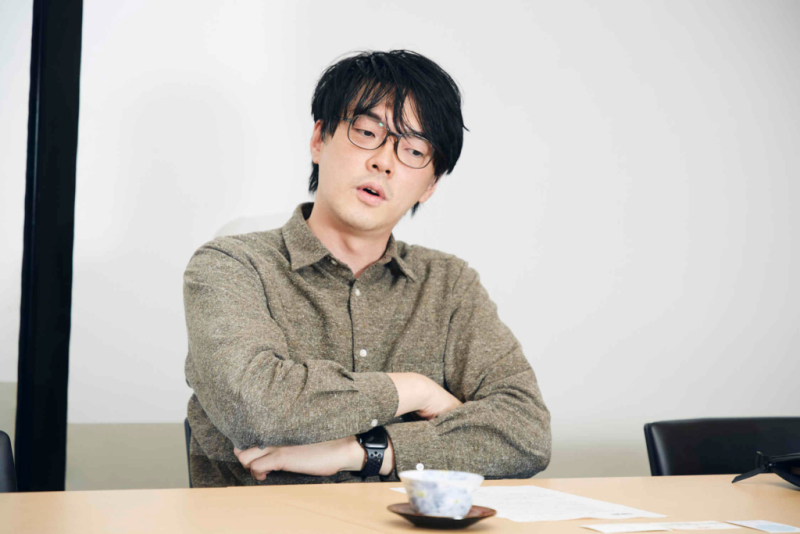
We've discussed the crucial creative formula behind many popular Jump series: the close collaboration between editor and manga artist. Editor Lin and manga artist Fujimoto also followed this same formula. But first, let's talk about the story before Fujimoto, who didn't seek employment after graduating college and was solely dedicated to drawing manga, submitted his work to "Jump SQ.'s" monthly manga competition: this is the story of Fujimoto's most "precocious" genius. From junior high to high school, Tatsuki Fujimoto conceived his own "manga magazine" in his mind. In this metaphysical magazine, known only to him, created by him, and read by him, he serialized his imagined manga, with as many as seven "manga works" running concurrently. In his imaginary world, Tatsuki Fujimoto was both creator and consumer, and both roles meticulously "maintained their duties": the "reader" would unreservedly "criticize" the "author's" work, while the author, in turn, needed to constantly deliver "surprises" to the reader. One amusing anecdote from this self-critique and creation process is that when one of Fujimoto's works reached its grand finale, his inner reader was so deeply moved by the ending that Fujimoto actually cried in class.
Tatsuki Fujimoto's early works. Image credit:ぴょるろぐ。
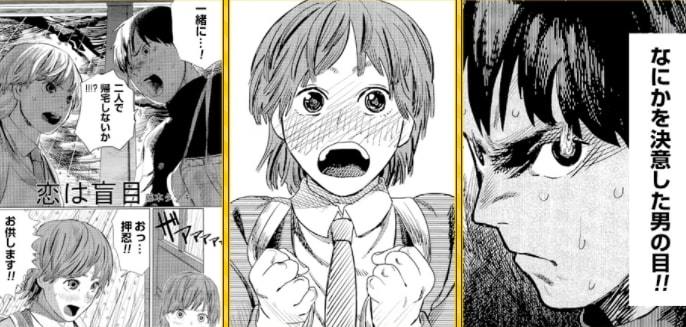
This showcases Fujimoto's two types of genius: he can simultaneously maintain two distinct consciousnesses – 'creation' and 'criticism' – allowing him to continuously refine his work through an internal 'heaven-and-hell' struggle; and he can simultaneously contemplate seven different types of works, demonstrating the breadth of his interests and his multitasking cognitive abilities. However, the first point is even rarer than the multitasking mentioned in the second. This means that within Fujimoto's creative mind, he not only continuously builds meticulously designed sandcastles but also constantly demolishes them, gradually bringing his works closer to his desired goal through an ongoing process of destruction and creation. So, what kind of manga does Fujimoto aspire to create? It's evident from his conversation with Hiroaki Samura, author of 'Blade of the Immortal,' that he aims to emulate Korean cinema.
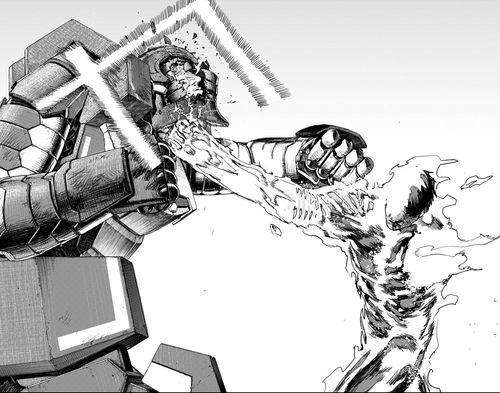
"Fire Punch": A Shocking Scene Image credit:このマンガがすごい!WEB
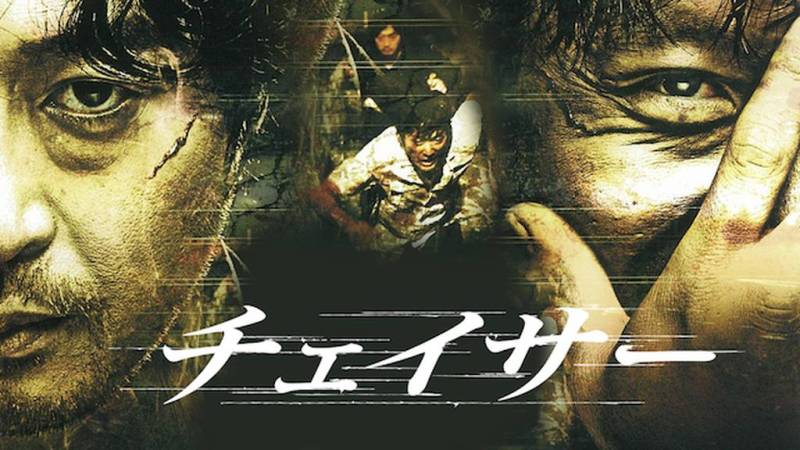
“I've always wanted to draw manga like Korean films. There's a Korean film called 'The Chaser'*, where the protagonist tracks down the antagonist, but about 30 minutes into the opening, the protagonist has already caught the antagonist. Yet, the story suddenly unfolds from there, continuously diving into a series of unexpected surprises, making you wonder 'what happens next?' Honestly, I truly can't guess how Korean film directors think, but by the end of watching 'The Chaser,' you distinctly feel 'this is the theme they wanted to convey,' and I want to create works with a similar style.”
*'The Chaser': The debut work of director Na Hong-jin ('The Wailing'), it depicts a pimp who runs an escort service discovering that his escort girls are successively disappearing, likely at the hands of a serial killer. As a former detective, the pimp decides to embark on a solitary pursuit.
"The Chaser" Image credit:ファミリー劇場
You'll find that the golden formula of traditional 'Weekly Shonen Jump' or even contemporary popular manga magazines – 'set a goal → face setbacks → train hard → overcome powerful enemies' – can no longer be applied to new-generation Korean directors like Na Hong-jin, Bong Joon-ho, and Park Chan-wook. Their commercial works often have only a commonplace, or even easily understandable, high-concept outline. However, these films typically change style within the first 30 minutes, breaking free from plot clichés and developing in unexpected directions. Just like 'Ashfall,' which opens like 'The Rock,' 'Emergency Declaration,' which opens like a disaster film, or 'Train to Busan,' which appears to be just an ordinary zombie movie – such Korean commercial films have truly 'surpassed their teachers' from Hollywood, 'outperforming them' in terms of audience surprise.
"Chainsaw Man" Image credit:RENOTE [リノート]
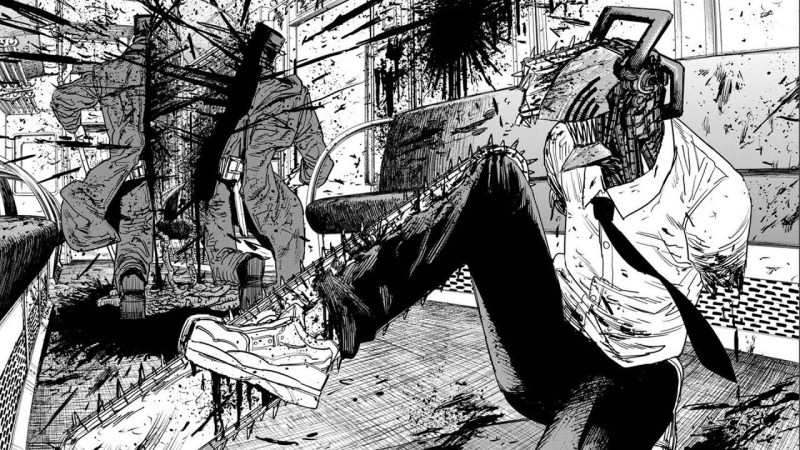
Tatsuki Fujimoto is captivated by such subversiveness and consistently applies it: 'Fire Punch' initially appears to be a story about a psychic avenging his sister, and 'Chainsaw Man' just a tale of a loser becoming a devil hunter. However, before long, they rapidly transform into bizarre works that defy reader expectations. Their pacing is fast, with numerous twists, and not just plot reversals; they steer the narrative into another dimension, another genre theme, leaving readers with no possibility of predicting the plot. This is not only because Fujimoto emulates modern Korean commercial cinema but also because his long-term, high-standard 'self-refinement' in his mind has allowed him to hone such sharp, sudden narrative turns.
▼ Even before YouTube became popular, Tatsuki Fujimoto uploaded his self-written and self-composed songs to YouTube. His personal description field at the time read:
“After hearing EXILE perform for the Emperor, I felt I had better songs, so I uploaded them (the beginning of a legend).”
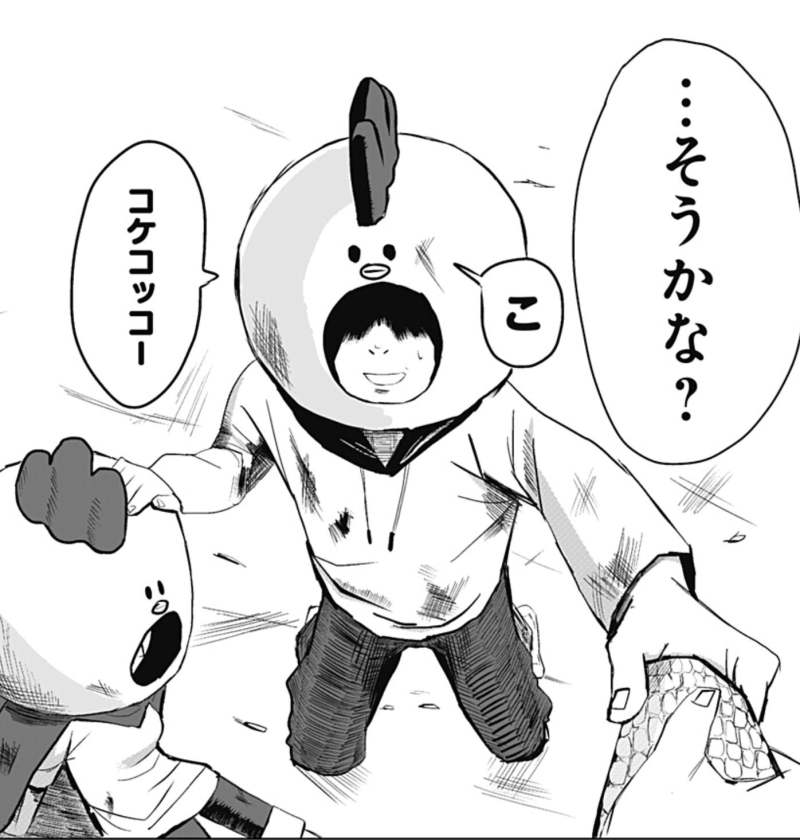
At 17, Tatsuki Fujimoto submitted 'There Were Two Chickens in the Garden' (庭には二羽ニワトリがいた。) to 'Jump SQ.' This work deeply impressed Shihei Lin, who stated: “Given his young age of 17 and the groundbreaking nature of the work, I felt the future potential of the 'energy' permeating the piece.” During the final selection phase of 'Jump SQ.'s' monthly competition, editors 'claim' manga artists they wish to collaborate with in the future – essentially an opportunity to establish an 'editor-manga artist' relationship early on. Shihei Lin recognized Fujimoto's 'energy' potential and decided to become his editor, assisting Fujimoto in improving everything from his drawing skills to the quality of his work's content, and also providing him with supplementary information related to his works. As Fujimoto had no job after graduating from university and no money to buy reference books, Lin provided significant material assistance.
"There Were Two Chickens in the Garden" Image credit:Amebaブログ
To some extent, Shihei Lin became the grounding mentor for Tatsuki Fujimoto: he rigorously demanded that manga artists hone their drawing skills, akin to first building the "muscle strength" essential for their future livelihood. This ensures stable production quality under the high-pressure weekly serialization schedule, while also making the work's essence more accessible to readers. Furthermore, from his initial management of "Jump SQ." to later becoming an editor and then Deputy Editor-in-Chief at "Shonen Jump+", Shihei Lin's approach significantly differed from that of traditional print manga editors. He oversaw numerous manga published on online platforms, where there was no eight-page limit per chapter. Instead, a single chapter could present hundreds of pages of content to readers at once. The pacing of 'introduction, development, turn, and conclusion' required by print formats simply doesn't apply to such lengthy chapters—you cannot expect readers to patiently read over a hundred pages before encountering the first suspenseful moment.
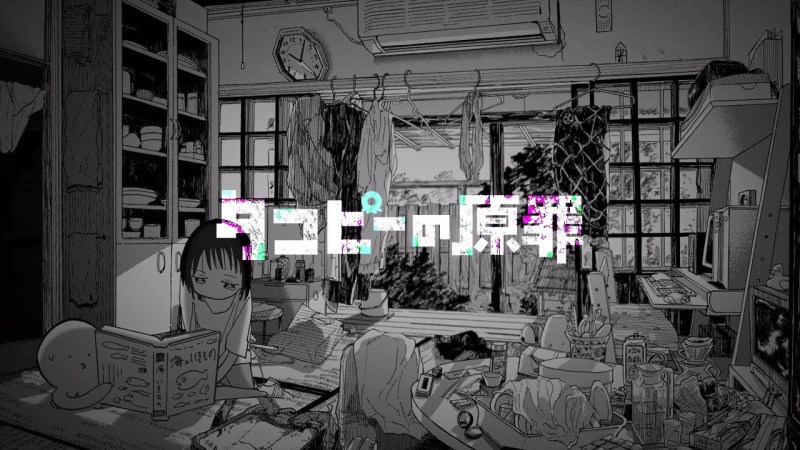
"The Vertical Labyrinth" is also a hugely popular work from "Shonen Jump+" Image credit:アニゲー速報
Therefore, Shihei Lin and Tatsuki Fujimoto, who admires Korean cinema, can be said to be kindred spirits: both enjoy planting plot bombshells within shorter narratives to continuously capture readers' attention. They also absorb a wealth of modern entertainment culture elements, integrating elements from different mediums such as film, music, and other manga into their works. Fujimoto even believes that authors should "endlessly" read and watch excellent entertainment works to expand the vision and scope of their own manga. More importantly, they don't just create works for Japanese readers. Like modern Korean commercial films, they hope these Japanese manga works are globally oriented, capable of bringing enjoyment to readers worldwide.
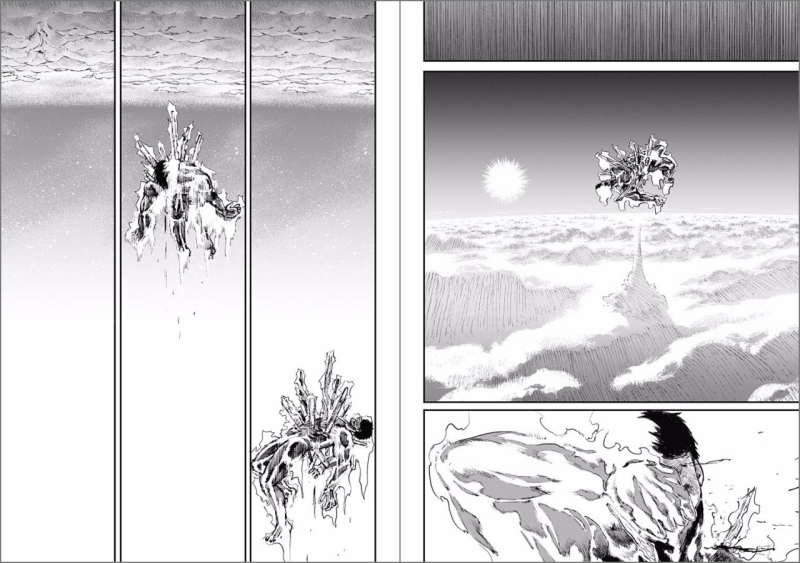
"Fire Punch": Highly cinematic paneling Image credit:マガ人
This form of "editor-manga artist" combination also breaks the past conventions of "Weekly Shonen Jump": in most past examples, the editor served as an assistant to the manga artist, much like the editor of "Chūka Ichiban" extensively provided manga artist Etsushi Ogawa with recipes and knowledge about Chinese cuisine. In some cases, the editor dominated the manga artist's creation, such as Nobuhiko Horie's strong leadership as the editor of "Fist of the North Star". However, between Shihei Lin and Tatsuki Fujimoto, they are more like comrades-in-arms, advancing hand-in-hand. Their goals, preferences, and ways of thinking are highly aligned, and they each strive towards the same objective. They mutually assist and stimulate each other, with both parties experiencing significant growth during the creative process—a rare occurrence among other Jump-line editor-manga artist pairings.
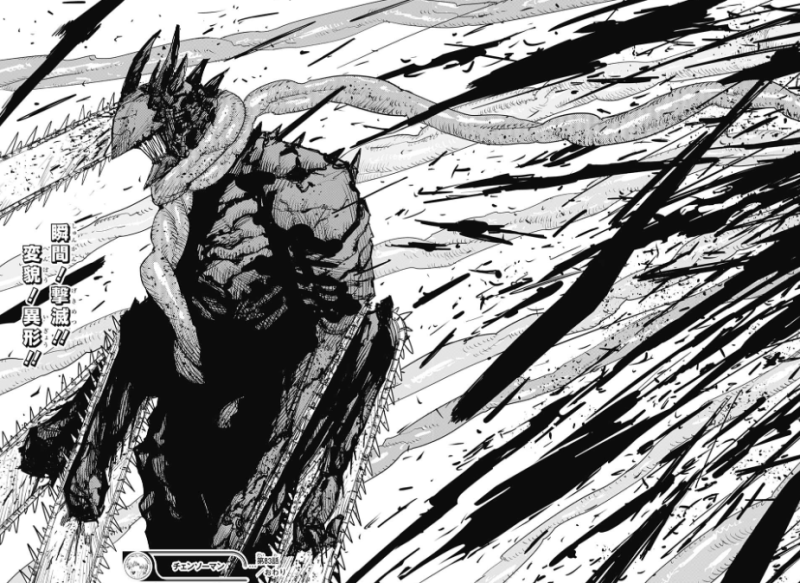
"Chainsaw Man" Image credit:manga-tei
This is why "Fire Punch" could be so uninhibited, even to its extremes—under Nobuhiko Horie's leadership, a situation where reader comprehension is "disregarded" would be almost impossible; and an editor acting purely as an assistant would be unable to keep up with such a self-styled author, let alone provide assistance. One could even say that a large part of Tatsuki Fujimoto's genius stems from his complementary "comrade-in-arms relationship" with Shihei Lin, and it is only on a unique publishing platform like "Shonen Jump+" that such peculiar works can emerge.
"Fire Punch": Extremely brutal scenes appear in the first chapter Image credit:このマンガがすごい!WEB
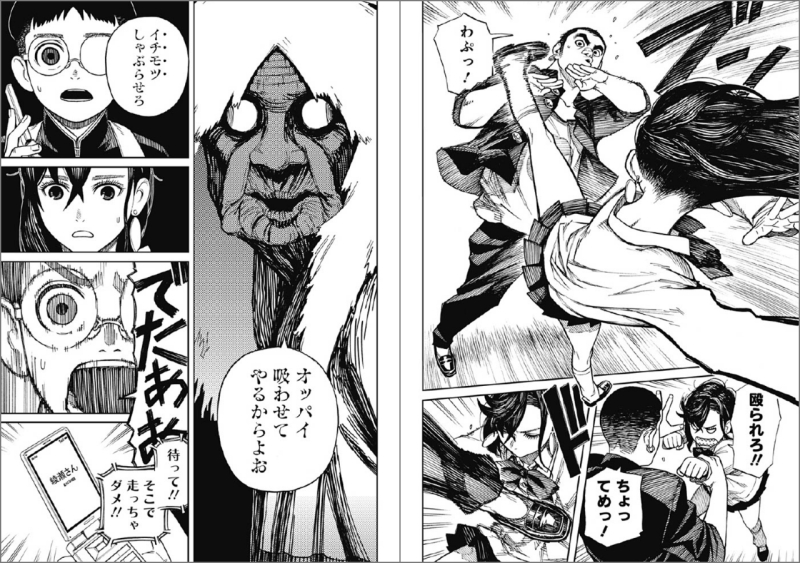
Shihei Lin later also became the editor for manga artist Yukinobu Tatsu, who was Tatsuki Fujimoto's assistant during the serialization of "Chainsaw Man". Yukinobu Tatsu's "Dandadan" (ダンダダン), published last year on "Shonen Jump+", similarly possesses the peculiar 'Shihei Lin x Tatsuki Fujimoto x "Shonen Jump+"' style: it blends diverse entertainment elements (on page six, a 'boyfriend resembling Ken Takakura' appears, along with many wide-angle compositions and montage-like storyboards reminiscent of cinematic language); features sudden, explosive plot points (on page 25, a ghost hag appears, saying, "You can suck my tits, I'll lick your dick"); and showcases wildly imaginative creativity (surprisingly merging the two 'non-overlapping' genres of supernatural and science fiction).
"Dandadan": A foul-mouthed ghost hag and exceptionally high-level artwork Image credit:Twitter
It can be said that the style established by Shihei Lin and Tatsuki Fujimoto is influencing a new generation of manga artists, ushering in a completely new era of creation, with new creative thinking, techniques, and behind-the-scenes team collaboration. These new works are no longer just about variations in narrative techniques; they also emphasize breaking free from past conventions in their themes and topics. Passion and hard work are no longer the focus, and saving the world is not more important than satisfying one's own desires. This is true for "Fire Punch," and even more so for "Chainsaw Man." This value system deeply resonates with today's young generation, who are struggling despite their efforts – if becoming a corporate slave cannot even guarantee a stable life with enough food and sleep, then it's better to enjoy the small, certain happinesses one can grasp as much as possible. From a certain perspective, such works are truly the "latest" manga: they represent the current young generation and speak for them.
Standing at the forefront of this new wave, Tatsuki Fujimoto is not just a genius. This "unprecedented author," as described by Shihei Lin, will lead Japanese manga to the world. It will be manga with a strong cinematic feel, manga that breaks the formula of traditional narrative structure, and we are fortunate to witness the future he brings.