
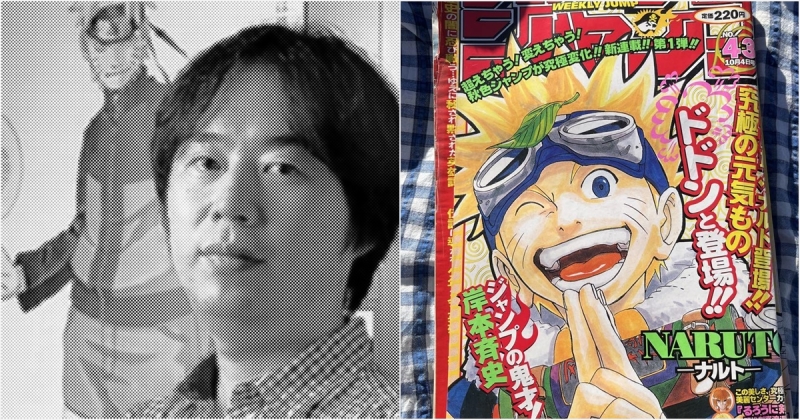
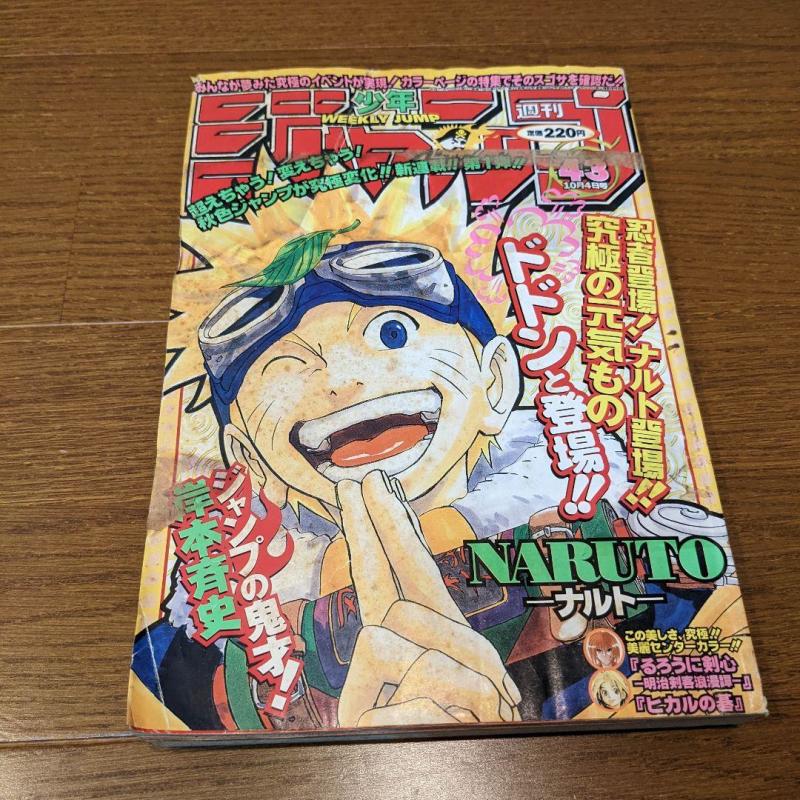
In 1999, the editors of "Weekly Shonen Jump" were in a frenzy. "JoJo's Bizarre Adventure" concluded in the first half of the year (Hirohiko Araki flew to the United States to interview prisons, conceptualizing his next work "Stone Ocean" for the following year), and "Rokudenashi Blues" and "Jigoku Sensei Nube" also ended their serialization that year. The final straw was "Rurouni Kenshin," the powerhouse that carried "Weekly Shonen Jump" through the late 90s, which concluded in the 43rd issue during the first week of October in the latter half of the year.
Curiously, the cover of the 43rd issue of "Weekly Shonen Jump" did not bid farewell to "Rurouni Kenshin." Instead, the cover featured the protagonist of a new serialization beginning in that issue: Naruto Uzumaki. Many readers might not have known then that this new series, "Naruto," would embark on a glorious 15-year history, ultimately becoming a flagship work for "Weekly Shonen Jump," with sales surpassed only by "One Piece" and "Dragon Ball." Therefore, we must certainly discuss the author of "Naruto," Masashi Kishimoto, who was a rookie manga artist in 1999.
The first chapter of "Naruto" began serialization in "Weekly Shonen Jump" Issue 43 in 1999 Image credit:Kemenkumham
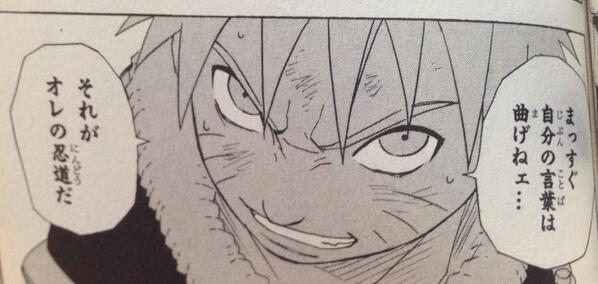
What exactly is "Naruto"? The story takes place in a ninja world, home to five great ninja nations: Fire, Water, Lightning, Wind, and Earth. These ninjas, who utilize various ninjutsu, senjutsu, taijutsu, genjutsu, animal manipulation, and necromancy, constantly battle each other. Ninja manga are not uncommon, and comics featuring young protagonists fighting are even more prevalent. So, what makes "Naruto" different? What was Masashi Kishimoto, then a 25-year-old rookie manga artist, thinking? The answer might be simpler than imagined; we can glimpse it through Naruto, the protagonist's, famous quote: "I'm not gonna run away and I never go back on my word! That's my ninja way!"
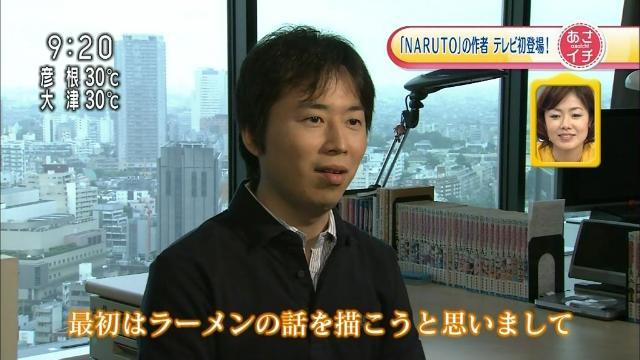
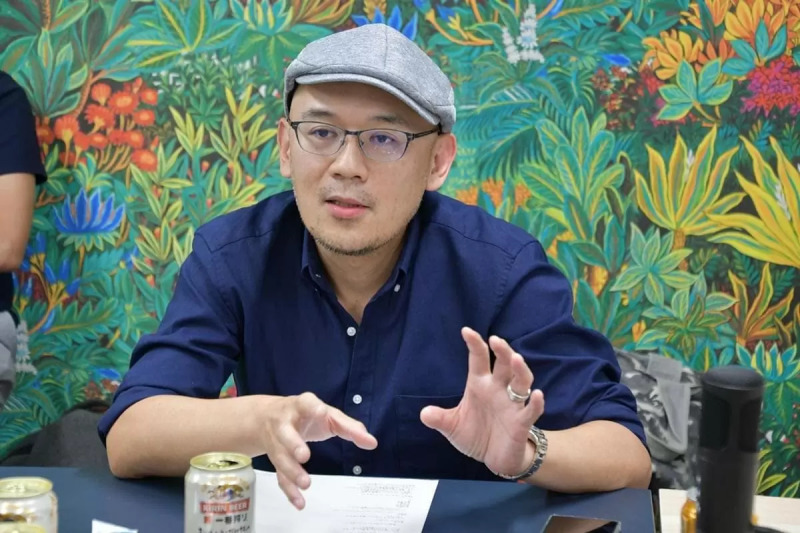
Masashi Kishimoto, whose initial public appearance was a bit awkward, during his first TV interview Image credit:オレ的ゲーム速報@刃
This statement can be broken down into three parts: "speak directly," "my," and "ninja way." For a rookie manga artist, the most crucial element is that "way"—you must find a path, a direction, a central theme for your work that can be sustained for hundreds of chapters without losing its essence. For newcomers, following and emulating their favorite works is one approach, just as Kohei Horikoshi and Koyoharu Gotouge have publicly stated that "Naruto" greatly influenced their works, "My Hero Academia" and "Demon Slayer: Kimetsu no Yaiba," respectively. You can indeed find traces of "Naruto" in these two successor works. So, did Kishimoto, who once expressed immense admiration for Akira Toriyama, pen "Naruto" in the style of "Dragon Ball"? It seems quite different.
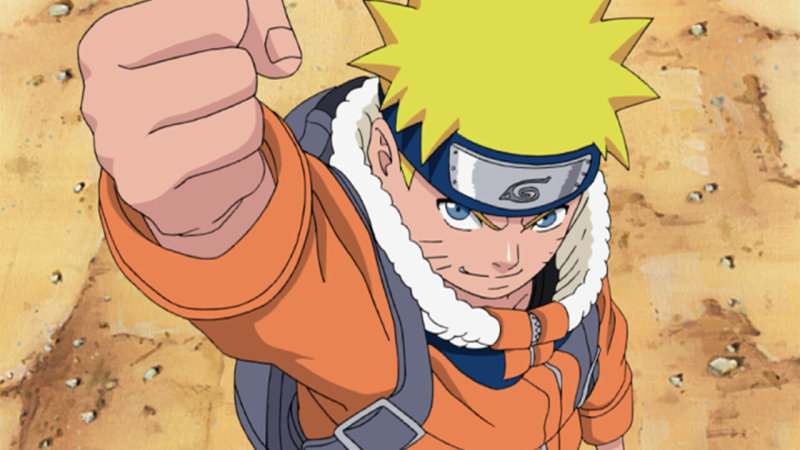
"Naruto" anime adaptation Image credit:NETFLIX
"Naruto" is different from "Dragon Ball." Son Goku of "Dragon Ball" was born into a world of strange and exotic creatures, where there were dinosaurs and giant fish, and... that's it. We don't really understand where Son Goku came from, what his life's goal is, or why he lives in isolation. What else exists in this world besides Goku? What is the technological level of this world? Readers know nothing. But "Naruto" is different; it doesn't, like Goku in "Dragon Ball," rush to plunge readers into a completely unknown adventure. Within the first ten pages of "Naruto," we are introduced to an entire ninja world.
The story of "Naruto" begins in Konoha Village, where there are mountains resembling America's Mount Rushmore, adorned with the sculpted heads of four past Hokage. The houses here feature Japanese-style eaves but also possess towering architectural structures, complete with modern mechanical and electrical equipment like water towers, utility poles, and air conditioners, creating a peculiar blend of Japanese and Western styles. There is a clear hierarchical system, with the Third Hokage leading all the village's ninjas. Naruto is a student about to graduate from the Ninja Academy, and he and his classmates are preparing for tomorrow's graduation exam—they must perform a perfect Transformation Jutsu. These ninjas, named ninjas and using the familiar Transformation Jutsu, yet their attire is quite modern: Iruka-sensei wears a tactical vest, Naruto wears windproof goggles on his head, and his classmates sport bucket hats and striped pants, essential fashion items for 90s Shibuya youth... This is not the traditional ninja world you're familiar with; it's a brand new fantasy world blending Japanese and Western, traditional and modern elements.
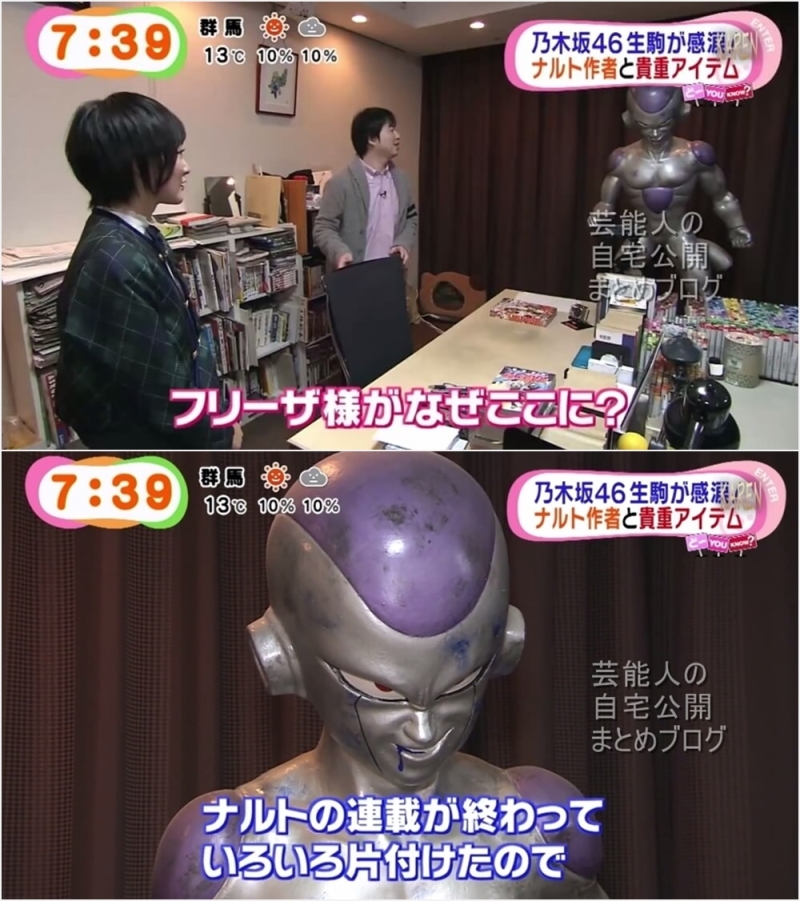
Masashi Kishimoto's most respected manga artist is Akira Toriyama, whom he calls a 'god-like existence.' He even has a life-sized Frieza statue in his studio... Image credit:芸能人の自宅公開まとめブログ
"Dragon Ball" features a boy in martial arts attire and a girl on a motorcycle, also a world blending fantasy and sci-fi. However, "Naruto" immediately presented readers with a much broader world setting from the outset. For a new manga artist, this approach isn't ideal, as your primary goal should be to first help readers understand the work's main theme and easily discover its appeal, thereby encouraging their support for every future serialized chapter. In that sense, quickly and directly diving into the story's core is the most reliable method; other world-building elements can be gradually filled in. Yet, Kishimoto, at 25, did the opposite. It seemed he already had the entire "Naruto" story clear in his mind. His urgency wasn't to make readers fall in love with him quickly, but rather to promote this fully formed and meticulously designed ninja world, which had taken shape in his mind, to all readers.
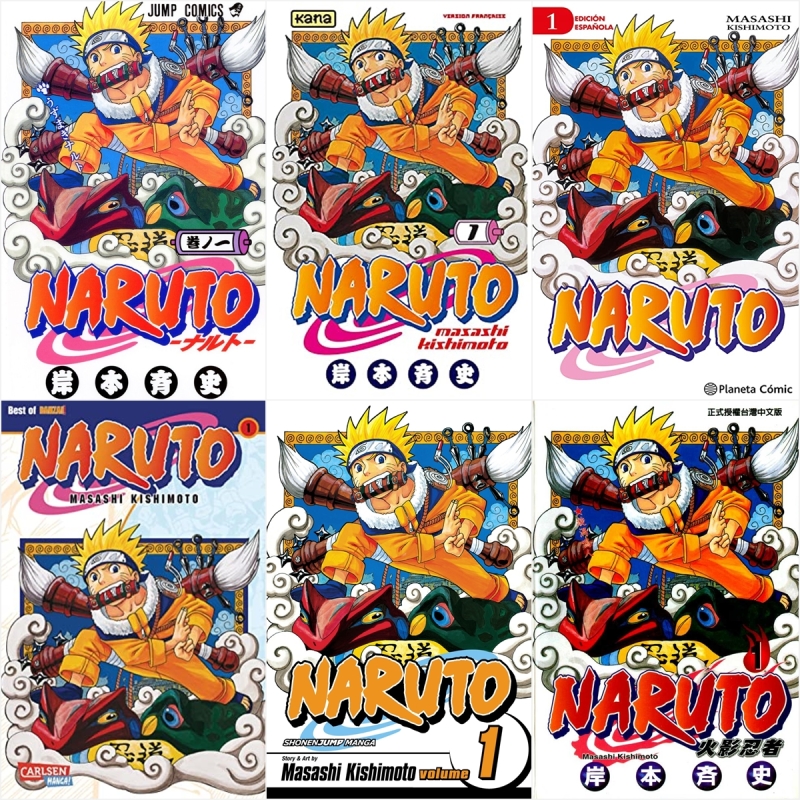
The first volume of "Naruto" was released on March 3, 2000. It was subsequently translated into various languages in over 60 countries worldwide, achieving astonishing success in the United States, France, and Germany. In the 2006 U.S. comic book sales charts, "Naruto" Volume 9 even surpassed Marvel's Spider-Man and DC's Superman to become the top seller. By December 2022, global sales had exceeded 100 million copies. Image credit:Amazon
This was not a conventional path, but it was the one Kishimoto chose. He didn't even follow "Dragon Ball's" "royal road," which saw Son Goku battle from jungles to evil organization bases, fighting relentlessly across the human, divine, and demonic realms. In the first chapter of "Naruto," we see Iruka-sensei bickering with Naruto, along with Naruto's inferiority complex about his origins, his longing for family, his regret over not being good enough, and his intense ambition... One could say "Naruto's" start was even somewhat slow, as it spent a significant amount of time building the interpersonal relationships and character development that "Dragon Ball" had largely forgone. Kishimoto, who couldn't yet claim much experience, was clearly making things difficult for himself.
But this was Kishimoto's "ninja way," the path he steadfastly followed for 15 years.
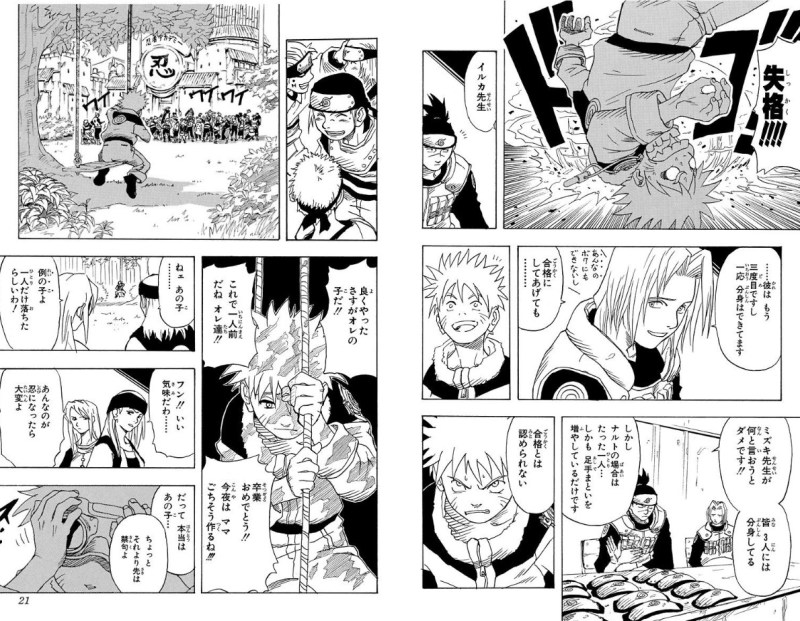
"Naruto" dedicated significant space to describing Naruto's inner world. Image credit:Sugiyama e-shop
This is a rare work from "Weekly Shonen Jump." We've all heard sayings like "the author grows with the work" or "the protagonist is a projection of the author's personality." However, examples like "Naruto," where the protagonist, Naruto Uzumaki, is entirely Masashi Kishimoto himself, and this principle is maintained for over a decade, are exceedingly rare. This requires the author's complete honesty; he must confidently project all his psychological traits onto the protagonist, not concealing his immaturity or recklessness, nor avoiding his mistakes. This carries high risks for creators, as external reactions often tempt you to modify your protagonist, making them more "mainstream" or "marketable." But Kishimoto was different; he truly "spoke his mind," allowing Naruto to become his own avatar in the book, steadfastly following his "ninja way."
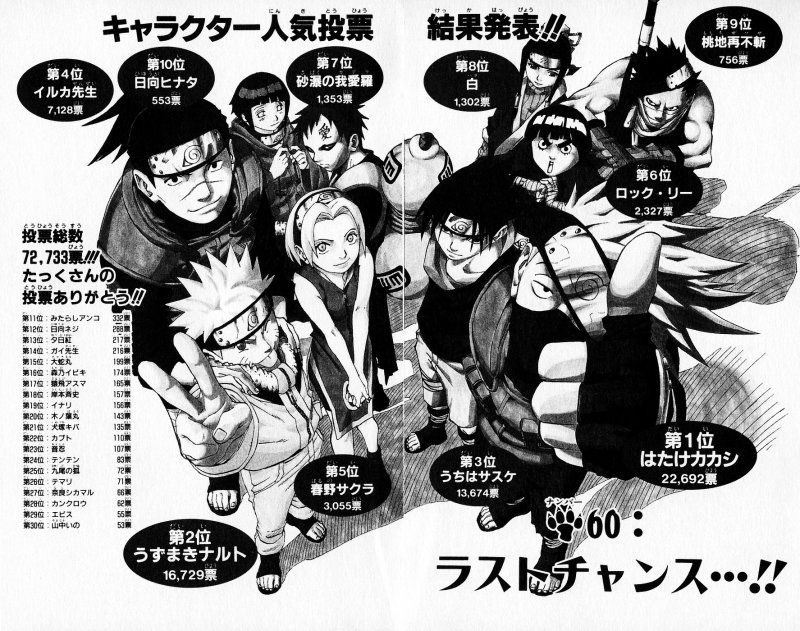
"For me, Naruto is very special. Many times when drawing him, I projected myself onto him, drawing based on my own feelings... So every time I saw the reader popularity polls and wondered, 'Why are Kakashi's votes always so high?' it would hurt my feelings (laughs)."
In the first popularity poll, Kakashi overwhelmingly surpassed the protagonist Naruto and his parental bond. Image credit:カモのなんでもランキング
To commit wholeheartedly and never retreat is a painful and difficult vow. Kishimoto, who was not in good physical condition, experienced numerous health problems when he first started serialization. It was common to be rushing deadlines while running a fever. He also experienced vomiting after eating anything, dehydration despite not exercising (due to excessive sweating during drawing and lack of water intake), insomnia, and severe headaches. Doctors explicitly told Kishimoto, "Your cells are dying," and advised him to rest properly... But he had finally reached the pinnacle of serialization, a dream for manga artists nationwide; how could he possibly stop and rest? Moreover, this deadline hell would be reborn every seven days, and he had to persist in drawing countless speed lines—of which there were many in the early chapters of "Naruto"—even while in pain and with a high fever.
But Kishimoto still adhered to his "speak your mind" ninja way, a path not easily understood by outsiders.
"Speaking my mind, that's my ninja way!" Image credit:Twitter
It was Kishimoto's first editor who requested leave for him. For Shueisha's editorial department, a rookie manga artist taking sick leave right at the start of serialization would significantly damage their reputation. Within the editorial department, rumors quickly spread, such as "the rookie is getting arrogant" and "if it's like this from the beginning, can it really be serialized for long?" However, this did not significantly affect the unconventional Kishimoto; on the contrary, it strengthened the relationship between Kishimoto and his editor.
The relationship between Sasuke and Naruto somewhat reflects the collaborative relationship between the editor and Kishimoto Image credit:WEBザテレビジョン
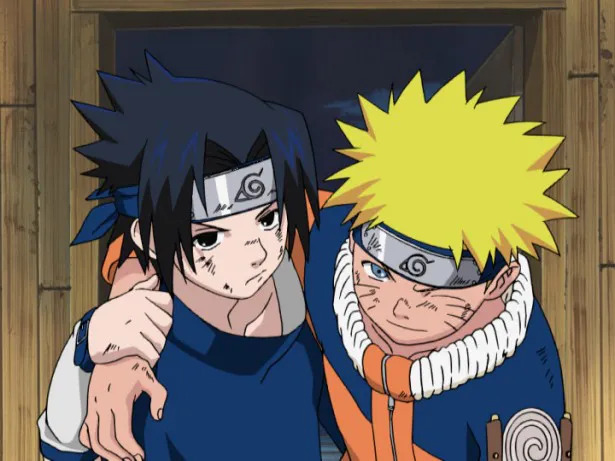
You can even see this depiction in "Naruto": Kishimoto's first editor-in-charge was the embodiment of Sasuke; the relationship between Naruto and Sasuke, and even other classmates, also reflected Kishimoto's relationships with other colleagues during serialization. In the past, we often saw editors being drawn by resentful manga artists as evil characters in their manga, then heavily mocked—the comical villain "Dr. Mashirito" from "Dr. Slump" is precisely the embodiment of Akira Toriyama's editor, the cool-headed and shrewd Kazuhiko Torishima.
"Naruto"'s first editor-in-charge, Kosuke Yahagi, was behind many interesting settings in "Naruto," including the addition of the character Sasuke, changing the original name "Kotaro" to "Gaara," "Momochi Momotaro" to "Momochi Zabuza," and changing his partner from a bear to a human (Haku), as well as systematizing the originally chaotic ninjutsu settings, among others. Image credit:電ファミニコゲーマー
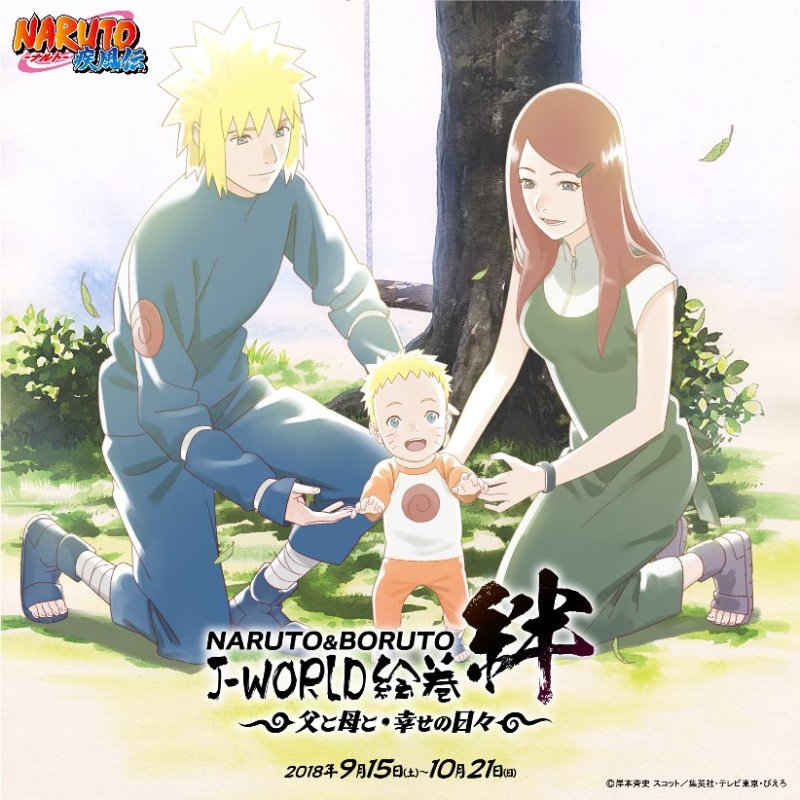
So, it doesn't really matter if readers don't love Naruto but only Kakashi, because loving "Naruto" is equivalent to loving Masashi Kishimoto himself entirely. He poured himself, his surroundings, and his values on all things into this manga. Kishimoto lost nearly 15 kilograms, practically sacrificing his body to this manga. Such examples are not uncommon in the independent publishing world, but it is extremely rare for even the mainstream commercial manga industry to operate this way. Kishimoto even incorporated his experiences of marriage and parenthood into the manga, making parent-child and family relationships one of the main themes of "Naruto." Among mainstream shonen manga, works that so strongly emphasize the bonds, sense of alienation, and responsibility of generational inheritance between parents and children are also rare—for shonen manga, parents and children are not important; comrades are. Don't forget that in the "Friendship, Effort, Victory" three principles... there are no words for "familial love."
Parent-child relationships are a key focus of this work. Image credit:Twitter
The unique aspects of "Naruto" don't stop there. When Naruto's mentor Kakashi was killed, facing the teacher-killing enemy Pain, readers naturally expected a fierce, emotional battle to follow... But that didn't happen. Naruto and Pain, surprisingly, reconciled through dialogue like mature adults. For shonen manga, this could be considered an extremely serious "taboo"—why no fight? That's what attracts readers to buy! There are quite a few such "anti-climax" examples, and even in the final conclusion of the entire series, during Naruto and Sasuke's ultimate showdown, dialogue occupied a very significant portion. For readers who loved last century's "fists instead of words" works like "Dragon Ball," "Sakigake!! Otokojuku," "Fist of the North Star," and "Kinnikuman," this was truly difficult to comprehend.
The final showdown, anticipated by fans for years, was commercialized as original artwork and became a super popular product. Image credit:ヤフオク!
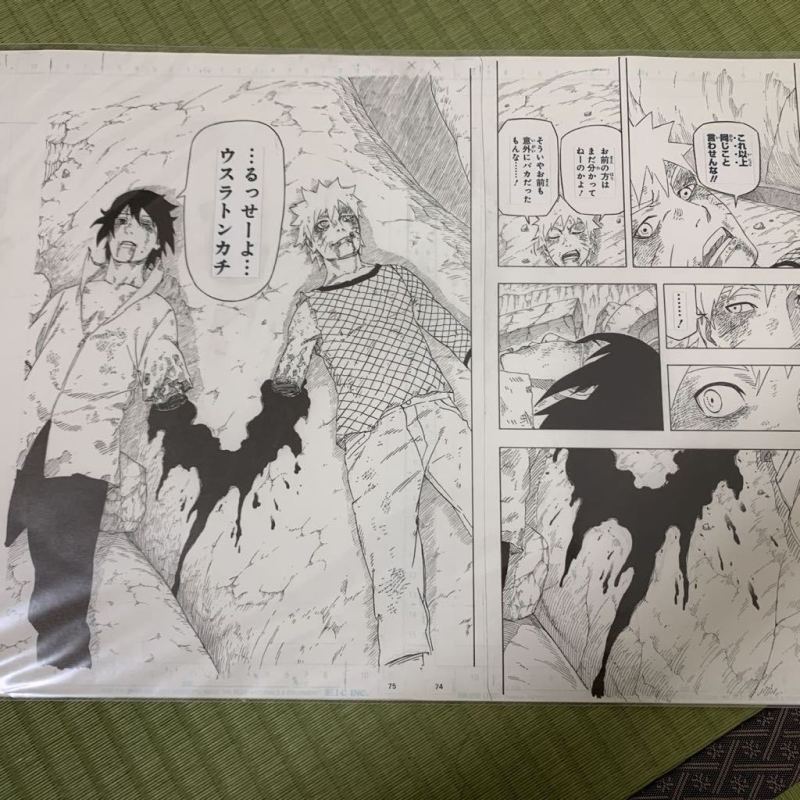
Ultimately, the ninjas depicted by Kishimoto differed greatly from the definitions in traditional ninja popular culture. The character "忍" (nin) no longer solely represented "hiding in the darkness" or merely a mental state of readiness required for assassination. Instead, "nin" became the waiting in darkness before embracing the light. Naruto's persistent pursuit of Sasuke is a form of "nin." He believed Sasuke could return to being the innocent child from Konoha Village over a decade ago, and did not believe Sasuke was a crystallization of negative emotions solely intent on destroying the world. And before he achieved his goal, he could endure, bear pain, and steel himself to make all sacrifices and contributions—you can imagine this also reflects Kishimoto's own attitude towards creating "Naruto." This "nin" is not about swallowing one's pride for the sake of peace, but rather a poised readiness before achieving the highest moral standard.
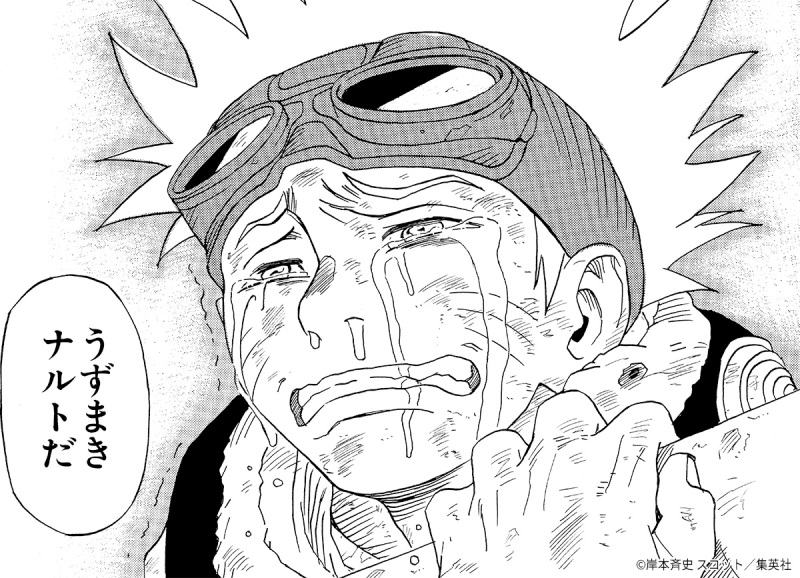
The close-up in the first chapter of the serialization was surprisingly the protagonist weeping profusely, rather than a victorious pose. Image credit:Twitter
"Naruto" has thus become one of the best-selling manga in the world. Beyond its sales, its influence is far-reaching, so much so that it can even be said that "Naruto"'s popularity within Japan is not as enduring as its long-standing popularity overseas. Many Hollywood stars and directors have confessed their love for "Naruto": actor Michael B. Jordan said the ending of "Naruto Shippuden" made him cry, and he even collaborated with the trendy brand COACH to release an entire series of Naruto T-shirts; John Boyega, who starred in "STAR WARS: The Force Awakens," quoted famous lines from "Naruto" on Instagram; ninja hand signs also appeared in the movie "Scott Pilgrim vs. the World"; there are countless videos on TikTok teaching "ninja run"; and among the "100 Japanese People Respected by the World" list compiled by the Japanese edition of "Newsweek," the only Japanese anime character selected was Naruto Uzumaki.
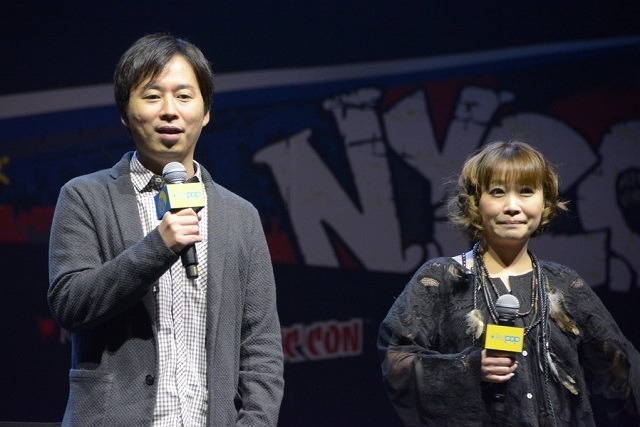
Kishimoto attending New York Comic-Con, with a queue stretching over 150 meters Image credit:アニメ!アニメ!
This is Kishimoto's Ninpo (ninja way). After 15 years and 700 chapters of serialization, his Ninpo has spread through various forms such as manga, video games, anime, novels, kabuki, and stage plays, forming a massive transmedia universe. Whether you like "Naruto" or not, you cannot ignore the immense impact it has had on the world. At the same time, one cannot overlook Masashi Kishimoto's perseverance, determination, and his unique Ninpo.