
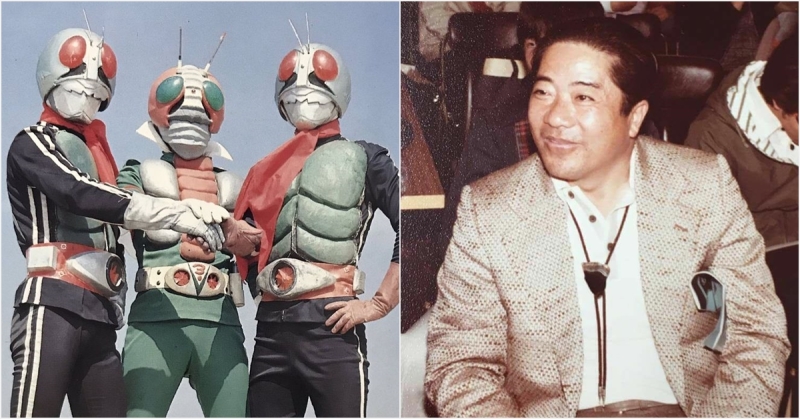
Shotaro Ishimori (later renamed Shotaro Ishinomori) once proposed that "manga" (漫畫) should be officially renamed "man-ga" (萬畫) (the two words are homophones in Japanese), because manga should be all-encompassing, capable of covering all art forms... On another note, Ishimori could indeed be called a "man-ga artist" because he created smash hits like "Cyborg 009," making him one of the hottest manga artists of his time, while also having to work on several different serializations... His agent had to allocate the master's time to different tasks every thirty minutes just to slightly manage Ishimori's workload – he is listed in the Guinness World Records as the manga artist who has "drawn the most different manga works," truly a genuine "man-ga artist."
Kamen Rider and Hurricane, the first "Kamen Rider" series began airing on TV Asahi in Japan on February 10, Showa 46 (1971). Image credit:1970年生まれ 男のロマンBlog
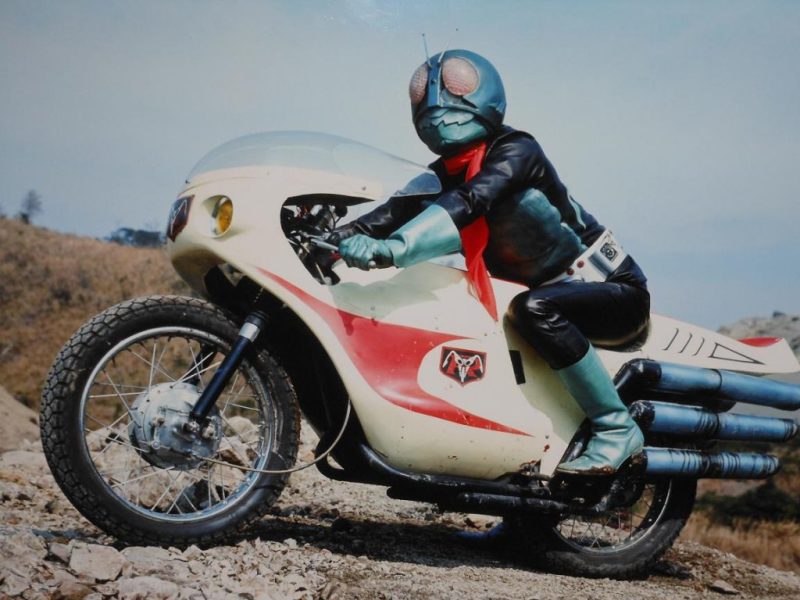
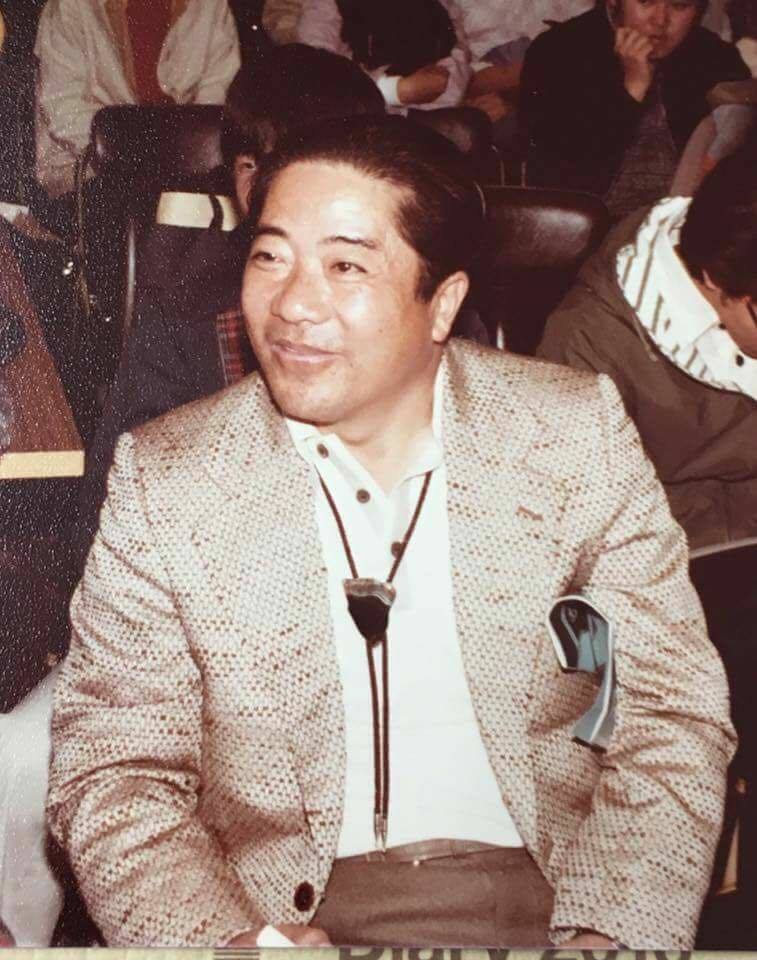
Among the more than seven hundred works by Master Ishinomori, "Kamen Rider" is certainly one of his representative masterpieces. However, the true architect who made "Kamen Rider" globally famous and synonymous with the unique audiovisual genre of "tokusatsu" was not Shotaro Ishinomori, but a gentle, unassuming producer, affectionately nicknamed "Crybaby" by his colleagues: the legendary producer Toru Hirayama, who produced numerous Toei superhero series. He transformed Kamen Rider from merely a costumed hero into a special character who responded to post-war Japanese social trends and redefined "justice." As director Hideaki Anno's new film "Shin Kamen Rider," a homage to the original "Kamen Rider" series, is about to be released in Taiwan, let us explore how Toru Hirayama produced this groundbreaking 1971 "Kamen Rider."
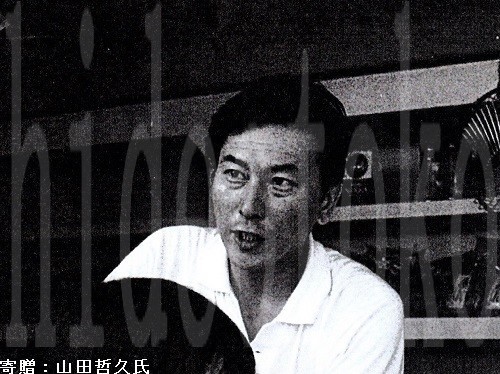
Legendary producer Toru Hirayama Image credit:Facebook
In 1964, Shotaro Ishimori began serializing the manga "Cyborg 009." From its inception, the story was designed to be exciting and popular with the masses, and it indeed became a huge hit. Two years later, in 1966, Toei Animation also sought to produce more commercially oriented (and profitable) animated films, leading to the release of the "Cyborg 009" movie adaptation. Many of Ishimori's works followed this successful formula of "manga becomes popular → adapted into film or TV series." Interestingly, however, "Kamen Rider" did not.
Shotaro Ishimori was not the sole initiator of this entire cross-media project spanning manga, animation, and live-action films. While he designed the Rider's appearance and many of the background settings were his ideas, he was more like one of the designers within this large-scale project. The leader overseeing this entire "Kamen Rider" cross-media plan was, in fact, the crying producer Toru Hirayama.
Toru Hirayama (right) and Shotaro Ishimori Image credit:Twitter
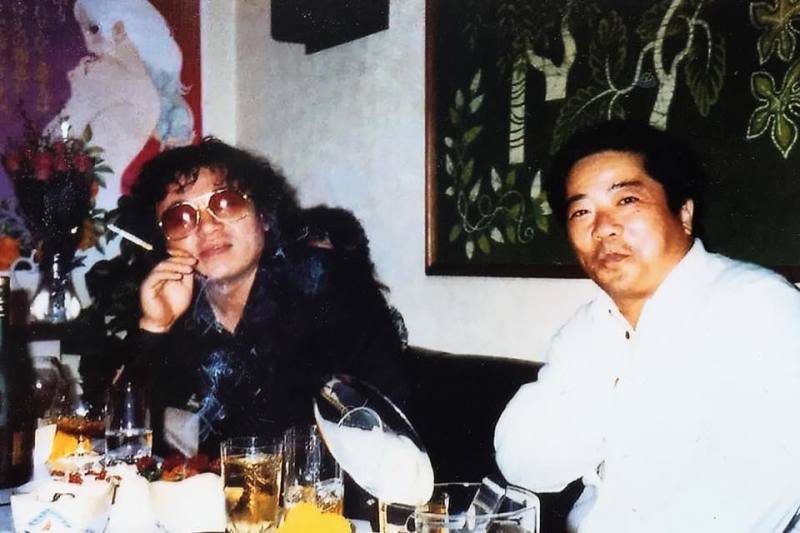
A producer is often the most ruthless person in the entire production team, as they must manage budgets, sometimes raise funds, and for this, they must humbly persuade investors. An overly emotional producer cannot play this money game well. Toru Hirayama worked at the large-scale Toei Company, where producers had to convince various departments and superiors to approve their projects, while also attracting corporate advertisers and coordinating all resources... Yet, Toru Hirayama was known to cry out loud during internal screenings, even at the ending of "Giant Robo" (ジャイアントロボ)... and cried so much that his colleagues rolled their eyes in disbelief. Could such a producer, whom even colleagues deemed unqualified, handle all the difficulties of the job... and even convince everyone to approve his new project?
It seemed highly unlikely, but in the book "The Men Who Created Kamen Rider," which describes the production process of the "Kamen Rider" series, Yusaku Uchida, the head of Toei Tokyo Production's Related Business Office, firmly believed that this senior, who often seemed to be bullied, possessed unlimited potential. Uchida, five years younger than Hirayama, was truly a man with a fierce drive; not only did his career advance faster than his senior's, but he never backed down from work – perhaps related to his director father, Tomu Uchida, who was full of leftist ideas. Uchida learned that the Mainichi Broadcasting System in the Kansai region wanted a new hero-type TV series, and he felt that this was an opportunity that Toei Studios, which had been struggling in recent years, absolutely could not miss.
Yusaku Uchida established Toei Ikuta Studio for the filming of "Kamen Rider," becoming its first director, responsible for managing all filming budgets, schedules, and director rotations. Image credit:此処にスタジオがあった頃
In 1970, Toei's "Toei Flyers" professional baseball team (the future Hokkaido Nippon-Ham Fighters) was embroiled in a match-fixing scandal. Toei, which excelled at period sword-fighting films in the 1950s, clearly struggled to adapt in the 1960s, with several films attempting to capitalize on the popular yakuza-style films of the era failing to break even at the box office. Toei was struggling financially and underwent internal restructuring. The new president even stated that Toei was now doing "everything except theft and fraud" to save the film company. For the tenacious Uchida, he set his sights on the opportunity of a TV superhero series, a genre completely different from Toei's DNA. Even though Toei no longer had a large budget and even its studios were dilapidated, he believed that in such a destitute environment, Toru Hirayama could still create a superhero unique to Toei.
Behind the Scenes of 'Kamen Rider' Image credit:evastore
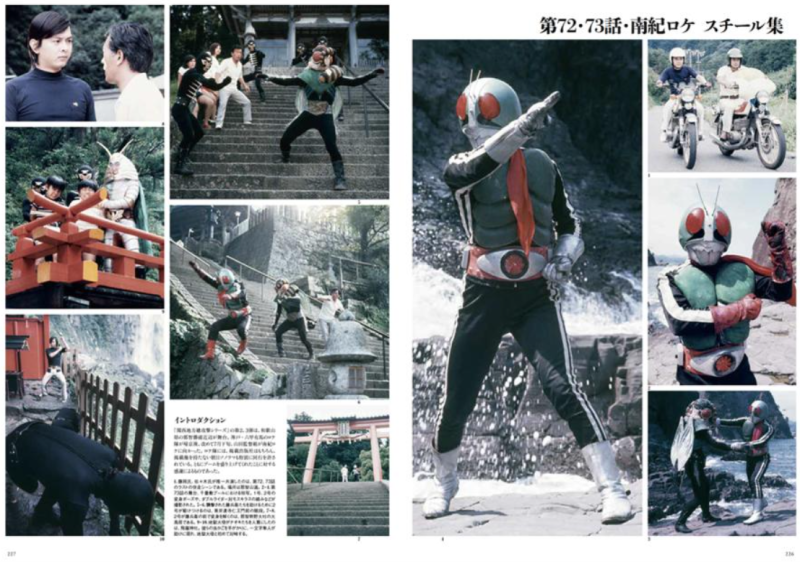
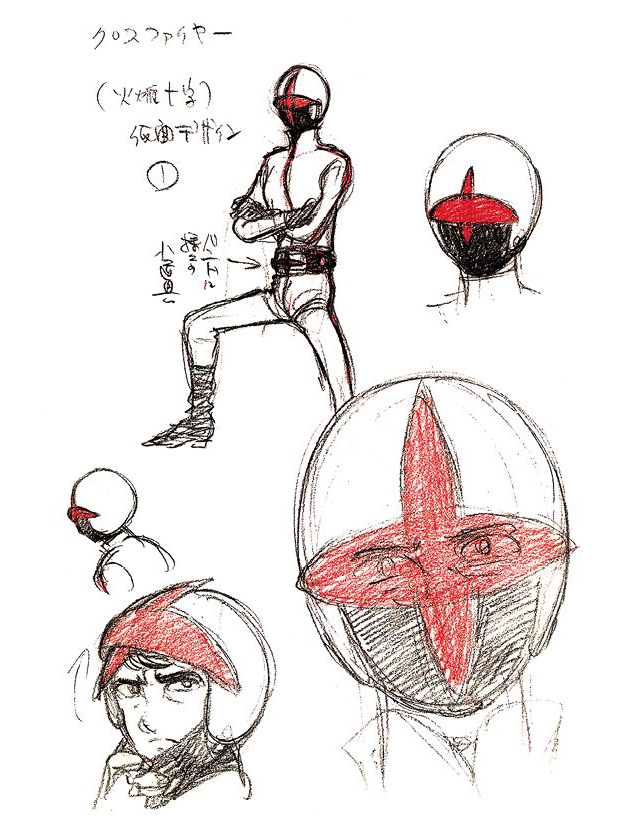
With nothing, everything had to be created from scratch, which seemed like a tall order (as many as 20% of Toei's producers voluntarily resigned in 1970). However, Hirayama successfully secured a 30-minute meeting with the master Shotaro Ishinomori. Based on Hirayama's concepts of "motorcycle" and "transformation," the master quickly sketched the superhero "Cross Fire," featuring a racing suit as its base and a cross-shaped visor on its helmet. This cool and handsome superhero filled everyone with confidence; department heads at Toei and executives at Mainichi Broadcasting all gave continuous praise, and it seemed the plan would proceed smoothly... But then, someone disagreed: Shotaro Ishinomori, who had quickly drawn Cross Fire, had a change of heart, thinking, "I don't want such a handsome guy."
The kanji is written as "十字仮面" (Jūji Kamen), but the pronunciation is Cross Fire (クロスファイヤー). Other proposed names included 『火焰十字(“十”字發音Cross)』, 『十字假面』 or 『Cross火面』...etc. Image credit:Pen Online
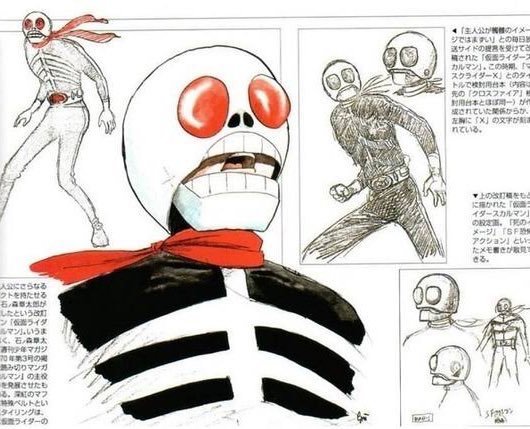
The manga master who drew the cool superhero had a change of heart; he didn't want to create a character commonly found in the market. Everyone wanted heroes to look cool and handsome, so he decided to do the opposite. If Cross Fire was a motorcycle-riding hero, and his helmet design made him a rare "round-headed" hero in the market, then Ishinomori believed he should seize this opportunity to design a new look that better suited the round-headed shape and would shock the market. Ishinomori recalled Hirayama and showed him the new sketches, which indeed shocked everyone: Cross Fire's helmet had now become a skull, with protruding large eyes, a row of exposed teeth along the lower edge of the helmet, and patterns symbolizing bones drawn on the all-black suit...
This was Shotaro Ishinomori's definition of the Rider, who was not yet called Kamen Rider at the time: this was a tragic protagonist burdened by resentment and hatred, whose hatred could not be extinguished even if his body turned to bone. He would crawl back from hell... to carry out his revenge in the form of a skeleton.
The skull rider, which terrified children, was rejected by Mainichi Broadcasting's Deputy Director of Sales, Hakozaki, who stated that 『a skull theme would cause problems for sales』. Image credit:Twitter
Let's rewind: Yusaku Uchida's job offer to his senior colleague Toru Hirayama was to produce a bright and cheerful hero series for the major television station Mainichi Broadcasting, one that children would love, much like "Ultraman" in the latter half of the 1960s—not some vengeful ghost from hell. No matter how Hirayama explained Master Ishinomori's creative vision, the expressions on the faces of Mainichi Broadcasting's executives were completely different from the joyful expressions they had when welcoming Cross Fire just a few days prior... This skull rider concept was rejected by both Toei and Mainichi Broadcasting, and Hirayama was caught in the middle, constantly communicating and coordinating between the master and the TV station, driving back and forth between Tokyo and Osaka almost non-stop...
Finally, both sides compromised. Shotaro Ishinomori retained the skull concept, but he adapted his original skull idea from the design of a locust in an insect encyclopedia; for the TV station, this perfectly aligned with children's fondness for insects. Based on the locust concept, Ishinomori and Hirayama began to flesh out the character's settings: Ishinomori, who loved nature, viewed the locust as an embodiment of nature, launching a counterattack against those who destroy the environment. And when Child of the Wind Ishinomori proposed "wind power" as the protagonist's power source, Hirayama came up with the idea of "a windmill on the belt" to "represent" wind power movement and the concept of the character's "transformation." Speaking of locusts, one must mention their amazing jumping ability... And for Hirayama, with a low budget, inexpensive equipment like trampolines could achieve amazing jumps on screen...
The secret of Kamen Rider's power. Is such a dangerous device as a nuclear reactor safe to place in the crotch area?... Image credit:Twitter
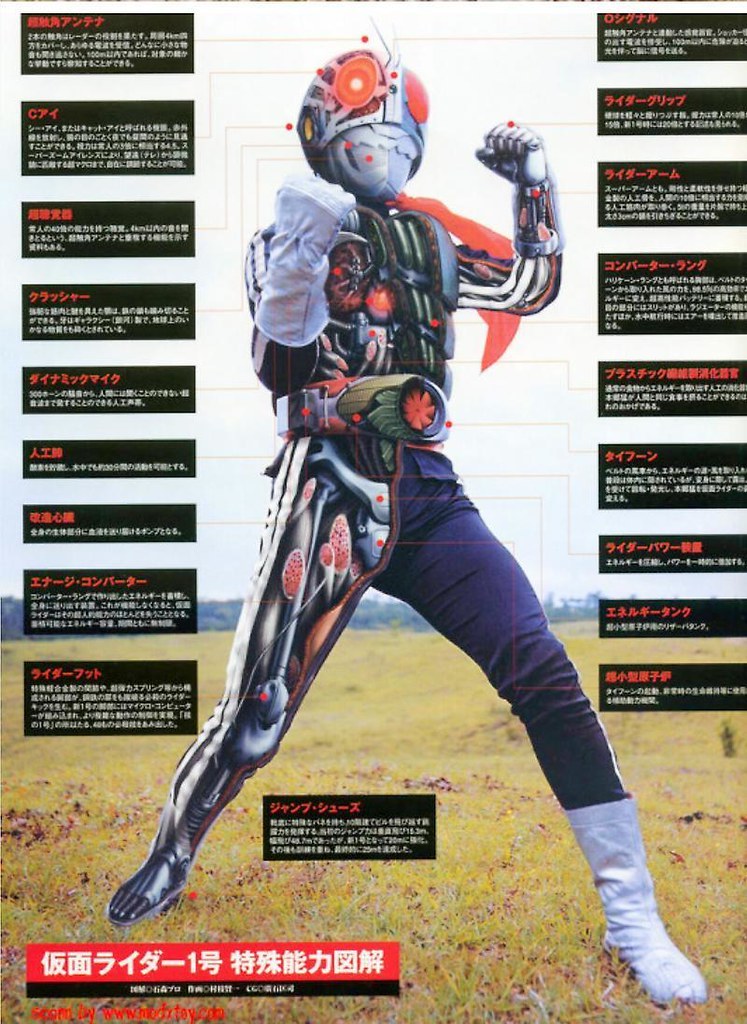
However, this only determined Kamen Rider's "form." What exactly was Kamen Rider's "soul"? This was the answer that Hirayama, as the producer, had to fully grasp before any of the crew members could figure it out.
This stemmed from Hirayama's "yearning" for heroes: During World War II, when mainland Japan was bombed, Hirayama was just a teenager. His father went to war, his younger sister was sent to the countryside for refuge, and under the national policy of student conscription, he also became a child soldier, tasked with digging air-raid shelters, assisting with evacuations, and clearing bombing sites. The Sumida River in Tokyo, where he once walked with his family, now flowed with countless charred bodies of those killed in the bombings. Hirayama Toru, terrified and weeping at this horrifying sight, had to pull bodies from the river with his comrades. He saw a mother, completely blackened, still tightly clutching her carbonized infant in the river. When his comrades tried to separate the two bodies, he rushed towards them, shouting, "You can't separate them!" and embraced the unfortunate mother and child.
Why were there no heroes to save us? Why did we have to bear the sacrifices of this war? Hirayama always fantasized about a man who would appear with the wind, fighting for the vulnerable and saving those who needed saving in this world. And now he had an opportunity to realize that dream: "Kamen Rider".
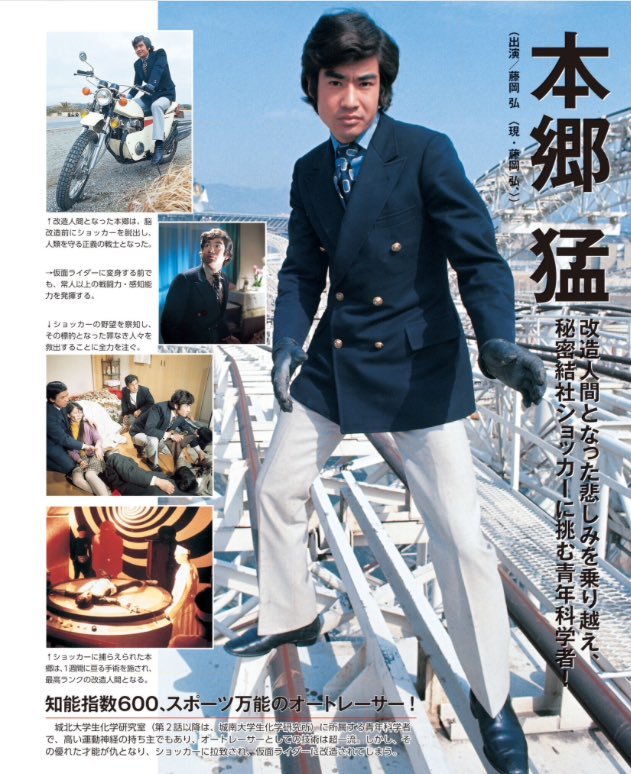
Hiroshi Fujioka plays a genius youth with an IQ of 600 and extraordinary physical abilities. Image credit:Twitter
The classic status of the "Kamen Rider" series stems from Toei's financial difficulties, Shotaro Ishinomori's excellent designs, and Toru Hirayama's efforts and vision. Due to Toei's lack of budget, the crew couldn't create elaborate miniature city models like Tsuburaya Productions did when filming "Ultraman". The Riders always fought villains in a dilapidated factory or a rocky wilderness; and the Rider's special moves were all simple punches, jumps, and flying kicks (euphemistically called "Rider Kick"). This might seem to contradict the industry's common knowledge that "higher budgets lead to higher quality," but the children watching television didn't think that way.
The Rider's settings and fighting style were so simple that children, who also had no budget, could easily imitate them. Wrap a red scarf around your neck, put on a helmet, and you'd look 50% like Kamen Rider; sprint, jump, and deliver a flying kick while shouting "Rider Kick" – this was much simpler than Ultraman's beam, which required a bit of imagination. The low budget of "Kamen Rider" actually brought the series closer to its young audience. Coupled with the dedicated performances of lead actor Hiroshi Fujioka and the stunt actors (from the renowned action group "Ohno Kenyu Kai"), the hand-to-hand combat between Riders and monsters looked exceptionally powerful at the time, making "Kamen Rider" more akin to a martial arts action series, perfectly aligning with the realistic fighting styles popular in contemporary film and television.
Shotaro Ishinomori's personally designed finishing move, the "Rider Kick," is listed by fans as one of the three essential Rider elements, alongside the belt and motorcycle. Image credit:Renote
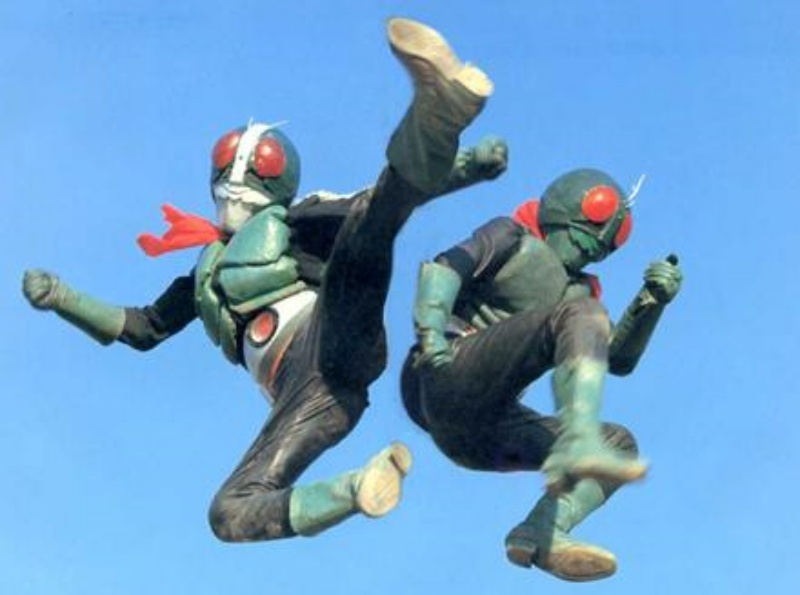
However, the on-screen tough guy Hiroshi Fujioka was so dedicated that he suffered an accident during the filming of a motorcycle scene for the tenth episode, resulting in a complex fracture of his left thigh. For an ongoing series, a producer should have made an immediate decision, fabricating an excuse to have another actor portray Takeshi Hongo (for example, Hongo was re-modified and forced to undergo cosmetic surgery). However, Toru Hirayama defied all opposition, insisting that Fujioka could not be replaced. Thus, even as the first episode of "Kamen Rider" was airing on television, Hirayama had already decided to introduce another protagonist, Hayato Ichimonji, to appear as "Kamen Rider No. 2" to fill the void left by No. 1's absence. And when the "immortal" Hiroshi Fujioka returned to the set for "Kamen Rider" Episode 40, the scene where Kamen Rider No. 1 and No. 2 appeared together on screen set an astonishing record, breaking viewership ratings of 30%.
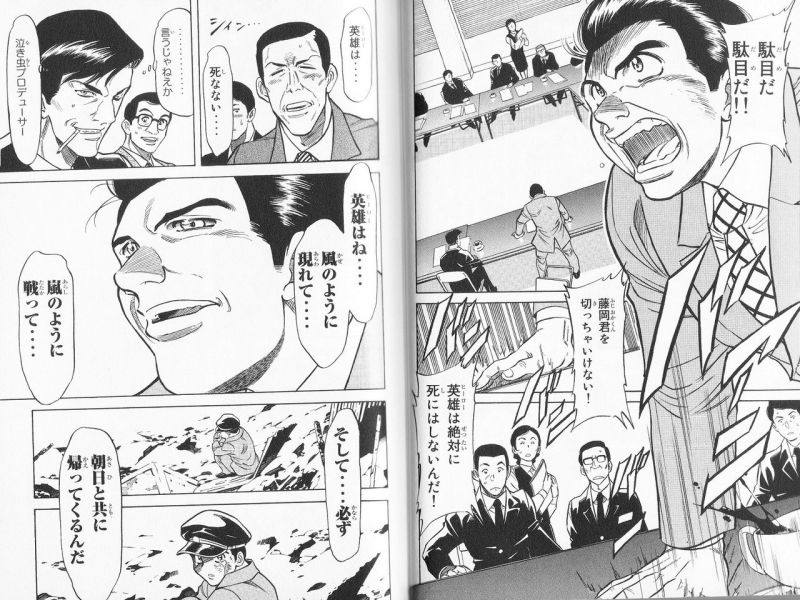
Toru Hirayama, who refused to recast and shouted "Heroes never die!" during a meeting. Image credit:蒼空になる疫病退散祈願
Hiroshi Fujioka recalled: "The accident caused filming to halt, and I brought a lot of trouble to everyone. When I heard people say, 'Fujioka can't make a comeback,' for a moment I thought, 'It would be better if I had just died in the accident.' But at that moment, Mr. Hirayama didn't kick me out of 'Kamen Rider'; instead, he encouraged me, saying, 'We'll get you back, heal quickly.' For me, who had already given up on life at that point, it was truly a ray of light. Those words gave me immense energy and supported my rehabilitation. Without that encouragement, the Hiroshi Fujioka of today would not exist."
"And when I returned to the set, Mr. Hirayama said, 'Seeing your heroic figure again truly brings tears to my eyes.' A lead actor suffering a serious injury is such a severe and worrying problem for a show's producer, but before I returned, the team, with the spirit of protecting 'Kamen Rider,' continued to work hard. This passion was ultimately conveyed to the children watching on television. It was then that I realized that when creating a work, the creator's will is the most crucial factor."
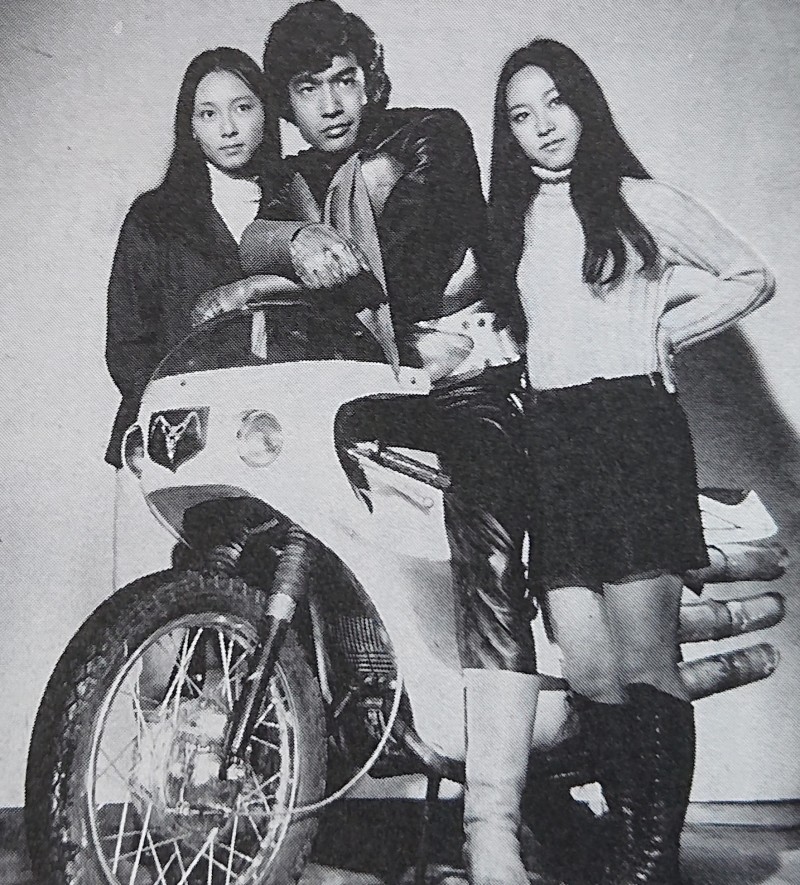
A very precious and rare promotional photo taken for the show, with Hiroshi Fujioka alongside Chieko Morikawa, who played Ruriko Midorikawa, and Yoko Shimada, who played Ruriko's classmate Hiromi Nohara. Image credit:Twitter
Encouraged by Hidenori Hirayama, the fiercely ambitious Yusaku Uchida eventually became the director of Ikuta Studio, the main filming location for "Kamen Rider." After producing "Kamen Rider V3" in 1974, he left Toei, and thereafter was unable to speak publicly about the "Kamen Rider" series. All of Toei's promotional materials at the time also avoided mentioning Uchida, leading to rumors among Rider fans that "Yusaku Uchida has passed away"; Hidenori Hirayama, on the other hand, continued to serve as the producer for subsequent "Kamen Rider" series until "Birth of No. 10! All Kamen Riders Assemble!" in 1984.
Hidenori Hirayama not only conceived the settings for the original Rider but also resolved the issue of Shotaro Ishinomori serializing "Kamen Rider" in "Weekly Shonen Magazine"; he cast many of the lead actors we've seen in "Kamen Rider" works; he persuaded corporations to advertise for "Kamen Rider"; he fixed scripts that were about to fall through... Hidenori Hirayama was essentially the true "Kamen Rider." A vast number of viewers are unaware of his efforts behind this series, but without his superhuman efforts, two or three times that of an ordinary person, this work could not have taken shape, nor could it have garnered such widespread audience affection. Ultimately, Hirayama realized his own dream: he was the wind-like hero who saved everyone.
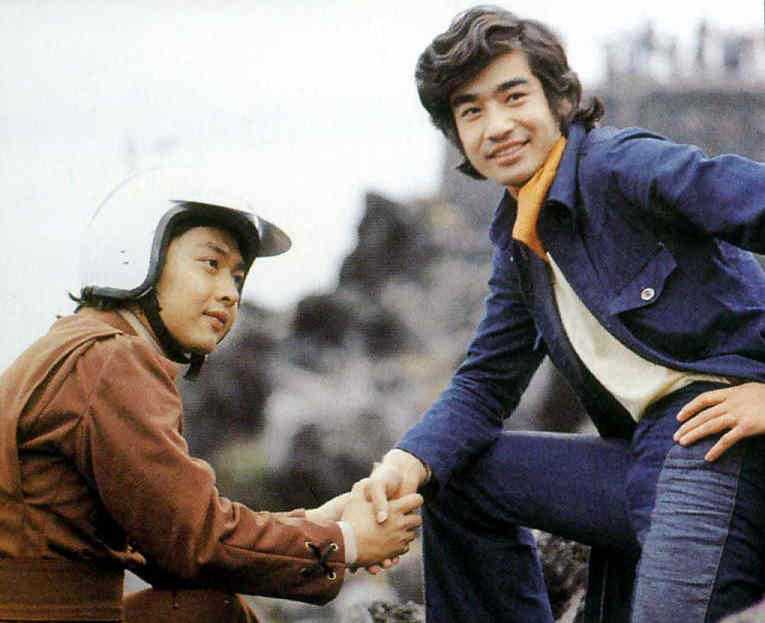
Kamen Rider No. 1 Takeshi Hongo (right) and Kamen Rider No. 2 Hayato Ichimonji (left) co-starring Image credit:マジン・ゴー!な日々
Low budgets created more realistic effects; period drama sword fighting, once considered outdated, was "repurposed" by "Kamen Rider" into the Rider's formula of fighting a hundred foes alone; martial arts performances, originally staged to raise travel funds for filming, evolved into the "hero show" spin-offs of future tokusatsu works. "Kamen Rider" is truly a work that rose from the ruins, symbolizing the changing of generations in Japanese cinema and simultaneously becoming a new revolution in the television industry. Its behind-the-scenes story is just as legendary as the righteous Riders on screen.