

AI's recent innovations have been grabbing global headlines, from image and video generation to smart conversations and document processing. More and more people are experimenting with this new tech, but it's also sparked a ton of debate.
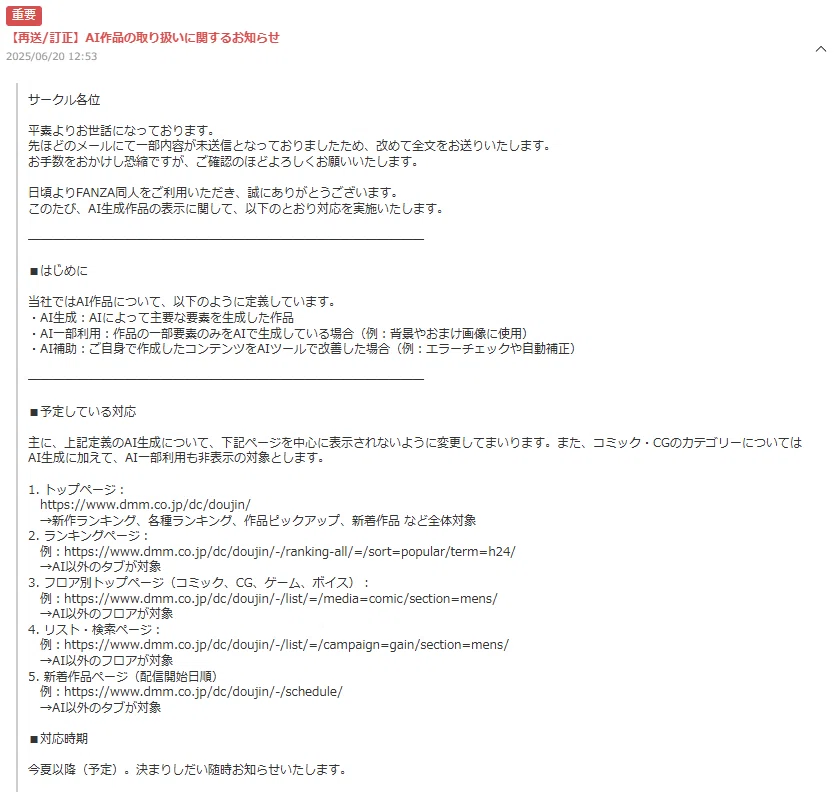
Japanese adult doujin platform "FANZA Doujin" just dropped a bombshell: starting in summer 2025, it's implementing a segregation policy for AI-generated doujin works, limiting their display. This move has ignited a firestorm of discussion online and prompted numerous creators and commentators to speak out.

According to FANZA's announcement, AI-related works will be split into three categories: "AI-Generated," "Partially AI-Used," and "AI-Assisted." Crucially, "AI-Generated" works will be yanked from prime visibility spots like the homepage, rankings, featured sections, and new releases. For some categories, like manga and CG, even "Partially AI-Used" works will be excluded from the main display.
While these AI works can still be listed for sale, they'll be confined to a dedicated AI section. This move is widely seen as a direct response to the recent flood of AI content, which has been squeezing out exposure for hand-drawn artists.
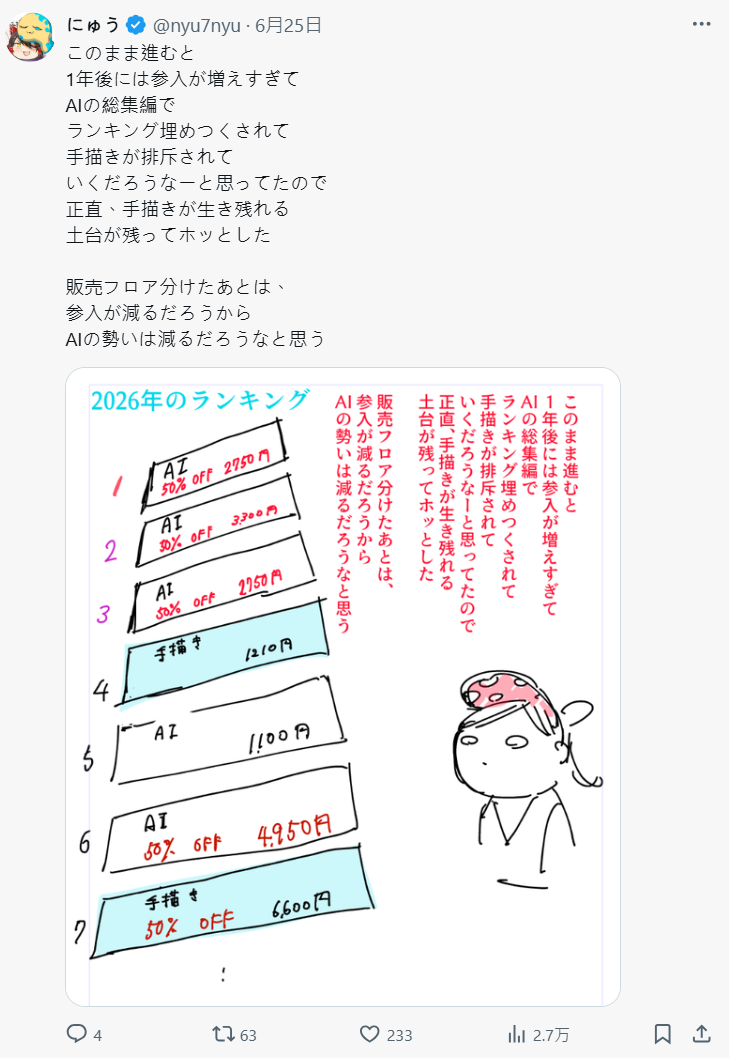
Many hand-drawn artists have chimed in. Illustrator "Nyuu" shared on social media that they'd long predicted AI creations would swamp the hand-drawn rankings within a year. Now that the platform is creating separate spaces, allowing hand-drawn artists to retain their footing, Nyuu admitted feeling "a sigh of relief." They also anticipate that once sales areas are segmented, the barrier to entry for AI circles will rise, and production volume will slow down.
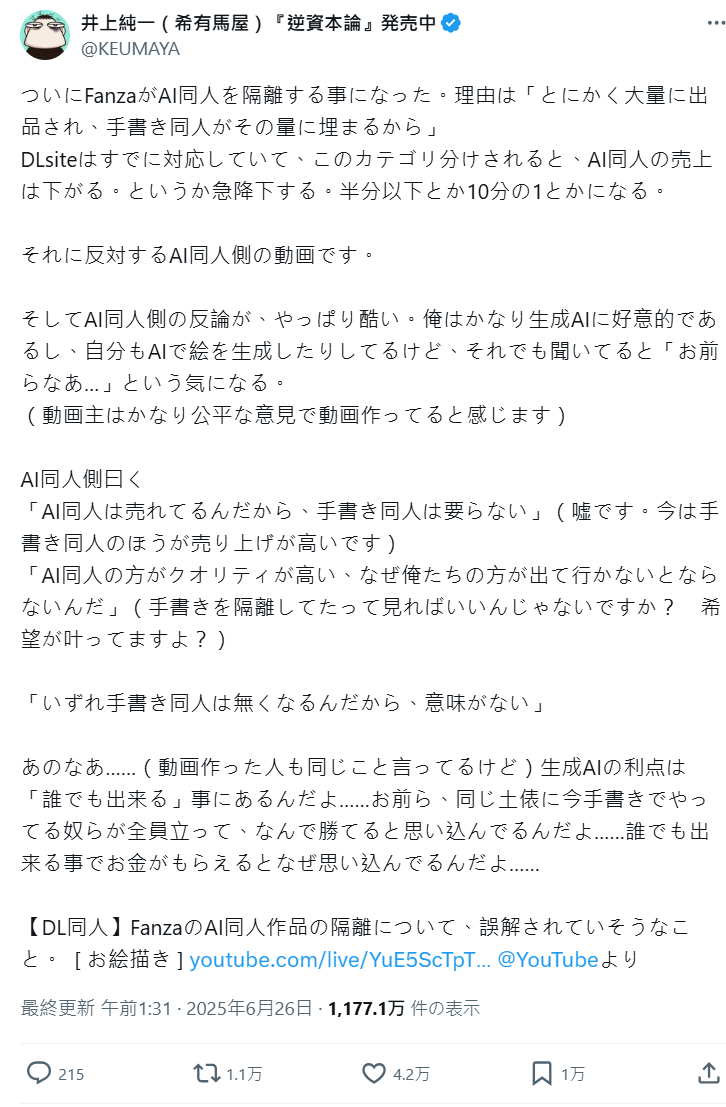
Manga artist Kiumaya (Junichi Inoue) also weighed in, stating that FANZA's action stems from an "overwhelming quantity of AI submissions with inconsistent quality," which has been burying hand-drawn doujin. He pointed to DLsite, which already implemented similar categorization, resulting in AI doujin sales "plummeting to half or even a tenth of their original figures."
As for the backlash from the AI creation camp, he didn't mince words, calling their arguments "absurd." Claims like "AI works sell better, so hand-drawn isn't necessary" or "AI quality is superior, why should we be excluded?" hold no water for Kiumaya. He fired back, "If everyone can make it, why should you be the one profiting from it?"
He further argued that AI's biggest advantage is actually "blending in with human hand-drawn art unnoticed," rather than existing as a standalone creative style. Kiumaya believes that if AI creators don't establish unique value, they'll ultimately struggle to survive.
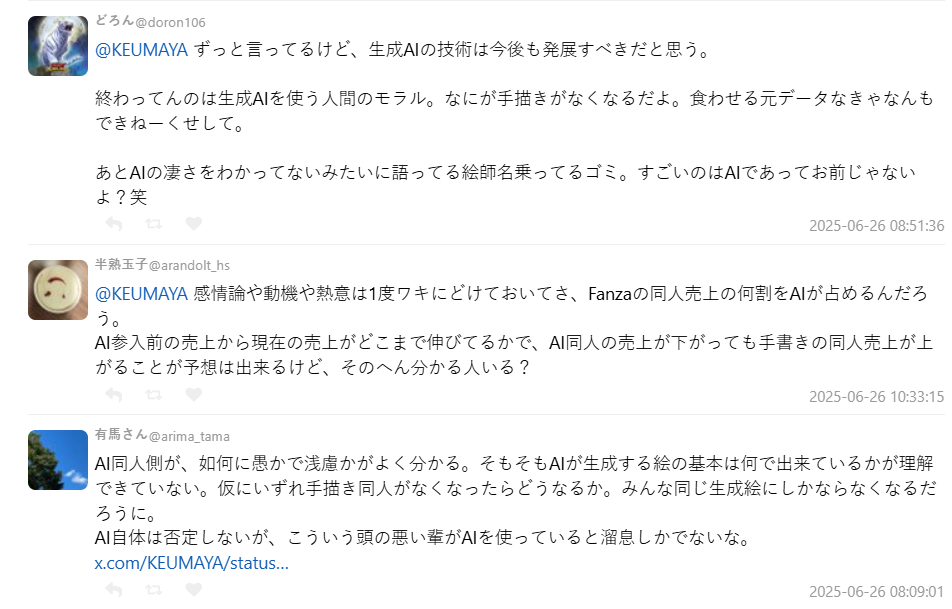
Beyond the tech and market angles, many comments zeroed in on creative ethics and user attitudes. One netizen lamented, "AI tech itself isn't the problem; human morality is." Others pointed out, "AI excels at mass production but can't replicate a creator's passion and intricate details."
Some even speculate that if AI continues to spread, consumers might just opt to generate images themselves with prompts, ditching finished products altogether – potentially phasing out current AI creators.
As generative AI tech matures, the creative market is undoubtedly in for another shake-up. While FANZA's "segregated display" isn't a ban, it signals the platform's commitment to content quality and fair exposure. The line between hand-drawn and AI might blur further, but the value and passion behind creation still can't be easily mass-produced.
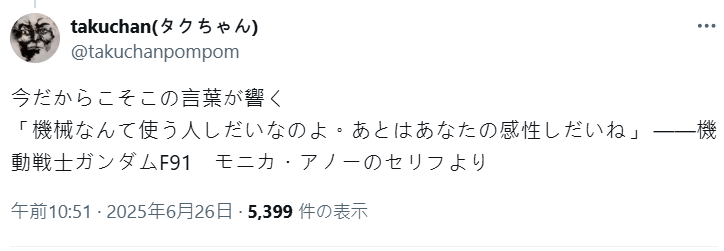
As one netizen quoted from "Mobile Suit Gundam F91": "How machines are used depends on the person; ultimately, it still comes down to your sensibility."
via: togetter