

Classic Studio Ghibli film Spirited Away has enjoyed enduring global popularity for years, even becoming a beloved favorite in the United States. Many believe this is due to the film's rich Japanese cultural elements, such as the bathhouse and character designs like Haku, which evoke a sense of "exoticism" for American audiences.
However, a recent post on Japanese X (formerly Twitter) shared a different perspective. After reading American critics' and actors' reviews of Spirited Away, a netizen realized that its appeal wasn't just about Japanese aesthetics, but rather its ability to help viewers "find parts of their own lives reflected in the story." This insight sparked a lively discussion among Japanese netizens.
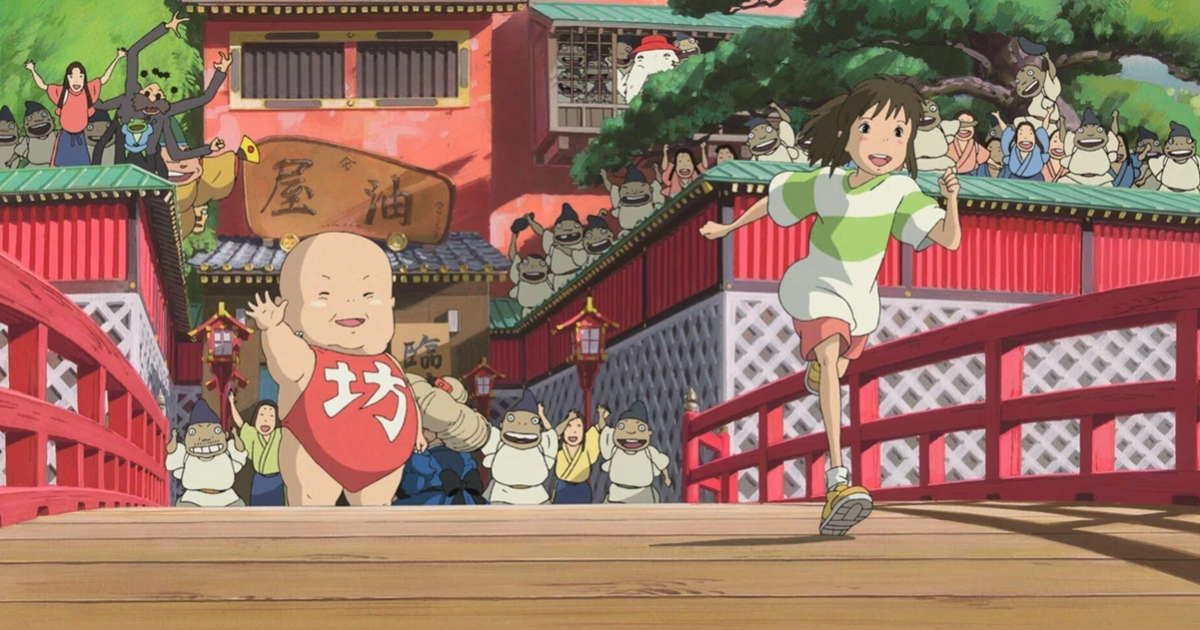
This discussion stemmed from The 21st Century's 100 Greatest Films list compiled by The New York Times, which invited over 500 directors, actors, and critics to vote on the best movies since 2000. Spirited Away naturally made the list, even being a personal favorite of actress & director Sofia Coppola. Other participants included horror master Stephen King, making the list a hot topic.
American actor John Turturro stated that Spirited Away resonates deeply because: "It's a movie that any child who has ever gotten lost in a department store or a crowd, unable to find their parents, can immediately connect with."
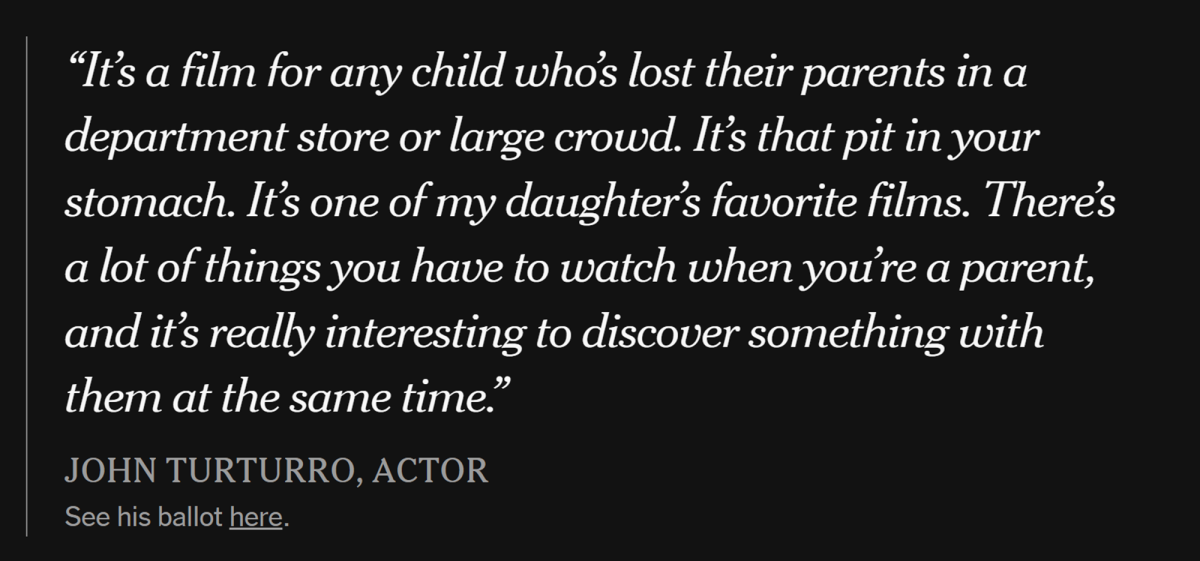
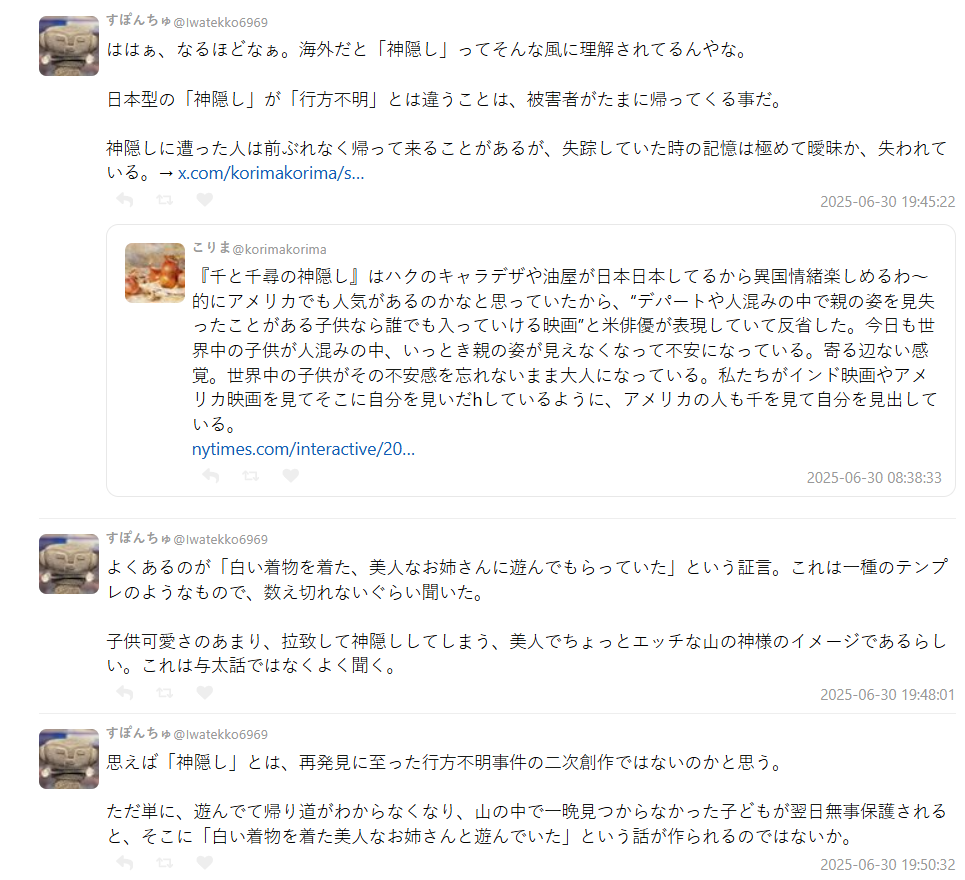
This quote deeply resonated with Japanese netizen Korima (@korimakorima), who posted on X: "I originally thought it was popular because of its Japanese visuals, but it turns out what truly moves people is that feeling of 'suddenly losing your anchor.' Every child in the world has experienced that fleeting moment of losing sight of their parents in a crowd, and we never truly forget that sense of unease, even as adults."
He believes that just as we often find parts of our own lives reflected in Indian or American films, Americans watching Spirited Away also find their own resonance within it.
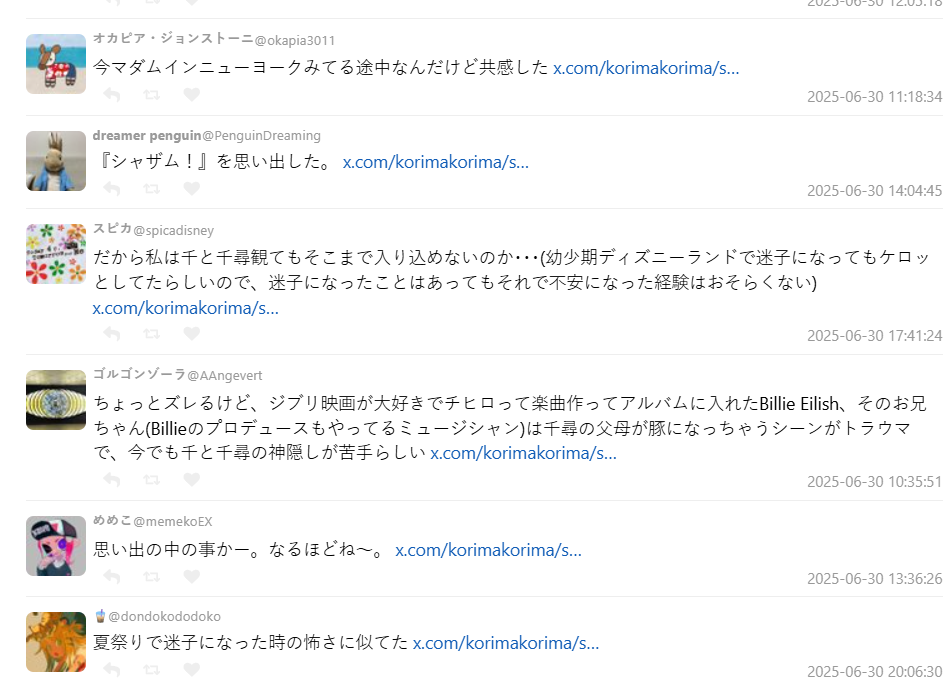
This post garnered widespread attention. Some shared memories of getting lost at summer festivals as children, still recalling the panic; while not everyone has had such an experience, the ability to empathize creates a powerful sense of immersion.
Other netizens pointed out that popular American singer Billie Eilish has openly expressed her love for Ghibli films and even wrote a song called "Chihiro" for her album. However, her brother and music producer revealed that he was terrified by the scene where Chihiro's parents turn into pigs when he was a child and still feels uncomfortable with the film to this day.
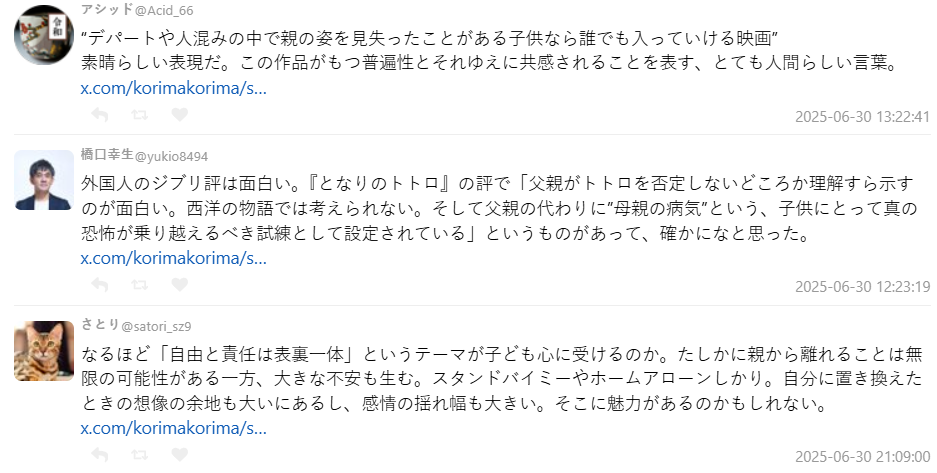
Other netizens suggested that Spirited Away captures the coming-of-age sentiment of "freedom coexisting with anxiety." Leaving the embrace of parents certainly symbolizes infinite possibilities, but it also comes with uncertainty and loneliness. This theme isn't unique to Spirited Away; classic American films like "Home Alone" and "Stand by Me" have also explored it.
Furthermore, some netizens expanded on the meaning of "Kamikakushi" (神隱), noting that in traditional Japanese belief, "Kamikakushi" differs from ordinary disappearance: those who are "Kamikakushi" sometimes return suddenly, but their memories of the vanished period are often vague. There's even a common saying about "being taken away to play by a beautiful white-clad woman," which some jokingly describe as a beautiful and mysterious mountain deity image, a common urban legend in Japanese society.
Spirited Away is more than just an animated film about a fantastical world; its global appeal stems from countless reasons. However, through American actor John Turturro's perspective, it truly touches upon a universal human memory—that moment of losing direction in a crowd, yet having to move forward.
This isn't just a Japanese story; it's an emotion understood by children worldwide. As one netizen said: "We were all once that child who couldn't find their parents in a crowd," which is perhaps a deeply relatable element.
via: togetter