

In the vast expanse of the DC Comics multiverse, there exists a sinister incarnation who is the polar opposite of Superman: Ultraman. This character, hailing from a parallel world, is the antithesis of the Justice League, often appearing as the leader of the Crime Syndicate.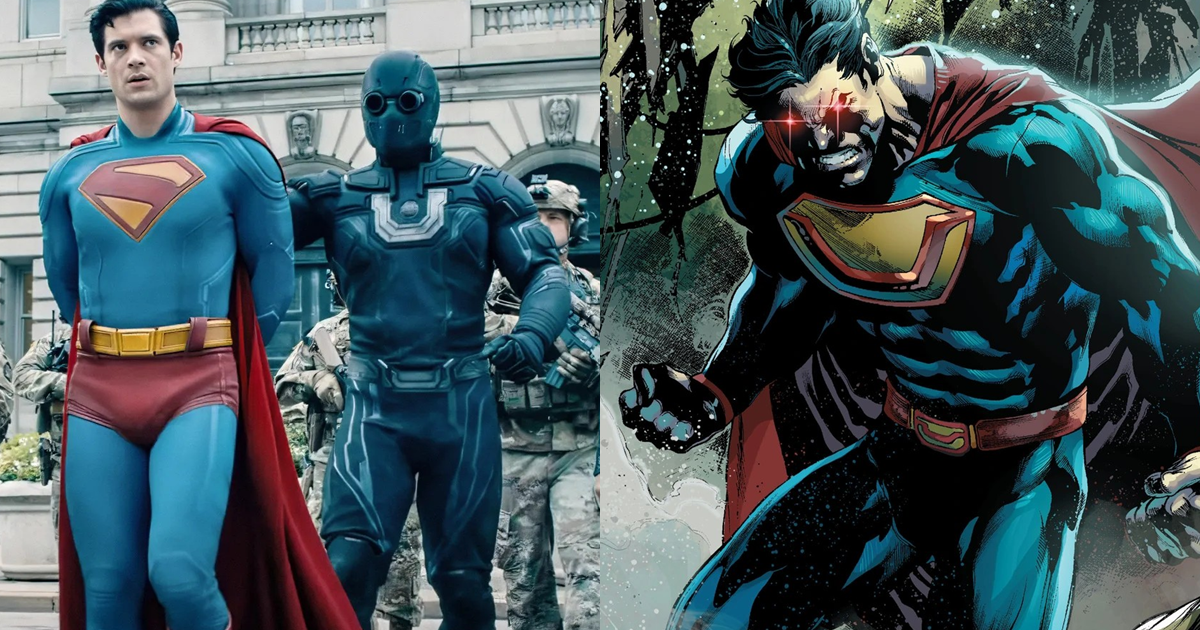
He not only possesses power comparable to Superman's but also represents a twisted "might makes right" ideology. This article will provide an in-depth look at Ultraman's background and origins, his first appearance and creators, key storylines, his relationship and contrast with Superman, his personality and motivations, and his overall impact and role within the DC Comics universe.
It's crucial to note that Ultraman is not a single, monolithic character. As the DC Comics continuity has evolved, several versions have appeared across different universes and eras, including the original Earth-3 version, the Post-Crisis incarnation, and the reimagined Ultraman of The New 52 era.
Before "Crisis on Infinite Earths"
Ultraman first appeared on DC's "Earth-3," a world with a reversed moral compass where evil reigns supreme and good is a rarity. The Ultraman of Earth-3 was conceived as Superman's evil mirror image. Like Superman, he was originally from Krypton, but in this universe, Krypton "never exploded." For reasons unknown, he was sent to Earth anyway.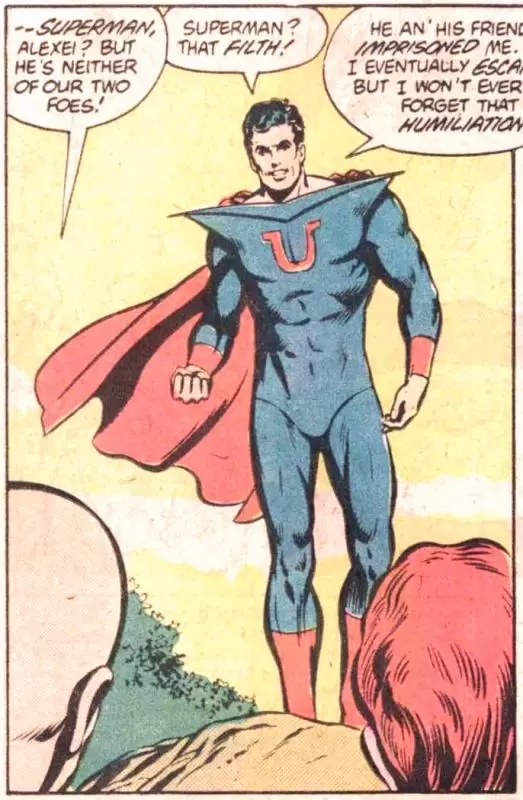
During his journey to Earth, the infant encountered Kryptonite for the first time, and its radiation began to alter him, granting him astonishing superpowers. Contrary to the Superman we know, Kryptonite was not only harmless to Ultraman but was, in fact, the very source of his power. The initial concept was that each exposure to Kryptonite granted him a new superpower. This was later adjusted, establishing that Ultraman needed constant exposure to Kryptonite radiation to maintain his strength.
After growing up on Earth, he crowned himself "Ultraman" and embarked on a path of conquest and destruction. His immense power made him nearly invincible, allowing him to conquer his world and assemble four other evil super-powered individuals to form the infamous "Crime Syndicate." Besides Ultraman, the group included Owlman (Batman's counterpart), Superwoman (Wonder Woman's), Johnny Quick (The Flash's), and Power Ring (Green Lantern's).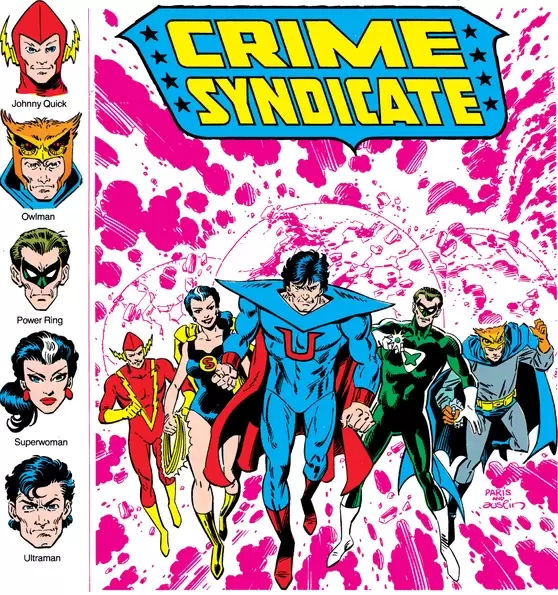
Post-"Crisis on Infinite Earths": "JLA: Earth 2"
In 1985, DC Comics' first major event, "Crisis on Infinite Earths," completely reshaped the DC multiverse and, with it, Ultraman's existence. During the event, the Anti-Monitor systematically destroyed parallel universes, and Earth-3 was one of the first to fall.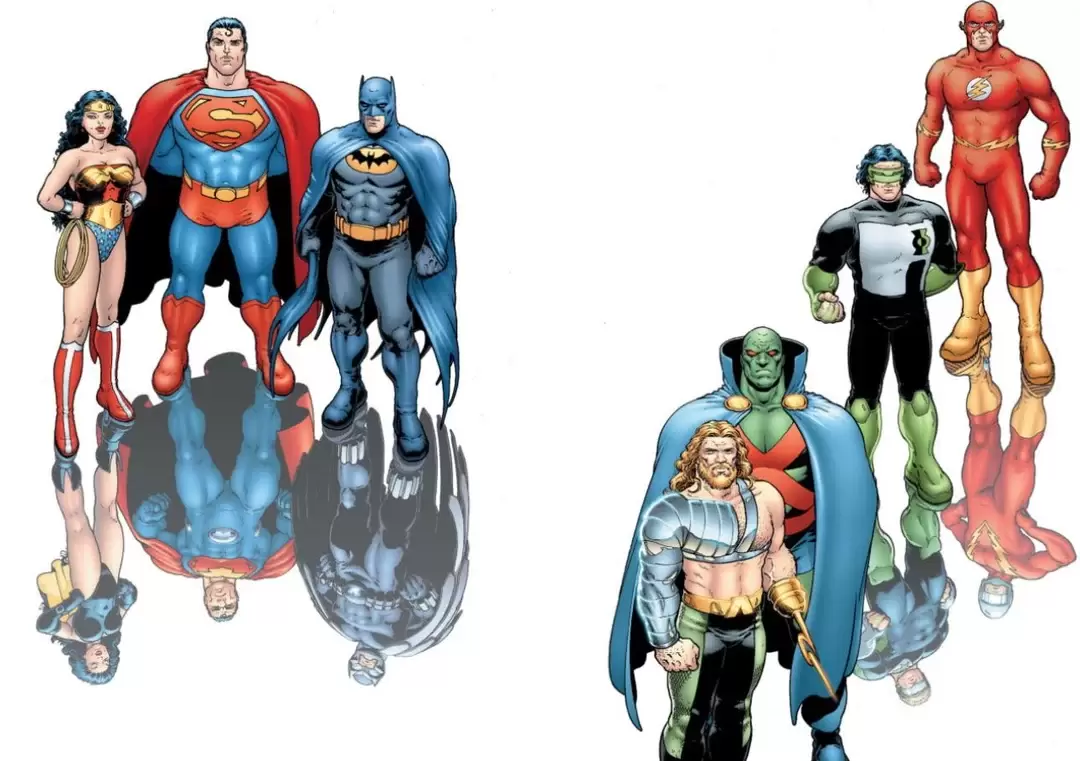
At the time, Ultraman led the Crime Syndicate in a futile attempt to resist the relentless anti-matter wave. In a final, defiant act, he charged headfirst into the wave that was annihilating his planet, choosing to fight until the very end and perish along with his entire world.
Although Earth-3 ceased to exist in the restructured universe and the original Ultraman was erased from history, the concept of the character did not disappear.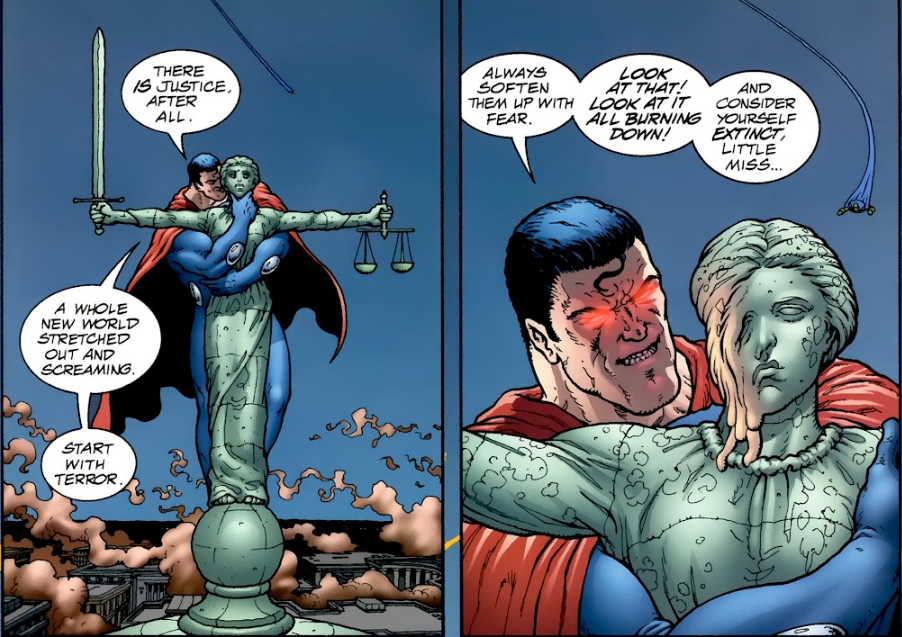
In subsequent stories, DC found new ways to introduce an evil Superman. In the Post-Crisis era, an Antimatter Universe version of Ultraman emerged. The 2000 graphic novel "JLA: Earth 2" provided him with a richer backstory. This version was a human astronaut named Clark Kent from the Antimatter Universe.
During a space accident, Kent's ship was pulled into another dimension where an alien race attempted to save him by reconstructing his body. The process resulted in a mentally and physically twisted super-human. This Antimatter Ultraman also possessed powers similar to Superman's, but his strength was derived from a substance called "Anti-Kryptonite."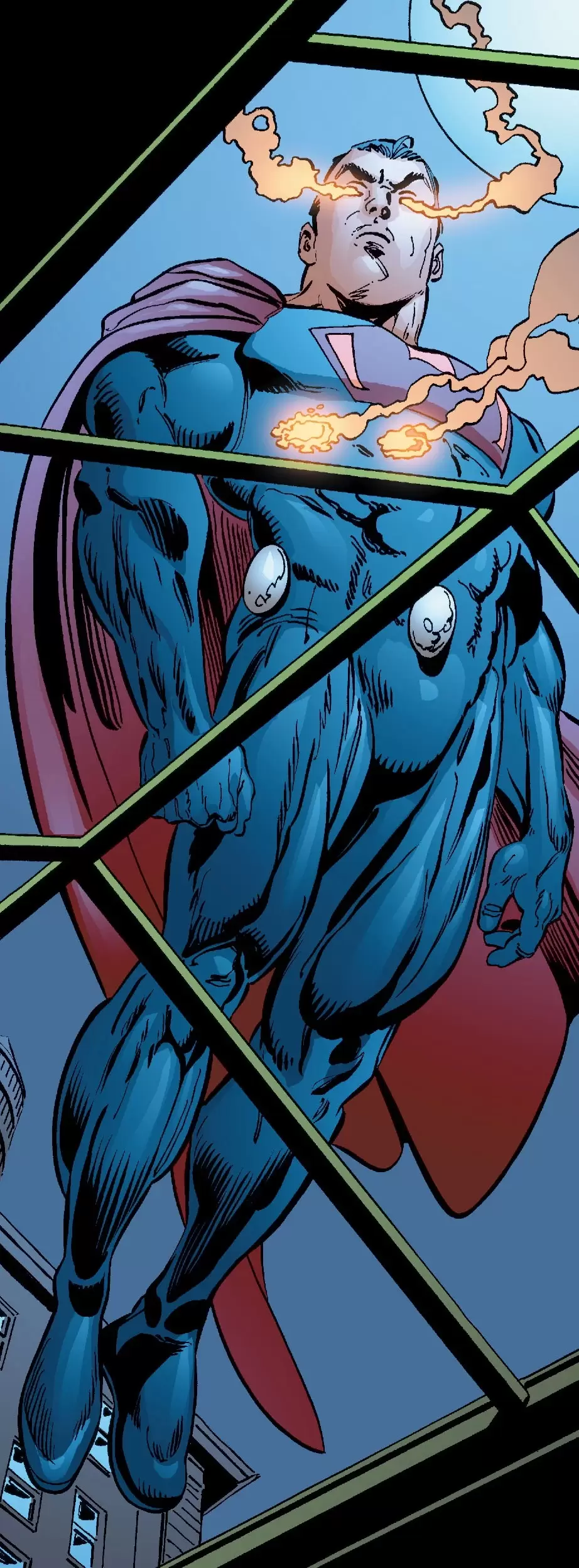
Consequently, if this Clark Kent stayed away from Anti-Kryptonite for too long, his powers would weaken. Conversely, regular green Kryptonite had no effect on him whatsoever, a clever setup that highlighted the mirror-like relationship between the two characters.
Furthermore, this version of Ultraman maintained a public identity as Lieutenant Clark Kent and was even married to his world's Lois Lane (who was also Superwoman). However, Superwoman's affair with Owlman meant Ultraman was constantly being cheated on, creating a tense and hostile dynamic among the trio. Despite this, he remained the team's leader, his personality defined by paranoia and tyranny.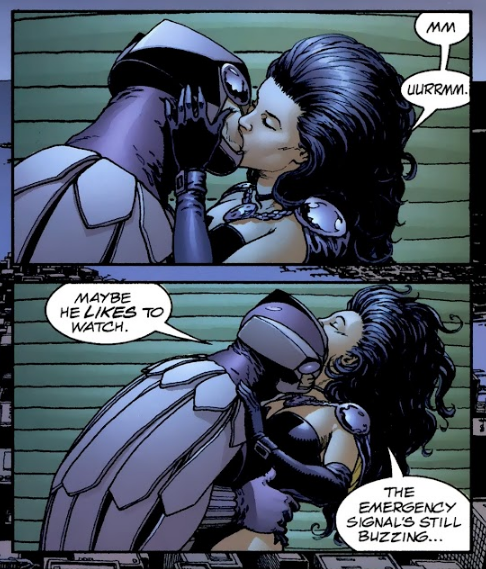
The Post-Crisis era featured other appearances related to Ultraman. For instance, in storylines like "52" and "Countdown Presents," a new Earth-3 was introduced, home to the "Crime Society of America," where Ultraman and his counterparts appeared and became embroiled in multiversal conflicts. However, these versions often made brief appearances before being wiped out in another cosmic catastrophe.
The New 52 Era
In 2011, DC Comics launched a major reboot dubbed "The New 52," which brought back the classic Crime Syndicate with a new look on a reimagined Earth-3. Naturally, Ultraman's origin story was significantly revised.
This version of Ultraman was named Kal-Il (a parallel to Superman's Kal-El), and his parents, Jor-Il and Lara, were cold and selfish Kryptonians. When their planet faced destruction, Jor-Il and his wife were determined to ensure their son would be the sole survivor.
They sent the young Kal-Il to Earth-3 in a rocket, instilling in him a brutal philosophy before he departed: he was to one day seek revenge on the entity that destroyed Krypton, and on his new world, he must "either be the strongest or die. There is no other choice." As one can imagine, Kal-Il was groomed from the start to be an extreme social Darwinist.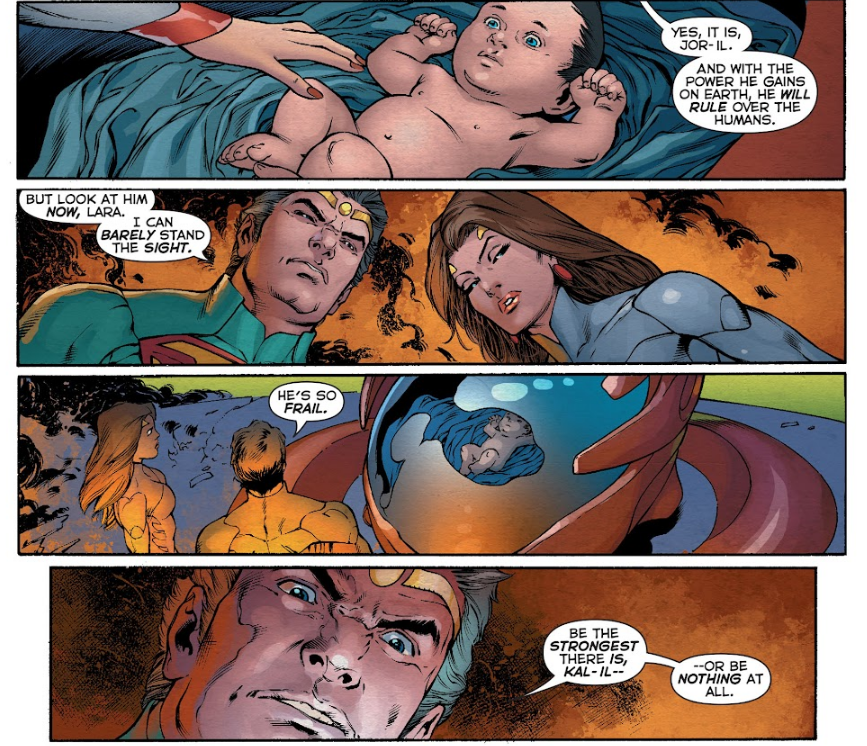
Upon arriving on Earth-3, the rocket landed in Smallville, Kansas, but instead of the kindly Kents, Kal-Il was found by a degenerate, drug-addicted farming couple. The young Kal-Il immediately used his power to force the couple to take him in. After chewing on Kryptonite fragments from his ship's wreckage, his first act was to sever Jonathan Kent's hand with his heat vision as a threat, forcing the terrified couple to raise him.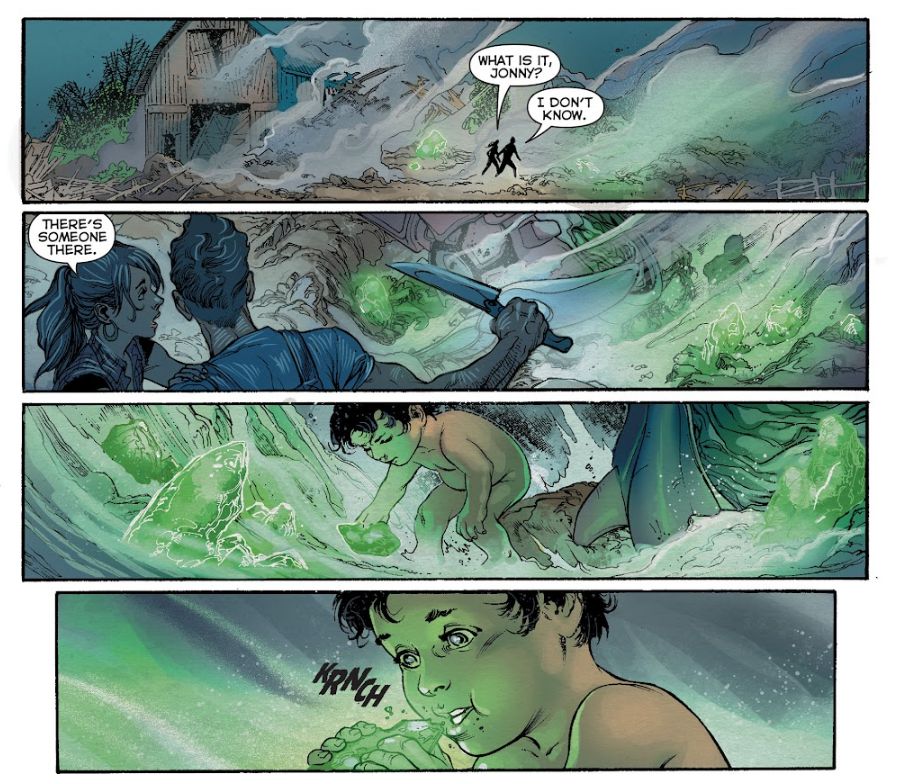
However, by the time Kal-Il turned seven, he decided his adoptive parents had outlived their usefulness. He murdered them in cold blood and burned down their farm. From that day forward, nothing could restrain the child as he descended further into a dark future.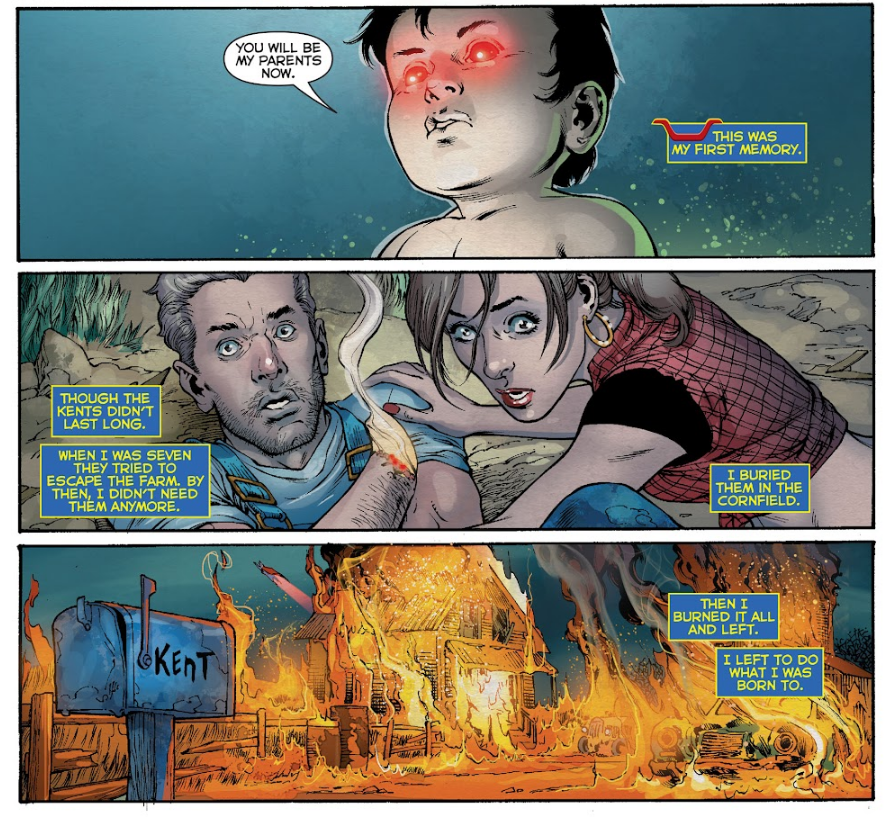
As an adult, Kal-Il took the name Ultraman and began a bloody conquest of Earth-3. In the process, he assassinated the President of the United States, subjugated a cowardly Hal Jordan into becoming the evil Power Ring, and established a new Crime Syndicate.
This Syndicate's lineup was similar to the Silver Age version, including Ultraman, Owlman, Superwoman, Johnny Quick, and Power Ring, but also featured new members like Grid (Cyborg's counterpart) and Atomica (The Atom's).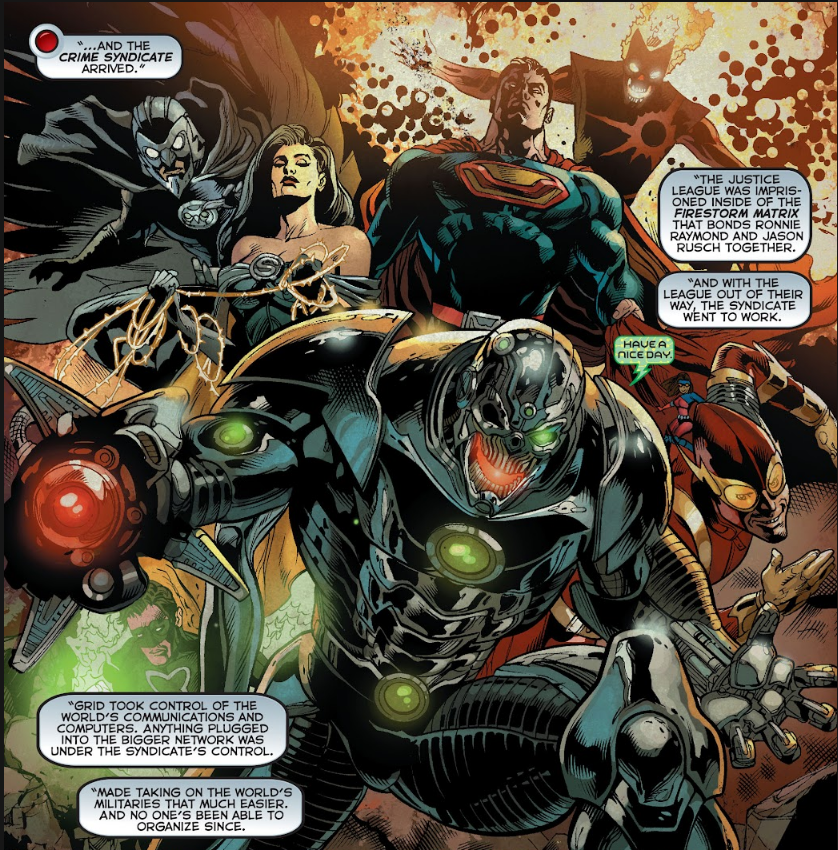
During his brutal reign, Ultraman was haunted by the threat that destroyed his homeworld. The Anti-Monitor finally arrived and launched a devastating attack on Earth-3. Facing the collapse of his reality, Ultraman led the surviving members of the Crime Syndicate through a dimensional portal to escape to the main DC Universe.
The New 52 Ultraman was characterized as more cruel and radical than previous versions. He was depicted as a violent, homicidal megalomaniac who championed elitism and the law of the jungle, viewing compassion and altruism as worthless weaknesses.
He despised all so-called "good" qualities and saw the weak as objects to be enslaved or eliminated. This pathological worldview stemmed from his parents' indoctrination and was nurtured by the unforgiving environment of Earth-3, where the weak could not survive.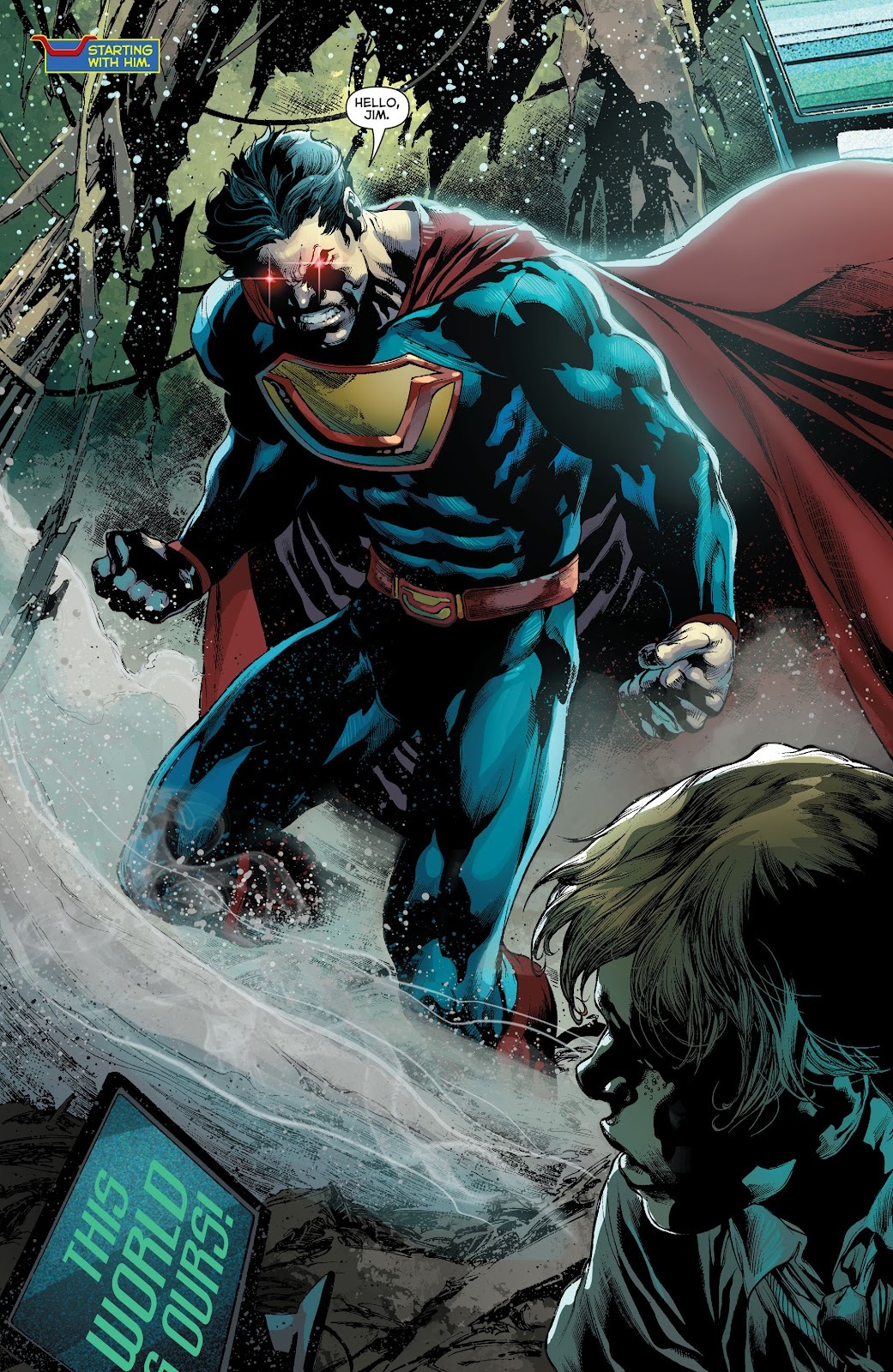
In terms of abilities, The New 52's Ultraman possessed the typical Kryptonian powerset: super-strength, invulnerability, flight, super-speed, heat vision, x-ray vision, and freeze breath.
However, his power source and weaknesses were the inverse of Superman's. Ultraman did not draw energy from the sun; instead, he absorbed radiation from green Kryptonite. He could even crush Kryptonite rocks with his bare hands and snort the powder like cocaine to boost his strength. Thus, the substance lethal to Superman was an essential "drug" for Ultraman.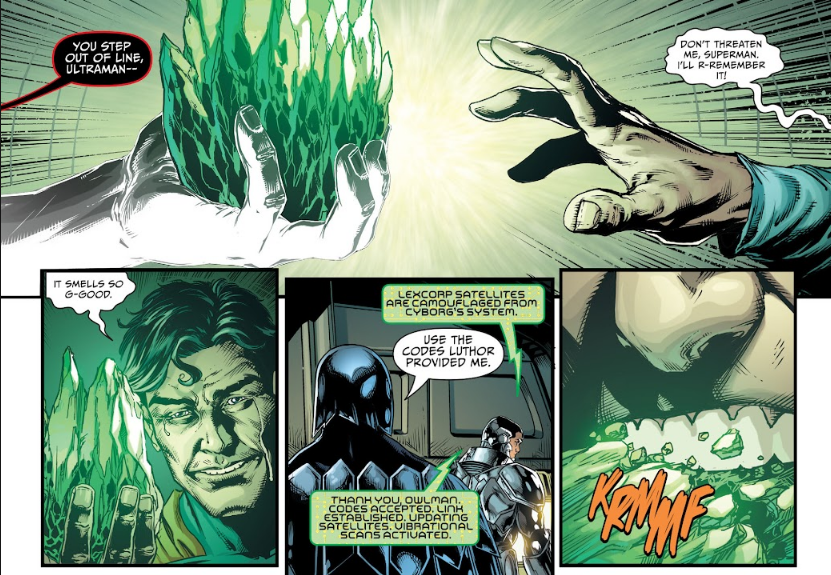
Even more interestingly, this Ultraman was weakened by yellow sunlight. In The New 52's continuity, yellow sun radiation breaks down the Kryptonite radiation in his system, leaving him vulnerable. When he invaded the main DC Universe, one of his first acts was to move the moon to block out the sun, creating a perpetual eclipse to protect himself.
Additionally, this version of Ultraman had no weakness to magic, unlike his heroic counterpart, making him an even more formidable foe.
Impact and Role in the DC Universe
As a villain in DC Comics, Ultraman holds a unique and significant position. He is not merely a one-off antagonist but a conceptual symbol—the "evil Superman"—representing the terrifying consequences of ultimate power falling into the hands of someone with a corrupt value system.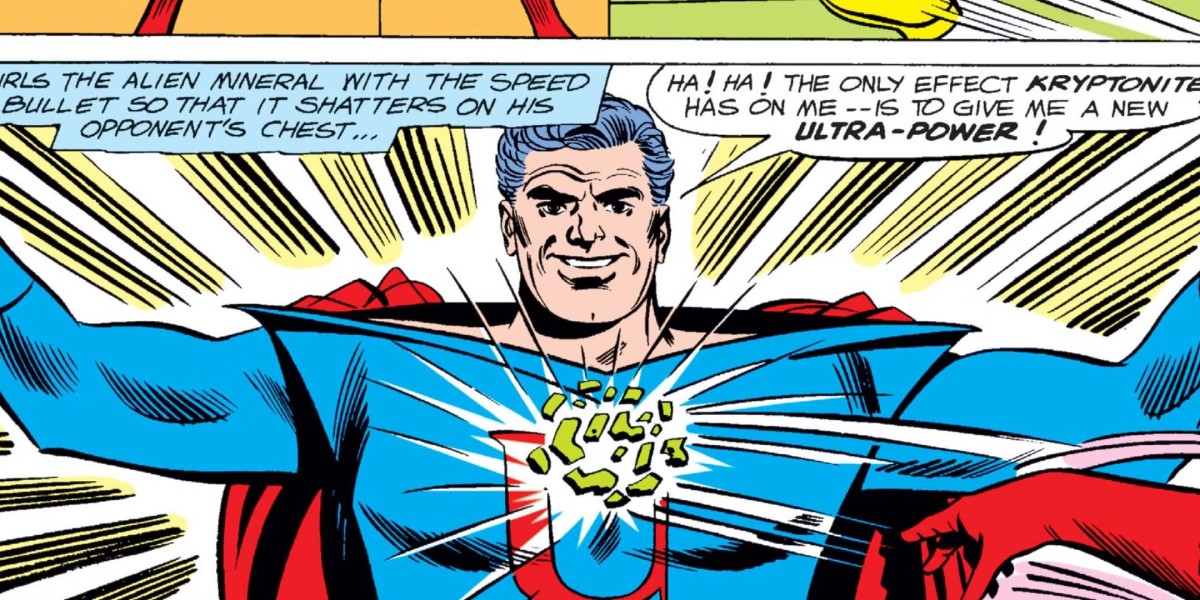
In the DC multiverse, Ultraman's home of Earth-3 is often used to explore themes of moral inversion. His existence serves as a reminder to readers that Superman's greatness lies not just in his power, but in how he chooses to use it. Because of this, Ultraman lacks Superman's depth and complex motivations; he is, through and through, a "bad guy."
Yet, it is this pure villainy that makes him a perfect mirror to reflect Superman's heroism. Without the guidance of morality and love, even someone with Superman's abilities can become a tyrant. This point is proven time and again in the comics: whenever Ultraman appears, it makes readers appreciate the kind-hearted hero from Smallville even more.
Among fans, Ultraman is an instantly recognizable classic. Whenever the "dark side of Superman" is discussed, his name is almost always part of the conversation.
While the DC Universe has other evil versions of Superman—like the bizarre and twisted clone Bizarro or the tragic, fallen hero from "Injustice"—Ultraman's uniqueness lies in his origin as a Superman from an inherently evil universe. He was bad from the very beginning.
▼ Bizarro (left) is simply a flawed clone of Superman with inverted abilities; the Superman of "Injustice" (center) is a dictator born from tragedy; but Ultraman (right) is purely evil, a product of his malevolent upbringing.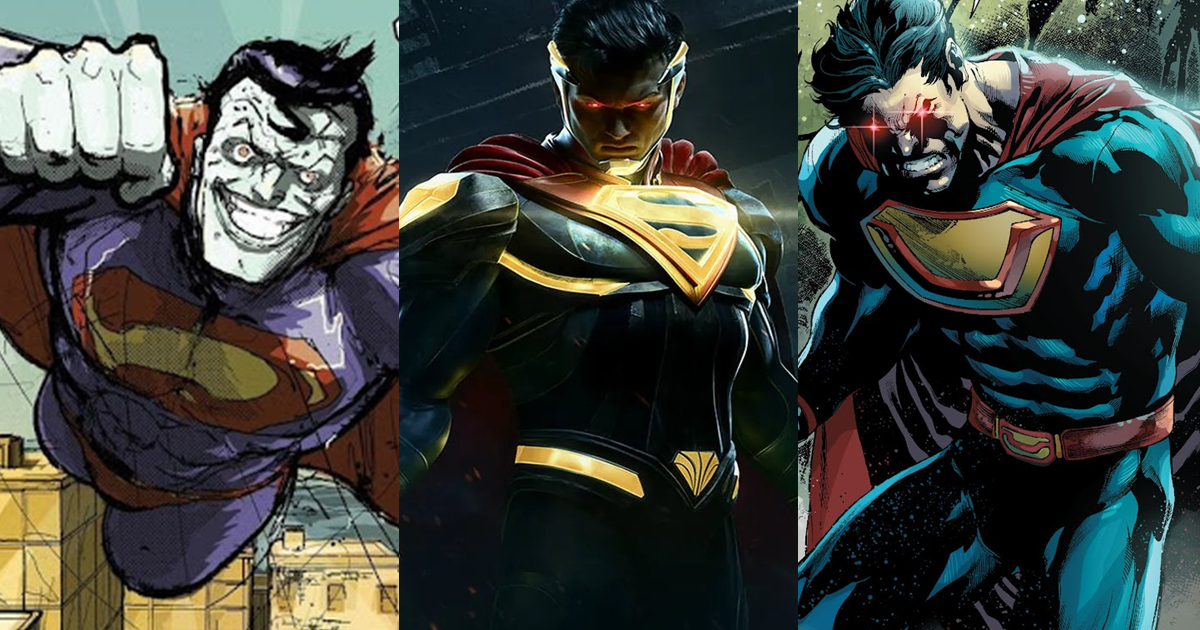
He never had a fall from grace; his very existence is the antithesis of Superman's character. In this sense, he represents an absolute, systemic evil. This positioning makes him incredibly useful for large-scale multiverse plots and crossover events. Whenever a story needs an "evil Justice League," Ultraman and the Crime Syndicate are the perfect choice.
This also explains why, no matter how many times the universe is rebooted, writers always find a way to bring back Earth-3 and Ultraman. The characters serve an irreplaceable narrative function and hold an undeniable appeal.