

"Bakuman," the manga by Tsugumi Ohba (story) and Takeshi Obata (art), recently made all its chapters free to read on Japan's "Shonen Jump+" website. This move has many netizens revisiting the series, which sparked widespread discussion in the 2010s.
However, looking back over a decade later, many are realizing that a lot of the plot points in the manga no longer reflect the current industry. In fact, some now see it as a "symbol of a bygone era," sparking heated debate among netizens about how much the manga world has changed.
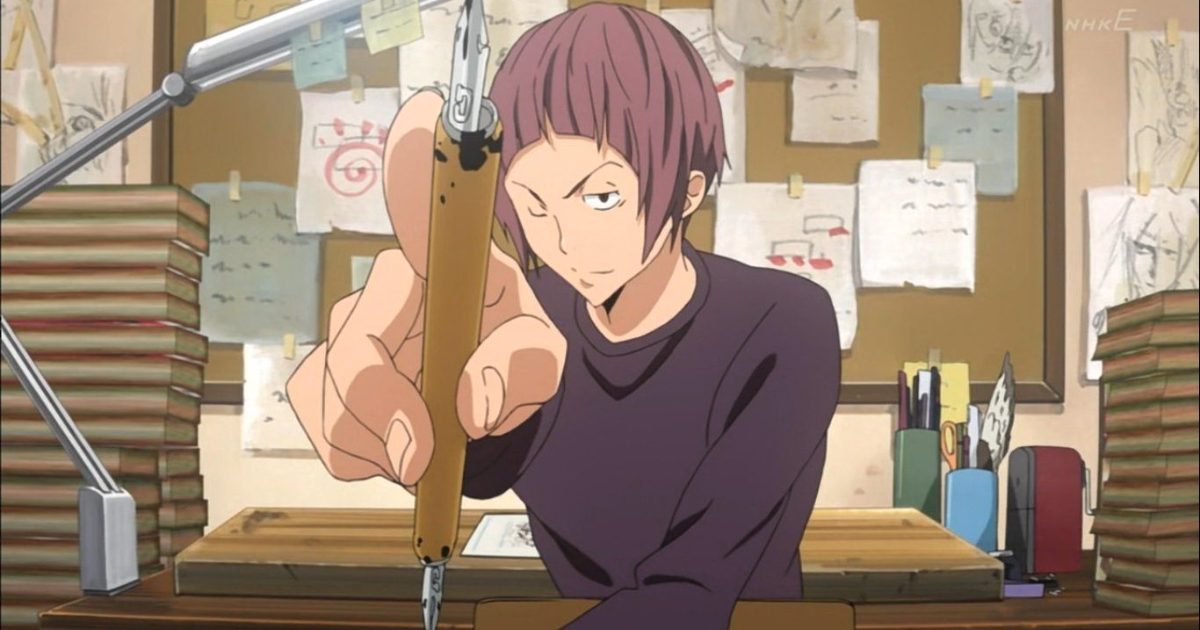 One Twitter user, revisiting "Bakuman," pointed out that the series feels "super old-school," especially the storyline where Eiji Nizuma "orchestrates a popularity contest to prevent his manga from ending."
Back then, this kind of setup was considered "standard operating procedure" for magazine editorial departments. But today, it seems wildly exaggerated. "Even a peak-popularity series like 'Demon Slayer' in today's 'Jump' can conclude when the author wants it to," the user noted. "Looking back now, you just wonder what those characters were even stressing about!"

Many netizens recall that "Jump" used to have a reputation for "extending" hugely popular series, a business strategy to keep profitable titles running as long as possible.
However, the tide has turned in recent years. Titles like "Assassination Classroom," "Demon Slayer," "Jujutsu Kaisen," and "Chainsaw Man" have all been able to wrap up at the height of their popularity, maintaining their buzz through anime adaptations and merchandise.
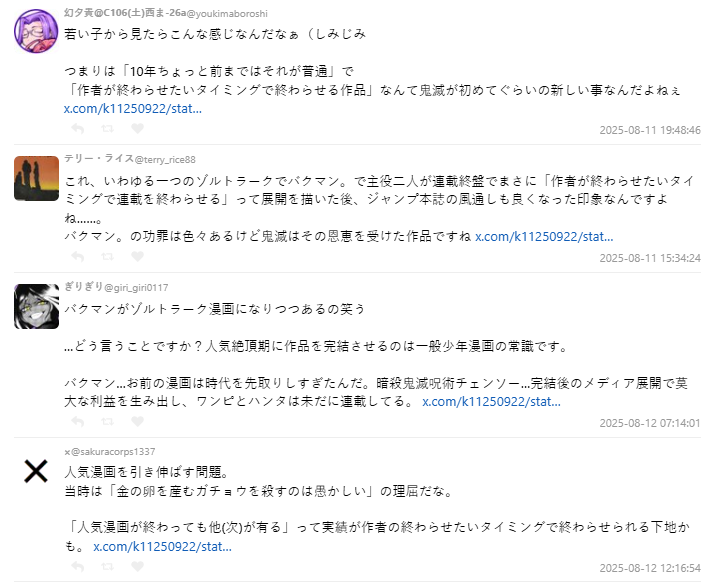
Some netizens suggest that while "Bakuman" exaggerated the competitive serialization culture of its time, it also sowed the seeds of "respecting an author's timing for conclusion" among readers and the industry. You could say there's a clear dividing line in the manga world: pre-"Bakuman" and post-"Bakuman."
Ironically, the very changes "Bakuman" helped inspire have made its own depiction of the manga world feel "outdated." The industry today is simply a different beast.
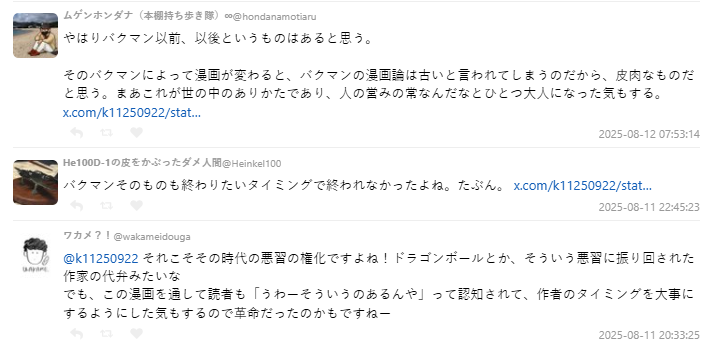
These days, it's rare for "Jump" series to be "forced to drag on." Instead, a new phenomenon has emerged: with significantly higher anime production standards and longer lead times, it's common for a manga to be nearing its end, or even already finished, by the time its anime adaptation premieres.
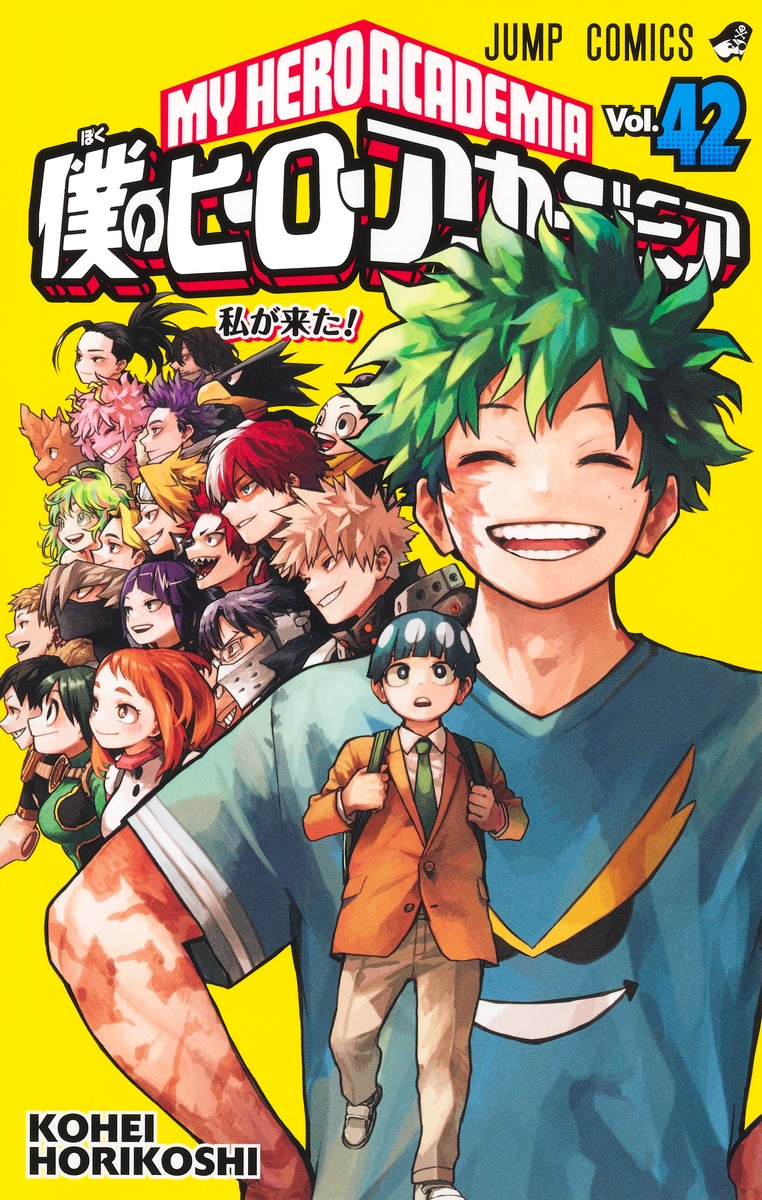
What's more, since "Gintama" in 2004, almost no "Jump" series has broken the 50-volume mark. Modern long-running manga typically fall within the 30 to 40-volume range, with examples like "Jujutsu Kaisen" (30 volumes total) and "My Hero Academia" (42 volumes total) considered "reasonable lengths."
Of course, these are just netizens' subjective opinions, and "Bakuman" might not be the sole reason for the manga industry's shift in attitude towards its works. Still, looking back at the intense manga battles depicted in "Bakuman," and Eiji Nizuma's declaration, "If I become 'Jump's' most popular author, give me the right to end 'manga I hate'," those words definitely hit different now.
via: togetter