

When you talk about games that are not just classic, but truly "god-tier," Dragon Quest III: The Seeds of Salvation (often shortened to "DQ3") immediately springs to mind. Not only was it the epic conclusion to the Erdrick Trilogy, but its original release saw massive queues, countless players diving in, and an ending that brought tears to many eyes – a shared experience for legions of fans.
Recently, Hiroshi Naito, the lead programmer for "DQ3," took to his personal X account to share fascinating and unexpected insights into the game's development process from back in the day.

Naito recounted his development experience:
"When we were making 'DQ3,' Enix actually set up an internal debug team. There were about 30 people, all wearing headphones, recording their gameplay, and testing the game simultaneously."
"Every morning, a stack of organized bug reports would arrive via fax. We'd then frantically fix them, fix them, fix them. By the afternoon, another stack of new bug reports would be dumped on us. Then we'd keep fixing late into the night. The next morning? Another stack of bug reports... Seriously, when was I supposed to sleep?!"
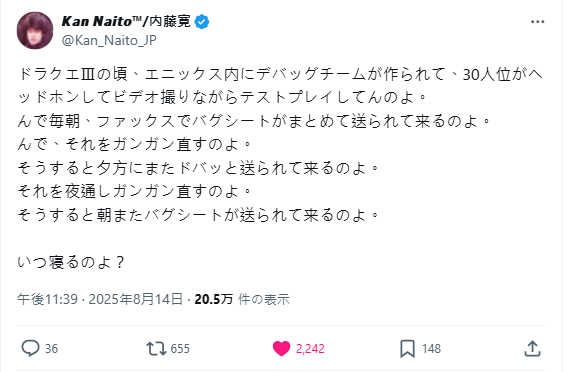
Considering the Famicom (FC) version was released in February 1988, the technology available back then simply doesn't compare to today's. Many netizens were surprised to hear about the sheer scale of "DQ3"'s testing, especially the high-intensity method involving headphones and video recording. It seems bugs were plentiful, with new issues constantly popping up even after a batch was fixed, highlighting how much human effort was poured into achieving precision with the limited tech of the era.
It's precisely because of their tireless, sleepless dedication to patiently squashing every single bug that players across the nation were able to fully enjoy the adventurous fun of "DQ3." To all the development team members, we can only say one thing: "Respect!"

In fact, Naito has previously shared that development officially kicked off in 1987. However, the company aimed for a Christmas release, meaning development had to be completed by September to allow time for debugging and cartridge production. They managed to finish development in just five months, which then led to an extensive debugging phase.
Despite their efforts, it was still too rushed, and the release was ultimately delayed until February of the following year. Developing a Famicom game with virtually no prior experience, starting almost from scratch, is truly commendable.
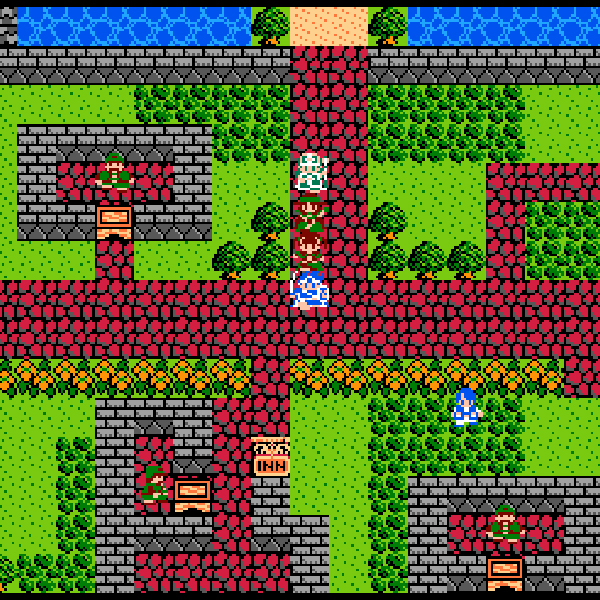
Beyond sharing his development memories, Hiroshi Naito appears to still be involved in various exciting game-related projects in 2025. If you're interested, you can follow his X account. He also runs a YouTube channel, packed with videos that are a must-watch for any game enthusiast.