

Katsuhiro Otomo's 1988 sci-fi anime masterpiece, AKIRA, remains an iconic work that perfectly captured its era, still revered as a god-tier classic by fans worldwide.
Recently, a broadcast of the film on Japan's NHK "ETV" channel sparked a heated online debate. One netizen claimed that scenes depicting the female character Kaori being violently assaulted and having her clothes torn left them traumatized, leading them to declare that AKIRA "doesn't need to be evaluated." They even went so far as to suggest the film is only praised by "men who can watch such scenes without a shred of pain." This take quickly ignited a firestorm of discussion, with many netizens strongly disagreeing.
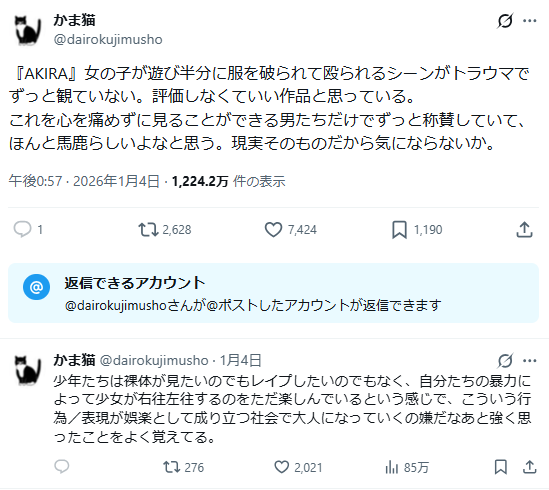
The discussion kicked off with this tweet, which stated:
"The scene in AKIRA where that girl's clothes are ripped off and she's beaten like it's a joke? That traumatized me, so I've never watched it again. I don't think this film needs to be evaluated at all. It's ridiculous how it's only ever praised by men who can watch those kinds of scenes without feeling a thing. Is it because it's so close to reality that you guys are numb to it?"
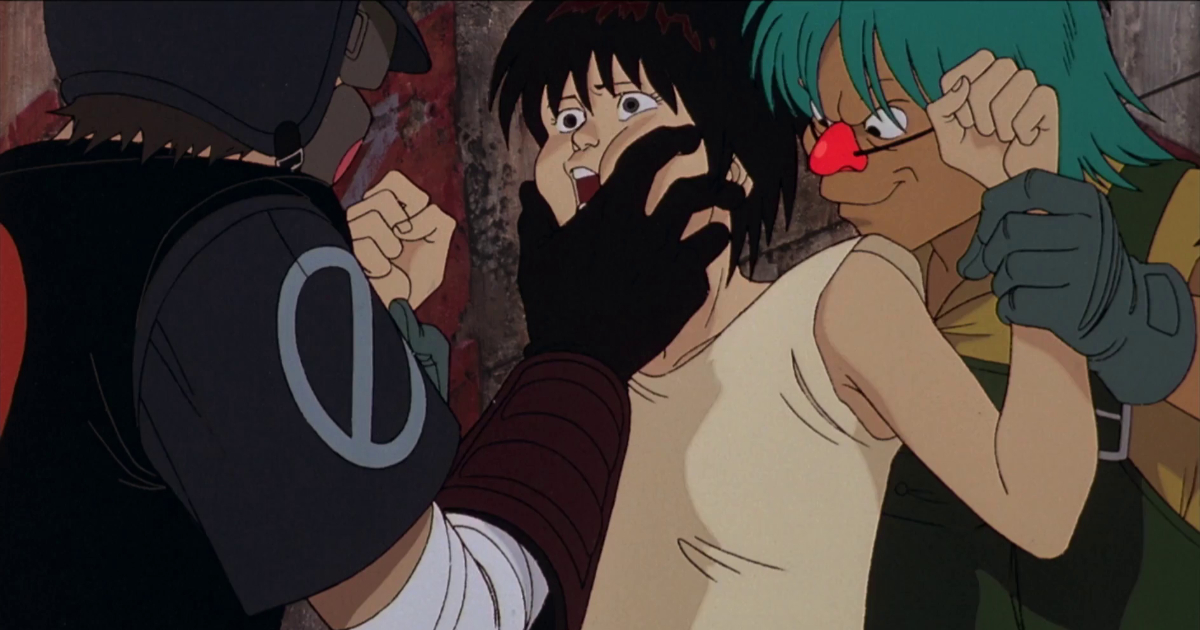
The user was referring to the harrowing ordeal suffered by Tetsuo's girlfriend, Kaori, in the film.
This statement immediately triggered a massive wave of responses, centering on questions like "Does depiction equal endorsement?" and "Can personal discomfort negate a work's value?"
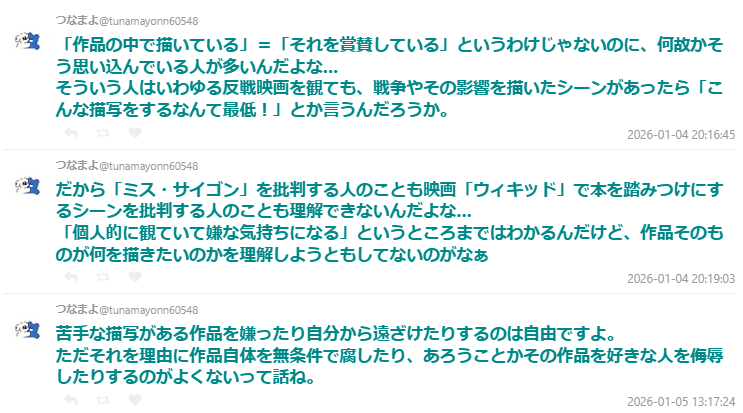
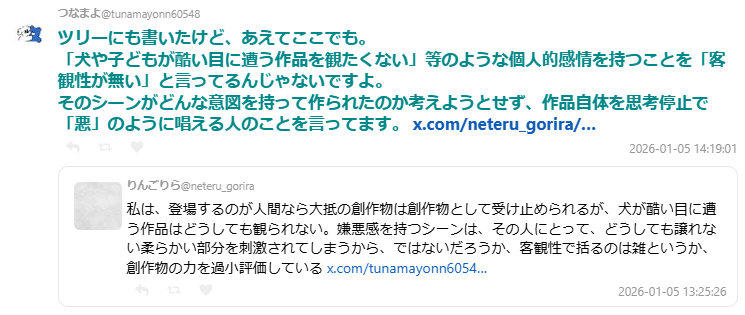
Netizens pointed out that feeling uncomfortable with certain scenes and choosing not to watch a work is entirely a personal freedom. However, they argued that this doesn't automatically mean the work is "unworthy of evaluation." One user summed up this logic:
"Feeling grossed out → This work isn't for me" is fine, but "Feeling grossed out → This work is wrong" is a leap too far.
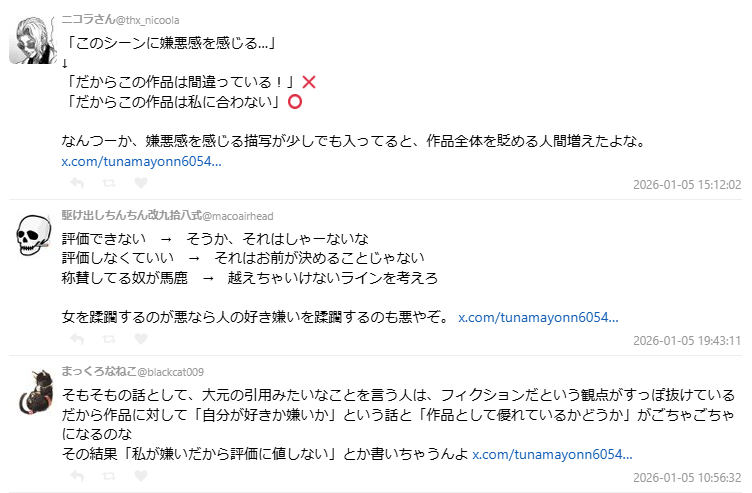
Many responses emphasized that the controversial violent scenes in AKIRA were clearly intended to make viewers feel uneasy and disgusted, serving to depict the film's dystopian world of moral decay and societal breakdown, rather than as "fan service."
Some female viewers stated that the scene was neither glamorized nor sexualized; instead, it starkly portrayed the absurdity and horror of violence, making the film's brutal core even more palpable. Male viewers also chimed in, noting their own discomfort with the sequence, refuting the idea that "only men can watch without feeling anything."
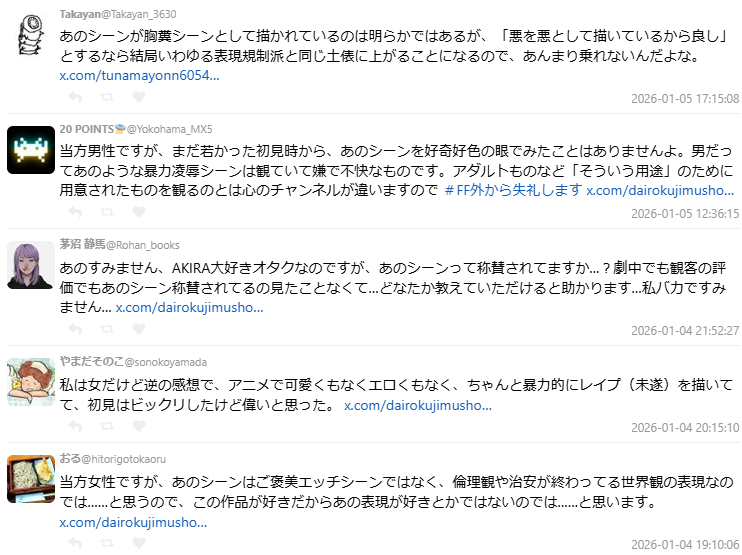
Others in the discussion drew parallels to different works, arguing that if the "depiction = endorsement" logic held true, then anti-war films, or works depicting crime or slavery, would all be seen as condoning injustice. Such an interpretation, they concluded, is far too simplistic.

Even more netizens pointed out that conflating "I don't like it" with "the work itself isn't good" ignores the crucial line between fictional creation and real-world value judgments.
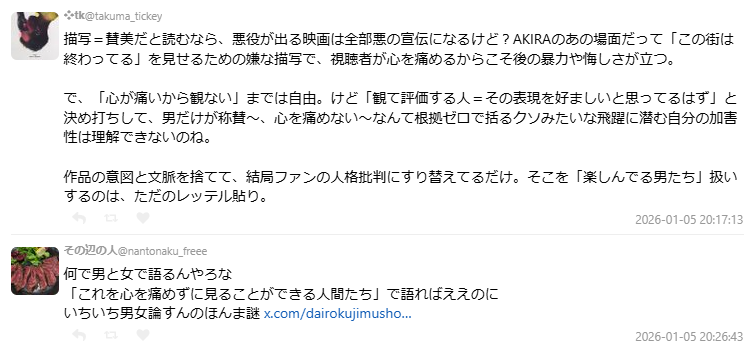
One netizen stated: "Not wanting to watch it? No problem. But to negate the work and negate other viewers simply because you don't want to watch it—that's truly crossing the line."
In fact, when it was announced earlier this year that AKIRA would air on NHK "ETV," it sparked considerable debate even then. After all, ETV is positioned as an educational channel, focusing on areas like children's programming, education, art, culture, language learning, hobbies, practical skills, science, and health. Given AKIRA's undeniably intense and violent narrative, many initially questioned its suitability for the channel.
Despite differing viewpoints, most participants in the discussion agreed that feeling distressed by certain depictions and choosing to avoid a work is a respectable personal choice. The real issue, they concluded, lies in whether one can dislike something while still maintaining an understanding and respect for the creative context and others' perspectives.
via: togetter