

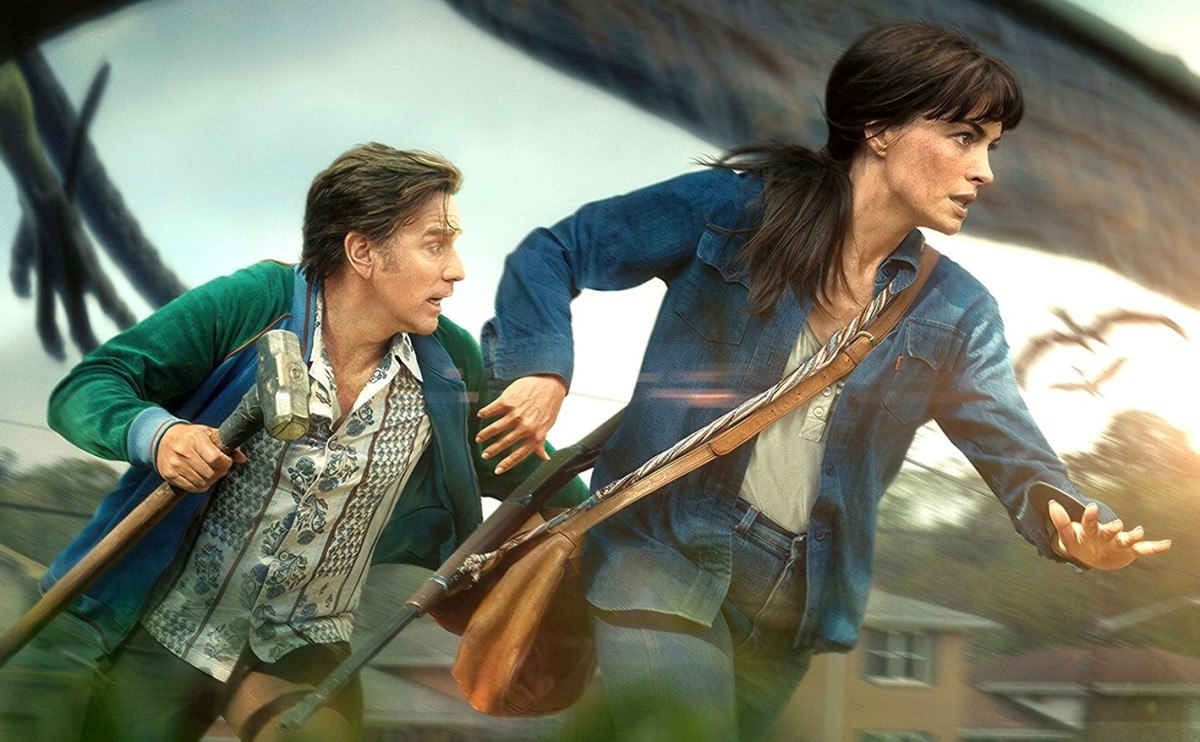
 (Photo: Warner Bros. Pictures)
(This article contains spoilers. Read at your own risk.)
For many film fans, the name David Robert Mitchell rings a bell, sparking a unique curiosity. As one of the creators who kicked off the new renaissance of prestige horror in the last decade, his second feature, "It Follows," remains an instant classic with immense influence. It was a wake-up call for modern Hollywood, proving that beyond endlessly rebooting IPs like "Halloween" or "The Texas Chain Saw Massacre," there was fertile ground for high-quality, original stories.
After the breakout success of "It Follows," everyone expected Mitchell to solidify his status as a new master of horror. Instead, for his third film, he swerved into a completely different lane with "Under the Silver Lake," a neo-noir detective thriller steeped in the style of Alfred Hitchcock. To be frank, the film wasn't particularly well-received, at least not compared to the buzz generated by "It Follows." Only a small cult following gave it high praise. After "Under the Silver Lake," Mitchell's momentum faded, and he disappeared from the scene for quite some time.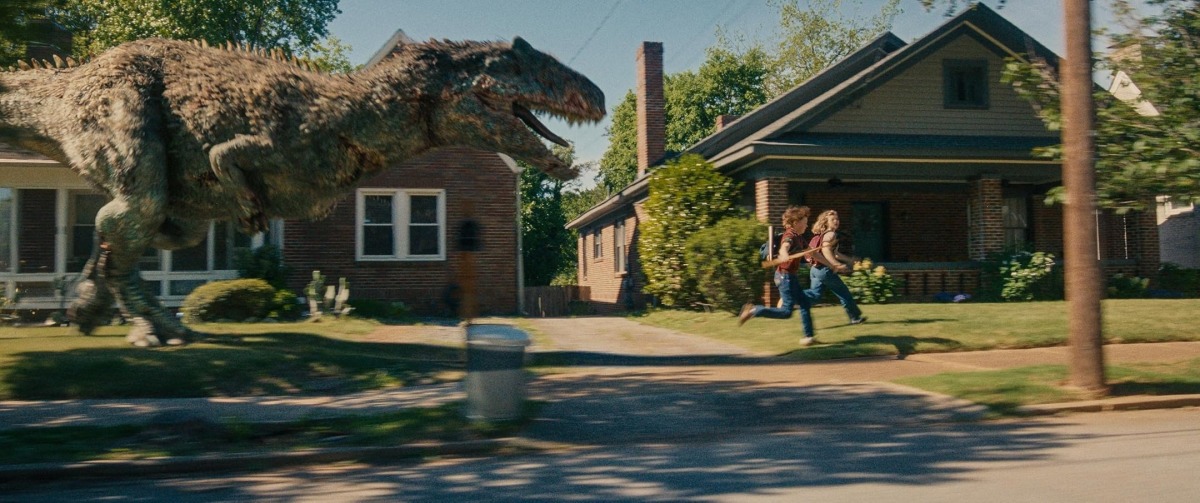
(Photo: Warner Bros. Pictures)
It wasn't until a few years ago, when Warner Bros. Pictures announced "Flowervale Street," that Mitchell's name resurfaced. The real surprise was seeing his name attached to a major commercial blockbuster. It's not uncommon for indie directors to be tapped by big studios, but Mitchell's case felt different. After being gone for so long, his return directly into the mainstream felt like a sudden leap. Did he finally decide to stop resisting and embrace the system? Or was he just in desperate need of a paycheck?
However, after watching the film, it becomes clear that "Flowervale Street" isn't fundamentally different from "It Follows" or "Under the Silver Lake." Mitchell is still continuing the common thread of his previous work: deconstructing and playing with the genres he loves. The story of "It Follows," in a way, was a commentary on a timeless horror trope—if there's a sex scene, someone's about to die, most likely the couple who just did the deed. Mitchell turned this trope into the central mechanic, making sex a literal curse that acts like a "heat-seeking missile." He even had the score composed to closely mimic the slasher films of the '70s and '80s.
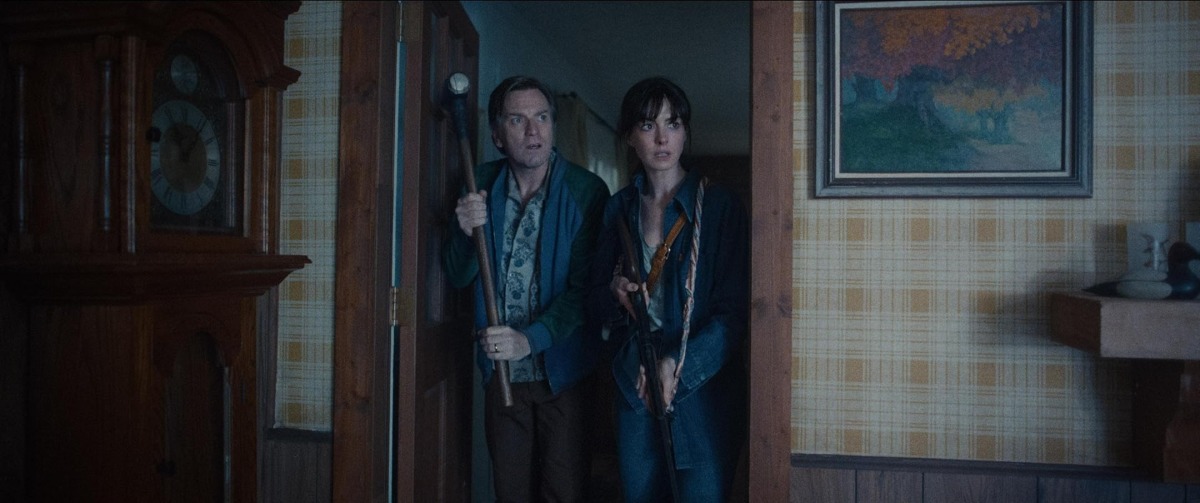 (Photo: Warner Bros. Pictures)
"Under the Silver Lake" applied the filmmaking language of old-school detective movies to a modern setting, creating a pastiche of iconic elements from films like "Chinatown" and various Hitchcock classics. But his approach was unapologetically romantic and self-indulgent. He didn't care if the resulting atmosphere felt out of place or if general audiences would find it strange. He even ignored the fact that modern films using this kind of pastiche often lean into comedy, allowing viewers who don't get the references to at least appreciate the humor in its exaggerated retro feel. Mitchell did it simply because he thought it was cool.
The bigger-budget "Flowervale Street" also champions an old-school approach, but this time its target is the '80s adventure film. This is a more abstract goal, as there's no clear-cut formula to follow. What Mitchell aims to capture is a purer viewing experience. He set out to make the kind of movie with a simple plot, where special effects still felt fresh, set in a small town or suburb where local protagonists stumble upon something extraordinary. It's essentially the same type of film "Stranger Things" pays homage to, just with fewer teenage characters.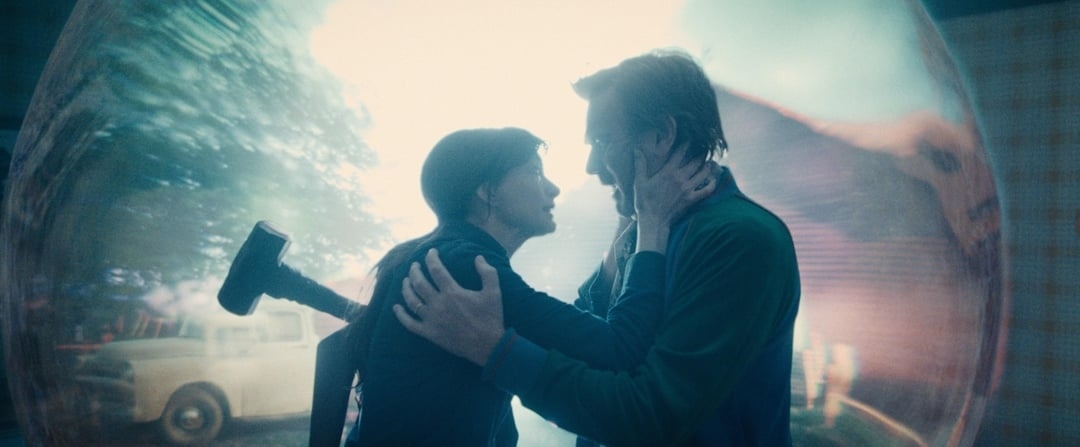 (Photo: Warner Bros. Pictures)
Some might describe this as the style of early Steven Spielberg, but that's not entirely accurate. A better classification, offered by veteran film buffs, is the "Amblin Entertainment style." Co-founded by Spielberg, Amblin produced not only his directorial efforts but also many films he produced, which collectively defined the '80s adventure aesthetic that pop culture now references. Global hits like the "Gremlins" series, the "Back to the Future" trilogy, and films like "The Goonies" planted unforgettable cultural symbols in the minds of a generation.
But this kind of simple adventure story is no longer in vogue. Our tastes have shifted toward more complexity: franchise films with intricate plotlines, convoluted multiverses, and endless adaptations of fantasy novels. Mitchell isn't the first to try and recapture this style. Spielberg and Amblin raised countless "children" who grew up to emulate their idol. Gareth Edwards is one, as is J.J. Abrams—who happens to be a producer on "Flowervale Street." Abrams even brought in Michael Giacchino, the contemporary composer most adept at mimicking John Williams' style (having worked on the first three "Jurassic World" films and "Rogue One," both IPs originally scored by Williams). And long before "Stranger Things," Abrams directed "Super 8," a fan film in all but name dedicated solely to honoring Spielberg's two most classic alien movies.
(Photo: Warner Bros. Pictures)
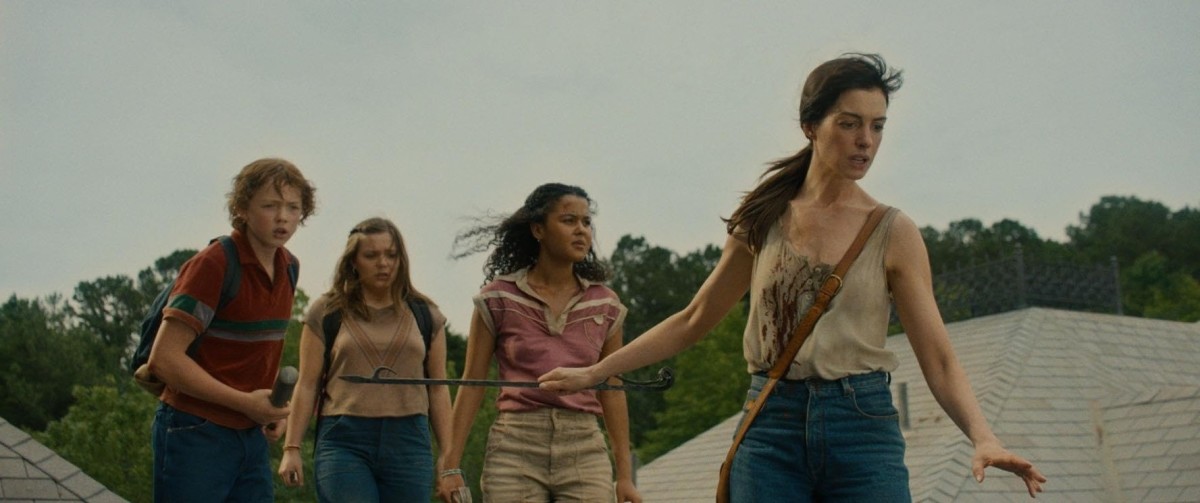
But will most modern audiences still buy into the Amblin-style adventure? It's highly subjective. "Flowervale Street" is incredibly old-fashioned in its execution. This isn't just a surface-level visual retro aesthetic; every single element stems from the creative logic of that era. It's a purely, almost naively simple adventure film. There are no deeper mysteries; what you see in the trailer is what you get. It makes no attempt to cater to modern sensibilities. It truly only serves the audience that grew up on these kinds of movies. If you're unfamiliar with them, or feel they have no place in today's cinema, you'll probably think it's a boring, colossal misfire.
This situation is very similar to "Under the Silver Lake." If you watch that film through a purely modern lens, you'll likely find it to be a pretentious and shallow exercise in style. But if you can get on board with Mitchell's romanticism, you'll find yourself completely immersed. Some might wonder why "It Follows," which also had a retro vibe, managed to win over modern audiences. It's because "It Follows" introduced new concepts and subverted old ones. It paid homage to the past while still moving forward. "Under the Silver Lake" and "Flowervale Street," however, have no interest in subversion. They simply want to tell a story using the mindset of a bygone era. And there's nothing wrong with that—in fact, I absolutely loved it (as films committed to such a thorough homage are rare), but it's not for everyone.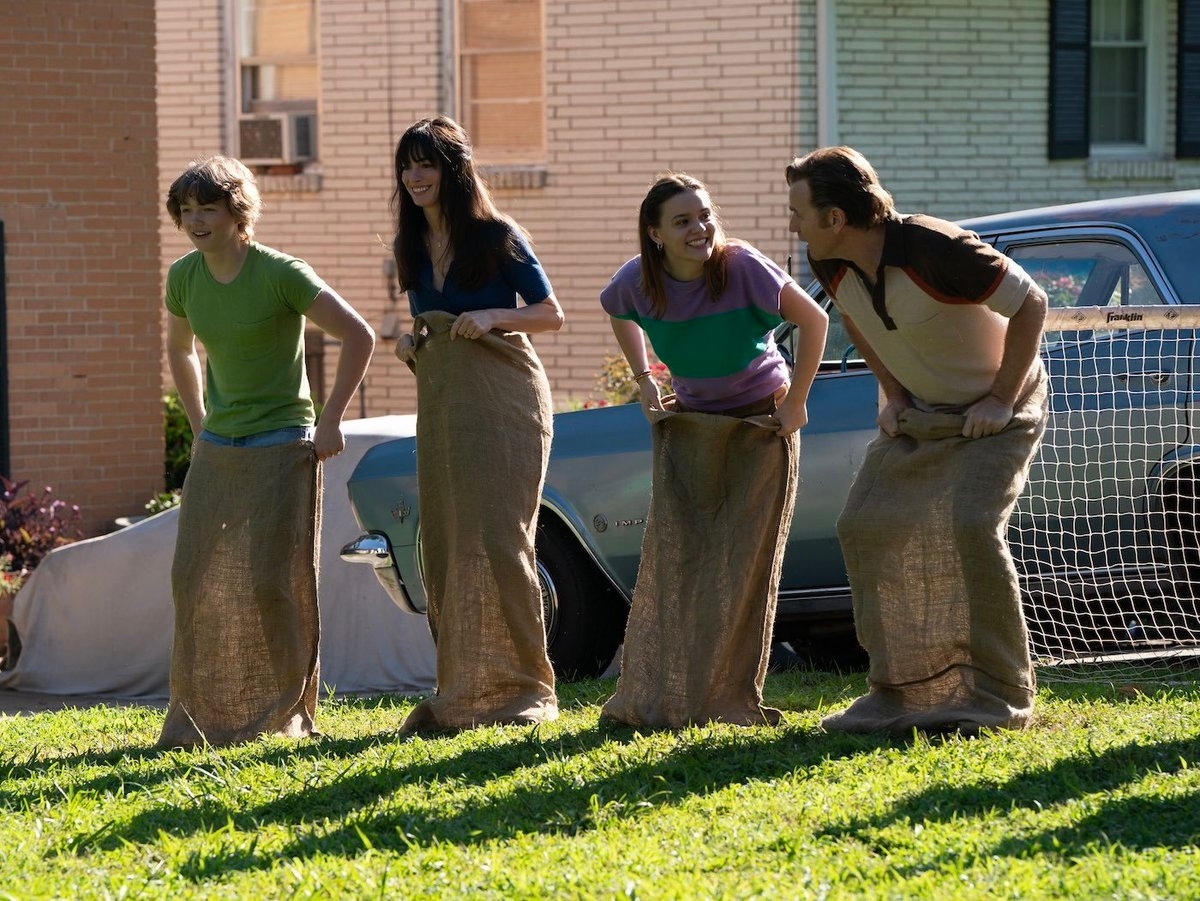 (Photo: Warner Bros. Pictures)
"Stranger Things" and "Super 8" offer another interesting comparison. Abrams told an old-school story using old-school methods. "Stranger Things" did not. It employed many "clever tricks" and modern packaging to make old things feel "new and cool" again. Its character development, suspense-building, and emotional arcs are all products of modern storytelling logic, merely wrapped in a retro skin. This is why "Super 8" never achieved the cultural impact of "Stranger Things." It's not just about Netflix's massive user base or bigger marketing budget; audiences never saw "Super 8" as a vastly underrated masterpiece, but rather as a "not bad, but not worth raving about" trip down memory lane.
As someone who considers himself a kid raised on Amblin movies, I quite liked "Flowervale Street." A big reason is that Mitchell understands the art of the build-up, something that modern films increasingly struggle with. A huge part of Spielberg's magic lies in this process; he is the king of entertainment because he knows how to manipulate the audience into a state of excitement. The mere sight of a shark's fin terrified audiences back in the day; the ripples in a glass of water and a disappearing goat had viewers on the edge of their seats long before the T-Rex broke loose. "Flowervale Street" is filled with this kind of masterful foreshadowing and layering.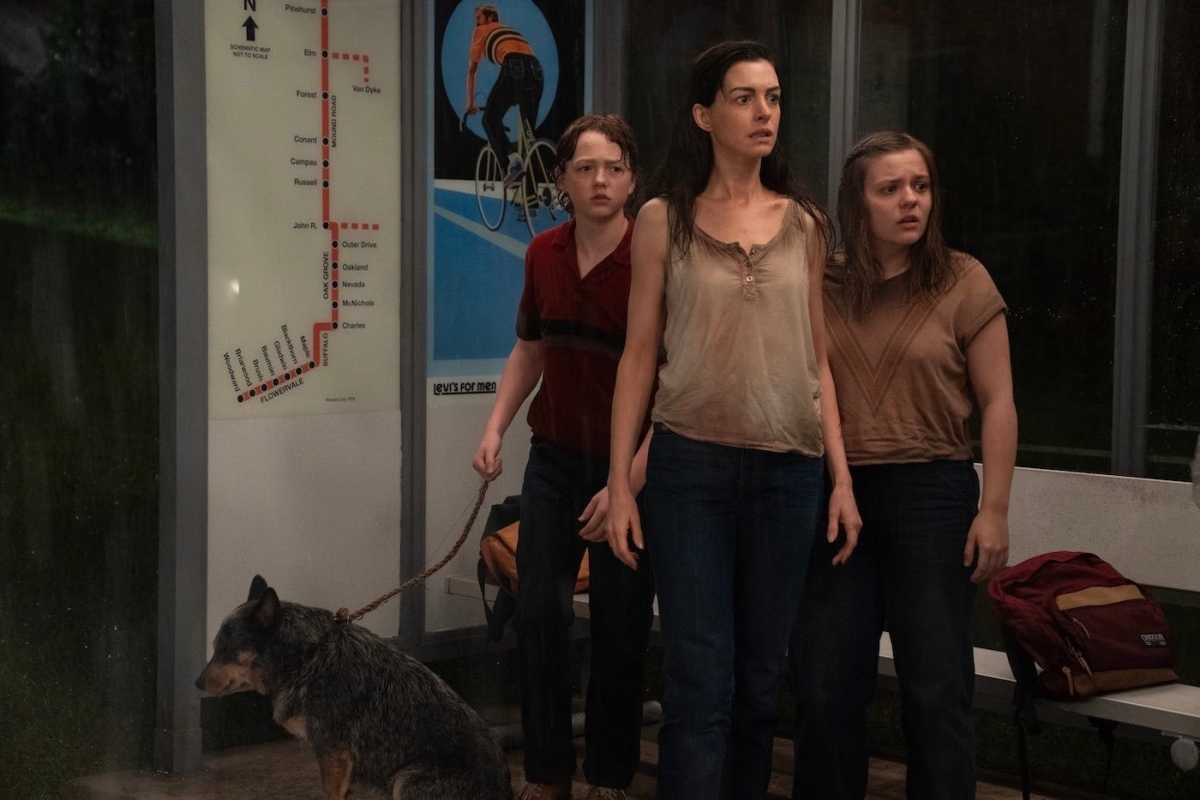 (Photo: Warner Bros. Pictures)
Mitchell's dedication to layering also applies to his characters. He takes the time to depict the family's internal conflicts and effectively resolves them throughout their struggle for survival. This is another thing modern films often get wrong. I hate when contemporary adventure movies pause the action for long, inefficient heart-to-hearts that kill the momentum. "Flowervale Street" avoids this. While it does have its quieter moments, it never lingers for too long. Whether in its sci-fi elements, human drama, or filmmaking techniques, this is an "abnormally simple" film by today's standards—a format Hollywood rarely touches anymore. But its overall production quality is more than enough to support this simplicity.
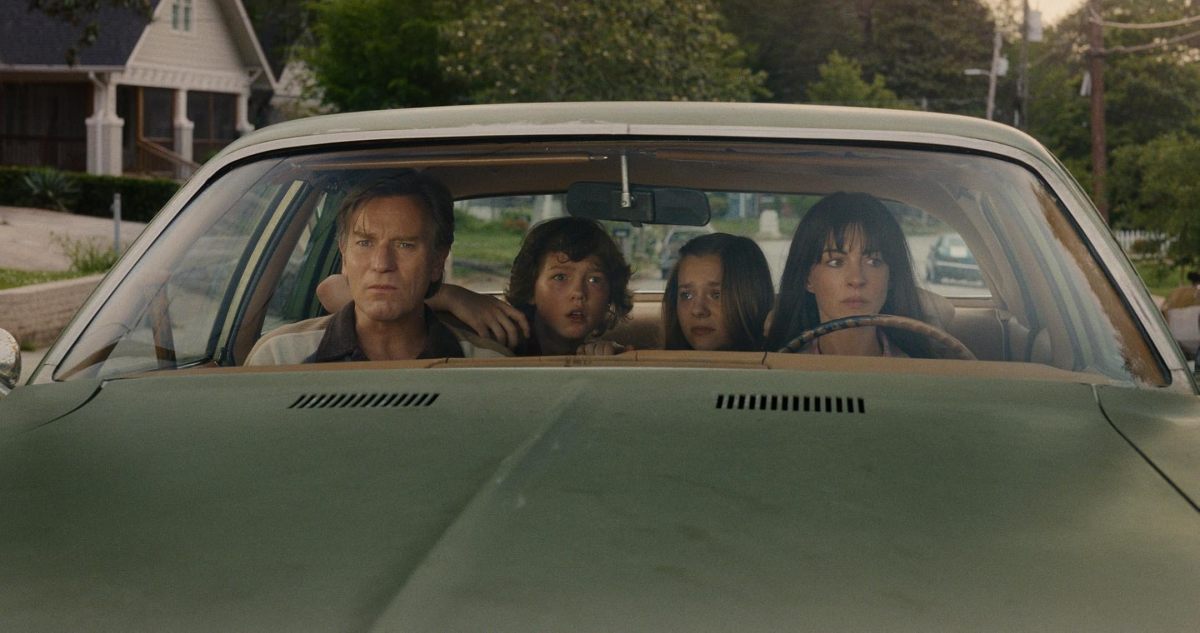
One of the few truly unexpected parts of the film is that Ewan McGregor's character effectively comes back from the dead at the end. Unlike most "failed" fathers in Spielberg's films who remain "permanently absent," he gets a chance at redemption. I initially wondered if this meant the family in the other timeline would be left without a father, but then I realized that's not the case. The other Anne Hathaway just has to keep making the phone call to "hijack" the McGregor from the next timeline, and so on, in an infinite loop. And the wife, a character typically relegated to supporting her husband or remarrying someone wealthy in these types of films, gets the chance to pursue her own dream—even if it's in a clichéd way (I've lost count of how many adventure movie protagonists end up writing a bestseller about their experience).
(Photo: Warner Bros. Pictures)
Another storyline that feels very un-eighties is the subtle hint at the daughter's sexuality. The way it's handled is hilarious: the sister is unknowingly sabotaging her brother's love life. Every time the brother tries to impress his crush, his more heroic and emotionally supportive sister swoops in and steals the show, leaving him looking on in a mixture of confusion and resentment. The director's touch is so subtle that it's not played as an overt joke, but seeing the brother's envious stare just cracked me up. The fact that his romantic rival is his own sister—who has no idea she's his rival—only multiplies the comedic effect.
PS: When I was in line for my ticket, I genuinely misremembered the title and almost said "Elm Street." Yes, that Elm Street from the "A Nightmare on Elm Street" series. It's a common problem for a Taiwanese Freddy Krueger fan like me! XD