

If you're in the cosplay scene, you know the name Enako. Her popularity is off the charts, and she's been on an absolute tear lately, releasing music albums and running a successful YouTube channel, cementing her status as Japan's most successful cosplayer.
However, a recent race queen outfit she wore during a livestream has kicked off a firestorm online. Some netizens argued that by wearing such outfits under the "cosplayer" title, she's misleading people into thinking these are cosplay, which could dilute the culture's meaning. The incident sparked a heated debate among fans, even igniting the larger question: What even counts as cosplay? The controversy prompted Enako herself to post on X, sharing her personal take on the matter.
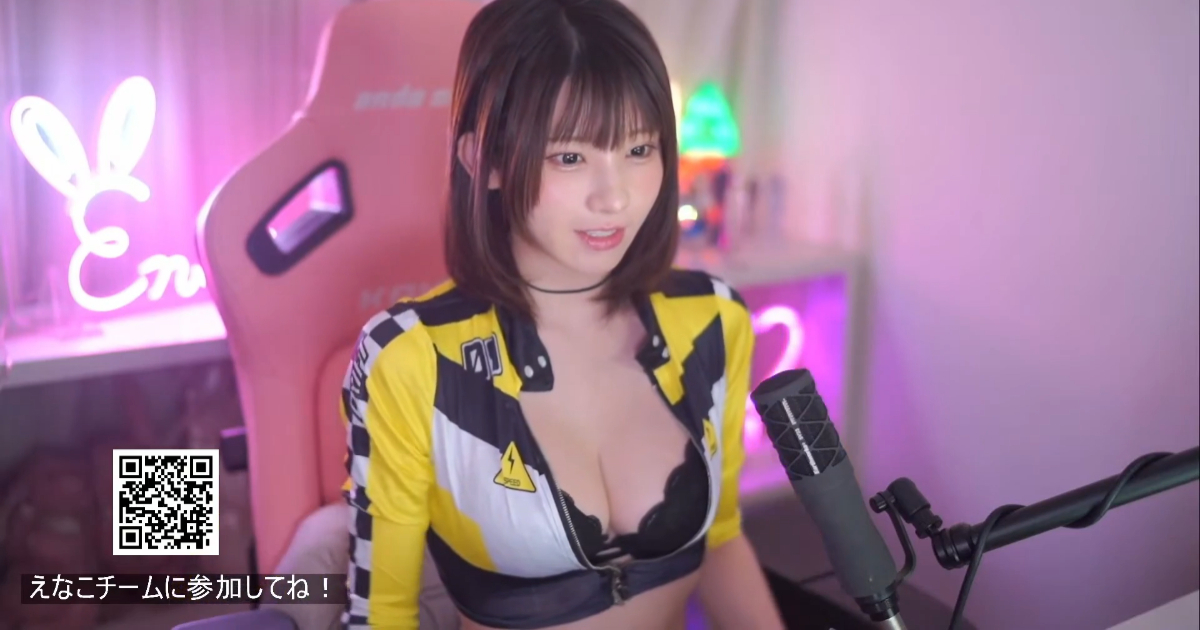
This look drew criticism from another cosplayer, Shizuki Yukina, who pointed out issues with the commercialization of cosplay and its potential cultural impact, arguing for a greater emphasis on the traditional spirit of character accuracy and role-playing.
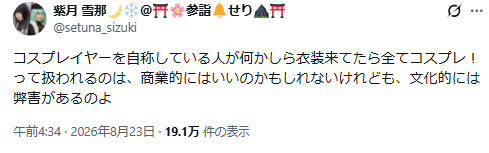
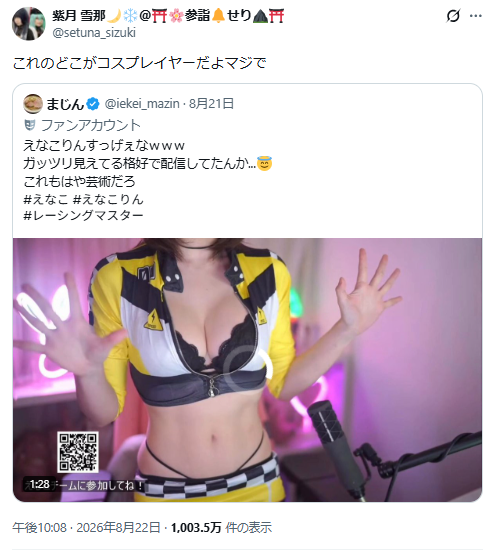
Yukina went on to say that outfits like the one Enako wore on her stream have no cosplay elements at all, and when everyone starts calling this stuff "cosplay," it creates a fundamental misunderstanding of the culture.
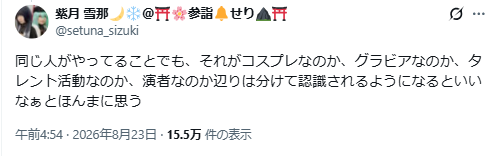
She believes there needs to be a clearer distinction between cosplay, gravure modeling, and other talent or performance activities to avoid public confusion.
While this was initially one person's opinion, other netizens echoed the sentiment, arguing that this kind of attire can't be considered cosplay. They believe that as a leading figure in the community, Enako should take a clearer stance to show people what cosplay is supposed to be about.
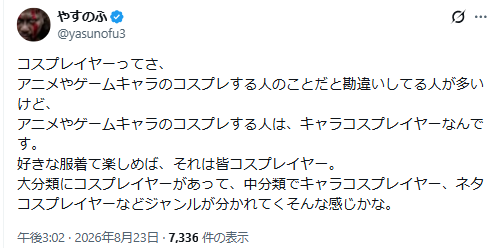
On the flip side, Enako's supporters pushed back, suggesting that cosplayers can be divided into two types: "character cosplayers" and "cosplayers who enjoy wearing outfits they love." They argued that since cosplay can be a profession, it should embrace a more diverse and broad range of activities.
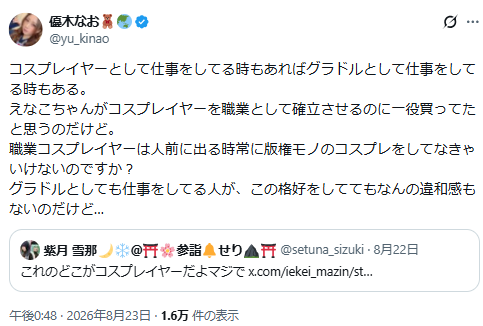
Others pointed out that while Enako is a top-tier cosplayer, she also works as a gravure model, a common practice for many in the scene. There's no rule stating that a professional cosplayer must only appear in licensed character costumes. For someone who also does gravure work, wearing such an outfit is perfectly normal.
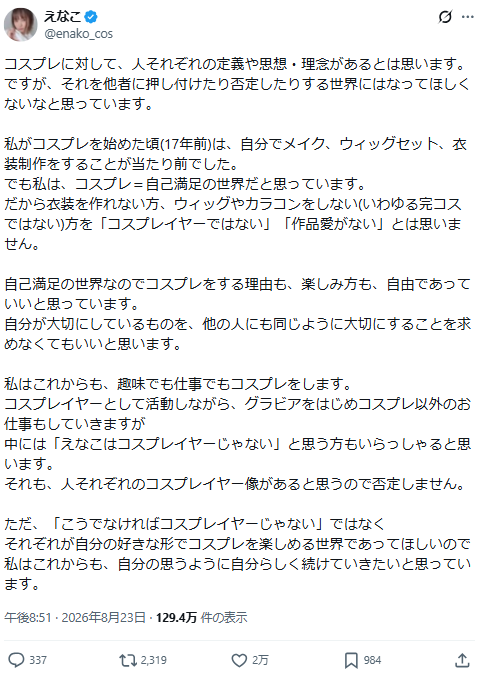
As the topic gained widespread attention, Enako herself addressed the "What is cosplay?" debate on X. She wrote:
I think everyone has their own definition, ideas, and philosophy about cosplay. But I don't want cosplay to become a world where people force their views on others or even negate them. When I first started cosplaying (17 years ago), doing my own makeup, styling wigs, and making my own costumes was the norm.
However, I believe cosplay is fundamentally a world of self-satisfaction. So, I would never look at someone who doesn't make their own costumes, or doesn't wear a wig or colored contacts (in other words, someone who isn't "perfectly accurate to the character"), and think they're "not a cosplayer" or "don't love the source material enough." If this is a world of self-satisfaction, then why you cosplay and how you enjoy it should be completely free.
I don't think it's necessary to demand that others cherish things the same way you do. Whether it's a hobby or a job, I will continue to cosplay. I will continue my activities as a cosplayer, while also taking on work outside of cosplay, like gravure modeling. However, I'm sure there will be people who think, "Enako isn't a real cosplayer at all."
I won't deny those feelings. I believe everyone has their own ideal image of a "cosplayer." I just don't want this to become a world where you "must meet a certain standard to be considered a cosplayer." I want everyone to be able to enjoy cosplay in their own way. So, from now on, I will continue to follow my own path and enjoy cosplay in my own style.
Many fans and followers applauded Enako's perspective, agreeing that the definition of a "cosplayer" shouldn't be dictated by others. Whether you're a traditionalist who values handmade craftsmanship and character accuracy or someone who expresses their love for a character in other ways, it's all born from the same passion.
Furthermore, it's not uncommon for cosplayers today to wear multiple hats. Everyone has their own way of sharing what they love, and this diversity is what helps the culture reach a wider audience.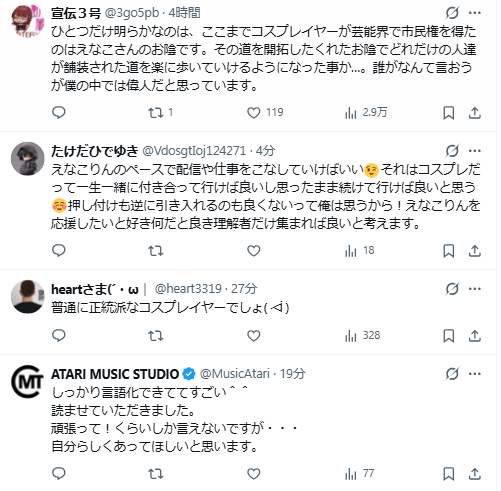
Ultimately, it's clear Enako isn't treating this debate as a battle. She believes that everyone has things they love, and they should be free to express that passion in their own way without needing to strictly define "what counts as cosplay." In a culture that is still finding its mainstream footing, this open-mindedness is what allows more people to discover its beauty.