

A photo recently posted on X in Japan has sparked widespread discussion. The poster said they had gone to a paper-recycling site to drop off cardboard when they unexpectedly found a large quantity of Weekly Shonen Jump issues discarded together, writing that the sight made them “feel a real sense of darkness.”
Judging from the issues shown and the timing of the post, the magazines are believed to have been released this July. After the photo surfaced, X users quickly began speculating that the pile might be connected to the bonus ONE PIECE card that caused a stir at the time and the accompanying resale market.
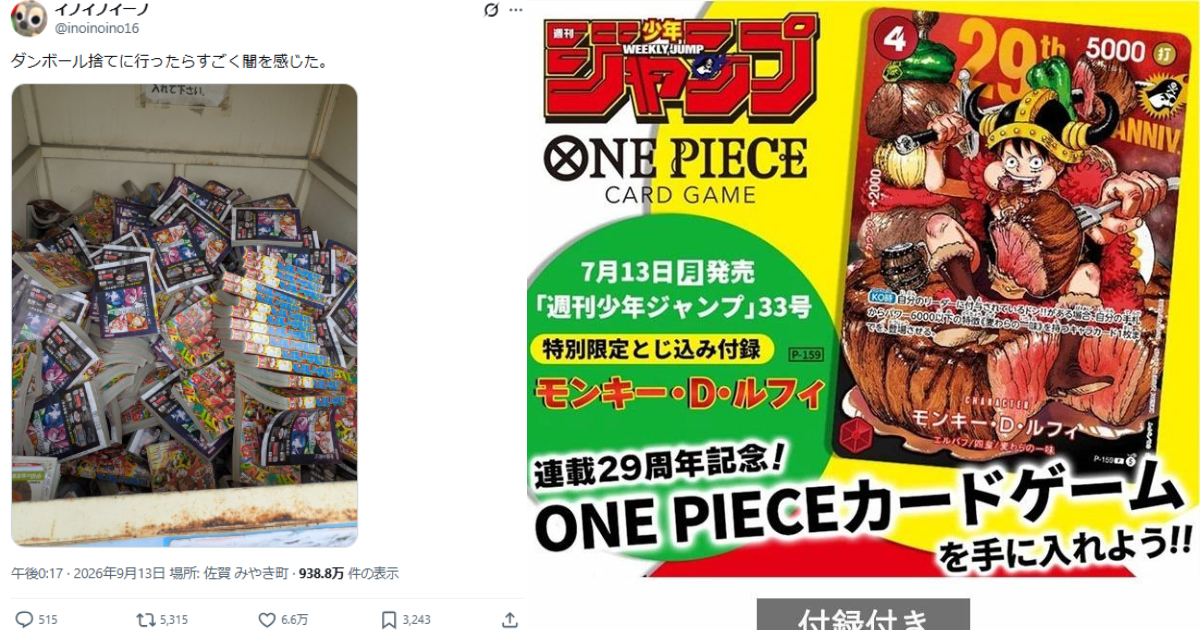
The original poster, known as “イノイノイーノ” on X, shared the photo on September 13 with the comment, “I went to throw away some cardboard and felt a real sense of darkness.” The image shows a large number of Weekly Shonen Jump issues piled inside a paper-recycling container.
They all appear to be the same issue and seem to have been discarded together. Without knowing the circumstances, the scene could easily be mistaken for an entire batch being disposed of by a business.
With the earlier controversy still fresh in many people’s minds, the replies soon filled with speculation. Some suggested that these might be copies of Weekly Shonen Jump that had been bought in bulk in July, with one user asking, “Could these be the Jump issues that came with the trading card?”
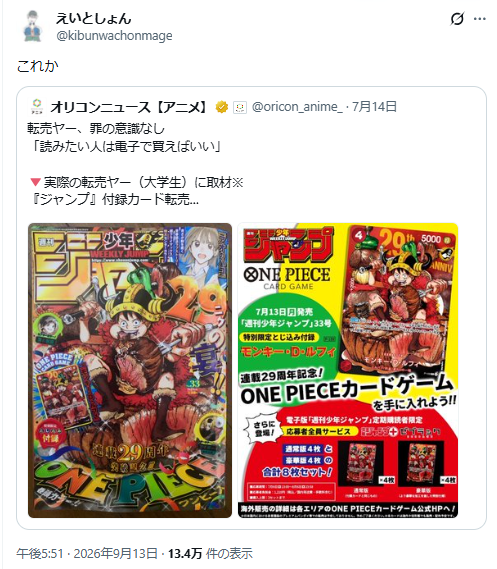
The magazines in the photo do, in fact, appear to be Weekly Shonen Jump Issue No. 33, released on July 13. To commemorate the 29th anniversary of ONE PIECE’s serialization, the issue included a limited-edition Monkey D. Luffy card. Shueisha anticipated strong demand and printed 500,000 more copies than usual, but the issue still became difficult to find and was caught up in a wave of high-priced resales.
(Related article: Weekly Shonen Jump’s Limited Luffy Card Sparks Buying Frenzy; Even 500,000 Extra Copies Fail to Prevent Shortages and High-Priced Resales)

Some users compared the situation to past incidents in which people bought large quantities of CDs or snacks solely for their bonus items, removed those extras, and then discarded the products themselves.
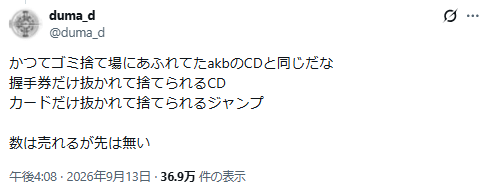
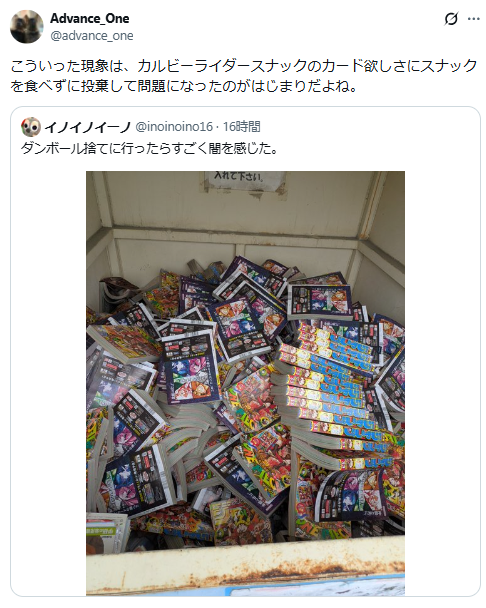
Others focused on the environmental impact and waste of resources, arguing that taking the bonus item and throwing away the manga magazine was a terrible waste. One X user lamented how many children in countries with limited access to manga might have smiled if the magazines had been sent to them instead.
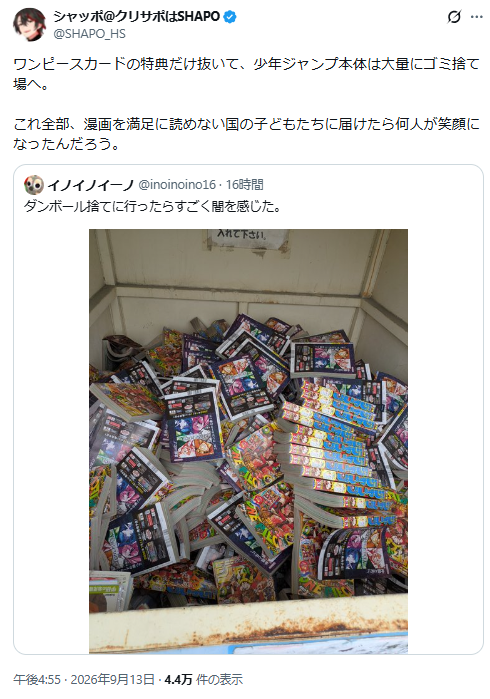
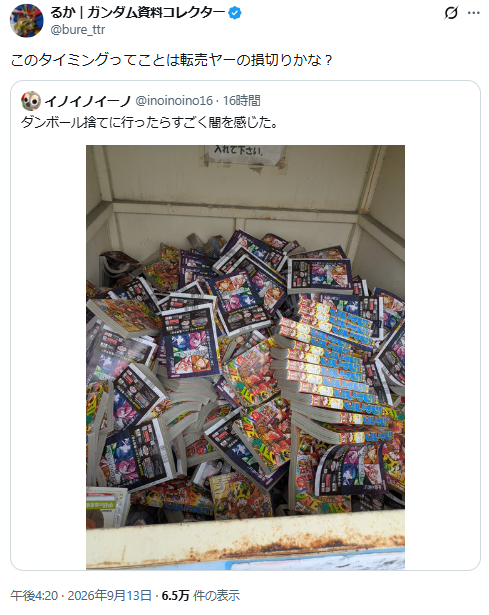
Beyond the issue of waste, many X users focused on one question: “Why did so many copies of Weekly Shonen Jump suddenly appear here?” Some speculated that resellers may have decided to “cut their losses” after market prices collapsed, disposing of their large inventories outright instead of taking them to a secondhand bookstore or another buyer.
Replies included comments such as, “Could this have been a failed resale attempt?” and “Given the timing, could this be a reseller cutting their losses?”
Another post claimed that Issue No. 33 briefly offered a chance to make a resale profit immediately after its release, but that market prices plunged after Shueisha took action, leaving people who had stockpiled large quantities with heavy losses. According to that post, the window between potential profit and the alleged market collapse may have lasted only around half a day.
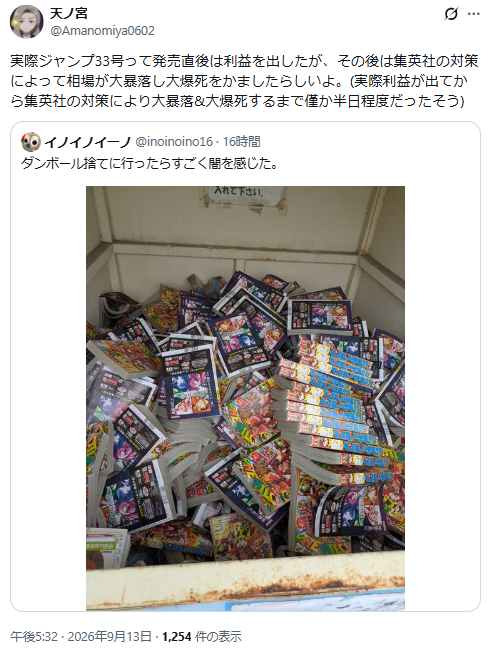
However, the photo alone does not reveal who purchased the discarded Weekly Shonen Jump issues, and there is currently no evidence confirming that the pile was actually connected to resale activity.
Even so, the sight of so many perfectly readable manga magazines being discarded like waste paper has left many people feeling disheartened.