
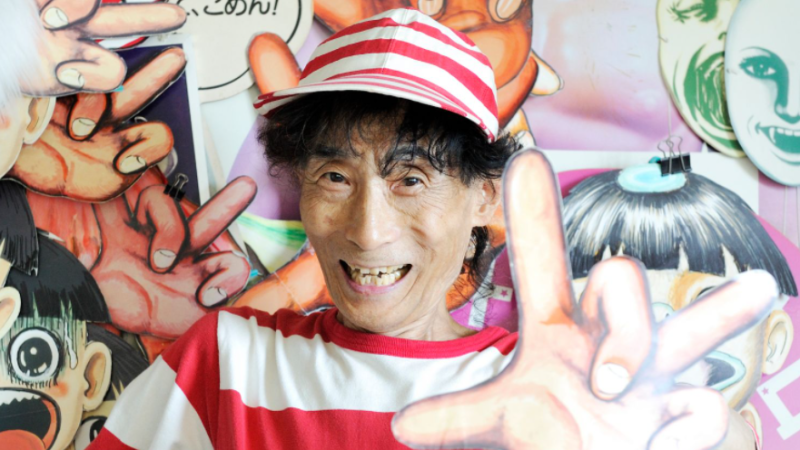
Since the Edo period, Kabuki and Noh theater have frequently staged classic rural horror legends, meaning horror culture in Japan has a history of over 300 years. Over such a long period, Japan evolved a unique 'Japanese Horror' style (J-Horror). In the 1950s, this trend manifested through monsters filled with resentment and rage, with monster films like 'Godzilla' terrifying post-war children; in 1961, an eccentrically dressed manga artist coined the term 'horror manga,' raising the banner of Japanese horror and ushering in a 30-year wave of terror in the Japanese manga world. This master of horror is the 85-year-old Kazuo Umezu (楳図かずお), and what follows are various mysterious legends about him.
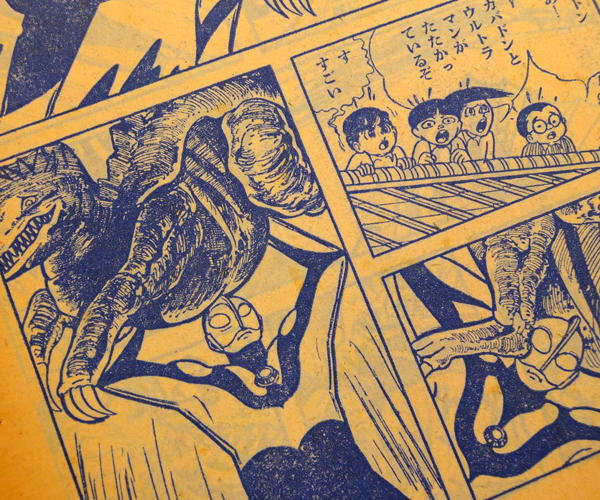
The master also drew Ultraman Image credit:はしもと玩具店
The One Who Defined Horror
Umezu's father was an elementary school teacher, and even before Umezu started school, he often heard his father recount various rural legends. For example, these included the legend of Anchin and Kiyohime from Kishu, and the legend of the Turtle Pond in Soni Village, Nara Prefecture. The common protagonist in these legends, the giant snake, later became a primary element in Umezu's story concepts: many snake monsters appeared in Umezu's early works. The snake monsters in these legends were sometimes benevolent, sometimes malevolent; they possessed changeable personalities like humans, but unlike humans, they wielded immense power, capable of instantly destroying anything in their path. This horror element, born from rural legends, imbued Umezu's works with more mystery and persuasiveness than others—resonating with the terrifying folk tales heard in childhood.
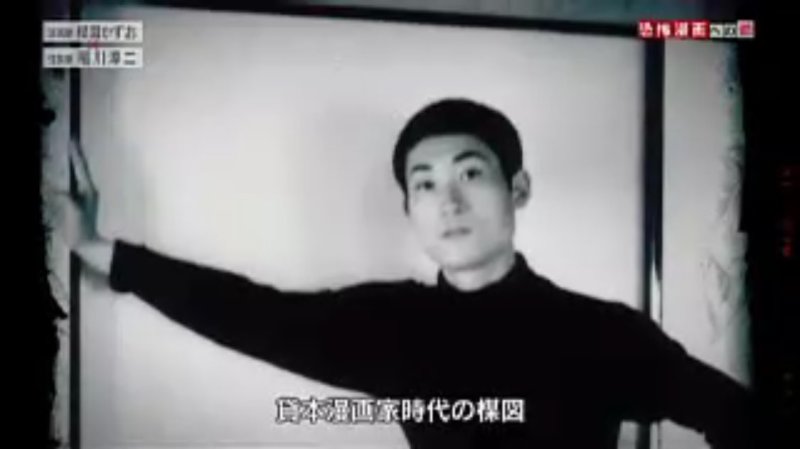
Umezu in his youth Image credit:Twitter
However, beyond these rural legends, Umezu's own imagination was even more astonishing. His 1957 long-form story 'The Girl Who Calls Ghosts' (《呼喚幽靈的少女》) serves as a prime example—this was nearly 20 years before his breakthrough work, 'The Drifting Classroom.' The story describes Midori, who likes her classmate Yukiko's beautiful comb. However, when she steals the comb, she doesn't know it's a memento of Yukiko's deceased older sister. Midori begins to see the sister's ghost appear, warning her that once the amount of hair combed out by this comb reaches a certain quantity, she will die.
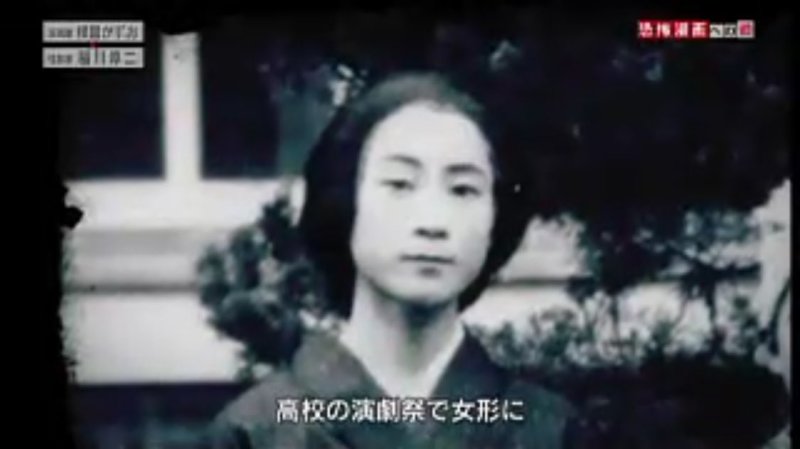
Umezu in his youth Image credit:Twitter
This story contains elements from 'Yotsuya Kaidan,' where vengeful spirits foretell the deadline of human demise (you can see 'Ringu' also borrowed this element). On the other hand, Umezu also utilized the real-life behavior of 'little girls keeping the hair they comb out' to create a death trap that the protagonist unknowingly steps into. When Midori learns from Yukiko that the secret is death once the hair in the cosmetic box is full, and then checks her own cosmetic box at home to find it nearly full, readers are bound to feel immense terror. This delivers a greater scare effect than simply ugly-looking monsters.
Umezu in his youth (center) Image credit:Twitter
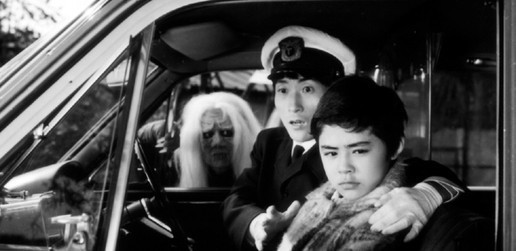
Of course, as Umezz's creative power matured, he imagined all sorts of fantastical plots, such as the collective spatiotemporal transfer in "The Drifting Classroom," the AI robot and network in "Watashi wa Shingo," and the brain transplant surgery in "Baptism," all featuring plot designs that transcended contemporary understanding, while also incorporating familiar traditional fairy tales or elements. Thus, Umezz became the master who defined "horror" in the Japanese manga world.
In "The Drifting Classroom," through a super-dimensional connection, a mother leaves supplies for her son in the distant future, making it a pioneer of the time-travel theme. Image credit:レア漫画、でもイイ漫画の紹介ブログ
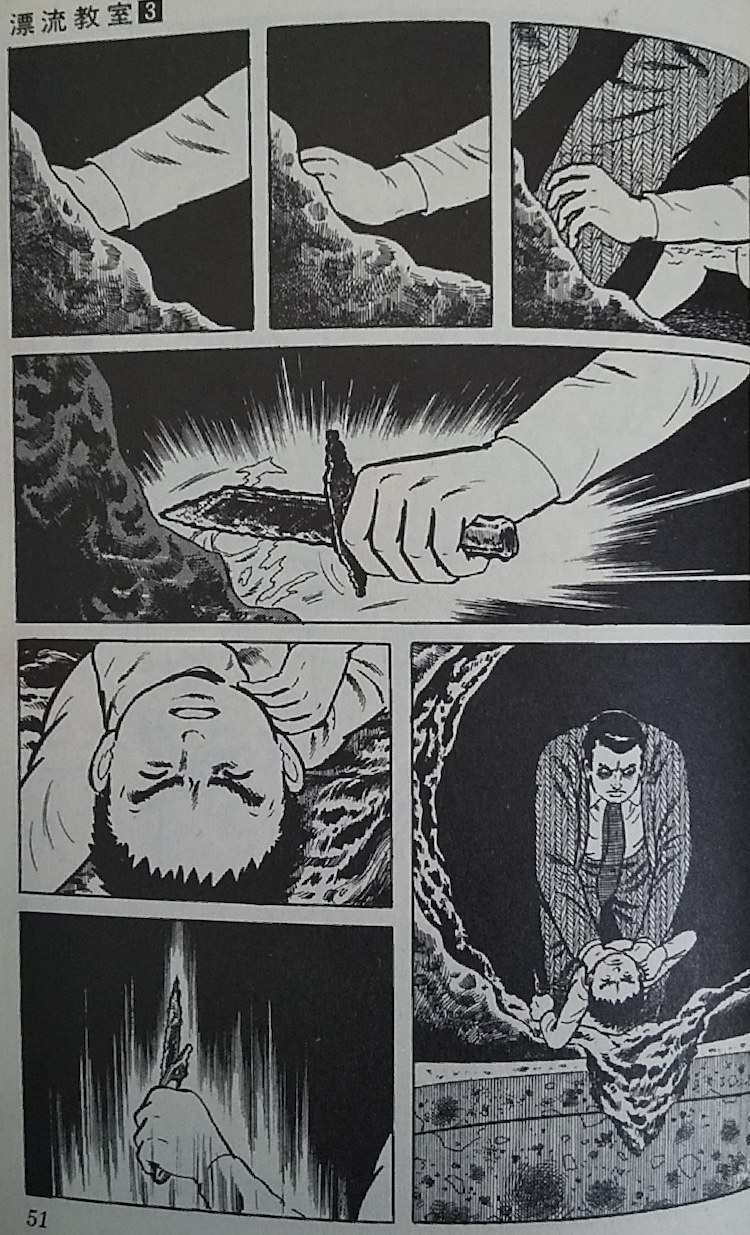
Master of Prophecy
In 1982, Dr. Dorothy Krieger of Mount Sinai Medical Center in New York successfully transplanted part of a rat's brain into another rat. This significant medical news must have sent a chill down the spines of many Japanese readers who loved Umezz's works: as early as 1974, Umezz's manga "Baptism" featured a plot where a mother performs brain transplant surgery on her daughter to gain youthful beauty.
1974-1976 work "Baptism" Image credit:楽天市場
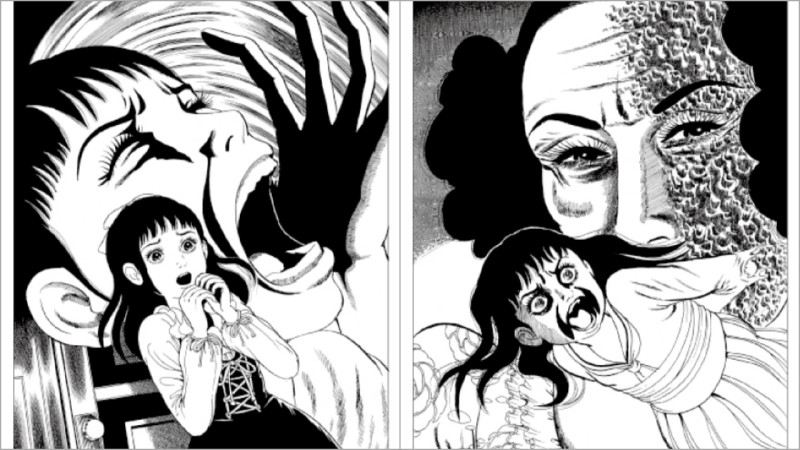
Umezz's imagination is astonishing, and "astonishing" is no exaggeration, as Umezz has predicted a vast number of future technologies and natural disasters in his manga, all purely from his personal imagination. He once predicted a major earthquake in Japan's Tohoku region in "The Drifting Classroom"; he predicted the 2013 volcanic eruption of Nishinoshima in the Ogasawara Islands, and even predicted that Nishinoshima would grow larger due to lava accumulation. However, no one knows when natural disasters will occur. Anyone can casually claim that a major earthquake might happen somewhere on a certain day, and it might come true decades later. This alone does not prove Kazuo Umezz's prophetic powers.
1972-1974 work "The Drifting Classroom," which is likely the most familiar of Umezz-sensei's works to Taiwanese people. Image credit:amazon
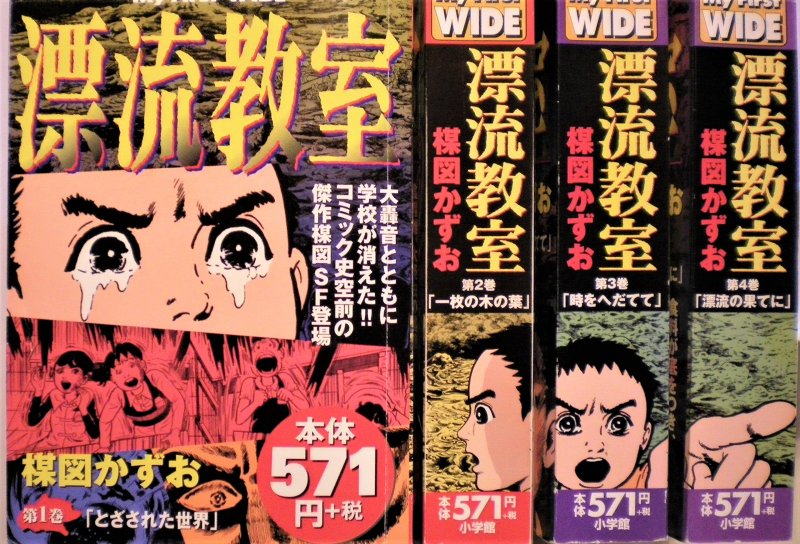
The best example should be Umezz's "Watashi wa Shingo," released in 1982. The plot describes two children, Marin and Satoru, breaking into a factory and discovering the latest factory robot, "Monroe," which has taken Satoru's father's job. Marin is about to be separated from Satoru because her father is going to work overseas. This little Romeo and Juliet want to "marry" and have "children." At this moment, Monroe suddenly gains self-awareness. Taking one character from "Marin" (真) and "Satoru" (悟), he names himself "Shingo." As his self-functions rapidly develop, Shingo embarks on a long journey to convey a message from Marin to Satoru.
1982-1986 work "Watashi wa Shingo" Image credit:Amazon
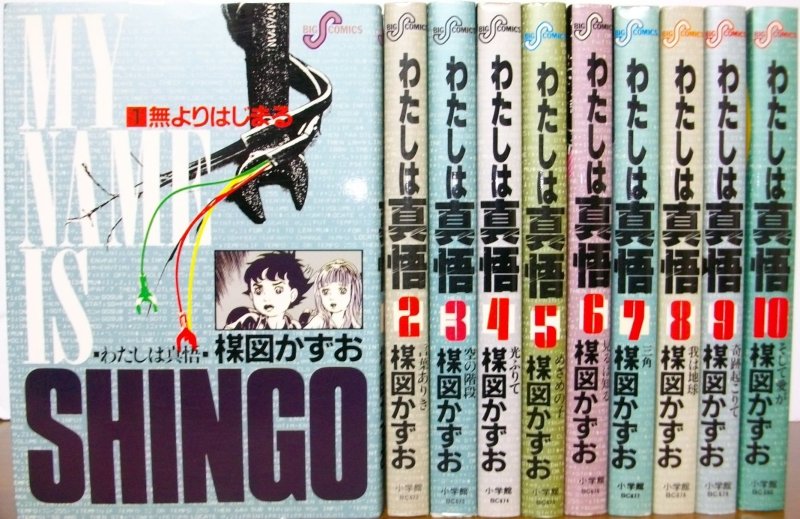
Shingo is a robot that continuously evolves throughout the story, but instead of designing Shingo with more superhuman abilities like flying or teleporting, Umezz chose a completely different approach: Shingo can connect with other mechanical devices, absorb information from them, and even control other machines in return. For modern readers, this brings to mind the concepts of the internet and the Internet of Things (IoT). However, let's reiterate, "Watashi wa Shingo" is a manga from 1982, while the National Science Foundation (NSF) in the United States only created NSFNET, the precursor to the internet, in 1986, and the world's first web browser was born in 1990. In Japan, the first inter-university network interconnection project, WIDE project, only began in 1988. And "Watashi wa Shingo" predates them by many years—not to mention the IoT, which only began commercial development in the 1990s.
"Watashi wa Shingo" Image credit:戰爭を語るブログ
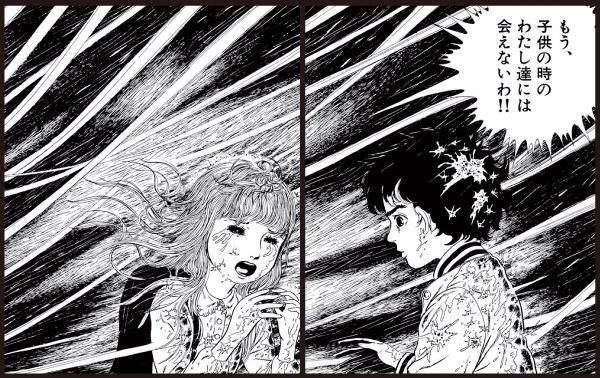
Did Kazuo Umezu consult technical experts during the creation of "My Name is Shingo"? Yes, but he was mercilessly rejected. When Umezu asked a scientist about future technological developments, the scientist told him: "Scientists do not predict the future; science only pursues realistic technology and does not speculate on future fantasies." Umezu was somewhat dissatisfied with the scientist's answer. He felt, isn't science precisely because of certain small changes that it can promote evolution? Can't one predict future possibilities from real-world observations? The rejected Umezu went home and pondered his own future robot.
"My Name is Shingo" connecting to the internet Image credit:itmedia
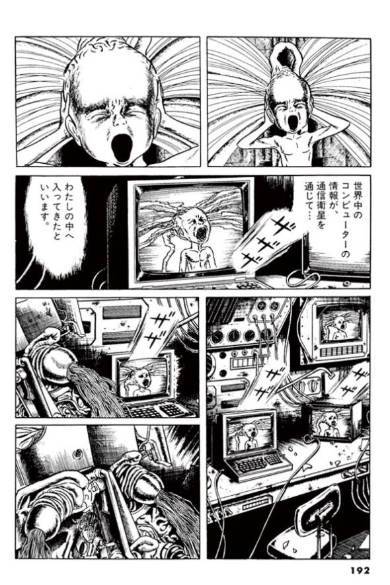
In the story, Shingo also connected to artificial satellites, gaining a vast amount of knowledge—this is precisely the widely used cloud technology of today. Umezu, without any expert assistance, naturally conceived these groundbreaking ideas... He is a true master of prophecy.
"My Name is Shingo" communicating with a remote control: almost predicting mobile phones Image credit:マンバ
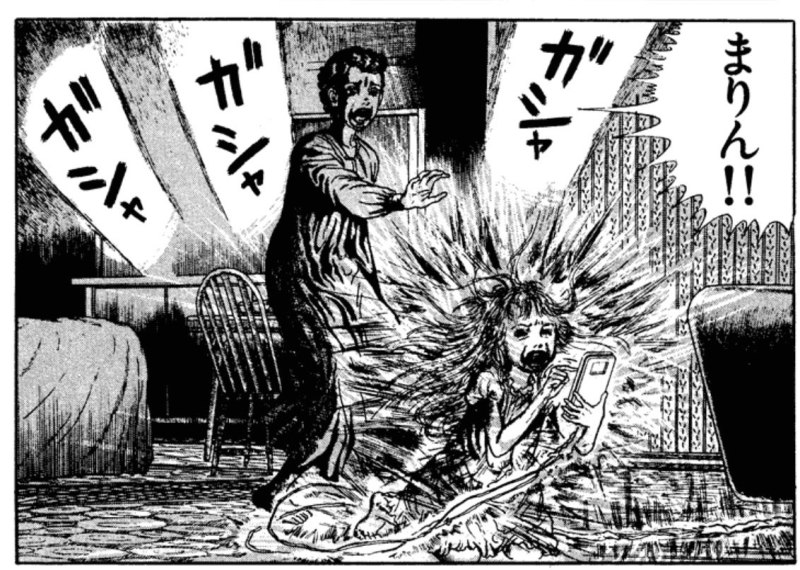
Image credit:umezz-art
Terror Summons Terror
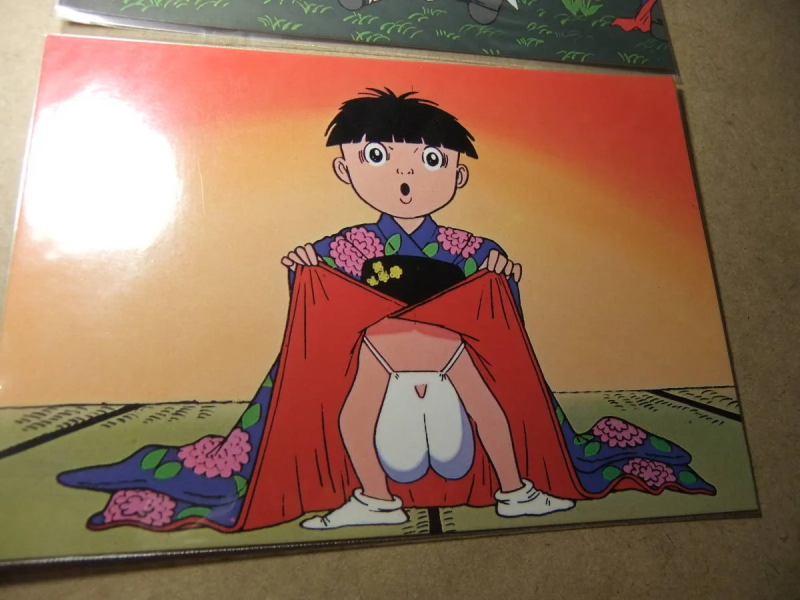
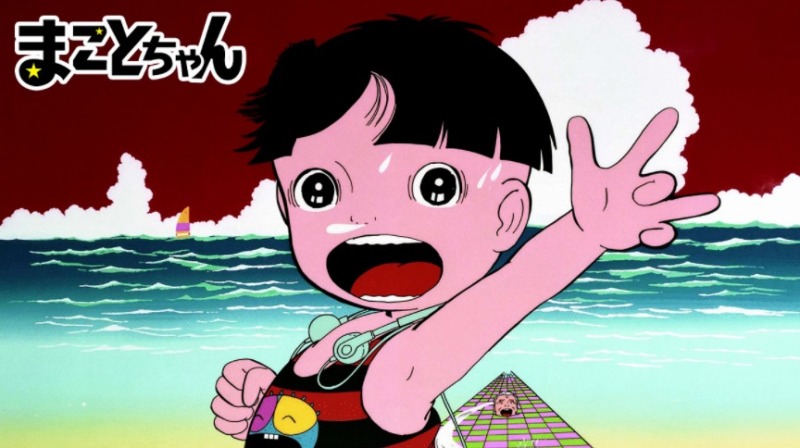
What is the horror master's best-selling horror manga? Unfortunately, Umezu's best-selling work is a comedy manga starring a kindergarten student, "Makoto-chan" (まことちゃん). This Showa-era "Crayon Shin-chan" achieved high sales, with its risqué jokes, unique terminology, and the protagonist "Jin Waiguai" (Taiwan's translation at the time) and his special hand gesture (palm open, middle and pinky fingers bent) becoming a social trend in Japan at the time.
"Makoto-chan" Image credit:Aucfree
But why did Umezu suddenly change his style after decades of creating horror manga to draw a chaotic kid's family comedy manga? There are many theories, and one popular one is: One day, Umezu was drawing in his studio late into the night when a fan suddenly visited—a beautiful woman with long hair. Umezu reluctantly chatted with her... and she truly seemed to be a fan, as she was very familiar with the details of Umezu's horror manga. Finally, this long-haired fan made a strange request to Umezu:
"Please don't draw about me anymore." At this moment, the fan's long hair drifted open, revealing where her eyes should have been, but there was nothing there...
"Makoto-chan" Image credit:鞆の浦に暮らす、映画好きの料理人ブログ
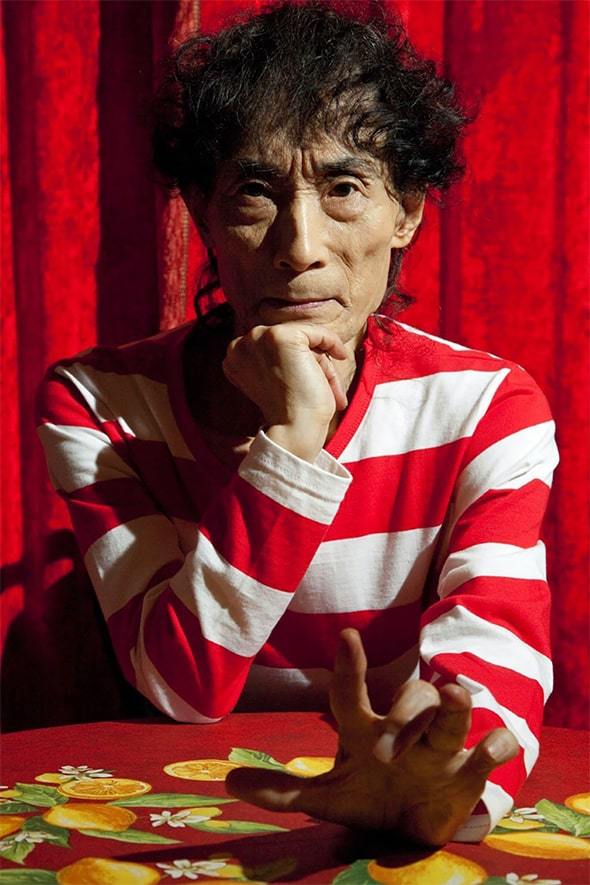
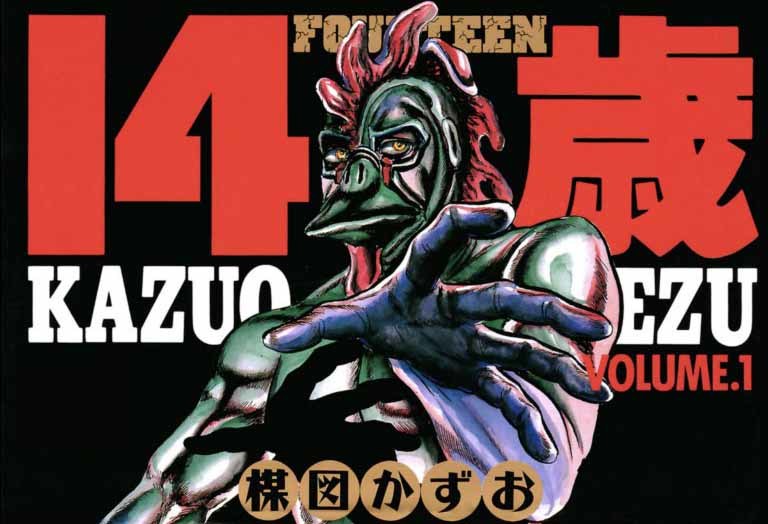
Umezu was terrified, so he built his house to be incredibly flamboyant, painting the walls with fluorescent colors; when he went out, he always wore bright red and white striped clothes. This was because Umezu heard that ghosts dislike brightly colored, high-contrast places... and because of this, he switched to drawing "Makoto-chan," which had no ghosts, no monsters, only crude jokes. Umezu recounted this "midnight ghost fan" story in numerous interviews, and whether it's true or false, no one can verify. However, after the serialization of "Makoto-chan" ended, Umezu immediately resumed serializing horror manga, including the later "My Name is Shingo," "The Left Hand of God, The Right Hand of the Devil," and "14-sai" (14 Years Old), among others... Master Umezu was probably just joking...
1990-1995 work "14-sai" Image credit:Twitter
However, some readers firmly believe that Umezu's works after "Makoto-chan" indeed featured fewer ghost-related themes... Did Mr. Umezu truly encounter a ghost? We'll leave that to your imagination.
From an Extravagant Mansion That Scared Away Ghosts to a Haunted House
Image credit:絶対に話したくなる!アニメやゲームの都市伝説

As mentioned earlier, this newly built, extravagant mansion by Umezu was painted with his signature red and white horizontal stripes on the exterior, and featured grand Roman-style columns at the entrance. This Kichijoji mansion, named "Makoto-chan House" (まことちゃんハウス), sparked resentment among neighbors during its construction in 2007. They claimed it was a "strange house that disregarded the surrounding landscape" and called its bold color scheme "color violence." They even filed for a provisional injunction with the court, demanding a halt to the construction. Although the court revoked the provisional injunction, the neighbors then initiated a civil lawsuit demanding the removal of the red and white striped exterior. In 2009, the court ruled in Umezu's favor.
鄰居不滿爆發 Image credit:rakuten
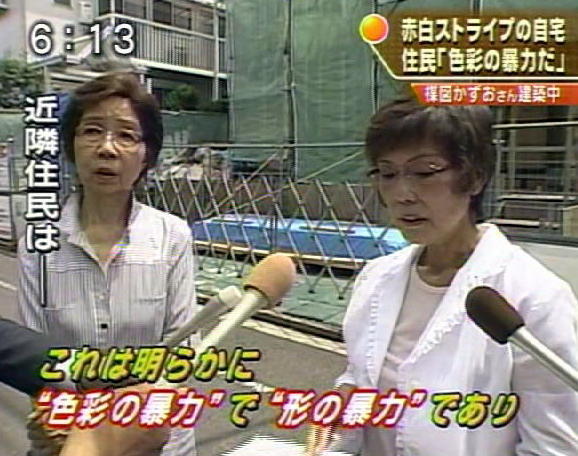
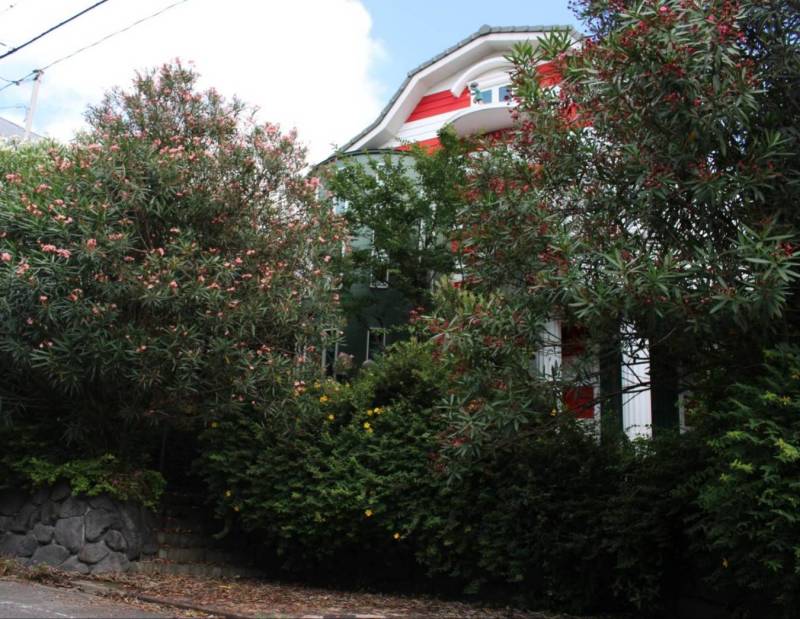
What kind of "visual violence" did this residence truly inflict? Even now that it's completed, many still cannot understand the core of the neighbors' complaints back then. During those two years, Umezu, who had already announced a hiatus from manga work, found himself in an inexpressible predicament. When facing the media, he only expressed his commitment to mending relations with his neighbors, and even his lawyer refused to make any public comments. Setting aside the fact that the red and white stripes on the exterior were merely a bit vibrant, in reality, the numerous Japanese fir trees in the garden have, after more than a decade, grown into a tree wall that obscures most of the mansion's exterior. From the outside, only a glimpse of the red and white roof is visible. Where did the neighbors' anger truly stem from?
宣判審判結果 Image credit:Twitter

This incident caused Umezu immense psychological trauma, and he did not move into the mansion after the lawsuit concluded. Initially, he hoped it would become a base to attract fans worldwide—the distinctive red and white stripes would allow international fans to instantly recognize it as the residence of Master Umezu. However, he did not anticipate that his earnest efforts to revitalize Japanese anime and manga culture would first be harshly rejected by local residents, preventing the Makoto-chan House from becoming a local tourist hub like the Ghibli Museum in Mitaka. Kichijoji was originally a gathering place for manga artists, including Tetsuo Hara of "Fist of the North Star," Katsuhiro Otomo of "Akira," and Yumiko Oshima of "The Star of Cottonland," all residing there. Yet, the Makoto-chan House, which could have been a landmark for Kichijoji's manga culture, instead became an abandoned, uninhabited "haunted house."
現在的狀況 Image credit:日刊大衆
The 85-Year-Old's Revival
After 1995, Umezu ceased his drawing work due to tenosynovitis. Of course, this was just one reason; Umezu, who had worked continuously for over 30 years prior, decided to take a well-deserved long break. After 2000, Umezu became known to more new-generation audiences due to film and television adaptations of his works—though they may not have actually read Umezu's original works like "The Drifting Classroom" or "Makoto-chan." After 26 years of semi-retirement, Umezu announced he would once again release a new manga work, slated for next January.
After 26 years, Master Umezu, who became a TV personality and film director, is finally set to reclaim his identity as a manga artist. Kazuo Umezu, at 85 years old, is about to embark on the next chapter of his life.