

When "Romance of the Three Kingdoms" is mentioned, most people's first association is likely with "Koei" (KOEI, now Koei Tecmo), the long-established Japanese game company.
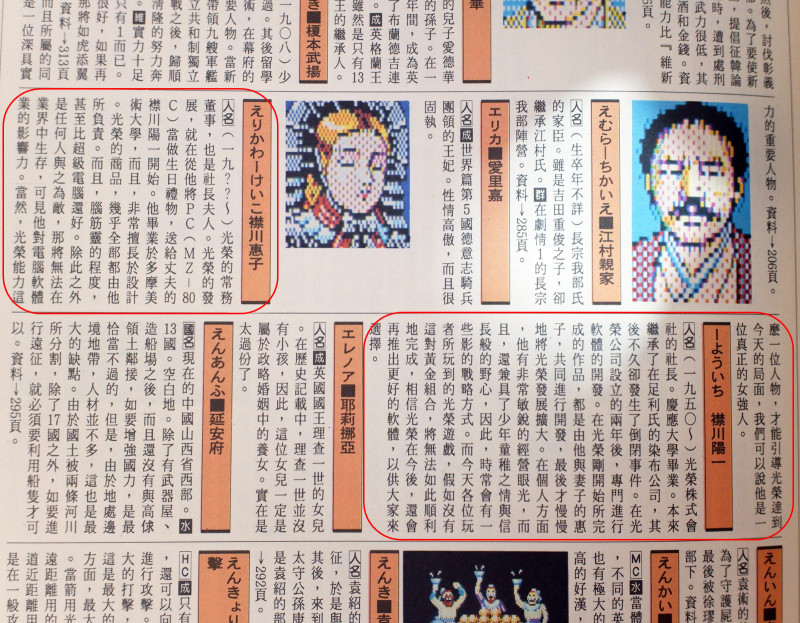
Koei initially transformed from a struggling, near-bankrupt dye company into a game software developer, eventually becoming a major, influential game publisher in its own right. The catalyst for all of this can be traced back to the moment when then-president Yoichi Erikawa received a SHARP MZ-80C personal computer as a gift from his wife, Keiko, a moment that profoundly altered Koei's future destiny.
▼The "Koei Terminology Encyclopedia" in Xiaohu's possession also mentions Koei founders Yoichi Erikawa and his wife Keiko. Image credit:KOEITECMO
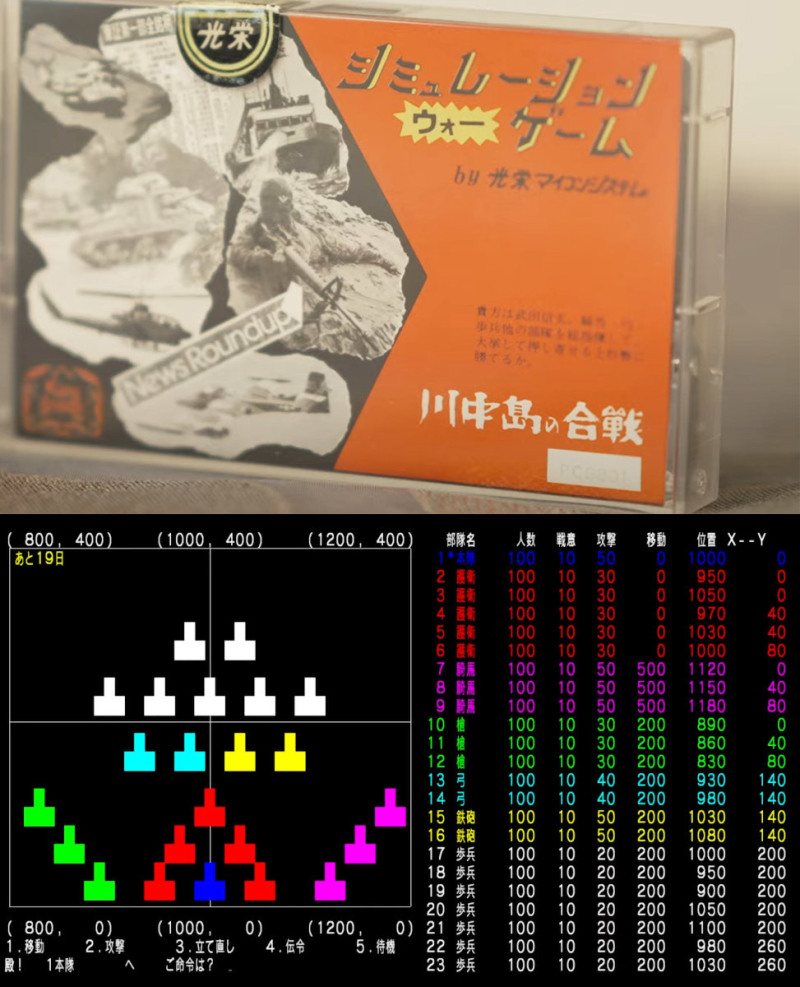
▼Koei's first game product, "Kawanakajima no Kassen," released in 1981. Image credit:YouTube
In the following years, Koei gradually stabilized its position in the game market, particularly excelling in the historical strategy simulation genre, where it was virtually unrivaled. Titles like "Nobunaga's Ambition" in 1983, and "Aoki Ōkami to Shiroki Mejika" and "Romance of the Three Kingdoms" in 1985, began to firmly associate Koei with the image of "historical simulation."
However, if you ask current players about Koei's image, many would likely answer with the term "Musou" (or Nioh). Indeed, in an earlier era, most players would probably have found it hard to believe that Koei would later become one of the major action game developers. "Musou" was a crucial turning point in this transformation.
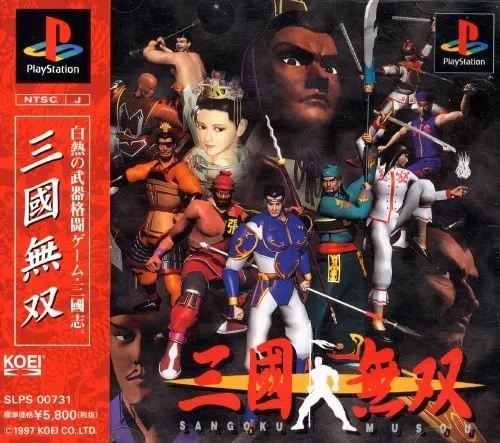
▼In 1997, Koei released "Sangokumusou," a 3D fighting game, on the PlayStation console, marking a significant breakthrough for the company into the action game genre. Image credit:KOEITECMO
The "Three Kingdoms Action Game" Craze Before the "Musou" Series
Try asking yourself: do you remember which work first sparked your strong interest in the Three Kingdoms? Many veteran players might answer not with Koei's Romance of the Three Kingdoms, but with CAPCOM's arcade version of "Tenchi wo Kurau" (吞食天地), released in April 1984.
▼Gameplay screenshot of the first arcade version of "Tenchi wo Kurau" (吞食天地). This game was based on the manga "Tenchi wo Kurau" (天地を喰らう) by renowned manga artist Hiroshi Motomiya. Image credit:ゲーム文化保存研究所
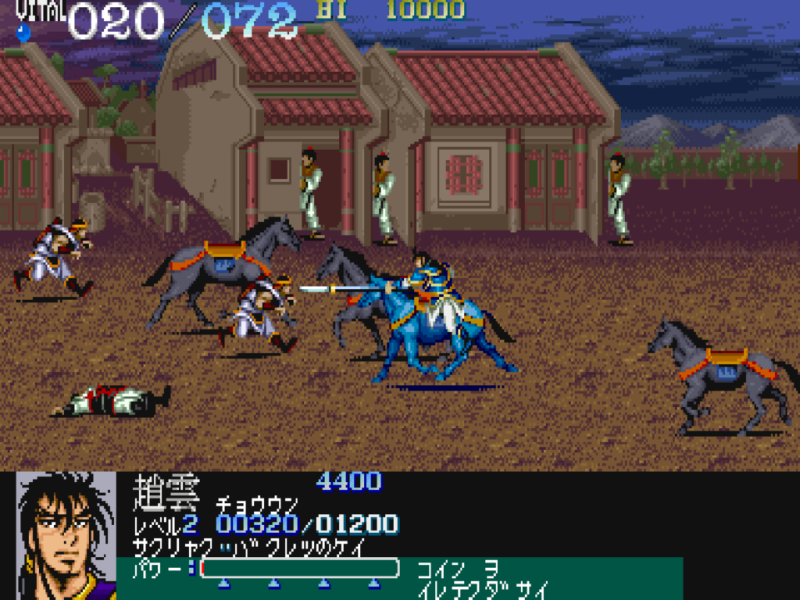
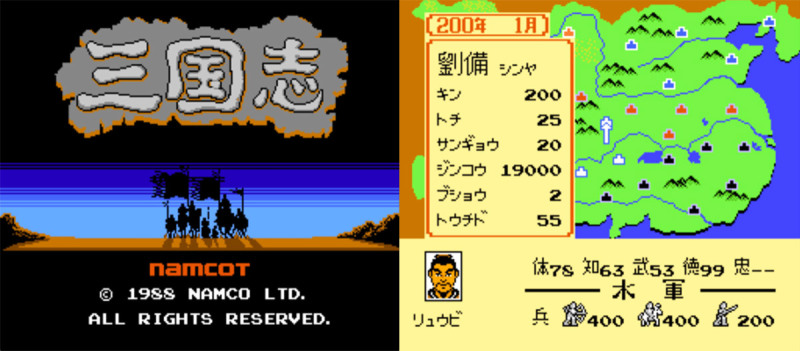
For Taiwanese players at the time, even though the Nintendo Famicom had successively seen NAMCOT*'s "Sangokushi - Chuugen no Hasha" and Koei's port of the first "Romance of the Three Kingdoms" (released on 1988.10.30), the strong impression left by these titles likely couldn't compare to the "horseback battle" game that many people surely saw in arcades just a few months later.
*Note: NAMCOT was the brand name used by the old NAMCO era (1984-1995) for home console releases.
▼NAMCOT's "Sangokushi - Chuugen no Hasha" (released on 1988.7.29). Image credit:Bandai Namco
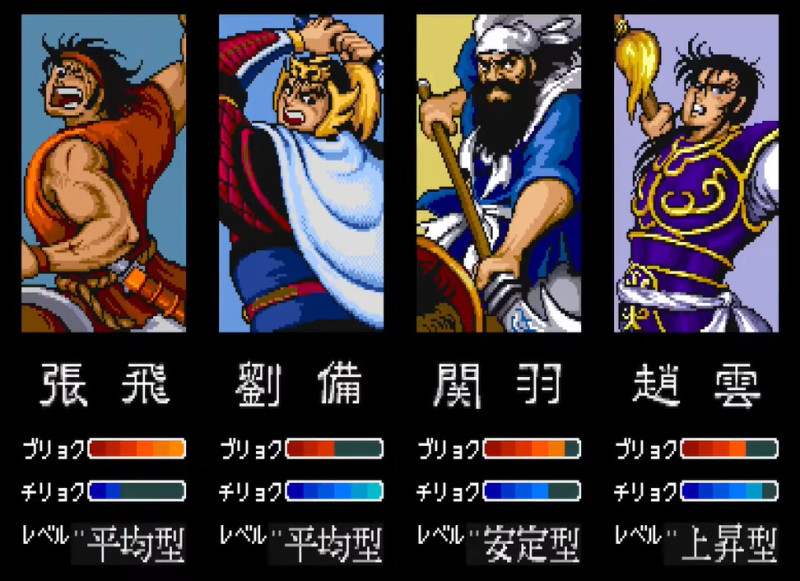
After all, compared to obscure and difficult-to-understand Japanese commands, action games leave the strongest impression. Drop in five coins, and you immediately enter the character selection screen with prominent names. Zhang Fei, Liu Bei, Guan Yu, Zhao Yun – it was from this moment that Xiaohu himself took his first step in recognizing the characters of the Three Kingdoms, embarking on the world of Romance of the Three Kingdoms.
▼The first generation offered four playable characters: Liu, Guan, Zhang, plus Zhao Yun. Image credit:Bandai Namco
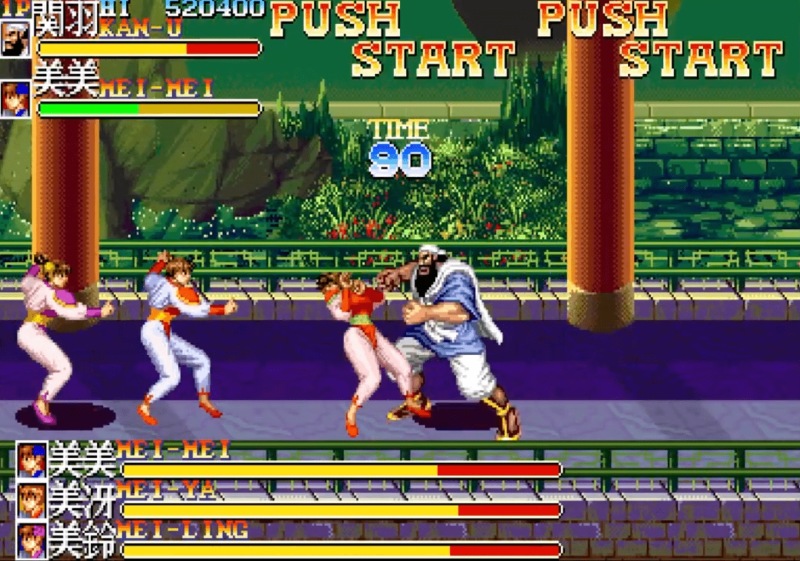
▼What most players are familiar with as a side-scrolling ACT is actually the second generation - "Dynasty Wars II: Battle of Red Cliffs" (天地を喰らう2 赤壁の戦い). This game was based on the "Tenchi wo Kurau" (天地を喰らう) manga by renowned cartoonist Hiroshi Motomiya. Image credit:ふたまん+
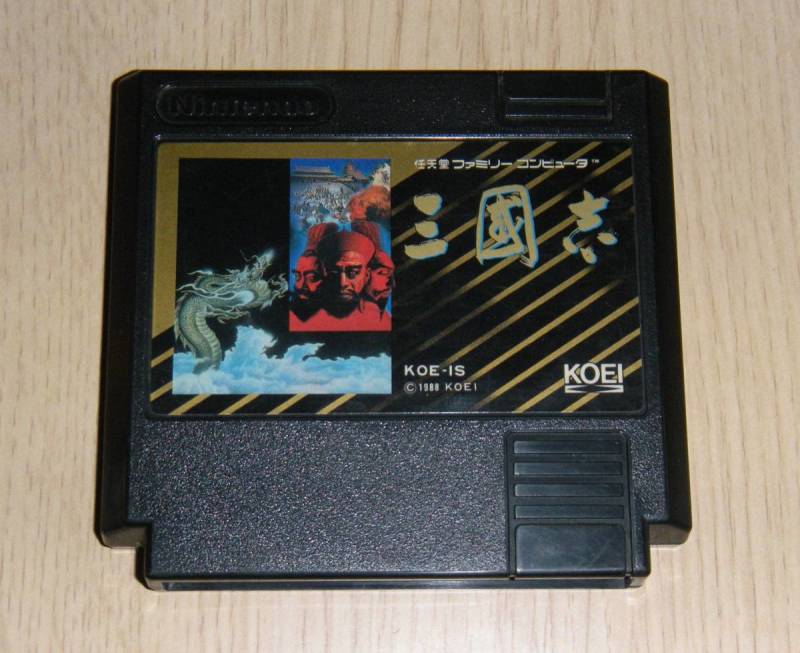
After witnessing the arcade's spectacular performance, the natural next thought was to look for similar games on home consoles. I believe many, like Xiaohu, excitedly bought a Famicom cartridge labeled "Romance of the Three Kingdoms" only to find, upon booting it up, not an action game like those in the arcade, but a screen full of incomprehensible Japanese characters. After about half an hour of play, filled with disappointment, they quietly turned off the TV and went to their rooms to cry.
▼The first "Romance of the Three Kingdoms" game was originally released in 1985 on the PC-8801mk2SR platform and ported to the Famicom in 1988. Image credit:ヤフオク!
At that time, Koei did not yet have the capability to create action games with both impressive visuals and sound like Capcom. Koei was then merely a game developer that had just found its footing in the personal computer sector, focusing on historical simulation games. However, the emergence of "Tenchi wo Kurau" (Dynasty Wars) certainly had a certain degree of influence on Koei when they later released "Dynasty Warriors".
The Local Three Kingdoms Fighting Game: "Romance of the Three Kingdoms: Warlords Battle"
But first, a quick digression: while "Dynasty Warriors" might be Koei's first Three Kingdoms-themed fighting game, if we're talking about the very first fighting game featuring Three Kingdoms warlords as its subject, that throne belongs to Taiwan's "Panda Software" from back in the day. In 1993, they released a 2D fighting game with a Three Kingdoms theme on the PC platform, titled "Romance of the Three Kingdoms: Warlords Battle".
▼A screenshot from "Romance of the Three Kingdoms: Warlords Battle 2," where familiar moves like "Meteor Chasing the Moon," "Overwhelming Mountains and Seas," and "Sweeping Thousands of Armies" originated.
In an era when hardware was not yet very advanced, Panda Software's ability to overcome numerous challenges and release this game on the PC platform was truly eye-opening. Moreover, the gameplay experience was quite good, and the addition of Chinese voiceovers for the moves made the game significantly more vibrant. After its release, the game received widespread acclaim. In 1995, "Romance of the Three Kingdoms: Warlords Battle 2" was released, adding new characters and improving overall performance. Ironically, in 1997, the same year Koei launched "Dynasty Warriors," Panda Software also closed its doors and ceased operations.
The Birth of "OMEGA FORCE," the Development Team Hailed as the Ultimate Weapon
Surprisingly, in the early nineties, action games based on the Three Kingdoms story seemed to be limited to Capcom's adaptations of "Tenchi wo Kurau" (Dynasty Wars). Koei, for its part, was largely focused on quietly cultivating the "historical simulation" genre. Even by 1994, when Sega launched the Saturn and Sony launched the PlayStation, ushering in the era of 3D polygons, Koei's "Romance of the Three Kingdoms" had already reached its fourth iteration, yet all of them remained SLG-type simulation games.
▼The SS version of "Romance of the Three Kingdoms IV," a next-generation console "Romance of the Three Kingdoms" title, differed not only in its more beautiful graphical interface but also included live-action video sequences and enhanced musical performance. Image credit:YouTube
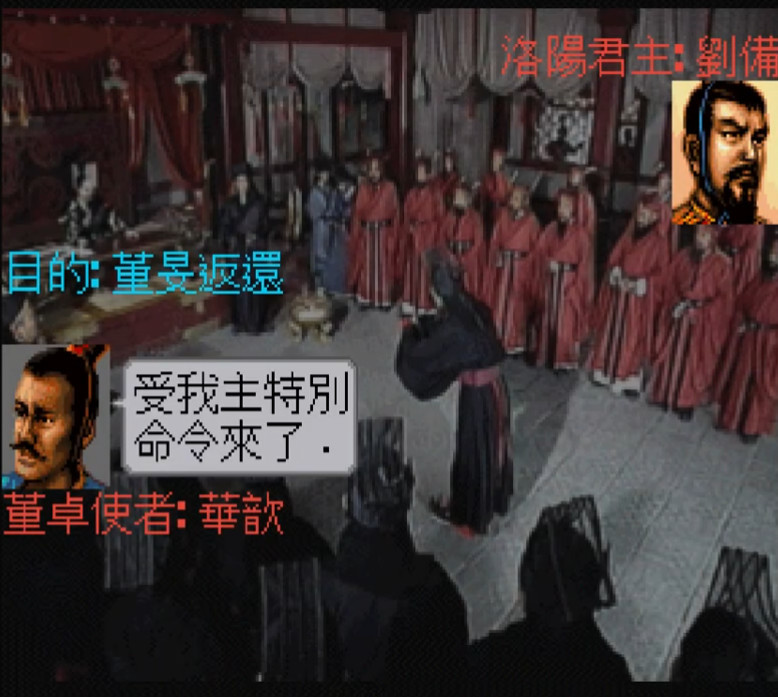
In fact, besides historical simulation games, Koei also released titles like the queen-raising game "Angelique" (アンジェリーク), action RPG "Brandish" (ブランディッシュ, Brandish, developed for Falcom's SNES port), and "Mahjong Taikai." However, they had never attempted a purely action-oriented game. To adapt to the trends of the new era and determined to break new ground, Koei established a new team of fewer than twenty people.
This highly anticipated new department was regarded as the company's "ultimate secret weapon," so Koei wanted to give it a special name. Initially, they considered using the English letter "Z," but found it too common. Their thoughts then turned to the Greek letter "OMEGA" (ω). However, simply using this name would clash with the famous watch brand Omega. So, they added "Force," a homophone for "fourth," to evoke a sense of "ultimate power." This is the origin of the Omega Force (ω-Force) team.
▼Anyone who frequently plays Koei's Musou games will certainly be familiar with this logo and name. Image credit:KOEITECMO
▼Mr. Kenichi Ogasawara, one of the founding members of the Omega Force team (currently Managing Executive Officer of KT Games), was the General Planner for the PS "Dynasty Warriors" at the time. Image credit:KOEITECMO

The Omega Force team's debut work, released in 1997, was the aforementioned "Dynasty Warriors." It was a 3D polygonal character modeling fighting game, and its release truly surprised many players, who never imagined Koei had the ability to create such a game.
▼The cover of "Dynasty Warriors," released on PlayStation in 1997. Image credit:KOEITECMO
▼In the opening animations of the various Dynasty Warriors games throughout history, the first one to appear is "Dynasty Warriors" on the PS console. Image credit:KOEITECMO
The Rising "Fighting Game Craze": Three Kingdoms 3D Fighting Joins the Fray
From the opening animation of Dynasty Warriors above, we can see the Three Kingdoms generals rendered in 3D polygons for the first time, and it's also evident that some generals already bear the hallmarks of "Dynasty Warriors." For Koei's first foray into the action game genre, choosing to try a fighting game is actually not difficult to understand.
From the late 1980s to the early 1990s, thanks to CAPCOM's "Street Fighter," 2D fighting games were extremely popular. Many famous fighting games, or action games derived from similar gameplay, were released during this period, such as CAPCOM's own "Final Fight," "Dynasty Wars 2: Battle of Red Cliffs," SNK's "Fatal Fury," "Samurai Shodown," "The King of Fighters," as well as SEGA's "Virtua Fighter" which utilized 3D polygons, and NAMCO's "Tekken," "Toshinden," and so on.
▼SEGA's "Virtua Fighter," released in 1993, brought fighting games into a whole new realm of 3D polygons. Image credit:YouTube
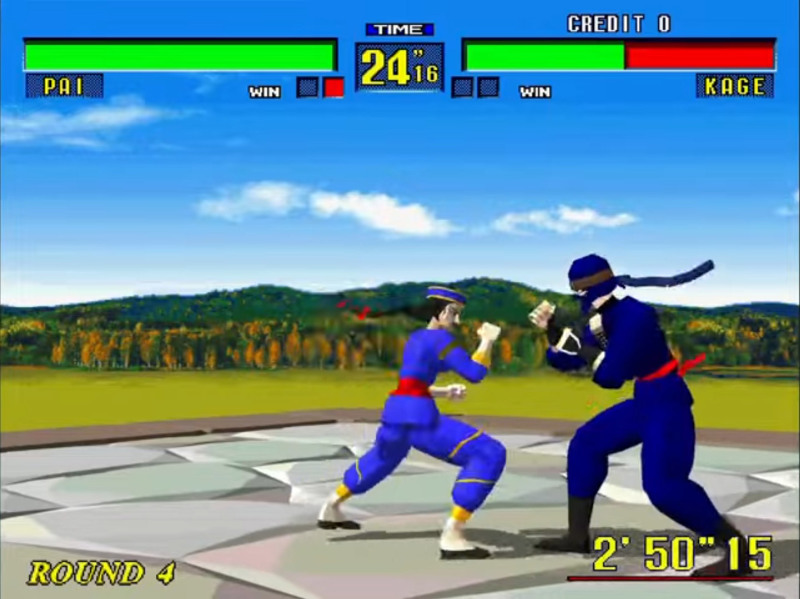
Koei has produced numerous Romance of the Three Kingdoms games over many years, possessing ability data for hundreds of Three Kingdoms generals. From this, selecting famous, distinctive, and special individuals, quantifying their abilities into physical attack moves, and making them playable characters was, theoretically, not difficult. Fighting games, coincidentally, are lively and multiplayer. Furthermore, players at the time had already seen 3D fighting games like Virtua Fighter, Battle Arena Toshinden, and Tekken, and found polygonal character models fresh. Thus, "a 3D fighting game with a Romance of the Three Kingdoms theme" became Koei's ultimate challenge.
In February 1997, "Dynasty Warriors" was released on the original PlayStation console. The game's opening, as is customary, featured a polygonal character animation, showcasing Koei's achievements. Including hidden characters, the game featured a total of 16 generals from factions such as Wei, Shu, and Wu. Looking back now, the designs of each general already show the prototypes of the current "Dynasty Warriors" series, such as Guan Yu, Zhang Fei, Zhou Yu, Lu Xun, Xu Chu, and others. At the same time, there was also some influence from other games; for example, the iconic character Zhao Yun is a prime example, his design clearly influenced by "Destiny of an Emperor."
▼The two versions of Zhao Yun are truly very similar. Image credit:Capcom Database@Fandom
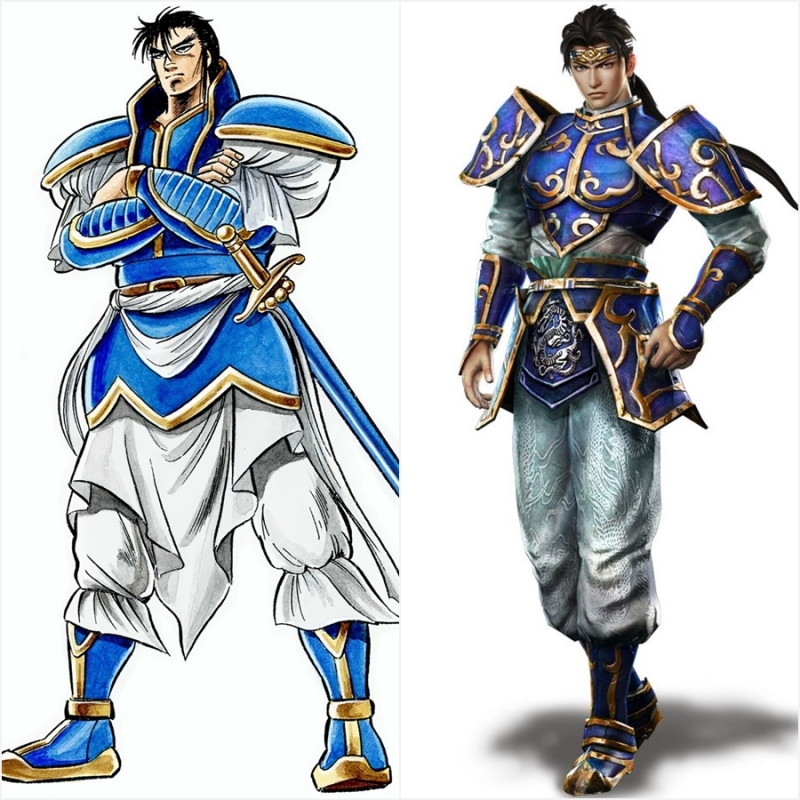
▼The first 3D fighting game featuring Three Kingdoms generals, a major breakthrough for Koei.
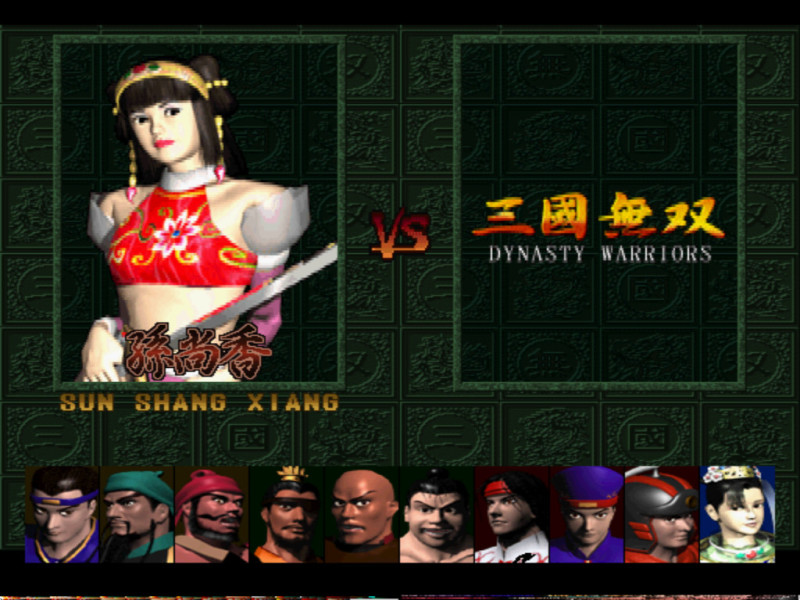
▼The game also features several hidden characters, including Zhuge Liang, Sun Shangxiang, and even Oda Nobunaga and "Kinoshita Tōkichirō." Image credit:KOEITECMO
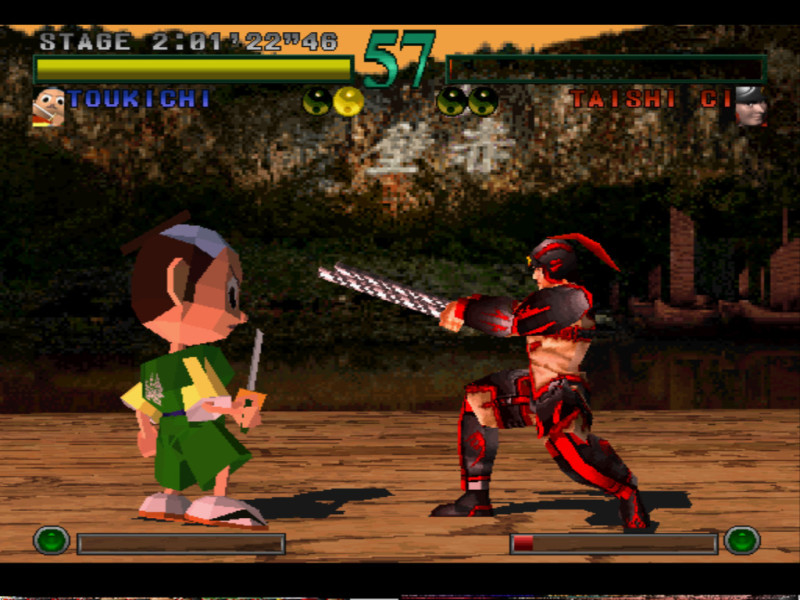
The performance of "Dynasty Warriors" itself was rather ordinary. Koei, with no prior experience in developing action or fighting games, played it safe by imitating other similar titles in terms of fighting game mechanics, and introduced "Musou," similar to a super special move. Character movements and the feel of hits were still a bit stiff; from today's perspective, it certainly isn't perfect, but at the time, it was a fresh and talked-about title, and a significant breakthrough for Koei itself.
▼The most iconic element of this title, the "Strategist Beam," Zhuge Liang received special treatment from Koei as a hidden character. Image credit:KOEITECMO
Although Koei made a concerted effort to break new ground, "Dynasty Warriors" did not seem to create a huge ripple or resonate strongly with players, as its appearance was, after all, unexpected. While fighting games are fun, their narrative expression is often weaker. Integrating elements like strategy and story simultaneously was something Koei, with its capabilities at the time and the hardware limitations of the PS console, could not yet fully achieve. This also implied that if a new, high-spec platform emerged, these ideas might then be realized.
The Birth of the Powerful PS2 Console
After its competitor SEGA launched the Dreamcast in 1998, SONY felt the pressure and accelerated its efforts, announcing the PS2 console in 1999 and releasing it the following year in March 2000. The PS2's powerful hardware capabilities and new DVD storage medium led to a dramatic leap in 3D performance and game capacity, making many game developers believe they could create titles that better realized their visions.
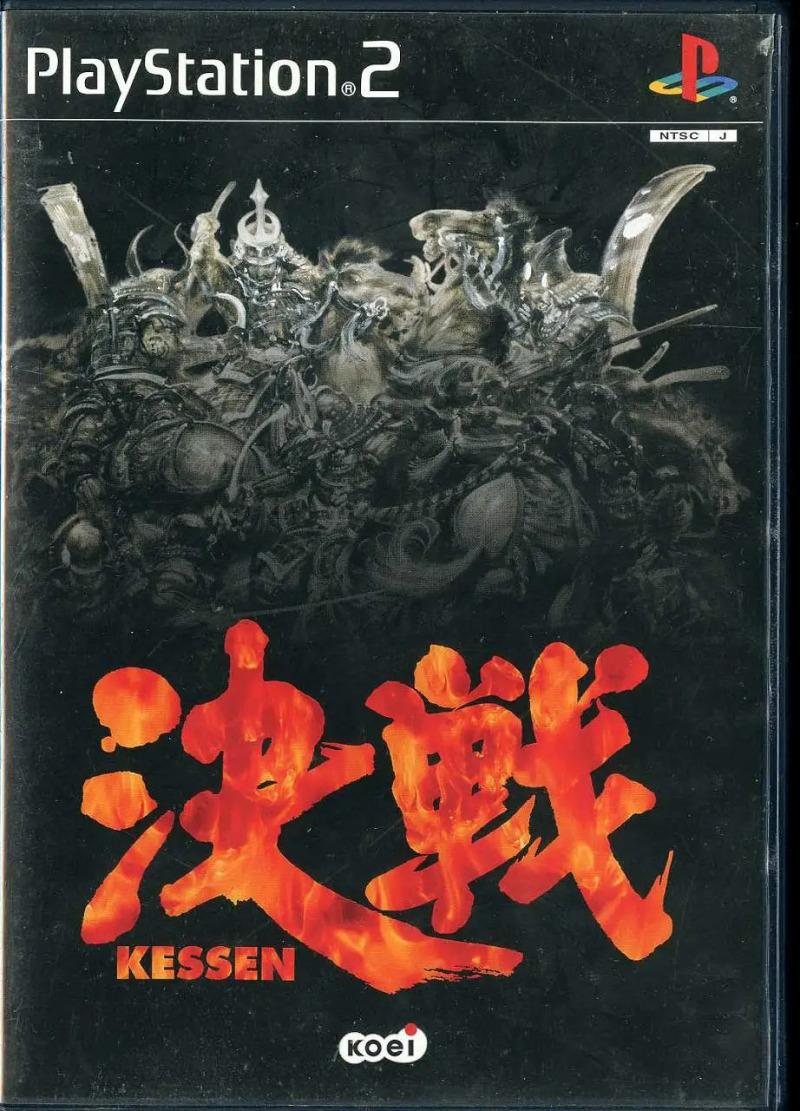
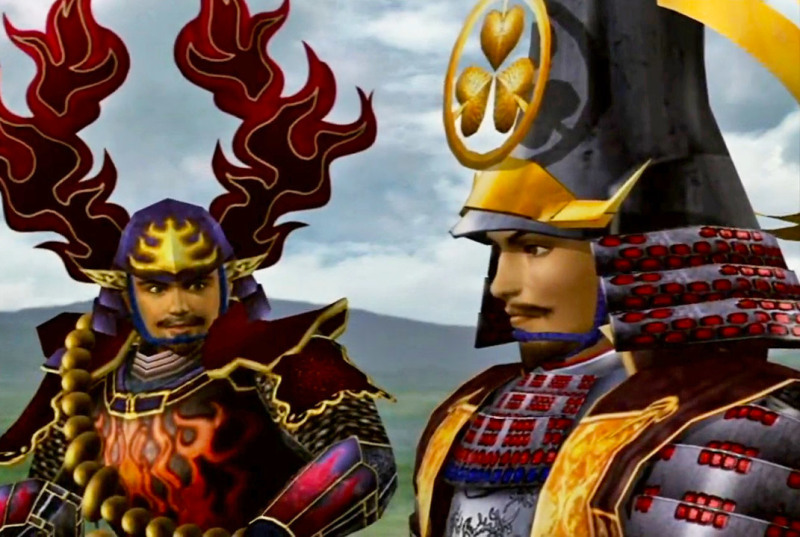
On March 4, 2000, Koei released "Kessen" alongside the PS2 console, a game whose visual performance gave players an entirely new experience. This also revealed Koei's ambitious goal: to depict the grandeur of "a thousand armies and a single warrior holding the pass" through the presentation of a greater number of polygonal models – in short, "Musou."
▼"Kessen" is set against the backdrop of famous battles, allowing players to fully enjoy the thrill of commanding the battlefield. Image credit:YouTube
The Origin of 'One Warrior Against a Thousand': "Kessen"
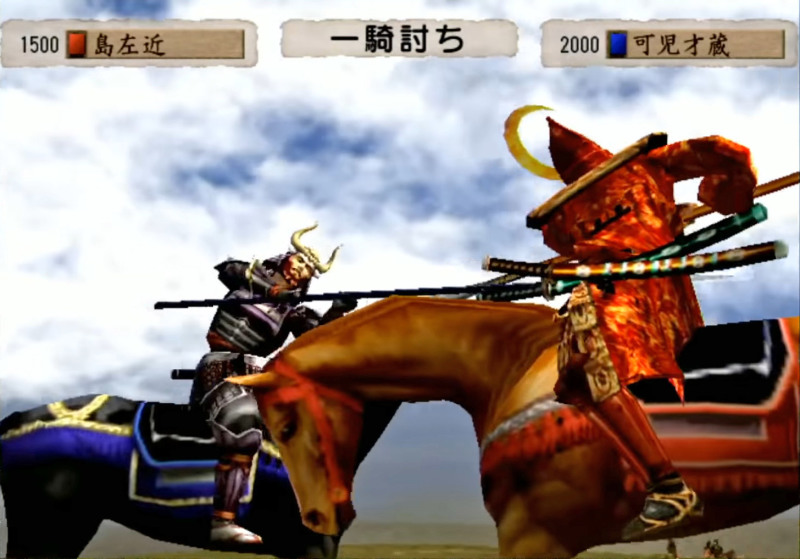
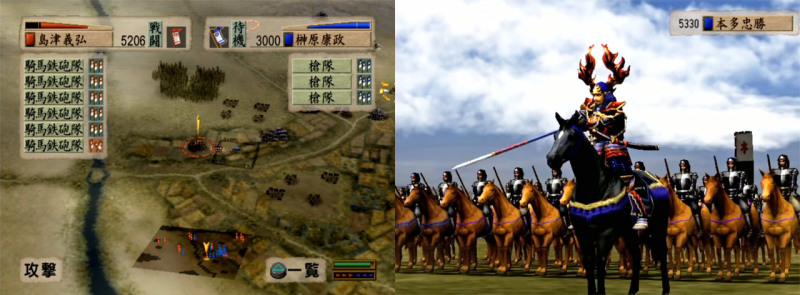
"Kessen" is a rather unique strategy game, themed around specific historical war confrontations. Players take on the role of a commander, issuing orders for battle, with semi-real-time gameplay elements – a genre Koei had not explored before. Although the game's sales popularity was moderate, its unique characteristics were evident through a large number of character models and real-time polygon rendering, recreating battlefields with "thousands of troops and horses," and scenes of more dynamic and elaborate duels between generals. What the original PlayStation console couldn't achieve in the past could now be easily accomplished on the PS2. Large-scale, expansive battlefield maps and simultaneous strategic actions of multiple factions – compared to 1-on-1 fighting games, a title like Kessen was truly Koei's vision for historical-themed games.
▼The duels between generals in the game feature more spectacular and varied actions. Image credit:YouTube
▼Players must simultaneously command the movement of multiple armies, and can feel the sheer number of individual soldiers. Image credit:YouTube
In "Kessen," players transform into a commander, personally leading their allied forces on the battlefield against enemies. What if the player themselves were to become one of the many generals on the battlefield, and fight enemies directly on the battlefield with their own strength? How would that play out? Indeed, the game that brought this idea to fruition is "Dynasty Warriors."
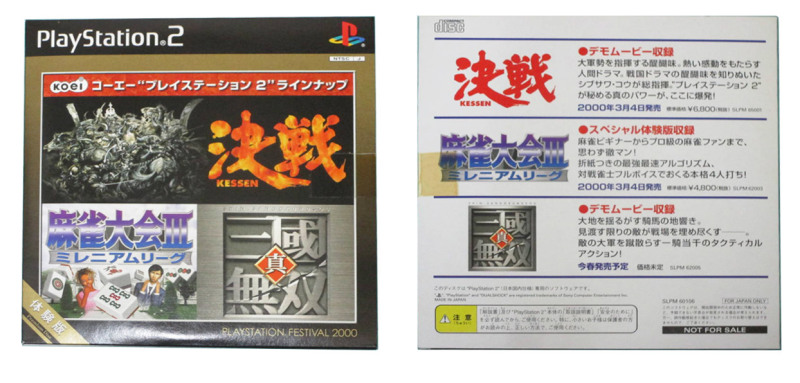
▼Among the demo discs distributed to players in the early days of the PS2 were Kessen, Mahjong Taikai 3, and the "Dynasty Warriors" game, which was scheduled for a later release. Image credit:aucfan
Father of Dynasty Warriors: Takazumi Tomoike
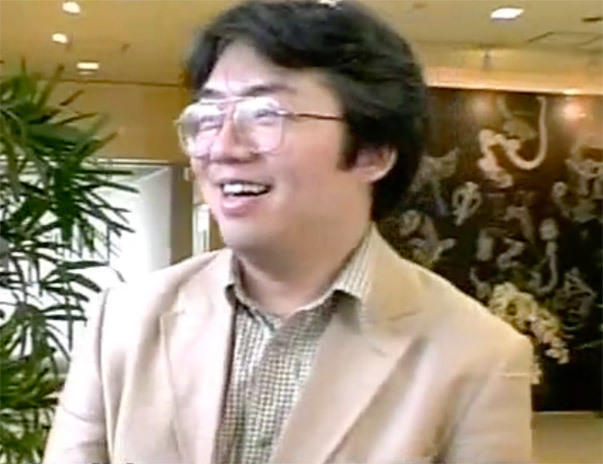
Takazumi Tomoike, the initial leader of the Omega Force team, can be considered the progenitor of Dynasty Warriors (including its initial fighting game iteration). Some players regard him as the "Father of Dynasty Warriors," but he himself is very humble, always attributing the success to the efforts of the entire Omega Force team; even when signing autographs, he would first sign the name Omega Force. Indeed, at the time, in addition to being led by Takazumi Tomoike from the former SEGA AM2 Research and Development division, the team also included excellent programmers such as Tomohiko Sho (current Omega Force Brand Director), Akihiro Suzuki (Dynasty Warriors 3 Director), Takashi Morinaka (Dynasty Warriors 4 Director), and Hisashi Koinuma (current KT President), along with Ogasawara, who was mentioned earlier. These individuals can be said to be the core of the entire Omega Force team.
▼Takazumi Tomoike. Considered the father of Dynasty Warriors, but he always attributes the credit to the entire Omega Force team. Image credit:Internet Archive
▼From left: Hisashi Koinuma, Tomohiko Sho, Akihiro Suzuki. They were all important early members of the Omega Force team. Image credit:4gamer
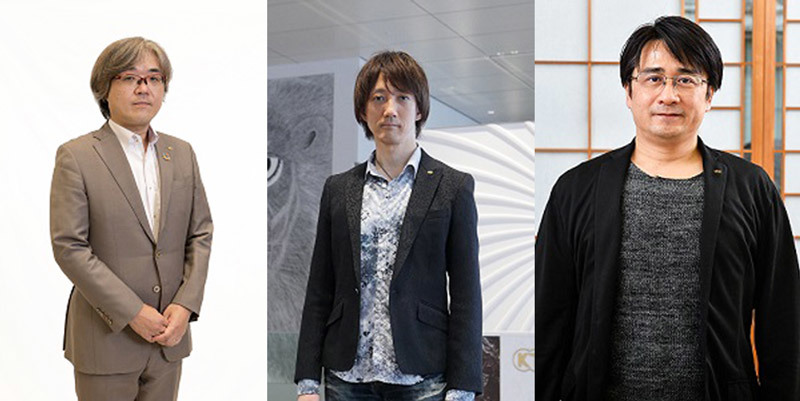
The Omega Force team, led by Takazumi Tomoike, saw the powerful capabilities of the PS2 console and wanted to create a brand new action game. Combining historical themes, action, real-time changes between armies, and multiplayer elements, "Romance of the Three Kingdoms" was precisely the most suitable subject matter. Retaining some of the previous game's controls, using simple light and heavy attacks for combos, and the invincible "Musou" technique that could be unleashed when the gauge was full. Coupled with a blend of historical facts and original elements, and some imaginative, fantastical settings, this new action game gained a very special appeal.
▼"Dynasty Warriors" fully demonstrated the powerful capabilities of the PS2 console, allowing for smooth battles against numerous enemies simultaneously on vast battlefields. Players could also stay informed of the battle situation through real-time messages. Image credit:YouTube
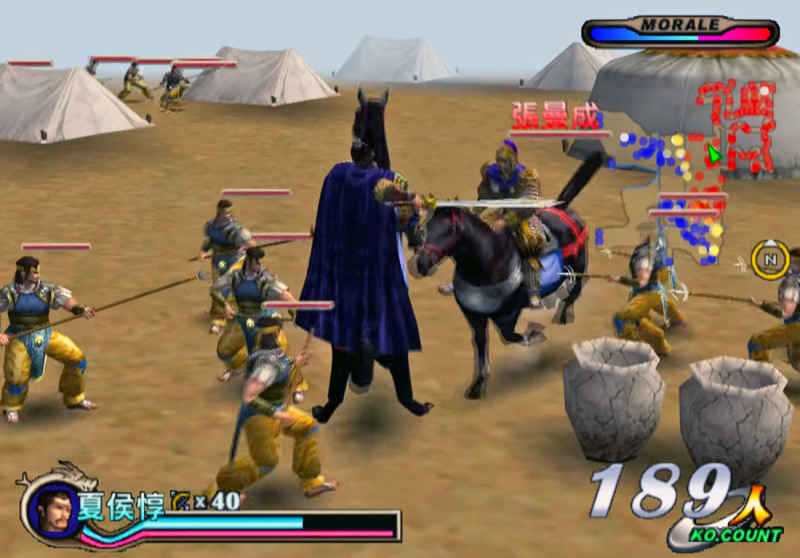
Differences Between Japanese and US Versions
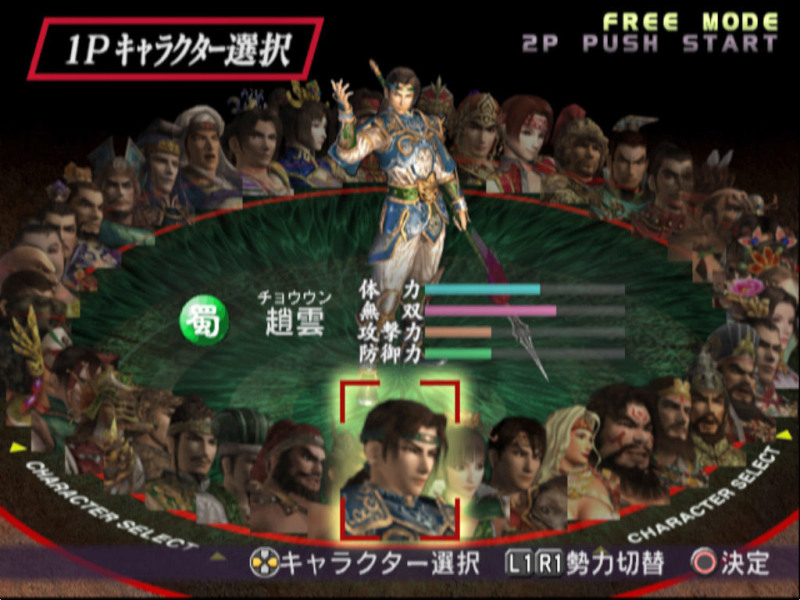
Starting with this title, "Sangokumusou" became "Shin Sangokumusou" (though the US version was directly titled "Dynasty Warriors 2," always one number behind the Japanese release), finding its true identity. The first installment sold 770,000 units, a promising start. However, what truly made the Musou series shine was "Shin Sangokumusou 2," released in September 2001. Compared to its predecessor, the number of playable officers increased from 28 to 41, with additional stage maps, weapon types, and mounts, alongside improvements in controls and action performance. It achieved global sales of 1.17 million units, later followed by the expansion pack "Xtreme Legends."
▼The second installment featured 41 playable officers. Incidentally, Zhao Yun became the default character due to the developers' personal preference, subsequently becoming the series' iconic figure. Image credit:KOEITECMO
▼To attract players, the game incorporated original elements, such as the designs and weapons of some officers. Tomoike Ryojun once stated that Zhang He was initially the most heavily criticized character. Image credit:KOEITECMO
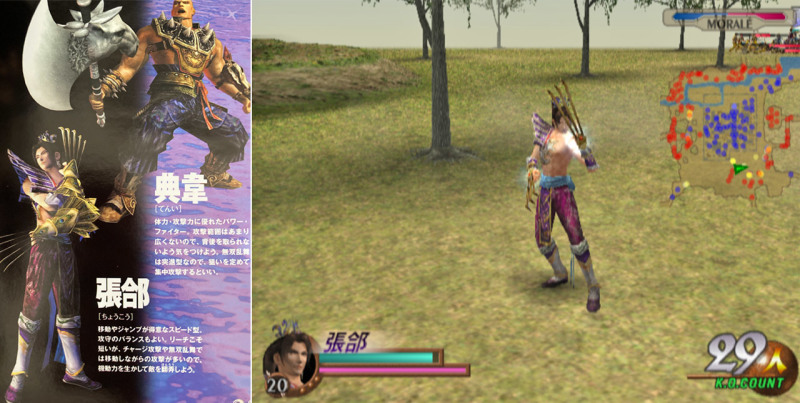
Musou = "Mowing Down" - A Proliferation of "Musou" Titles
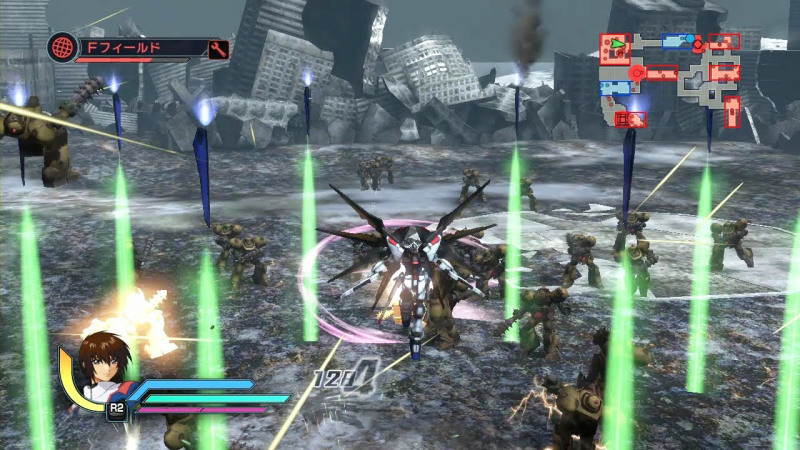
Early Musou titles, such as Shin Sangokumusou 1 and 2, weren't excessively easy. However, subsequent entries lowered the difficulty further to broaden market appeal, giving rise to the term "mowing down" (referring to effortlessly defeating hordes of enemies). Nevertheless, it's undeniable that the term "Musou" successfully carved out its own unique niche, expanding into other franchises. Examples include Koei Tecmo's own "Samurai Warriors," Bandai's "Gundam Musou" (Dynasty Warriors: Gundam), and Nintendo's "Hyrule Warriors" (Zelda Musou).
▼"Shin Gundam Musou" (Dynasty Warriors: Gundam Reborn) on the PS3 in 2013 was the final installment in the Gundam Musou series. Image credit:KOEITECMO
In the blink of an eye, the "Shin Musou" series has been around for over 20 years. A special video retrospective on Koei Tecmo's official website evokes a strong sense of nostalgia for its glorious past. With nearly five years having passed since the last main installment, Dynasty Warriors 8, we hope Koei Tecmo will learn from the shortcomings of previous titles and once again deliver a Musou game that truly impresses players with its sincerity.