
Manga artist Tohru Fujisawa, famous for manga depicting delinquent youth and young adults such as "Shonan Junai Gumi!" and "Great Teacher Onizuka GTO," is most frequently asked: "Were you a delinquent yourself?" In fact, the closest Fujisawa came to being a delinquent in his youth was when he was 17: when he decided to leave his hometown in Hokkaido to draw manga in Tokyo, his parents angrily roared, "You won't survive in Tokyo!"
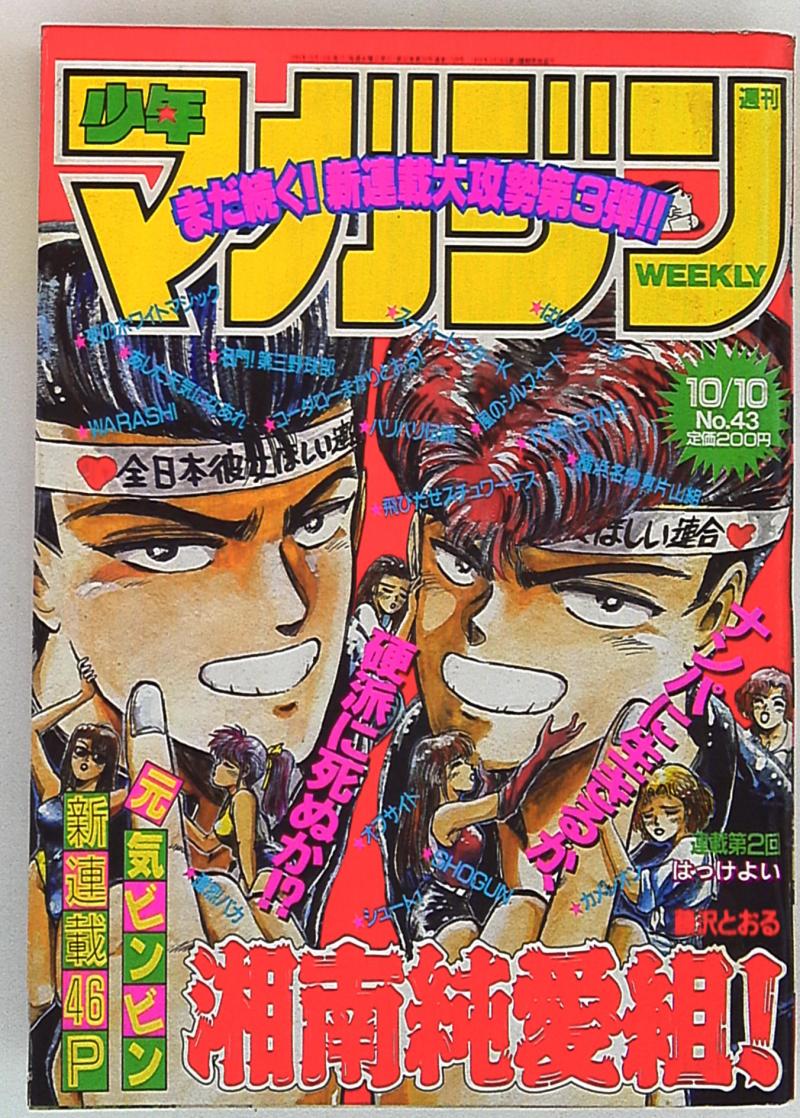
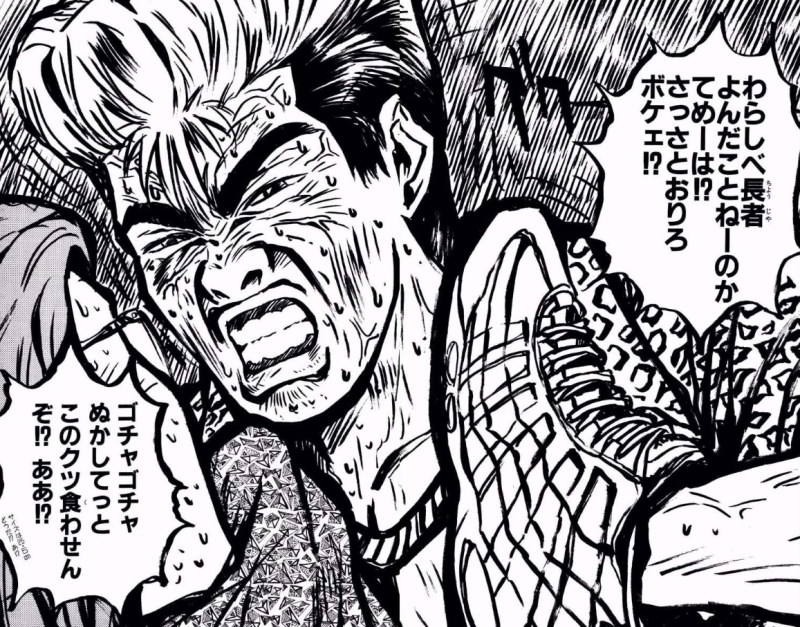
"Shonan Junai Gumi!" began serialization on October 10, 1990, in Weekly Shonen Magazine No. 43 Image credit:Mandarake
The not-so-"delinquent" "delinquent youth" arrived in Tokyo, and he survived, becoming a classic author of delinquent manga, creating immense success in cross-media ventures, and finally earning his parents' understanding and acceptance of his "unconventional" work as a manga artist... Tohru Fujisawa's story isn't as dramatic as those in his manga, but the following short stories will give you a clearer picture of what Fujisawa experienced that enabled him to create classic rebellious works in the late 90s that resonated deeply with young readers.
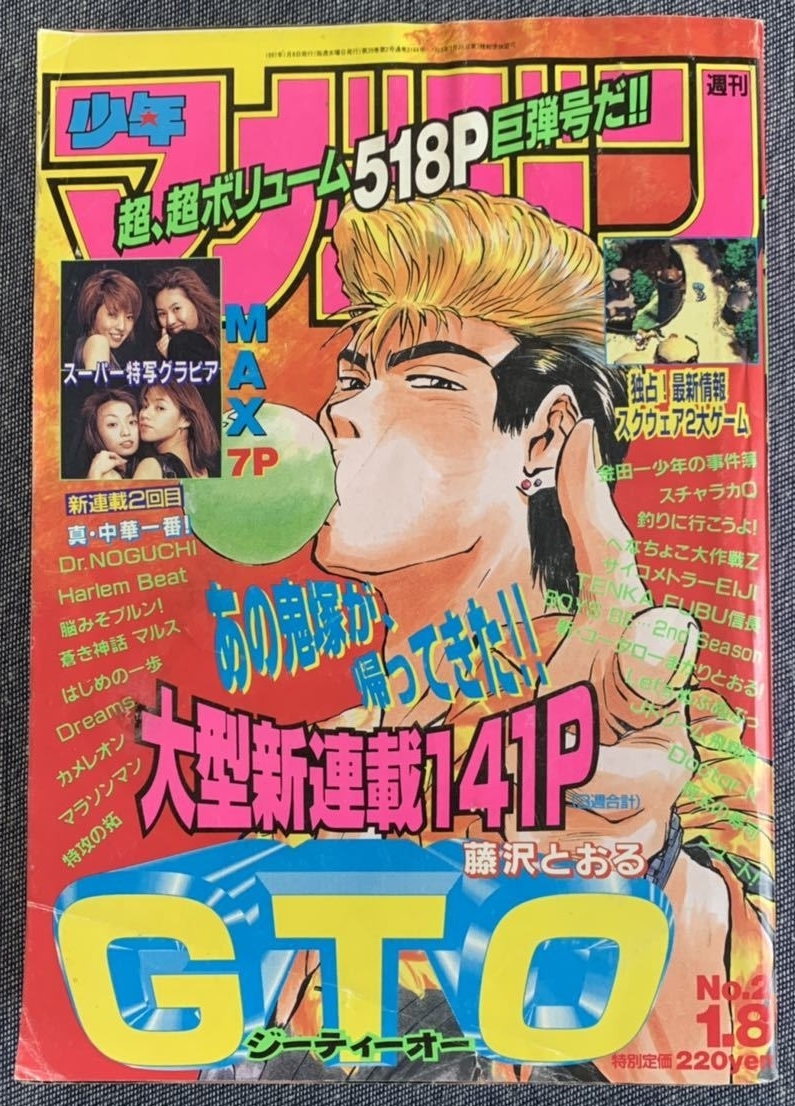
"GTO" began serialization on January 8, 1997, in Weekly Shonen Magazine No. 2 Image credit:aucfree
1. A Town Without a SeaA 17-year-old decided to live alone in metropolitan Tokyo; this was an act of rebellion in the truest sense. Fujisawa had no parental support and limited funds, yet he resolutely came to live in this unfamiliar, bustling city. What was the foundation supporting the teenager's rebellion? It was his pen.
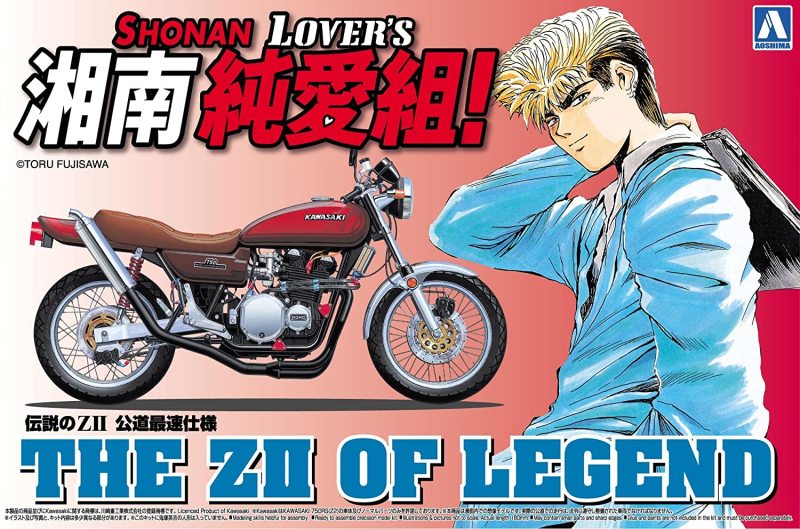
"Shonan Junai Gumi!" The legendary "Crimson ZII" Image credit:Twitter
Tohru Fujisawa is a typical "born manga artist," the kind of child who loved to draw from a young age and was, of course, criticized by elders for not pursuing a proper career. Fujisawa lived in an inland region of Hokkaido where the sea was not visible, and the vast northern land was covered in snow for half the year. Young Fujisawa had never seen the real sea, and the white became an invisible cage, surrounding him everywhere. For the imaginative Fujisawa, this natural environment and his parents' scolding became obstacles to his imagination. Although his upbringing wasn't particularly strict, he always felt a sense of confinement, unable to stretch his limbs. And "delinquency" was born from this—
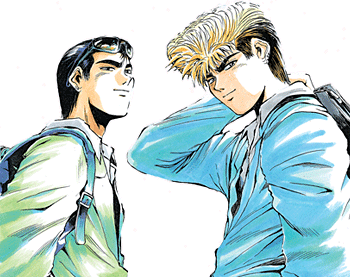
"Shonan Junai Gumi!" The "Onibaku Combi" Image credit:Twitter
Rebellion isn't about enjoying mischief; its essence is "freedom," the opposite of "confinement," a defiant attitude born from a desire to break an unchanging status quo. Naturally, it was too difficult for a child to change such an environment, leading him to face this predicament passively. When Tohru Fujisawa turned 17, this stifling emotion found a possible outlet: he had already participated in many doujinshi club activities and large-scale doujin events like Comiket. Fujisawa realized that a manga publisher might be his one-way ticket out of Hokkaido, so he began actively submitting his work—at this time, his pen had not yet brought forth delinquent youth, but rather giant robots, sci-fi wars, and beautiful girls.
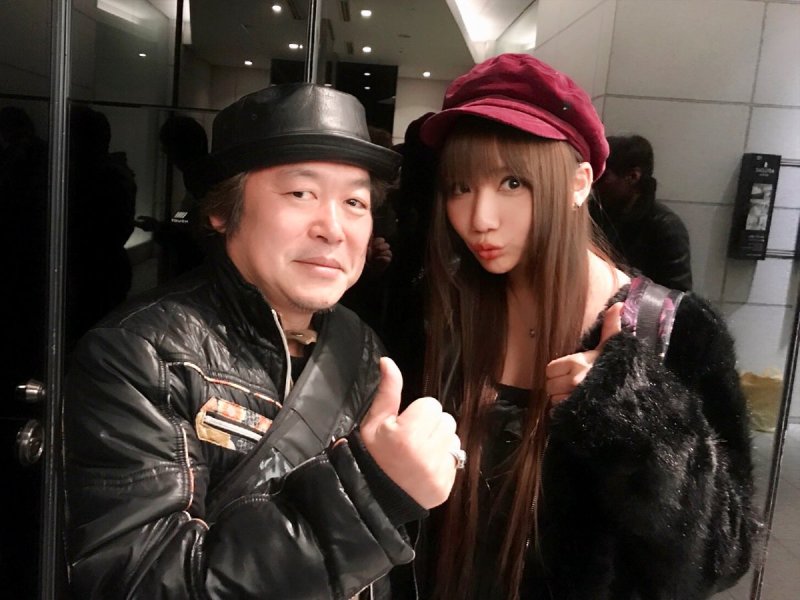
Tohru Fujisawa (left) Image credit:Twitter
2. Meticulous Observation of Life's DetailsWhat Fujisawa himself didn't realize was that despite the dreariness of his youth, in such an unchanging environment, as a born artist, he had even more time to observe every detail of the things around him. When he later worked on commercial projects, this keen observation provided him with a wealth of creative material: The most ingenious aspect of "Great Teacher Onizuka (GTO)"'s artwork is undoubtedly the character designs of the beautiful girls, but the background details in "GTO" are also astonishing.
Don't forget the double-page spread in the first chapter of "GTO" titled "Eikichi Onizuka Appears." In this spread, where Onizuka squats on a Shibuya street, the shop signs next to the Shibuya Hachiko statue and the shopping street come to life under his pen; when depicting Onizuka's messy room, filled with his tokkō-fuku (special attack uniform) and various models, you can see astonishing details... gossip magazines are scattered on the floor, a stack of "Children's Encyclopedias" sits on the right bookshelf, the area next to the TV is crammed with adult videos, and even small details like the room's curtains are designed by Fujisawa with dazzling patterns, showcasing Onizuka's flamboyant personal fashion taste.
"GTO" Shibuya Street Scene Image credit:Manga Ōkoku
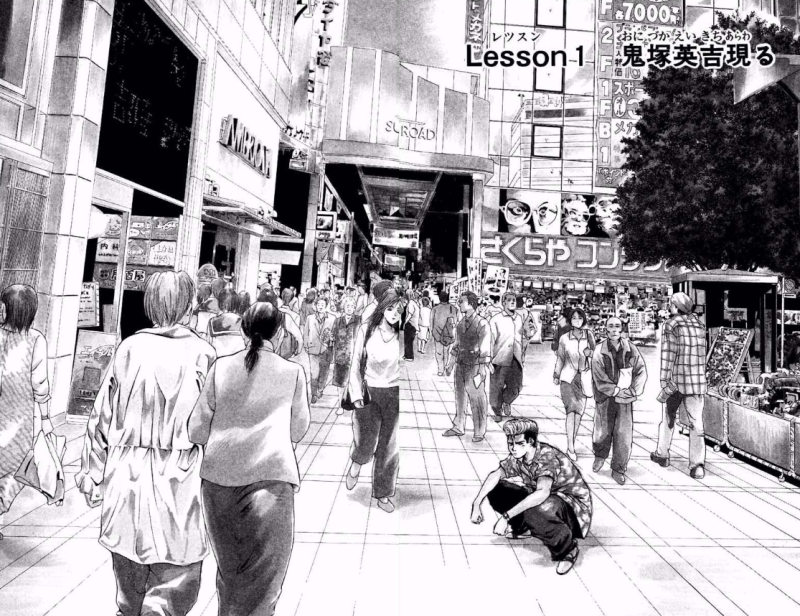
That was the artistic prowess of a 30-year-old Tohru Fujisawa in 1997, but the ability to draw with such a realistic sense of life came from the observational skills he honed in Hokkaido before he was 17.
3. Cinematic Storyboarding TechniquesJapanese manga artists born in the latter half of the 60s have one major difference from earlier manga artists: they were all profoundly influenced by cinema. When Yoshihiro Togashi ran out of ideas, he would go to video rental stores to find movies for inspiration; and Tohru Fujisawa, who is less than a year apart from Togashi, was also very fond of movies as a child. This generation of manga artists, "raised by cinema," approaches manga creation with a different mindset than their predecessors: they don't focus on "static images" as their primary thought; these manga panels are, in fact, specific moments within a dynamic process, and what they first conceive in their minds is an entire fluid sequence of motion, much like a film – one could say that manga panels are a few frames out of 24 film frames per second.
"GTO" Onizuka's Room Image credit:Manga Ōkoku
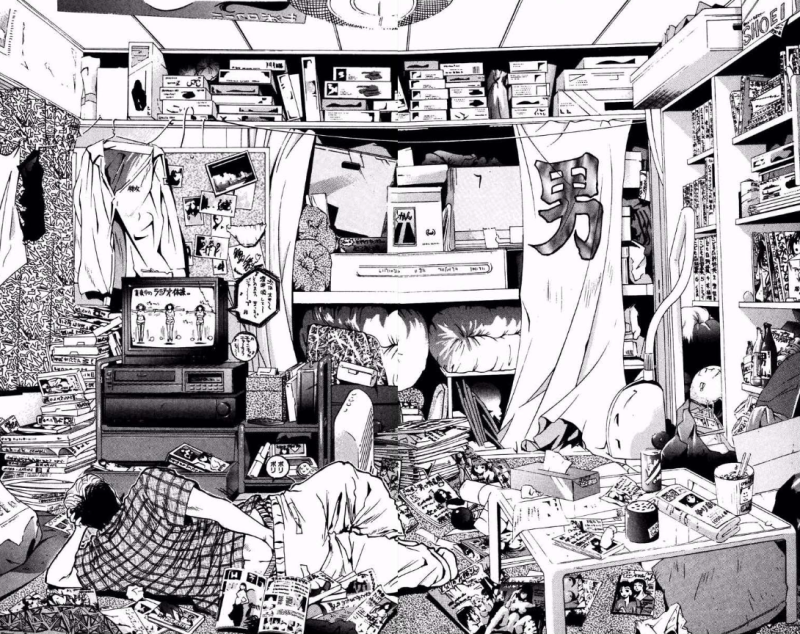
In fact, Fujisawa's greatest ambition was to become an animator. However, in the last century, animators couldn't survive working alone (a stark contrast to today's YouTube animation creation trend); an entire team was required... moreover, he was a complete novice who had never even touched a cel. For Fujisawa, drawing manga was a means to achieve his visual style: "I can't make animation, but I can draw manga that feels like animation, allowing a ten-panel manga page to convey a few seconds of animated sensation."
"Shonan Junai Gumi!" Dynamic Racing Scene Image credit:Twitter
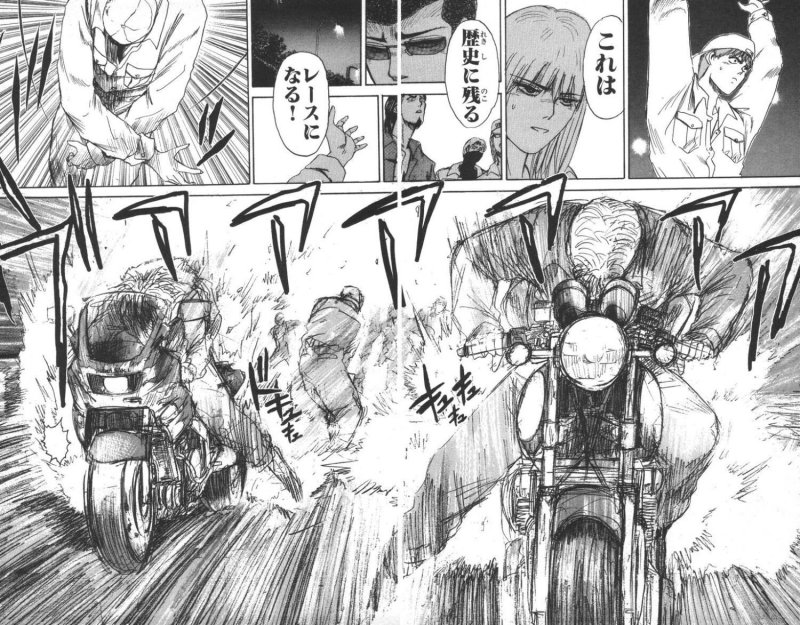
Manga and film share an extremely similar visual language. In film, camera techniques like close-ups are used to create suspense within the frame, making viewers curious about what the protagonist's wide-eyed gaze in that close-up shot has seen; similarly, when readers look at manga, they need to turn the page to find out what happens next. Fujisawa can leverage this inherent limitation of the medium to build tension before the reader turns the page, creating suspense that is only revealed upon flipping: In the very first chapter of "GTO," the lust-filled Onizuka attends a class reunion, and a junior hints to Onizuka that a girl has been staring at him (even adding "with hungry eyes")... Readers begin to wonder what kind of romantic encounter Onizuka will have... but only after turning the page do they discover it's an ugly woman "with nostrils as big as a pig's."
"GTO" Powerful Double-Page Spread Image credit:Manga Ōkoku
4. The Mentor Who Was a Born PlayboyAt this point in the story, you might feel a slight sense of incongruity: Tohru Fujisawa, who wasn't a delinquent, drew sci-fi manga in his youth, and whose debut work was a romance manga—why would he create "Shonan Junai Gumi!", which realistically depicts the life of delinquents? Indeed, Fujisawa, who had never seen the real ocean as a child, once thought he absolutely had to draw a manga set against a coastal backdrop. But why choose a delinquent manga theme? After all, a youthful romance on the beach seemed quite good too... This brings us to the mentor who truly led Fujisawa down the "path of delinquency": Tatsuya Egawa.
Tatsuya Egawa (left) on a TV program Image credit:PRTimes
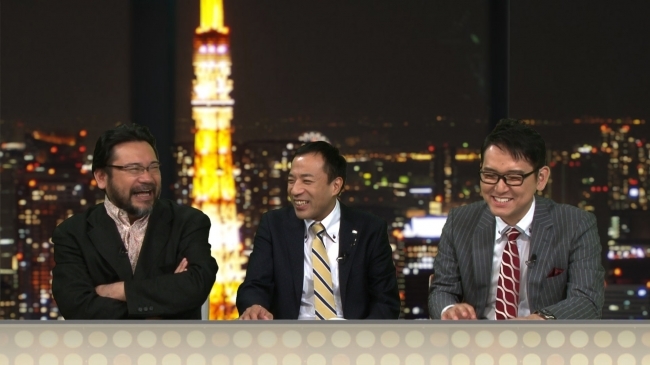
Tatsuya Egawa is an author known as the "number one in all of Japan" manga artist. Here, "number one" doesn't refer to the best-selling manga artist, but rather the "laziest" one. This manga artist is famous for his complete lack of responsibility; ironically, he even fired his assistants for being irresponsible, yet he himself was widely known among editors for his irresponsibility. Almost all of his famous works ended with abrupt cancellations, and even those that did reach an ending often had terrible conclusions: these include "Tokyo University Story," "Magical Taruruto-kun," "The Russo-Japanese War Story" (Nichiro Sensou Monogatari), and others, all of which ultimately caused immense psychological trauma to readers (the ending of "Tokyo University Story" even told readers that the entire 34-volume series was just a dream). So why didn't he finish these works that were loved by so many readers? Was it due to health reasons? Or was it a protest against publishers by ending them poorly? The truth is, he was simply lazy.
"Tokyo University Story" Image credit:漫画の力
Yet, at the same time, he was active in television, giving magazine interviews, and flaunting his luxury cars and mansions on variety shows, essentially treating his manga artist status as a means to get rich. The thing is, Tatsuya Egawa's artistic skill was also considered exceptional in the 90s; his depictions of the female form were imbued with the alluring charm of mature women, which made many readers devoted followers... However, Egawa had no desire to desperately satisfy them; instead, he criticized Hayao Miyazaki as hypocritical, called "Doraemon" disgusting, and even railed against modern Japanese politics in magazines... Variety shows adored this kind of sensationalist celebrity persona, but readers would forever wait for his next new serialization.
Tatsuya Egawa Image credit:清水草一.com
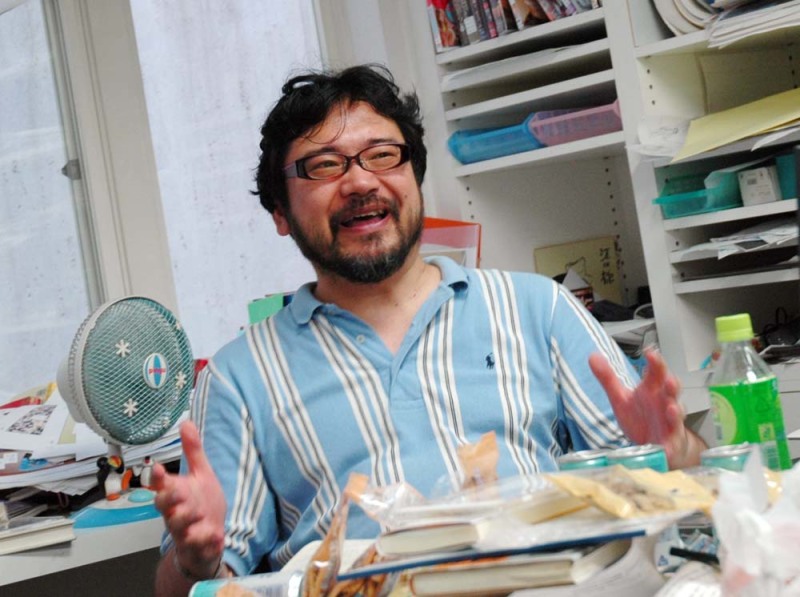
Tatsuya Egawa wasn't doing it on purpose; he was a natural-born hedonist, and Tohru Fujisawa can attest to this. A few years after arriving in Tokyo, he became Tatsuya Egawa's assistant, learning from him the special "fleshy" drawing technique for female bodies... and also picking up many ways to have fun. After Fujisawa debuted, his editor was one of Egawa's former editors. The three of them hit it off, often driving luxury cars along the Shonan coast, having fun and picking up girls... Tohru Fujisawa, from rustic Hokkaido, truly stepped into the real world of Tokyo at this point—a joyful city that never sleeps. These nightlife experiences, to some extent, became nourishment for his creativity. Ultimately, Tohru Fujisawa did not follow his mentor's bad example, but rather learned advanced techniques. Egawa's "sense of freedom" created by wealth became an evolved form of Fujisawa's rebellious values: If I want it, why can't I have it? This adult world, which constantly preaches "normalcy" and "rules," was simply too hypocritical.
Onizuka from "GTO" asks students for help with image editing Image credit:Twiiter
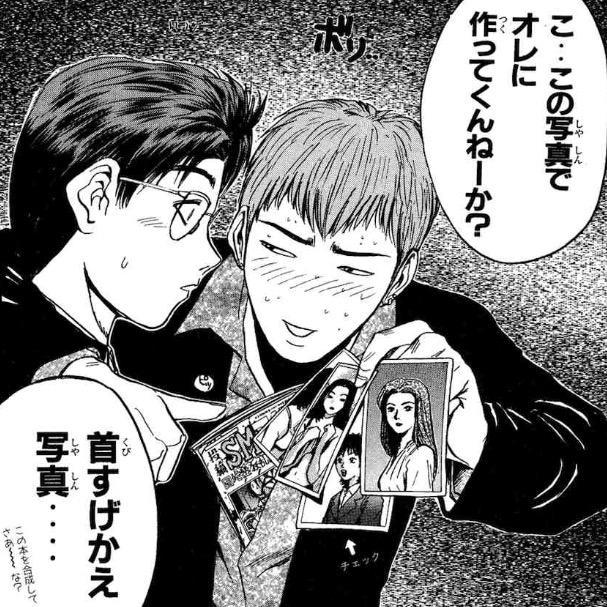
5. The Delinquent Students' Comrade-in-ArmsTatsuya Egawa was not a good role model, but the sense of hypocrisy Toru Fujisawa felt in Japanese society was undeniably real. In 1990, it was the peak of Japan's bubble economy (which burst the following year), with the national economy booming and everyone engaged in frenzied financial speculation. Yet, adults were paradoxically scolding teenagers to conform, creating a widespread absurd phenomenon. The high working hours of parents led to a lack of concern for their children, further deteriorating parent-child relationships. These negative influences caused children to flee their homes and join bosozoku gangs, causing trouble on the streets. What were these delinquent youths rebelling against? It was the hypocrisy and money obsession of society. What they were desperately searching for was not merely the thrill that school and family couldn't provide, but a peaceful salvation, a feeling of being recognized and accepted. Toru Fujisawa deeply empathized with this longing: he himself had run away from home to Tokyo for the very same reason.
1998 TV Drama "Great Teacher Onizuka (GTO)" Image credit:Family Gekijo
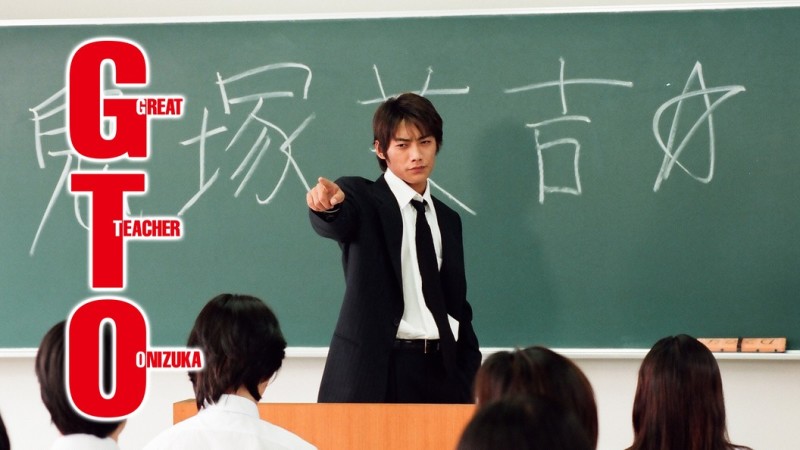
This clearly distinguishes "Shonan Junai Gumi!" from other delinquent manga: the protagonists, Eikichi Onizuka and Ryuji Danma, are fighting masters known as the "Onibaku Duo." The story begins with them being expelled for their egregious behavior, causing all the delinquents in the school to shed tears over losing their leaders... but on the very next page (this is only the second page), the truth is immediately revealed... it turns out this expulsion notice was fake. The Onibaku Duo had long wanted to "retire" from their delinquent lives. They were determined to "turn over a new leaf" in order to get girlfriends and live a happy and fulfilling (or rather, "lose their virginity") life.
"Shonan Junai Gumi!" Onibaku Duo Image credit:eBookJapan - Yahoo! JAPAN
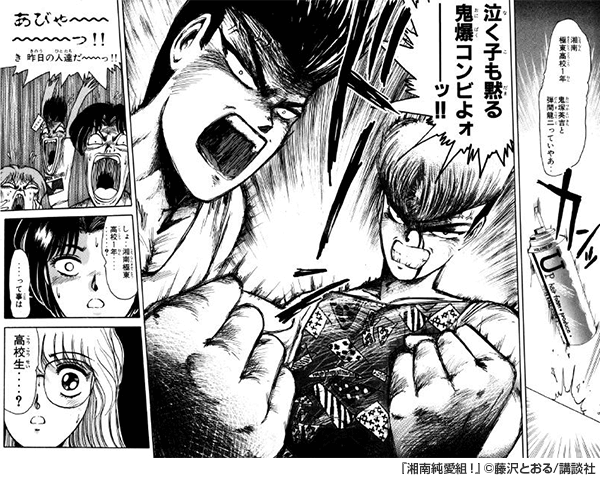
Of course, "Shonan Junai Gumi!" is fundamentally a comedy manga, but this deconstruction of rebellion was even more popular among delinquents... And after "Shonan Junai Gumi!" concluded its 6-year serialization, "Great Teacher Onizuka (GTO)" immediately followed. By then, Fujisawa was no longer a young man, the bubble economy era had passed, and Japan had entered the "Lost Decade." Now in his 30s, he took the perspective of an "adult" to examine the concept of "rebellion." Onizuka, once a "former delinquent," now became an "understanding figure" and "comrade-in-arms" for delinquent high school students, working with them to break down the even more closed-off and divisive societal values of the recession era.
"Great Teacher Onizuka (GTO)" Teacher becomes the students' best friend Image credit:Manga Osusume
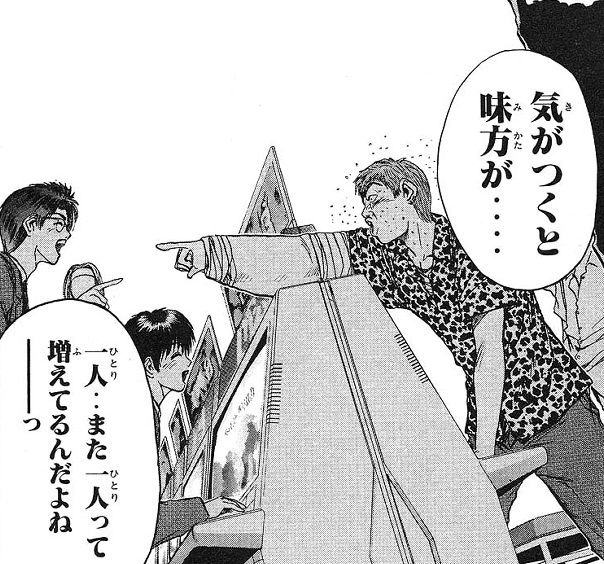
Onizuka, who made it hard to tell if he was a delinquent or just a simple-minded pervert, entered adult society and became a "high-ranking" teacher, gradually revealing his true position in society: he was still a rebellious delinquent, but he was also a teacher who adhered to professional ethics. Between these two very different identities, he achieved a balance and gained true freedom. Perhaps this is the true meaning of "Great Teacher Onizuka (GTO)"; rebellion and conservatism are not everyone's ultimate goals, these are merely processes. We can retain that wild side within us, yet still survive in the world by finding balance. To some extent, "Great Teacher Onizuka (GTO)" is a more accurate reflection of real society than other educational manga that advocate "abandoning evil for good."
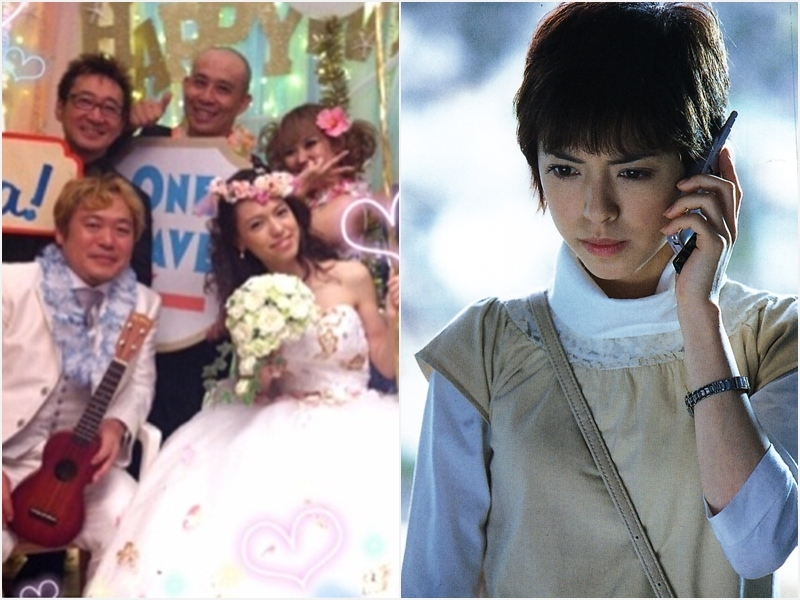
Teacher Fujisawa married Mino Fujisawa (formerly Ayano Sugiyama), who played the heroine "Yui Kanzaki" in "Kamen Rider Ryuki," in 2010. Image credit:Hamada Britny Official Blog & Tokusatsu Heroine Gaho
Teacher Fujisawa's famous mansion, covering 140 tsubo (approx. 462 sq m), with a total value exceeding 2 billion Japanese Yen. Image credit:Celebrity Homes Feature

In 1997, the manga weekly "Weekly Shonen Magazine" suddenly surpassed "Weekly Shonen Jump" in sales, becoming the king of Japanese shonen manga weeklies. This achievement wasn't solely due to the power of the manga itself, but rather the "transmedia" power of manga combined with anime and live-action adaptations. The two major works that supported "Weekly Shonen Magazine" that year were "The Kindaichi Case Files" and "Great Teacher Onizuka (GTO)". Who would have thought that Tohru Fujisawa, who ran away from home, dreamed of becoming a professional manga artist in Tokyo, once wavered about his path, and joined an "unruly" manga artist as an assistant, would become a leading figure at Kodansha. His "Great Teacher Onizuka (GTO)" not only propelled Takashi Sorimachi and Nanako Matsushima to television stardom, generated over 50 million copies in manga sales, but also created a transmedia universe combining anime, pachinko, films, and TV series. Perhaps, being "unruly" is truly the backbone of society?