

Among Japan's most legendary swordsmen, Miyamoto Musashi, revered as the "Kensei" (Sword Saint), is undoubtedly the most celebrated. His exploits have been immortalized in films, TV series, and anime, with portrayals like Takuya Kimura's lead role in the drama "Miyamoto Musashi" and Takehiko Inoue's iconic manga "Vagabond" cementing his image in the public consciousness.
Recently, a user on X in Japan sparked a massive online discussion by posting a famous portrait of Miyamoto Musashi, a designated national treasure. The user noted that many people claim this single image perfectly captures his formidable skill, but wondered if it might just be a case of fan hype—fans reading too much into it. The question immediately went viral.
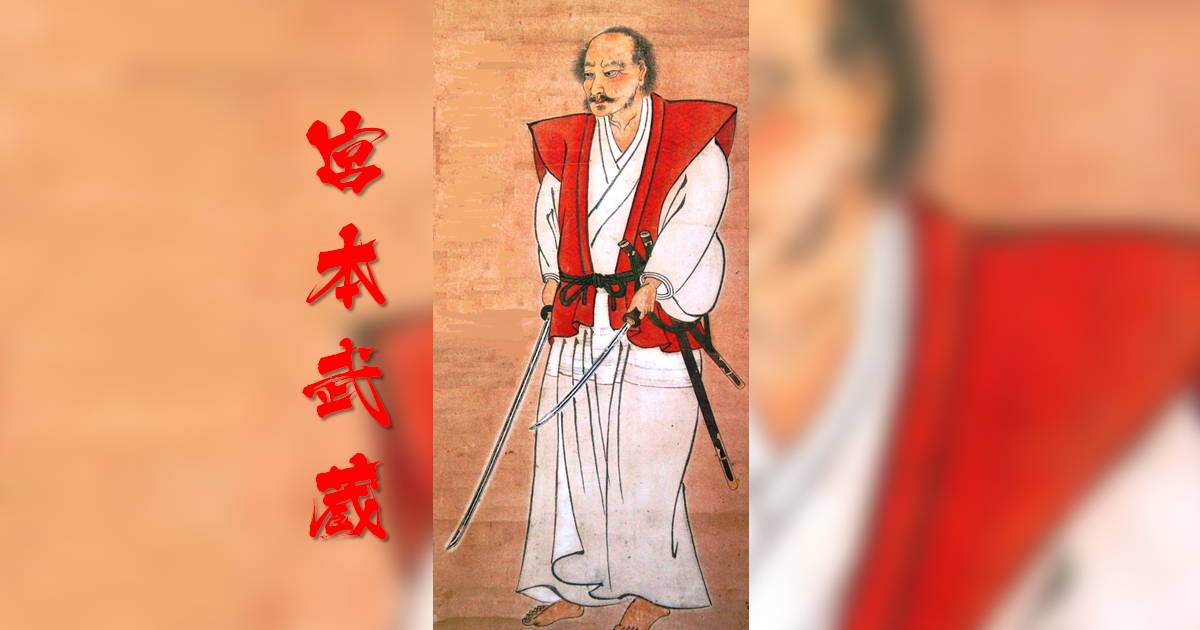
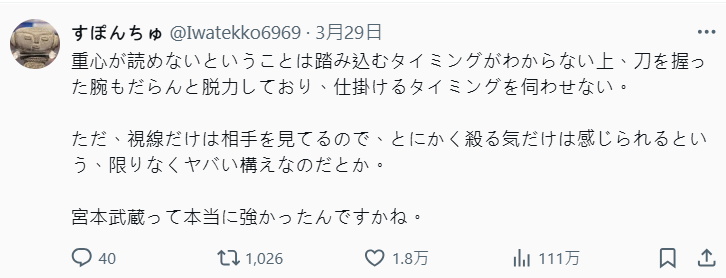
The original poster mentioned hearing that people who practice martial arts or combat sports find the portrait incredibly unsettling, even terrifying.
The reason? In the painting, Musashi has already drawn his sword, yet his body is hunched, his feet aren't in a ready stance, and his center of gravity is completely unreadable. This posture is bizarre for a samurai duel. With his center of gravity hidden, an opponent would have no way to predict his movements.
An unreadable center of gravity means you have no idea when he's going to lunge at you. Furthermore, his sword hand is relaxed and hanging loosely, offering no telltale signs of an impending strike. But the most terrifying part is his gaze. His eyes are locked onto his opponent, radiating an intense "I'm about to end you" aura that's deeply and fundamentally unnerving.
This kind of stance is said to be incredibly difficult to counter in a real fight. So, was Miyamoto Musashi really that strong? Or was he just a master of psychological warfare who knew how to break his opponents before the first move was even made?
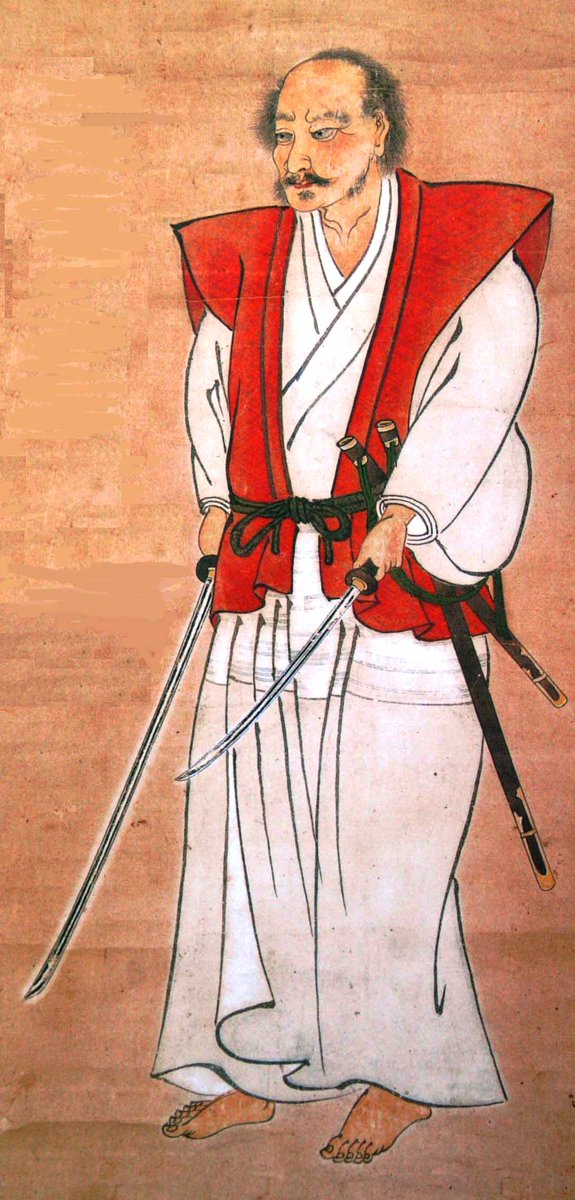
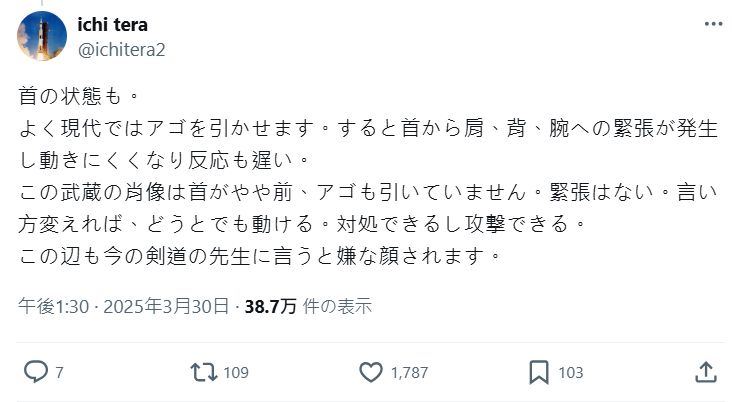
A netizen with martial arts experience pointed out that modern disciplines often teach practitioners to tuck their chin. However, this can tense up the neck, shoulders, back, and arms, restricting movement and slowing reaction times.
Looking at Musashi's portrait, his neck is slightly forward and his chin is untucked, leaving his body completely free of rigidity. In other words, his posture is one of "total readiness," allowing him to move however he pleases—reactively or offensively. But if you tried to explain this to a modern kendo master, you'd probably get a stern look.
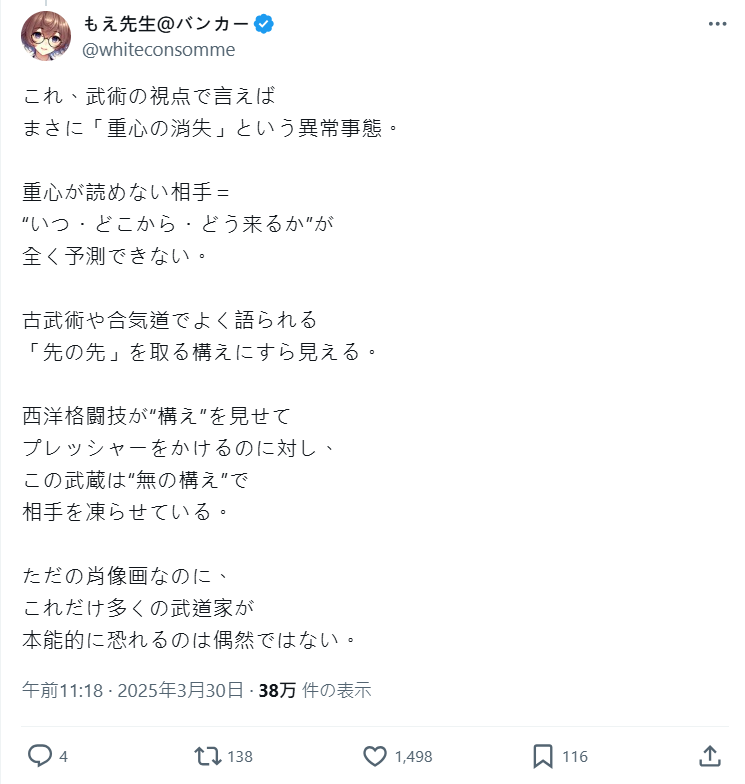
Another user commented that from a martial arts perspective, this is a state of "disappearing center of gravity," which is highly unusual. An opponent whose center of gravity you can't read is an opponent whose "when, where, and how" of attack you can't predict.
This even echoes the concept of "sen no sen" (seizing the initiative before the opponent can act) found in classical martial arts and Aikido. While Western combat sports often rely on aggressive stances to pressure an opponent, Musashi's posture seems to use a state of "nothingness" to freeze his foe. The fact that a mere painting can instinctively frighten so many trained martial artists is, they argue, surely no coincidence.
Another user shared a photo of a Kendo 7th Dan practitioner whose posture is almost identical to Musashi's. This photo had actually sparked a similar online buzz back in 2022.
(A Kendo 7th Dan is the second-highest rank achievable, signifying an exceptionally skilled individual.)

Even the manga "Baki the Grappler" features the character Yujiro Hanma adopting Musashi's stance during a fight, a clear nod to its legendary effectiveness.

Ultimately, the discussion proves the extraordinary place Miyamoto Musashi holds in the Japanese psyche. Even centuries after his time, a single portrait can ignite passionate debate among modern audiences. It seems the title of "Sword Saint" was more than well-earned.
via: togetter