

In our increasingly globalized entertainment landscape, characters from all corners of the world pop up in stories with diverse cultural backdrops. This naturally leads to a wider array of character names. But a recent tweet from a Japanese netizen has sparked a fresh debate: do these names actually resonate with audiences from the cultures they represent?
Japanese netizen Yuichiro Haga (@Yuichiro_Junior) recently posted on X (formerly Twitter), musing, "When Japanese characters appear in overseas works, sometimes they're given names that no Japanese person would ever have. It suddenly occurred to me that when foreign characters appear in Japanese works, we might not notice it, but there must be names that are completely implausible to people from those countries."
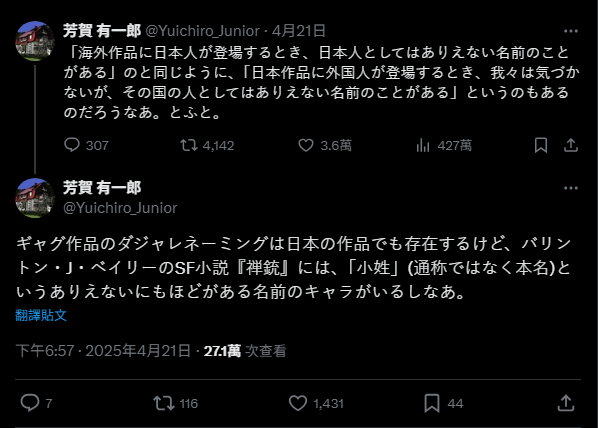
This sentiment struck a chord with many users, especially those familiar with various linguistic and cultural backgrounds, who often find themselves pulled out of the story by unnatural-sounding character names. Haga added that while punny names are common in comedies, even serious works sometimes feature these "impossible names."
He cited an example from British sci-fi author Barrington J. Bayley's novel, "The Zen Gun," which features a character named "Koshō" (小姓). In Japanese, "Koshō" is a historical title for a page or attendant to a samurai lord, making it an almost comically absurd choice for a personal name.
"It's not a nickname, it's their real name—that's just too impossible," Haga wrote.
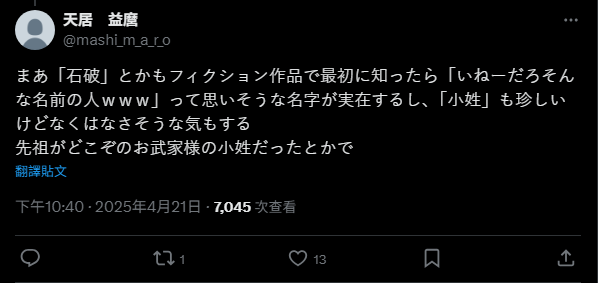
The tweet ignited a lively discussion. One netizen commented, "Speaking of which, if you first heard a surname like 'Ishiba' in a fictional work, you'd probably think, 'Who has a name like that, LOL?' But it actually exists in real life. And while 'Koshō' is rare, it might not be entirely impossible; maybe an ancestor was a samurai's Koshō."
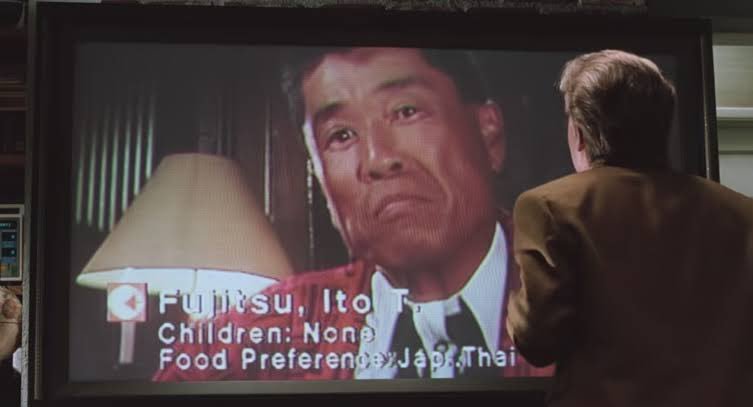
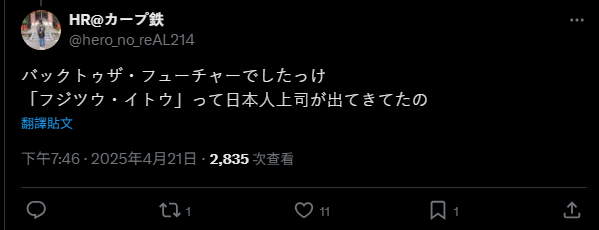
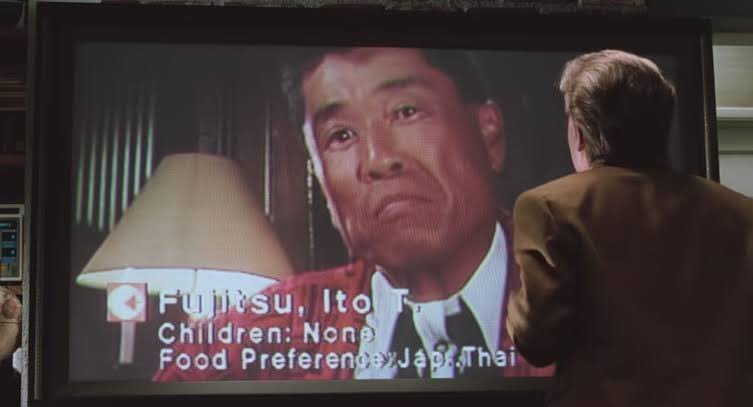
Another user brought up, "Wasn't it in 'Back to the Future'? There was a Japanese boss named 'Fujitsu Ito'."
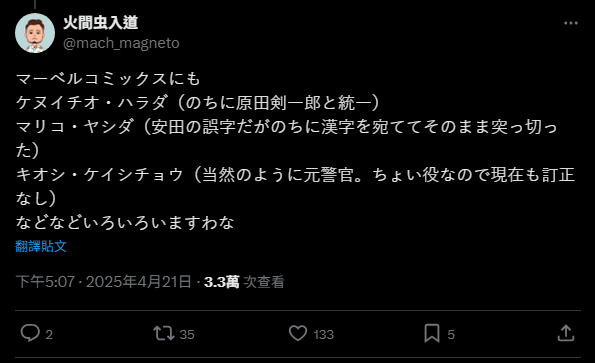
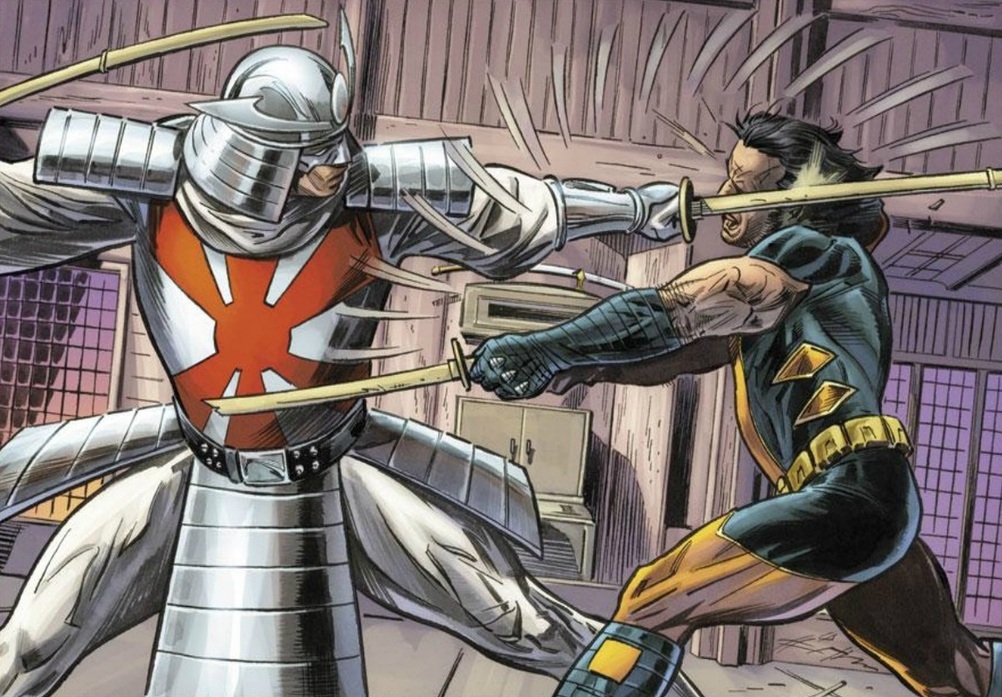
Even Marvel Comics got a shout-out: "Marvel Comics has plenty of examples too, like 'Silver Samurai,' whose real name is Kenuichio Harada. Then there's 'Mariko Yashida' (originally a typo of 'Yasuda' that stuck and was given kanji). And a Japanese police officer named Kioshi Keishicho – though he's a minor character, so it hasn't been corrected yet."
Other netizens offered examples from Japanese manga itself: "The names in 'Attack on Titan' mix English, German, and French, often feeling strange and a bit off. As for 'Frieren: Beyond Journey's End,' the character names are directly German words. For some, just seeing the name could be a spoiler. It's really appreciated that local fans accept these naming conventions."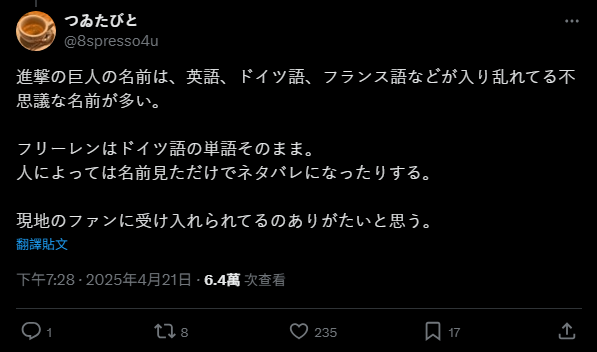
As cross-cultural creations become more widespread, these little "cultural misalignment" details have become a fun topic of conversation among audiences.