

The VTuber scene has exploded in recent years, becoming a global phenomenon from Japan to Asia and the West. But with this massive wave of attention comes a harsh reality: for every star, there are countless indie and even corporate-backed VTubers struggling to find an audience. With so many creators jumping in, the market is saturated, and many end up quitting before they ever get a foothold.
Recently, a new trend has taken over Japanese X (formerly Twitter): "bottom-tier VTuber" (底辺Vtuber). What started as a self-deprecating joke has unexpectedly become a trending search term, forcing creators and fans alike to re-examine the line between success, failure, and identity in the VTuber ecosystem.
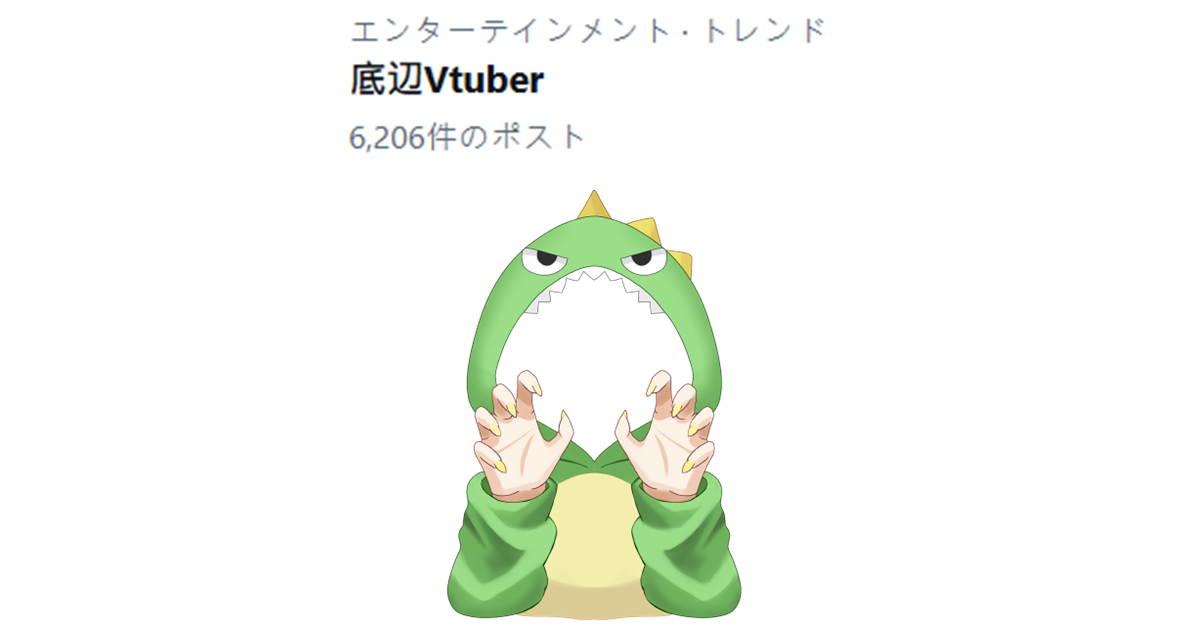
A "bottom-tier VTuber" generally refers to a creator whose viewership, subscriber count, or income pales in comparison to their mainstream counterparts. Many creators have adopted the label as a humorous way to cope with their situation. But on April 22, the term shot to the top of Japan's trending topics on X, sparking a massive wave of discussion and debate.
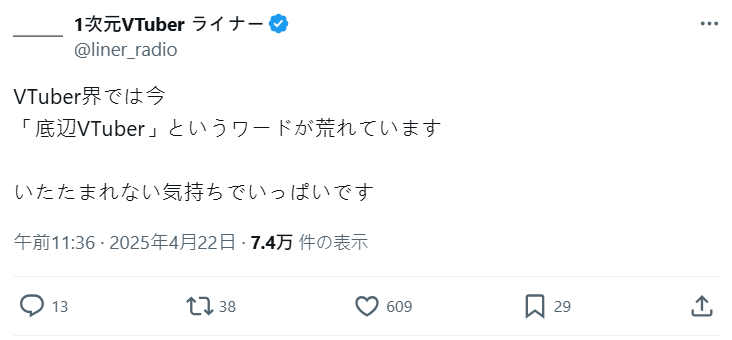
As VTuber Liner put it, "The term 'bottom-tier VTuber' is blowing up everywhere in the community right now, and seeing it happen just doesn't sit right with me..."
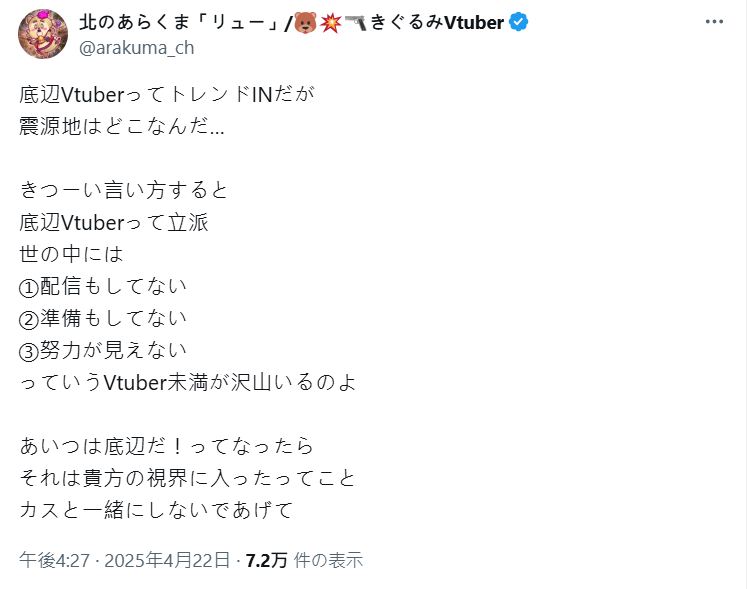
Another VTuber, Kitakata Kougen Ryuu, offered a different take: "So 'bottom-tier VTuber' is trending, but where did this even start? Let's be real, being a so-called 'bottom-tier VTuber' is actually pretty damn impressive.
Because there are way more people in the world who:
① Never stream at all
② Don't prepare any content
③ Show zero effort
There are tons of people who don't even qualify as VTubers. If you can point at someone and say 'that person is bottom-tier,' it means you've actually noticed them. Don't lump them in with those who do nothing."
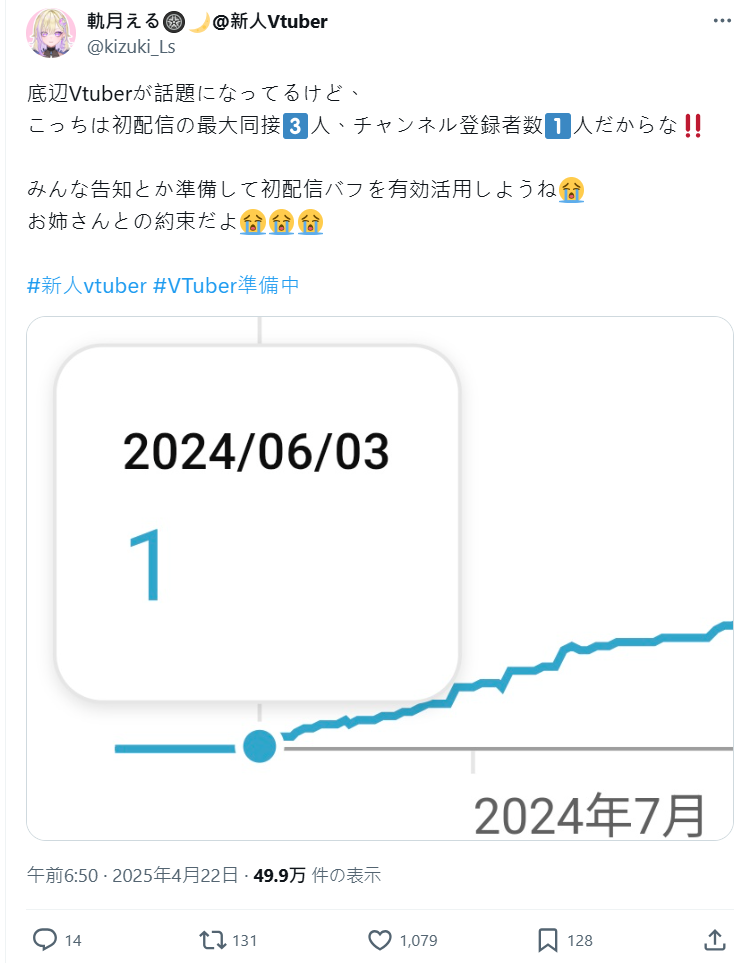
Many VTubers who see themselves as grinding it out at the "bottom" also shared their stories. Onotsuki Eru recalled her debut stream: "My max concurrent viewers was 3, and I got only 1 subscriber." She urged newcomers to prepare thoroughly and not waste the promotional opportunity of a debut.
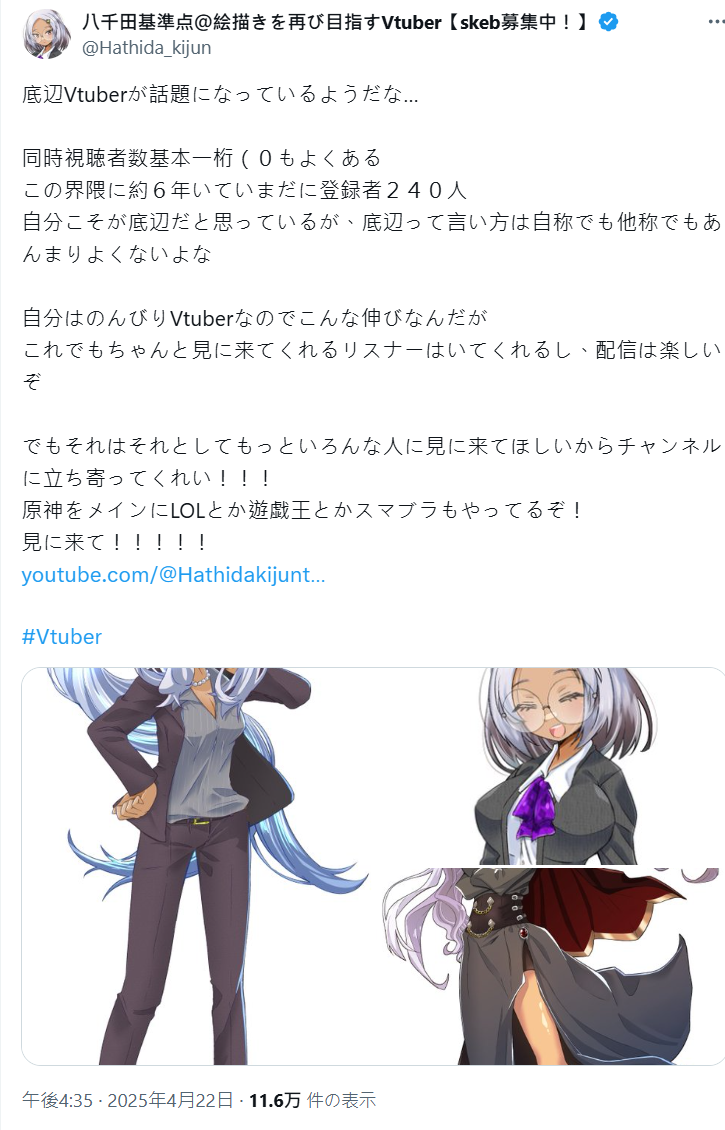
VTuber Yachita Kijunten admitted that after nearly six years in the scene, they have just 240 subscribers, with viewership often in the single digits or even zero. "But I feel like 'bottom-tier VTuber' is a negative term, whether you say it about yourself or someone else," they shared. "I'm taking things at my own pace, and I still have viewers who are willing to watch me. I have fun streaming!"
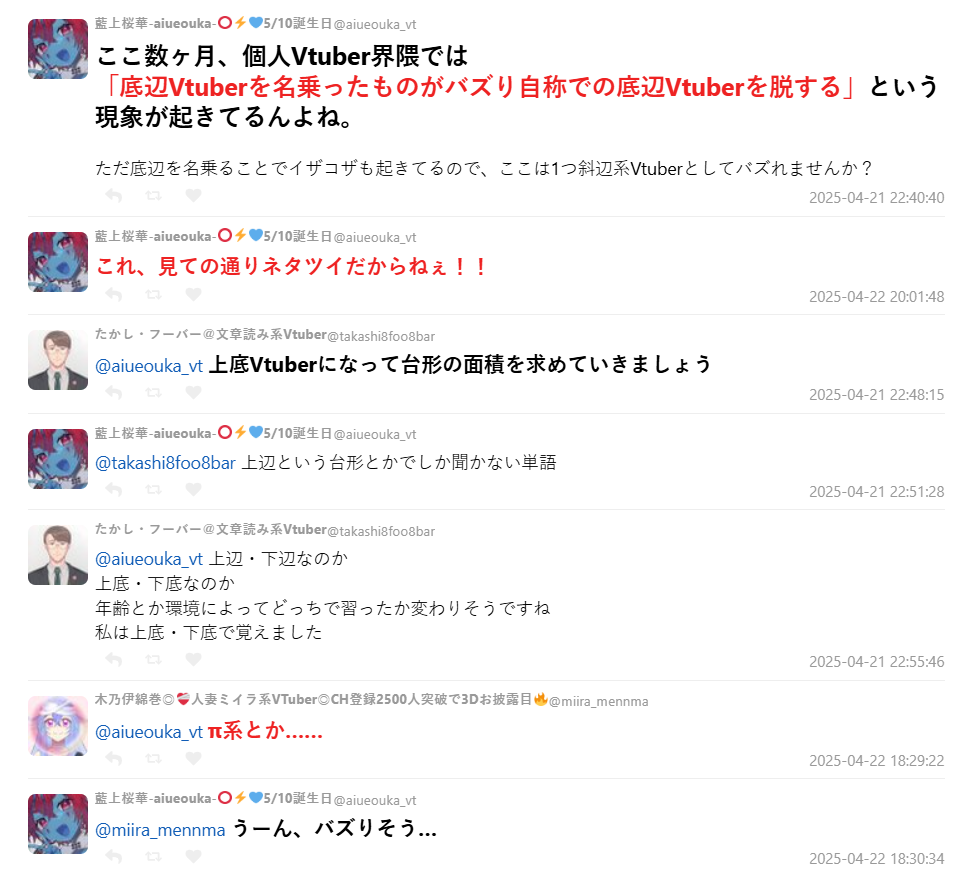
However, some have noticed an ironic pattern: "There are quite a few cases of self-proclaimed 'bottom-tier VTubers' who blow up and successfully escape the bottom tier." This led to a joke: maybe they should try calling themselves "hypotenuse-type VTubers" to see if that helps them get famous.
Of course, it's mostly in jest. For many, the "bottom-tier" label is a form of self-deprecating humor and a way to motivate themselves to keep climbing.
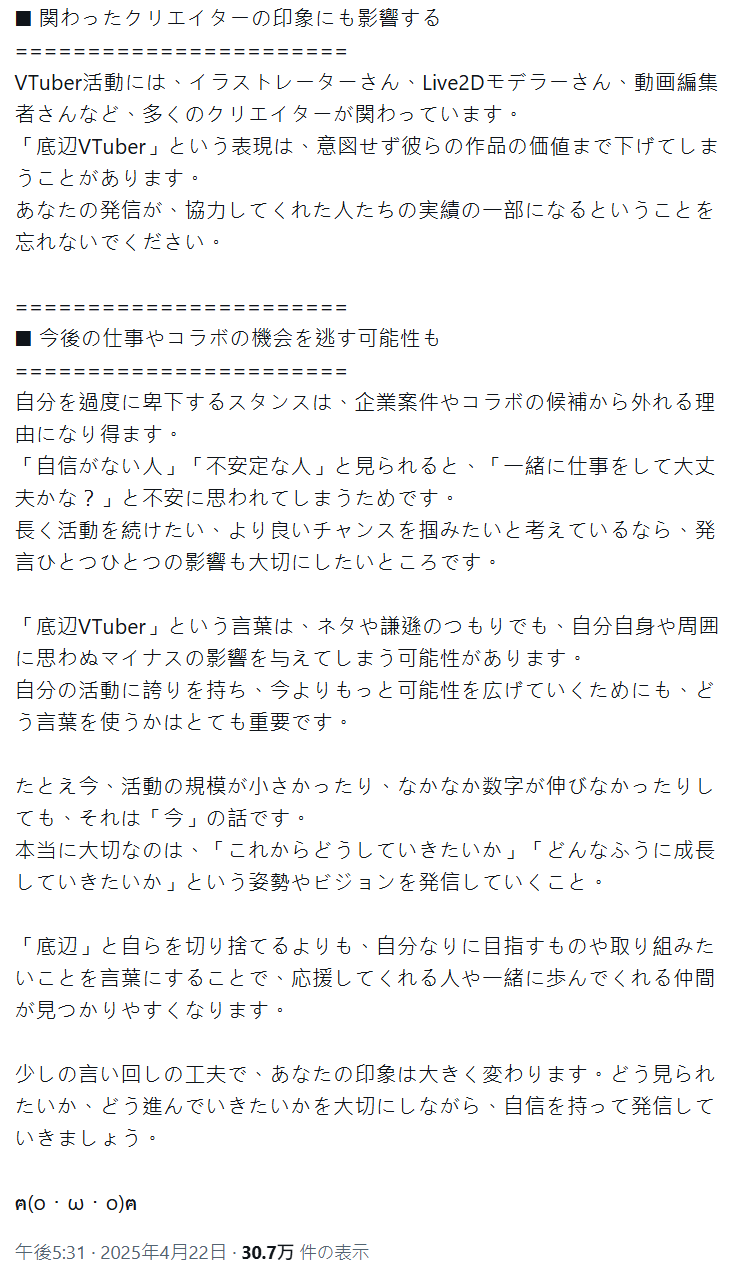
One netizen, kentax, offered a detailed breakdown of why using the "bottom-tier VTuber" label is actually a terrible strategy.
Here's why:
It damages your brand image.
When you say, "This is all I am," you're setting a low bar for your audience's first impression. They might write you off before they even see what you can do, which is a huge waste.
It creates a bad vibe on social media.
People who don't know you will just see the term and assume you have low energy or a negative attitude, making them less likely to follow. Remember, there's a big difference between being humble and constantly putting yourself down.
It reflects poorly on your collaborators.
A VTuber's avatar is a collaborative effort involving illustrators, modelers, editors, and more. When you call yourself "bottom-tier," you might inadvertently imply that the work of these professionals is also subpar.
You'll miss out on collaboration opportunities.
Companies or other VTubers might be hesitant to work with you if you're constantly down on yourself. They might worry about your stability or lack of confidence.
Even if it's just a joke, this kind of language can cause real, unseen damage to yourself and those around you. Just because your stats aren't great now doesn't mean they won't improve. What truly matters is what you plan to do next. Instead of calling yourself "bottom-tier," focus on what you want to bring to your audience and the direction you want to go. That's how you'll find people who will genuinely support you.

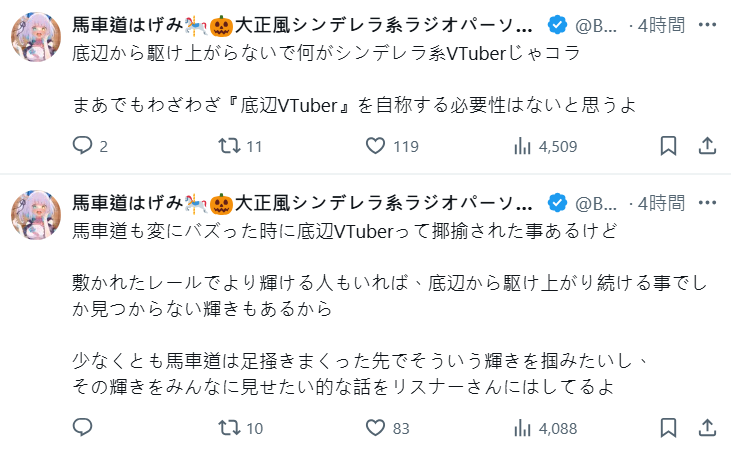
VTuber Bashamichi Hagemi, who was once labeled "bottom-tier," shared her own philosophy: "Some people shine on the main track, while others are down in the valley, still pushing forward." She hopes to "seize her own light" in her own way and bring hope and courage to her viewers.
She also joked, "Rising up from the bottom is what makes a true Cinderella VTuber, right? (lol). But honestly, you really don't need to call yourself a 'bottom-tier VTuber.'"
This whole debate over "bottom-tier VTubers" is more than just a passing trend. It's a reflection of the current creative landscape, where creators are constantly grappling with their self-worth, audience expectations, and the harsh realities of the market.
Whether at the peak or in the valley, every creator's effort deserves to be seen. Perhaps more important than finding solidarity in self-deprecation is believing in your own limitless potential. After all, the real value lies in giving it your all and having no regrets.
( Related: Money Down, But No Debut? Japanese Live2D Artist Says ~40% of VTubers Quit After Their Model Is Finished )
via: togetter