J-pop legend Utada Hikaru dropped her new single "Mine or Yours" on May 2, 2025, performing the track for the first time on the popular YouTube channel *THE FIRST TAKE*. The song, also featured in a commercial for Coca-Cola's Ayataka green tea, quickly captured the attention of fans, but not just for its melody.
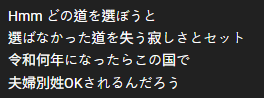
While the ballad explores themes of "choosing to walk together and understand each other through reality and imperfection," one particular line has ignited a fierce debate on social media: "What year of the Reiwa era will it be before this country lets married couples have different surnames?"
Controversial Lyrics Slammed as an "Attempt to Destroy the Nation"
The lyric, which touches on Japan's mandatory same-surname system for married couples, drew sharp criticism from opponents who accused Utada of "interfering in politics," "not understanding Japan," and promoting "radical ideas." The backlash online was swift:
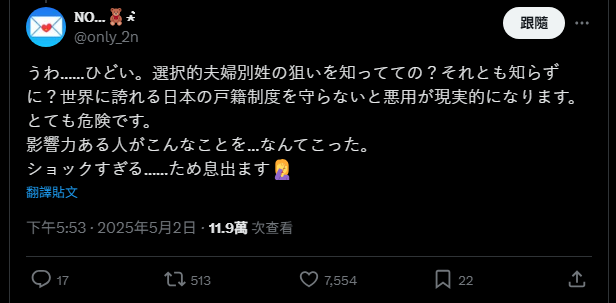
"Wow... this is too much. Do you understand the implications of optional separate surnames, or are you just ignorant? If we don't protect Japan's proud family registry system, it will be abused by people with ill intentions. It's incredibly dangerous. I can't believe someone with your influence would say this."
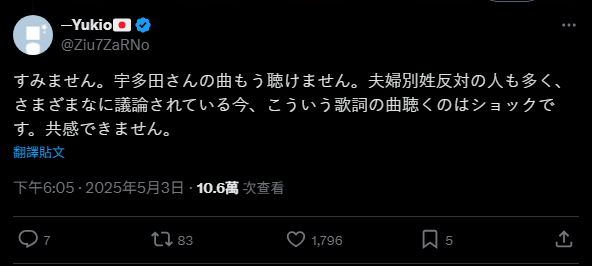
"Sorry, but I can't listen to Utada's music anymore. At a time when there's so much opposition and fierce debate over the 'separate surnames' issue, these lyrics are shocking. I can't connect with them at all."
Some extreme comments escalated the issue into political conspiracy theories, accusing Utada of having a hidden agenda to "destroy the national system" and "open the gates to enemies":
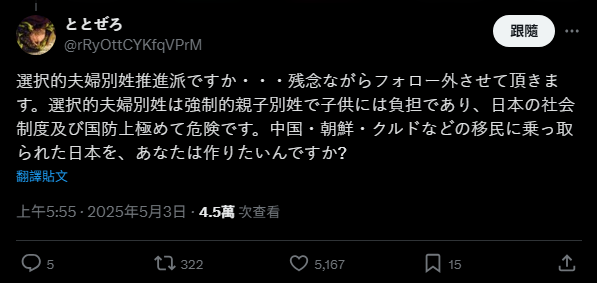
"So you're a proponent of optional separate surnames... Regretfully, I'm unfollowing. This system would lead to mandatory separate surnames for parents and children, which is a burden on kids and extremely dangerous for Japan's social structure and national defense. Do you want to create a Japan occupied by immigrants from China, Korea, and Kurdistan?"
Many critics also focused on whether artists should express political opinions at all:
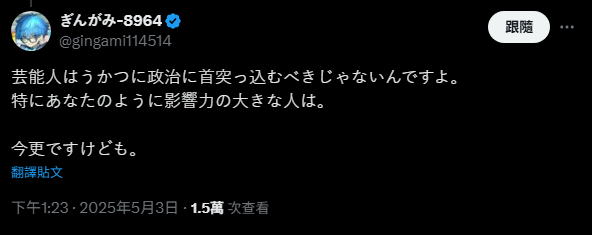
"Celebrities shouldn't meddle in politics so casually, especially someone with your immense influence."
The "Separate Surnames" Debate: Japan's Status as the World's Only Holdout
Currently, Japan is the only country in the world with a law requiring married couples to share the same surname. Women account for 95% of those who change their names, leading to practical difficulties in career and personal identity. As far back as 1996, Japan's Ministry of Justice Legislative Council recommended amending the law to introduce an "optional separate surname system," but the reform has been stalled ever since.
An Artist's Honest Question: Is "Mine or Yours" a Political Statement?
Amid the firestorm, supporters rushed to defend Utada's freedom of expression, arguing that the lyric was not a political maneuver but an honest reflection of a social reality:
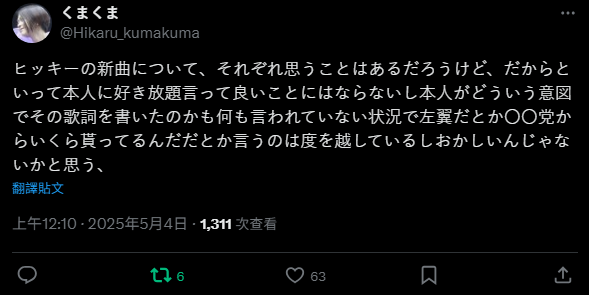
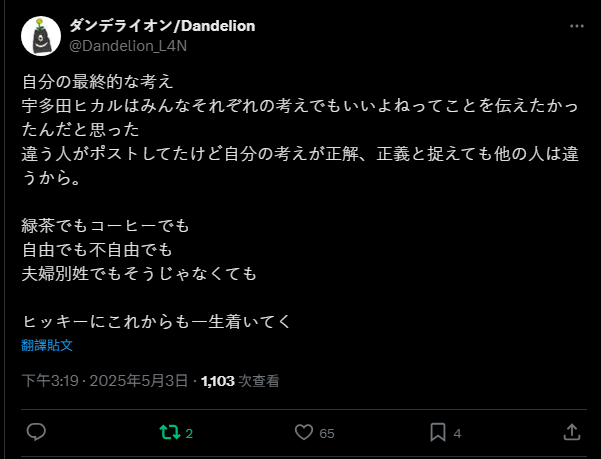
"Everyone has their own opinion, but that doesn't give them the right to say whatever they want and criticize her recklessly."
"Utada didn't issue a statement; she just wrote a question from her heart in a song. And for that, she's being labeled a leftist and accused of taking money from a political party. It's just absurd."
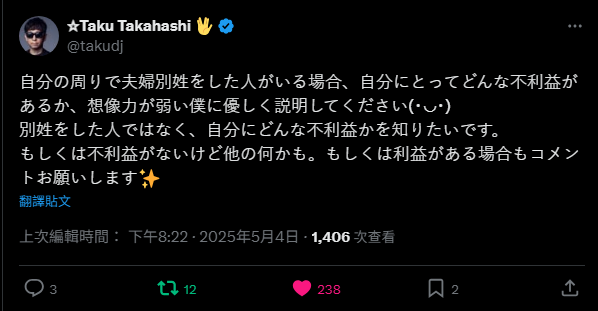
Even musician Taku Takahashi, who worked on remixes for Utada's "traveling" and "Gold," weighed in on X (formerly Twitter), asking: "If someone I know chooses to have a different surname from their spouse, what disadvantage is that to me? I'd like someone to explain it to me gently, because my imagination is a bit lacking (・◡・)."
"I don't want to know what happens to the couple who chooses it, but—what's the disadvantage *to me*? Or maybe there's no disadvantage, just other changes? Or could there even be benefits?"
Not the First Time: Utada on Why "Lyrics Aren't a Manifesto"
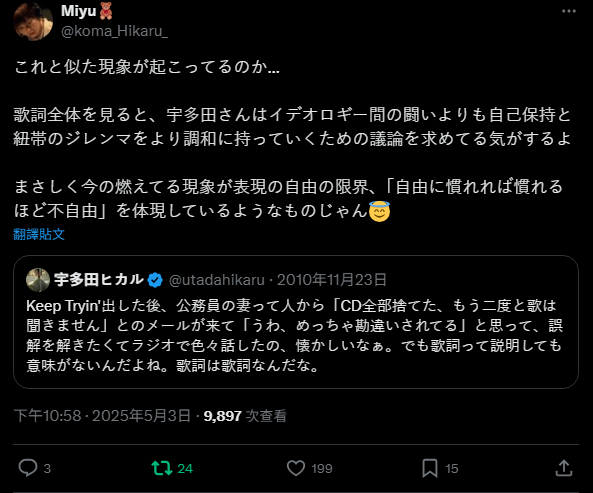
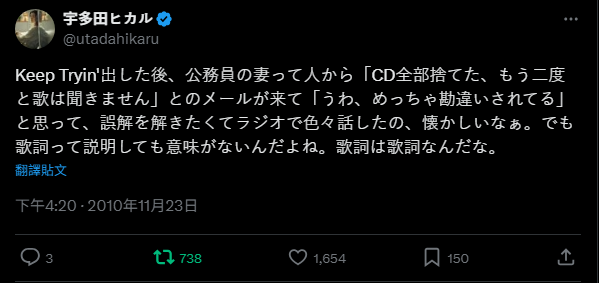
This isn't the first time Utada's lyrics have stirred controversy. The singer once recalled that after releasing the single "Keep Tryin'" in 2006, a listener who identified as a civil servant's wife sent a letter saying, "I threw away all your CDs and will never listen to your music again."
Utada reflected, "At the time, I thought, 'Wow, that's a huge misunderstanding.' I even spent a lot of time on the radio trying to clear it up, which is a fond memory now. But I later realized that there's no point in explaining lyrics. Lyrics are just lyrics."
Recalling this history, one fan commented:
"Is the same thing happening all over again? I don't think she's trying to provoke a confrontation. It feels more like she's reminding us how to find balance and understanding between 'self-identity' and 'human connection.'"
"This whole firestorm has become a case study on the 'limits of free expression.' The more accustomed we become to freedom, the more anxious we get when someone actually exercises it, isn't that right?"