

When you're planning a trip to Japan, beyond the usual suspects like Tokyo and Osaka, Fukuoka is likely high on your list. It's not just the largest city in Kyushu; it's the most populous city west of Osaka.
But a recent post on X has gone viral, sparking a massive debate over "Fukuoka in the eyes of a tourist vs. a local." From transportation and attractions to food prices and subtle regional rivalries, netizens are sharing their unfiltered takes, revealing a major gap between how outsiders and residents see the city.
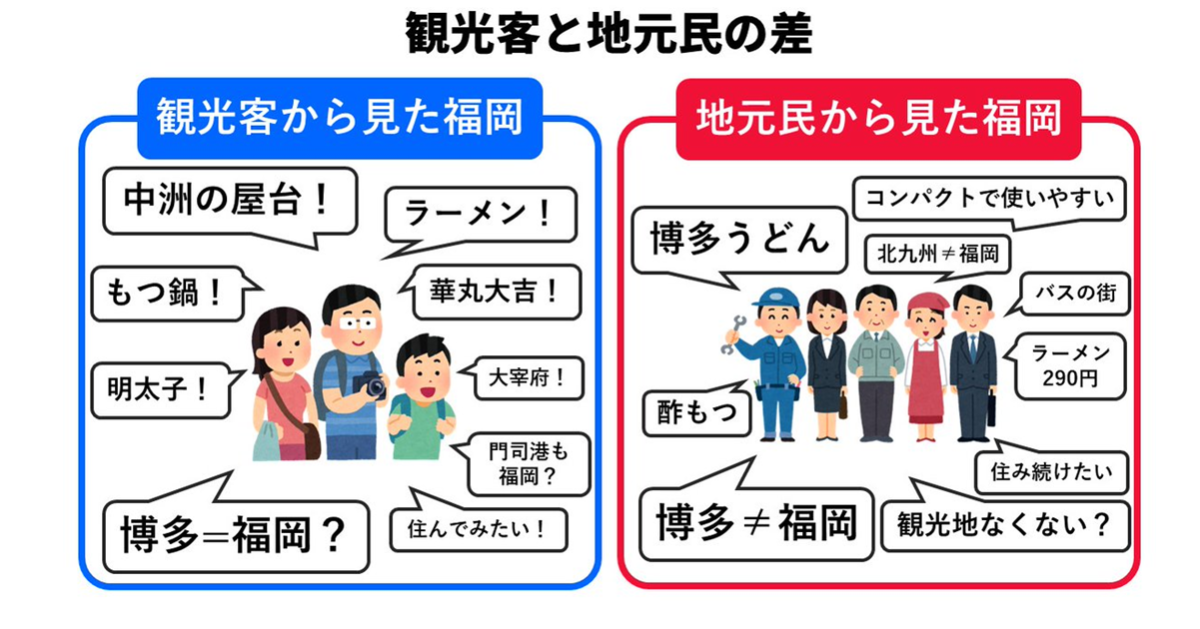
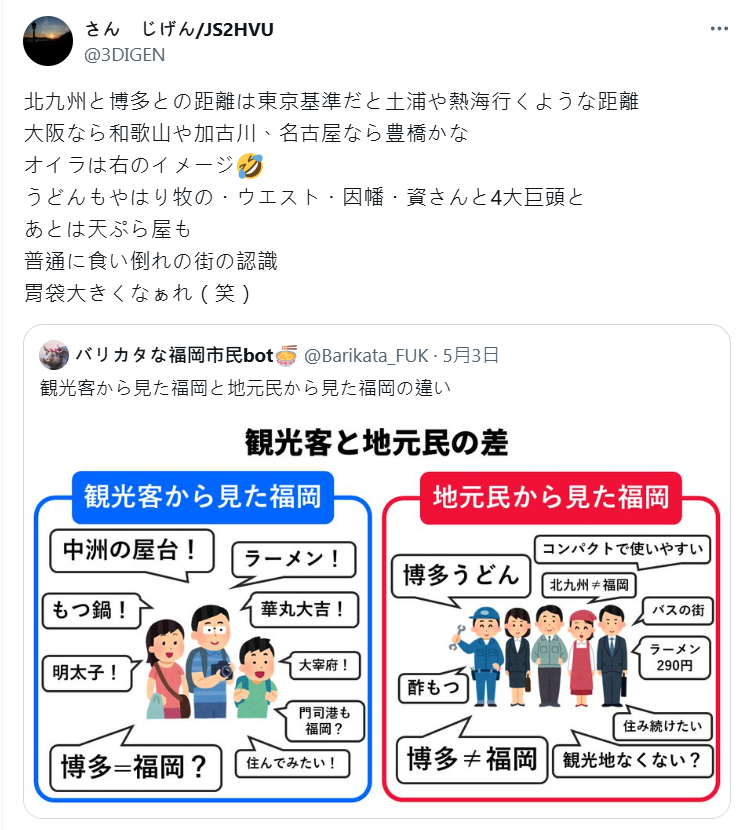
The whole thing kicked off when a Fukuoka-based account, "Barikata na Fukuoka Shimin bot," posted a comparison graphic highlighting the stark differences in perspective. Here's the breakdown:
Fukuoka Through a Tourist's Eyes:
"The food stalls in Nakasu have such a vibe!"
"Gotta have the ramen!"
"Hey, Hanamaru Daikichi [a comedy duo] are from Fukuoka!"
"I'm dying to try some mentaiko!"
"I'm heading to Dazaifu Shrine to pray!"
"Motsunabe hot pot sounds amazing~"
"Mojiko Port is part of Fukuoka, right?"
"Living here must be so chill~"
"Hakata = Fukuoka, right?"
Fukuoka Through a Local's Eyes:
"Nah, it's all about Hakata Udon here."
"The only way to eat motsunabe is with vinegar."
"Hakata is NOT Fukuoka. Get it straight."
"Life here is super convenient; everything is compact and efficient."
"Kitakyushu and Fukuoka are completely different places, okay?"
"This is a city you get around by bus."
"We have ramen shops where a bowl costs just 290 yen!"
"I never want to leave this place."
"Honestly... there aren't really any major tourist attractions."
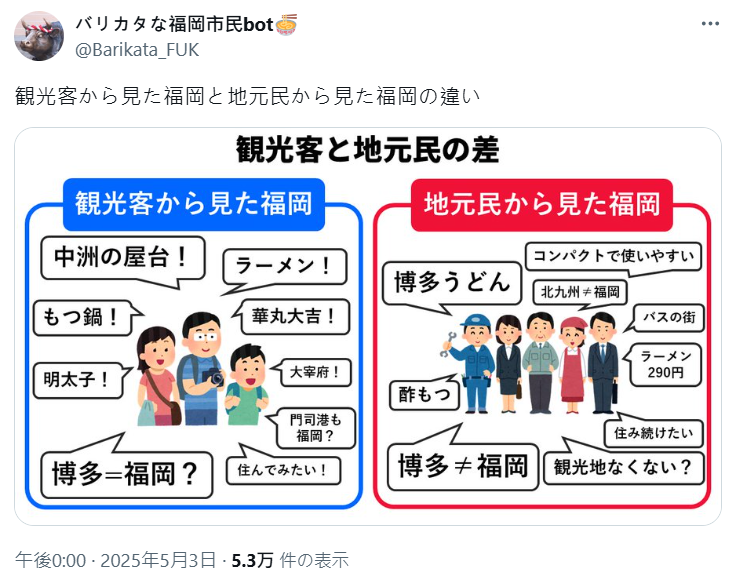
The graphic blew up, drawing in comments from locals and non-residents alike, all weighing in on what Fukuoka is really like.
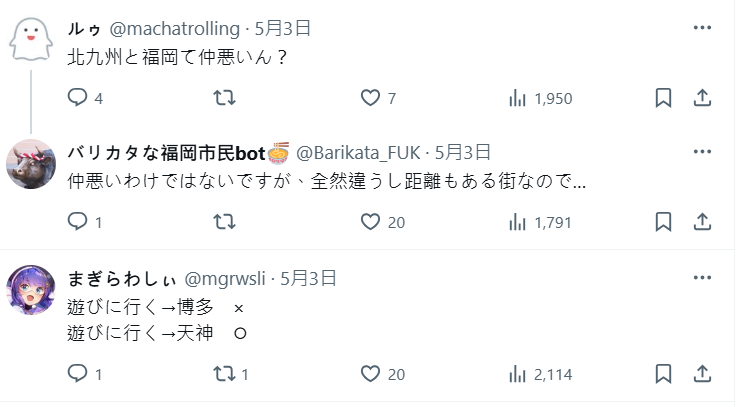
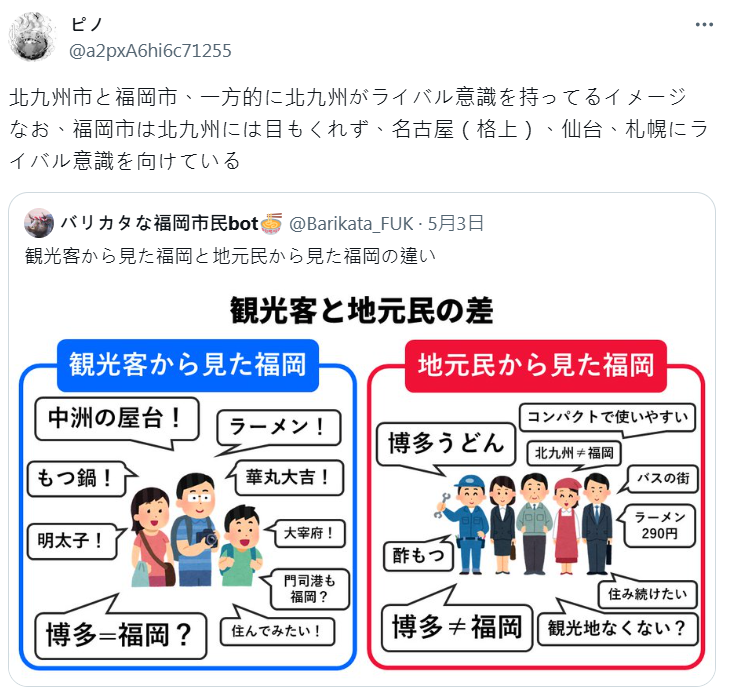
One user asked, "Is there bad blood between Kitakyushu and Fukuoka City?" A Fukuoka local replied, "It's not that we don't get along, it's just that they're completely different places and not even close to each other." Another user analyzed the psychological distance: "Kitakyushu has a one-sided rivalry, but Fukuoka City isn't even looking their way. They're busy competing with Nagoya, Sendai, and Sapporo."
Others chimed in to put the distance into perspective. For someone from Tokyo, the trip from Hakata to Kitakyushu is like going to Tsuchiura or Atami. For an Osakan, it's like trekking to Wakayama. And for someone in Nagoya, it's a trip to Toyohashi. While both are in "Fukuoka Prefecture," they're hardly a quick jaunt away—the train ride alone takes about 90 minutes.
On the point of "Fukuoka doesn't have many tourist spots," many locals reluctantly agreed. Aside from Dazaifu Tenmangu Shrine, many attractions don't hold much appeal for outsiders. One user put it bluntly: "Areas like Tenjin and Hakata are where we live our daily lives. We don't see them as having any tourist value."
However, others argued that tourists often find novelty in things locals take for granted, like the yatai (food stall) culture in Nakasu and the incredibly cheap and delicious food.
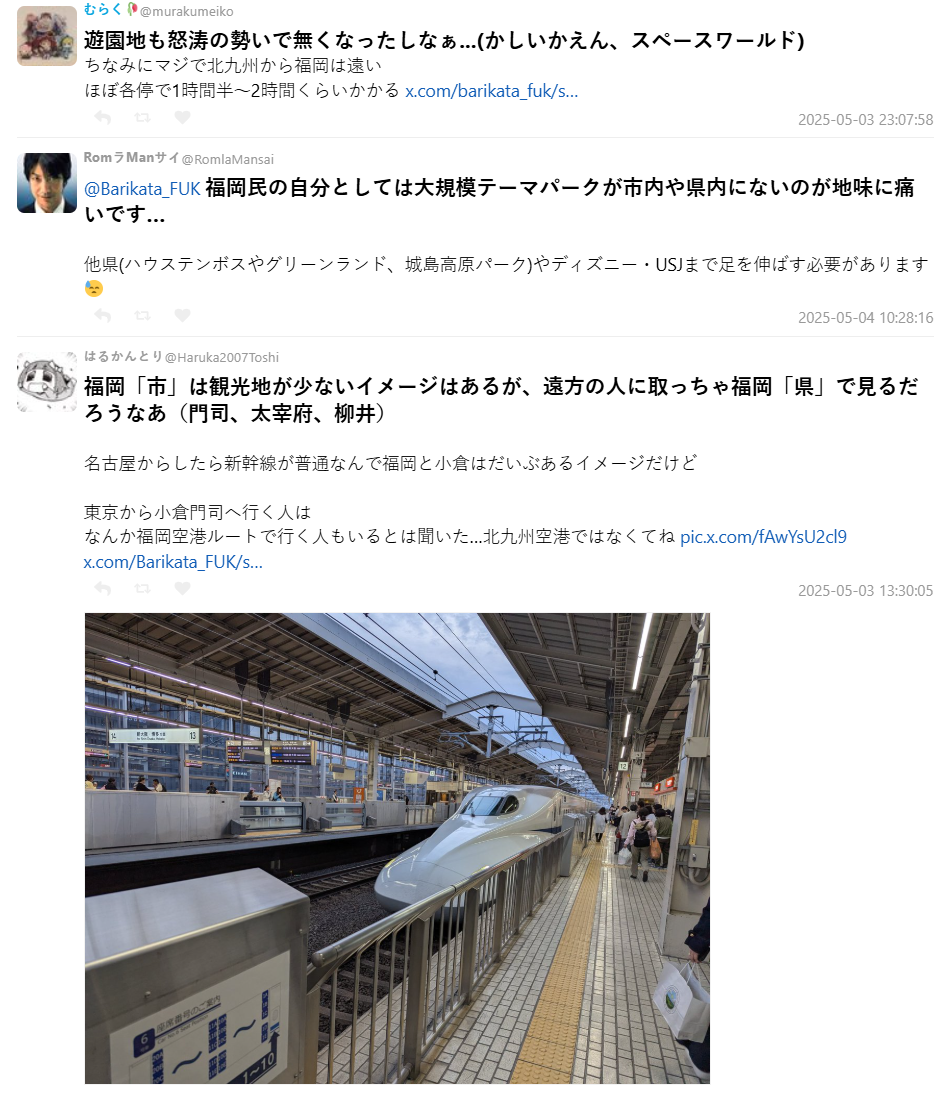
One self-proclaimed Fukuoka native pointed out a major issue: "The biggest pain point is the lack of a large-scale theme park in the city. For fun, we have to go to Greenland in Kumamoto, Huis Ten Bosch in Nagasaki, or even fly to Disneyland or USJ."
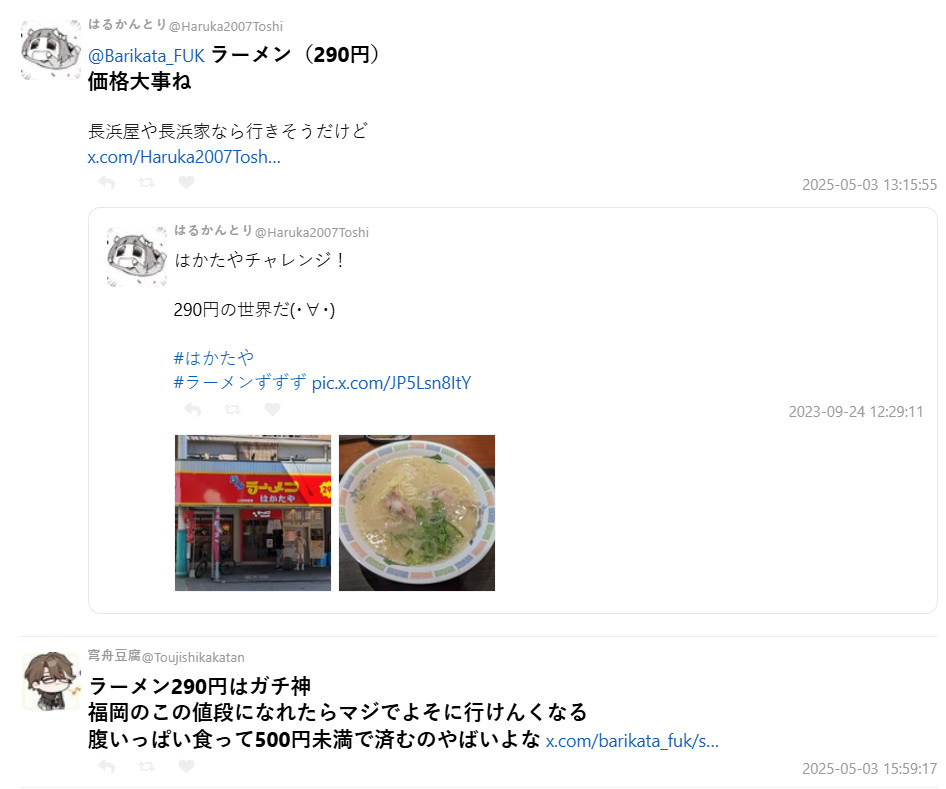
What really shocked many non-locals was Fukuoka's incredibly affordable cost of living. The conversation turned to a ramen chain called "Hakataya," where you can get a bowl of ramen for just 290 yen. You can eat until you're stuffed for under 500 yen. "The prices are insane," a local commented. "Once you get used to this, you can't eat anywhere else."
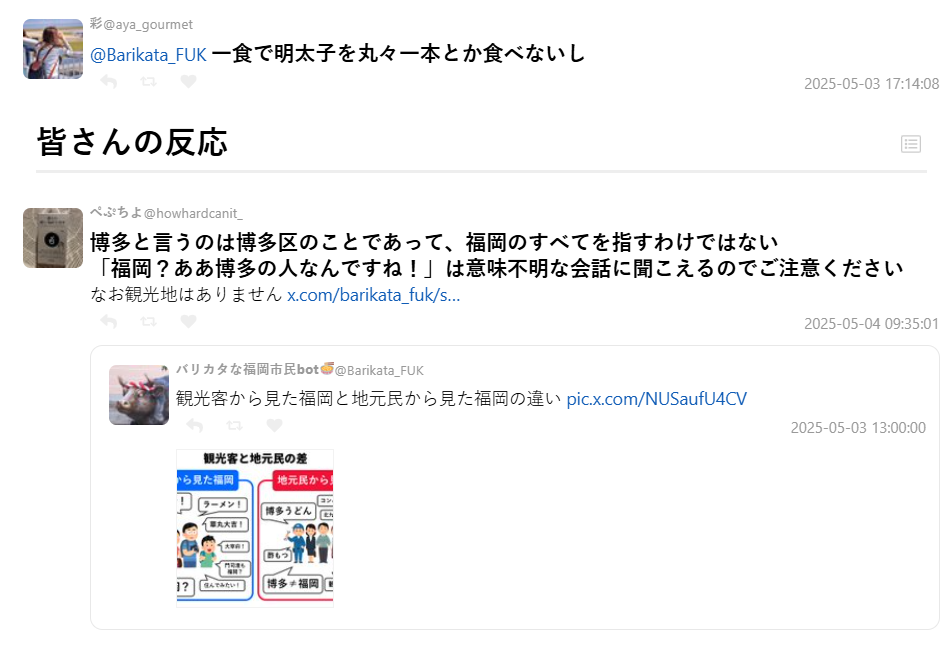
Amusingly, locals also shared common misconceptions tourists have about Fukuoka: "No, we don't eat an entire stick of mentaiko with every meal." "Hakata is just a ward within Fukuoka City. Saying 'Fukuoka people = Hakata people' just confuses us." "If you're meeting up with friends, the spot is Kego Park in Tenjin, not Hakata Station."
Looking at all the comments, it's clear that this isn't unique to Fukuoka. All over Japan, you'll find residents who claim, "There's nothing to do here." But through a tourist's eyes, those same places hold an irreplaceable charm. It seems to be a universal truth: what locals see as mundane, visitors often see as magic.
via: togetter