

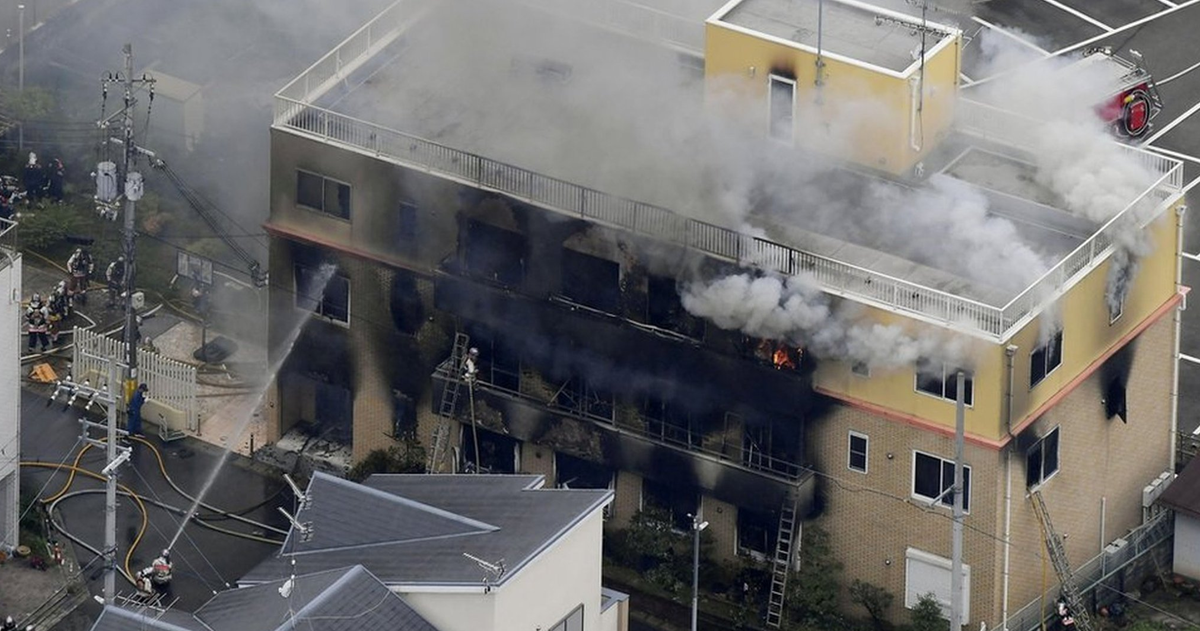
The devastating 2019 "Kyoto Animation arson attack" not only resulted in tragic loss of life and significant asset damage for the anime studio, but it was also dubbed by Japanese media as "the deadliest arson incident since the Heisei era." The perpetrator, Shinji Aoba, was later sentenced to death.
Fast forward to today, and several Japanese industry professionals have recently taken to X (formerly Twitter) to share their heightened vigilance and aversion towards "sending unsolicited creative ideas" in the wake of the "KyoAni incident." Many expressed deep concern over comments from fans and netizens.
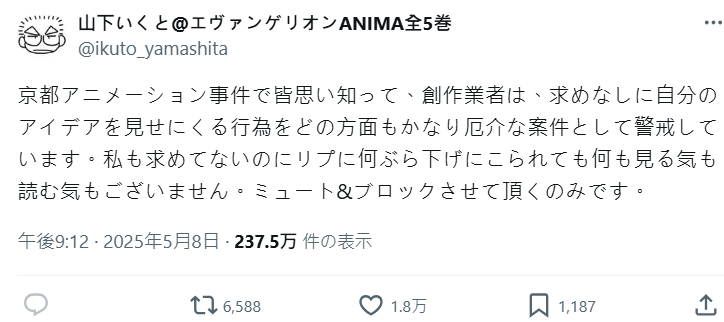
Ikuto Yamashita, known for his work on "Neon Genesis Evangelion ANIMA" and his expertise in mechanical design, stated that after the KyoAni incident, the entire creative community learned a crucial lesson: "It's an absolute nightmare when someone forces their creative ideas on creators without any invitation." He emphasized that he has zero interest in such unsolicited ideas, won't read them, and will immediately "mute and block" anyone who sends them.
(Note: Shinji Aoba, the perpetrator of the KyoAni incident, was arrested shouting, "They stole my novel!" He had also previously submitted a novel under the same name and address to the Kyoto Animation Award's general novel open call.)
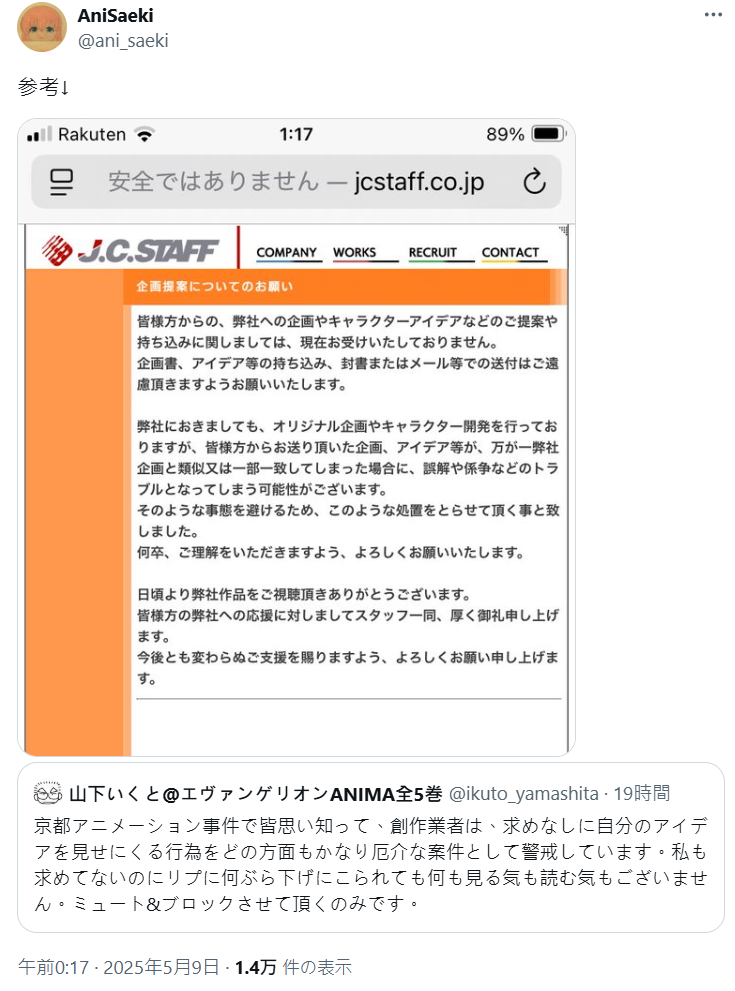
Netizens also pointed to an official announcement from anime production company J.C.STAFF:
Regarding any suggestions or proposals, such as project plans or character designs, sent to our company, we currently do not accept any of them. Please refrain from sending any form of project proposals, creative ideas, or similar materials, whether by physical mail or email. We kindly ask for your strict adherence to this policy.
Even though our company develops its own original projects and characters, there is a risk of misunderstandings or disputes if, by unfortunate coincidence, the content you send overlaps with ours in some way. To prevent such situations, we have decided to adopt a policy of not accepting any unsolicited proposals. We sincerely appreciate your understanding and cooperation, and thank you for your continued support.
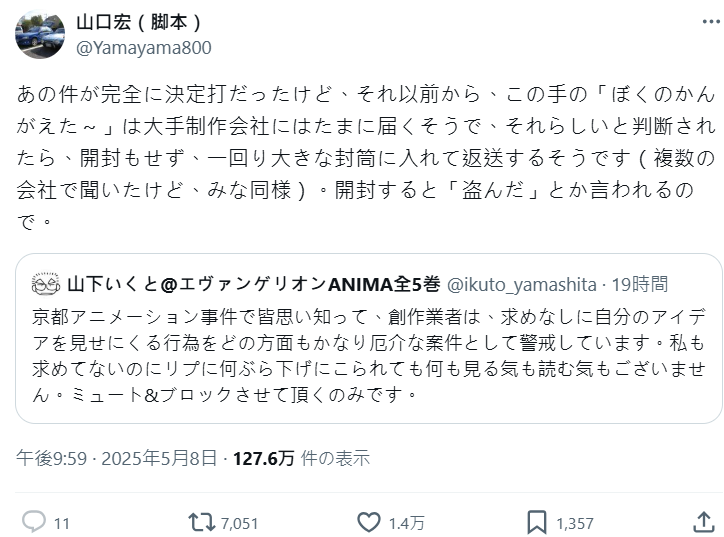
Anime scriptwriter Hiroshi Yamaguchi revealed that even before the KyoAni incident, major production companies frequently received "my story" submissions from the public, with some individuals even showing up demanding to meet directors. He stressed that most companies would return such mail unopened, "because once you open it, you risk being accused of plagiarism."
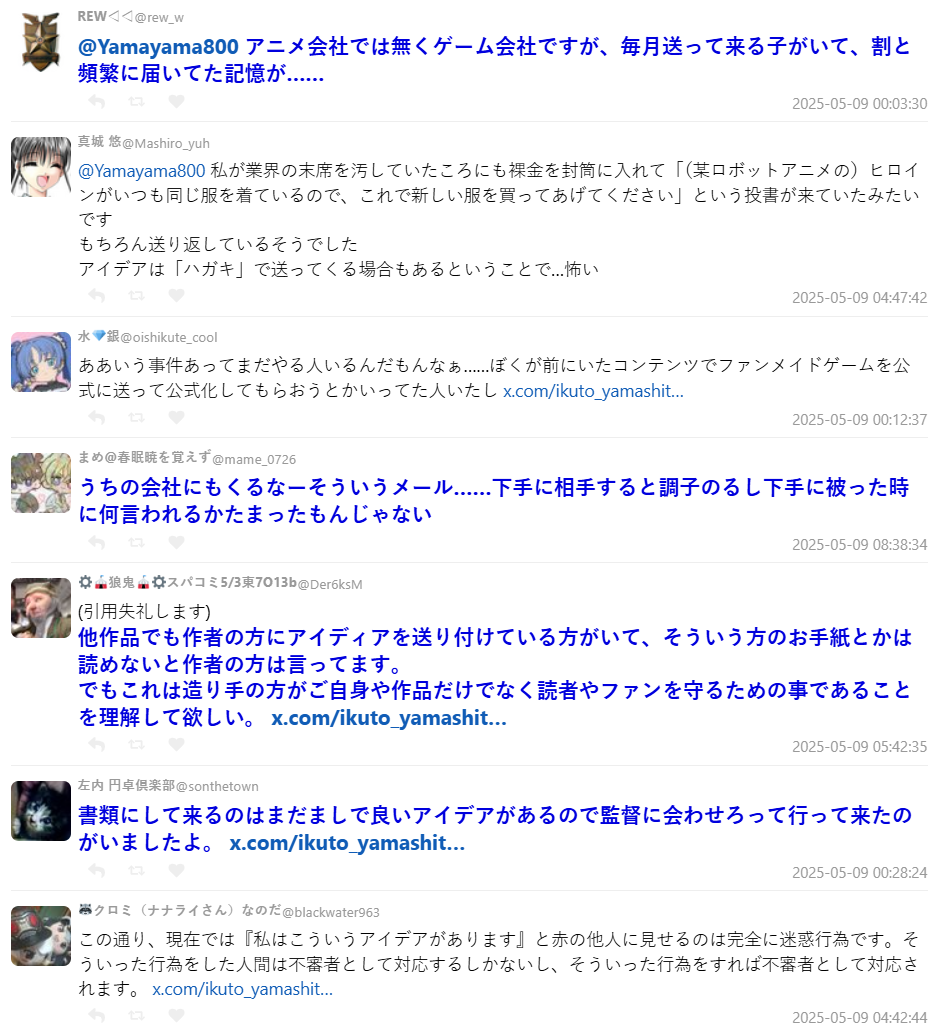
This wave of statements resonated widely. A game company employee shared how one individual sent creative proposals every single month. Another creator recalled receiving a letter that even included cash, demanding a character's outfit be changed. Some fans even created their own games and sent them to official companies, hoping for them to be "made official."
Illustrators and novelists also chimed in, stating, "This kind of behavior has always existed," and "It truly makes you lose all motivation." One creator bluntly put it: "The moment you propose that idea, I never want to use it in my life." Furthermore, some advised: "If you really want your idea to become a reality, go join a production company, or start your own. Don't just rely on nagging or sending letters all day."
In fact, the once-popular "tōkō mochīkomi bunka" (the culture of bringing your work directly to publishers for submission) in Japan has been severely impacted. While online platforms like Pixiv and note allow creators to publish their own work, they still struggle to fully compensate for the decline of the physical submission culture.
It's clear that creators are now highly sensitive to unsolicited "suggestions" from the public or fans. Using such ideas could lead to plagiarism issues, or even ignite a desire for revenge, as seen in the KyoAni incident. It's safe to say that the incident has indeed put everyone on high alert.
via: togetter