

For many anime, manga, and gaming fans, the "Itasha" culture is nothing new. It’s all about decking out your beloved ride – whether it’s a motorcycle or a car – with custom paint jobs or decals featuring your favorite characters. The end result? A vehicle that’s not just a car, but a rolling shrine to your fandom, making it "waifu-er than waifu" as some might say.
But what happens when these personalized vehicles hit the resale market? A recent post by a used car dealer on Japan’s X (formerly Twitter) has sparked a heated debate, leaving many wondering if "Itasha" decals should be removed before a car changes hands, and delving into the potential copyright issues involved.
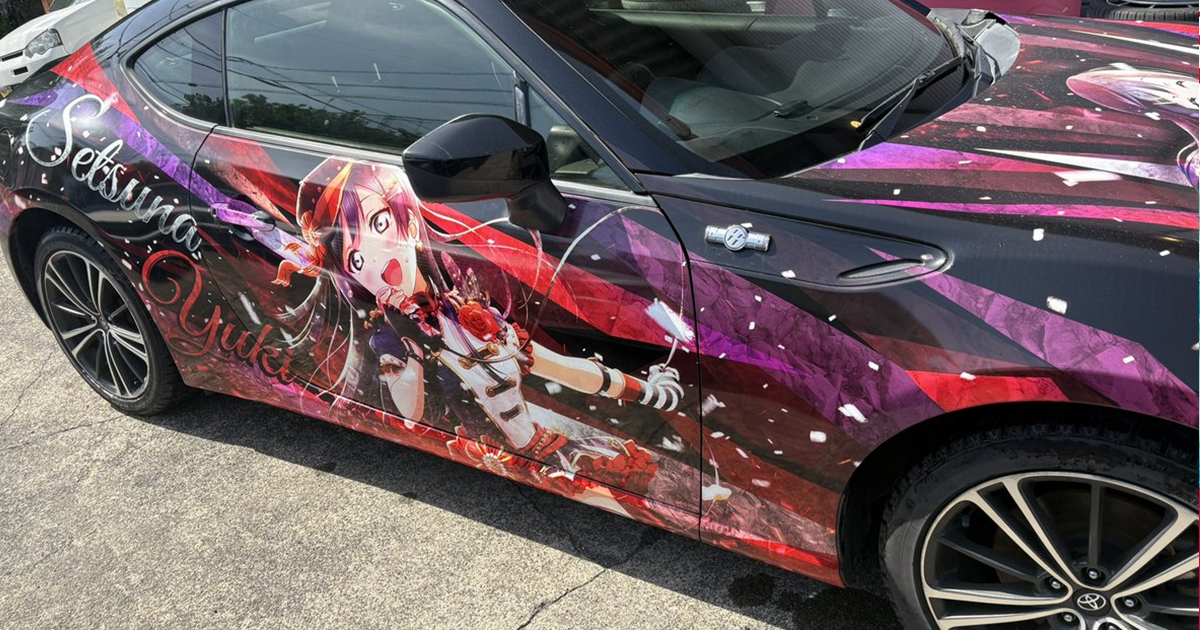
The dealer, GarageKAZU, shared their predicament after acquiring an "Itasha" adorned with LoveLive! themed decals from an industry auction. The previous owner hadn't bothered to remove the character stickers before selling the car, prompting GarageKAZU to ask: "Isn't it common sense in the industry to peel off 'Itasha' decals before reselling the car?"
They argued that letting such a vehicle enter the market directly could cause a lot of trouble. "If you love a character, shouldn't you see it through to the very end and take responsibility?" they questioned.
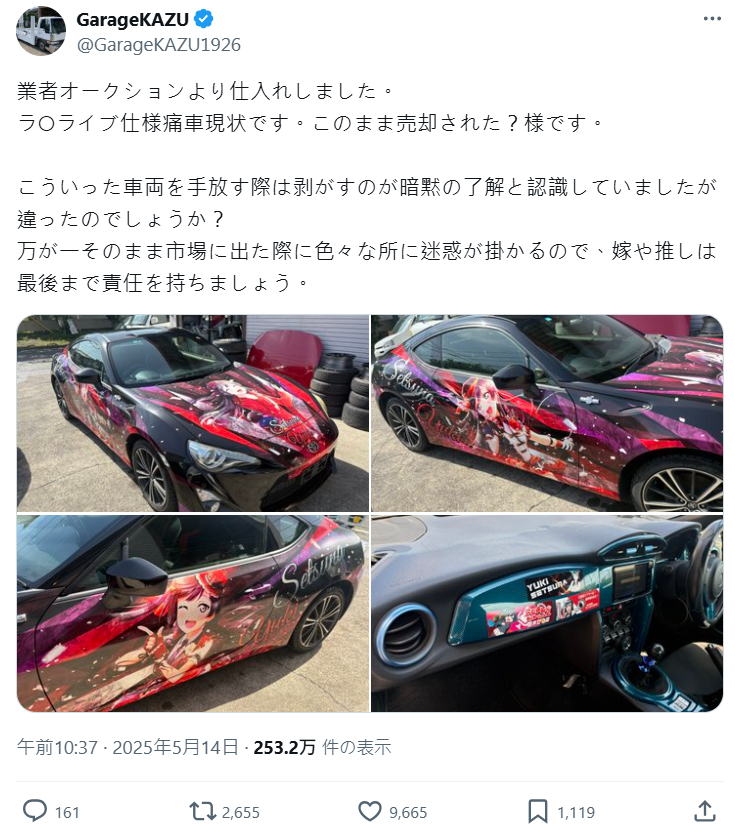
GarageKAZU explained that as soon as the car arrived at their lot, they immediately began stripping the decals and repairing any paint damage caused by the removal. They emphasized that their concern wasn't about their own inconvenience, but rather "respect for the copyright holders."

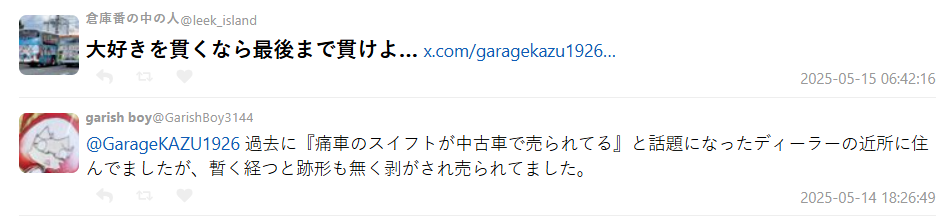
Many netizens rallied behind GarageKAZU’s stance, asserting that "Itasha" owners should "be prepared to take full responsibility from the moment they declare their love for a work and put characters on their car." Some commenters didn't mince words: "If you once called her your 'waifu,' why wouldn't you see the cleanup through?" and "True fans would never let their beloved work be mocked in the hands of a stranger."
However, not everyone was convinced. Some were puzzled: "So you can't sell it like that? If a buyer thinks it's cool and is willing to take it, what's the problem?" Others even suggested that a well-preserved "Itasha" could actually boost its collector's value, "Maybe it would sell better if the stickers weren't removed."
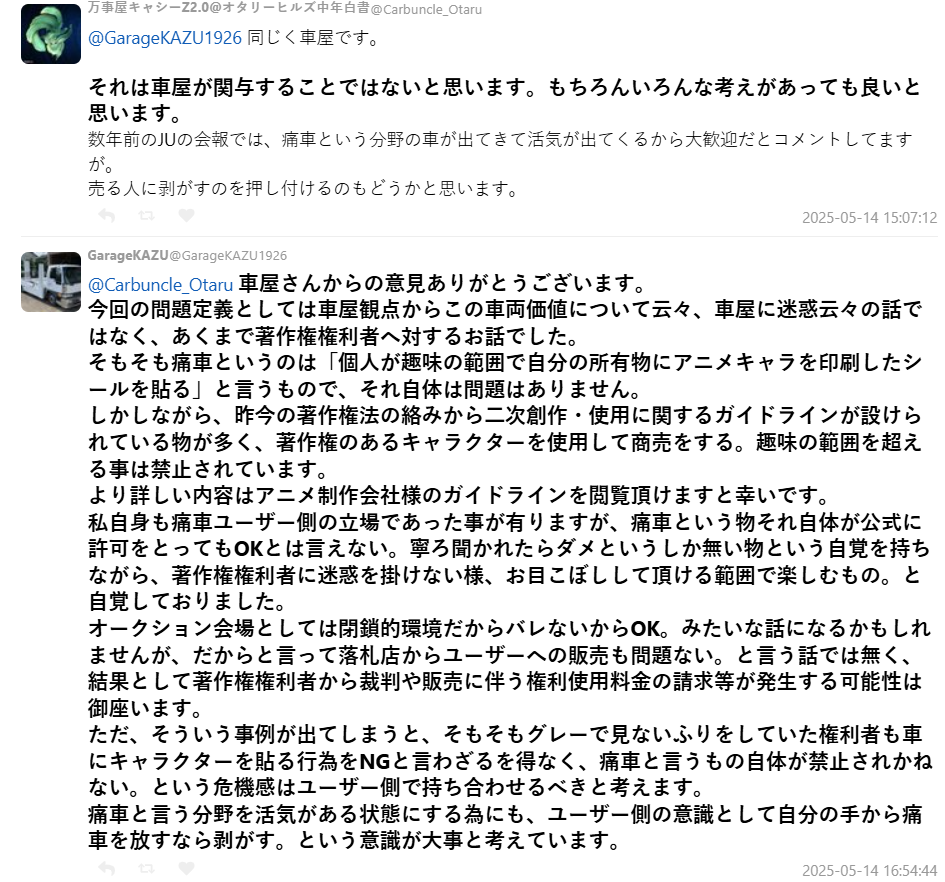
"While it's not illegal to put anime characters on your personal car, once that car enters the commercial market, a dealer selling it could be suspected of 'profiting from copyrighted material.' If such actions become rampant, it could lead to original creators issuing formal cease-and-desist letters, or even demanding a ban on such 'Itasha' activities altogether," GarageKAZU clarified.
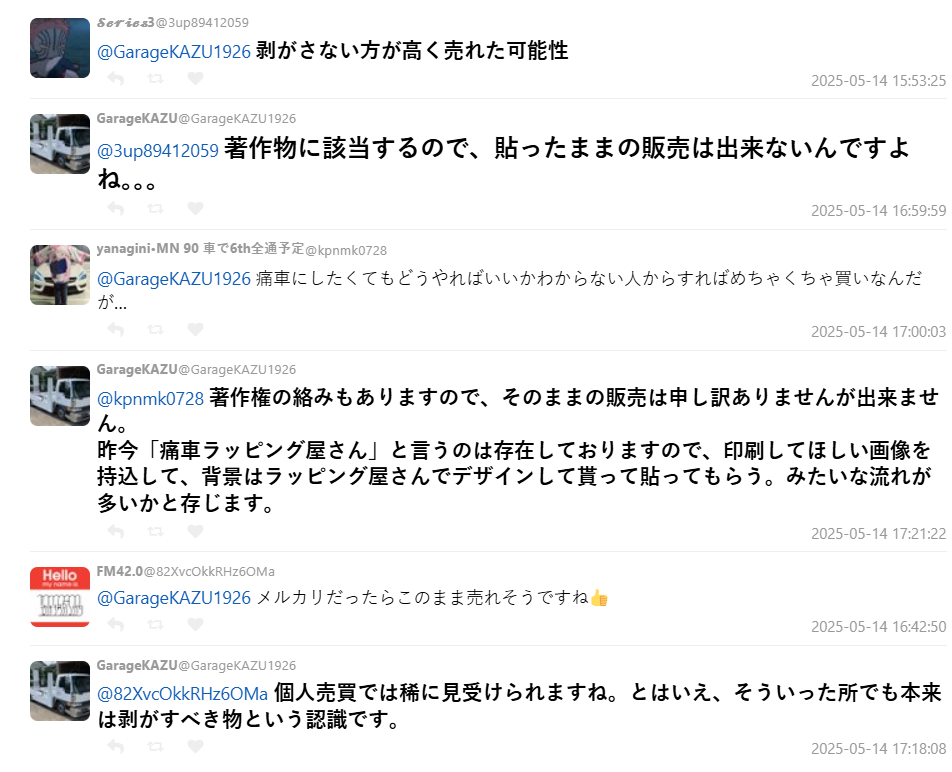
Other dealers voiced their disagreement, believing that whether to remove decals should be a matter of buyer and seller freedom. "If a buyer knowingly purchases an 'Itasha,' then there's no copyright issue. Forcing sellers to remove decals is a bit too much interference," one commented. GarageKAZU responded: "My statement isn't from a dealer's perspective saying the car is hard to sell, but from the perspective of someone who was once an 'Itasha' enthusiast, reminding everyone to cherish this culture."
They also pointed out that in the past, many "Itasha" used materials with ambiguous copyrights, but today, many ACG companies have issued strict guidelines for fan creations and usage. "The deeper your love for a work, the more you should understand where the boundaries lie," they advised.
What started as a simple post from a car dealer about reselling an "Itasha" has spiraled into a multi-faceted discussion spanning copyright law, "Itasha" culture, and ethical usage. Currently, the decals on the controversial car have been almost entirely removed, and the vehicle has been repainted and refurbished.
One netizen summed it up: "Precisely because we love these works, we should be extra careful not to let temporary convenience destroy the 'Itasha' culture that has been built up over many years." As for the "unspoken rule" of whether to strip decals before reselling an "Itasha," it seems this debate will continue to rage within the community.
via: togetter