

Japanese rock band King Gnu has been on an absolute tear lately, skyrocketing to fame in 2019 with their hit track "Hakujitsu." They've continued their reign with chart-toppers like "Ichizu," the theme song for 'JUJUTSU KAISEN 0 the Movie,' and "Special," the opening theme for the Shibuya Incident arc of the anime.
Frontman Daiki Tsuneta recently dropped a bombshell during an Instagram live stream: for their upcoming nationwide tour, kicking off February 21 in Sendai, the entire show will be open for audience photos and videos. Naturally, the announcement instantly set the internet ablaze.

While snapping photos and recording videos on your phone is pretty standard and largely permitted at concerts overseas, it's almost universally banned during performances in Japan. Tsuneta didn't mince words during the stream: "Regarding filming at concerts, I'll cut straight to the chase – starting with the next tour, the entire show is fair game for filming." His delivery was as straightforward as it gets.
So, why the radical shift? He confessed, "We perform in various countries, and don't you think Japan is uniquely strict about this? It's always bothered me. Japan is one of the most rule-abiding nations in the world, yet it's the most rigid. Honestly, I want to minimize the rules as much as possible."

He also revealed that some fans suggested only allowing filming for a few select songs. However, he explained that they'd tried that a few times before, and as soon as specific songs were greenlit, it turned into a "photo op" free-for-all. Everyone would simultaneously hoist their phones, pointing them at the stage, which completely killed the vibe for those tracks. "The songs just die," he said, which is why he's not keen on the partial filming approach.
But he also stressed, "We absolutely do not encourage recording the entire performance and uploading it to YouTube for profit." His final message to fans? "It's all up to your conscience."
▼ King Gnu's Japan and world tour this year will also include a stop in Taipei this June.

However, the decision has sparked a polarized reaction across the Japanese internet. Some fans are thrilled about the photo and video allowance, as long as it doesn't compromise the show's quality. On the flip side, other netizens question why they should cater to overseas trends, especially when the ban was largely to deter those looking to profit from recordings, arguing that this new approach isn't the right move.
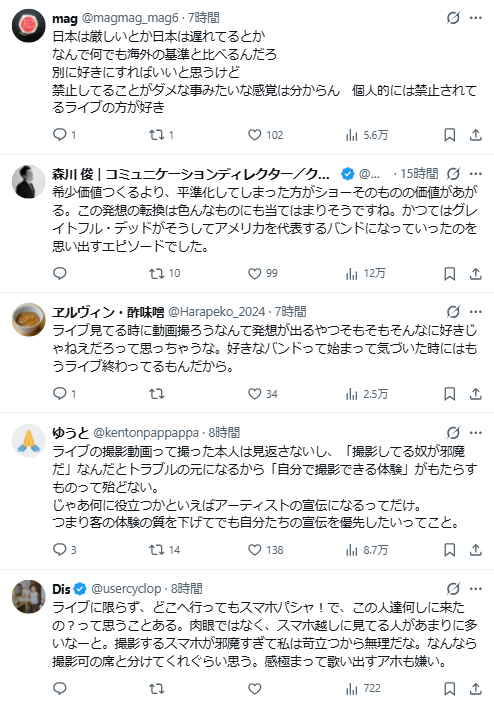
This "all-show filming" decision is a truly groundbreaking experiment within Japanese concert culture. It'll certainly be interesting to see what kind of ripple effects it creates.