

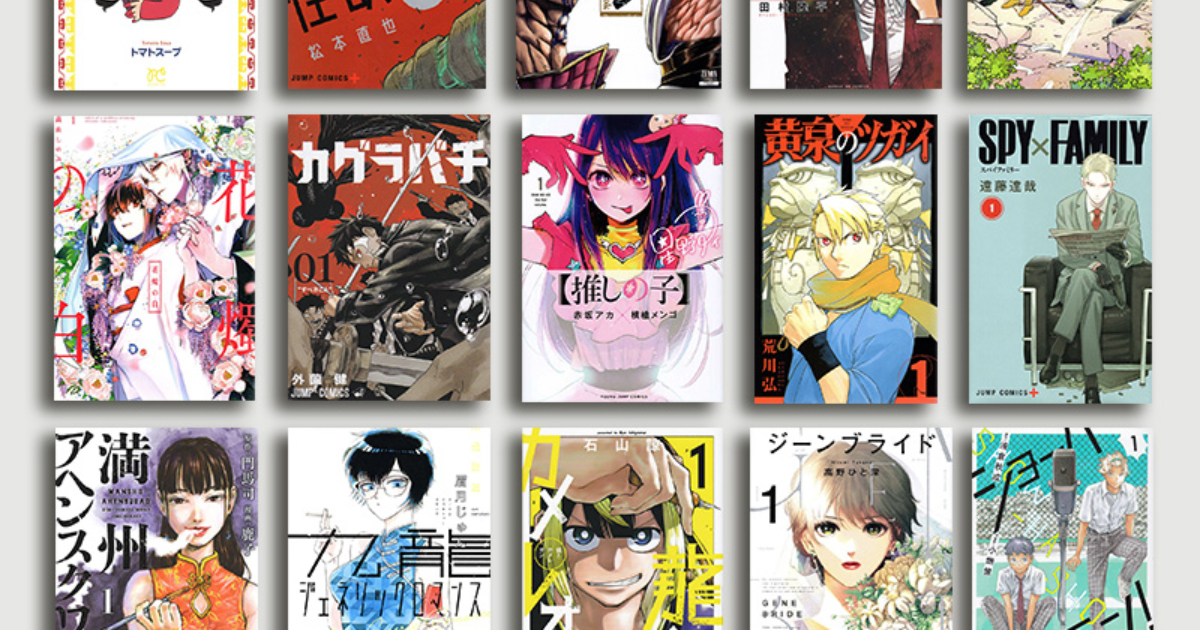
If you have been reading Japanese manga for years, you may have noticed that titles are getting longer and longer. And it is not just the famously wordy light novel market: manga titles across Japan are trending longer.
Japanese e-book platform BookLive recently released the results of a study examining “changes in manga titles.” It found that the average Japanese manga title has grown to roughly twice its original length over the past 15 years, sparking plenty of discussion online.
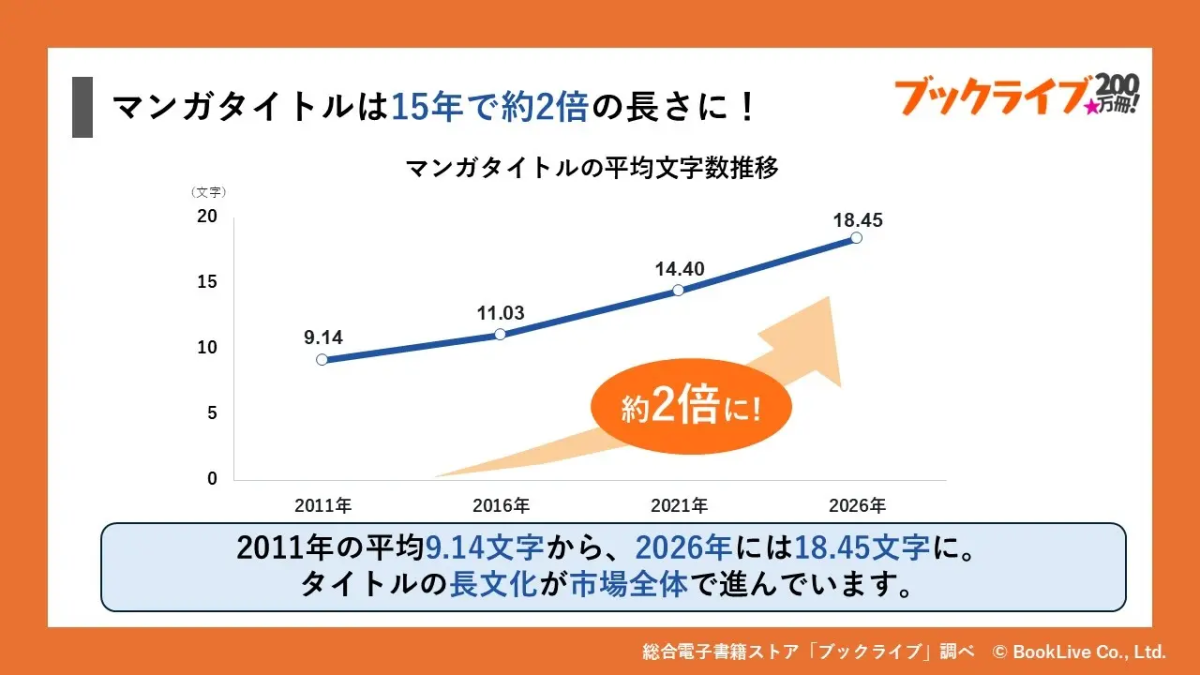
The study analyzed manga available on BookLive, grouping titles by the year their first volume was added to the platform and calculating their character counts.
The average title length rose from 9.14 characters in 2011 to 18.45 characters in 2026, roughly doubling over the period. The median also climbed from eight characters in 2011 to 16 in 2026, showing that the increase was not driven by a small number of exceptionally long titles. Manga titles have become longer across the market as a whole.
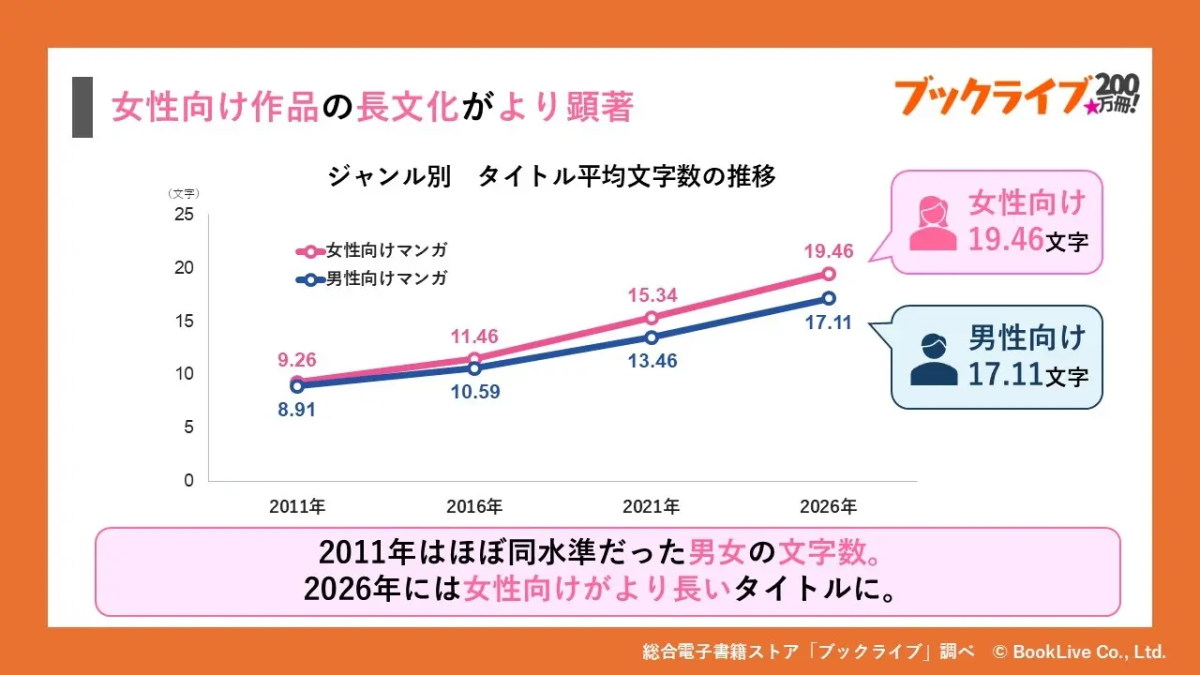
A closer comparison of manga aimed at male and female readers reveals that the two categories were nearly identical in 2011, averaging 8.91 and 9.26 characters, respectively.
By 2026, the average had reached 17.11 characters for male-oriented manga and 19.46 for female-oriented manga, suggesting that the shift toward longer titles is even more pronounced in works targeting women.
According to BookLive, the trend is tied to changes in how readers discover and choose what to read. More readers now prioritize “time efficiency” and “value for money,” hoping to avoid the disappointment of “starting a series only to find that it is not what they expected.” That has increased demand for titles that immediately communicate a work’s premise and defining features, making it increasingly common to pack key story details directly into the name.
Another major factor is the growing popularity of web novels and light novels, followed by their publication as books and the boom in manga adaptations. Web novels often need to attract readers through text-only lists without cover art, encouraging the rise of descriptive, sentence-like titles that can “explain the premise all by themselves.”
As more of these works receive manga adaptations, that naming style has spread across the wider manga market. The gradual shift from physical bookstores to e-book platforms is also believed to be contributing to the trend.
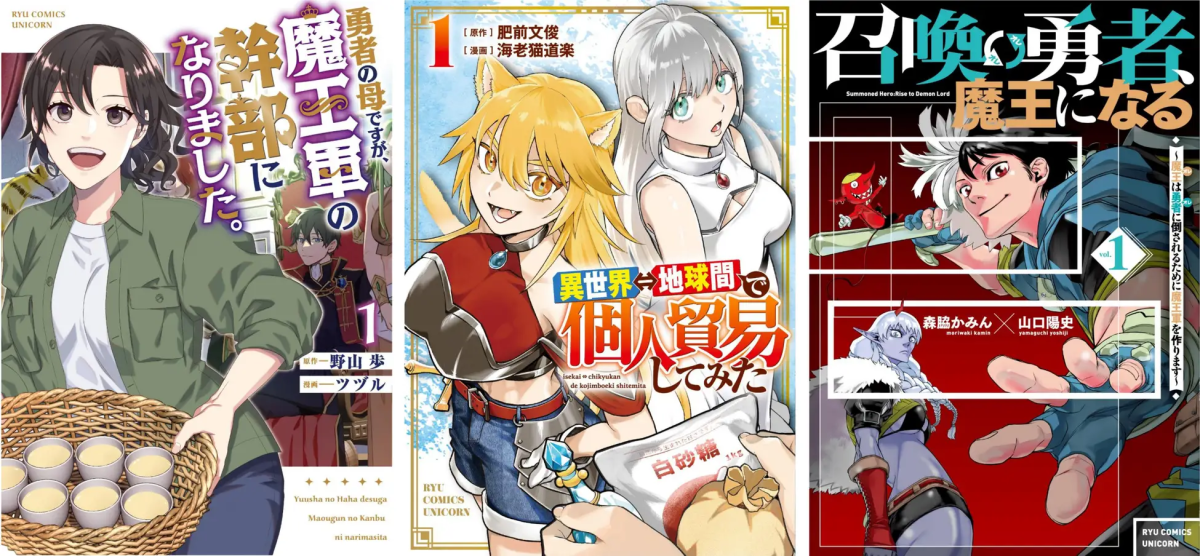
As readers increasingly browse through lists and search results, keywords such as “another world,” “reincarnation,” “exile,” and “noble lady” have become far more common. These terms instantly signal a story’s genre and setting. In other words, manga titles are increasingly functioning like “tags,” giving readers useful clues when searching for their next series.
There is even a growing culture around enjoying comically long titles for their own sake. The full title spells out a work’s setup and selling points in detail, while fans naturally create and adopt abbreviations when discussing it. A title is no longer just an entry point into a series; it can also help shape the community around it.
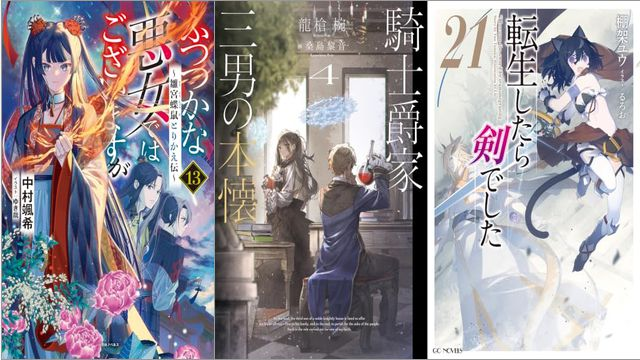
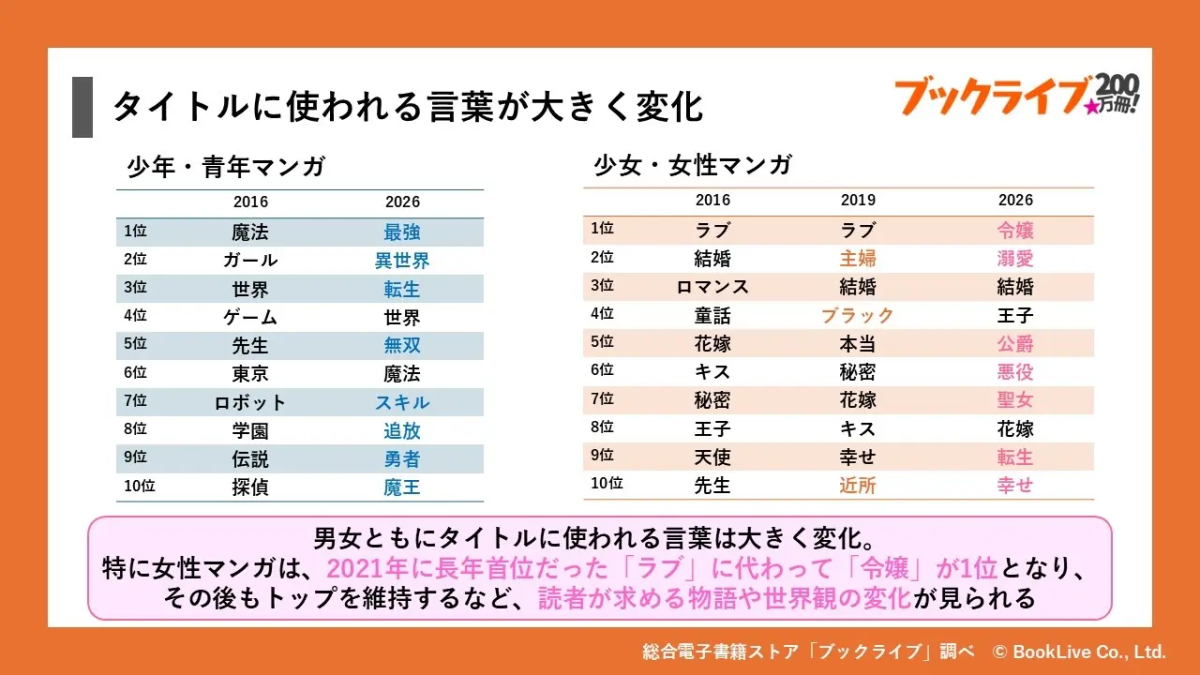
It is not only title length that has changed. The vocabulary used in manga titles has shifted dramatically over the past decade. In manga aimed at boys and adult men, terms such as “another world,” “reincarnation,” and “strongest” have become popular keywords, reflecting a growing tendency to advertise the setting and protagonist’s abilities right in the title.
The shift has been even more striking in manga aimed at girls and women. In 2016, romance-focused words such as “love,” “marriage,” and “romance” dominated. By around 2019, titles increasingly featured terms such as “housewife,” “toxic,” and “neighbor,” pointing to stories centered on realistic interpersonal conflict.
Since 2021, fantasy-coded terms such as “noble lady,” “villainess,” “doting love,” and “saint” have climbed to the top of the rankings. The changing vocabulary of manga titles shows just how dramatically readers’ preferred stories and settings have evolved over the past decade.
via: PR TIMES