

As AI data centers expand, mounting pressure on the global memory supply is driving up the cost of computers and gaming hardware. OpenAI CEO Sam Altman recently argued that leaving scarce DRAM scattered across personal computers is a "quite terrible" allocation of resources, suggesting that concentrating memory in cloud data centers would improve utilization—a stance that quickly sparked debate.
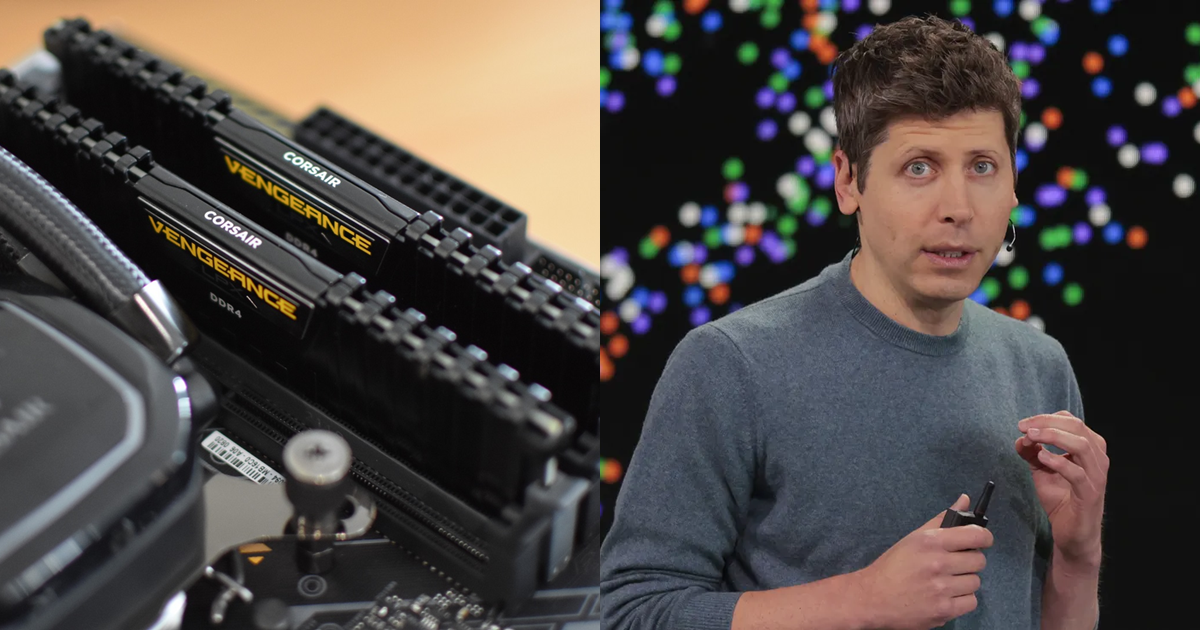
According to IGN, Altman discussed the shortage of AI computing resources and the market's failure to adequately address supply constraints during an appearance on the YouTube show "Cheeky Pint." While some believe open-source models running on personal computers could reduce reliance on data centers, Altman offered a different view of how memory should be used.
"From the standpoint of allocating resources worldwide, it makes little sense for everyone to keep a large share of the planet's scarce DRAM in their own computers when it may be used only 5% of the time."
"When supply is this severely constrained, cloud computing should keep those resources working as much as possible. Yet for some reason, many people instinctively see it the other way around," Altman said.
His comments underscore OpenAI's emphasis on centralized computing, but DRAM is not used exclusively for AI. Gaming PCs, smartphones and a wide range of consumer electronics also depend on memory. The 5% figure was Altman's own estimate during the interview and should not be treated as the actual utilization rate of every personal computer.
Amid rising memory costs and supply pressures, Sony announced price increases for the PS5 lineup in March 2026, while some used PS5 Pro listings climbed as high as $1,399. The graphics card market has also taken a hit: The NVIDIA GeForce RTX 5080 temporarily vanished from NVIDIA's official store as market prices surged to around $2,000, while reports suggested that NVIDIA GeForce RTX 5090 supplies were being reduced.
Samsung Electronics has also warned during an earnings call that tight memory supplies could continue into 2027. As AI companies and everyday consumers compete for limited hardware resources, the industry still faces a difficult balancing act between data center demand, freedom in personal computing and costs across the consumer market.
via: IGN