
I once mentioned in a previous column about "Dragon Ball" that "games adapted from famous anime or film IPs have a high probability of being terrible." Some readers might wonder if it's really that bad. This time, I've selected a few games that are all based on well-known IPs, and their adaptations have earned a certain "notorious reputation" among players. Let's dive in.
1. From Box Office King to Desert Burial: The Infamous E.T. Atari Game
Game Title: E.T. the Extra-Terrestrial
Platform: ATARI 2600
Developer: ATARI
Release Date: December 1982
▼The cartridge cover for Atari's E.T. Image credit:ETsy
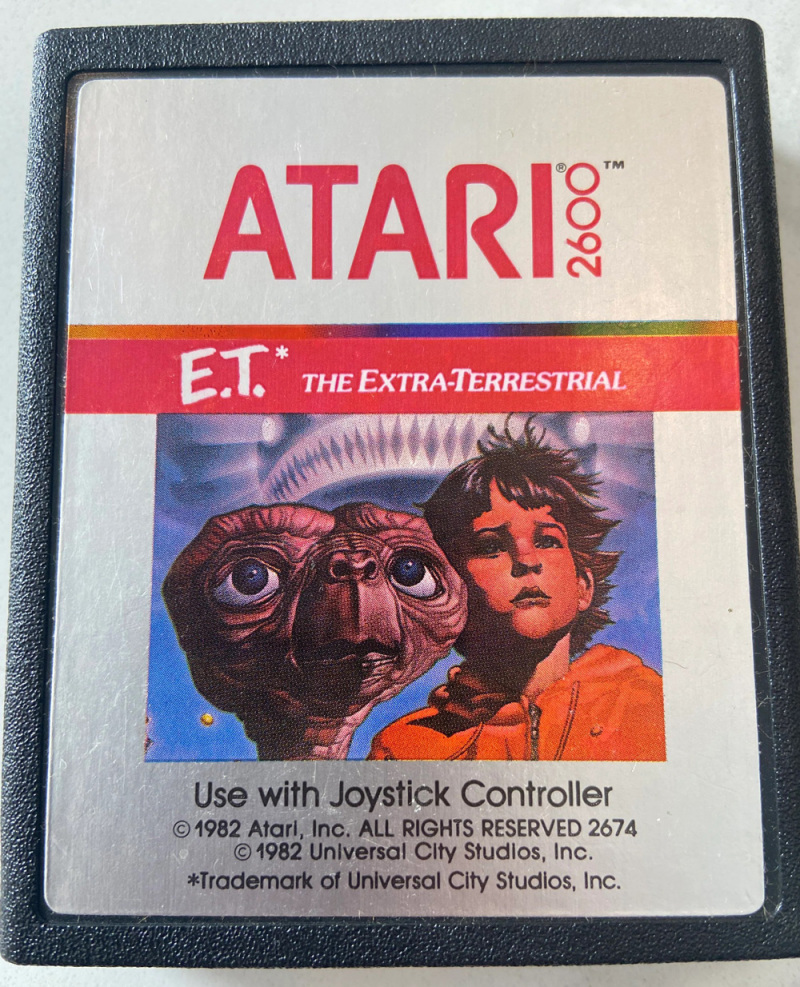
When it comes to the classic film "E.T. the Extra-Terrestrial," veteran film buffs who have seen it will undoubtedly agree with its reputation as one of the "top 100 must-see films of the 20th century." Renowned director Steven Spielberg crafted this sci-fi masterpiece, setting a benchmark that even he struggled to surpass. Released in 1982, the film was the box office champion of its time, becoming the highest-grossing film in history and even surpassing George Lucas's "Star Wars." This record stood until 1993, when it was finally broken by Spielberg's own "Jurassic Park."
Given the film's exceptional quality, one might assume that a game adaptation would be equally outstanding, right? Think again! The eponymous game, released on the Atari console in the same year, not only failed to deliver a stellar performance but also became one of the final nails in the coffin of the classic video game industry crash known as the "ATARI SHOCK."
A Low-Quality Game Rushed to Completion in Under Six Weeks
At the time, with the film's massive success, Atari quickly caught wind of the business opportunity and eagerly sought to adapt the film into a game. However, negotiating the adaptation rights took considerable time, and they were also rushing to meet the Christmas holiday release window. Despite the fact that the game's designer, Howard Scott Warshaw, had previously succeeded in adapting another of Steven Spielberg's films, "Raiders of the Lost Ark" (i.e., "Indiana Jones"), into a well-received game, and was personally hand-picked by the director, creating a game from scratch in just six weeks was an impossible task for even the most brilliant engineer.
▼Howard Scott Warshaw on the right, Steven Spielberg on the left. Image credit:imgur

▼Promotional poster for the E.T. cartridge just before its release. Image credit:twitter
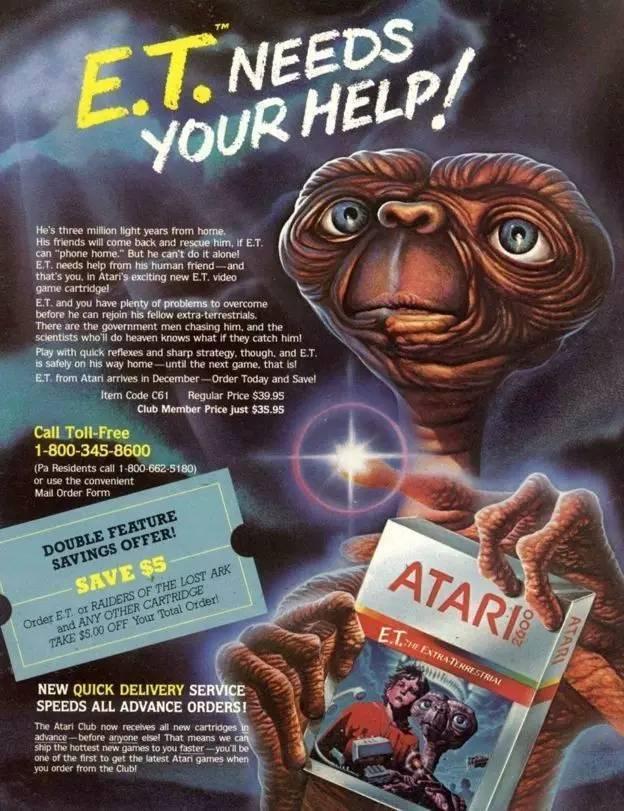
That's right, you heard correctly. The designer had only six weeks (or five, as he himself claimed) to develop the game, and he was working entirely alone. By all accounts, this was an impossible mission. It's no surprise that a project born under such immense pressure would likely suffer significantly in quality.
Frustrating and Monotonous: The Gameplay That Sank Atari's E.T. the Extra-Terrestrial
Indeed, the game's playability was remarkably low. Designer Howard Scott Warshaw later stated that he had originally hoped for more time to integrate the film's narrative elements into the game. However, due to severe time constraints, only one or two ideas from the movie could be implemented.
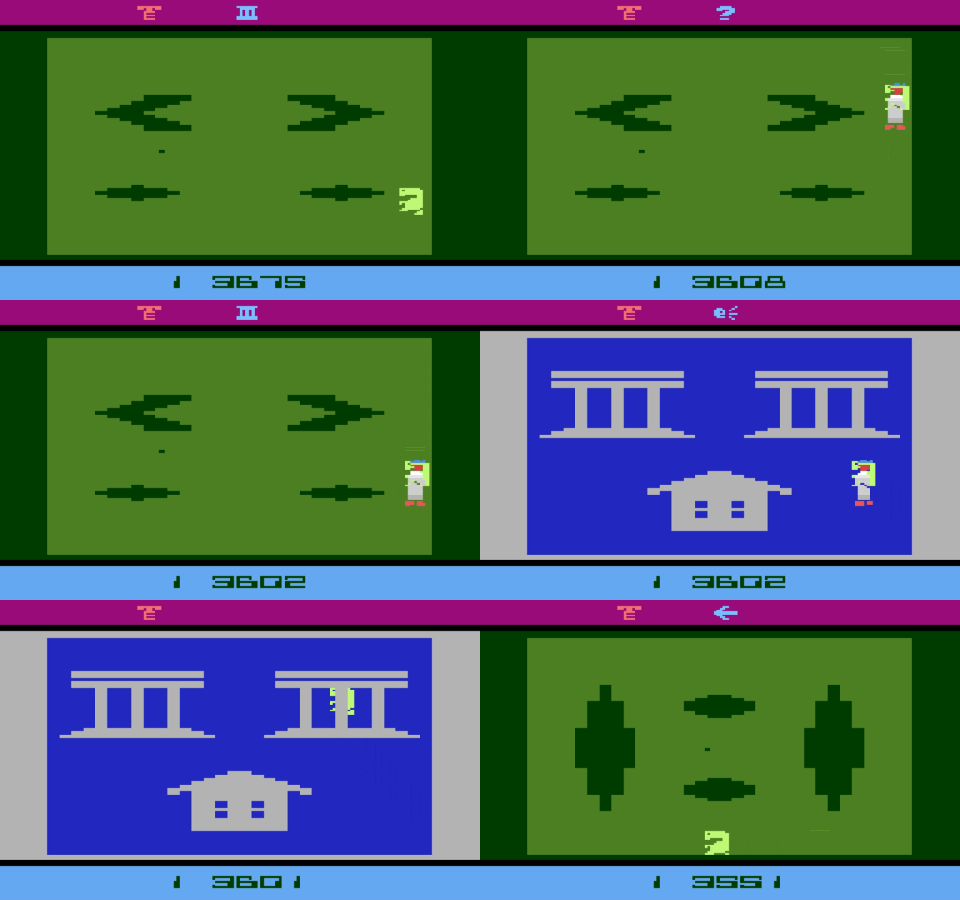
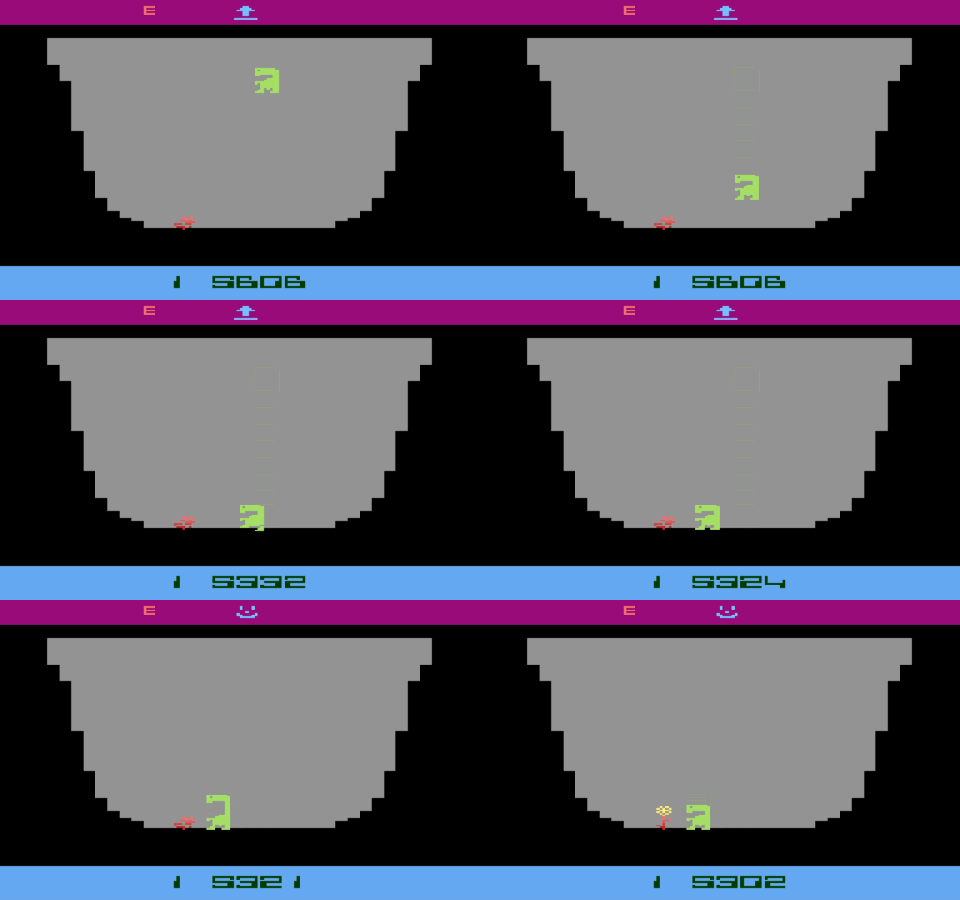
Evidently, the final product offered incredibly monotonous gameplay. Players controlling E.T. would inexplicably fall into pit after pit, and movement felt clunky and frustrating. The game's sole objective was to evade agents, collect scattered telephone parts within a time limit, and allow E.T. to "phone home." The pacing was slow and tedious.
▼E.T. had to evade enemies to prevent losing parts or points. Image credit:badgamehall
▼Constantly falling into pits was frustrating, but necessary to find parts and items. Image credit:badgamehall
Despite many purchasing the game based on the film's immense popularity, leading to respectable initial sales, this was quickly followed by a deluge of negative reviews, unsold inventory, and returns. These factors proved fatal for Atari.
The Atari Shock's Defining Title: How E.T. the Extra-Terrestrial Proved an Urban Legend
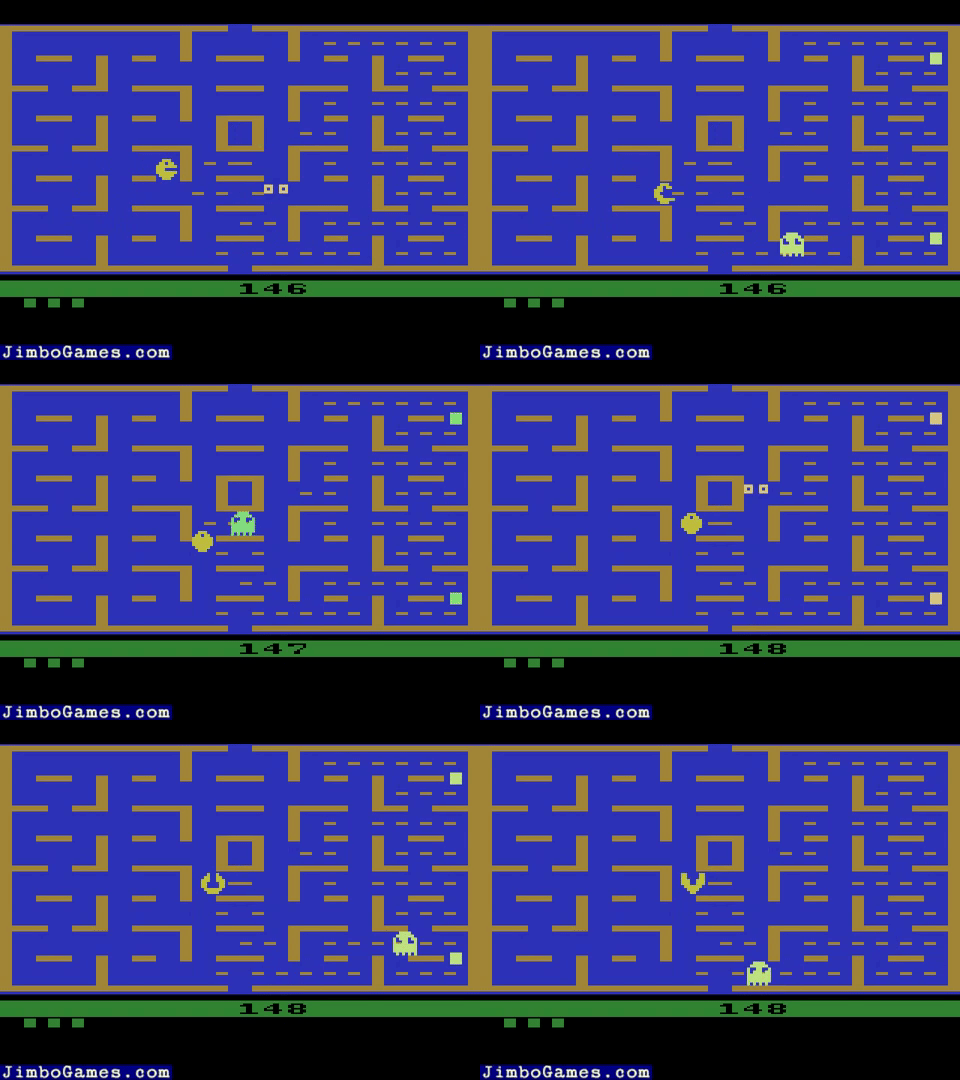
In 1983, the infamous "Atari Shock" erupted, a culmination of various issues that plagued the video game industry. Among the games most associated with this event, "E.T. the Extra-Terrestrial" is undoubtedly one, alongside "Pac-Man." While these titles weren't the sole cause, they were certainly significant contributors to Atari's downfall. The primary reasons stemmed from Atari's poor quality control in its later years, an overestimation of sales, producing more cartridges than consoles sold, and the resulting massive inventory and returns.
▼Atari's "Pac-Man." Image credit:tech2002
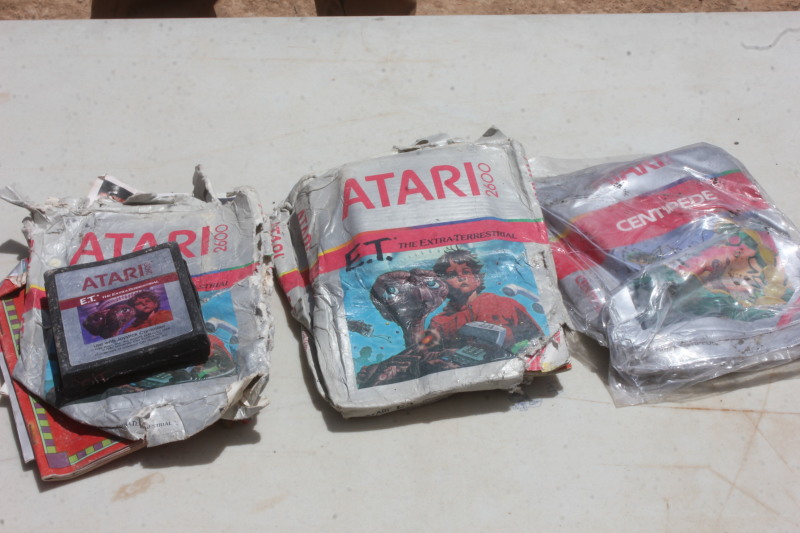
Following the crisis, Atari chose to bury its mistakes. Millions of unsold cartridges were secretly dumped overnight in a New Mexico desert landfill, giving rise to an enduring urban legend. Despite Atari's persistent denials, a 2014 documentary from Microsoft, "ATARI: Game Over," meticulously documented an excavation at the site with Microsoft's assistance. The excavation successfully unearthed over 1,300 "E.T. the Extra-Terrestrial" and other game cartridges. With this discovery, the urban legend was no longer a myth, but a verified piece of history.
▼Atari E.T. cartridges excavated from the landfill. Image credit:arstechnica

▼Other games were also found alongside E.T. Image credit:arstechnica
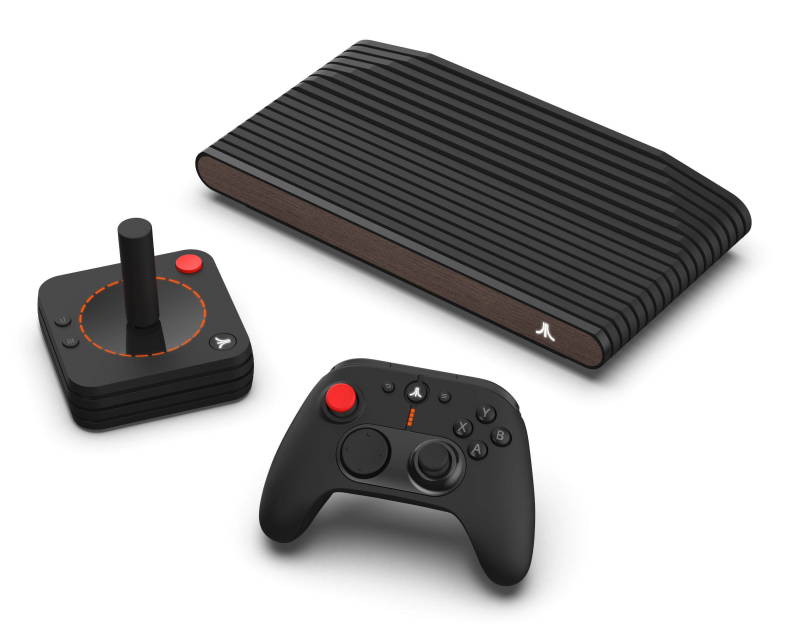
And what about ATARI? After changing hands multiple times over the years, the company continues to survive in the gaming world. In June 2021, they even released a console called the "ATARI VCS", priced at three to four hundred US dollars. It features multiple systems, apps, and hundreds of ATARI and arcade games. While its sales figures aren't widely known, it's safe to assume that for the same price, most gamers would likely opt for a Nintendo Switch or PlayStation 5.
▼The ATARI VCS. Image credit:ATARI
2. For Western Gamers, "Superman" Reigns as the Worst Comic Adaptation
Game Title: Superman 64
Platform: Nintendo N64
Developer: Titus Interactive
Release Date: May 1999
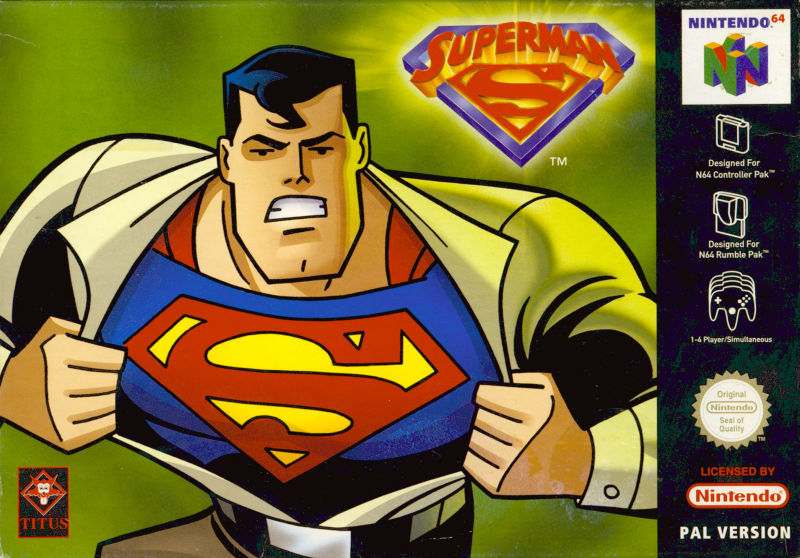
For many Western gamers, if "E.T." is their go-to example of a truly terrible game, then the Nintendo 64 title "Superman" likely takes a close second. Superman, the iconic flagship superhero of the DC universe, embodies invincibility and immense power. His image is synonymous with strength, making everything else seem small and fragile in comparison.
▼The "Superman N64" cartridge cover. Image credit:MobyGames
However, "Superman 64" delivered an experience that was anything but. The fact that it's widely considered one of the worst comic book adaptations speaks volumes about how fundamentally flawed the game truly was.
No Satisfying Combat, Monotonous Gameplay, and Abysmal Controls
Typically, when Superman emerges from a phone booth in the movies, he unleashes thunderous power, breathtaking speed comparable to The Flash, and off-the-charts strength. He delivers precise, fatal blows to enemies with satisfying impact, often punctuated by flirtatious moments with Lois Lane, providing audiences with the perfect blend of heroics and romance.
This game adaptation, however, felt like trying to stomach expired, moldy food. The in-game Superman not only looked ridiculous, but his actions completely lacked any sense of power. Despite Superman being able to fly "faster than a speeding bullet," players were forced to navigate him through a series of absurd rings using an incredibly difficult-to-control 3D analog stick, turning the experience into an unwelcome "flight simulator."
▼The game featured an abundance of these "fly through rings" tunnel missions. Image credit:N64street
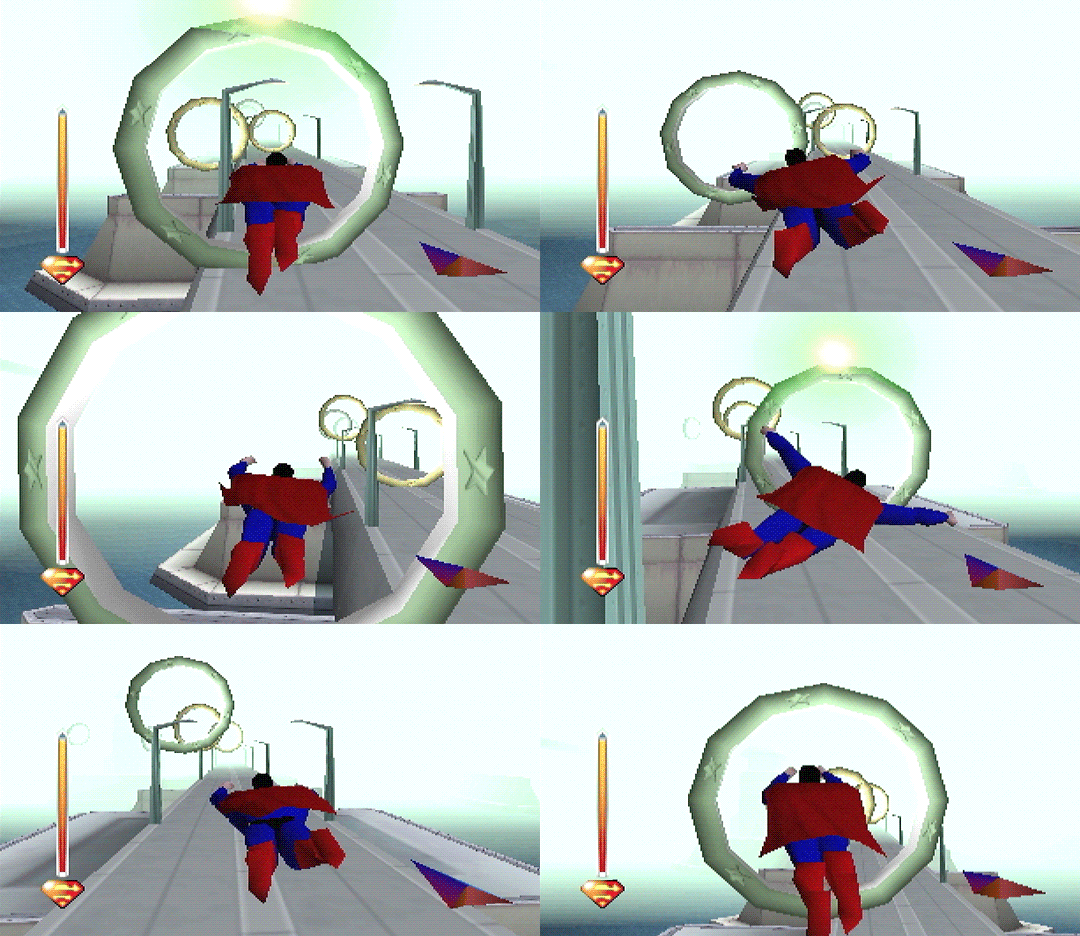
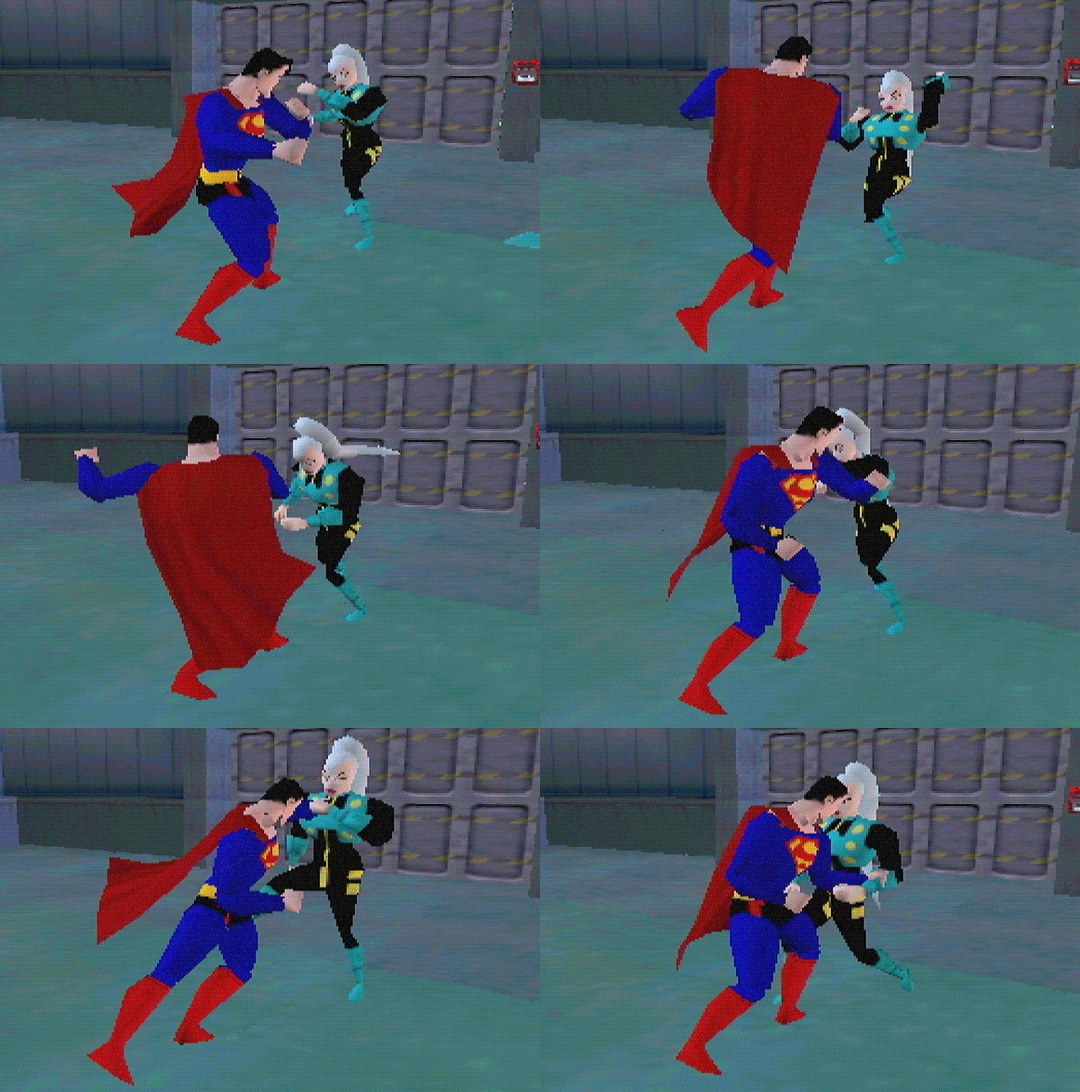
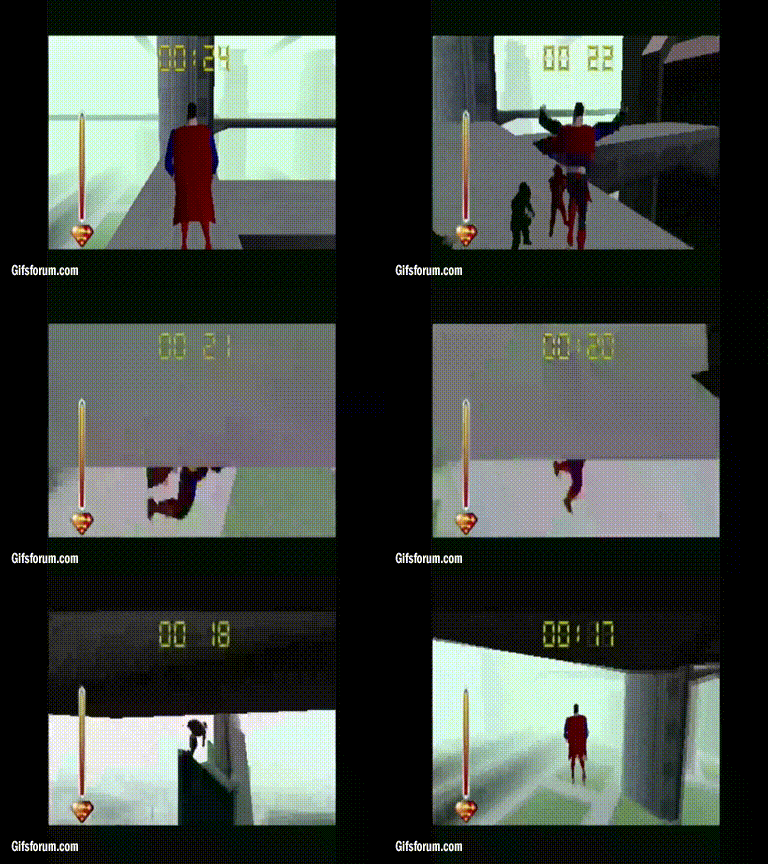
The game was plagued by nonsensical missions, unclear instructions that were incredibly unfriendly to new players, and polygon glitches that broke the immersion. Instead of the satisfying combat expected from Superman, players were met with an endless parade of strange ring-flying tasks, as if Superman was merely a student in a flight school. It was an utterly baffling game, especially considering its 1999 release date, by which point games should have had a more fundamental understanding of engaging design.
▼Superman's movements felt incredibly weak and lacked impact. Image credit:N64street
▼Polygon glitches like this were extremely common. Image credit:imgur
Superman's Gaming History: Why the Nintendo 64 Version Remains the Ultimate Flop
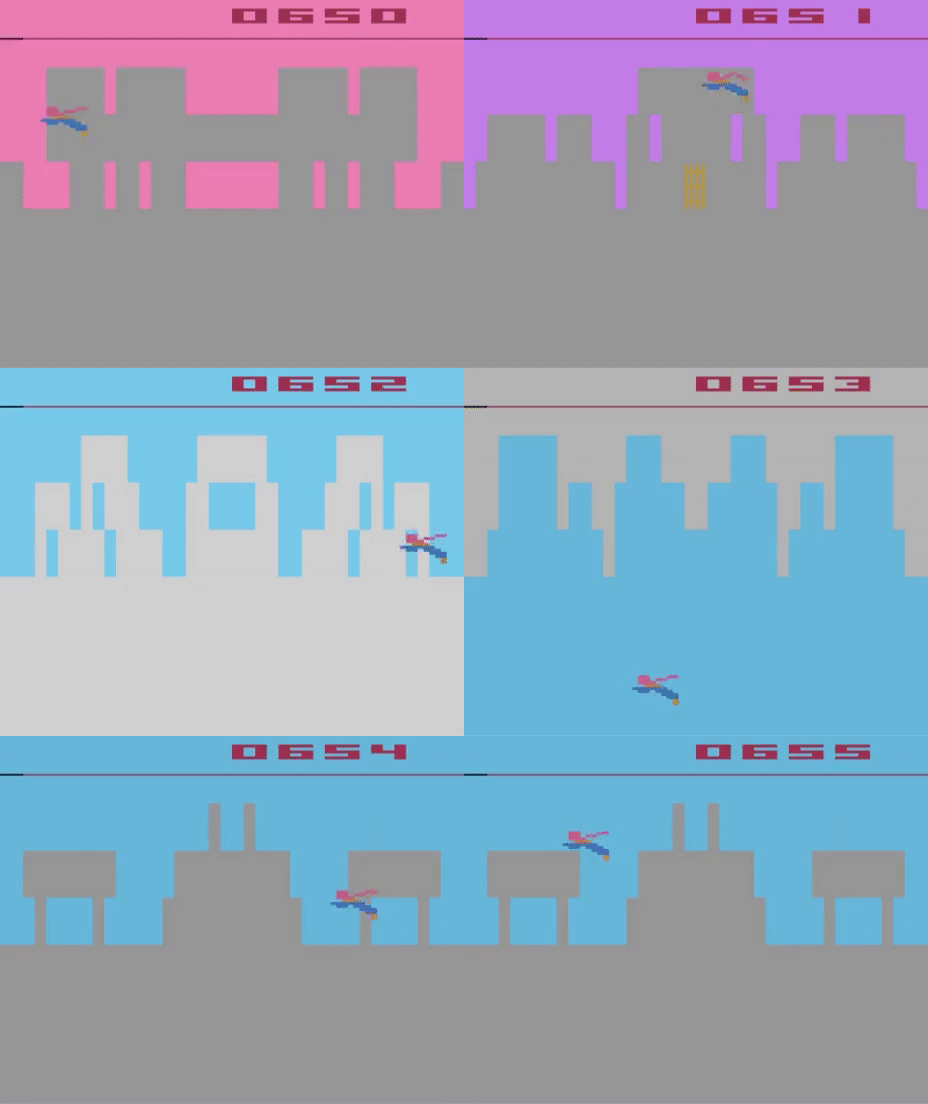
While many Superman games have graced various platforms over the years—dating back to the Atari 2600 in 1979, followed by releases on the Famicom (NES), arcades, SEGA Mega Drive (Genesis), Game Boy, and more—and several of them certainly underperformed, none quite reach the legendary status of "flop" like Superman 64.
▼The Atari version of Superman. Image credit:GFYCAT
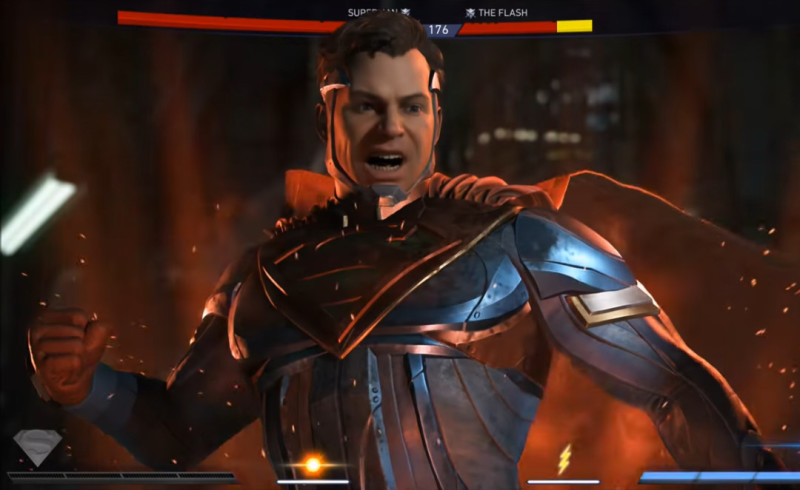
Titus Interactive, the developer behind Superman 64, declared bankruptcy in 2005, with its game rights subsequently transferring to Interplay. Fortunately, Superman has since seen much better portrayals in crossover fighting titles like "Injustice: Gods Among Us" and "Injustice 2."
▼Superman in "Injustice 2". Image credit:YouTube
3. A Flop of Cinematic Proportions: The NES "Ghostbusters" Game Where You Buy Your Own Gear
Game Title: Ghostbusters
Platform: Nintendo Famicom (NES)
Developer: Activision
Release Date: September 1986
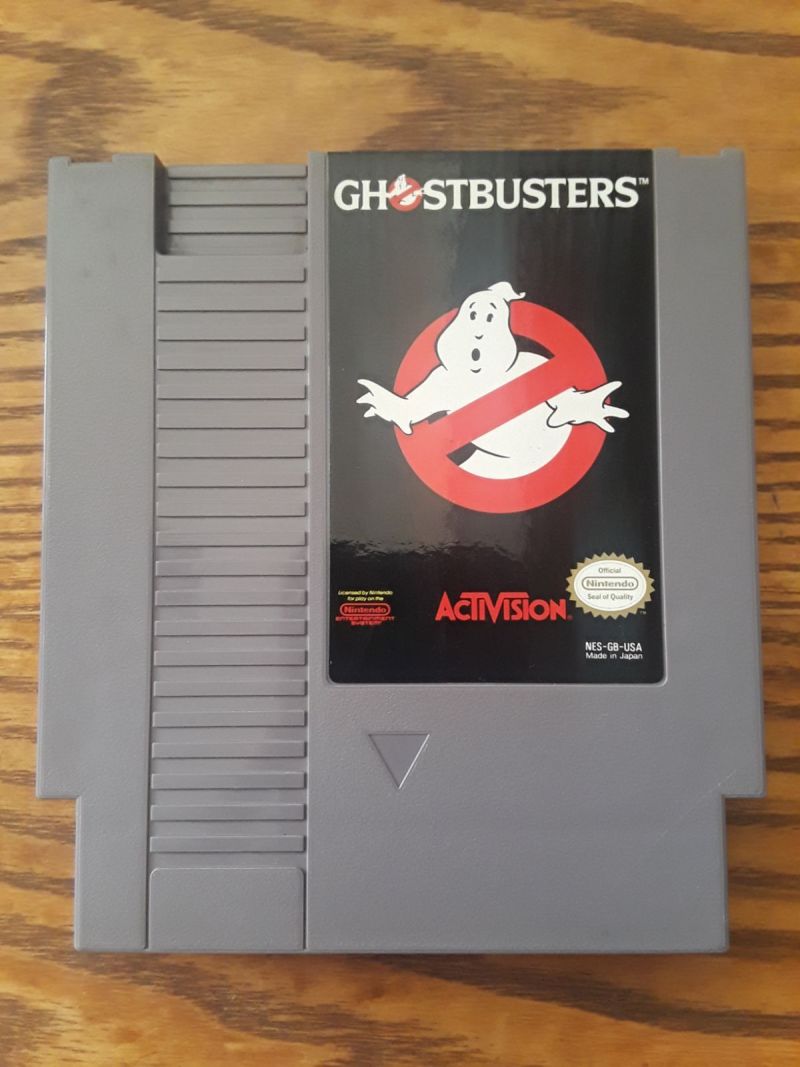
▼The North American NES cartridge cover for Ghostbusters. Image credit:Pinterest
When it comes to ghost-busting themed entertainment, today's kids might have "Demon Slayer: Kimetsu no Yaiba," while those from two decades ago enjoyed "Hell Teacher Nūbē" and "Zenki." But for kids forty years ago, it was all about "Ghostbusters"! The 1984 film captivated countless boys' imaginations with its uniquely styled Ecto-1, the thrill of donning high-tech ghost-busting gear and firing proton streams, and the sheer spectacle of battling colossal specters like the Stay Puft Marshmallow Man. Each scene was dazzling, and the film ultimately achieved astonishing success, becoming the first horror-comedy in history to gross over $100 million at the box office.
Just converting it into a game, however... seemed to inspire nothing but immense frustration, making it one of the most frequently cited examples of a terrible movie adaptation.
Ghostbusters Who Have to Buy Their Own Gear
In the original film, the Ghostbusters' iconic equipment was ingeniously developed by the three doctors themselves. Yet, in the game, players are inexplicably forced to purchase these essential tools from a store? If that were truly the case, why wouldn't the Ghostbusters have simply opened a ghost-busting equipment store from the beginning? They certainly wouldn't have had to worry about being fired and losing their research funding. And if stores were selling ghost-busting gear, then who you gonna call?
▼"Didn't we develop this ghost-busting equipment ourselves? Why do we have to buy it?" Image credit:YouTube
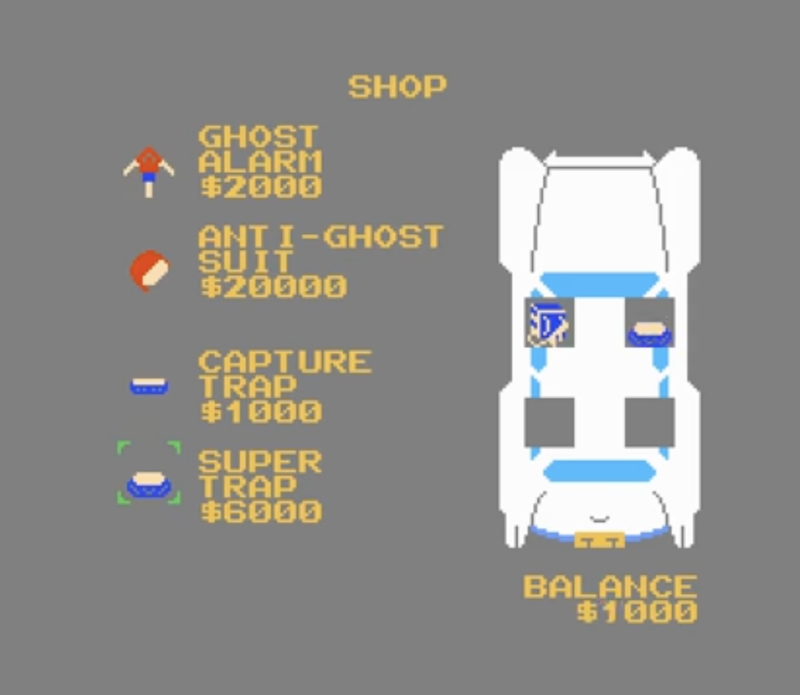
Even the Ghostbusters heroes have to buy their initial gear from the store... it really feels like a raw deal from capitalism!
Ghostbusters Logo Wanders Aimlessly, Followed by Pointless Street Racing
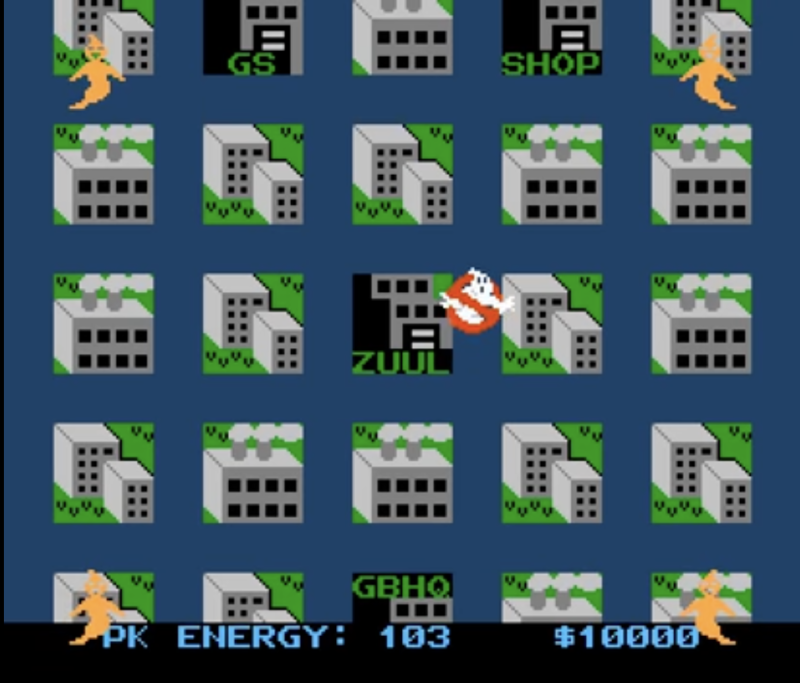
The game kicks off with that familiar and nostalgic Ghostbusters logo appearing on the title screen. It looks pretty good, but once you jump into the game, it instantly shrinks down to something resembling a mouse cursor, darting through a grid of city streets. At this point, you have absolutely no idea what you're supposed to be doing.
▼Seeing the Ghostbusters logo and ghosts floating around at the start, with no explanation, leaves you clueless. Image credit:YouTube
▼Why do the Ghostbusters have to race against drunk drivers on the street? Image credit:YouTube
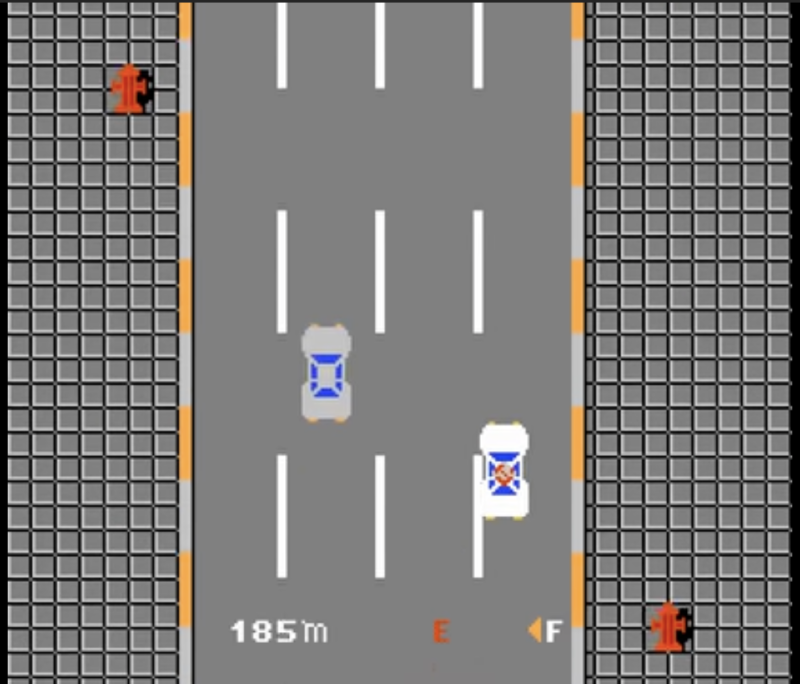
Turns out, you have to find the haunted buildings yourself. They'll flash red when you get close, but remember, you need to buy equipment first before you can proceed.
What comes next isn't directly entering the building to search. Instead, you're forced into a bizarre road chase sequence in the cool ECTO-1. You constantly have to dodge cars trying to ram you and hit oil barrels to refuel. Only after all that hassle can you finally go bust some ghosts. It's hard to tell if this is a ghost-busting game or a racing game.
That Catchy Theme Song Becomes a Brain-Numbing Loop
A song might sound great the first, second, or even third time you hear it. But after five or ten continuous listens, you're bound to get sick of it. The "Ghostbusters" theme song, written and composed by Ray Parker Jr. back in the day, had a simple, catchy melody. The repeated "Ghostbusters" lyrics, delivered with that rhythm, felt exhilarating, and it was a chart-topping single for three consecutive weeks.
▼The original theme song was written by Ray Parker Jr. Image credit:YouTube
However, when you're forced to listen to this song non-stop throughout the entire game, your feeling isn't one of admiration, but endless annoyance. You start to wonder if the development team lacked the budget to commission more in-game music, so they just treated this single track like a precious treasure, playing it on repeat to numb players' minds.
The lack of varied background music makes it impossible to distinguish what you're doing at any given moment. There's no sense of progression or connection to the gameplay, no highs or lows, making the experience increasingly boring.
A Final Battle Without Hints, Plus a Proofreading Blunder in the Credits
After collecting a bunch of ghosts and accumulating enough actions, you finally head to the main ghost containment facility. But the final level provides absolutely no hints on how to play or what the rules are. Movement requires mashing buttons to slowly walk, endlessly climbing repetitive stair assets. While you could shoot and capture ghosts before, now you suddenly have to avoid touching them, and getting hit by a ghost two or three times means instant death. It's completely baffling.
▼Here, you can't shoot ghosts; you can only dodge them, which is very strange. Image credit:YouTube
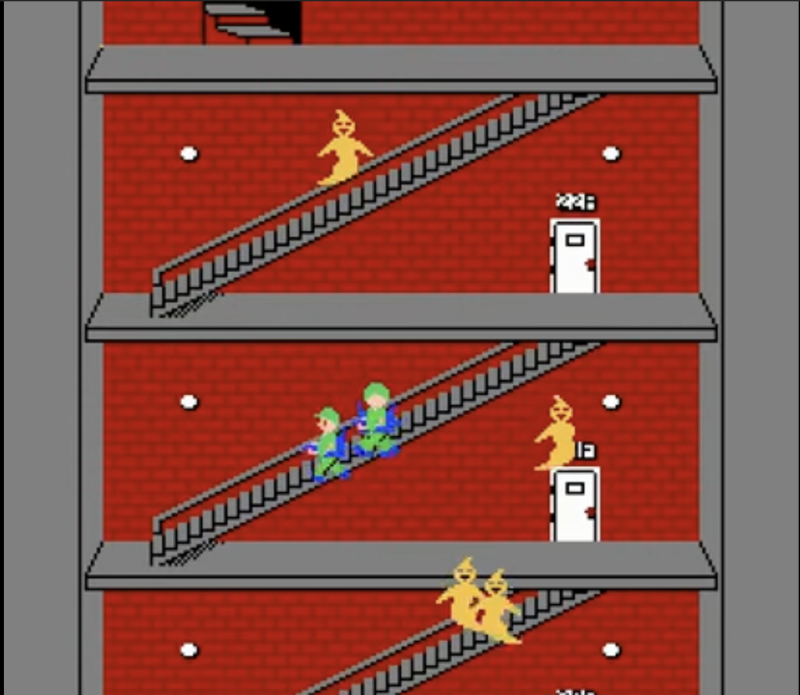
▼The final showdown with Gozer and Zuul after climbing to the rooftop. Image credit:YouTube
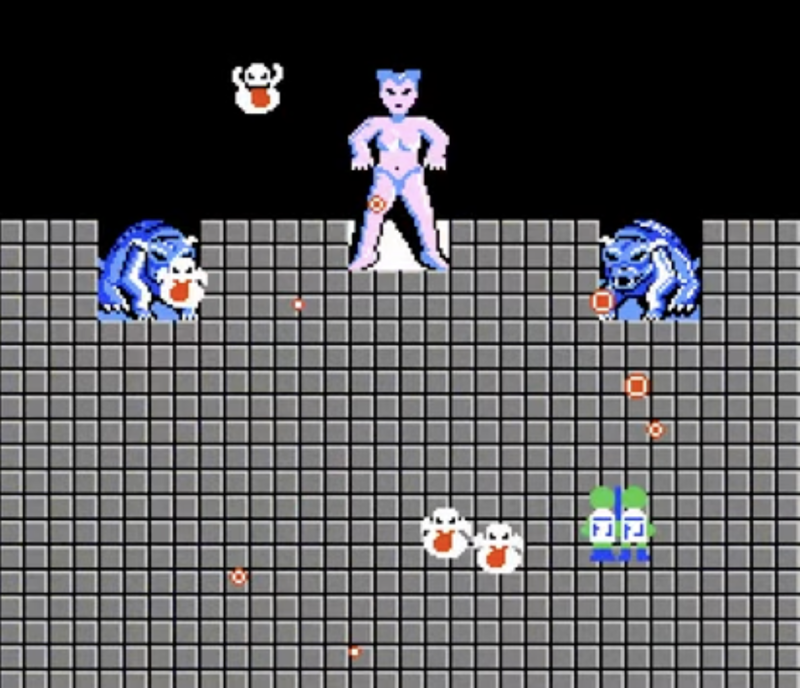
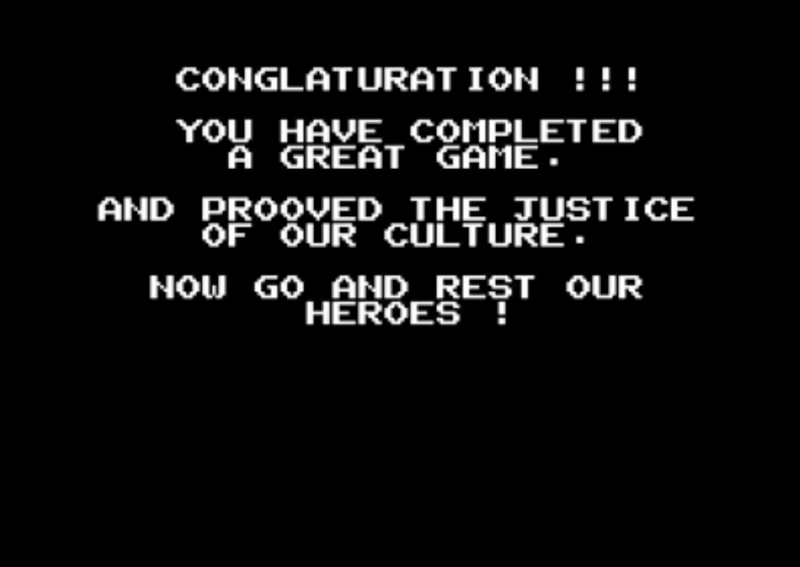
After finally climbing to the rooftop and defeating the boss, you'd expect a cool ending, right? Instead, the post-game screen was just a bizarre, corporate-sounding thank you message—with typos! And the Japanese version was even worse, showing nothing but a black screen with two Japanese characters, "りり" (riri), instead of credits or a thank you. What kind of team made this game?
▼Look closely at the text in the image; two words are misspelled. Image credit:YouTube
▼This is the ending of the Japanese version of the game—absolutely nothing, just two Japanese characters. Image credit:YouTube

Ghostbusters IP: A Cinematic Classic Endures, Later Games Found Redemption
Thankfully, the enduring legacy of "Ghostbusters" wasn't tarnished by the abysmal quality of its initial game adaptation. The franchise went on to produce sequels, a female-led reboot, and even saw the 1984 original receive a digital restoration last year. With a canonical sequel slated for 2021, its popularity remains incredibly high.
▼Gameplay from the second game. Image credit:YouTube
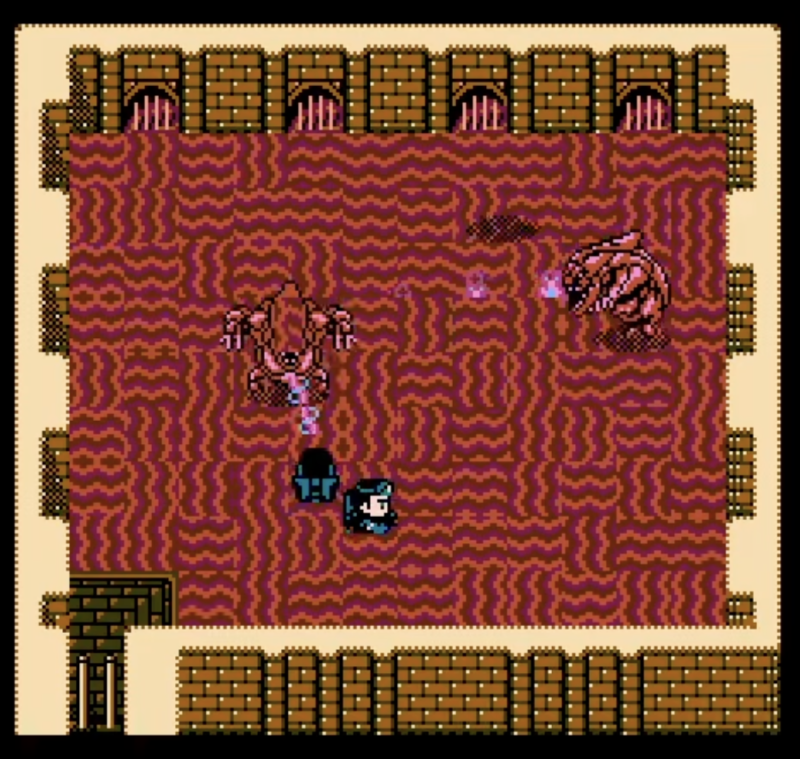
Regarding the games, a second installment was released to coincide with the movie sequel, and this time, they didn't mess it up. All the necessary elements were added, the pacing was well-structured, and the text was properly proofread, finally delivering a satisfying experience for players. Years later, a first-person shooter-style game was also released on next-gen consoles, performing quite respectably.
4. "Teenage Mutant Ninja Turtles" (NES) – A Notoriously Awkward Mess
Game Title: Teenage Mutant Ninja Turtles ("Gekikame Ninja Den")
Platform: Nintendo Famicom/NES
Developer: KONAMI
Release Date: May 1989
Back then, these four turtles not only helped us remember famous Renaissance artists in history class, but their cartoons and movies were also guaranteed hits, drawing high ratings and box office success. I remember if any kid brought a TMNT toy to school, their desk would be swarmed with classmates as soon as recess hit.
With such a fantastic IP, it was a no-brainer to adapt it into a game and cash in on kids and players! So, two years after the cartoon first aired in 1987, KONAMI, then a powerhouse in the industry, released the first "Teenage Mutant Ninja Turtles" game in 1989.
▼A comparison of the Japanese and American cartridge covers. Hmm? Why is the Japanese title "Gekikame Ninja Den"? No matter, let's just play! Image credit:twitter
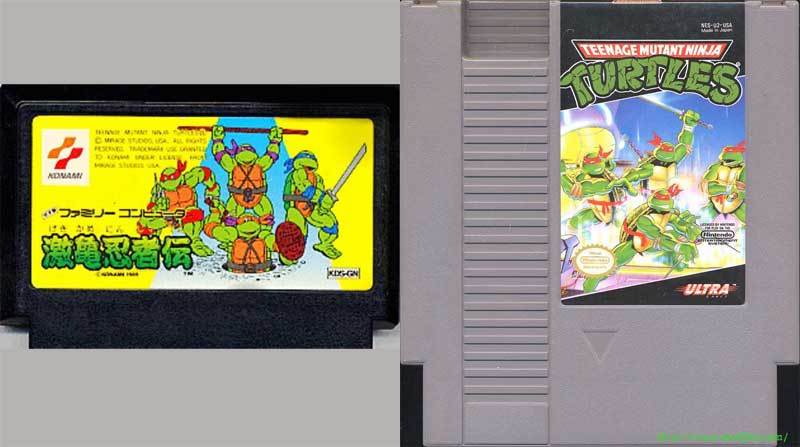
The moment you slotted that cartridge into your console and powered up your NES, that's when you first witnessed your beloved "Teenage Mutant Ninja Turtles" world being utterly trashed.
Teenage Mutant Ninja Turtles (NES) Suffered from Awkward Jumps and Punishing Level Design
This "Teenage Mutant Ninja Turtles" game was likely a nightmare for many kids. It's a 2D side-scrolling game, much like "Mega Man" or "Castlevania," but unfortunately, it had numerous flaws. For instance, the level designers deliberately created obstacles that made it difficult to navigate, often due to the characters' hitboxes making it hard to fit through gaps when jumping. Furthermore, the turtles' jumping mechanics were incredibly bizarre; they looked capable but were actually very hard to control.
▼You can't jump through these single-tile gaps; you have to walk. Image credit:YouTube
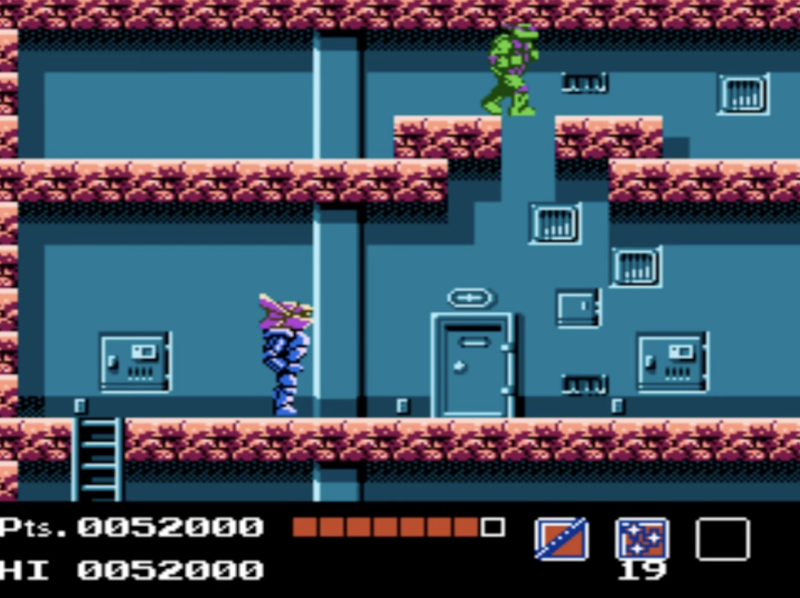
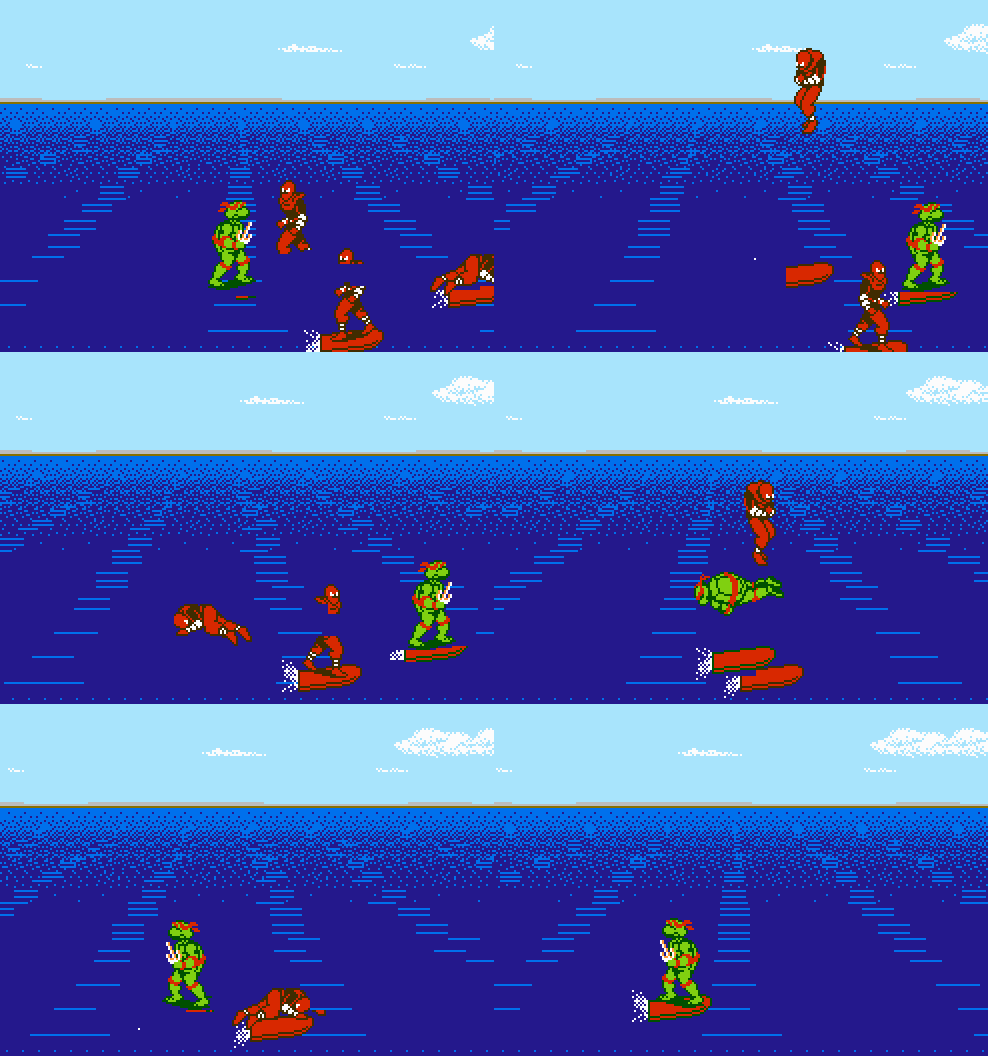
The most infuriating aspect was the abundance of instant-death traps. Often, without any warning, you'd inexplicably die, leaving you clueless on how to proceed. The levels were riddled with bizarre design choices, most notably one-tile gaps that you couldn't jump over but had to walk across! Was this a homage to "Super Mario"? And then there were the Teenage Mutant Ninja Turtles, who live in the sewers, getting washed away by water in the sewer levels. Turtles can swim, right?! (They clearly swim in the second major stage!) What kind of game doesn't allow for an appeal?
▼Can't the Ninja Turtles swim? Image credit:goggle bob
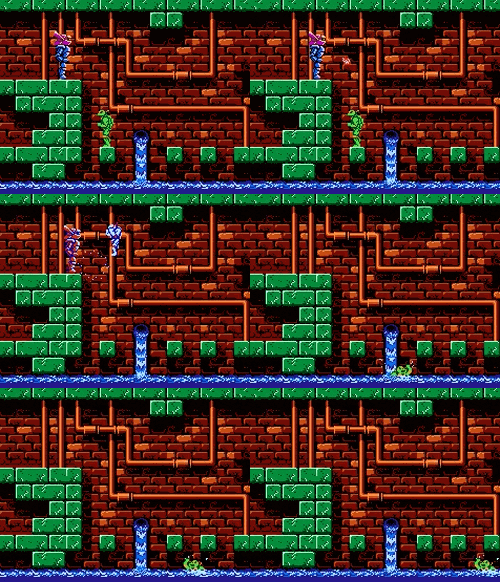
▼Spike panels on both sides constantly close in, resulting in instant death upon contact. Image credit:YouTube
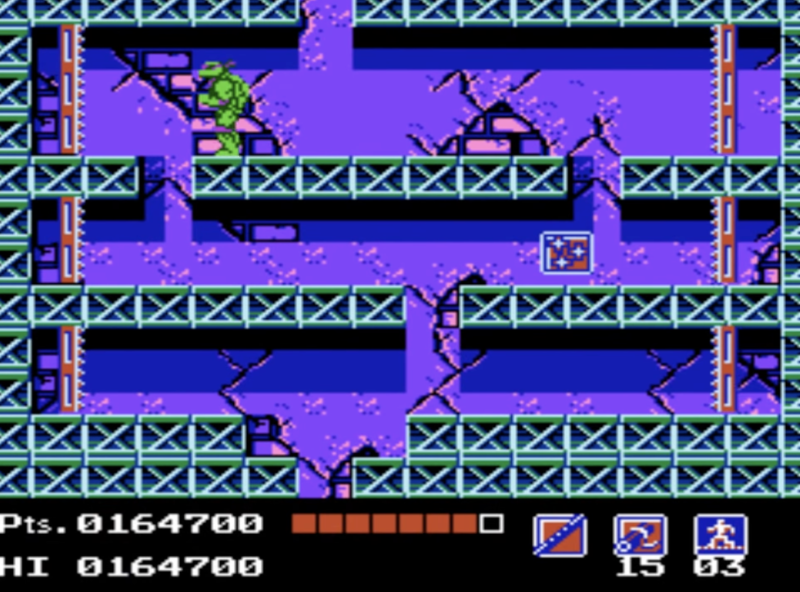
Unfamiliar Foes and Questionable Character Designs Plagued the NES "TMNT"
The enemies encountered in the game were vastly different from the cartoon series kids watched at the time. Most of the fodder enemies were completely unfamiliar characters, and to make matters worse, they were incredibly tough. Sometimes you'd face strange flying birds, or fire-generating firemen, or even monsters whose heads and bodies would separate. It felt like a chaotic mess of enemies, cobbled together from various other games and dumped into this one. Even the final boss, Shredder, and the Technodrome looked different from their cartoon counterparts. And wait, where was Krang?
▼Many minor enemies were unseen in the original series. Image credit:YouTube
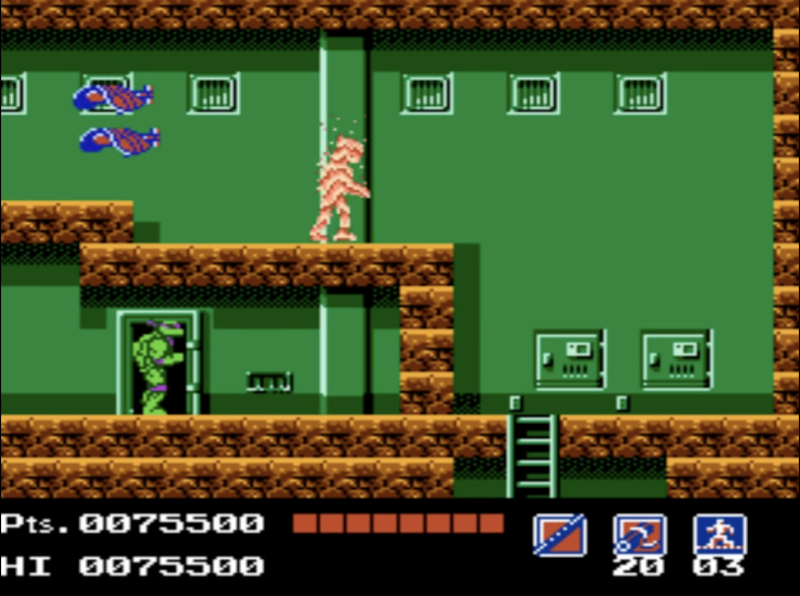
▼The final boss, Shredder, had a slightly different appearance. Image credit:YouTube
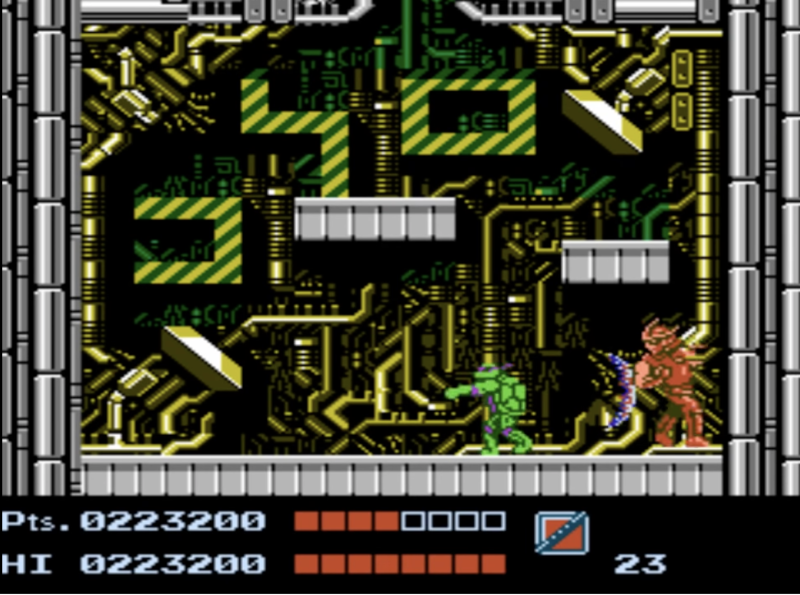
Poor Turtle Balance and Overpowered Sub-Weapons Defined the Original "Teenage Mutant Ninja Turtles" NES Game
Everyone knows the names of the four turtles and their signature weapons. Theoretically, they should all be equally strong, but that's far from the truth in this game. Only one turtle was truly effective: Donatello, the resident inventor. His bo staff was long, powerful, and dealt significant damage, often taking a full health bar from enemies. As for the others? Their range was short, their attacks weak, making them little more than glorified meat shields.
▼Donatello was the only truly effective character in the game. Image credit:YouTube
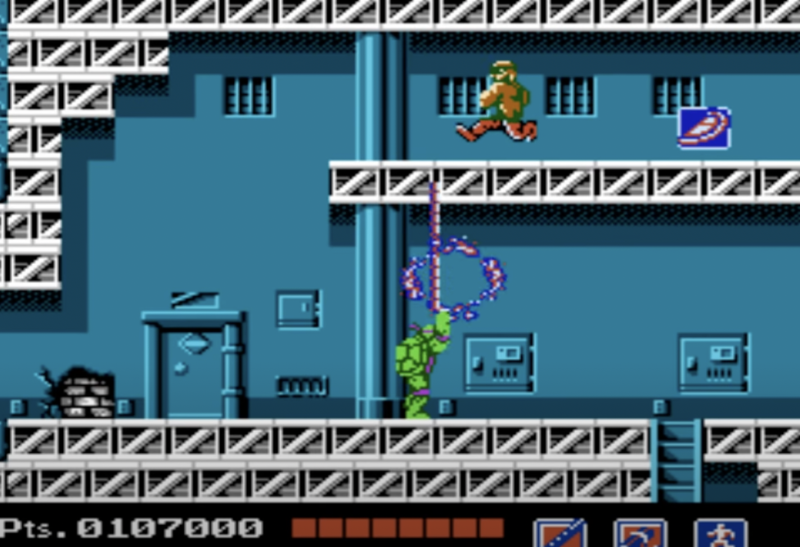
▼The scroll sub-weapon's energy blast was incredibly powerful. Image credit:goggle bob
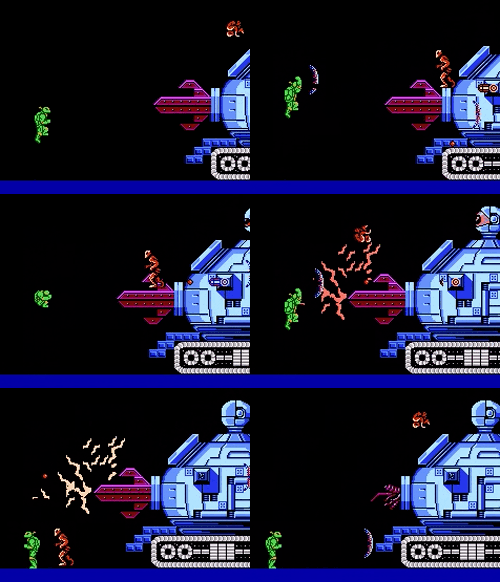
However, the most potent weapons in the game were arguably the sub-weapons found on the ground. Whether it was shurikens, boomerangs, or the scroll that fired energy blasts, their performance far outstripped the turtles' default weapons. In the final stage, if you were lucky enough to pick up a scroll from an enemy, you could spam Shredder with blasts and defeat him almost instantly. Such an imbalanced design was a hallmark of this particular title.
A Lone Blight: The First "TMNT" Game Was Bad, But Its Successors Were Legendary
Thankfully, while there have been numerous "Teenage Mutant Ninja Turtles" games, only this first adaptation was truly awful. Subsequent titles performed exceptionally well. The 1989 arcade version is arguably the most beloved, allowing four players to team up, unleash a variety of moves, and satisfyingly beat down the Foot Clan. Its port to the NES was equally enjoyable. The 1991 release of "Teenage Mutant Ninja Turtles II: The Manhattan Project" was a masterpiece, featuring rich action and even introducing special moves similar to those found in games like "Dynasty Wars," where powerful attacks could be unleashed at the cost of a portion of your health. It effectively erased any childhood trauma caused by its predecessor.
▼The 1991 release of "Teenage Mutant Ninja Turtles II: The Manhattan Project" introduced special, health-costing moves, unique for each of the four turtles. Image credit:Pinterest
5. Did the Developers Even Understand Transformers?
Game Title: Transformers: Mystery of Convoy (戦え! 超ロボット生命体トランスフォーマーコンボイの謎)
Platform: Nintendo Famicom (NES)
Developer: TAKARA
Release Date: December 1986
▼The cartridge box art for "Transformers: Mystery of Convoy." Image credit:Zel-Life
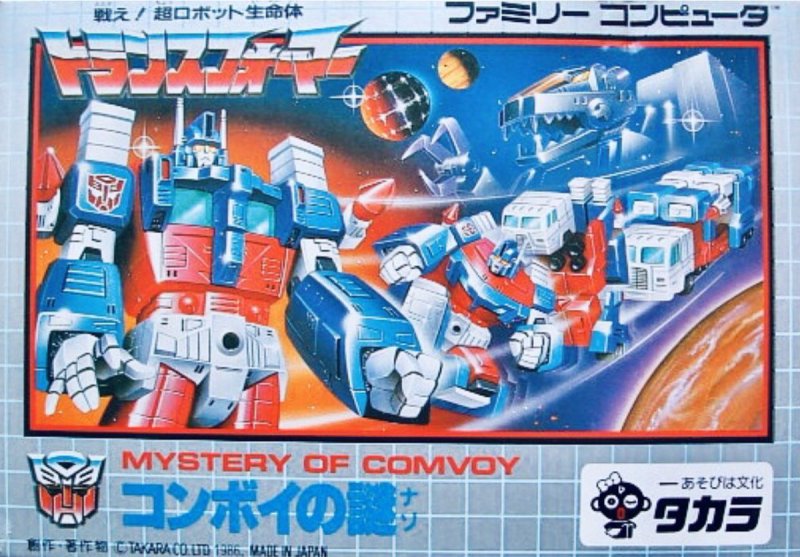
Transformers has always held a significant place in the hearts of many boys who love robot toys. Your display cabinet is either packed with Gundam kits or overflowing with various Transformers (Microman counts too!). From cars and planes to dinosaurs and space shuttles, Transformers have left their mark everywhere.
▼Promotional poster released before the game's launch. Image credit:Zel-Life
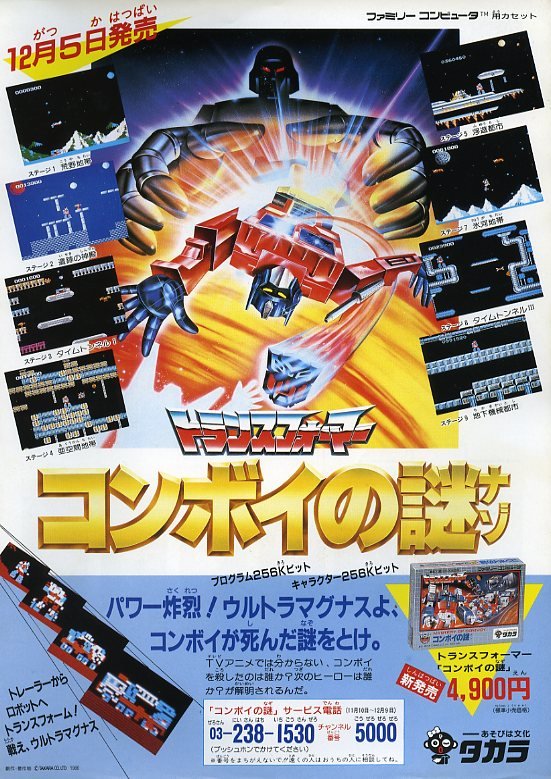
From the numerous Transformers cartoons and movies, most fans have a solid understanding of the franchise's combat styles and the overall atmosphere of its battles. However, translating that experience into a video game can be an entirely different story. Case in point: the 1986 release, "Transformers: Mystery of Convoy."
Ultra Magnus Is Pathetically Weak, Dies From a Single Touch
The protagonist of this game isn't actually Optimus Prime, but Ultra Magnus. He was originally Optimus Prime's chosen successor, expected to become the next Autobot leader. Unfortunately, the Matrix of Leadership ultimately chose Hot Rod instead.
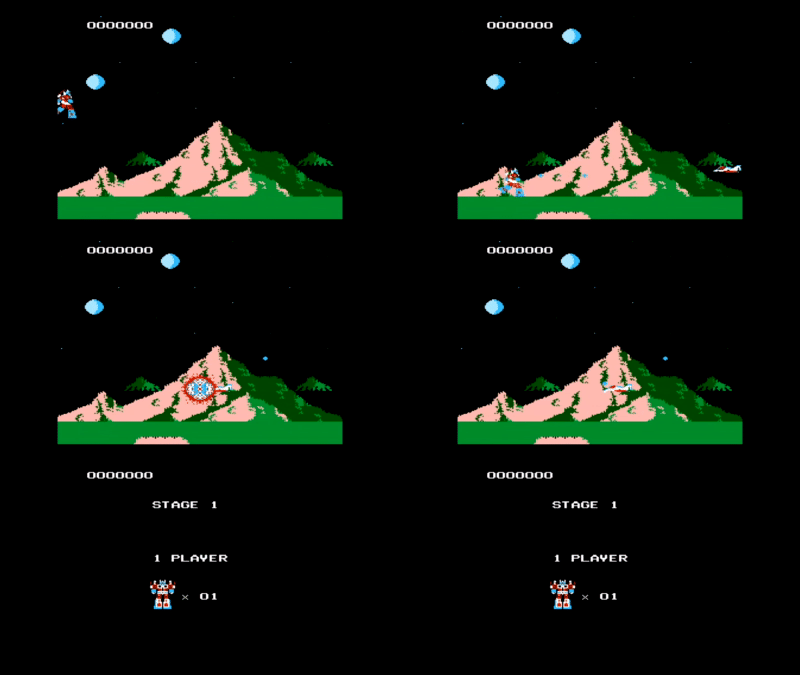
But none of that matters here, because in this game, Ultra Magnus is practically a paper doll. A single bullet from an enemy plane can blow him up, and even a head-on collision will destroy Magnus while the plane flies off unscathed. It's absolutely ridiculous! He's supposed to be a massive Transformer; did the Matrix of Leadership reject him because he was this fragile?
▼You die within two seconds of starting the game. Have you ever played a Transformers game like this? Image credit:Raptic
Poor Level Design, Repetitive Assets, and Lazy Bosses
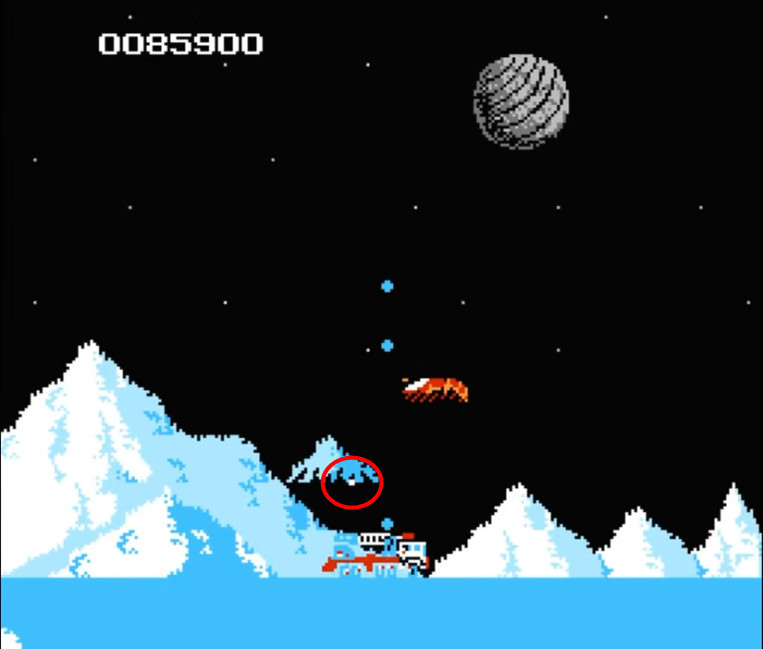
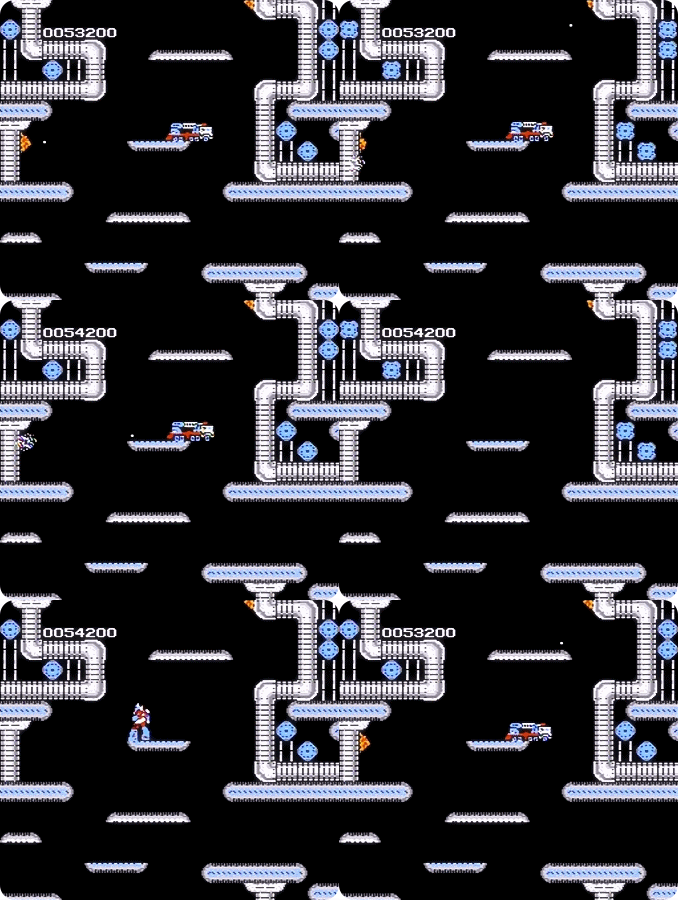
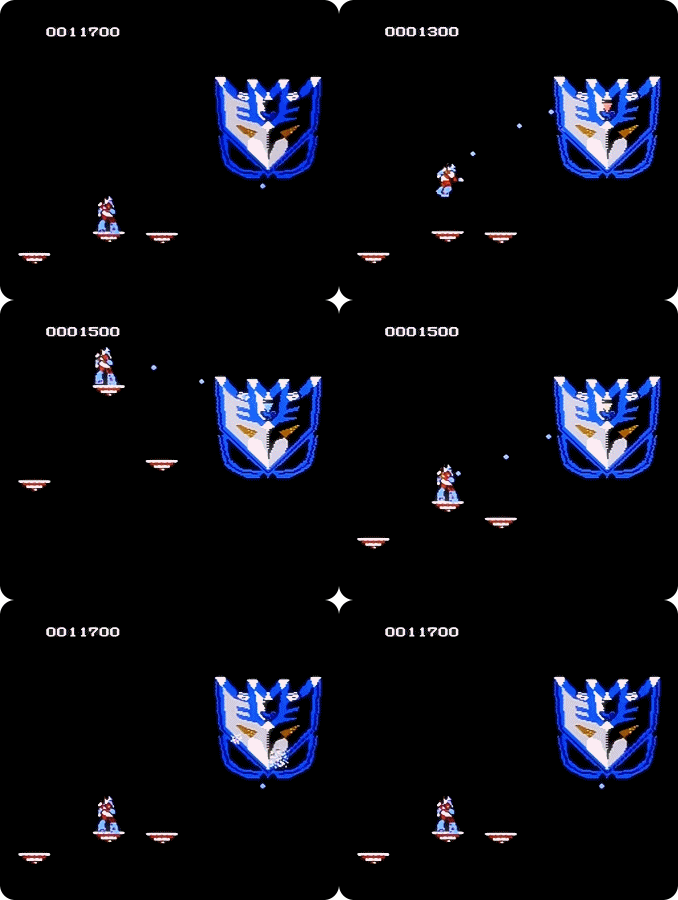
Beyond the protagonist's shockingly low durability, the game's level design is riddled with flaws. There are platforms that are impossible to reach with jumps, monotonous and unchanging stages, irreversible branching paths, tiny, hard-to-hit enemies, and even the incredibly lazy decision to use the Decepticon insignia as a boss (three times, no less!). All of these issues make you wonder: was any real effort put into developing this game? Did the creators even play it, or truly understand Transformers at all?
▼A major problem in this game is how easily enemy bullets blend into the background, making them almost invisible. (Red circle indicates a bullet) Image credit:YouTube
▼While Ultra Magnus can transform into a truck, its utility is minimal. Image credit:Raptic
▼Using the Decepticon insignia as a boss? That's incredibly lazy, and they even recolor it and use it three times! Image credit:Raptic
A Transformers Game That Missed Its Mark and Barely Connected to the Story
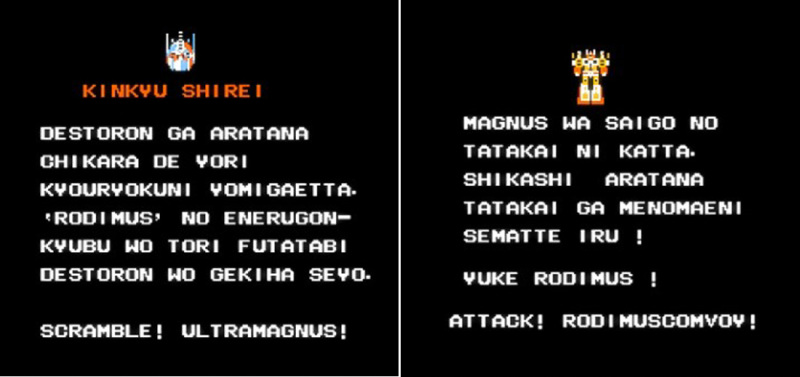
This game was originally conceived to explain Optimus Prime's sudden death to Japanese audiences, as "The Transformers: The Movie" had not yet been released in Japan. The idea was to use the game to bridge the narrative gap. However, not only did the game fail to clarify the plot, it muddled it even further. When "The Movie" eventually premiered in Japan, the game's entire premise collapsed, leaving it with the infamous reputation as one of the worst titles in the franchise.
▼This game actually featured two endings. Collecting all the hidden text allowed players to use Rodimus Prime in a second playthrough to unlock the true ending, which, disappointingly, was just a single "Congratulations!" message. Image credit:Raptic
6. The Infamous Ancestor of Bad Bandai IP Games: Mobile Suit Z Gundam
Game Title: Mobile Suit Z Gundam: Hot Scramble (機動戦士Ζガンダム・ホットスクランブル)
Platform: Famicom (FC)
Developer: Bandai
Release Date: August 1986
The history of Gundam is vast, with countless incredible entries. When asked about my favorite, I always answer without hesitation: the "Mobile Suit Z Gundam" TV series. Its mobile suit designs are stunning and unique, and the story is exceptional, concluding with a poignant, albeit sad, yet ultimately satisfying ending. Unfortunately, when such a magnificent series received its first video game adaptation, it failed to evoke the same emotion. Instead, it left players feeling so frustrated and depressed they'd want to smash their cartridges. As the very first Gundam game, it, too, couldn't escape the fate of becoming a notorious "kusoge" (shit game).
▼Actual gameplay footage. Image credit:YouTube
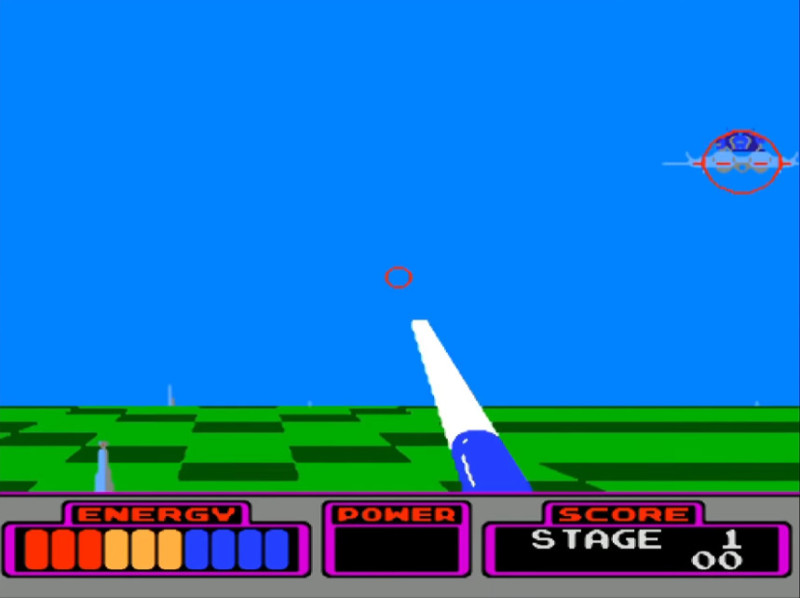
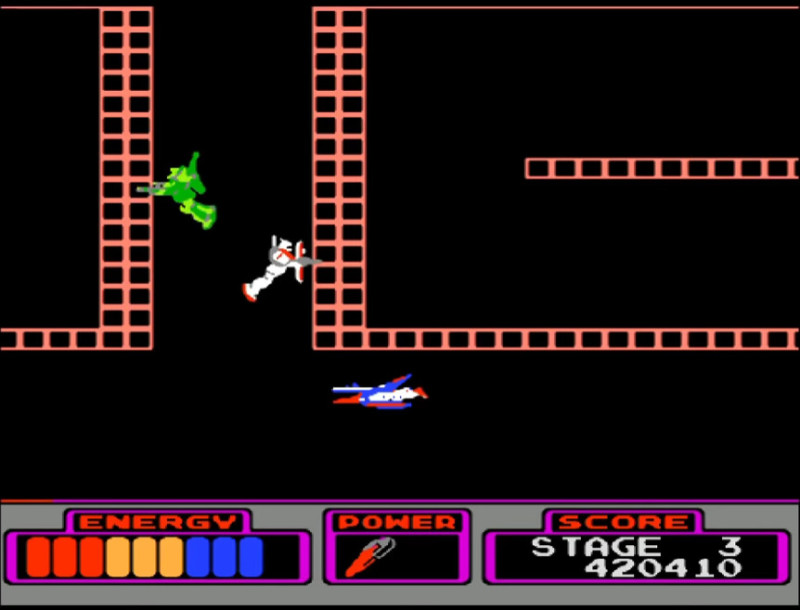
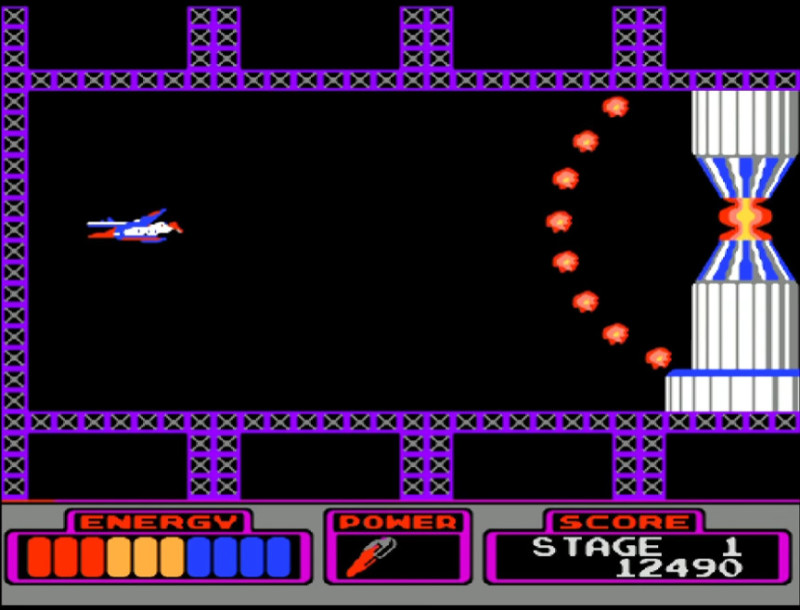
The overall gameplay was incredibly monotonous, reminiscent of the meaningless 3D shooting stages in "Top Gun" on the NES. It featured bizarre maze-like base levels with minimal structural variation and a repetitive objective: always destroying a core. While it was initially nice to hear anime theme songs like "To the Aqua Star with Love," their incessant repetition quickly became tiresome. Overall, the game failed to capture the emotional depth of the story or the sheer power of Gundam battles; players would likely find themselves dozing off by the second stage.
▼The initial shooting screen was quite odd, with beams from the gun barrel resembling strips of paper. Image credit:YouTube
▼The 2D sections involved Z Gundam exploring mazes after infiltrating a base. Image credit:YouTube
▼The level progression followed a monotonous, identical pattern. Image credit:YouTube
▼To even see the game's ending, players had to intentionally commit suicide. Image credit:YouTube
A Terrible Game, Yet Its Cartridge is a Treasure? The Legendary "Final Version" Limited to 1,000 Copies
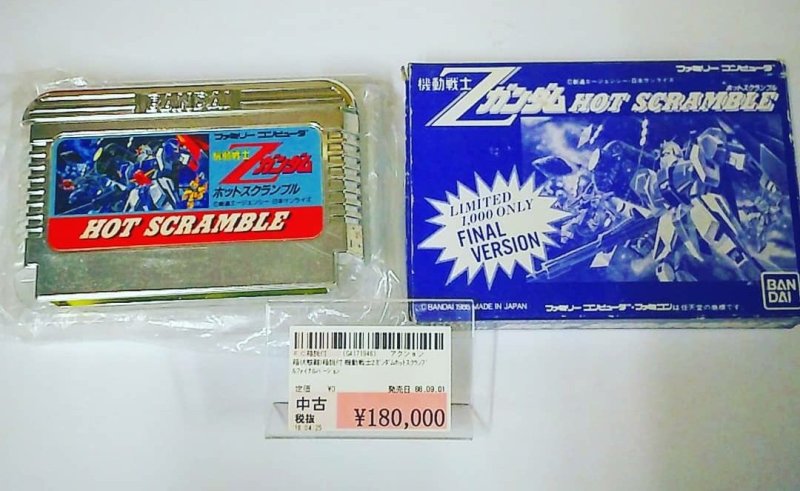
Despite its abysmal gameplay, this title holds a curious distinction: it's actually one of the **most expensive games on the Nintendo Famicom platform**! To be precise, a special **"Final Version"** of the game was released. As its name suggests, this ultimate edition featured numerous content changes, and its cartridge shell was transformed from plain black to a gleaming silver! Only 1,000 copies were ever distributed through a limited lottery, making it an incredibly high-priced, rare gem in the eyes of Famicom collectors.
▼The monochrome outer box, instruction manual, and the cartridge itself for the lottery-exclusive "Final Version." Image credit:twitter
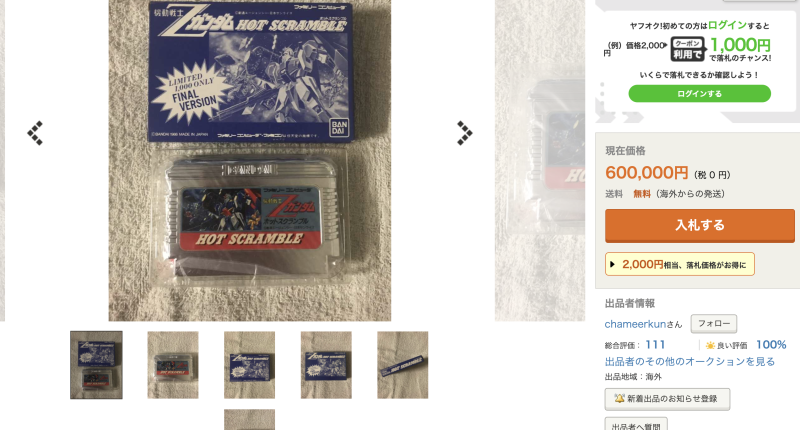
How much is it worth? While researching this article, I did some searching and discovered that a complete cartridge, with its original box and manual intact, was priced at an astonishing 600,000 Japanese Yen! Previously, a listing for just the loose cartridge (without the box or manual) could still fetch 100,000 JPY. Quite staggering, isn't it?
▼An auction price of 600,000 JPY seen on a Japanese auction site. Image credit:Yahoo! Auctions Japan
▼A loose cartridge sold for 180,000 JPY on the renowned used game retailer Suruga-ya. Image credit:Suruga-ya

This unique situation, where a game's content might be notoriously terrible, yet its cartridge is an extremely high-priced collector's treasure, is likely a phenomenon only seen with this particular title.
The six titles I've highlighted above are just a few examples of classic, infamous bad games adapted from well-known IPs. In fact, if you dig deeper, many more early titles could be considered, often originating from the American market and frequently adapted from TV series, cartoons, or movies. I'll be sure to share more of these fascinating examples with you all in the future, should the opportunity arise.