

In the latter half of the 1980s, Japan entered the Bubble Economy era. Money flowed freely, and everyone indulged in luxurious living: driving fancy cars, escorting beautiful women, going to dance clubs after work, and skiing in the middle of the night. If life was more fantastical than manga, would anyone still read manga? Children of the bubble era, of course, turned to "City Hunter." This manga set numerous new records in manga and anime history, leading young readers into the adult-oriented life of a bounty hunter and showing them the "correct" way of life during the Bubble Economy. All of this stemmed from the ingenuity of author Tsukasa Hojo, whose life-sized protagonist, Ryo Saeba, embarked on decades of splendid adventures alongside Hojo.
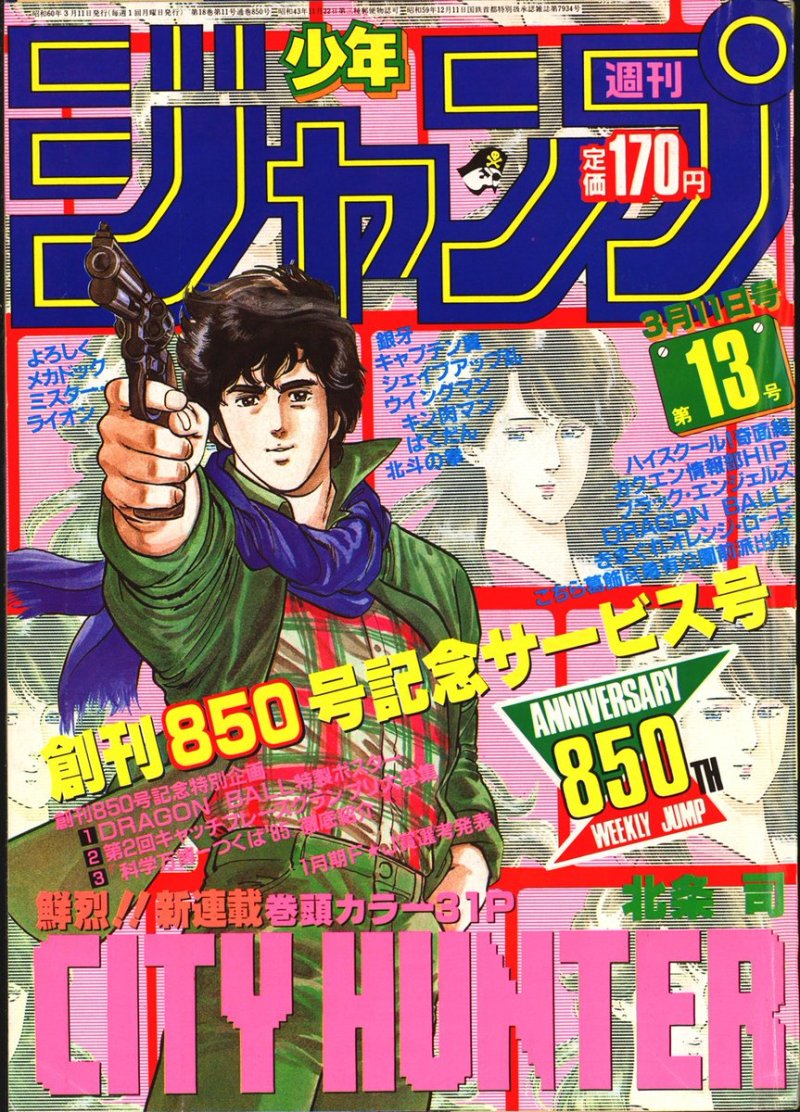
Weekly Shonen Jump Issue 13, 1985, featuring the first chapter of "City Hunter" Image credit:Tsukasa Hojo Official @hojo_official
The Life-Sized Hero Kenshiro from "Fist of the North Star" didn't need to eat, and Goku from "Dragon Ball" didn't need to sleep. Welcome to the "Iron Boy Squad" of 1985: the shonen manga protagonists of the mid-80s didn't eat, sleep, or rest; they were either fighting enemies or on their way to battle every day. They weren't extraordinary because of superpowers; essentially, none of them were truly human. The young manga artist Tsukasa Hojo, however, was deeply critical of these "iron heroes." These heroes were hundreds of light-years away from their readers, so how could readers relate to them? Thus, he decided to create a "human" hero: one who eats, shops, enjoys a drink, visits coffee shops, and gets flustered at the sight of beautiful women.
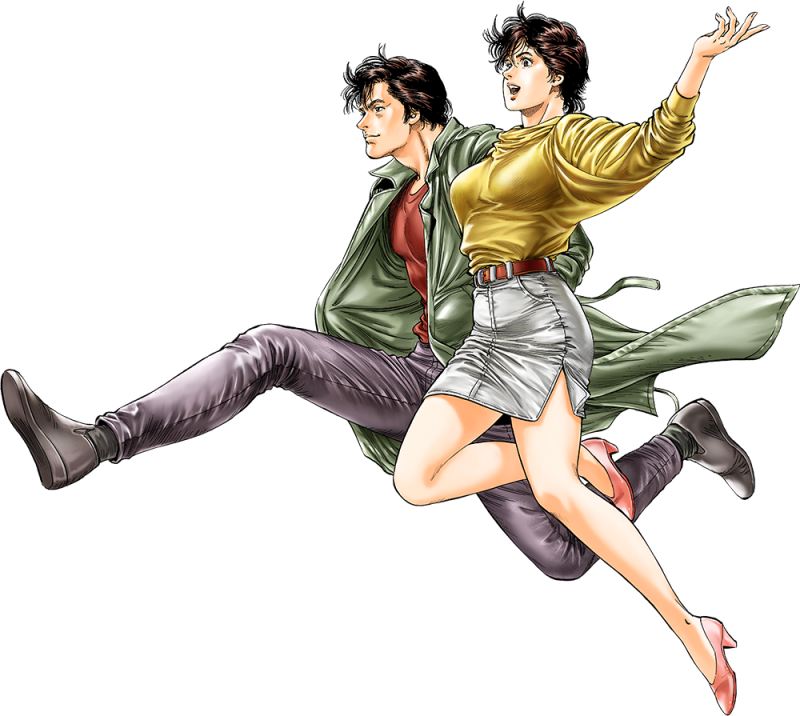
"City Hunter" Image credit:the-eyewear.com
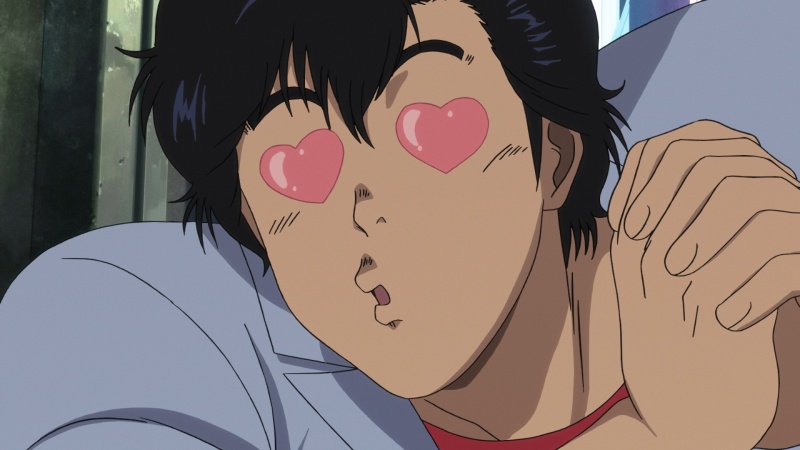
The bounty hunter concept was not new; Film Noir works from the 1940s featured protagonists who were all street toughs: ruthless, kicking away women who threw themselves at them, resorting to fisticuffs at the slightest disagreement, focused solely on completing their missions, and loving no one—in fact, the protagonists of Film Noir or hard-boiled detective novels primarily loved themselves. The young manga artist Tsukasa Hojo, however, was deeply critical of these "iron heroes." Therefore, the Ryo Saeba he created was not cold at all; most of the time, he was lazy, lecherous, and unserious, acting like a common scoundrel despite his handsome appearance. While readers discovered Ryo Saeba to be an approachable and charming protagonist, they didn't realize that Ryo Saeba was actually right there among them—at first glance, Ryo seemed like an ordinary playboy commonly found during the Bubble Economy era.
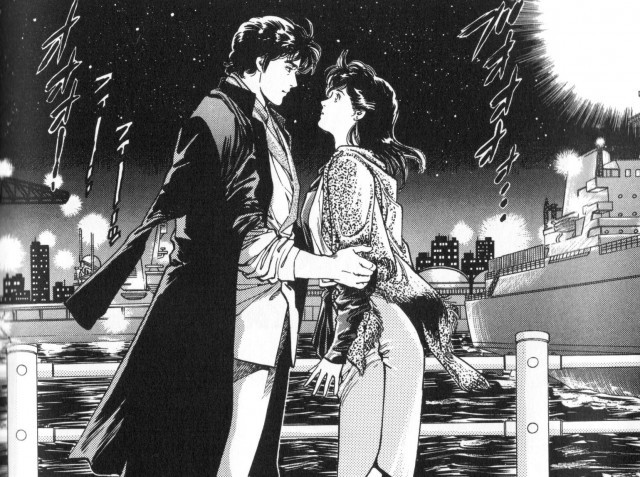
One of the famous scenes from "City Hunter" Image credit:Honcheruju
The Reaction to "Fist of the North Star" From the above, it might seem that Tsukasa Hojo was a manga artist with a keen eye for analyzing social trends, but that's only half true. Let's not forget that the "Golden Formula for Victory" of Weekly Shonen Jump in the 80s was a collaborative effort between editors and manga artists. Nobuhiko Horie, the great editor who created "Fist of the North Star," also became the editor for Tsukasa Hojo's "City Hunter." However, "Fist of the North Star," the iron-blooded apocalyptic epic nurtured by Horie, became a huge hurdle for junior manga artists like Hojo: after two years of serialization, "Fist of the North Star" had fed readers an excessive amount of passionate ruthlessness. In 1985, Kenshiro's battle with the Nanto Emperor was still unresolved, but feedback from Weekly Shonen Jump readers already included opinions like "Don't give us any more works of this kind."
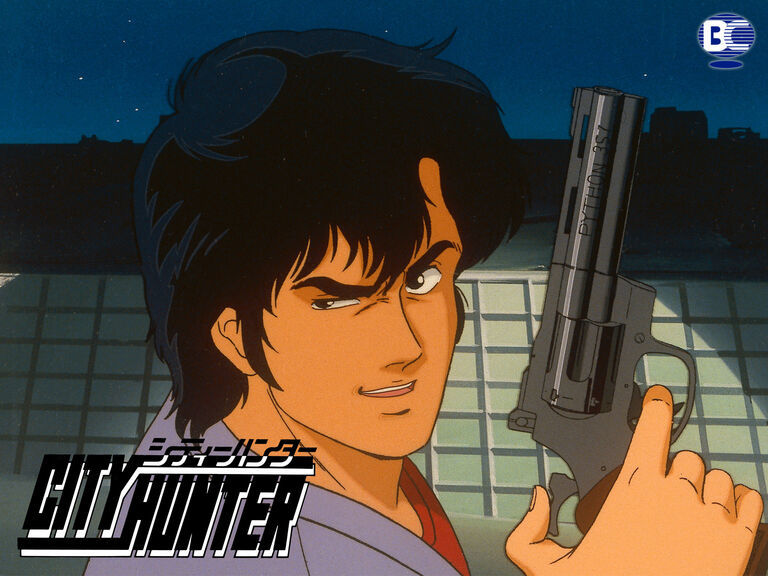
"City Hunter" protagonist: Ryo Saeba Image credit:GYAO!
Both the triumph and the challenge came from "Fist of the North Star." The immense success of "Fist of the North Star" forced other shonen manga to change their style—the market only needed one king of hard-boiled action. "Dragon Ball" began as a comedic adventure, and "Sakigake!! Otokojuku" started as a comedic fighting series. You can see that young creators were all moving in the opposite direction of "Fist of the North Star": Kenshiro seemed to never flash a wide, toothy grin, so they made their protagonists smile more cheerfully. Nobuhiko Horie decided that "City Hunter" should also avoid the dark path of revenge and assassination as much as possible. Tsukasa Hojo, who agreed with this direction and was also tired of genre clichés, began to comically exaggerate his sharpshooting City Hunter.
Ryo's common expressions Image credit:IGN Japan
The Other Protagonist: ShinjukuWhat is Tokyo's most famous district? During the bubble economy era, the vibrant, neon-lit Shinjuku became Japan's universally known "Demon City." In novelist Hideyuki Kikuchi's 1982 debut work "Demon City," the "Demon City" was Shinjuku, isolated and rife with violent crime. Of course, in real-life Shinjuku, there were no two-headed dogs or vampires from "Demon City." However, the numerous hotels and dance clubs that emerged in Shinjuku during the bubble economy era looked much like a den of monsters from which creatures could emerge at any moment. Shinjuku was also one of Japan's earliest high-rise dense areas (the super-tall Tokyo Metropolitan Government Building was even built here in 1990), giving people a beautiful fantasy of future progress.
To commission Ryo Saeba, one must write "XYZ" on the Shinjuku Station message board. Image credit:漫画全巻ドットコム
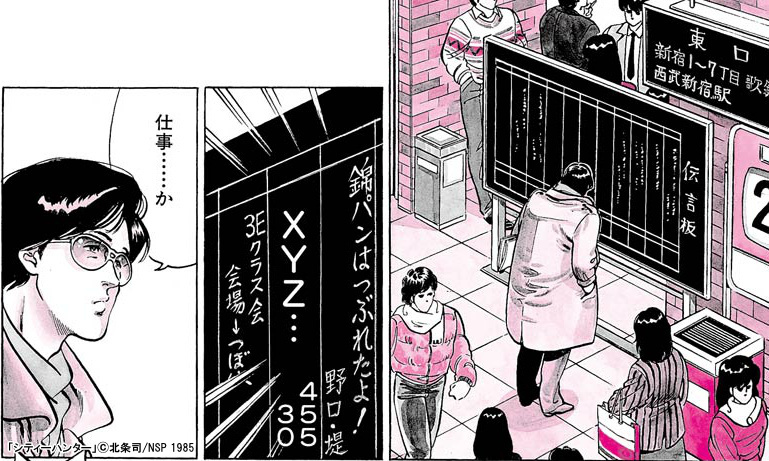
Thus, Shinjuku, which prospered even more during the bubble economy era, became Japan's "New York," a "metropolis" that gathered both prosperity and crime, and the most suitable complex environment for Ryo Saeba to thrive. One could say that Tsukasa Hojo perfectly captured the pulse of society, making the Shinjuku that the entire nation yearned for a universally known backdrop in his work, requiring no introduction. However, a small problem arose: Tsukasa Hojo himself had never actually been to Shinjuku.
Real Shinjuku scenes only appeared in the later stages of the manga. Image credit:Ameba
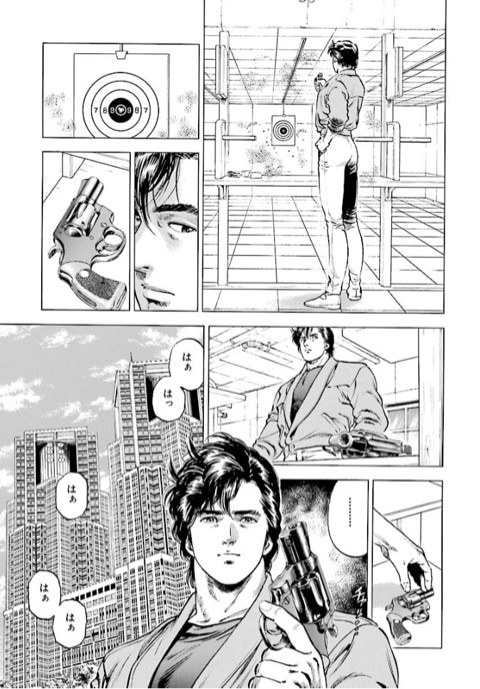
Unexpectedly, the short story "City Hunter -XYZ-", developed from the character Shin Kamiya in "Cat's Eye", was voted the most popular work by readers, quickly evolving from a one-shot into a serialized series. Understandably, "Weekly Shonen Jump" placed extremely high hopes on Tsukasa Hojo—which also meant giving Hojo less preparation time. Hojo, rushed into production, immediately found himself in a high-pressure serialization schedule. When he developed a humorous character named "Mouse" from his previous work "Cat's Eye" into the protagonist of "City Hunter -XYZ-", because Mouse was a master marksman, Hojo even flew to Los Angeles to practice live firing at a shooting range to gain knowledge about firearms. However, when "City Hunter -XYZ-" became "City Hunter", Hojo no longer had the luxury of going out for research.
The depiction of firearms in "City Hunter" is extremely detailed. Image credit:ほちょこのブログ
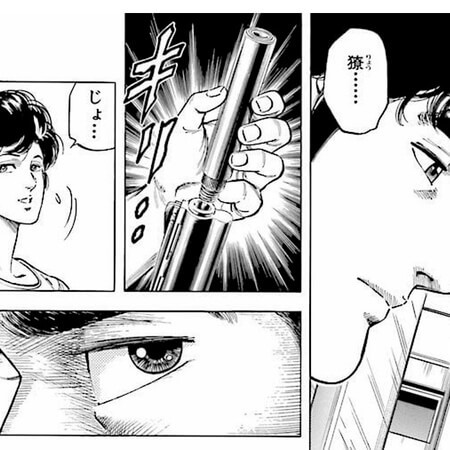
He had gone to Los Angeles, but now didn't even have time to go to Shinjuku. Hojo could only glean knowledge about Shinjuku from editor Horie and others. However, this secondhand information couldn't compare to firsthand experience, so Hojo ultimately had to depict "Japan's New York" using street views of New York. In this manga work, which was extremely close to reality, the Shinjuku depicted was, in Hojo's words, a "fictional Shinjuku," combining the two extreme styles of New York's skyscrapers and its slums; Shinjuku Station also differed from the real Shinjuku Station. Shinjuku became the implicit protagonist of "City Hunter"; it was wild, indifferent, but it wasn't the real Shinjuku. It was a product of Tsukasa Hojo's imagination, blending New York with the concept of a "city of sin."
Tsukasa Hojo and Nobuhiko Horie later co-founded Coamix. Image credit:コアミックス
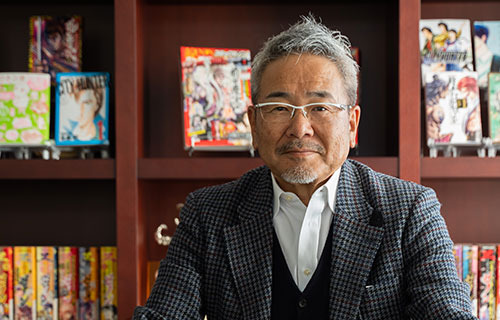
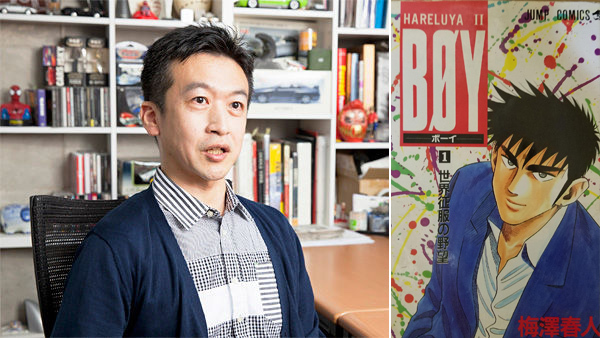
Before their debut, Haruto Umezawa, author of "Hareluya II BØY", and Takehiko Inoue both served as assistants to Tsukasa Hojo. At the time, Hojo was serializing "City Hunter" and took many photos of Shinjuku streetscapes for manga background material. One day, among these photos, Umezawa coincidentally discovered himself, at 19 years old, in the center of one particular photo—three years before he became Hojo's assistant. Years later, Umezawa commented on this anecdote, saying, "I felt it was fate, not coincidence." Image credit:GAZOO
"Amnesia" Behind the JoyMost of "City Hunter"'s plot is comedic in style. Today, "Shinjuku Stallion" Ryo Saeba is once again healthily "bulging" (もっこり), and Kaori is energetically swinging her 100-ton hammer at Ryo's nether regions. The 26-year-old young manga artist Tsukasa Hojo must have been drawing "City Hunter" happily and full of vigor every day. But in fact, this was not the case; Hojo barely remembered how he completed his work each day—years later, he could hardly recall his memories from when he serialized "Cat's Eye" or "City Hunter."
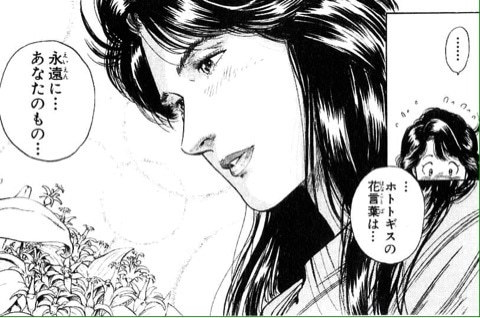
The women drawn by Tsukasa Hojo possess strong charm Image credit:きよの漫画考察日記
Tsukasa Hojo's life was too successful. His first serialized work, "Cat's Eye," became a huge hit, and his second serialized work, "City Hunter," managed to become even more popular. It is rare in the Japanese manga industry for a manga artist to have more than one long-running, best-selling serialized work. Hojo was "unluckily" one of them, as he had no intention of becoming a popular manga artist. Hojo originally hoped to become a "moderately successful manga artist" in his hometown but was discovered by Nobuhiko Horie and brought to "Weekly Shonen Jump" to serialize "Cat's Eye." From the moment he learned he had to move to Tokyo for work until he actually went to Tokyo, only two short days passed—the manga artist who aspired to be a slacker was forced to become a life winner in two days.
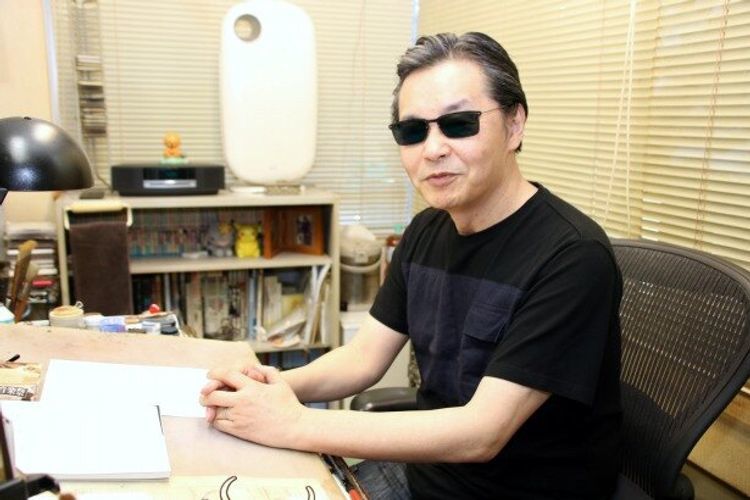
Tsukasa Hojo Image credit:MOVIE WALKER PRESS
Tsukasa Hojo's manga artist life was a continuous chain of events, and "City Hunter" was not only more popular than "Cat's Eye" but also held its own against powerful predecessors like "Fist of the North Star," "Dragon Ball," and "Kimagure Orange Road." This excellent performance was achieved through Hojo's tireless, day-and-night work. He was the youngest author among these big-name "Weekly Shonen Jump" manga artists, yet "City Hunter" was not the lowest-selling junior among these works; instead, it was a crucial pillar that collectively supported the golden age of "Weekly Shonen Jump" in the latter half of the 80s—one can imagine how immense Hojo's pressure must have been.
"City Hunter" was serialized in "Weekly Shonen Jump," and this cover is arguably one of the most classic "City Hunter" illustrations. Image credit:オークフリー
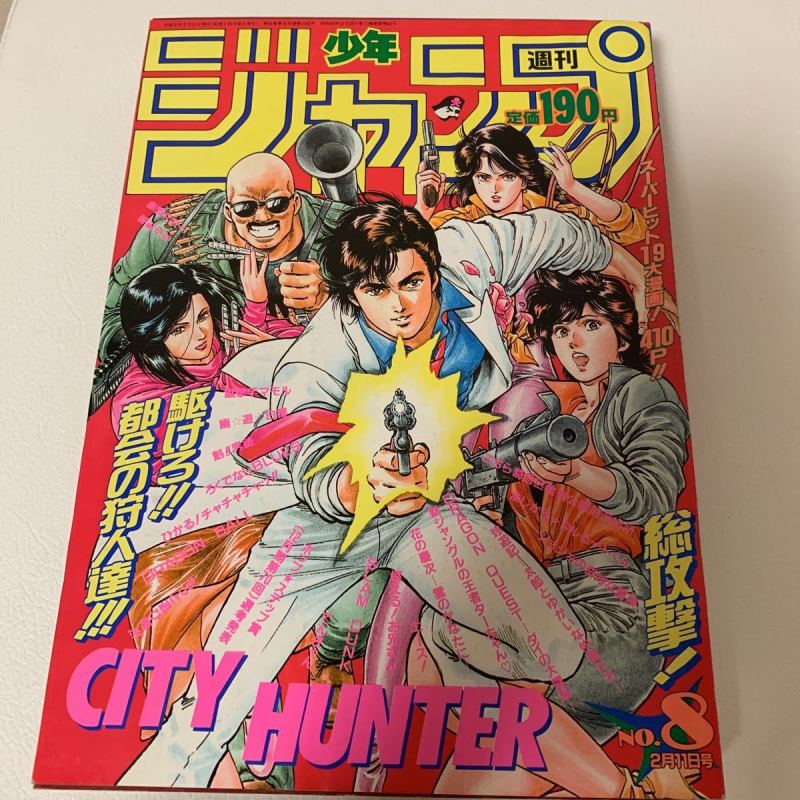
Mr. Hojo has stated in more than one place that readers are curious if he has any interesting anecdotes to share from the serialization process of "City Hunter," but he has few memories, or only painful ones, from those years of high-pressure and long working hours.
"Everyone probably thinks I was drawing happily. But originally, drawing is not a particularly happy thing. And whether it's drawing messy comedic stories or serious stories, you first have to start by carefully inking the line art, and then you have to go through the same drawing steps. Moreover, drawing comedic content requires spending countless hours painstakingly coming up with jokes, which is really not a happy thing at all. Of course, there are moments when I draw happily, but that's only in that instant when an idea suddenly strikes, like 'This is the way to draw it!'"
"City Hunter" first serialization Image credit:ヤフオク! - Yahoo!
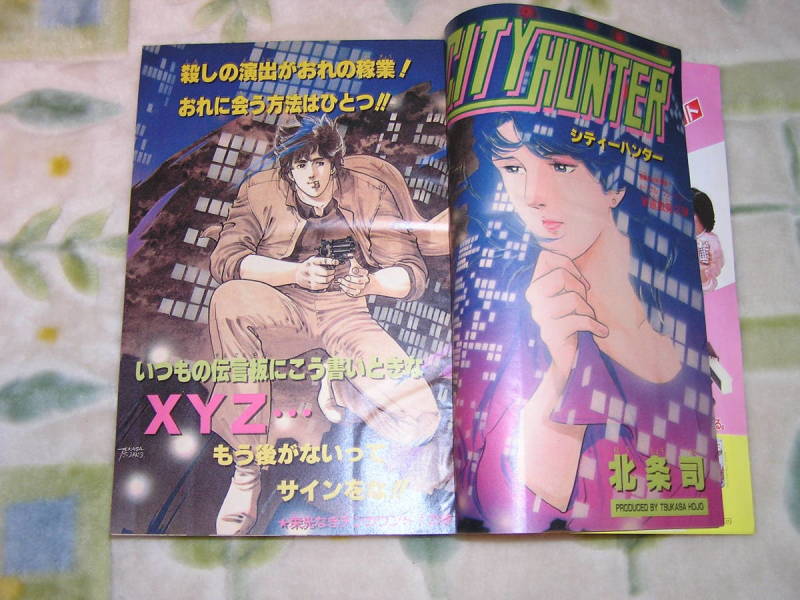
The Return of the Disciples"Weekly Shonen Jump"'s golden formula for success began to collapse in the 90s—internal strife began to occur within the "Weekly Shonen Jump" editorial department. Without editorial support, and lacking the backing of professional knowledge and market considerations, manga artists who rarely left their homes began to lose their balance, and even the world-renowned "City Hunter" faced disaster. "City Hunter" was suddenly announced to be ending by the weekly magazine. This story, which should have been able to continue indefinitely, only began to conceive its ending four weeks before its forced conclusion. The romance between Kaori and Ryo finally blossomed, which was not the anticipated story development but rather a reluctant service to the readers—readers had waited for nearly 6 years, so here's an obvious ending for you.
The final chapter of "City Hunter" in "Weekly Shonen Jump," with no hint even on the cover Image credit:オークフリー
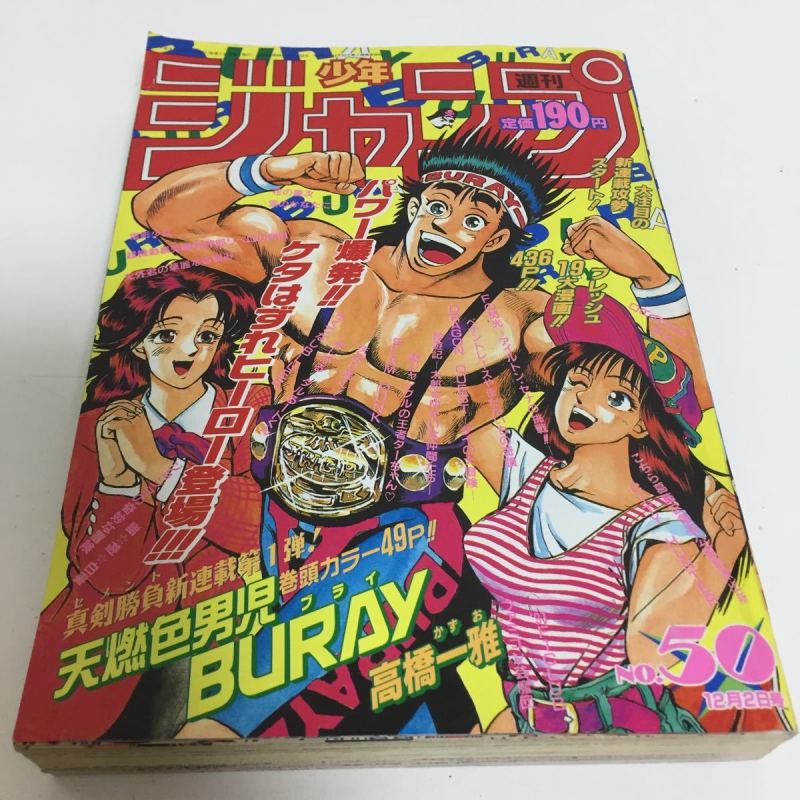
But how the story ended was no longer the point. For the struggling manga artist Tsukasa Hojo, *how* to draw the ending was more important than *what* the ending should be: he was running out of time to draw. On the final day of drawing the ending, Hojo's former assistants, Takehiko Inoue ("Slam Dunk") and Haruto Umezawa ("Hareluya II BØY"), both returned to help the master who had taught them so much valuable experience. In the "City Hunter Complete Edition," Takehiko Inoue spoke about Tsukasa Hojo's influence on him:
Tsukasa Hojo and his assistant Takehiko Inoue Image credit:Da Vinci News
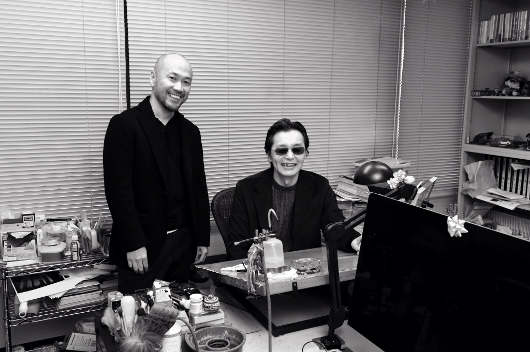
"When I came to Tokyo, the first professional manga artist I saw in person was Mr. Hojo. At the time, he allowed me to study manga under him, so I joined Hojo's studio as an assistant. That was around 1988. After joining, my feeling was—wow, it was truly moving to see a professional manga artist's original manuscript paper. His lines were fast and clean, every single one filled with vitality. The lines on the manuscript paper seemed alive, as if they would float right off the page. Although the art was great when serialized in the magazine, the original hand-drawn manuscript was the most beautiful. That impression remains incredibly clear to this day."
Takehiko Inoue, Tsukasa Hojo, Haruto Umezawa Image credit:disp.cc
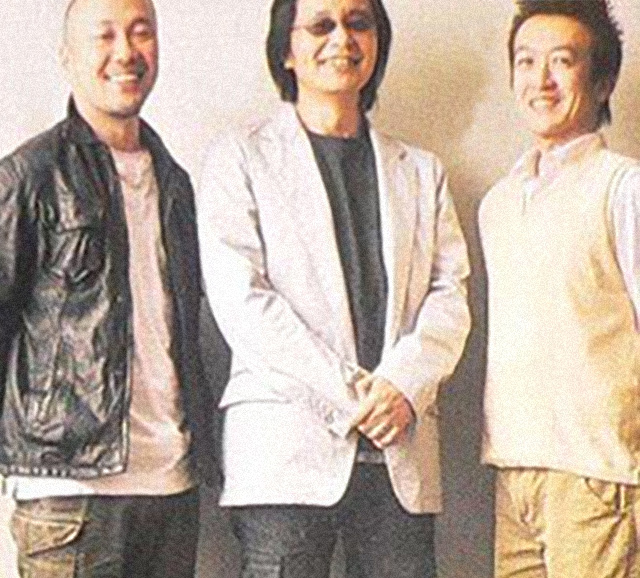
And regarding his former assistants returning to help on the final day of serialization, Tsukasa Hojo's sentiment was: "It was truly a surprise that could make you cry... although I didn't cry."
6. "Lechery" is Actually a Form of Loneliness
Lechery is a difficult personality trait for a modern manga protagonist Image credit:【のムのム】自然体つぶやきブログ
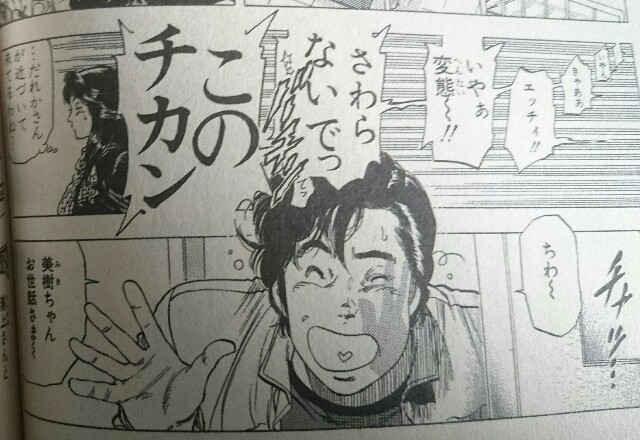
The protagonist of "Urusei Yatsura," Ataru Moroboshi, is unbelievably lecherous—he'll hit on any female-shaped creature of any species. Ryo Saeba is, of course, a great pervert who can be compared to Ataru. However, Ryo Saeba's "lechery" is not ordinary lechery.
Making a move on the client first is Ryo's principle Image credit:Manga Zenkan Dot Com
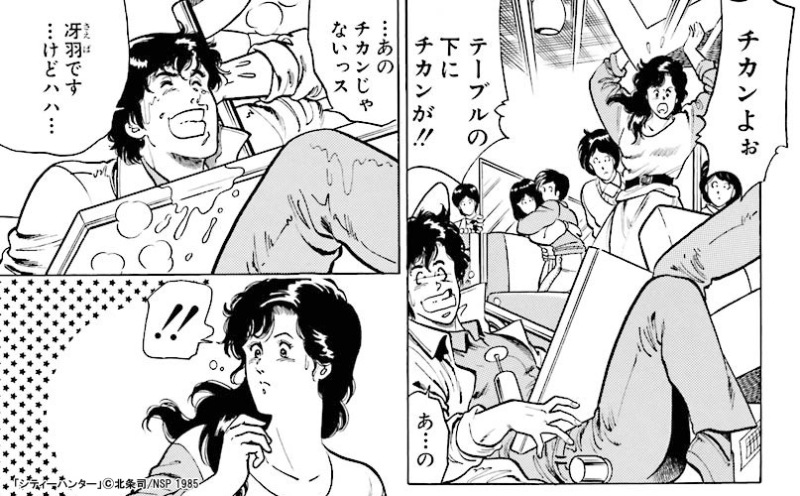
The formula for many "City Hunter" chapters is almost always the same: a mysterious beautiful woman appears → she encounters a crisis → Ryo lends a helping hand → the beauty falls in love with Ryo → Ryo tries every trick in the book to get his hands on her, only to be stopped by Kaori's every trick in the book → Ryo rejects the beauty's feelings → the story ends. What's interesting is that Ryo Saeba is not an ordinary high school student like Ataru Moroboshi. He is a stateless orphan mercenary, born on the battlefield and raised amidst slaughter, a top-tier assassin/bodyguard who can take on the entire underworld single-handedly. It probably wouldn't be that difficult for him to have his way with anyone, yet he is often defeated by Kaori's giant hammer.
Ryo and Kaori Image credit:Kiyo no Manga Kōsatsu Nikki
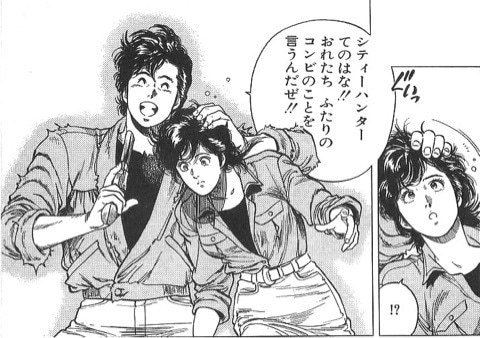
"Ryo doesn't want to fall in love," Tsukasa Hojo stated. "He calculates the exact distance he should maintain with women—close enough to satisfy his desires, but far enough that they won't truly fall for him. And why doesn't Ryo want to fall in love? Because although he appears to be a frivolous character at first glance, he is actually an extremely lonely person. An orphan who grew up in a country torn by civil war, he doesn't even know his own age or real name. He has no nationality and, legally speaking, cannot even get married. Therefore, Ryo is a man who cannot confide his inner loneliness to anyone."
Ryo and Kaori Image credit:Twitter
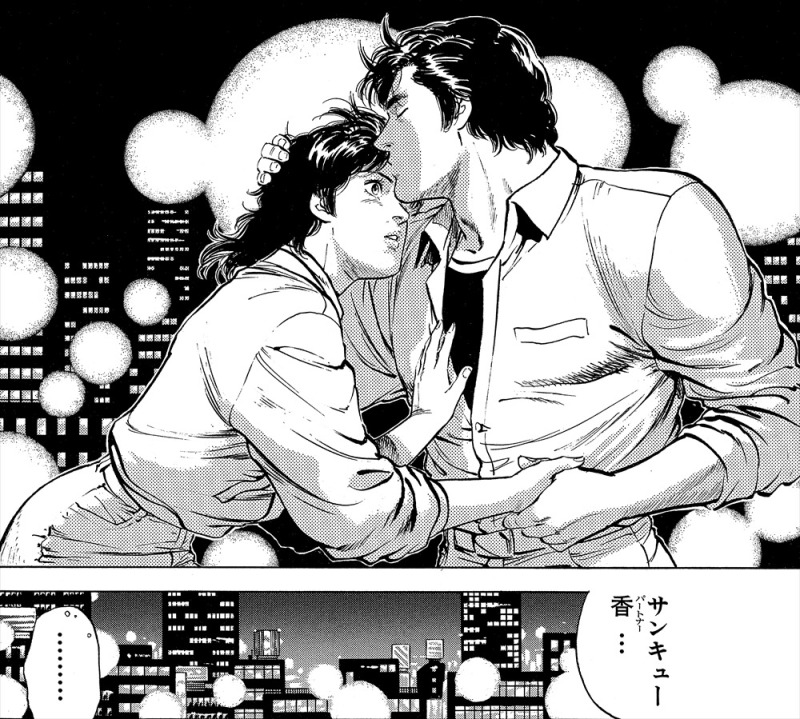
Ryo's lecherousness, his groping, and his public displays of arousal have become the most tangible ways he expresses his emotions. This perverted nature is another way for Ryo to "keep his distance" from others, rather than simply a means of venting his desires. His line of work cannot promise happiness to anyone; in fact, it brings more danger. Instead of adopting an obviously distant demeanor, Ryo's lechery acts as an invisible protective film, maintaining his distance from others... while simultaneously hiding his true self.
The 100-Ton Hammer Image credit:Anibu
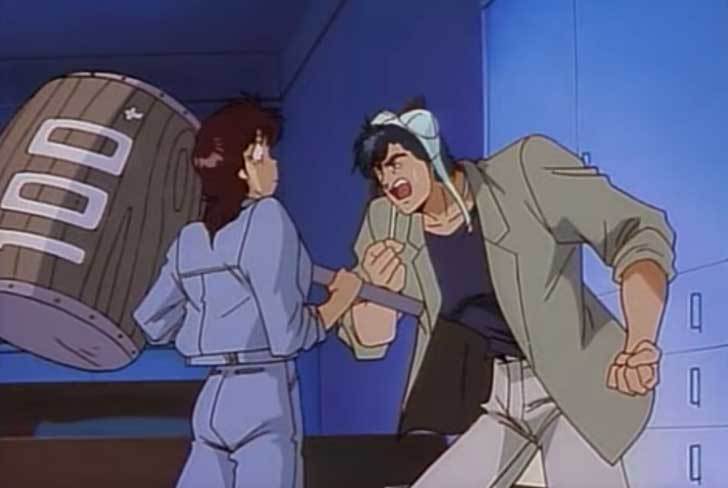
The brilliance of Tsukasa Hojo's "City Hunter" lies not just in his ability to draw such sexy men and women, but in how the work deliberately has Ryo maintain a certain distance from all the other characters. Ryo doesn't just keep his distance from Kaori; he also maintains a considerable distance from Umibozu, Miki, and Saeko—his "peers" who also walk the line between the legitimate world and the underworld. Ryo Saeba can joke and laugh with anyone, but he rarely opens his heart to these companions. "Weekly Shonen Jump" is known for advocating the golden trio of "Friendship, Effort, Victory," yet "City Hunter" quietly subverts the very first principle. However, "City Hunter" also quietly taught many young readers what "loneliness" is.
Kaori's Furious Hammer Image credit:Niconico
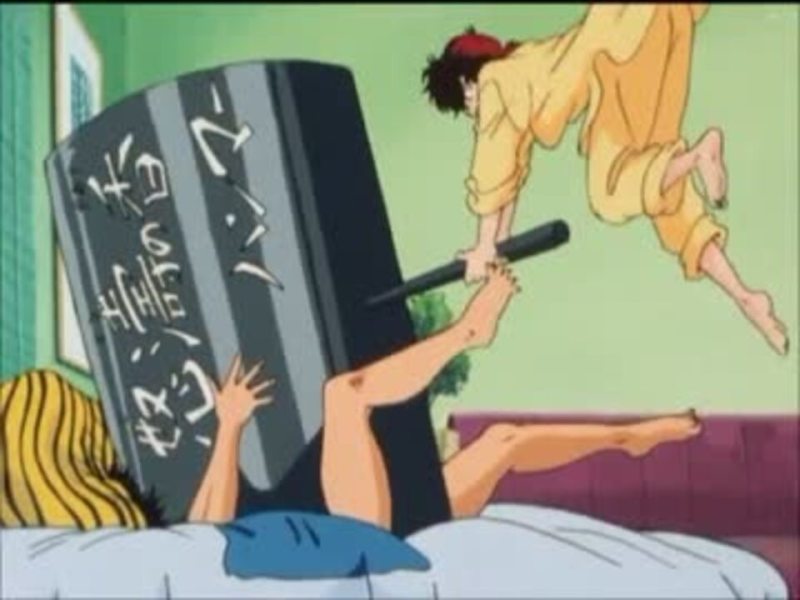
Son Goku might be the most powerful fighter in the universe, and Kenshiro might be the world's greatest martial artist, but the perpetually lonely Ryo Saeba possesses a unique coolness that no other manga character can replace. It's a mature, adult charm, and it's hard to find a protagonist so "beyond his years" in other shonen manga. Tsukasa Hojo's six years of hard work created a legendary classic in manga, and "City Hunter" went on to forge another legend on the small screen.
The "City Hunter" TV anime Image credit:Sunrise
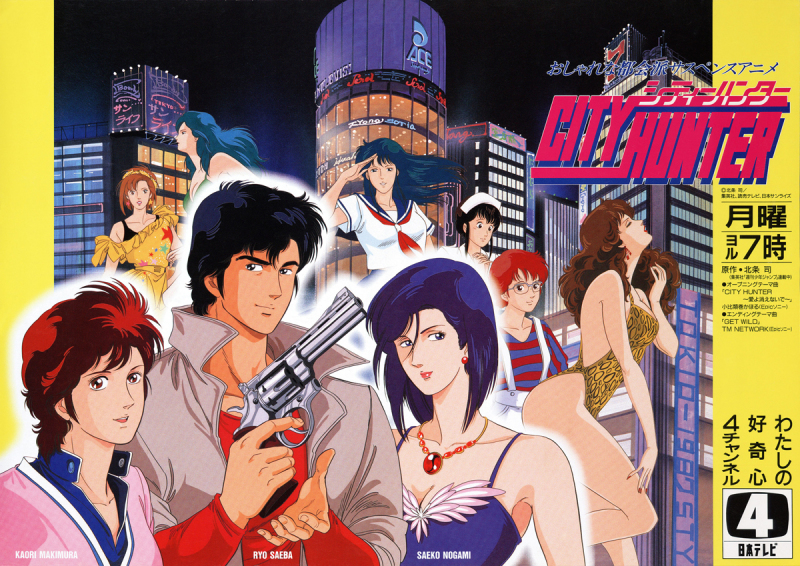
The bubble economy era ended in 1991, and the "City Hunter" manga also ceased serialization that same year. But even though so much time has passed since the bubble economy, Ryo Saeba has left behind an indelible and profound image. This is all thanks to those six years where Tsukasa Hojo poured his very soul into his work—he truly traded his precious life for this invaluable masterpiece.