
Pick up a pen now and draw a character. Where would your first stroke begin? This question might have different answers for every manga artist. So, what is Naoki Urasawa's answer? The author of famous manga such as "Yawara!", "20th Century Boys", and "Monster", he is also a visiting professor for the manga course at Nagoya Zokei University, with extensive teaching experience... and he feels that many people's drawing methods overlook the most important spirit of manga. "Even my students might get it wrong..." the manga master said with a slight embarrassment. Compared to many of his less articulate manga artist peers, Naoki Urasawa can be said to be one of the most willing to share and articulate creators in the manga world today. Below is Urasawa-sensei's mini-classroom on manga creation.
The Essence of Manga Characters Lies in Their SkeletonsOne reason many people love Naoki Urasawa's manga is that there isn't a lot of dialogue, yet the characters' silent actions and gestures convey profound emotions. For Urasawa, the key to giving manga characters their own souls lies in their "skeletons."
Naoki Urasawa drawing Image credit:Toyo Keizai Online
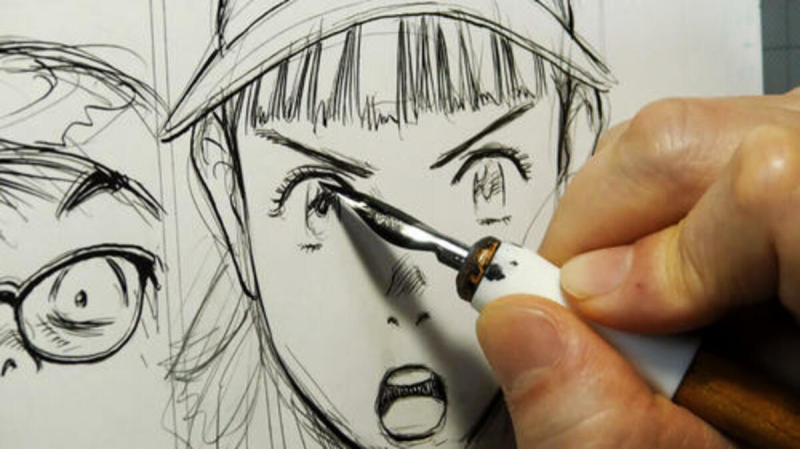
"I believe the foundation of a character is the skeleton. Even a small change in the skeletal structure will fundamentally alter the character's personality... I think when drawing characters, many people start by drawing a circle for the head, and then the shoulders below the head... But sometimes, if the body turns, won't the head be obscured by the shoulder? Because of various changes like this, I often tell my students... I think it's best not to develop the habit of 'drawing the head first, then the shoulders.'"
Naoki Urasawa drawing live at his exhibition. Source:Youtube
First, determine the position of the skeleton; that is, first determine the emotion a character wants to convey within a small panel, then decide their posture and actions to express that emotion, and finally, put pen to paper—because it's possible the character might not show their face at all, but instead reveal their trembling hands, indicating their inner struggle. This way of thinking demonstrates Urasawa-sensei's creative philosophy: every character is rich with emotion, and when they are drawn on paper, it's not just about depicting their physical form, but most importantly, portraying their inner state.
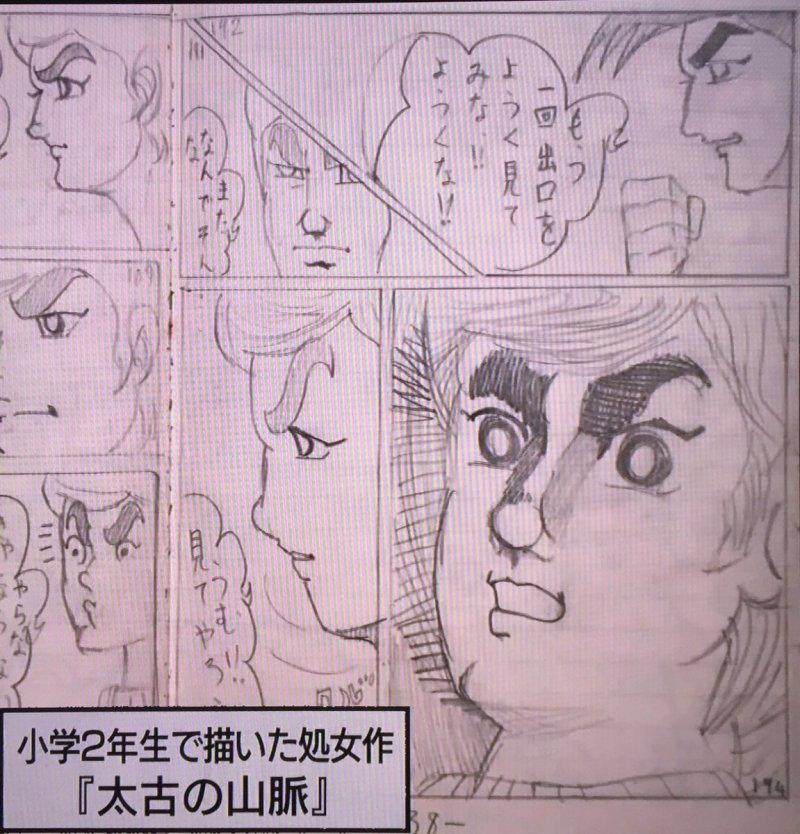
Naoki Urasawa's first long-form manga, "The Ancient Mountains" (太古の山脈), created in elementary school, was influenced by the Film Noir broadcast on Japanese television at the time. The only reader of this work was his older brother, who was 4 years his senior. Image credit:Twitter
The Most Important Feature on a Face is the NoseEyes are the windows to the soul, and in various manga, the importance of eyes is often paramount: for example, in the recently popular manga "Oshi no Ko", the protagonists' eyes feature giant hexagrams, symbolizing their innate idol charm. However, for Naoki Urasawa, the nose might be the key.
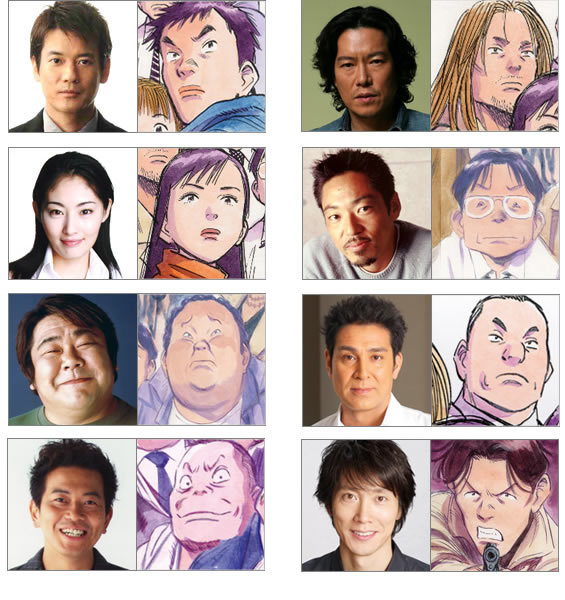
The noses of each character in "20th Century Boys" are distinct Image credit:Fashion Press
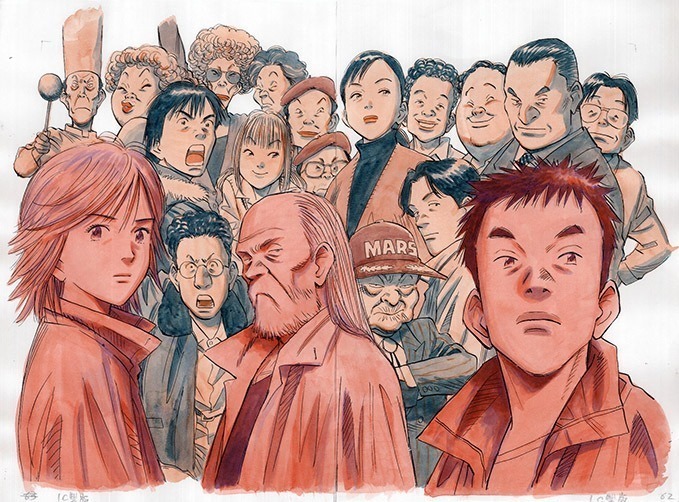
Have you ever noticed? Naoki Urasawa's characters possess a wide variety of noses. In long-running manga like "20th Century Boys," over 30 important characters appear, and most of them have their own unique noses: The highly combative "Otcho" Choji Ochiai has a short, pointed nose; in his full-face close-ups, the tip of his nose forms a sharp V-shape, symbolizing his unyielding spirit; Kakuta, the manga artist who escaped prison with Otcho, has an exaggerated, comical large nose; and "Mon" Masamune Shimon, a former rugby star, has a thick, bulbous nose that matches his robust physique... It can be said that from the "nose shape" of Urasawa's characters, one can often guess their personality.
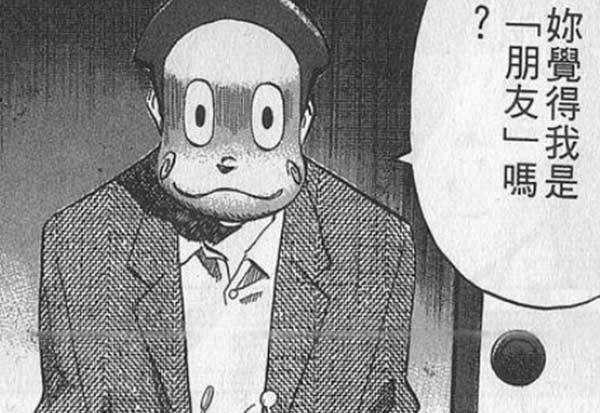
Snot-nosed Donkey, of course, needs particularly prominent nostrils Image credit:renote
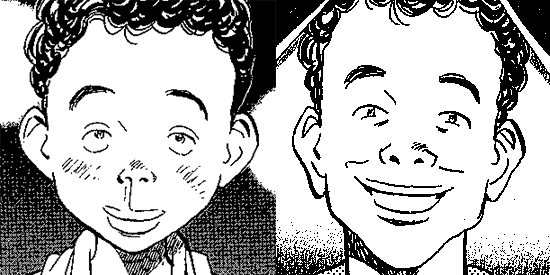
This stems from Urasawa's admiration for masters like Osamu Tezuka and Shotaro Ishinomori: based on different personalities, these masters' characters often possess common physical traits. For example, Tezuka's large-nosed characters typically have loyal and gentle personalities; while Master Ishinomori's comedic characters often have small, round noses. As an organ in the center of the face, the nose is difficult to distort to express diverse emotions, but this "immobility" can serve as an anchor-like presence, subtly conveying a message the author wishes to impart. “I like to draw the nose first. Isn't it easier to establish the 'center' first?” This is Mr. Urasawa's habit.
Naoki Urasawa's other best-selling work, "20th Century Boys," had a live-action film adaptation released in 2008. The casting was remarkably close to the original characters' essence, earning it the title of "divine casting" from netizens. Image credit:しんこきゅう~
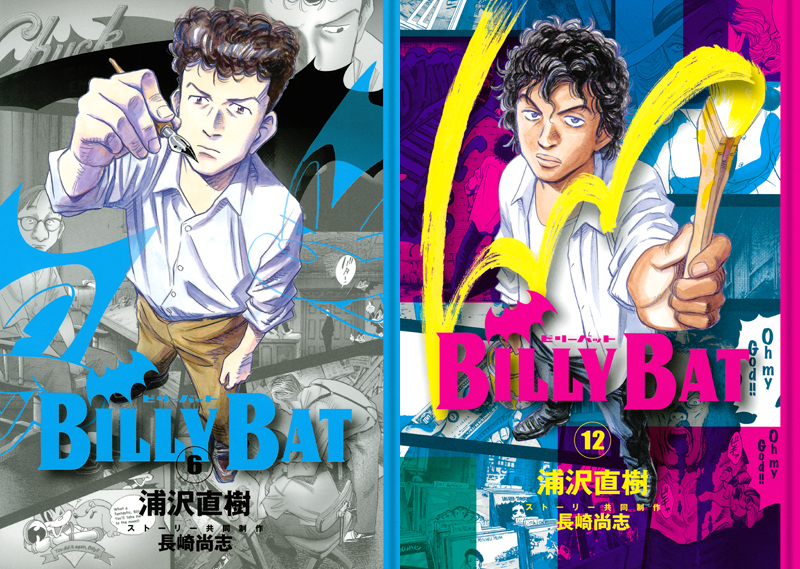
The "Creator Gods" Created by the Creator GodThe creator god of a manga is undoubtedly the mangaka themselves. However, in Naoki Urasawa's manga, we also see a multitude of "creator god" characters. In Naoki Urasawa's "BILLY BAT," the mangaka Kevin Yamagata draws "Billy Bat;" the boys in "20th Century Boys" draw a "Book of Prophecy;" and Franz Bonaparta in "MONSTER" creates "The Nameless Monster," profoundly influencing the protagonist Johan... Naoki Urasawa's manga are not merely creations; within these creations, there are also numerous "works within works," and these internal works are always crucial elements of the entire story. However, the concept of "creation" is even more significant in Naoki Urasawa's works.
"BILLY BAT" Image credit:ブックライブ
Dr. Tenma's courageous act of saving the boy Johan "created" a monster; and the scientists in "PLUTO" "created" seven "world's greatest robots." All of Urasawa's works since "MONSTER" feature similar creator gods and acts of creation. This appears to be a meta-approach; Naoki Urasawa doesn't merely create a fictional work, but within these creations, he also imbues the power of creation ex nihilo. Urasawa faithfully describes the origins and development of creation, while also portraying the complex emotions between creators (creator gods) and their creations. Japanese mangaka so dedicated to the theme of creation are truly rare, with Urasawa being a notable exception.
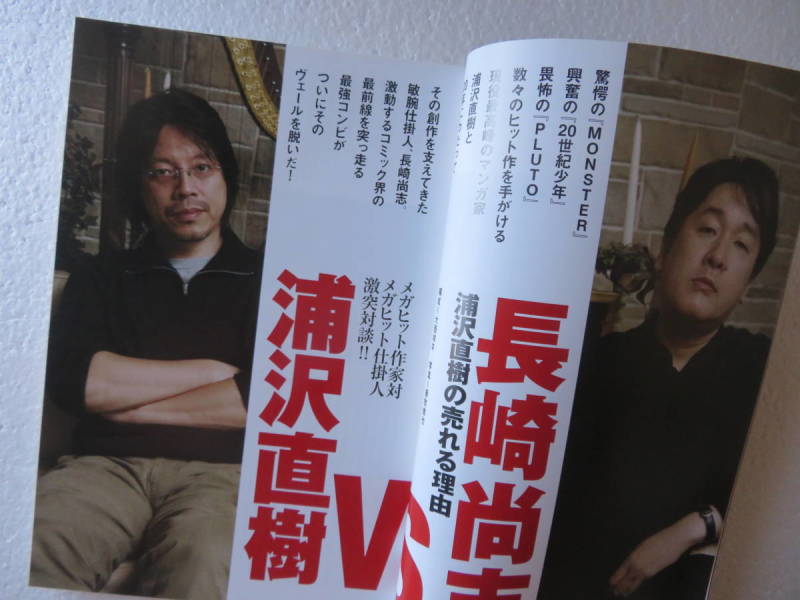
A rare photo of Naoki Urasawa, who has created many best-selling works, and his long-time collaborator, editor Takashi Nagasaki. "PLUTO," initially rejected for adaptation by Tezuka's eldest son Makoto Tezuka, was eventually granted permission through Takashi Nagasaki's persistent efforts. Ultimately, "PLUTO" won numerous awards in Japan and was nominated for the Eisner Award in the United States. Image credit:虫ん坊
The act of creation is the fusion of the causes, emotions, and subsequent effects of real-world events, presented in a fictionalized form. Creators must be profoundly impacted by reality to channel feelings of anguish, joy, or melancholy, fueled by the passion ignited by such impact, into another dimension to become a finished product. Creation itself is neither good nor evil; it is an intuition, a spontaneous act (such as Dr. Tenma's act of saving lives or Kenji and others creating the Book of Prophecy). However, the consequences of creation can trigger severe crises, inciting hatred, jealousy, and slaughter. The bat in "BILLY BAT" becomes the core of all conspiracy theories in human history; Johan in "MONSTER" becomes the devil of the Cold War era; and the monster in "PLUTO" that seeks to destroy the world was created to make the world a better place.
"PLUTO" produced as an anime by Netflix Source:Youtube
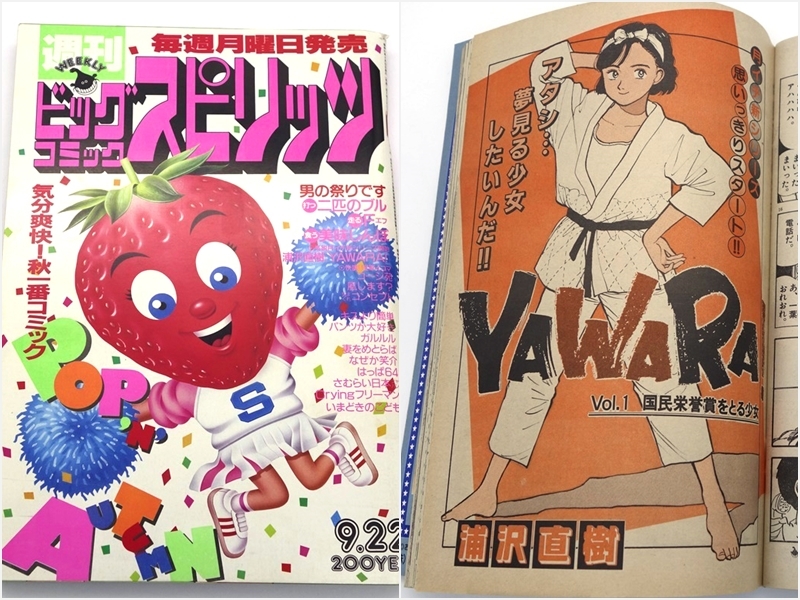
The Manga Artist Who Became a Prophet by Focusing Too Much on CreationAfter "MONSTER," Naoki Urasawa made "creation" his creative theme, but even before "MONSTER," his breakthrough manga "YAWARA!" had already "created" reality: "YAWARA!" began serialization in 1986, at a time when women's judo was still not a highly regarded sport in Japan, the birthplace of judo. However, in 1992, the year before "YAWARA!" concluded its serialization, 17-year-old Japanese judoka Ryoko Tamura secured a spot to represent Japan in judo at the Barcelona Olympics, and subsequently won a silver medal at the Games. The manga truly became reality, and Ryoko Tamura gained a new nickname: people called her "Yawara-chan," after Yawara Inokuma, the protagonist of "YAWARA!"
Naoki Urasawa's breakthrough work "YAWARA!" (Taiwanese translation: "Yi Rou Ke Gang"), began serialization in "Big Comic Spirits" No. 30 on September 22, 1986. Image credit:ヤフオク!
Urasawa's next work after "YAWARA!", "Happy!", saw Japanese tennis player Kimiko Date's world ranking rapidly rise during its serialization. In 1994, she entered the world's top 10; in 1995, she became the first Japanese player to reach the French Open semifinals and achieved a world ranking of No. 4, ushering in one of the most glorious golden eras in Japanese women's tennis history.
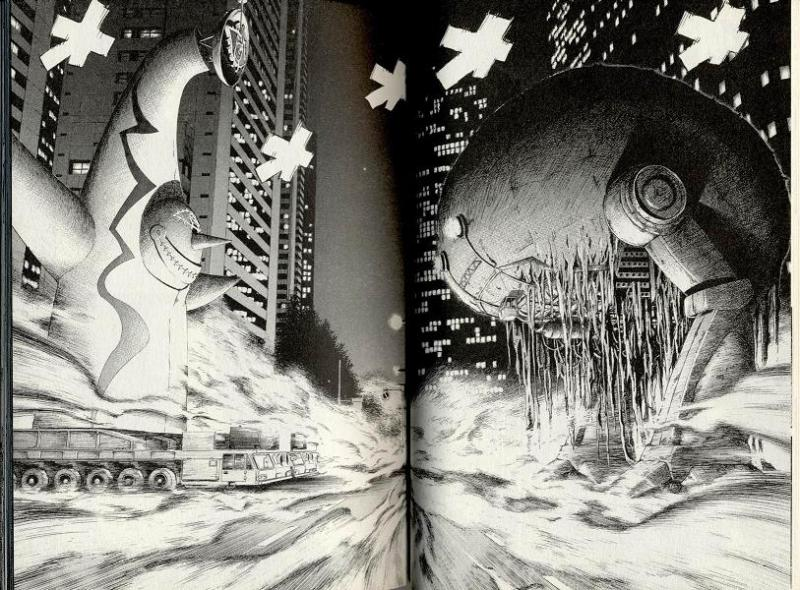
In 2001, Urasawa was preparing to submit the manuscript for the following week's "20th Century Boys" to his editor. The manuscript depicted a massive scene of all the skyscrapers in Shinjuku collapsing... Just as he was about to submit it, a news flash suddenly appeared on the TV screen next to Urasawa... The World Trade Center towers in New York had been struck by two planes, which was the shocking 9/11 incident in the United States. In that instant, Urasawa's heart sank, "Ah... it happened again..."
"20th Century Boys" giant robot and pseudo-Tower of the Sun confronting each other on Shinjuku Station South Exit street Image credit:Twitter
Urasawa has repeatedly emphasized that he has no prophetic abilities—a claim that many have doubted, especially after "BILLY BAT," a story about a manga artist who can see the bat. He is simply adept at observing many small details in life, and these details quietly brew within him, eventually converging to become an unexpected creative idea. For Urasawa, when he draws these ideas, he is merely faithfully "translating" the numerous coincidences from past history or daily life. But then again, as the saying goes, "to understand the future, one must understand the past." Perhaps Urasawa, who is skilled at documenting everything before his eyes, is precisely the prophet who best knows how to predict the future?
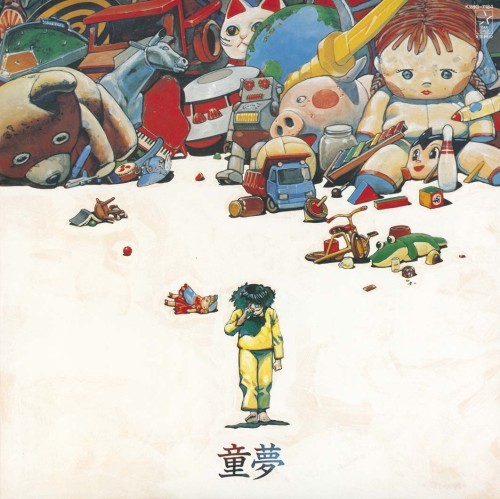
The Manga Artist Who Doesn't Want to Die YoungIn 1980, Naoki Urasawa, then a university student, read the first chapter of Katsuhiro Otomo's serialized work "Domu" in a manga weekly. That moment completely overwhelmed the young Urasawa, because not only Otomo's artwork, plot, or paneling techniques, but everything was a marvel Urasawa had never seen before. At that time, Urasawa had already won Shogakukan's Newcomer Manga Award and had begun working as a manga assistant. However, these honors and experiences paled in comparison to the palpable impact brought by the short first chapter of "Domu." According to Urasawa, he felt "a brand new door had opened."
"Domu" Image credit:diskunion
The problem was, a work like "Domu," with its intricate art style and astonishing plot, was serialized in a weekly manga magazine. After Urasawa began his professional manga career, he often wondered how Katsuhiro Otomo could produce such high-quality work every week. This wasn't something that could be achieved simply with the help of many assistants; it must have been a masterpiece that Mr. Otomo could only draw by sacrificing all his free time and burning through his mental and physical energy. And Urasawa began to ponder: Is it really worth it? Can a manga artist working at 120% capacity truly keep drawing forever... Most importantly, can I push myself as hard as Mr. Katsuhiro Otomo?
What Urasawa didn't realize was that Katsuhiro Otomo actually put 300% of his effort into drawing every manga. "Domu" was actually only the length of a single collected volume, but Otomo not only worked himself to the bone to perfect it during its serialization, but when it was to be published as a collected volume after serialization ended, Otomo astonishingly added nearly a hundred pages of new material.
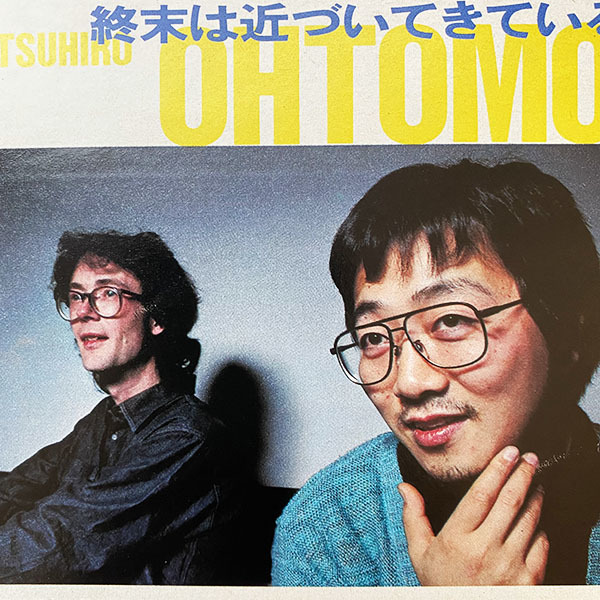
Katsuhiro Otomo, author of "Akira," which profoundly influenced Cyberpunk. Image credit:ヤフオク!
The intractable balance problem of "demanding perfection" and "adapting to serialization life," a question of quality versus quantity, became an issue Naoki Urasawa had to solve once he became a professional serialized manga artist. However, becoming a serialized manga artist, especially a popular one, means you must continuously produce high-quality content, not letting down the fans who eagerly await new material every week. This, it seemed, also meant that this quality-quantity balance problem could only be solved by a manga artist's 300%, 400% total dedication, and as mere mortals, manga artists would eventually face the predicament of "drawing themselves to death."
Urasawa's revered teachers, Tezuka-sensei and Ishinomori-sensei, both passed away at 60; Fujiko F. Fujio passed away at 62; Hisashi Sakaguchi, author of "The Stone Flower," passed away at 49; Director Satoshi Kon, who, like Urasawa, admired Otomo and faithfully recreated Otomo's style in his manga, passed away at 46... And many more manga artists Urasawa admired, and many he knew who didn't rely on assistants and mostly drew their content themselves, passed away in their forties and fifties. Urasawa felt this industry was wrong—too many colleagues burned with passion for their dreams, but ultimately, they themselves were burned out.
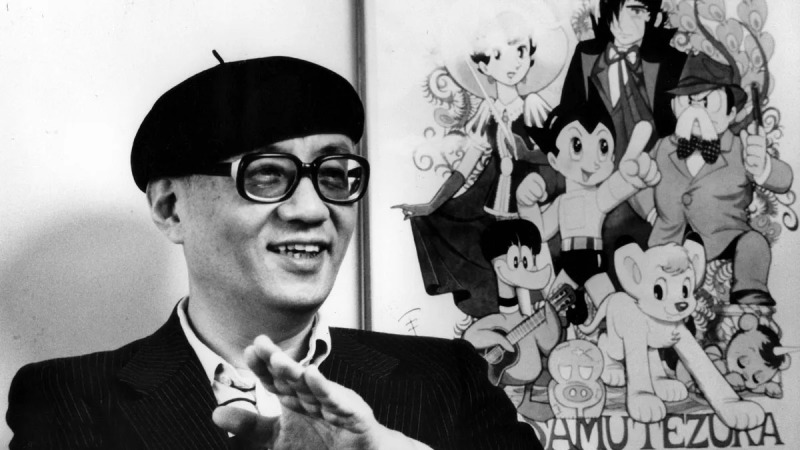
Osamu Tezuka, revered as the "God of Manga" in Japan. The "Greatest Robot on Earth" chapter from "Astro Boy" was the work that most deeply influenced Naoki Urasawa, leading him to adapt it into "PLUTO" starting in 2003. Image credit:GQ JAPAN
Just as the serialization of "20th Century Boys" was hitting its stride, Urasawa dislocated his left shoulder. He drew with his right hand, so this injury didn't seem to affect his weekly serialization work. The problem was, the left shoulder is a crucial part for supporting the drawing body; without the left hand's support, the right hand's drawing couldn't be precise, yet Urasawa still didn't give up working. However, just a few days later, his left shoulder became completely immobile. Even just a few strokes with his right hand caused such severe pain in his left shoulder that half his body felt almost paralyzed. Suddenly, Urasawa recalled: when did many of the prematurely deceased manga masters realize that they only had a handful of years left in their lives... Or did they never realize it at all?
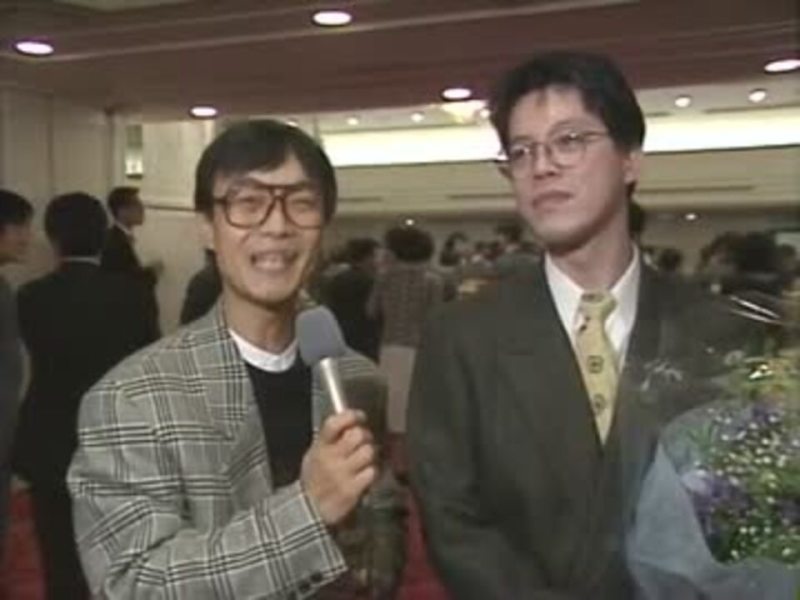
Naoki Urasawa won the 35th Shogakukan Manga Award in Heisei 1 (1989) for "YAWARA!". The interviewer on the left is the famous voice actor Akira Kamiya. Image credit:ニコニコ動画
The incident of a dislocated shoulder leading to temporary paralysis profoundly impacted Naoki Urasawa. As he lay prone on his workbench, immobilized by excruciating pain in his left shoulder, he thought that Kenji Endo's adventure was not yet over, and the true identity of "Friend" had still not been revealed to readers... and that he might pass away at that very second. Naoki Urasawa, who from 1985 to 1994, for nearly a decade, simultaneously serialized three manga series—"Pineapple Army," "Yawara!", and "Master Keaton"—working tirelessly to produce a total of 55 tankōbon volumes, originally held the motto of "working oneself to death" as his guiding principle. But at that moment, he finally awoke to the realization: he still had many stories he wanted to tell, and perhaps this principle should not be taken for granted.
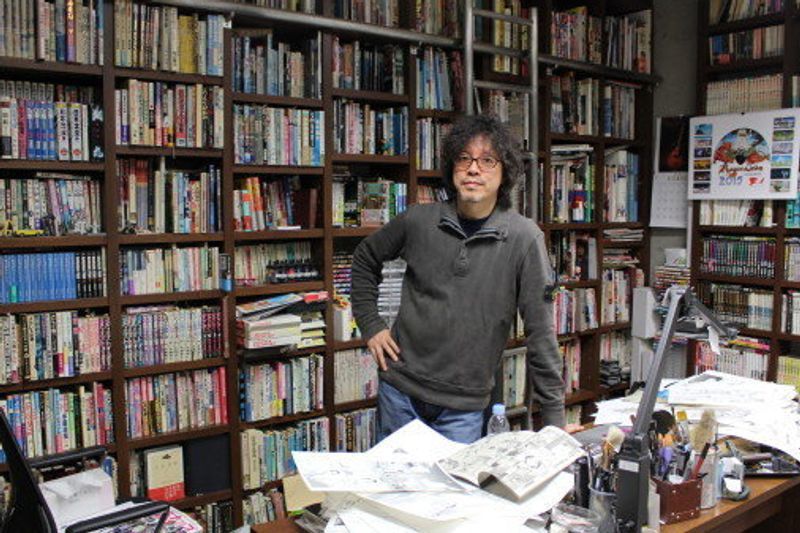
Naoki Urasawa in his studio Image credit:ハフポスト
Naoki Urasawa continues to serialize his works, and today, he no longer pursues a relentless, year-round overtime work ethic. For this creator, who is constantly conceiving stories, crafting narratives that can move more people is more important than anything else. Now over 60 years old, Urasawa has already outlived two masters he deeply respects. What concerns Urasawa more is whether he can, like Mr. Tezuka or Mr. Ishinomori, leave behind works that manga readers will still enjoy a hundred years from now. His continued creation of manga signifies that he has not yet found the answer that truly satisfies him.