

Japanese manga publishers have been relentlessly combating pirate websites in recent years, consistently targeting these illegal resources that infringe on copyrights and artists' rights.
This case, however, targets a different kind of defendant: U.S. multinational tech company Cloudflare. Cloudflare was found to have infringed on publishing rights by continuing to provide CDN (Content Delivery Network) services to pirate manga websites. Four major publishers—Shueisha, Shogakukan, Kodansha, and KADOKAWA—jointly sued Cloudflare in the Tokyo District Court, which ruled on November 19 that Cloudflare must pay approximately 500 million yen in damages.

The court ordered Cloudflare to pay:
Kodansha, Shueisha, and Shogakukan: ¥126.5 million each, plus accrued interest
KADOKAWA: Over ¥121.4 million
Cloudflare had argued "no intent or gross negligence" and that its "impact on the infringement was limited," seeking to reduce the compensation amount. However, the court stated, "There are no grounds to mitigate responsibility," emphasizing Cloudflare's clear liability for its prolonged failure to cease CDN provision.
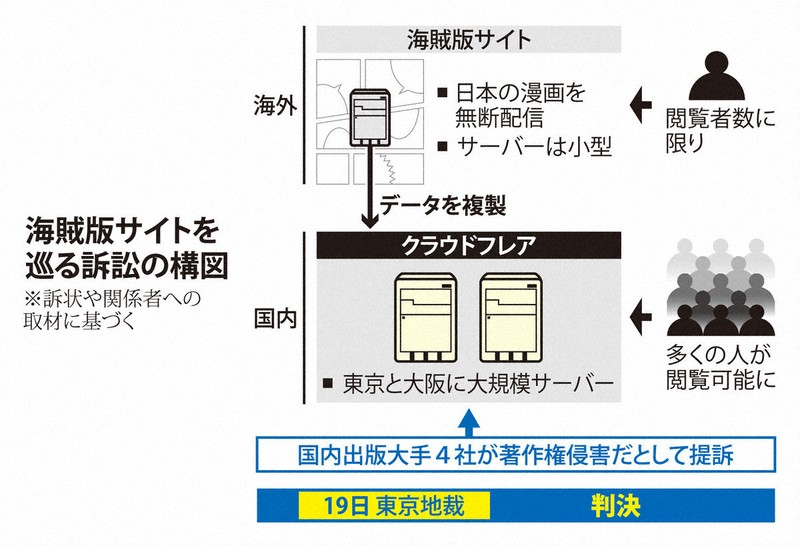
This case focused on two large pirate manga sites, which were among the "Big Three Pirate Sites" around 2021, collectively boasting over 300 million monthly visits at their peak. These sites operated using Cloudflare's CDN services, unauthorizedly uploading over 4,000 works and 120,000 chapters of manga content.
The four publishers emphasized that they are not against CDN technology itself, but rather Cloudflare's practices:
Failure to verify identities
Ease of service application without knowing user identities
Becoming a breeding ground for anonymous overseas operations of numerous pirate sites
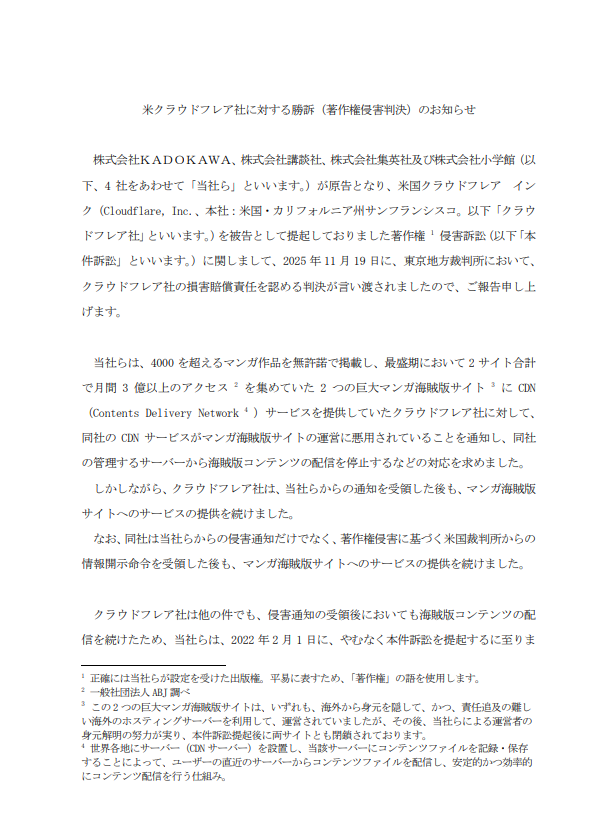
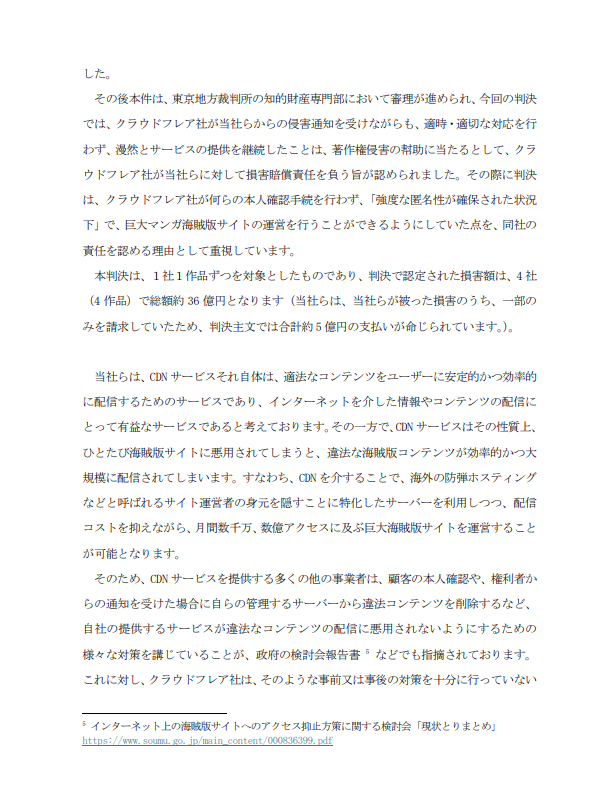
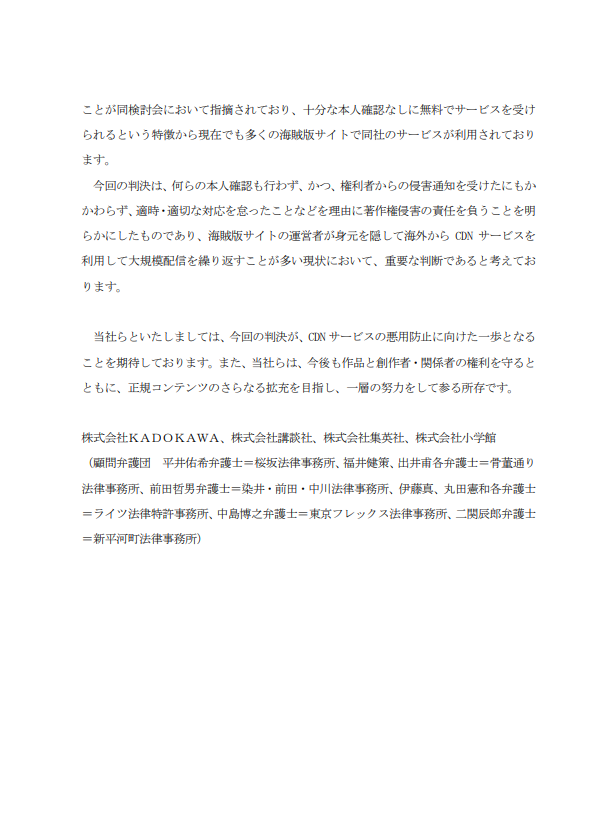
Starting in 2020, the four publishers repeatedly sent infringement notices to Cloudflare, demanding termination of contracts with the pirate sites, but received no effective resolution. They formally filed the lawsuit in February 2022. Initially, in addition to compensation, they also sought a court order to prohibit Cloudflare from transmitting and caching pirated content. However, as the pirate sites subsequently shut down on their own, the publishers withdrew this specific request in November 2023.
The Tokyo District Court determined that pirated content and its cached files were automatically transmitted to Japanese readers via Cloudflare's servers, objectively infringing on publishing rights. The court found that Cloudflare had both the ability and the necessity to stop the service but failed to act within one month of receiving notifications, thus holding Cloudflare responsible.
▼ Pirate website screenshot.

The four publishers issued a joint statement, asserting that Cloudflare's failure to take "timely and appropriate" measures after receiving infringement notices made it liable for the infringement. They stated that this ruling clearly defines the scope of responsibility for CDN providers.
They further emphasized the ruling's significance, noting that many pirate sites currently exploit CDNs to conceal their identities and distribute content en masse from overseas. The four publishers concluded by expressing their hope that this judgment will serve as a crucial milestone in preventing the further abuse of CDNs, and affirmed their continued dedication to copyright protection and the promotion of legitimate content.
via: iTmedia