

It's been 30 years since the TV anime first aired, and the enduring popularity of Neon Genesis Evangelion continues to spark countless collaborations, a testament to its three-decade-long appeal.
Recently, the "EVA・Japonism" art project announced its second installment, a collaboration with ukiyo-e publisher "Han-san." This new collection, titled "EVA Kabuki Ukiyo-e" series, is now available for purchase on the official online store, "Ukiyo-e Kobo."
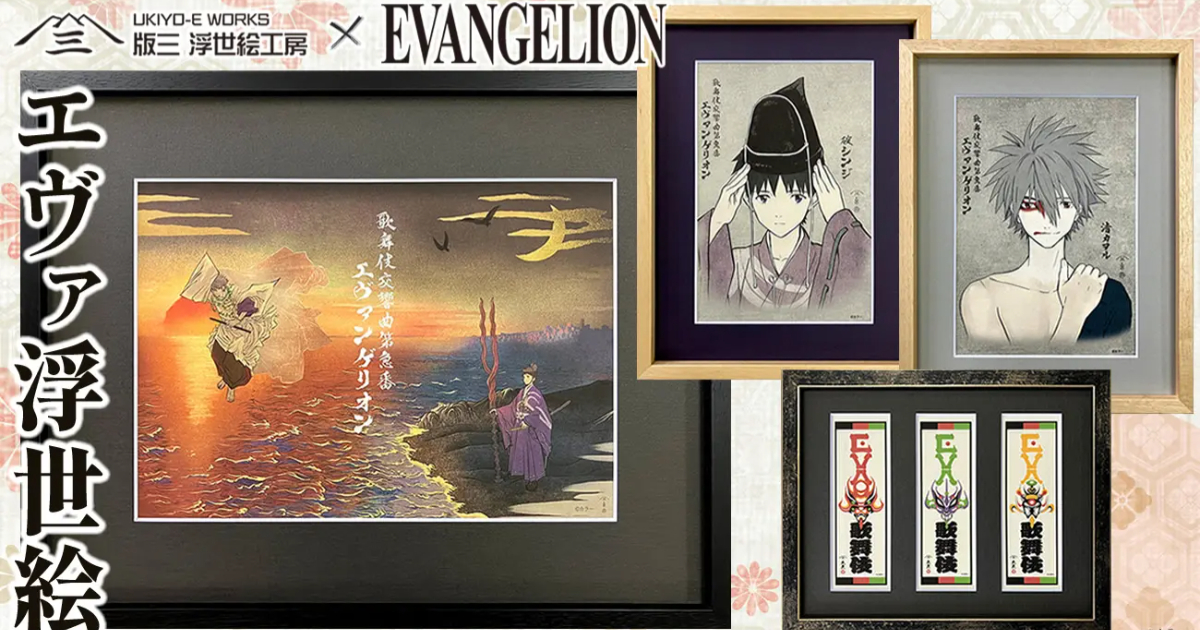
This series previously launched its first collection, "EVA Ukiyo-e Hakone Hachiri Bijin San-ga Zoroi," which drew inspiration from Edo ukiyo-e master Kitagawa Utamaro's "Three Beauties of the Present Day." It transformed the three female characters—Rei Ayanami, Asuka Langley Soryu, and Mari Illustrious Makinami—into stunning, Japanese-style princesses.
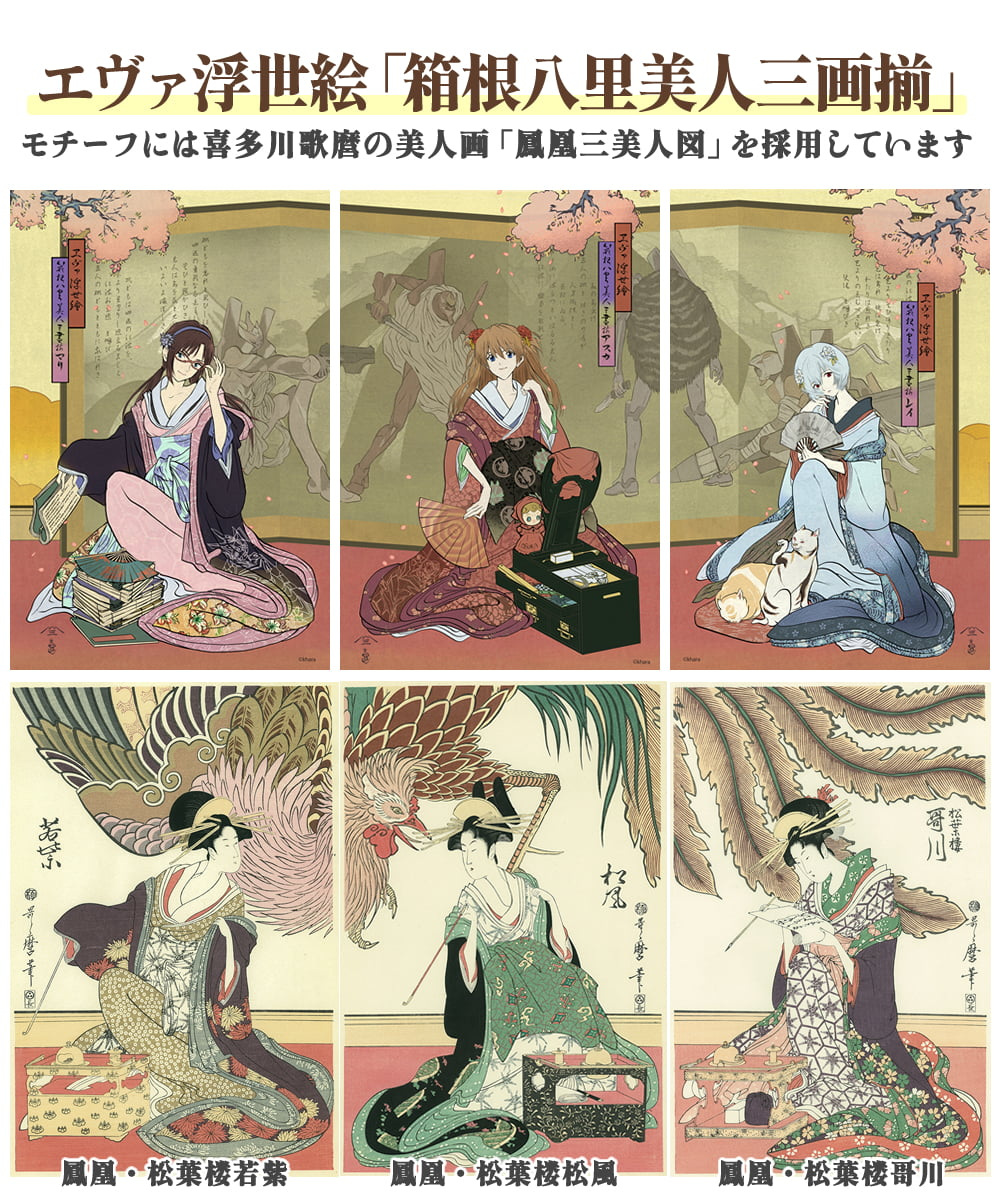
This time around, the collection takes its cue from the "Eva Kabuki" stage play held in Japan. It features brand-new Japanese-style illustrations, from the fateful showdown between Kaworu Nagisa and Shinji Ikari to "Senjafuda"-style designs for each EVA unit, seamlessly blending traditional Edo-era aesthetics.
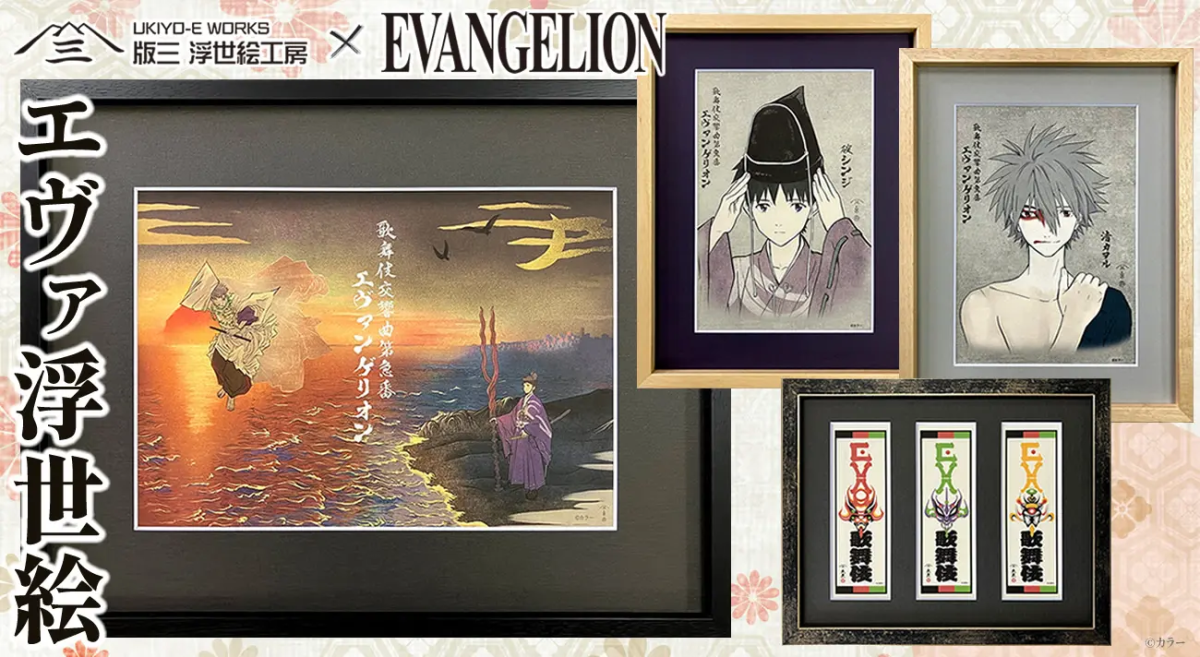
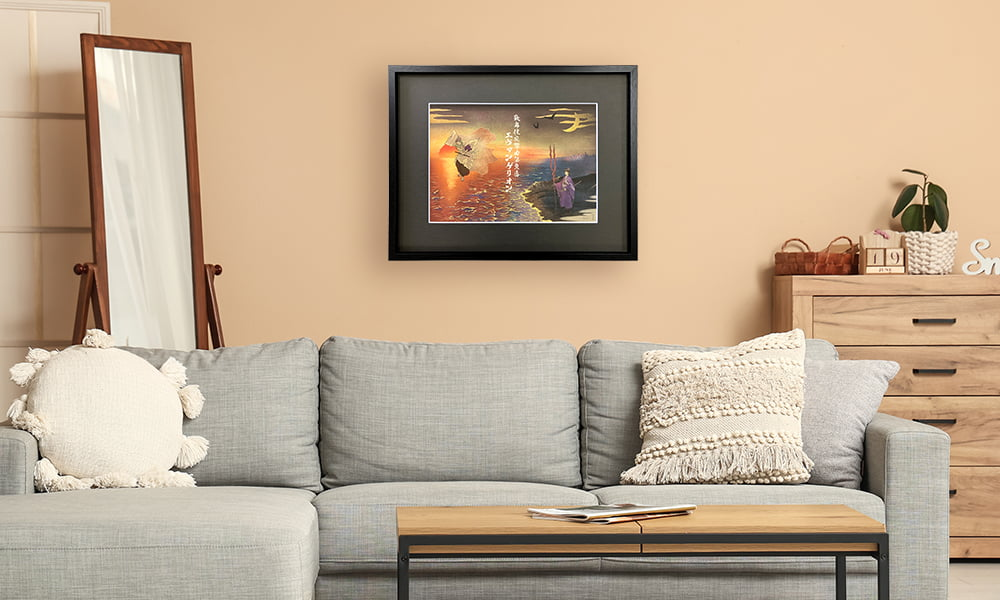
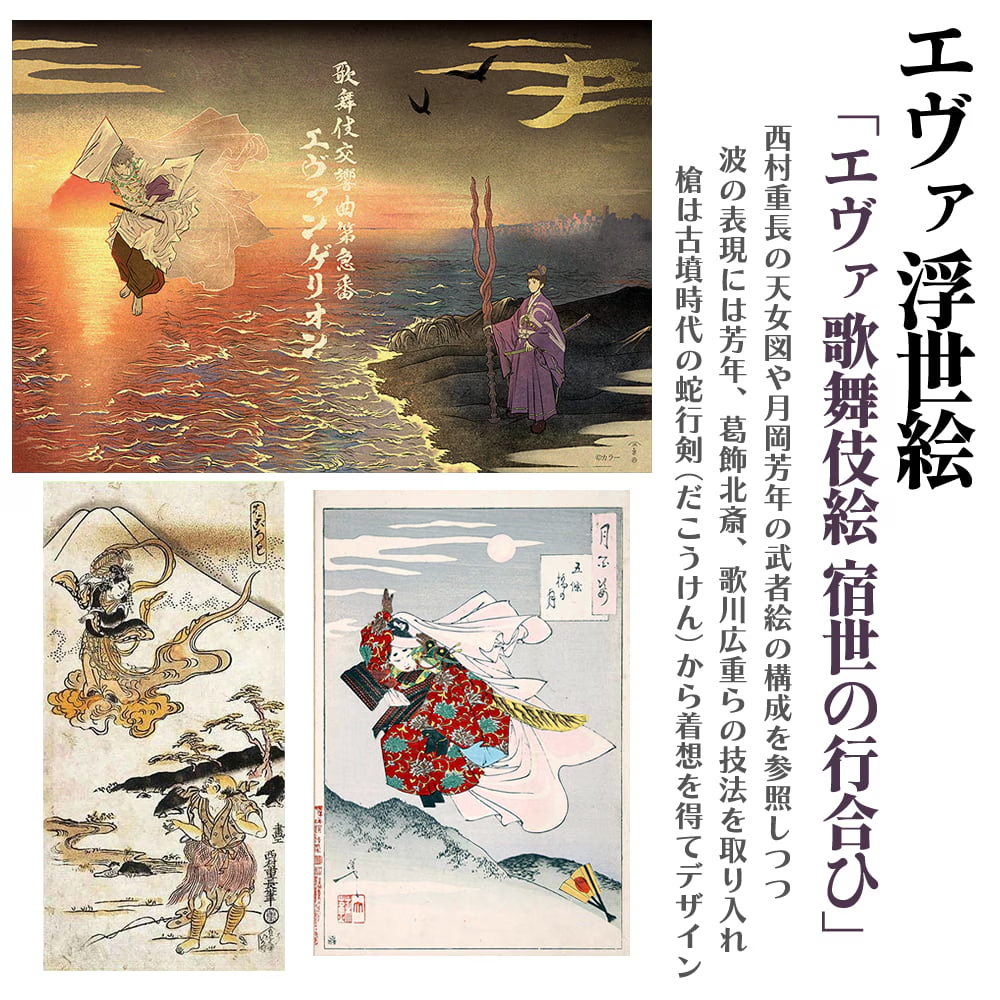
▼ EVA Kabuki Ukiyo-e: Fateful Encounter (Shukuse no Yukiai) Price: 42,900 JPY
This piece is based on the main visual created for "Kabuki Symphony Final Chapter EVA," performed during the major 30th-anniversary event, "EVANGELION:30+; 30th ANNIVERSARY OF EVANGELION."
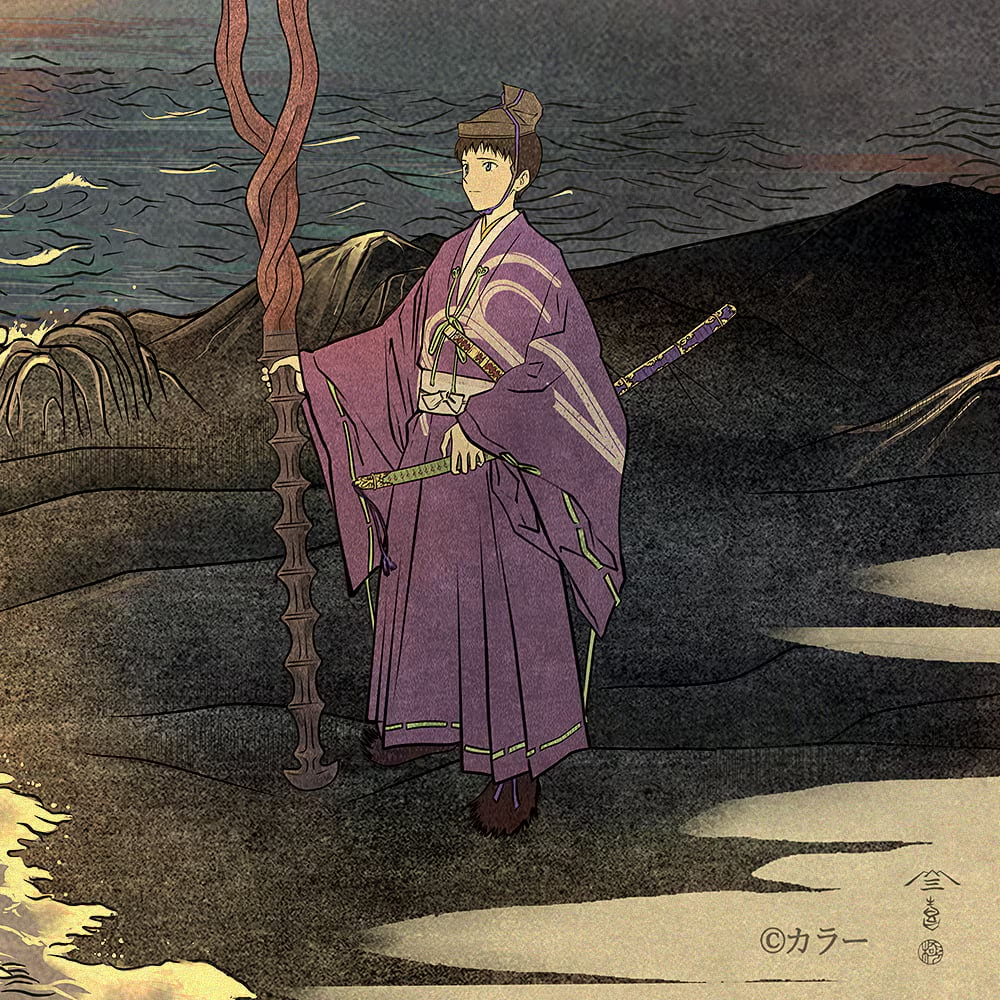
The artwork depicts Kaworu Nagisa, holding a flute like a celestial being, and Shinji Ikari, dressed as a samurai, meeting in a solemn yet mysterious space. The background design is equally thoughtful: a sunset sinking into the sea, a moon rising in the sky, creating a contrasting composition that hints at concepts like "heaven and earth" and "end and beginning." In the distance, a cityscape reminiscent of a world in ruins, coupled with a vast, blood-red ocean stretching endlessly, amplifies the work's apocalyptic feel and grand scale.
The composition draws inspiration from classic "confrontation" layouts found in works like Nishimura Shigenaga's Tennyo-zu and Tsukioka Yoshitoshi's Musha-e. The wave patterns, meanwhile, blend artistic elements from Yoshitoshi, Katsushika Hokusai, and Utagawa Hiroshige.

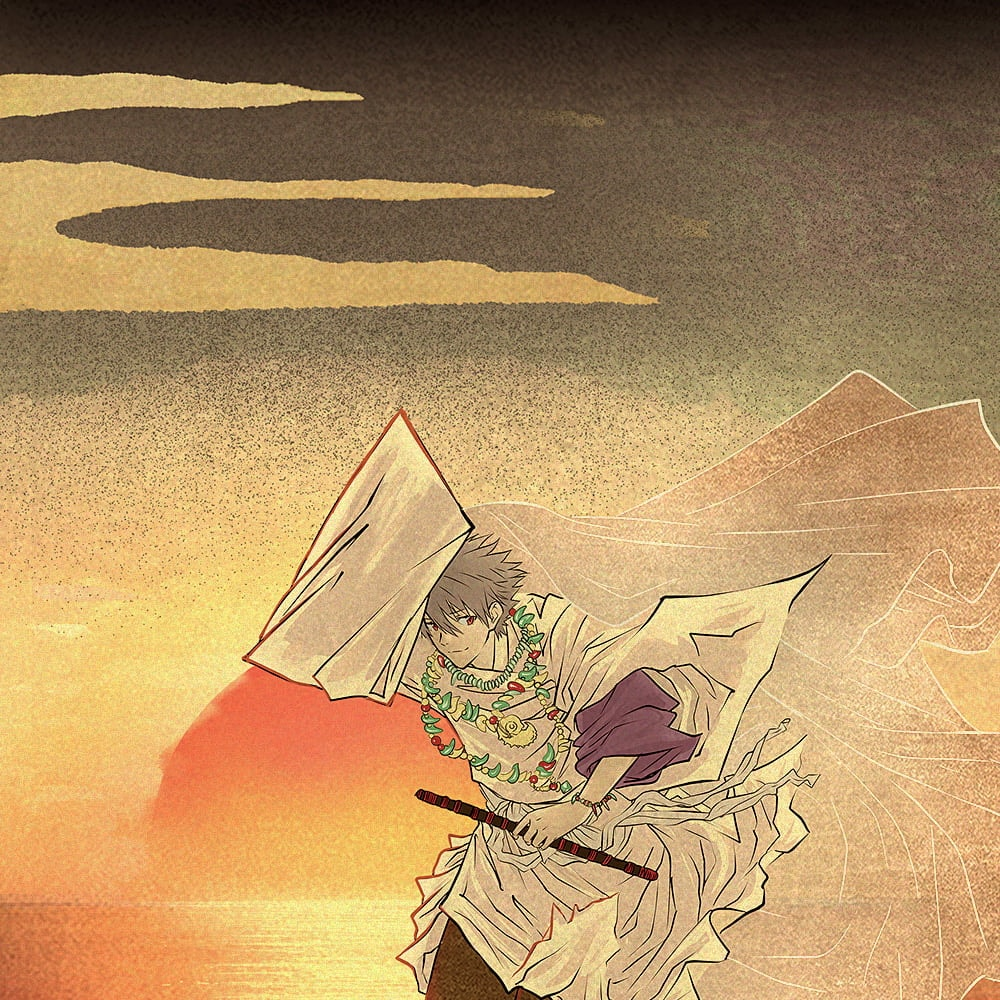
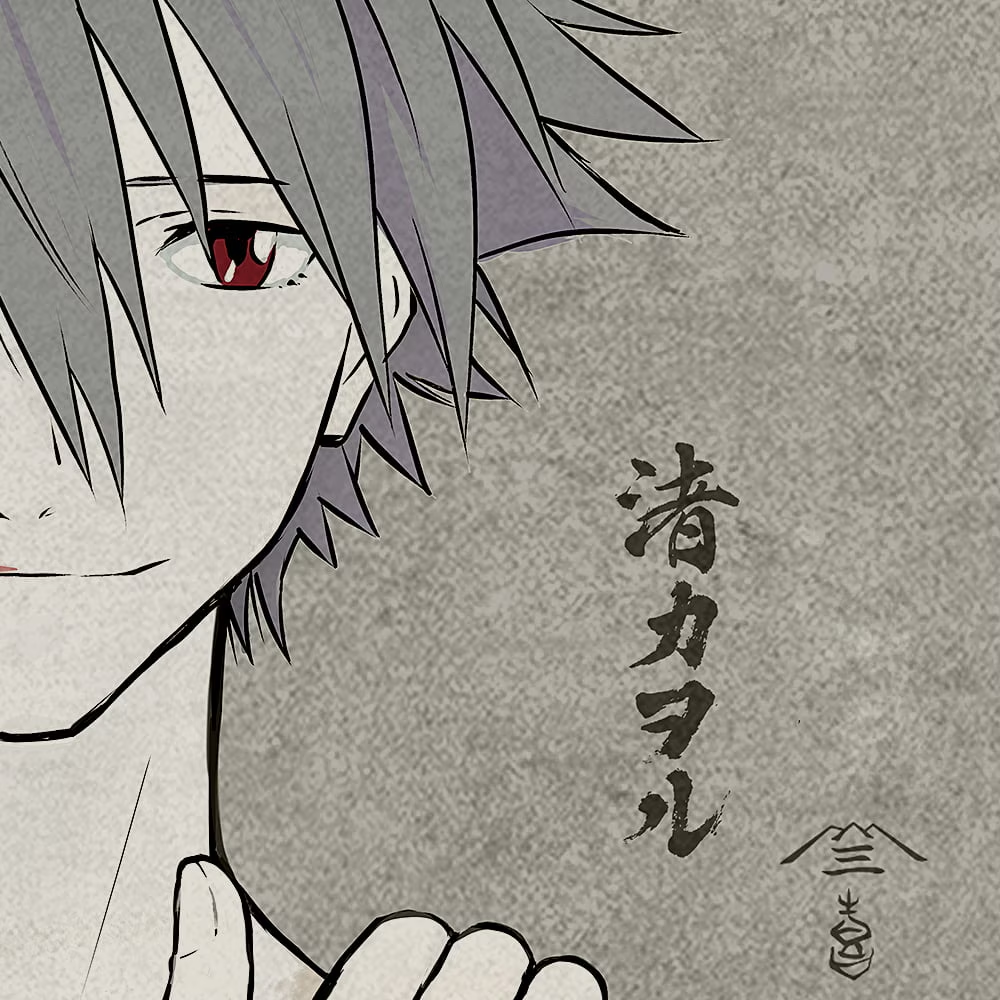
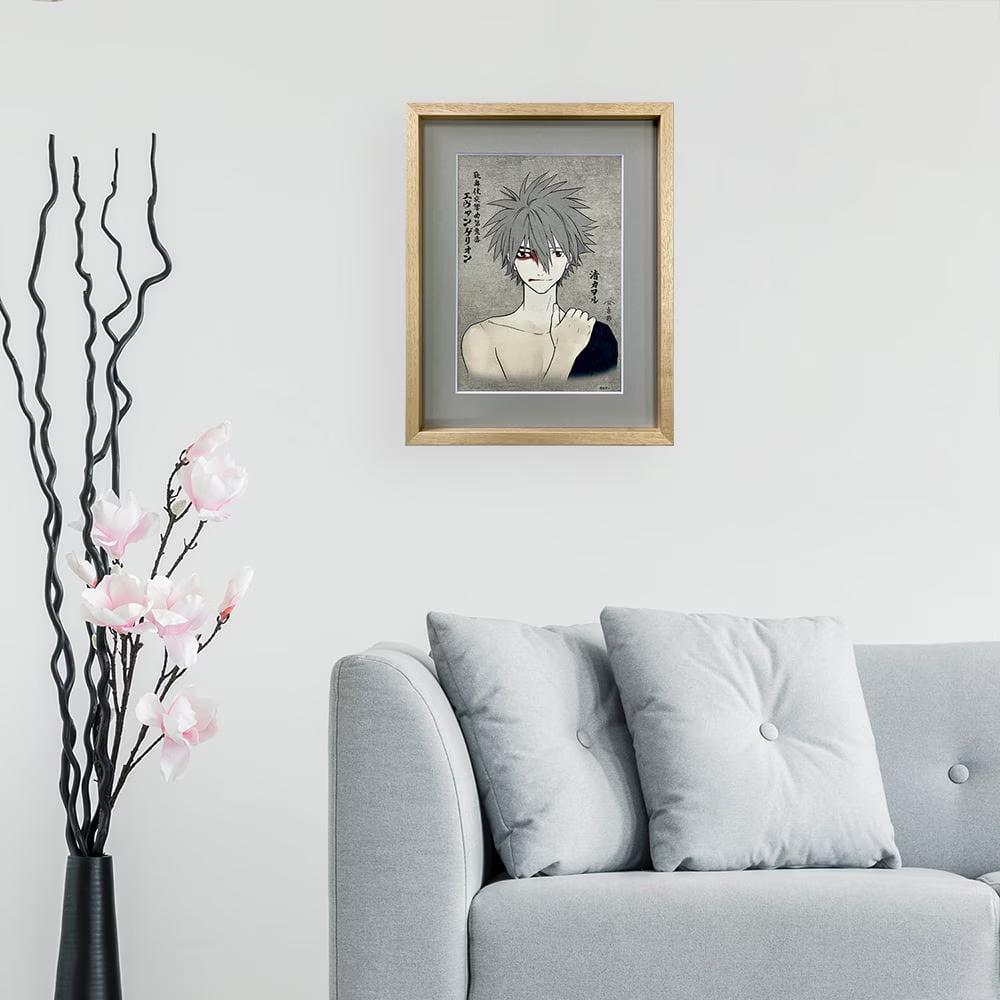
▼ EVA Kabuki: Kaworu Nagisa Ukiyo-e Price: 33,000 JPY
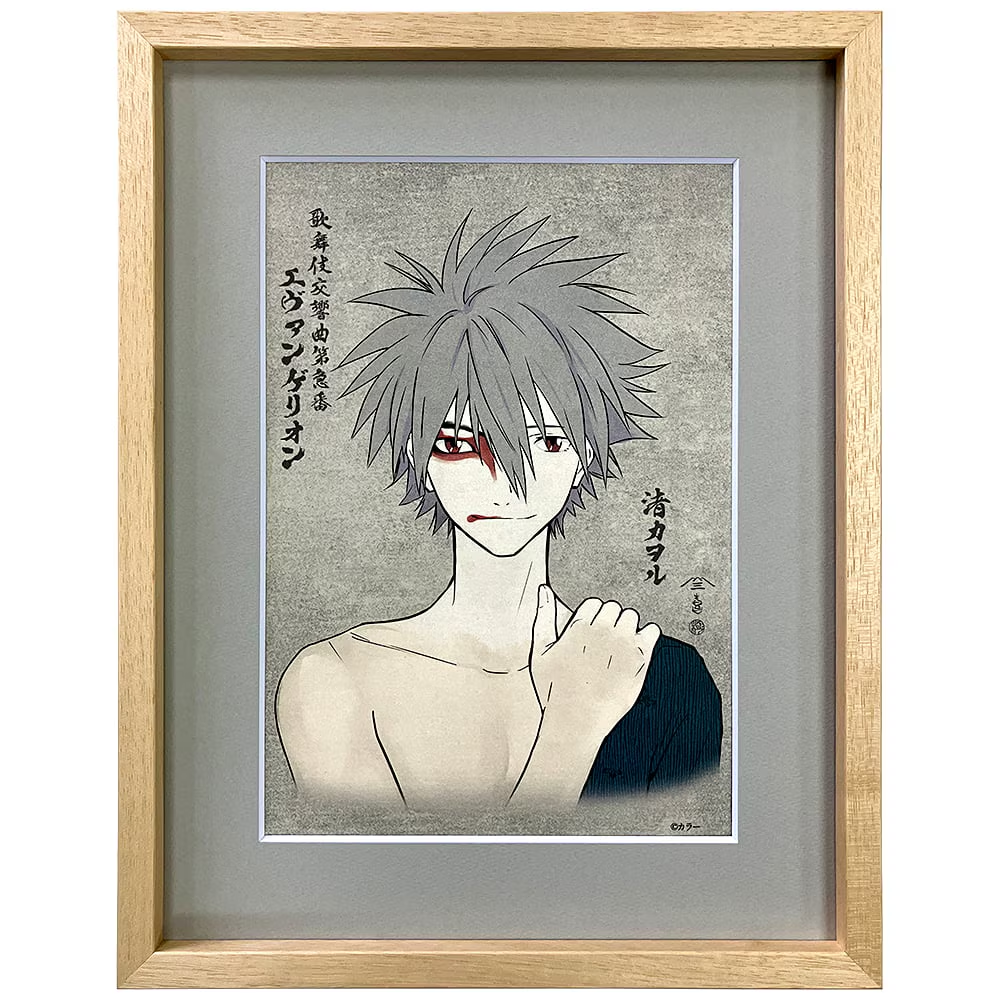
This "big head" portrait was created to commemorate "Kabuki Symphony Final Chapter EVA." It captures the character during the makeup process, a "getting ready" state that conveys the tense, quiet atmosphere just before fully embodying the role.
The kumadori makeup on his face adopts the "Mukimi Kumadori" style, which symbolizes youth, a hint of sensuality, and a sense of justice. Whether the character is looking into a mirror or gazing into something unfathomably deep, that slightly melancholic expression is the most striking feature of this entire piece.
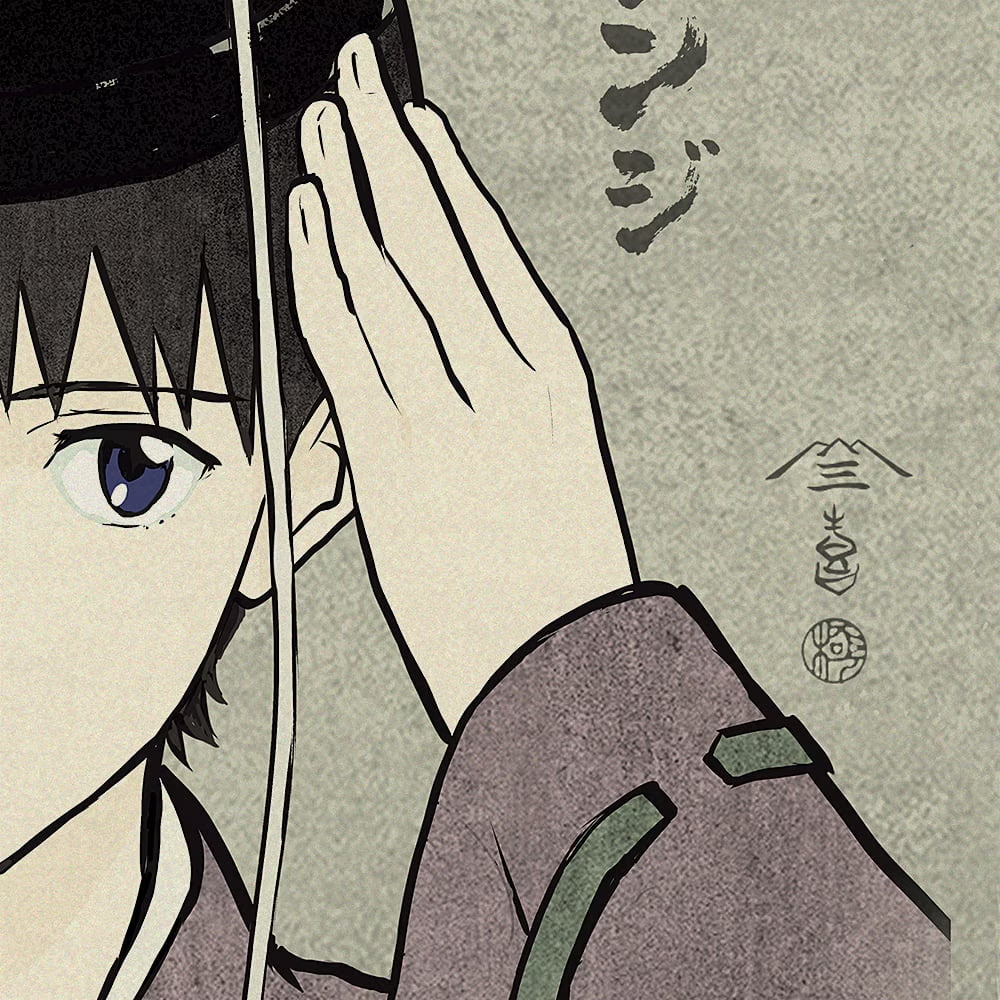
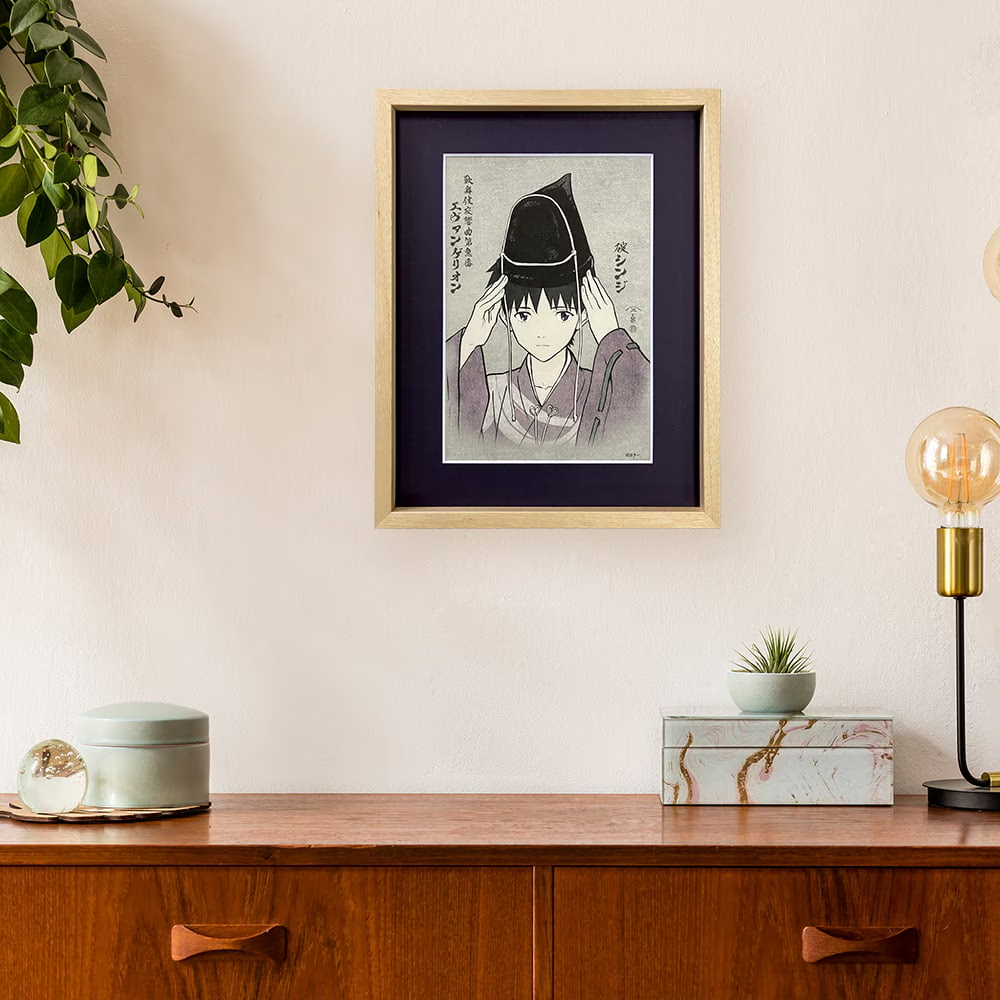
▼ EVA Kabuki: Shinji Ikari Ukiyo-e Price: 33,000 JPY
This "big head" portrait was created to commemorate "Kabuki Symphony Final Chapter EVA." It captures the precise moment before Shinji steps onto the stage, adjusting his eboshi (a traditional Japanese cap) and getting into character. Shinji embodies both a delicate, youthful sensibility and the courage and resolve he displays in battles against the Angels. These seemingly contradictory traits are distilled into a single expression.
His gaze is directed forward, yet it carries a hint of hesitation, making this dual emotional portrayal particularly poignant. Through its unique close-up composition, the artwork magnifies the character's subtle inner emotions, while also incorporating the aesthetic beauty of movement emphasized in Kabuki and Japanese culture, revealing Shinji's inner composure and elegance. It's a truly layered piece.

▼ EVA × Senjafuda Price: 12,000 JPY for a single set; 18,000 JPY for a three-frame set
Inspired by the imagery of the "Kabuki Symphony Final Chapter EVA" performance, these pieces were crafted by artist Izumo. They combine the representative colors of the EVA units with Kabuki kumadori designs, transforming them into a unique "Senjafuda" style that exudes traditional Edo-era beauty.
The artworks are produced using Echizen Washi paper and high-definition Giclée printing technology, meticulously reproducing delicate colors and textures for an overall exquisite quality. When the three units—Unit-01, Unit-00, and Unit-02—are displayed together, they create an impressive visual impact with excellent overall balance.
via: 線上商店「浮世繪工房」