

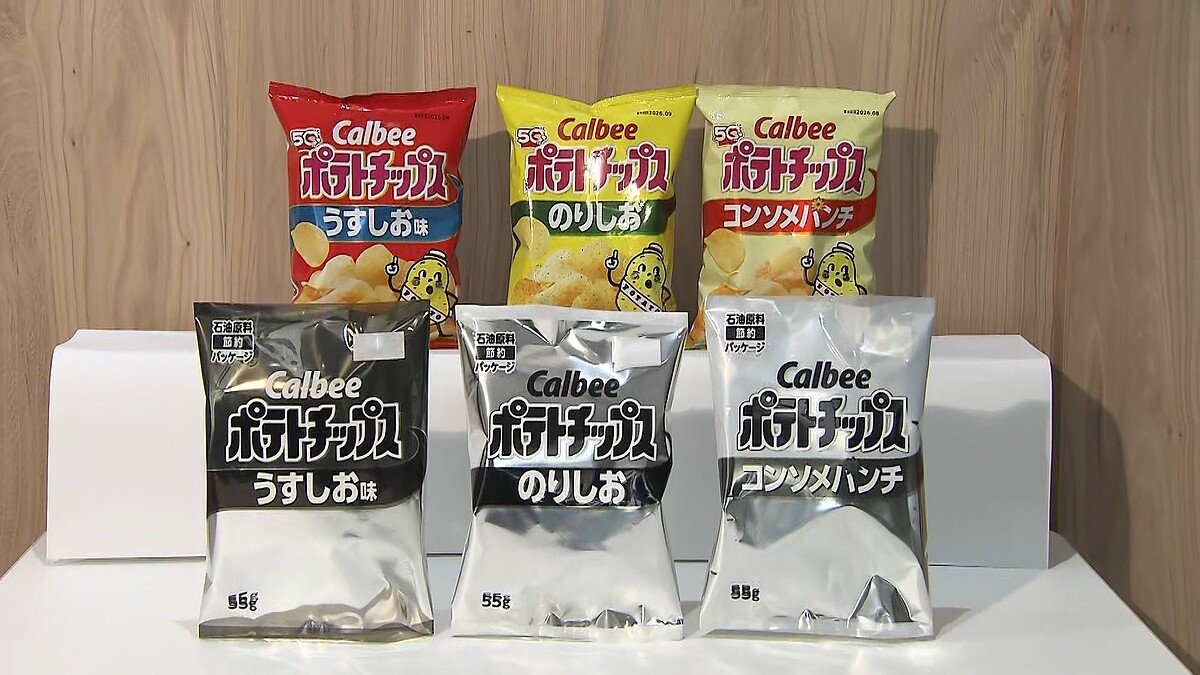
Japanese snack giant Calbee recently announced that due to the ongoing situation in the Middle East, which has led to an unstable supply of packaging inks and other materials, some of their product packaging will be simplified to a black-and-white design. This news has sparked a lively debate online.
The topic also left many Japanese netizens scratching their heads. One X (formerly Twitter) user posted a mock-up of a transparent potato chip bag, suggesting, "This would be fine, right?" The post unexpectedly blew up, drawing in a flood of professionals from packaging design and food development who stepped in to reveal the hidden secrets behind the design.

▼ Calbee potato chips recently switched to black-and-white packaging.
The whole thing kicked off with this post, which stated, "Potato chips could just be packaged like this." The image showed a nearly fully transparent potato chip bag, allowing the contents to be seen directly.
The user's main point was that packaging isn't that important... simpler is better, so there's no need to worry about ink issues.
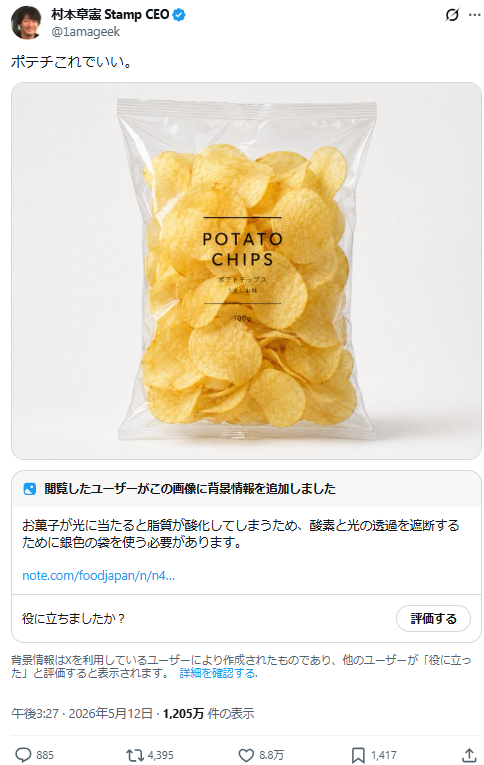
They later added, "Okay, I get why they can't be transparent now, haha." While the original poster was clearly joking, the discussion quickly gained massive traction.

Enter Masa, a netizen with experience in product development and packaging design, who offered a detailed explanation. He pointed out that the silver layer on the inside of potato chip bags is actually an "aluminum vapor deposition film." This material isn't just for blocking light; more crucially, it effectively blocks oxygen, moisture, and light, preventing the chips from oxidizing and spoiling.
He explained that most transparent packaging typically uses a double-layer structure of PET and polyethylene. However, products like potato chips are extremely thin and high in oil content, making them particularly susceptible to environmental factors. This is why an aluminum layer is added to create a multi-layered structure that protects the contents.
Masa also noted that many people assume packaging design is merely about aesthetics and appearance, but in reality, it involves extensive material science and preservation technology. He stated, "People in product development or packaging design actually need to learn a lot about materials science." This explanation left many netizens exclaiming, "Mind blown!"
Another netizen, who previously worked in "printing"-related fields, also chimed in, confirming that potato chip bags are indeed more than just a pretty face. That silver material actually performs many vital functions: blocking light, reducing oxygen permeability, resisting moisture, and delaying oil oxidation. If switched to transparent packaging, the quality would degrade much faster just sitting under supermarket lights.
So, the recent change to "simplified black-ink-only packaging" is a corporate decision to "sacrifice aesthetics to prioritize product protection."

Many older netizens shared their memories: "Potato chip bags used to have a small transparent window in the middle." But everyone agreed that back then, snacks would easily get stale, lose their flavor, and taste bad quickly after opening.

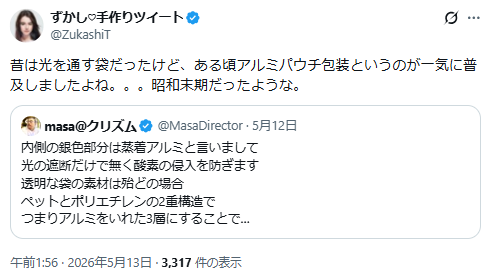
It wasn't until aluminum vapor deposition packaging became widespread that snack shelf life significantly improved. One netizen described it perfectly: "I really lived through the era when snacks evolved from transparent bags to aluminum bags."

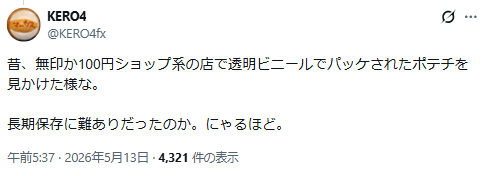
Some netizens also pointed out that potato chips and biscuits sold at stores like Muji or 100-yen shops don't keep as well because they often use transparent packaging. So that's why!
What started as a simple debate about "transparent packaging looking better" unexpectedly turned into a fascinating science lesson on food packaging. Many netizens, after reading through the explanations, admitted, "I never realized there was so much technology behind a single bag of potato chips." Ultimately, being able to buy snacks that don't spoil easily and are convenient to store is a testament to continuous technological advancement.
via: x@1amageek