

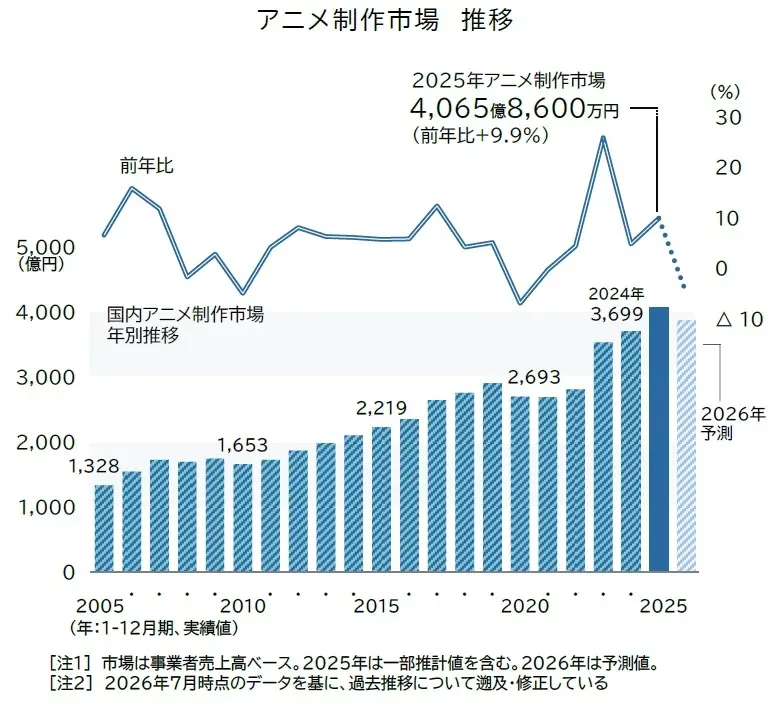
According to a recent industry survey by Japan's largest private credit research agency, Teikoku Databank (TDB), the Japanese anime production market surpassed ¥400 billion for the first time in 2025, setting an all-time high.
However, as shortages of animators and other staff become more severe, production capacity is approaching its limit, and the market may be entering a "post-peak" phase. TDB estimates that if current industry conditions persist, the anime production market could shrink in 2026 for the first time in five years.

The survey, based on company revenues for the calendar year 2025, found that the Japanese anime production market reached a scale of ¥406.586 billion, a 9.9% increase from the previous year's ¥369.874 billion. This growth rate surpassed the prior year's 4.9%, pushing the market past the ¥400 billion mark for the first time and establishing a new record.
This growth was primarily driven by demand from video streaming platforms like Netflix. Compared to the past market, which was centered on television anime, the demand for animated content from streaming services has continued to rise, making 2025 a year of massive production volume. Additionally, the concentrated delivery of large-scale projects, such as theatrical films, led to a high volume of orders for both major contractors and specialized animation studios.
In addition to strong performance in IP licensing, including secondary use, more animation companies are securing downstream revenue by investing in production committees or strengthening their planning and production capabilities to take on original works and collaboration projects.
Some companies that previously specialized in production have begun to transition into "moto-uke" (prime contractors) that directly handle entire animation projects from clients, resulting in significant revenue growth for these studios. At the same time, the industry is gradually shifting away from its heavy reliance on TV anime series toward higher-value, longer-form content like theatrical films, which demand higher production quality.
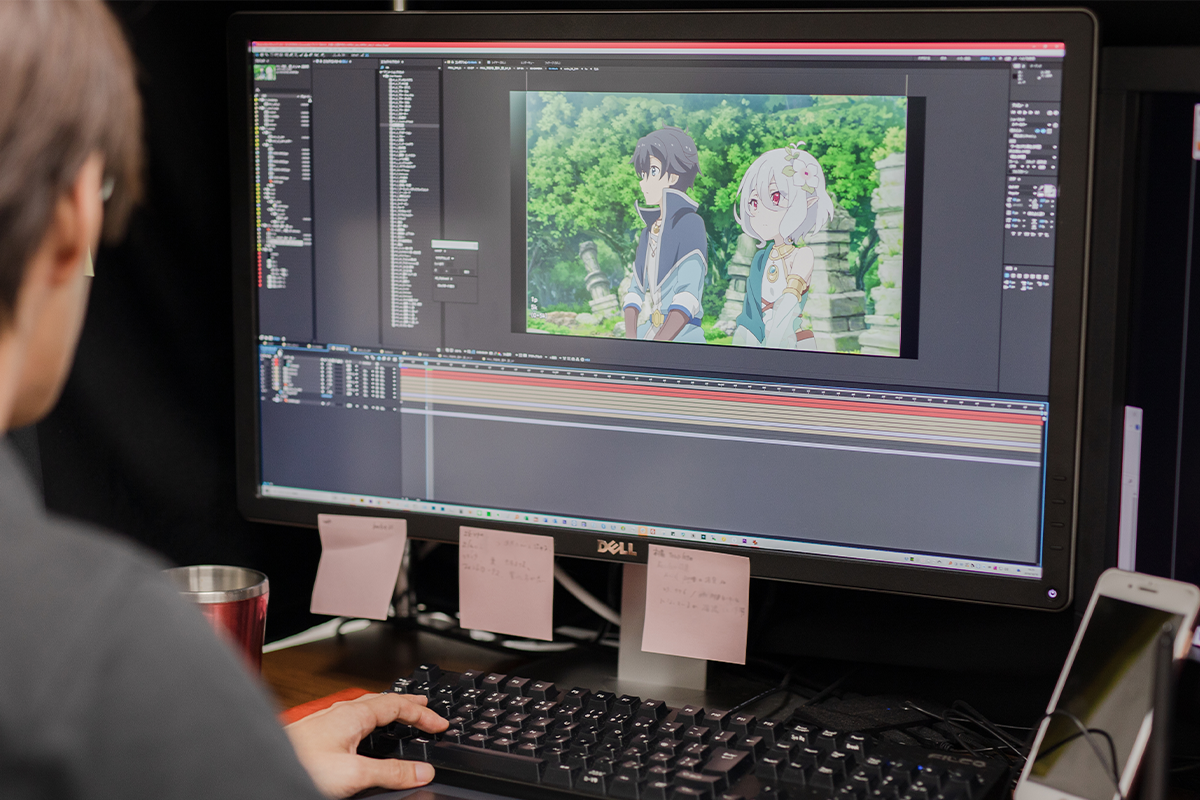
▼ For example, this year's hit "Cosmic Radiance Princess!" was produced directly for streaming platforms and theaters.

In 2025, the average revenue for a Japanese animation production company was ¥1.337 billion. After a previous decline due to factors like production delays during the pandemic, average revenue has now grown for five consecutive years since 2021, reaching a new high since statistics began in 2000. Growth was particularly pronounced among "prime/gross contracting" companies that handle production directly; in contrast, the average revenue increase for "specialized studios" handling subcontracted work was smaller. In other words, while the overall market is growing, the revenue gap between different production models is widening.
However, high personnel and outsourcing costs have become the industry norm. Furthermore, the depreciation of the yen has increased the cost of overseas outsourcing, while increasingly complex production workflows have led to longer production times and more delays. This has even caused "cross-period" issues where projects are delayed into the next fiscal year. This signifies a structural risk within animation companies: even if a studio is flooded with orders all year, a concentration of delivery delays can suddenly push a single year's financial results into the red.
Moreover, the market boom driven by the frequent release of blockbuster theatrical films before 2025 is now showing a backlash, with revenue declines beginning to appear at major animation companies. Even the production funding for original works on streaming platforms, which had been a key driver of the Japanese anime market, has started to plateau.
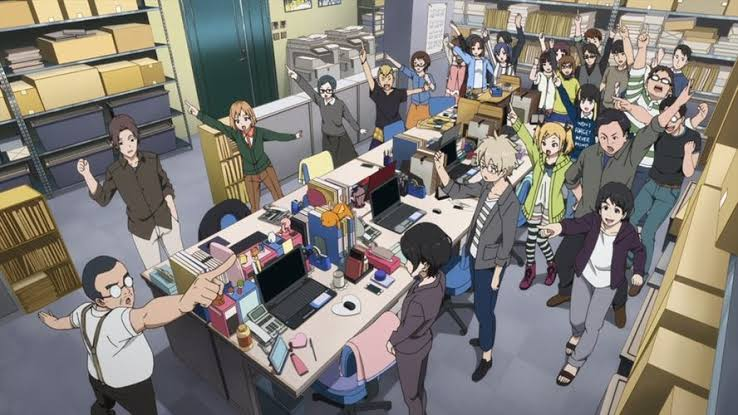
In other words, the boom of the last few years, where global streaming platforms heavily invested in Japanese animation, is gradually coming to an end. On the other hand, the labor shortage in anime production is becoming more severe. Due to a lack of animators, many production companies are already operating at near-maximum capacity. In an effort to maintain quality and improve working conditions, some studios are now in a position where they have to turn down new projects despite the demand.
Therefore, TDB believes that if the current business trends in the animation industry continue, the Japanese anime production market in 2026 may fall below the previous year's level for the first time in five years.
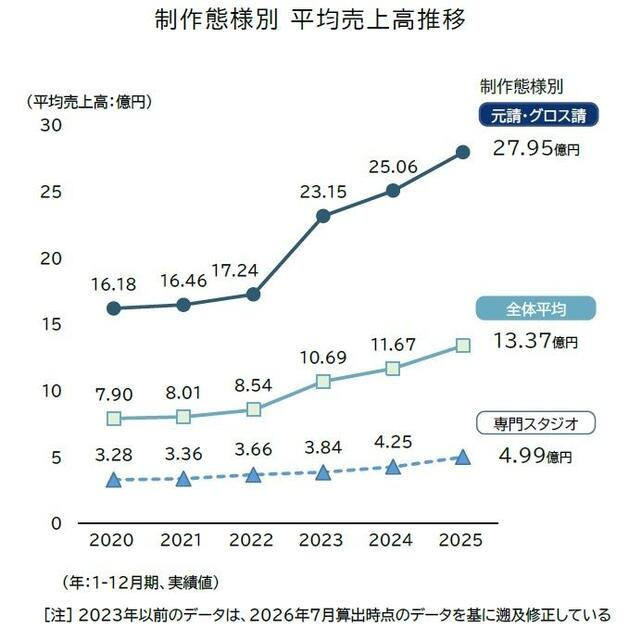
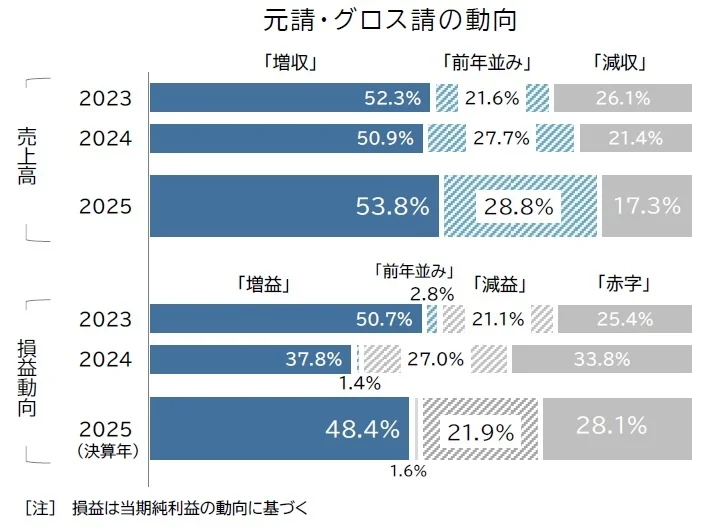
Looking at production types, "prime/gross contracting" companies, which have the capability to directly undertake and complete animation production, saw their average revenue reach ¥2.795 billion in 2025, marking five consecutive years of growth and another record high. Among these companies, 53.8% reported increased revenue, while the percentage of companies with decreased revenue fell to 17.3%, dropping below 20% for the first time in three years. In terms of profit, 48.4% of companies saw increased profits, a significant jump from the previous year.
However, a clear polarization in revenue and profit performance has emerged. TDB points out that the profitability of prime contractors largely depends on two factors: "whether they own the IP (rights for secondary use)" and "whether they can control production costs, including outsourcing and personnel expenses."
In recent years, anime production itself has often been characterized by high costs and low profits, prompting many companies to shift toward generating higher profits by leveraging their own IP. This includes establishing business models that can generate continuous income without needing to produce new animation each time, such as by re-releasing past works on streaming platforms, launching remasters, and merchandising.
Animation companies that can extend their own IP to overseas streaming, game adaptations, and merchandise licensing can often stabilize their performance with sales from related products and distribution revenue, with some even achieving record-high profits. Furthermore, as demand for animation production continues to rise, price negotiations are gradually shifting to a point where "the production side has more leverage."
On the other hand, small and medium-sized prime contractors without their own IP primarily rely on "one-time revenue" from producing and delivering animation. These companies are hit particularly hard by the severe labor shortage and rising outsourcing costs. While they can maintain revenue by taking on a large volume of projects, the lack of animators can easily lead to production delays. Conversely, extensive outsourcing to meet deadlines can cause costs to far exceed income. This has led to situations where "revenue increases, but losses grow even larger," and the deficit ratio is rising.
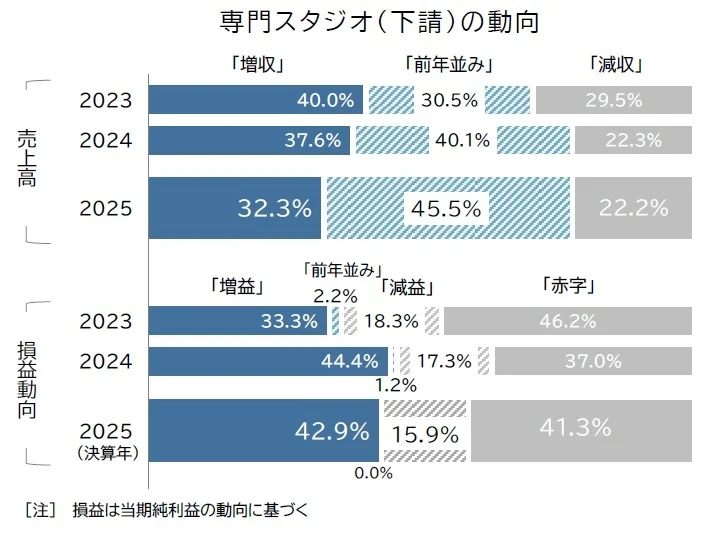
"Specialized studios," which participate in animation production as downstream subcontractors, had an average revenue of ¥499 million in 2025, remaining above the ¥400 million mark for the second consecutive year. However, their performance is not entirely optimistic. These studios generally rely on low-priced contracts or temporary projects from larger animation companies, and their revenue ceiling is often directly determined by their "available production staff." However, with strong demand for animated content in recent years, prime contractors are outsourcing more drawing, key animation, and in-between animation work that they cannot handle in-house, which has boosted the revenue of specialized studios.
Additionally, with the digitalization of animation production, some companies skilled in digital animation or computer graphics (CG), or those that actively invested in digital equipment, have started receiving higher-value projects like event visuals, leading to revenue growth.
But on the other hand, specialized studios also face a shortage of animators. Employee departures or leaves of absence can directly reduce their production capacity, and some companies have been forced to accept a decline in revenue as a result. Other studios have taken on more work than they can handle, forcing them to outsource heavily to freelancers or other studios. This has caused outsourcing costs to skyrocket, with cost increases outpacing revenue growth and ultimately leading to losses.
In recent years, a trend has emerged where specialized studios attempt to break away from their traditional subcontractor role and take on complete animation projects themselves. While this approach can increase profit margins, the production costs originally borne by the upstream prime contractor are entirely transferred to them. If production schedules slip, delivery delays occur, and continued outsourcing is needed due to labor shortages, losses can expand even further.
Teikoku Databank notes that while the Japanese anime production market surpassed ¥400 billion in 2025 to set a new record, rapidly rising personnel and outsourcing costs mean that the room to profit from animation production alone is shrinking. This is compounded by a severe shortage of animators, which lengthens production times, causes delivery delays, and further drives up costs. The result is a state of "profitless prosperity," where "demand is increasing but not translating into more profit." In other words, everyone is incredibly busy, but that doesn't mean everyone is making money.
TDB also predicts that large, corporate-group-affiliated animation companies with strong proprietary IP or secondary use rights can leverage high, long-term income from streaming and merchandising to invest in new technologies and improve employee compensation, thereby attracting and retaining talent. They can also expand their production capabilities by acquiring small and medium-sized animation studios or turning them into subsidiaries.
However, the situation is grim for small and medium-sized studios that lack their own IP and survive solely on contract work. These companies have little negotiating power with clients and find it difficult to cultivate talent internally, making them highly vulnerable to soaring personnel and overseas outsourcing costs, which can lead to losses and even long-term insolvency.

With over 300 animation production studios still operating in Japan, industry consolidation is likely to become more pronounced. In other words, the Japanese anime industry may be on the verge of a major shake-up: companies with IP, capital, technology, and talent will continue to expand, while small and medium-sized studios that lack profitability and rely on contract work may be gradually pushed out of the market.
The era of "making more and more content" may be reaching its limit. The real challenge now facing the Japanese anime industry is figuring out how to "be able to produce, and also be able to profit" amid labor shortages and ballooning costs.
Note: Financial figures and earnings forecasts should be confirmed through the company’s official announcements.
via: 帝国データバンク