
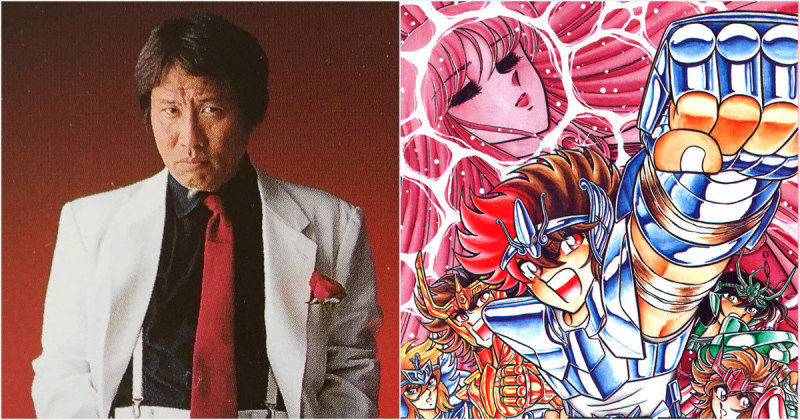
"Friendship, Effort, Victory" – these three principles have long been considered by readers as the creative guidelines for works serialized in "Weekly Shonen Jump." In fact, Shueisha has never had such a strict rule, but when we read "Dragon Ball" or "One Piece," these "Weekly Shonen Jump" works, we can feel these three principles constantly being referenced in the plot. Who first set this precedent? Who established the formula for shonen manga for an entire generation of young readers? The answer is the great manga artist Masami Kurumada. Let's introduce this master manga artist who created works like "Saint Seiya," "Fuma no Kojiro," and "B't X." The following six little-known facts about Sensei Masami Kurumada will make you admire him even more.
Masami Kurumada Image credit:Masami Kurumada 40th Anniversary of Passionate Artistry
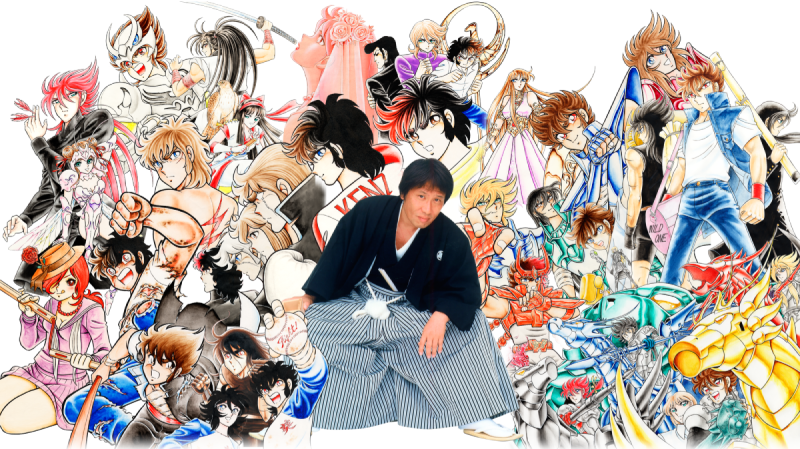
1. He is the man who changed the history of Japanese shonen mangaShonen manga of the 60s and 70s was full of blood. Don't misunderstand, this doesn't mean that "Tiger Mask," "Judo Icchokusen," or "Ashita no Joe" were actually cruel murder manga, but from another perspective, it was pretty close: these works, categorized as "sports grit" (スポ根) manga, whether they involved playing ball, boxing, or wrestling, required swallowing teeth and blood in every match, and sacrificing flesh and bone was not regrettable. Getting beaten to a bloody pulp by an opponent was one thing, but even during home training, one had to self-inflict abuse until bruised and battered. The origin of sports grit manga reflected the Japanese society's definition of "man" at the time: a man must undergo rigorous training, and only through the pain of almost completely destroying his body could he be tempered and reborn, earning everyone's recognition and respect.
Masami Kurumada Image credit:Twitter
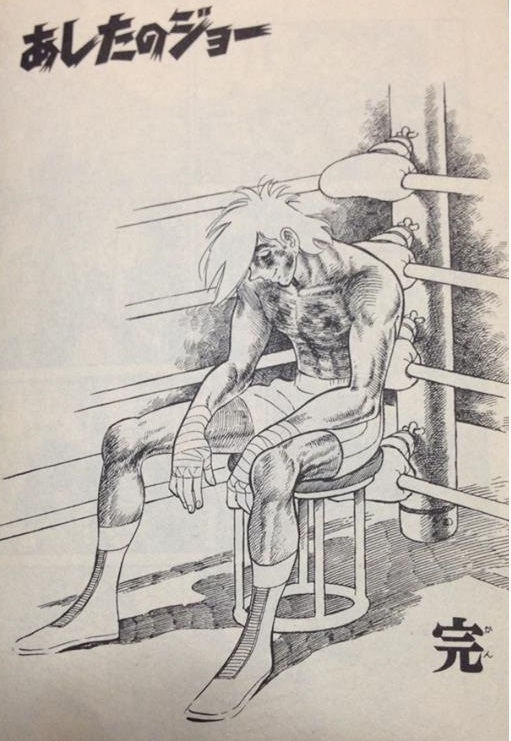
Sports grit manga differs significantly from "Friendship, Effort, Victory": "Effort" is certainly necessary, but "Victory" is not absolute. Continuous failure allows the protagonist to keep striving, and failure allows the protagonist to achieve ultimate victory after several light-years... In fact, the protagonist might not even achieve a formal victory, because the sheer number of failures accumulated on his back might already be worthy of respect – fighting to the point of complete physical and spiritual annihilation, or even death, was considered the ultimate reward. When Joe Yabuki, at the end of "Ashita no Joe," sat in the corner of the ring, smiling and completely pale, it wasn't an open ending; readers knew he had passed away... or rather, readers "expected" him to have died, as that was the only way to justify his reckless sacrifice and determination.
"Ashita no Joe" ending Image credit:Chou Manga Sokuhou
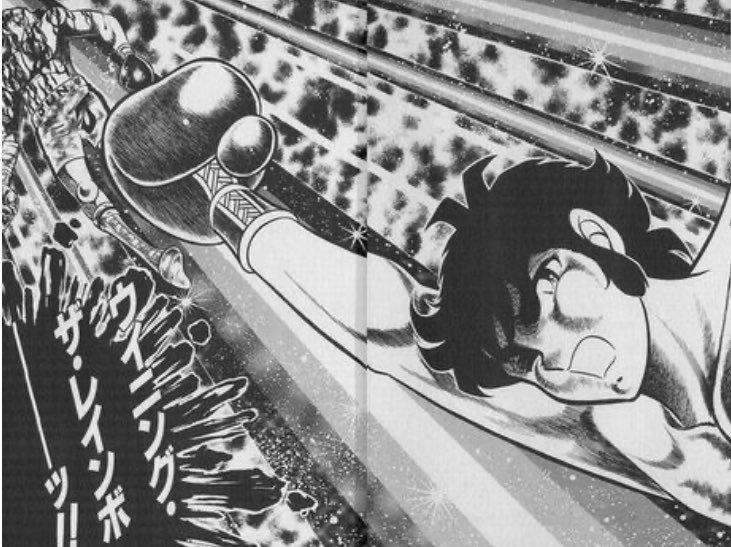
In 1977, Masami Kurumada changed this decade-long tradition of shonen manga. His "Ring ni Kakero" was originally a standard sports grit manga, where the protagonist painstakingly strived to become a world boxing champion to inherit his deceased father's will. However, midway through "Ring ni Kakero"'s serialization, the art style drastically changed. Kurumada decided to transform the unreasonably cruel "Ring ni Kakero" into an unreasonably exaggerated superpower boxing work. Real boxing techniques like uppercuts and liver blows began to disappear from the "Ring ni Kakero" ring. The protagonist's special moves started to defy the laws of physics. Just listen to the names of these finishing moves, and you'll understand what I mean: "Asura Soul Strike," "God's Illusion," "Shadow Dragon Extreme Break," and so on.
The "Galaxy Magnum" whose name is hard to grasp at first listen Image credit:Twitter
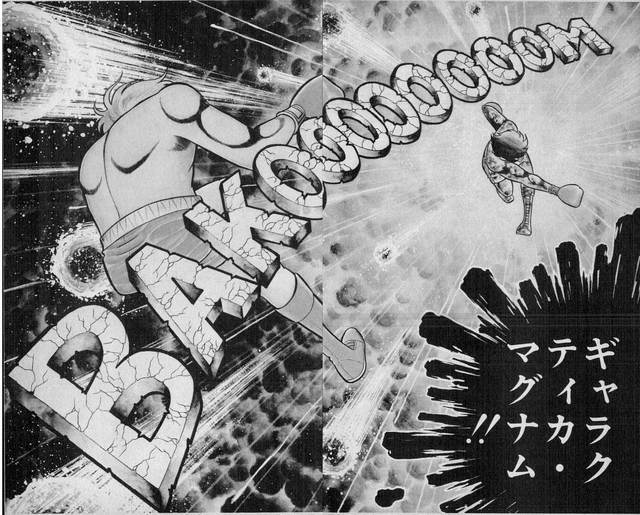
"Ring ni Kakero" no longer followed the traditional sports manga trope of enduring hardship and "swallowing one's teeth with blood"; instead, it became Masami Kurumada's creative playground. Even Greek gods could step into the ring to punch it out with the protagonist, dark organizations in the boxing world naturally sought to stop the protagonist, and the Asura clan, aiming to conquer the world (sounds formidable, right?), also had to be defeated by the protagonist. Gods, demons, and humans alike were all opponents for the male lead, leading weekly readers to no longer anticipate heartbreaking defeats in the manga, but rather increasingly extravagant victories. "Ring ni Kakero" received an enthusiastic response, signaling the gradual decline of traditional sports manga focused on perseverance from the mainstream. At that time, Masami Kurumada was merely a young man in his late twenties, but he successfully revolutionized the trajectory of Japanese shonen manga.
"Ring ni Kakero" Image credit:Twitter
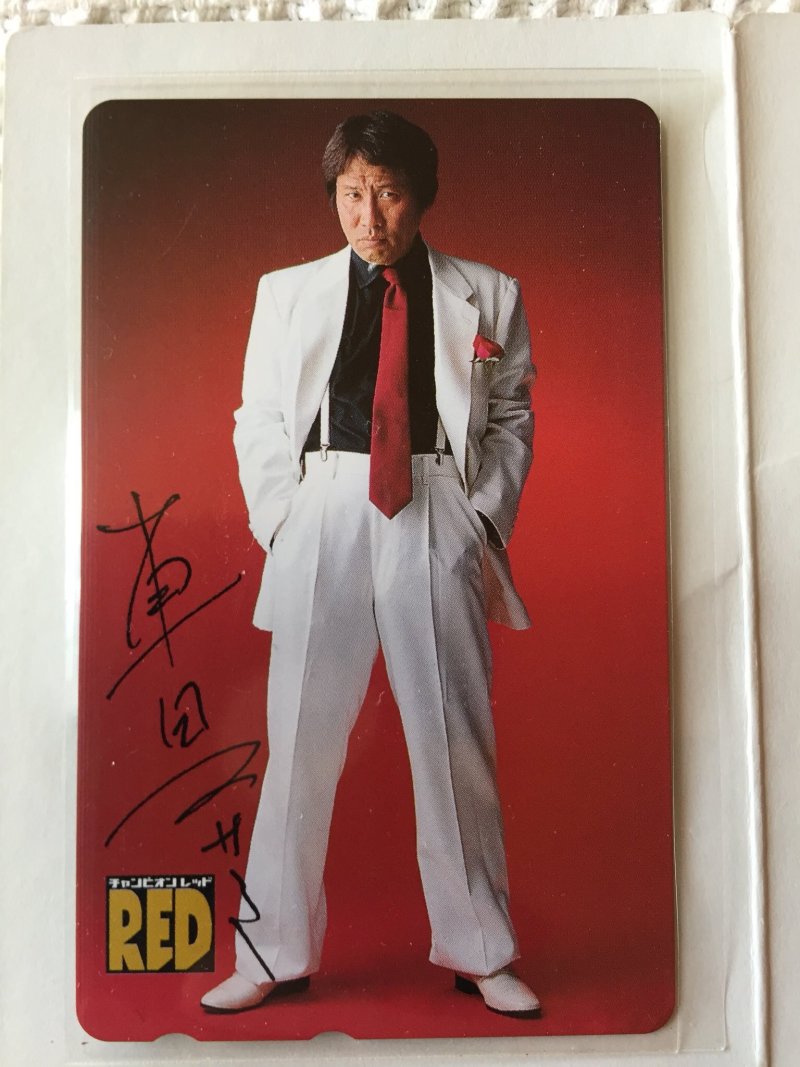
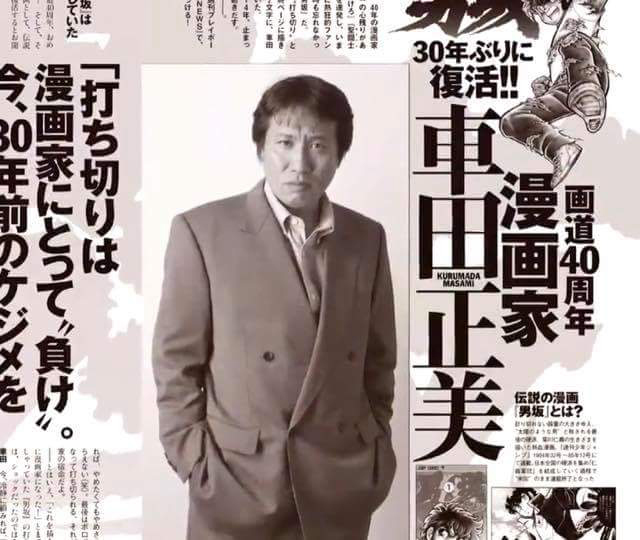
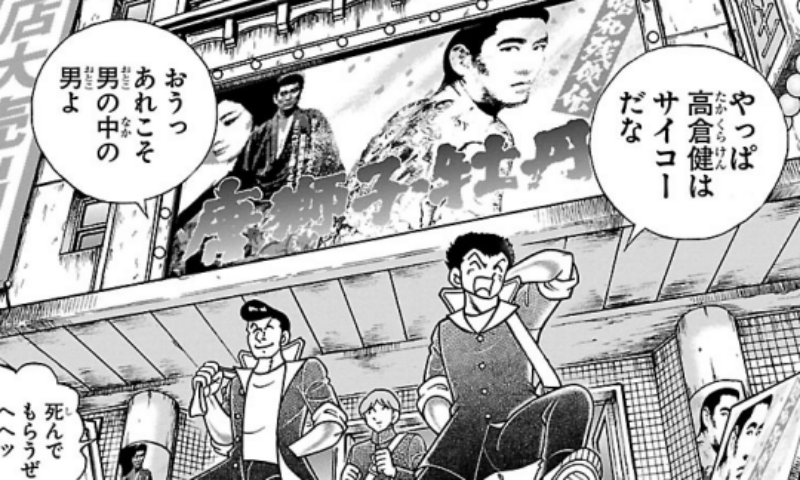
2. He is a Man Who Admires Manly MenReaders unfamiliar with Japanese naming conventions might assume that "Kurumada-sensei," with the given name "Masami," is a female author. In fact, a glance at Kurumada-sensei's photos reveals not only that he is male, but also a man who frequently frowns, clenches his jaw, and adopts a cool, unapproachable expression in pictures. This is related to his upbringing, as Kurumada-sensei was a child who aspired to the "way of the tough guy" from a young age. Ken Takakura was his idol, and yakuza films were his favorite. Going with his gang of friends after school (and sometimes during school) to watch yakuza films starring Ken Takakura was their way of soaking up masculinity.
Kurumada-sensei often poses with hands in pockets and a fierce expression Image credit:Saint Seiya News
In his autobiographical manga "The Blue Age," Kurumada-sensei described himself thus: "I had no connection to genius, but I also couldn't become a true delinquent." At best, young Kurumada admired the chivalrous and heroic path of "ninkyo," but lacked the courage to truly delve into the dark underbelly of society and commit misdeeds. He had intelligent friends, and also friends who aspired to become gangsters. Yet, he was like a "middle-of-the-road" type, neither here nor there, merely following those tough guys who "licked blood from the blade" with admiring eyes, believing this was the only way to become a true man—but he couldn't bring himself to truly act tough or ruthless. However, perhaps it was precisely this wavering attitude that allowed us to encounter this great manga master.
Young Masami Kurumada: "As expected, Ken Takakura is the best!" Image credit:Amazon
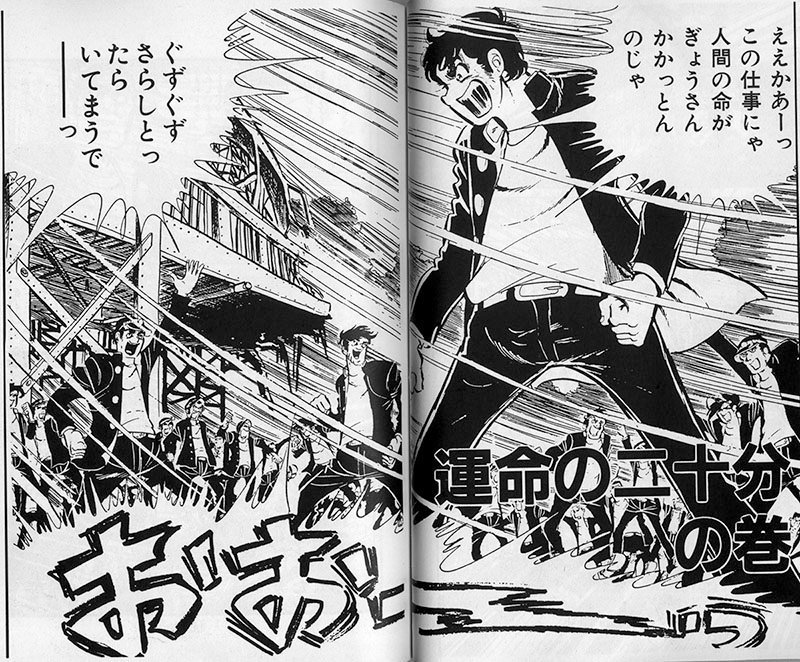
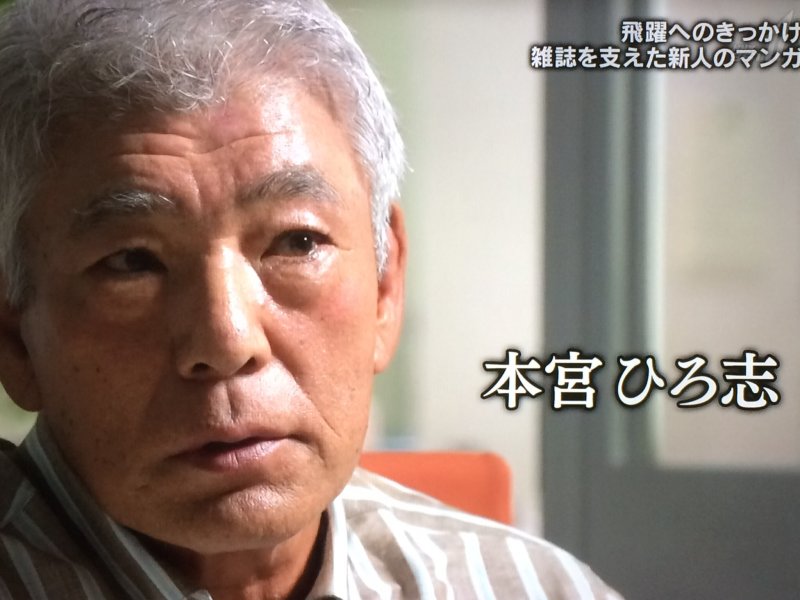
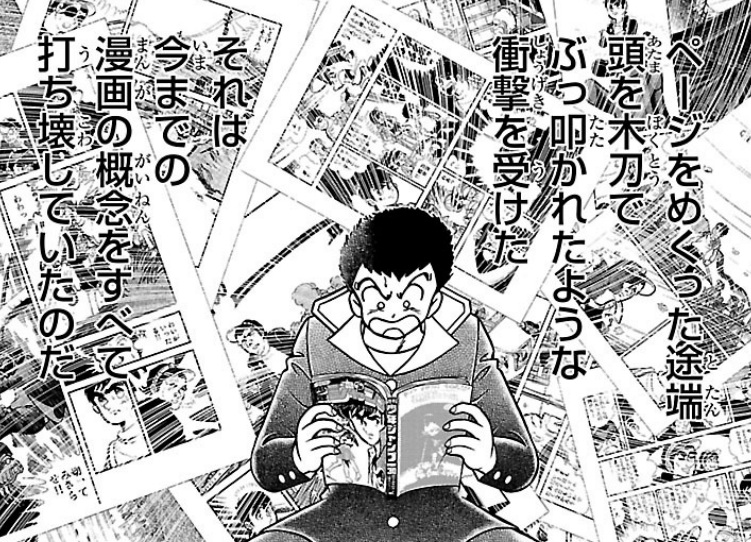
3. He Realized Delinquents Could Make It BigThe true man who opened another path to true manhood for Kurumada was Hiroshi Motomiya (本宮ひろ志), revered as the "Master of Shonen Manga." Many of today's revered manga masters are practically his grand-disciples. When Kurumada, then a high school student, read Motomiya's debut serialization "Otoko Ippiki Gaki Daisho" in "Weekly Shonen Jump," he immediately felt an unprecedented shock. According to his description: merely turning to the first page of the manga delivered a shock akin to being struck directly on the head with a wooden sword, completely shattering his preconceived notions about manga. "Otoko Ippiki Gaki Daisho" did not extol lofty ideals of justice; in fact, its protagonists were often dirty and crude. Yet, one could feel even more strongly the will to survive of these underprivileged protagonists. Kurumada had never seen such a realistic manga; it was the most interesting manga he had ever encountered.
"Otoko Ippiki Gaki Daisho" Image credit:Twitter
Mr. Osamu Tezuka was a top medical student, and for Kurumada, a revered manga artist should always be a university graduate. However, Hiroshi Motomiya not only had only a junior high school diploma, but he was also consistently a student in the lowest-performing class, even in the most delinquent class of a 'bad boy' school. This was another shock Motomiya delivered to Kurumada: if even a delinquent could become a great manga artist, it meant he, too, had at least a small chance.
Teacher Hiroshi Motomiya Image credit:Twitter
4. He Discovered That Drawing Manga Isn't Just About Being Good at DrawingStarting in the 1960s, the manga industry began to grow rapidly, and for newcomers, breaking into the manga world was not an easy task. Many people would bring their works daily to publishers like Shueisha, allowing editors to assess whether their creations had the potential to be featured in "Weekly Shonen Jump". Kurumada once felt inferior about his drawing skills, but a friend who was better at drawing told him that the most important thing in manga is being interesting, and simply drawing well isn't enough. Just like Hiroshi Motomiya's manga, while Teacher Motomiya's art style certainly had great power, the real reason "Otoko Ippiki Gaki Daisho" was so beloved was the protagonist's unprecedented actions and his life philosophy of breaking social norms.
Teacher Motomiya broadened Kurumada's horizons Image credit:Amazon
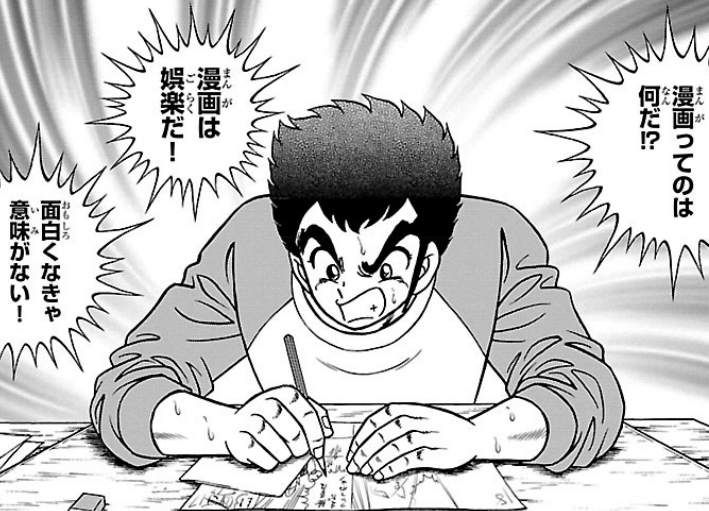
Being interesting became the key to manga, and also the key for Kurumada to subvert the genre of sports perseverance manga. If readers had been accustomed to 'never-give-up' sports perseverance manga for a decade, then they needed a fresher kind of 'interesting'. And for Teacher Kurumada, special moves were his 'interesting'. Teacher Kurumada stated in the ending of "Blue Age":
"What exactly is manga!? Manga is entertainment! Manga without interest is meaningless! Think back to when you were little, what made your heart pound with excitement? Perhaps it was some kind of beam shot by the protagonist? Or a certain technique used by a ninja? Or a swordsman's 'X-slash' sword art? Those are special moves! A hero must have their own special moves! The sight of special moves defeating evil will absolutely thrill people!"
"Manga is entertainment!" Image credit:Amazon
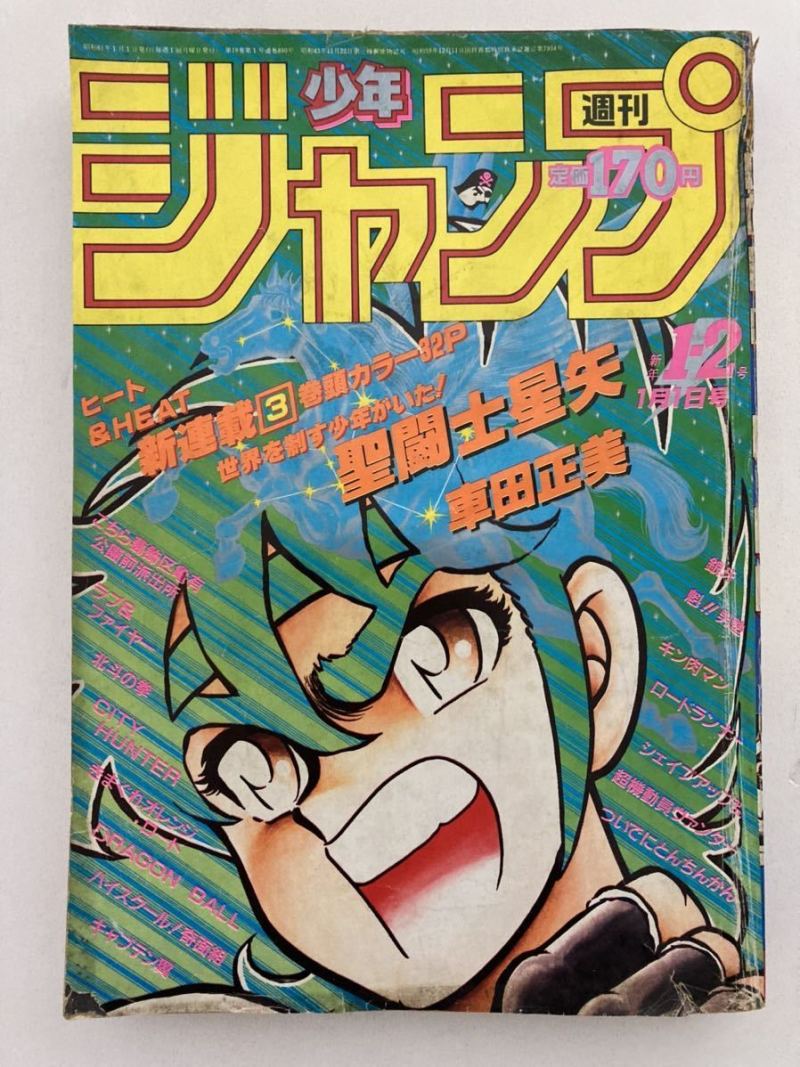
5. "Saint Seiya" Was the Earliest "Compendium of Special Moves"After "Ring ni Kakero" changed its direction, the protagonist began to possess incredibly powerful special moves, and then each of his enemies also appeared with their own deadly techniques... Then, in 1985, Teacher Kurumada's other representative work, "Saint Seiya," was born, and this manga truly pushed the concept of special moves to its extreme. This concept, which is commonplace for modern readers, still had much room for development at the time, and "Saint Seiya" became a reference model for many future manga artists.
The first chapter of "Saint Seiya" was published in the December 1985 issue of Weekly Shonen Jump (1986 1・2 combined issue) Image credit:ヤフオク!
Master Roshi launched the "Kamehameha" in "Dragon Ball," and Kojiro Hyuga unleashed the "Tiger Shot" in "Captain Tsubasa." These manga were released before "Saint Seiya," and these characters all had their signature special moves, but compared to the special moves in "Saint Seiya," they all seemed to lack something. The Kamehameha is a beam of light with an oval head, and the Tiger Shot features a tiger accompanying the ball as it rushes into the goal. Beam cannons and running tigers are cool, but Pegasus Ryusei Ken (Pegasus Meteor Fist) is a product of another dimension. The "Saint Seiya" anime adaptation perfectly illustrates this.
Pegasus Ryusei Ken Image credit:Twitter
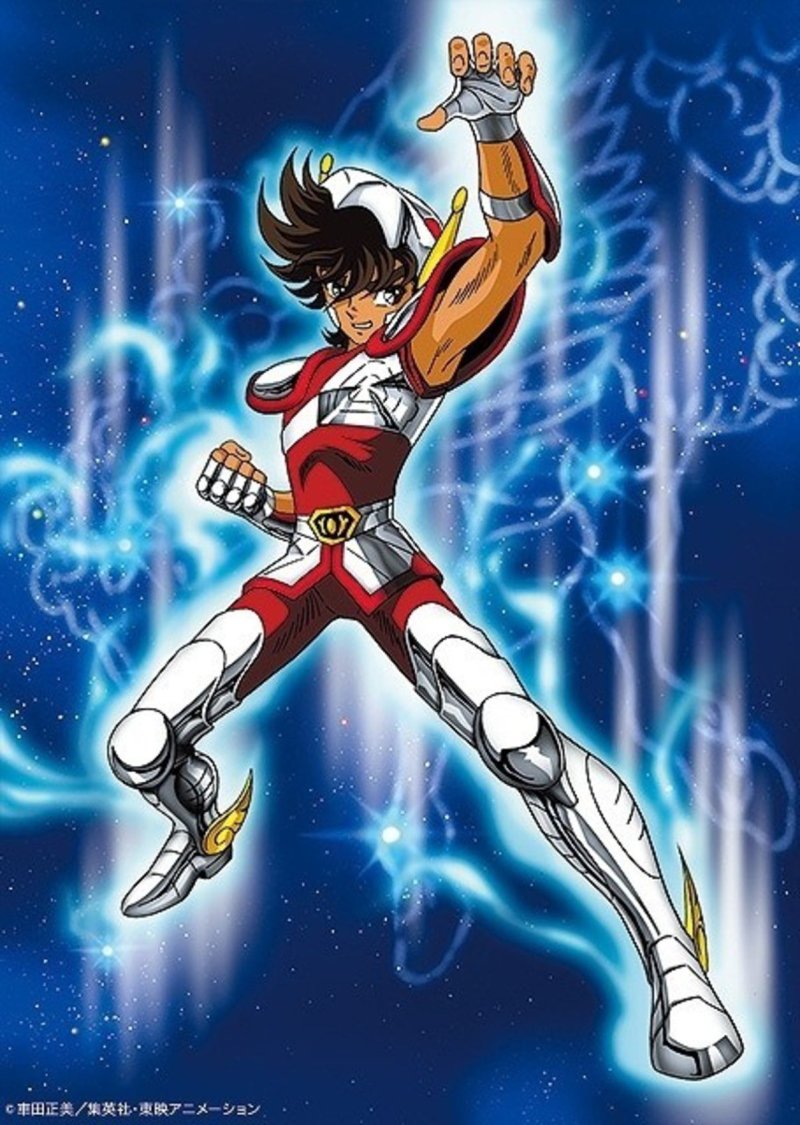
Seiya lowers his body, spreads his arms, and begins to draw circles inward, as the constellation Pegasus appears behind him... Seiya is tracing the trajectories of the 13 stars of the Pegasus constellation... His hands eventually settle diagonally above his sides, like the wings of Pegasus; then his right fist retracts towards his abdomen, and his legs begin to stride forward, like a galloping Pegasus. As Seiya shouts "Pegasus Ryusei Ken," he throws a straight right punch forward... No, not one, but countless punches, a deluge of light points spraying forward like raindrops, with over a hundred supersonic fists per second transforming into beams of light and shooting forward. No matter how many enemies there are, they must endure this rain of ultra-fast punches that the eye cannot catch.
Pegasus Ryusei Ken Image credit:Twitter
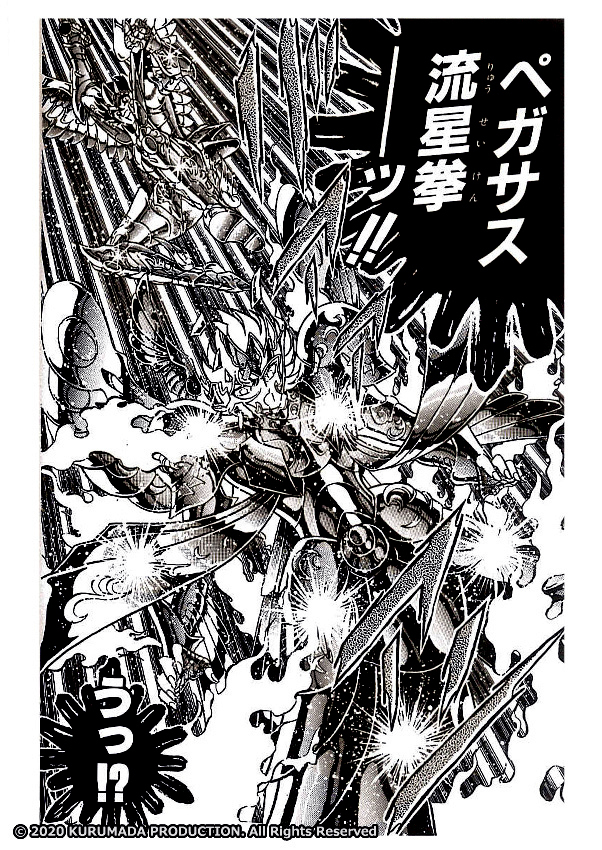
Before throwing a punch, Pegasus Ryusei Ken is first and foremost a dance, a battle dance that integrates the constellation theme of "Saint Seiya" while mimicking the animal posture of that constellation. You can trace the origins of this animalistic martial art back to 1970s Hong Kong martial arts films, but for readers of shonen manga, such a "showy" special move, while not unprecedented, can certainly be considered full of sincerity. This punch isn't just for defeating enemies; it's full of presence, both elegant and showcasing individual style, much like the transformation sequences of giant robots and Kamen Riders, quickly stimulating your emotions even before the outcome is decided.
Kurumada-sensei's backgrounds are always drawn magnificently Image credit:Twitter
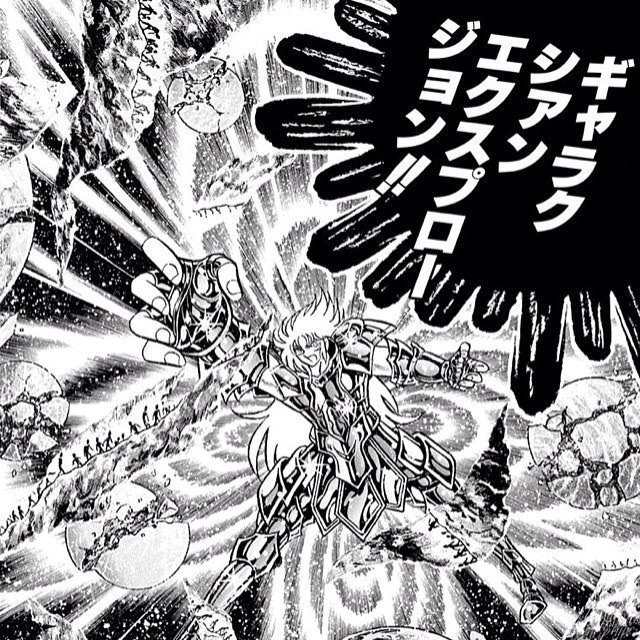
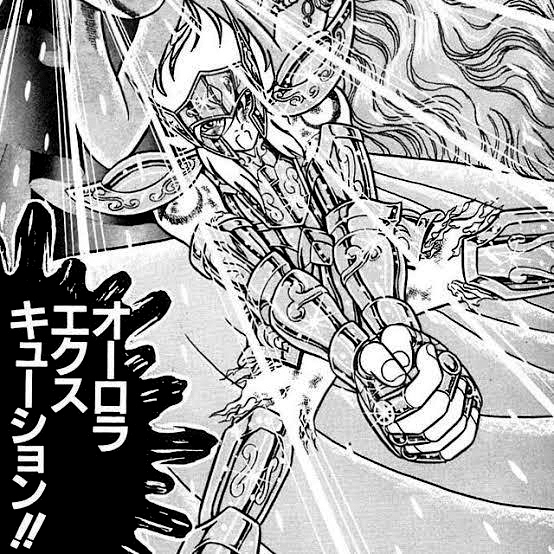
Pegasus Ryusei Ken is just one example; in "Saint Seiya," everyone has a special move. Some have chains that transform into nebulae; some have punches that can send opponents into another universe; some can stimulate an opponent's central nervous system, causing intense pain; and many children, even before they are old enough to study physics, learn about "absolute zero" from Camus's special move, "Aurora Execution."
The name "Aurora Execution" is actually a mistranslation in Taiwan Image credit:Twitter
6. He created the formula of "defeated strong enemy immediately becomes a good friend"Masami Kurumada, who "couldn't be a scholar nor a delinquent," used to be half-hearted in everything he did, and his journey to becoming a professional manga artist took several years. The key to him avoiding a bad path and finally firming up his resolve came from his friends. These friends, who once aspired to the path of chivalry with him, continuously gave him encouragement and advice, allowing Kurumada to eventually embark on the right path. This is a crucial factor in Masami Kurumada's strong emphasis on friendship. In fact, you might notice that "friendship" and "victory" within the three principles of "Friendship, Effort, Victory" are fundamentally somewhat contradictory: only one person can achieve victory, so if you want to be victorious every time, how can you forge friendships with everyone?
Blocking an arrow for someone Image credit:情報のサガ
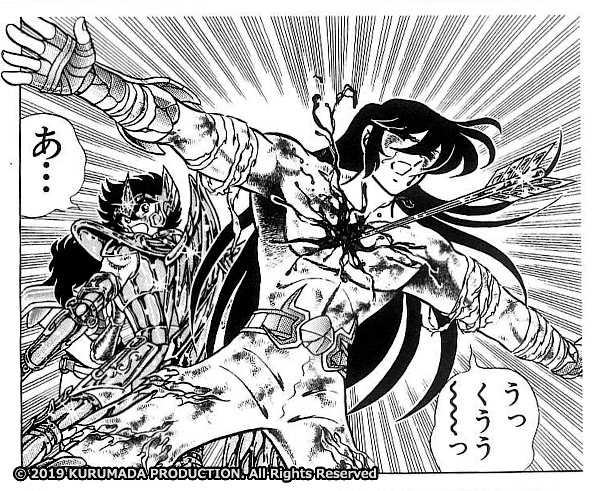
In "Ring ni Kakero," the Kage Dou Clan, operating in the shadows of the Japanese boxing world, initially stood as adversaries to the protagonist. However, after being defeated by his fists, they became his "shadows," supporting him from behind. This concept of turning enemies into friends was further developed in "Saint Seiya," transforming the relationship between friendship and victory into a fresh layer of meaning: even enemies, after a fierce battle determines a victor, can become the most loyal friends; conversely, even friends might turn into foes due to certain circumstances.
Shiryu enjoys immense popularity. Image credit:漫画まとめ@うさちゃんねる
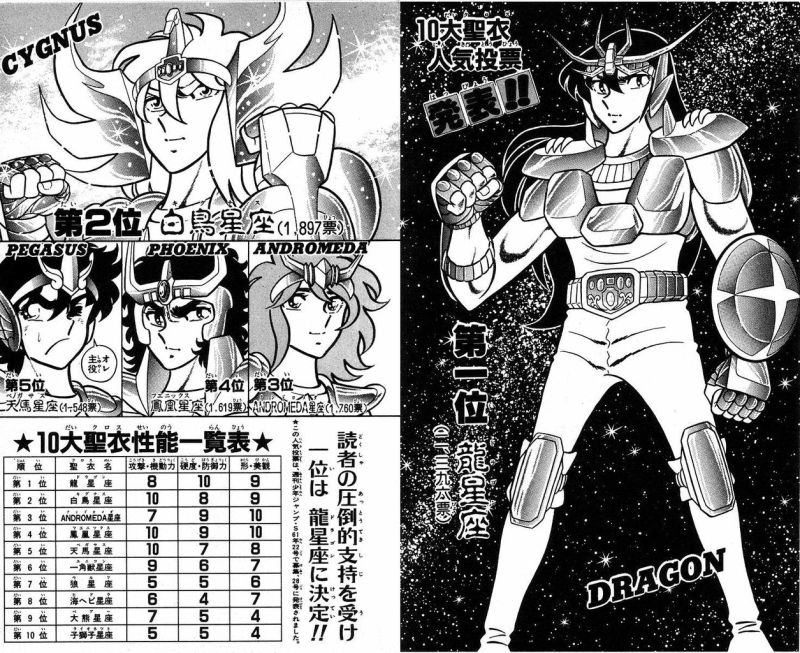
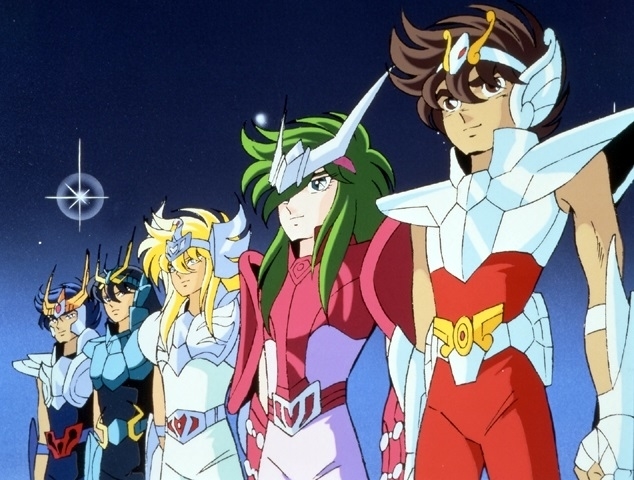
Why are the relationships between friends and foes so fluid in "Saint Seiya"? Masami Kurumada, who pushed the sports endurance genre out of the mainstream, still, to some extent, inherited the "ultimate victory theory" from sports endurance manga. You'll find that the so-called "friendship" among Seiya, Hyoga, Shiryu, Ikki, and Shun is not merely built upon mutual admiration or shared interests. They are comrades who have gathered for a greater goal; rather than "friends," they are more akin to "comrades-in-arms." This is precisely in line with "Saint Seiya's" definition of the Saint profession: every Saint's sacred duty is to serve the Goddess Athena.
"Saint Seiya" Image credit:ひかりTV
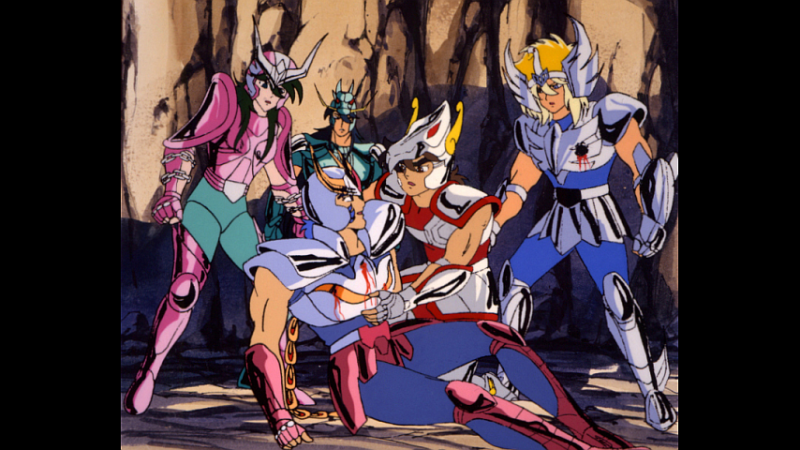
Athena's safety, her mission, and her desires became the ultimate objective that united all Saints. It is under this premise that unity and friendship exist. At the same time, every Saint is aware that both they and their comrades are merely expendable pawns in the pursuit of ultimate victory. This is why many famous scenes in "Saint Seiya" often depict a Saint becoming cannon fodder, a human shield, allowing other characters to advance by stepping over their sacrifice. Similarly, even if they must cross swords, it is simply due to differing opinions or stances on "achieving victory"—yet these conflicts and disagreements will, in turn, forge even stronger bonds in the future.
"Saint Seiya" Image credit:アニメイトタイムズ
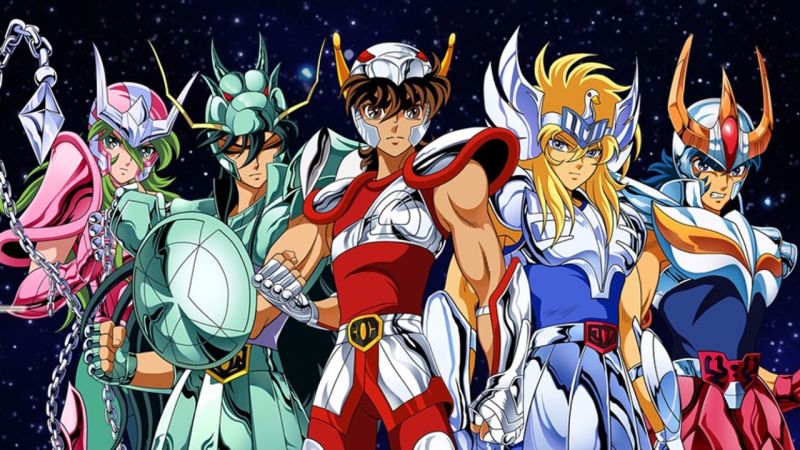
The trope of defeated formidable foes immediately becoming close allies has become a formula widely adopted by many shonen manga. This isn't just for reusing character design creativity (though that is certainly important). For Sensei Kurumada, who applied this formula very early in his works, this friend-foe transforming friendship, besides being based on his gratitude for past support from friendships, also implies the concept of comrades-in-arms. Therefore, even if someone who was once an enemy becomes a friend, another day they might revert to being an enemy and oppose him again. This isn't a personality change, but simply because the other party's goals differ from his own once more—hopefully, this will make you appreciate Ikki, who often seems to disregard his brother and friends, even more.
"Saint Seiya" Image credit:アニメイトタイムズ
Sensei Masami Kurumada has been creating for over 40 years. He is a huge contributor to "Weekly Shonen Jump" becoming Japan's best-selling manga magazine, and he is also one who changed the history of shonen manga development. He couldn't be a scholar, nor could he be a ruffian, yet he became a great manga artist whose works are loved by both scholars and ruffians.