
"Nonsense" (無厘頭) now seems to be an archaic term, but for readers currently in their 40s, it holds a special meaning: in their youth during the 90s, the "nonsense comedy manga" (不条理ギャグ漫画) genre exploded in popularity in Japan. Leading the charge was the wildly imaginative Sensha Yoshida... but he was too far ahead of his time, and not all young readers could accept his logic-defying humor.
Image credit:メルカリ

After Yoshida, two standard-bearers simultaneously launched new works in 1993, together propping up the world of nonsense comedy: Kenji Hamaoka of "Super Radical Gag Family" (抓狂一族) and Minoru Furuya of "Inachu Table Tennis Club" (稻中桌球社). Almost 30 years have passed, and nonsense is no longer a dominant trend. Yet, Master Yoshida is still active, and "Super Radical Gag Family" continues its madness. But what about Minoru Furuya...? This genius manga artist has been out of the public eye for five years now.
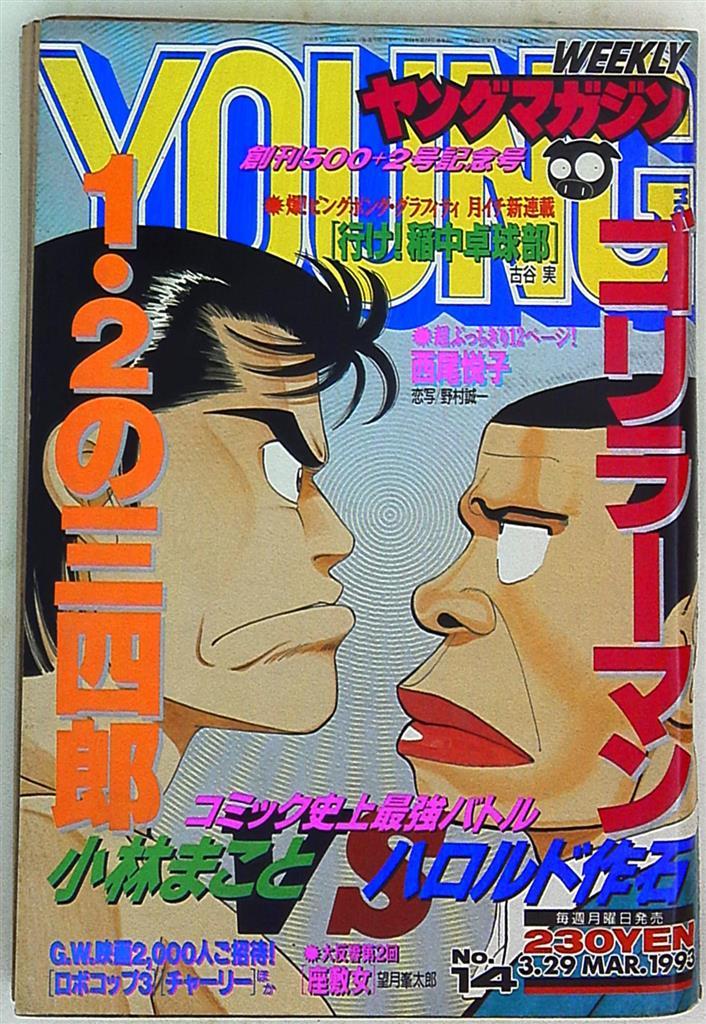
《稻中桌球社》 began serialization in Weekly Young Magazine, Issue 14, 1993 Image credit:まんだらけ
Nonsense was so important to a generation. Kids of the 90s could watch Stephen Chow on TV and discuss "Inachu Table Tennis Club" with their classmates after school. The jokes in these films and manga couldn't be retold to their parents for a laugh—it was even questionable whether they counted as jokes at all. "Inachu Table Tennis Club" is vulgar; the boys in it think about sex all day, and sex seems to revolve around them—it seems even a gentle breeze could make them instantly erect. But this isn't the main reason "Inachu Table Tennis Club" couldn't be shown to parents. These vulgar gags lack the traditional setup and punchline of a joke; they aren't about a funny incident, but are themselves bewildering existences. The humor arises from that sense of bewildering absurdity. "Inachu Table Tennis Club" tries to make you find "boring," "disgusting," and "weird" inherently funny.
"Inachu Table Tennis Club" butt bleeding and "Ashita no Joe" Image credit:ヤングマガジン公式
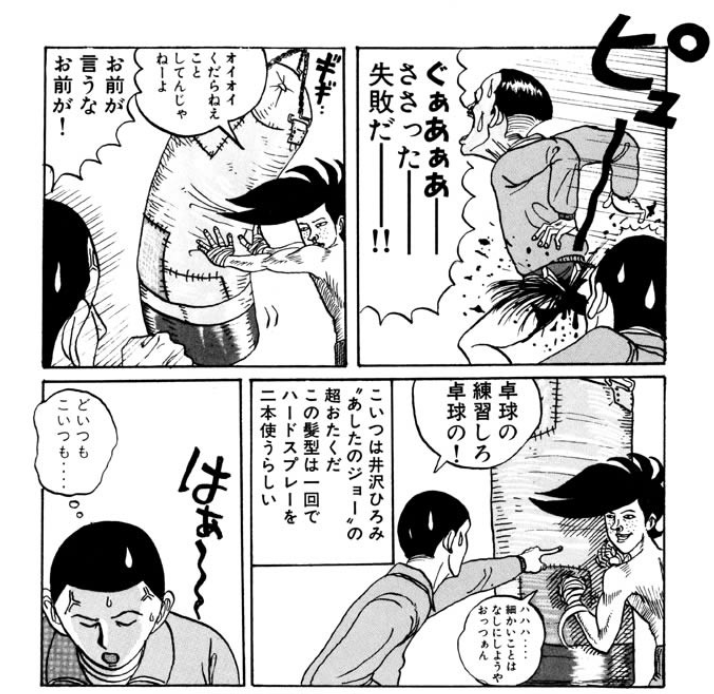
This might sound a bit metaphysical, but in reality, it's almost impossible to describe in words what makes nonsense funny. The phrase "Dead is dead, bleeding from seven orifices is bleeding from seven orifices" fundamentally contains no humorous element. You must have experienced it within an absurd context, for example, seeing Stephen Chow beaten to the point of bleeding from seven orifices yet still alive, to then feel the absurdity in his meaningless bravado and subsequently laugh. But Stephen Chow, after all, makes films, which allow for longer narratives to build absurd contexts. "Inachu Table Tennis Club" doesn't have that luxury; in this manga, with at most six or seven panels per page, sometimes a nonsense gag has to be crammed into just two panels:
"Inachu Table Tennis Club" Tanaka's period fantasy Image credit:ヤングマガジン公式
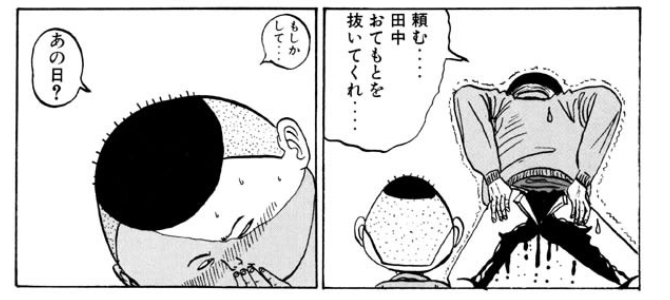
For example, in the first panel of a certain page, Maeno's butt is gushing blood because a chopstick was broken by his butt crack, piercing him. In the second panel, Izawa, with his pompadour, suddenly transforms into "Ashita no Joe" (小拳王) and practices boxing with a punching bag in the table tennis club. Why did Maeno use his butt crack to hold chopsticks? Why is Izawa practicing boxing in the table tennis club? None of this matters. Maeno never uses his butt to hold chopsticks again, and Izawa's love for "Ashita no Joe" only appears this one time. These gags elicit an absurd smile from readers in the moment, and their significance extends only to that... or to introducing the next absurd punchline: Tanaka, the repressed pervert with a mind full of erotic thoughts, sees Maeno's blood-soaked butt and actually fantasizes whether Maeno, being male, might be having his period... Tanaka has no sexual fantasies about Maeno; he simply gets excited and starts fantasizing purely because of "menstruation," a physiological condition unique to females.
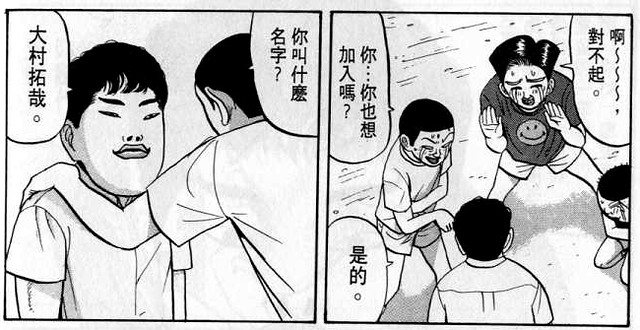
The memorable Takuya Omura was even immortalized by a manufacturer who released a toy. Image credit:[最も好ましい]
"The Ping-Pong Club" is precisely such an outrageous creation. It is not a softcore erotic manga; it doesn't play any suggestive games. It rarely (though it does happen) allows male characters to grope beautiful, curvaceous female classmates on behalf of the readers, thereby fulfilling readers' voyeuristic desires—because the characters in "The Ping-Pong Club" openly fantasize and shamelessly do foolish things, and they are satisfied simply by fantasizing and acting silly. If you compare "The Ping-Pong Club" with manga that have a slightly softcore erotic style, such as "To Love-Ru," "Negima! Magister Negi Magi," or "Video Girl Ai," you'll discover its distinctiveness. Its focus isn't on the alluring bodies of young girls that tempt to sin; its focus is entirely on the vague adolescent urges of young boys—and adolescent urges often appear suddenly and vanish just as quickly, which is precisely the essence of nonsensical comedy.
Animated version of "The Ping-Pong Club" Image credit:TC Entertainment
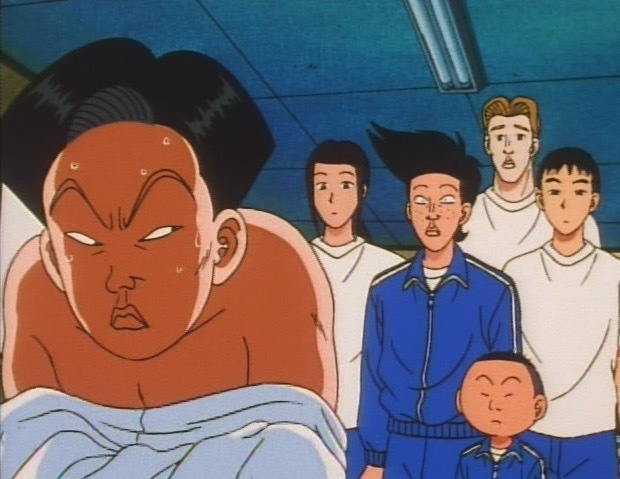
It's hard to imagine how successful "The Ping-Pong Club" would be today; perhaps it wouldn't generate such an astonishing craze if published now. Yet, when it began serialization in "Weekly Young Magazine" in 1993, Minoru Furuya's debut manga immediately garnered an enthusiastic response. The thing is, while most works in "Weekly Young Magazine" aren't known for their beautiful and eye-catching art styles—the messy art style of "Initial D" and the unappealing character designs of the "Kaiji: Ultimate Survivor" series are both signature works of "Weekly Young Magazine"—"The Ping-Pong Club"'s art style could be described as "beyond limits." It looked neither aesthetically pleasing nor sometimes crude... yet suddenly meticulous when depicting characters' ugly expressions. And just a year later, Furuya Minoru's art style abruptly changed again; the visuals became much cleaner, and even the female characters became much cuter... making one wonder if the artist was changed midway through the series.
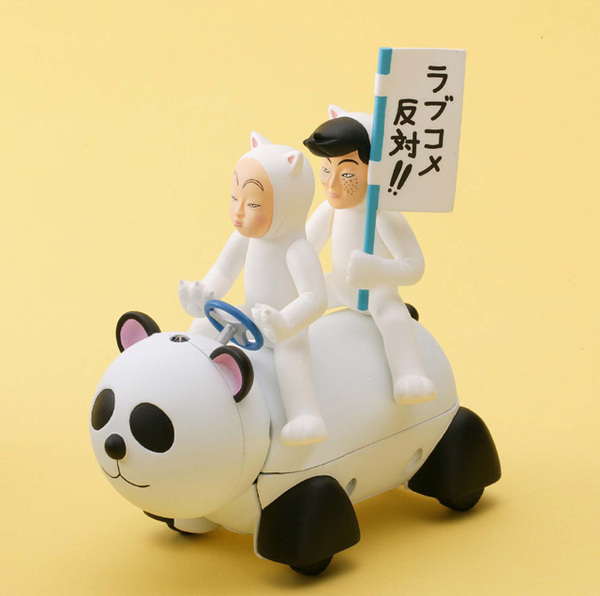
However, the value of "The Ping-Pong Club" cannot be judged by its art style alone, because its astonishing success clearly wasn't achieved solely by a group of "aficionados of the unconventional" who appreciated its peculiar style. "The Ping-Pong Club" was released in 13 volumes and sold over 25 million copies—and this is just its sales success. The "Shine Shine Dan" (Go-to-Hell Squad), formed by Maeno and Izawa in the manga, specialized in harassing couples seen on the street (or "riajuu," as they're called today). The "Shine Shine Dan" trend spread throughout Asia with "The Ping-Pong Club," with young groups in Taiwan and China calling themselves the "Shine Shine Dan," appearing on Valentine's Day or at popular dating spots, shamelessly "disrupting" others' dates.
The "Shine Shine Dan" (死ね死ね団), beloved by Taiwanese netizens and internet users, originated from "The Ping-Pong Club" Image credit:Ameba Blog

This differs from Taiwan's "love tax" crime incidents in the 1980s—where perpetrators would bang on the windshields of cars parked late at night by riversides or in mountainous areas, startling couples intimately engaged inside, then damaging their property or extorting them. In real society, those who became part of the "Shine Shine Dan" more often engaged in a form of ironic behavior tinged with sadness: for example, buying odd-numbered movie tickets to prevent couples from sitting together; or singing the national anthem loudly late at night at Chiang Kai-shek Memorial Hall, startling couples canoodling in the dark. It can be said that the actions of the "Shine Shine Dan" revealed resentment rather than anger; it was the lament of "why do you have it and I don't?" This lament did not escalate into physical acts of plunder; the "Shine Shine Dan" merely amplified this individual lament, forcing those who are happy to confront this sorrow.
Megahouse's 2007 release of "The Ping-Pong Club" Shine Shine Dan Panda Car No. 1 Image credit:ascii
This is, in fact, the essence of "The Ping-Pong Club": this work, often mistakenly identified as a comedy manga, unlike the manga of comedy master Rumiko Takahashi, lacked the dedication to fully serve comedy from the outset. Beyond its crude gags, "The Ping-Pong Club" more often reveals the sorrow and suffering hidden behind its outrageous behavior. This is a manga built upon negative emotions; the characters' motivations are not driven by love, friendship, or effort. The segments fantasizing about female bodies may indeed be the carnal urges of adolescence, but the hidden sorrow and suffering in "The Ping-Pong Club" do not stem from adolescent physiological changes; they come from negative social phenomena such as class, poverty, and discrimination. This originated from a sense of social emptiness following the collapse of Japan's bubble economy in the early 1990s.
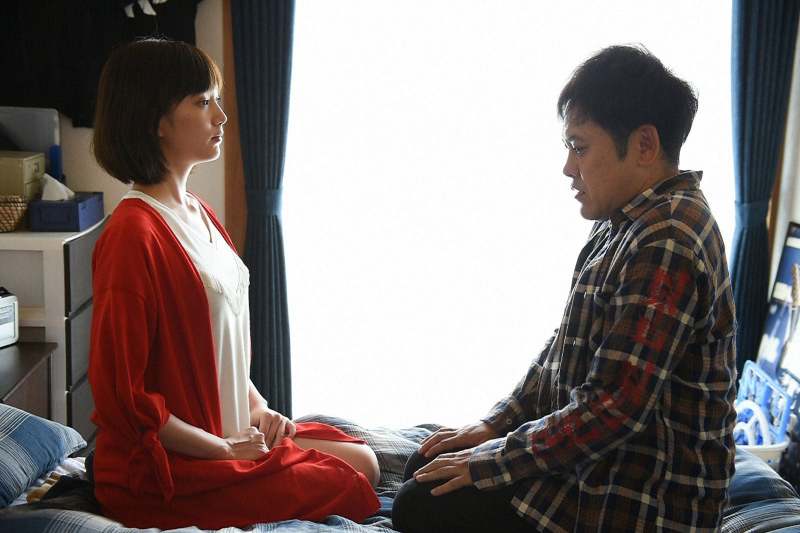
Another work, "Wani Tokagegisu" (深海魚男), was adapted into a Japanese drama starring comedian Tetsuhiro Arita and Tsubasa Honda. Image credit:mdpr.jp
In the 90s, you wouldn't find any mainstream manga from a major publisher that would put "Drop dead" (死ね) in a character's mouth—thus, the "Drop Dead Corps" (去死去死團) achieved a shocking and outrageous effect with its name alone. "Inachu Ping-Pong Club" unflinchingly exposed discriminatory and bullying behaviors, with sensitive words like "Drop dead," "ugly woman," and "sow" appearing brazenly. If the author's sole purpose was comedy, it seems unnecessary to push the boundaries so aggressively. Some say that when a manga artist draws happily, you can feel that excitement in their work. If that's true, then you should be able to feel the negative emotions in Minoru Furuya's heart from "Inachu Ping-Pong Club".
Minoru Furuya's rare photo Image credit:HOUYHNHNM(フイナム)
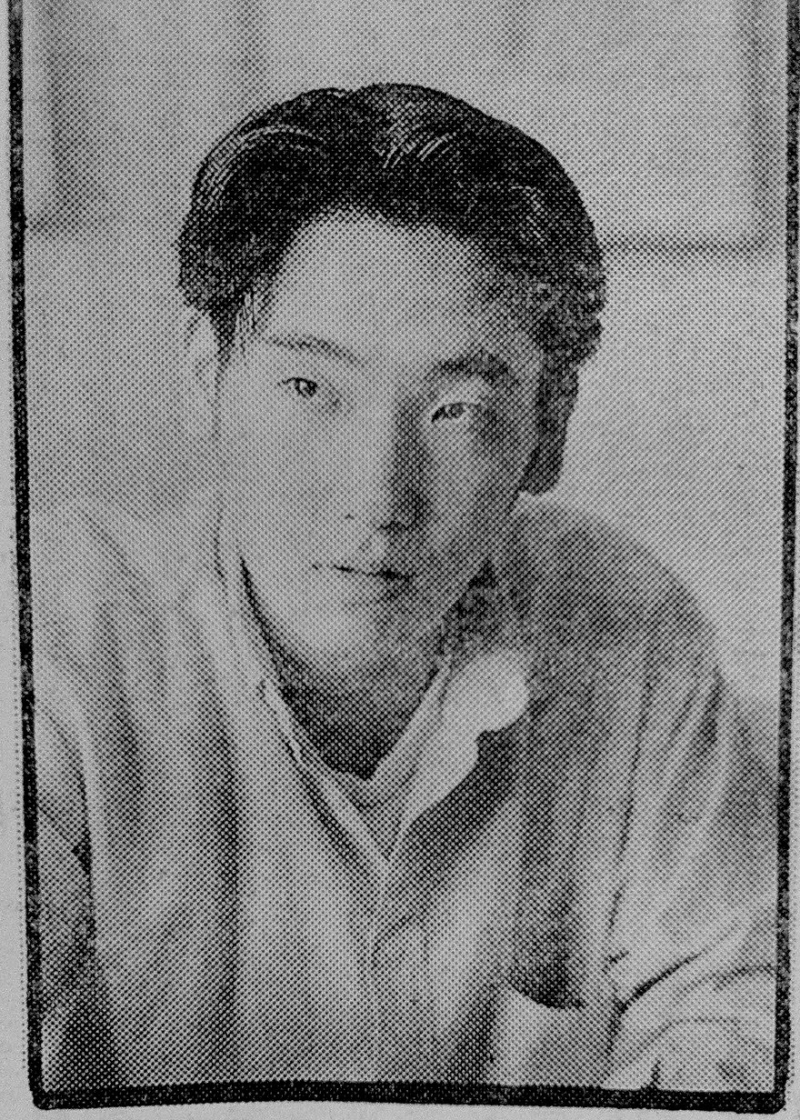
These negative emotions were indeed present: a young Minoru Furuya initially worked in a barbershop, experiencing "suffering worse than death" in a high-pressure and harsh work environment. He finally escaped the torment of an exploitative company and decided to draw some manga. For an unemployed person, drawing manga didn't mean Furuya decided to pursue a career as a manga artist, nor was it to fulfill his lifelong dream of drawing. Neither was the case; Minoru Furuya drew manga purely as a way to relieve life's pressures, a pure interest to vent the pain inflicted by his cruel boss. He had absolutely no basic knowledge a manga artist should possess; he didn't know what screen tones were, nor did he understand composition techniques for line art. He had a very long way to go to become a manga artist.
Japanese musician Keigo Oyamada (left) and Minoru Furuya (right) Image credit:HOUYHNHNM(フイナム)
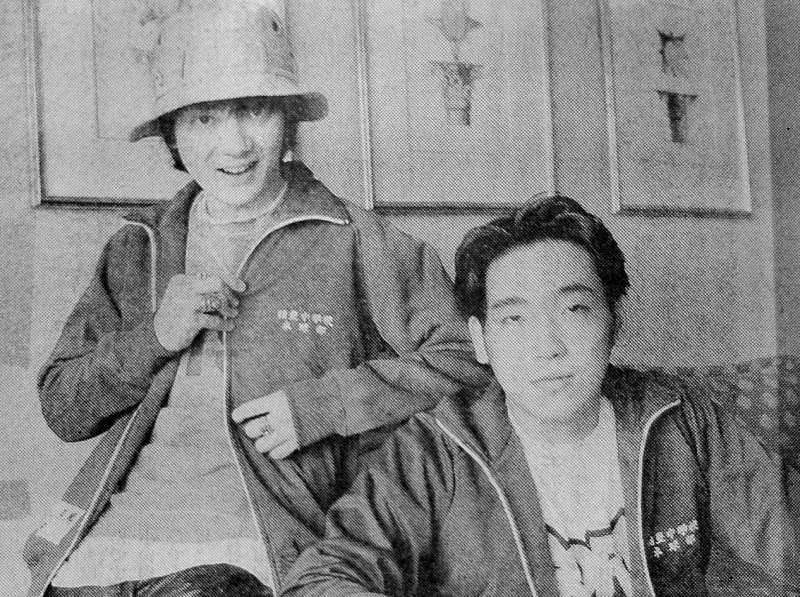
He even submitted to Weekly Young Magazine's manga competition with the mindset of earning money from a part-time job. For this, he began to learn how to panel manga frames and how to use various drawing tools. For him, becoming a manga artist was still not a lifelong career, but merely a passive speculative act where he might receive prize money just by mailing in his manuscript. Yet, this same Minoru Furuya won an award on his second attempt at the competition. This submitted work would later become "Inachu Ping-Pong Club".
Animated version of "Inachu Ping-Pong Club" Image credit:impress

Minoru Furuya, who never intended to become a manga artist and simply took things as they came, didn't even know how to be afraid when he got the chance for serialization—he had no concept whatsoever of the pressure of serialization deadlines or the manpower resources needed for meeting deadlines. He only hired one assistant to help, and later two more... this manga artist, who sold millions of copies, only ever had three assistants. He also didn't know how to allocate drawing time, let alone how drawing progress should align with publication schedules... Minoru Furuya had only one thought: "Draw, draw as much as possible." If he lacked genius, he would compensate with sweat and toil. Knowing his drawing was terrible, Furuya couldn't possibly draw romance manga with handsome men and beautiful women, nor could he draw war manga with vast armies... but if a gag manga was drawn ugly, wouldn't readers laugh precisely because the art was so ugly? And so, Minoru Furuya, somewhat self-consciously, embarked on the path of comedy.
Another famous work, "Hiru no Ame" (Daytime Rain), was adapted into a film, starring V6 member Go Morita as a psychopathic killer Image credit:Amazon

Minoru Furuya himself can be said to be a victim of the bubble economy era. His experience working in a barbershop is a common portrayal of long working hours and employer exploitation of labor during that period. After the bubble economy burst in 1991, a large number of young people like Furuya were swept into a wave of unemployment; they couldn't find new jobs, and the jobs they did find paid very little. At this time, Japan entered what was called the "employment ice age," and the frenzied and booming employment market of previous years was no longer seen. Not only that, but the atmosphere of luxury and materialism prevalent during the bubble economy period made wealth, appearance, and status the criteria for judging success in society. If you weren't handsome or favored by women, you were, by definition, a loser and had to endure discriminatory treatment at the bottom rung—this social anomaly was also depicted in "Inachu Ping-Pong Club." It can be said that, both within and outside the book, "Inachu Ping-Pong Club" became a collection of negative emotions.
The first story in "Minoru Furuya Masterpiece Collection (1) Inasaku", titled "My Health", tells of waking up one day and defecating a rabbit Image credit:xuite
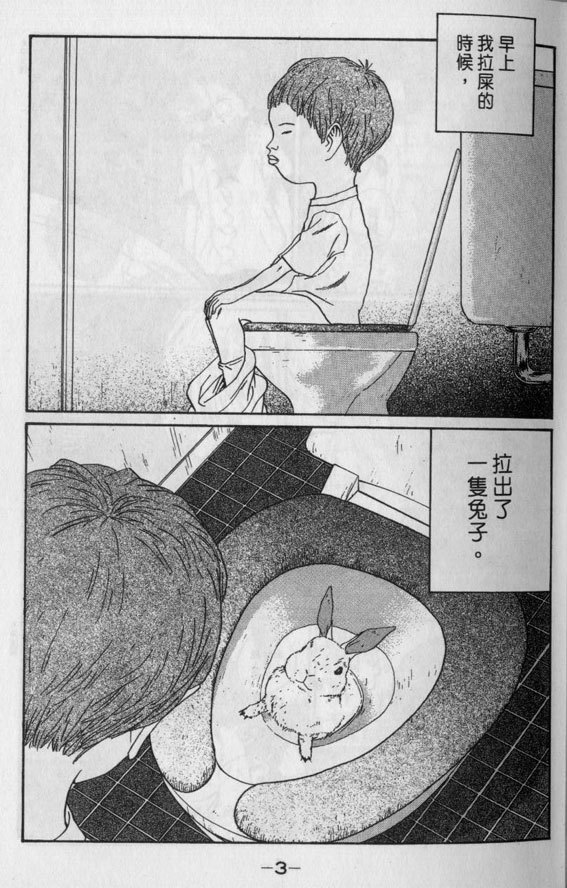
So Minoru Furuya was destined to depart from the path of comedy, possessing a fundamental and absolute difference from artists like Sensha Yoshida or Kenji Hamaoka. He wasn't merely creating humor; rather, he used a wry, almost-smiling facade to package the malice of the human world. In the later stages of "Ping-Pong Club," Maeno almost became the sole protagonist: he hadn't found a girlfriend and continued to refuse to grow up. But as his eccentric companions each went their separate ways, the lonely Maeno could only become more "childish," even forcing his friends to continue their nonsensical antics. Behind these comedic moments, a strong sense of "being left behind" permeated, and over the course of 13 volumes, this entanglement grew even more melancholic and dark: when the ping-pong club president planned to perform the "adult ritual" with his girlfriend, the girlfriend-less pervert Tanaka generously taught him various intimate knowledge, and Tanaka said:
"I don't mind... if you grow by trampling on me."
Only Maeno believed his dad's saying that "the rainbow is a symphony played by the sun and seven bald old men." Image credit:facebook
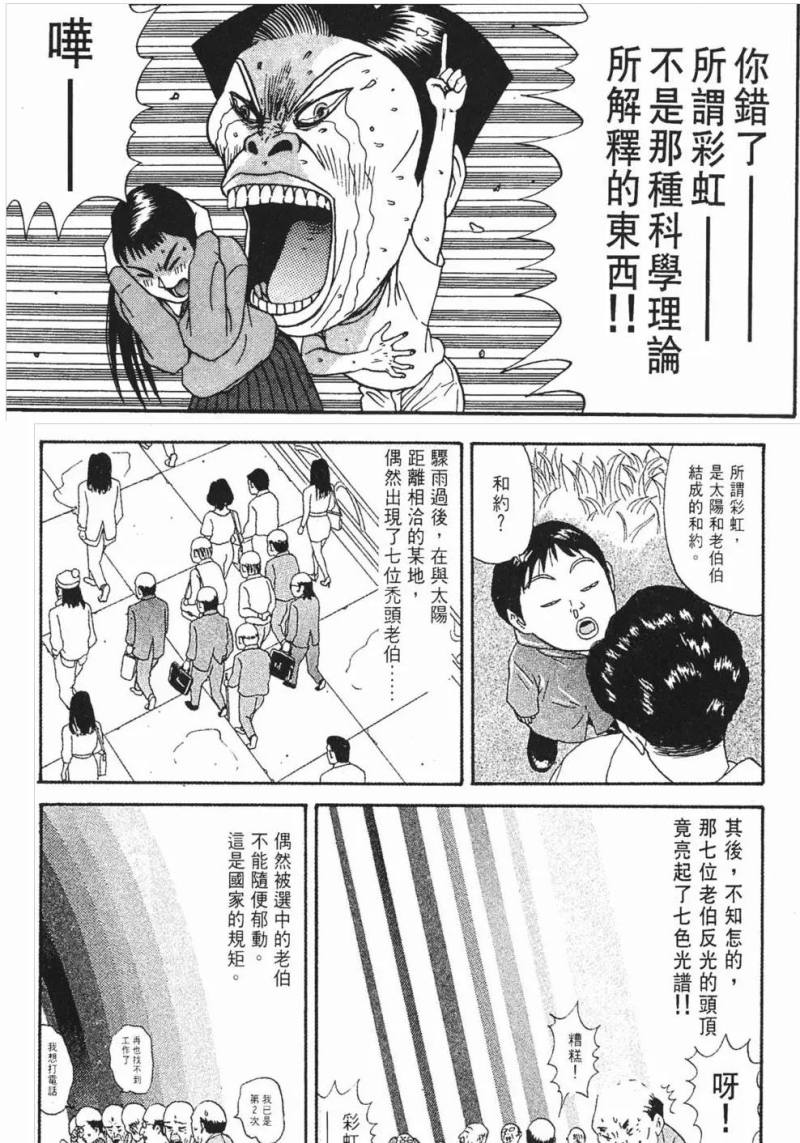
President Takeda didn't truly "trample" on Tanaka; it was Takeda's happiness that stung the unfillable void in Tanaka's heart. A typical gag manga would likely conclude there, shifting to another joke to lighten the mood. However, "Ping-Pong Club" ultimately had no room left for distraction; the sadness behind its humor had grown so immense it was impossible to ignore, much like Izawa hiding behind a utility pole. Therefore, it was natural that Minoru Furuya's subsequent work after "Ping-Pong Club," "Himizu," delved even deeper into the darker aspects of human nature. General opinion often describes Furuya's transition from "Ping-Pong Club" to "Himizu" as a "radical change in style." This perspective, however, undoubtedly fails to recognize the gloom hidden beneath the explicit content and large breasts in "Ping-Pong Club."
"Himizu" was adapted into a film by renowned director Sion Sono in 2012. Image credit:ヤングマガジン公式

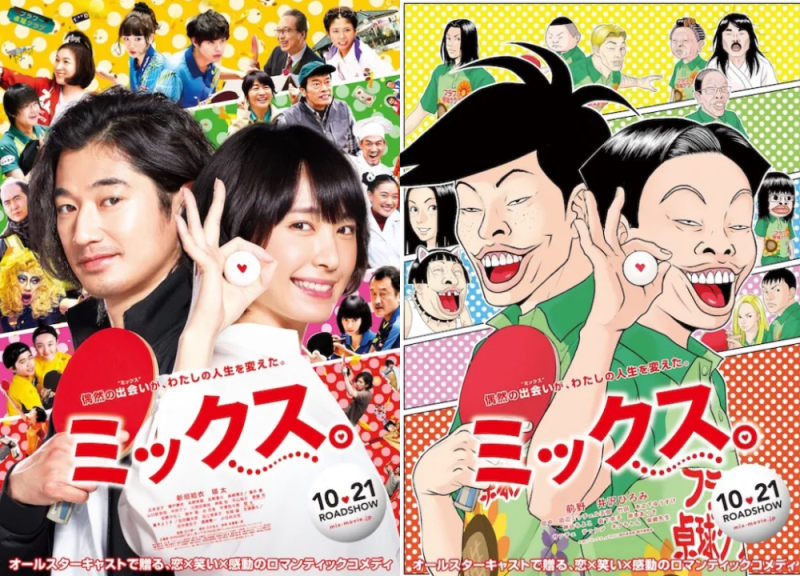
In 2017, the radiant Yui Aragaki starred in the lighthearted comedy ping-pong film "Mix." Minoru Furuya was invited to draw a "Mix" poster in the style of "Ping-Pong Club." Although the film's promotional focus was on the "nation's wife," the opportunity to see characters from "Ping-Pong Club" again after more than a decade made this poster even more precious than the film itself.
"Mix" poster and Minoru Furuya's "Ping-Pong Club"-style version Image credit:Eigaland
Also in 2017, he released the short story manga collection "Gelexis" (ゲレクシス), which was even further detached from reality. It opened with characters expressing "the newly born universe" through their facial expressions... two characters engaged in an aimless, nonsensical crosstalk... Of course, "Gelexis" likely stunned many readers who loved "Ping-Pong Club," as its content had even deviated from the absurd, becoming utterly chaotic. But on the other hand, perhaps Minoru Furuya is just like the 40-year-old single uncle in the book, who describes himself thus:
"How should I put it... I'm freer than I imagined! Much freer than I imagined!"
"Gelexis" Image credit:Amazon

Now, the shadow of the bubble economy era has long passed, and Minoru Furuya is no longer the aimless young man he once was. Perhaps he has truly become freer, finally able to draw whatever works he desires. After 2017, Minoru Furuya seemed to disappear; he released no new works, participated in no sponsored content or advertising campaigns, and no longer attended the publishing house judging events he once did. Where did Minoru Furuya go? Did he truly traverse the darkness and find a brand new sky? This is a question that has remained unanswered for five years... and we may have to keep asking.