

McDonald's Japan's Pokémon Happy Meal card and toy promotion kicked off on August 8th, immediately sparking a massive buying frenzy. By August 9th, the Pokémon card event had already devolved into rampant reselling and bulk buying chaos, drawing widespread complaints from netizens.
Many netizens observed that scalpers were exploiting mobile ordering to flood stores with massive orders, throwing queues and order fulfillment systems into disarray. In response, netizens on X quickly highlighted some McDonald's locations that had implemented clever strategies to block these malicious bulk orders from scalpers, earning widespread praise.
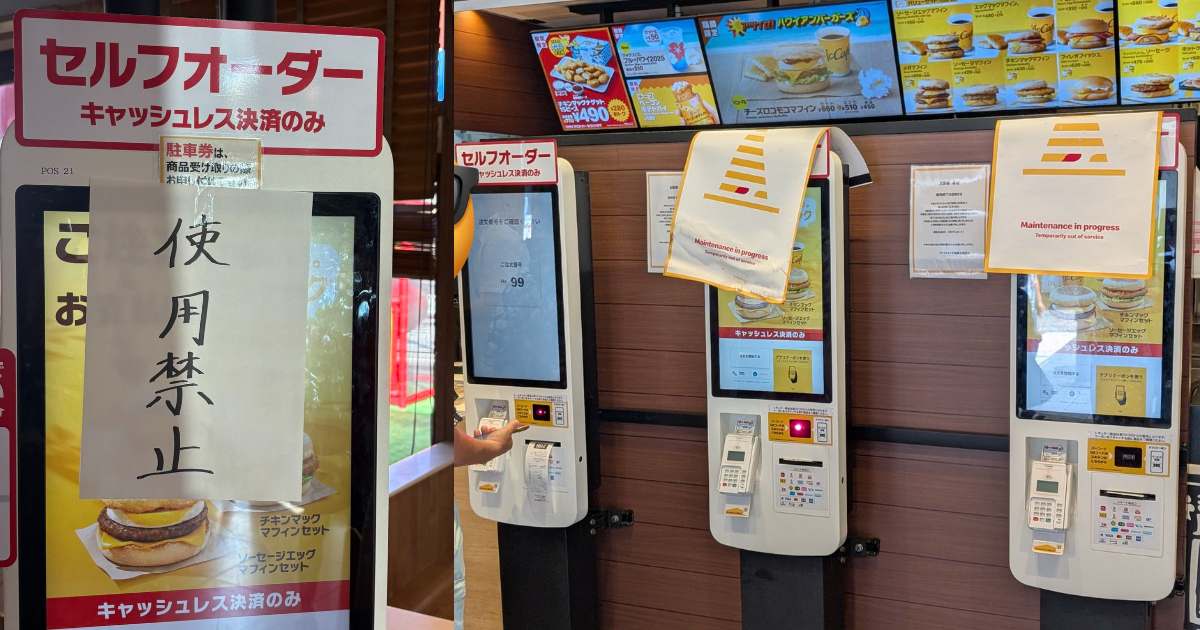
One netizen shared how a "genius store manager" at a particular McDonald's branch rolled out three key measures during the event: they blocked mobile ordering, temporarily halted sales of Egg McMuffins, and shut down one self-order kiosk. This kept in-store queues to a maximum of 10 people, a stark contrast to other branches plagued by lines stretching hundreds deep. The store even meticulously arranged the Pokémon cards and posted clear instructions for customers to pick up their cards by number, preventing any chaos.
Thanks to these arrangements, the original poster (OP) was able to smoothly purchase their meal at this branch. Scalpers, realizing their tactics were futile, simply gave up, ensuring genuine fans could get their hands on the goods.
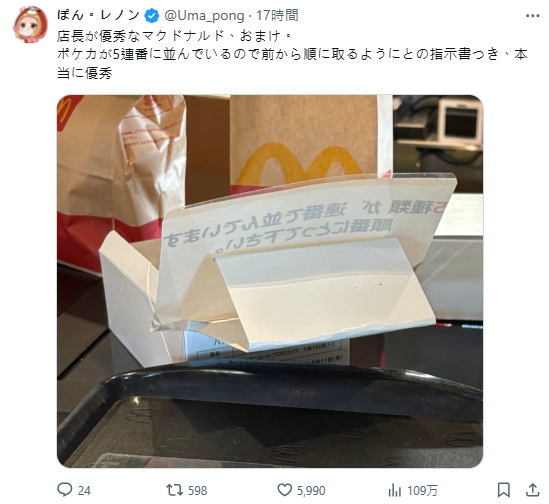
Many customers lauded the approach for effectively maintaining order, even allowing regular patrons, not interested in the promotion, to dine quickly. However, some netizens pointed out that similar measures were also implemented at other branches, suggesting these were part of McDonald's HQ's recommended operating procedures. They noted that experienced staff are instructed to immediately shut down mobile ordering and delivery services during order surges.
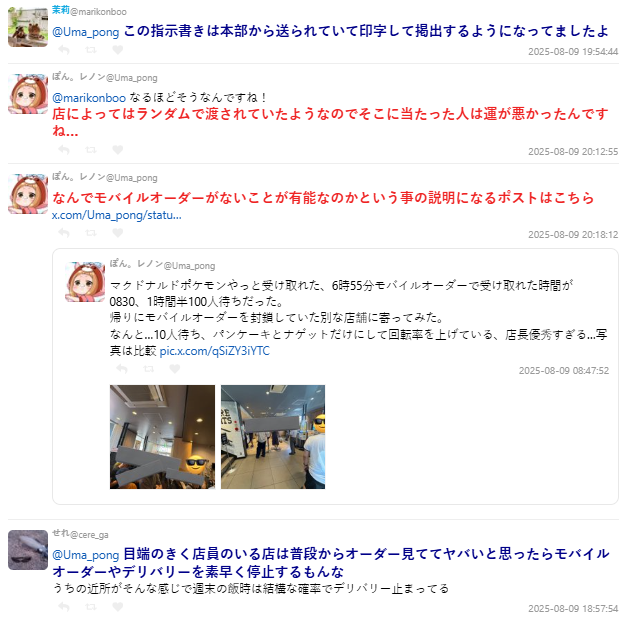
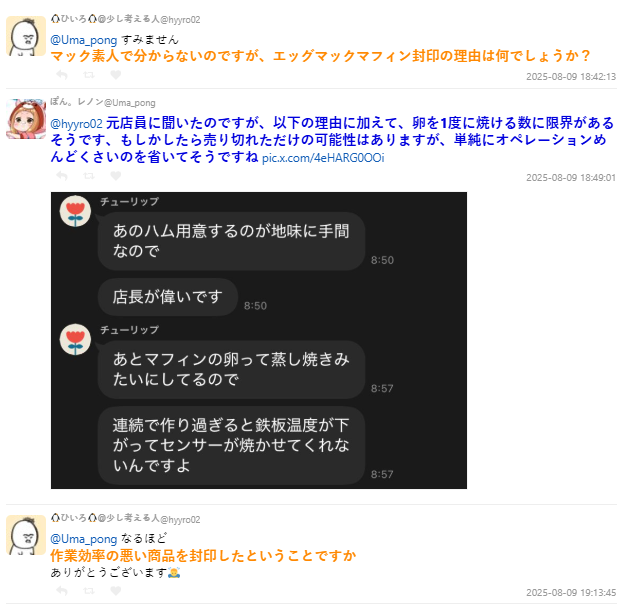
As for halting Egg McMuffin sales, a former employee explained that reasons included limited egg-frying capacity and a complex preparation process, all aimed at easing kitchen pressure. Additionally, some store managers opted to separate Happy Meal sales from regular orders or restricted purchases to counter queues only, effectively preventing scalpers from bulk-buying through mobile systems.
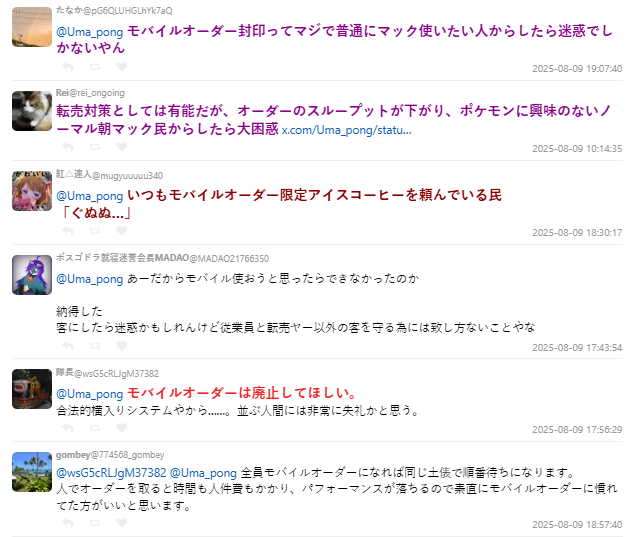
However, not all these measures were met with universal acclaim. Some customers found blocking mobile orders inconvenient for those simply looking for a meal, especially regular morning patrons accustomed to ordering coffee or breakfast via their phones. Critics argued that McDonald's HQ should directly modify its system to limit single-purchase quantities or eliminate scalpers' advantages, as the only true way to resolve the chaos.
Other netizens pointed out that while mobile ordering certainly boosts efficiency, if not properly integrated with in-store order scheduling, it essentially becomes "legal queue-jumping," detracting from the experience of those waiting in physical lines. Striking the right balance between convenience and fairness will be a critical test for McDonald's operational strategy moving forward.
Of course, simply "blocking mobile orders" alone might not be enough to stop scalpers from flooding stores and causing chaos. It still requires on-site queue management and specific mechanisms to achieve the success seen at the branch shared by the OP.
Perhaps McDonald's needs to devise more robust solutions to consistently tackle the buying frenzies that accompany these popular collaboration meals. After all, following popular collaborations like Kirby and Chiikawa, it's been the same old story, leaving Japanese consumers wondering if McDonald's truly has the capacity to manage these recurring issues.
via: togetter