

Gaming icon Hideo Kojima recently sat down with Wired Tokyo for a rapid-fire Q&A, where reader questions prompted him to reflect on the pivotal moment that kicked off his illustrious career. He didn't mince words: 1985's "Super Mario Bros." wasn't just the game he played the most; it was the ultimate catalyst that launched him into the world of game development.
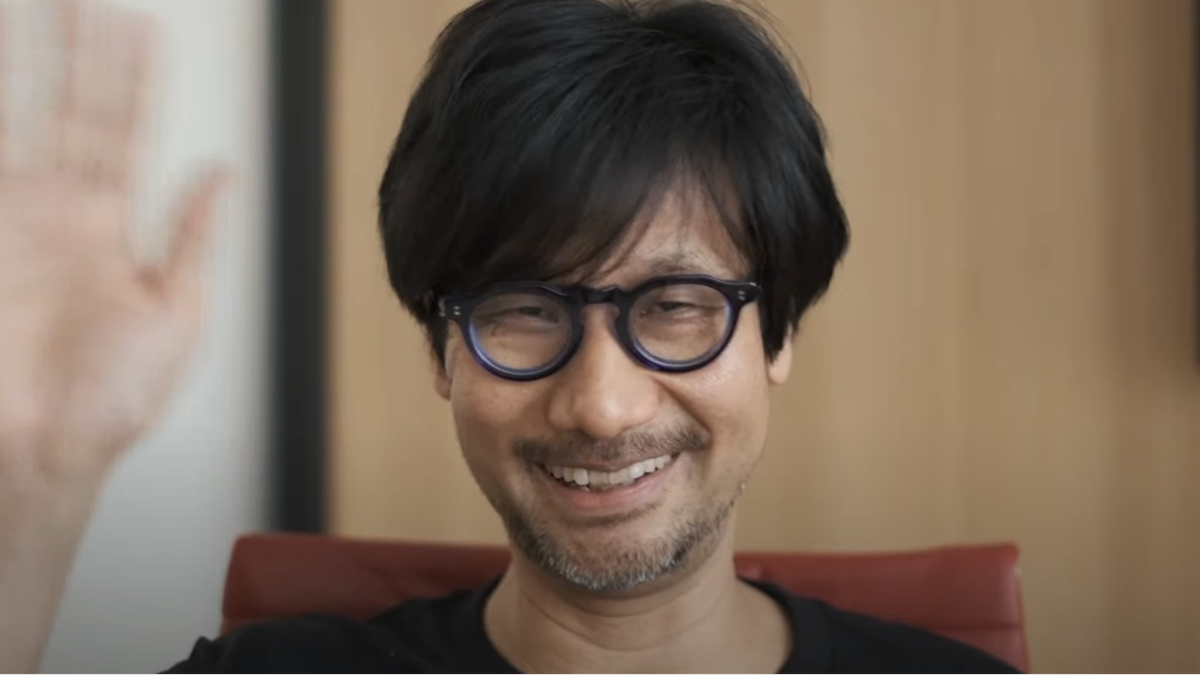
When asked, "What's the game you've played the most in your life?" Kojima's answer was immediate and unequivocal: "Super Mario Bros., no question."
That might come as a surprise to many, given Kojima's reputation for cinematic storytelling, intricate themes, and sprawling worlds. But he quickly clarified that it was this seemingly simple platformer that first made him truly grasp the immense potential of games as a medium.

Kojima reminisced about his college days, admitting he'd skip classes to obsessively play "Super Mario Bros." at home for an entire year. He chuckled, saying he probably wouldn't have entered the game industry at all if it weren't for that game. While he rarely touches side-scrolling action games these days, he still vividly recalls its brilliant design.
Mario running left-to-right with jumping as the core action seems straightforward, but the inclusion of the dash button subtly altered jump trajectories and speed, impacting decisions for attacks and dodges, revealing incredible depth. This delicate balance between just two buttons is what made "Super Mario Bros." stand head and shoulders above other platformers of its era, and why it still feels incredibly smooth and timeless today.
Kojima pointed out that despite having almost no explicit narrative, players still strongly felt like they were embarking on an epic adventure. When he first experienced that sensation, even with pixelated graphics and no complex plot, he became convinced that games, as a medium, would one day surpass film in their expressive power.
He also highlighted the crucial role of Nintendo's world-building at the time. The Mushroom Kingdom, while a background setting, cleverly blended Japanese folklore with fantasy elements like "Alice in Wonderland." Through visual shifts and clever level design, players gradually felt the adventure unfold and the world come alive.
Later in the interview, Kojima touched upon his portrayal of technology and society in "Metal Gear Solid 2." He clarified that while the game is often mistakenly seen as a prophecy for artificial intelligence, it actually focused on digital society itself – specifically, the state where intertwined information gradually develops a "will."