
In 1972, Go Nagai was working himself to death: In early summer, he "reincarnated" his manga that had been canceled the previous year, incorporating elements of gods and demons reversing roles into his new manga "Devilman"; a few weeks later, at a meeting discussing the animation production of "Devilman," a plan for a new robot work was decided.
As we know, the overwhelmed Go Nagai came up with the idea for "Mazinger Z." In the late autumn of October, Nagai's "Mazinger" manga began serialization, and in December, the "Mazinger" anime began airing... Whether as a manga artist or a planner, Go Nagai was already in a state of extreme overwork... And being a manga artist is inherently a job prone to severe overwork; even with Nagai's endless ideas, he didn't have enough physical stamina to complete 8 pages of manga manuscript per week.
Ken Ishikawa-sensei Image credit:Anilist/
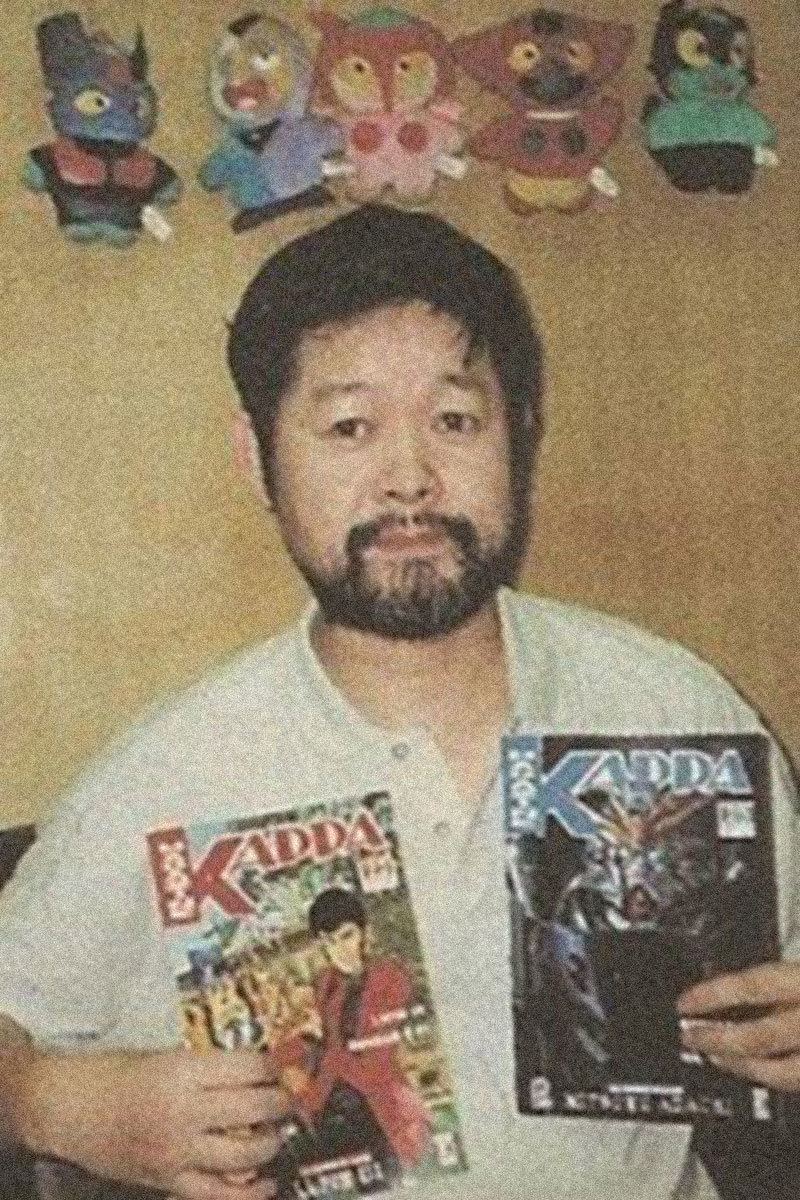
Here he comes, here he comes, the super-hero who saves super-heroes.
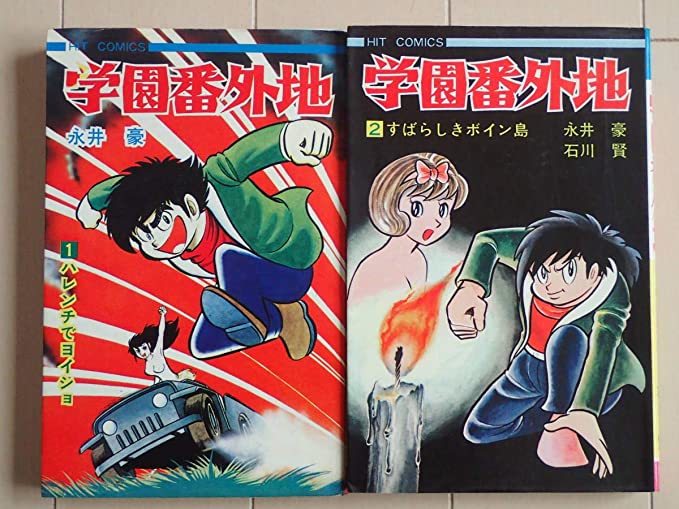
His penmanship was divine, his output incredibly high, and even better, he deeply understood Nagai-sensei's drawing style and excelled precisely in the areas Nagai-sensei did not—Ken Ishikawa, who had already worked as an assistant under Go Nagai for four years, had already assisted in drawing Nagai's works such as "Harenchi Gakuen" and "Abashiri Ikka," and was already Nagai's best right-hand man, arrived. He saved Go Nagai, who was not just his "teacher" but also his "comrade-in-arms," and would assist Nagai in drawing the new manga "Getter Robo."
At this time, Ishikawa might not have realized that he would not just be the pen that drew Getter Robo; soon after, he would become Getter Robo's true father, raising it to be the greatest robot in the world.
Ken Ishikawa assisting in drawing Go Nagai's "Gakuen Bangaichi" Image credit:Amazon
Creativity was a common factor flowing in the Nagai family's blood: Go Nagai's younger brother, Takashi Nagai, later became the president of Dynamic Production and Dynamic Planning, companies founded by the brothers. This planner, who had a better business mind than his elder brother, was the first key contributor to making "Getter Robo" so special. It was he who decided that Getter Robo must be formed by the combination of three vehicles—a purely commercial consideration to encourage consumers to buy three toys at once.
Evidently, this concept was completely different from "Mazinger"'s "Pilder On" combination; it didn't stem from any profound psychological theory, nor from any life experience... perhaps it originated, to some extent, from a car accident.
"Getter Robo" is extremely brutal Image credit:Pinterest
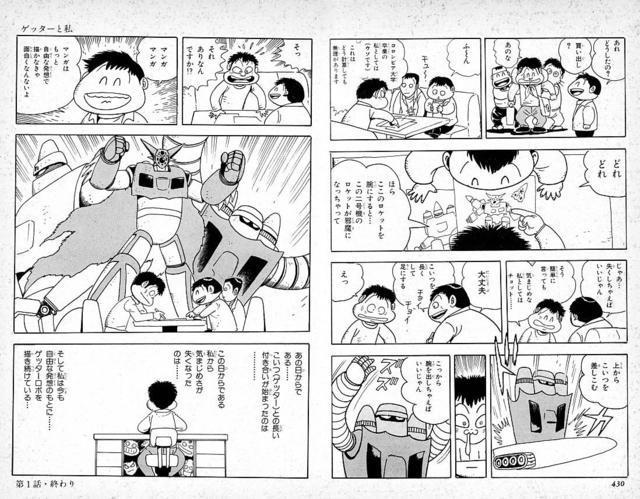
Ken Ishikawa later recounted in the manga appendix "Getter and I": Dynamic Production bought three cars, and Go Nagai, Ken Ishikawa, and Takashi Nagai each drove one—how glorious... except none of the three had driver's licenses, and they didn't seem to be very good drivers.
Then, whether it was the cruel trick of fate, the machinations of greedy desire, or the karmic cycle of good and evil... it was probably just poor driving skills—their three cars crashed into each other. And Go Nagai, startled, sat up in his car and shouted: "The next project will be a combining robot! That's the feeling! Three-machine combination!"
Go Nagai (left) and Takashi Nagai-san Image credit:Anime! Anime!
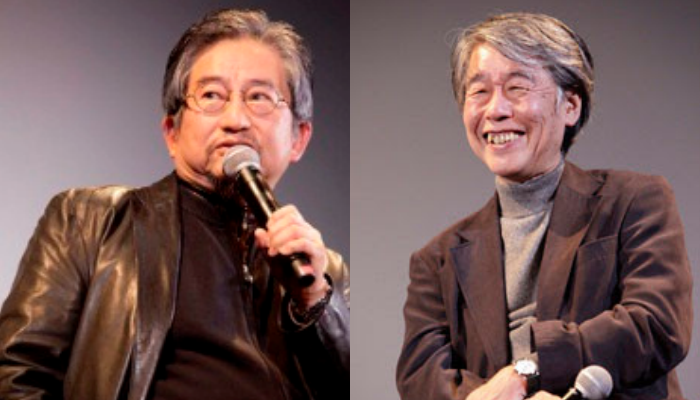
This origin story is much better than one made purely for profit, but unfortunately, it's Ishikawa Ken's romanticized version. The truth is, Getter's origin stemmed from the commercial considerations of Nagai Takashi and Toei Animation.
Go Nagai listened as his younger brother excitedly described "three machines combining and transforming," and "they can become three different robots based on different combinations"... Go Nagai couldn't help but scoff, "What on earth is this guy talking about?" However, everyone loved the transformation and combination idea of "Getter Robo," especially Toei Animation, who was collaborating on the project.
Both the planning company and the animation studio saw the immense business opportunities behind combining robots and enthusiastically voted in favor of profiting from it. But they overlooked a fundamental question: who would draw the "Getter Robo" manga? The custom at the time was to first launch a weekly serialized manga to gauge popularity—drawing manga was cheaper than producing animation or toys, and it served as an excellent market research questionnaire.
Three Getter Robo toys that can reasonably transform Image credit:Chogokin Damashii
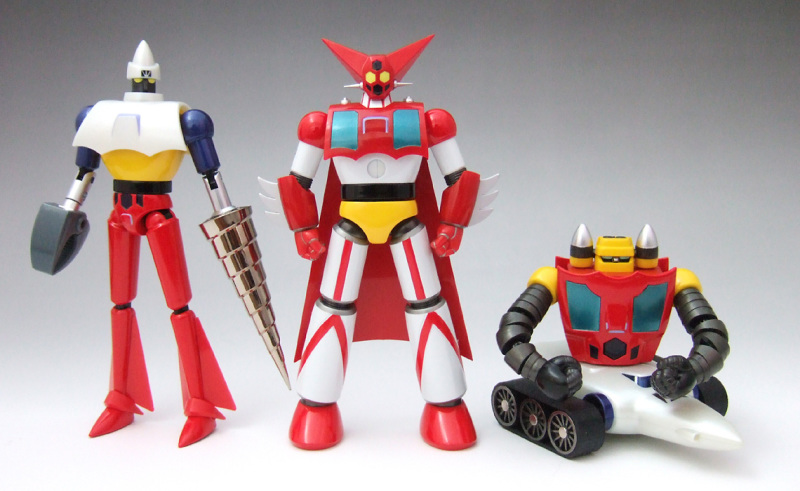
Then came Ishikawa Ken. He had been involved since the planning stage, but he became the pivotal figure for this manga.
The Getter Robo, not yet named "Getter," needed to embody most of the creative settings in the manga. Readers needed to see what Getter Robo looked like, how they combined, what three robots they formed when combined, who piloted these miraculous machines, and what they would fight against... Go Nagai was responsible for most of the creative concepts, but he was already unable to shoulder the majority of the work. At this time, he also had "Cutie Honey" and "Dororon Enma-kun" on his hands—both manga quickly became TV anime. And this king of creativity was very willing to let his good comrade share the burden.
Piloting Shin Getter Dragon Image credit:Twitter
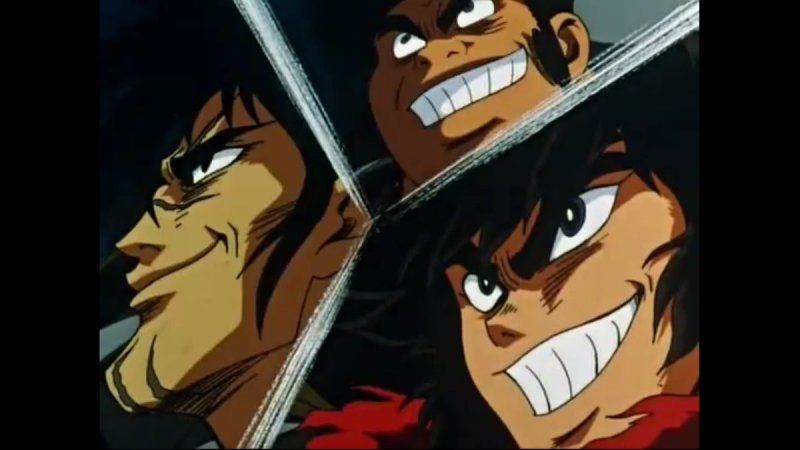
Ishikawa Ken's first contribution was determining the design of Getter-1's appearance.
Many know that he decided on a tortoise shell pattern for Getter-1's face: specifically, the hexagonal mouth and the trapezoidal "beard" surrounding it. However, Getter-1's torso and limbs were actually the focus of Ishikawa Ken's design: the cylindrical body and limbs were, in fact, somewhat out of fashion at the time. One can compare the manga version of Getter-1 with the anime version; the latter's physique presents a more masculine inverted triangle shape. Similarly, "Steel Jeeg," released by Dynamic Planning and Toei Animation after "Getter Robo," also featured a similar inverted triangle appearance. Conversely, Getter-1, as drawn by Ishikawa Ken in the 70s, looked more akin to "Tetsujin 28-go" from the 60s.
Note the thick cylindrical design of Getter-1's limbs and torso Image credit:EVOLUTION TOY
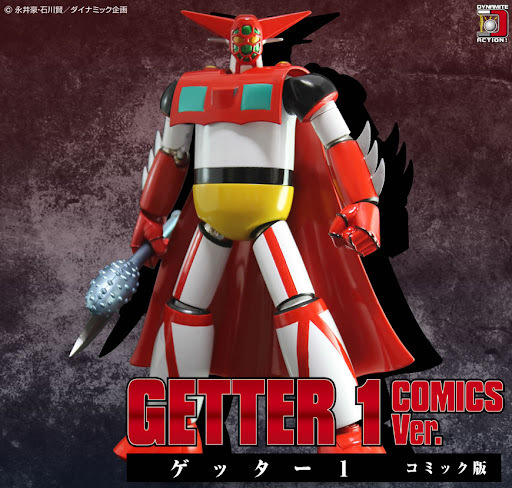
This was a deliberate design: the robot manga Ishikawa Ken most wanted to remake with his own hands was Mitsuteru Yokoyama's "Tetsujin 28-go," created in 1956. Thus, Getter-1 became the "Ishikawa Version Tetsujin 28-go" clad in red. Both arms and legs were entirely composed of equally thick cylinders—compare this to Steel Jeeg, which featured varying thicknesses in its upper and lower leg designs.
As we mentioned before, although Mazinger Z was more akin to a "vehicle" than a "human" concept for Go Nagai, in the original drafts of Getter Robo, these robots were actually closer to "human transformation forms": the three protagonists were supposed to transform into Getter-1 by forming a human pyramid.
Getter's early design drafts, where the three fighter jets were originally three race cars Image credit:Twitter
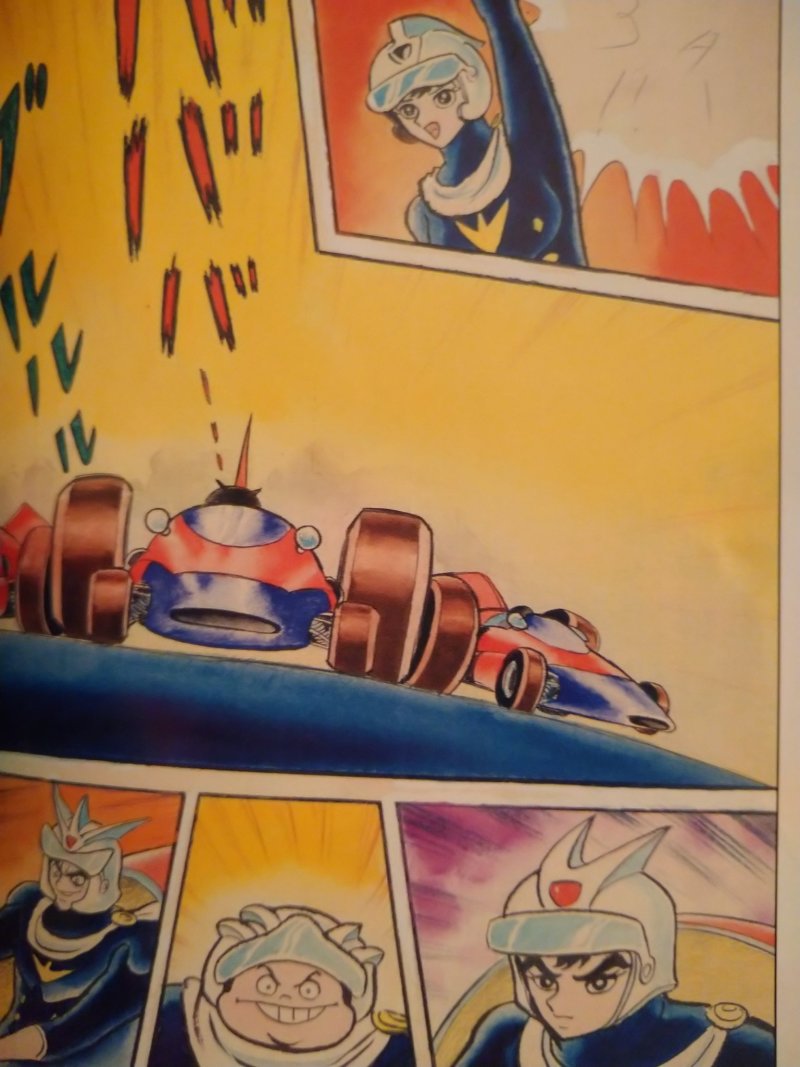
However, Ishikawa Ken's Getter-1 design was akin to shouting, "I'm not going to be human!"—Getter-1 looked very difficult to associate with a human transformation, its cylindrical shape exuding a ruggedness typical of heavy machinery. In Ishikawa Ken's view, Getter Robo should inherit the vehicle concept of Mazinger Z; it wasn't the protagonist, but rather the pilots inside its body who were the protagonists... Ishikawa Ken even adhered to this belief more strongly than his mentor who developed the concept. In the "Getter Robo" manga, Ryoma Nagare, Hayato Jin, and Musashi Tomoe are all characters with rich personalities, often overshadowing Getter Robo itself.
Even before a suicide attack, abandoning teammates, one must smile and press the button Image credit:Ameba
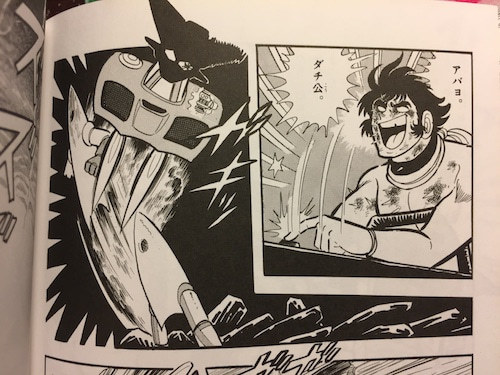
If you first encountered Getter Robo through games like "Super Robot Wars," you might not fully grasp this feeling—in those games, you control robots from various series, and they are the protagonists.
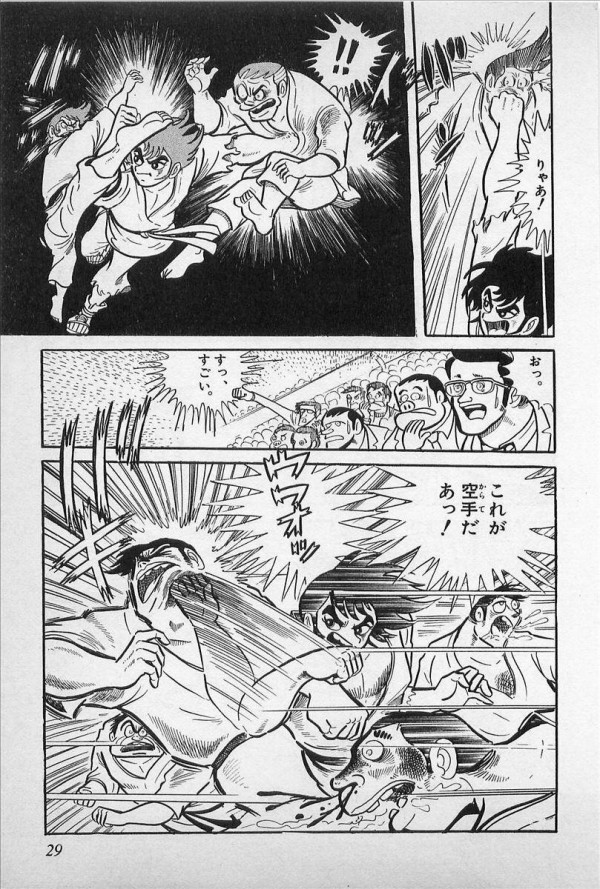
However, in Ken Ishikawa's original work, Getter Robo is merely a supporting character. When all Japanese youths expected "Getter Robo" to follow the style of "Mazinger Z," a 'robot fighting' manga featuring giant robots battling mechanical beasts, Ken Ishikawa immediately stunned everyone: Ryoma Nagare, a highly skilled and violent karate master, entered the national martial arts tournament carrying his father's portrait. Upon entering, he immediately knocked down the instructor, then proceeded into the arena, striking down obstructing referees, and furiously knocking out the reigning champion with two punches... His eyes wide open, he seemed possessed:
"Is this all the champion can do? The Japanese martial arts world has truly fallen into depravity!"
How to identify Ken Ishikawa's characters? Those with these 'circle' eyes, symbolizing madness, are them Image credit:Twitter
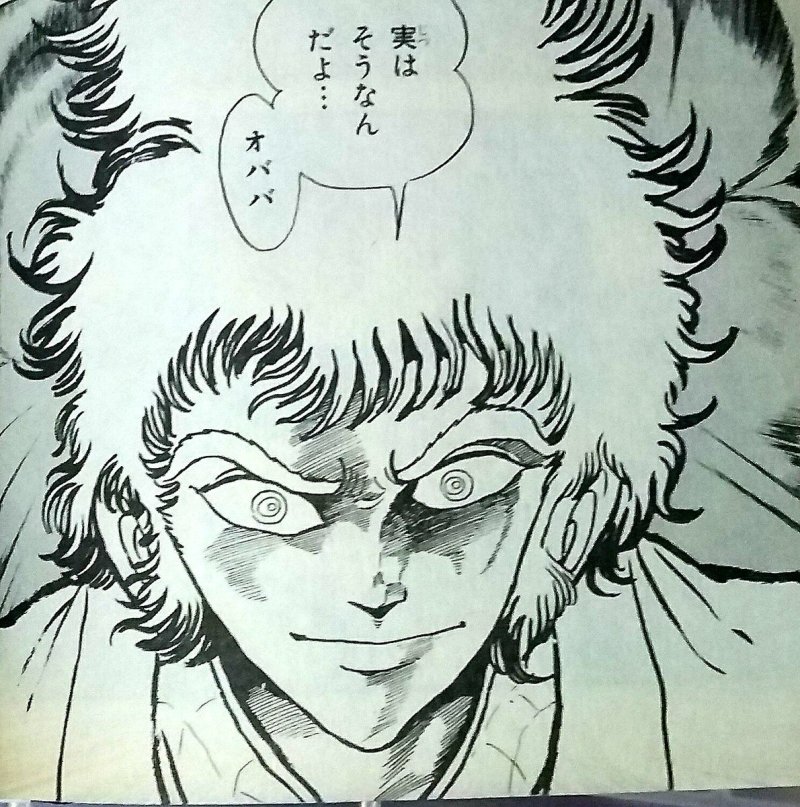
Ryoma let out a wild laugh in the arena. This wasn't a robot manga; this was entirely "Shura no Mon," "Ashita no Joe," or even "Baki" if you prefer.
The definition of 'karate' that Ryoma recognized, and that his father upheld throughout his life despite being ostracized by the karate world, was different from the rest of the world. They believed karate should be a 'killing sport,' aiming for vital points, where victory isn't declared until the opponent is dead.
Karate means fighting until death (big mistake) Image credit:livedoor
Let me remind you again, Getter Robo had not yet appeared; in fact, it hadn't even been completed in the manga. Ryoma Nagare accepted Dr. Saotome's recruitment, arriving at the research institute to train as a pilot... then... a disgusting army of salamanders invaded the institute, controlling corpses to become zombies; giant pterodactyls descended from the sky to attack the institute.
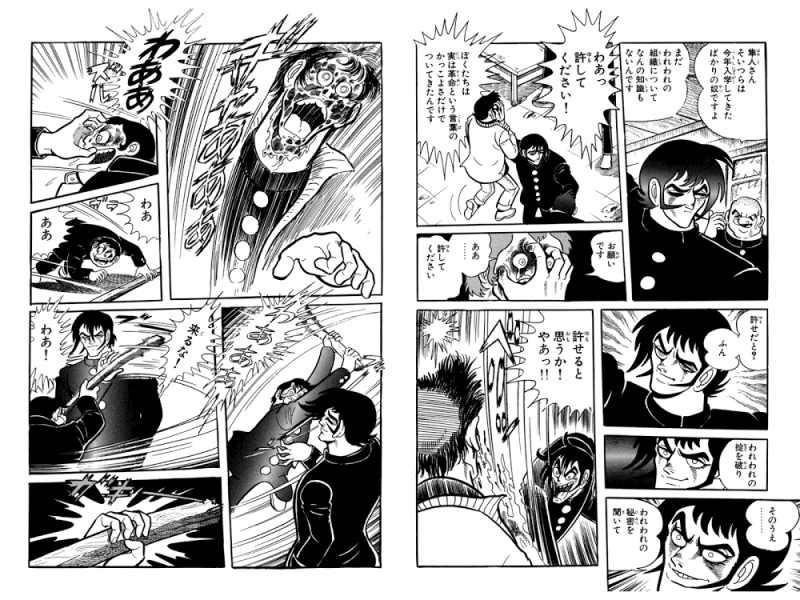
Ryoma, holding the doctor and his daughter, darted around, dodging monster attacks: he became the protagonist of "Resident Evil," using a flamethrower to incinerate salamanders and zombies, and he still hadn't boarded Getter... Surely he'd pilot the robot next chapter... No, we see another protagonist appear, Hayato Jin, leader of a violent student organization, who is preparing to assassinate the Japanese Prime Minister, then tear off the entire face of disobedient subordinates and gouge out their eyes.
Tearing off faces and gouging out eyes, revolutionaries certainly know how to 'revolutionize' others' lives Image credit:kohidekazu's blog
Years later, some found Master Asia cool, able to fight Gundams with his bare fists and flying kicks. But in 1972, Ken Ishikawa, in his robot manga, had already created human protagonists more powerful than Getter Robo and more brutal than the Dinosaur Empire.
Ken Ishikawa still inherited his master Go Nagai's 'vehicle aesthetic,' but he inherited it a bit too faithfully: Ryoma Nagare, Hayato Jin, and Musashi Tomoe were already human weapons, and Getter Robo was merely their brass knuckles, drill, and judo gi—just a weapon they used to slaughter larger opponents.
Ishikawa's man-machine fusion aesthetic: both machine and pilot battered and broken together Image credit:Twitter
Koji Kabuto was just a delinquent, Amuro Ray was merely an introverted boy, and Shotaro Kaneda was still an excellent student with good grades and conduct. The gentle Ken Ishikawa, however, seemed to unleash his intense violent streak solely through his pen, even surpassing Go Nagai, who was dubbed the 'King of Violence' by the Japanese PTA—Devilman Akira Fudo's personality was, in fact, hopelessly gentle.
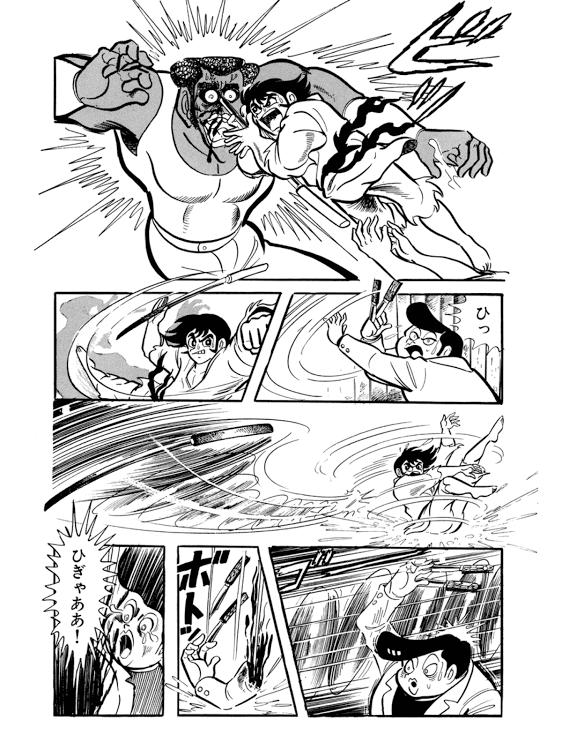
However, the Ryoma Nagare and Hayato Jin created by Ken Ishikawa possessed such vile personalities that even 21st-century readers would find them unacceptable. When a stray dog barked at Ryoma Nagare on the street, in the very next panel, the dog was decapitated, its head severed from its body and discarded nearby. Ryoma, his left hand stained with blood, merely sneered, saying, "The rain is truly too heavy; even the dogs are this agitated." You're the agitated one! You're completely creating corpses along the way!
Katana straight through the forehead, throwing knife disarming an arm – Ryoma Nagare is the most villainous man in manga history Image credit:kohidekazu's blog
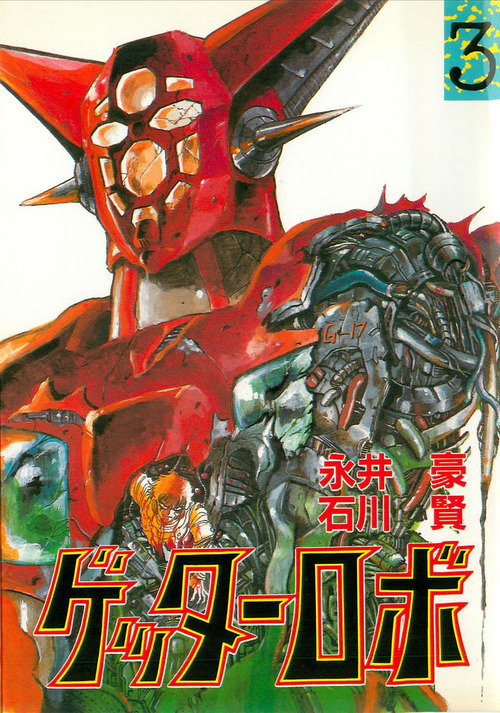
The "Getter Robo" manga is credited as a "collaboration between Go Nagai and Ken Ishikawa," but in reality, the essence of this manga, and even the subsequent anime adaptation, entirely originated from Ken Ishikawa.
The character art style we see is indeed Go Nagai's style, but it is also the style of Ken Ishikawa, who served as Nagai's assistant for many years. Furthermore, the mecha design for "Getter Robo" was spearheaded by a reluctant Ishikawa—after he finished designing Getter-1, Go Nagai wanted him to directly complete the designs for the remaining two mechs. Ishikawa suddenly found himself in a situation where he became the main party involved, strongly insisting that Nagai also participate in the design of Getter-2 and Getter-3.
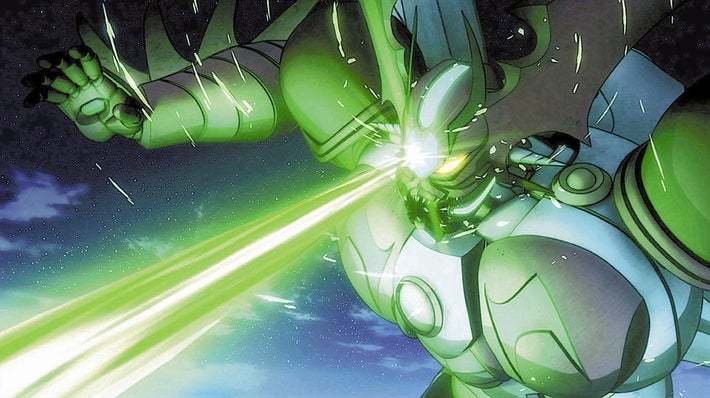
"Getter Robo Arc" anime Image credit:読売新聞オンライン
Beyond just the mechs, Ishikawa was also more skilled than Nagai at drawing background scenes and characters—a skill honed from his training as an assistant. Moreover, he drew faster than Nagai and with better quality. All of this made the "Getter Robo" manga even more visually appealing, and simultaneously, more blood-soaked.
It is evident that Ken Ishikawa not only poured his artistic skill into this manga but also infused his very soul: Ryoma, Hayato, and Musashi represent three facets of his personality—willfulness, violence, and kindness. No single aspect alone could sustain the monumental project that is "Getter Robo"; they had to merge to unleash their greatest power.
Ishikawa never cut corners when drawing background characters Image credit:mandarake
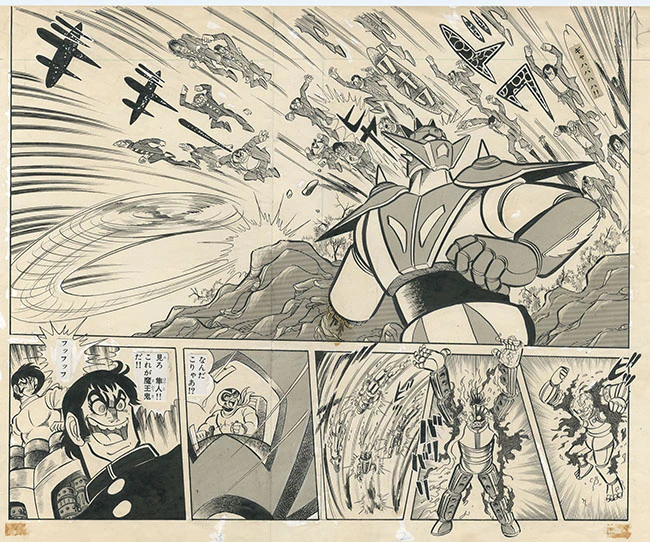
Surpassing its predecessors, "Getter Robo" recreated the tragic grandeur and brutality of "Devilman's" one-against-a-hundred battles; it optimized the man-machine fusion aesthetic of "Mazinger Z" (when Getter was damaged, fragments of the mech directly pierced Ryoma's body, leaving him as blood-soaked as Getter); and its level of cruelty almost exceeded most contemporary works or even Go Nagai's own creations. The protagonists met their ends in the most tragic ways, yet all possessed an iron will unafraid of death... either perishing with their enemies or dying from exhaustion while still standing firm, all of which were Ken Ishikawa's designs.
Even Go Nagai himself stated, "Getter belongs to Ishikawa."
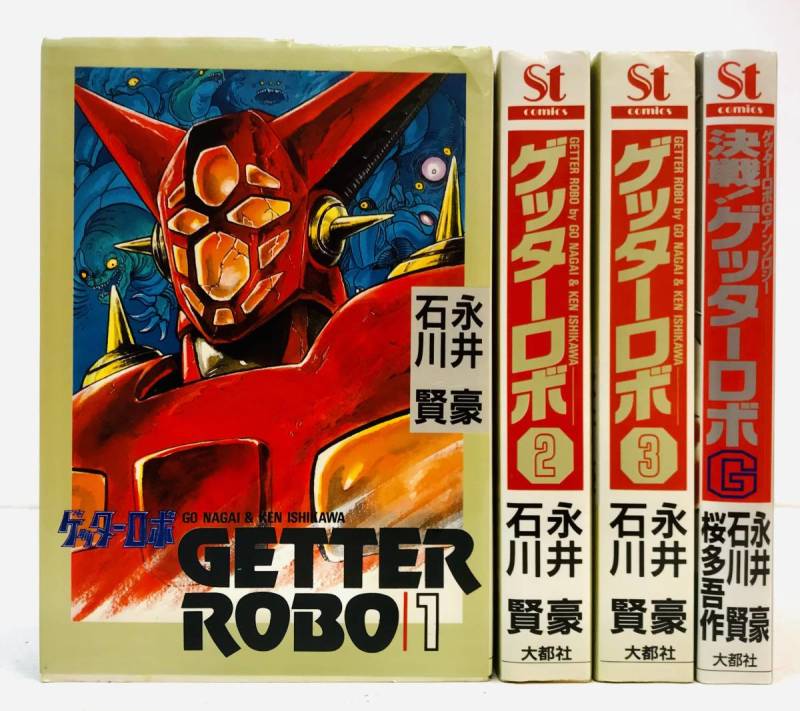
"Getter Robo" manga Image credit:ヤフオク
Ishikawa possessed Ryoma's madness, but also Hayato's rationality. Although he gradually became the dominant figure in "Getter Robo," he couldn't easily resolve the numerous illogical settings within "Getter Robo."
For instance, how do three fighter jets combine to form Getter-1? Theoretically, three fighter jets should have six possible combination methods, so why are there only three?
The rationality of these combination mechanisms could not be fully explained within the fast-paced and short-length manga serialization. For the rational Ishikawa, these illogical designs could only be glossed over—Ryoma and his comrades still had an entire empire to conquer. He must have endured immense, brain-taxing pressure during the creative process.
Go Nagai's ideas for transformation and combination were incredibly bold Image credit:Twitter
The serialization of "Getter Robo" was immensely popular, followed by Ishikawa's continued serialization of "Getter Robo G," and even "Getter Robo Go," among others. By the time of "Getter Robo Go," Go Nagai was merely credited for the original character designs. Ishikawa continued to serialize "Shin Getter Robo" in 1997, and in 2001, he created "Getter Robo Arc," the final chapter of the "Getter Robo Legend." However, before he could finish, this great manga artist passed away prematurely at the age of just 58.
But if you open the 1972 "Getter Robo" manga, even in that nearly 50-year-old comic, the inexhaustible madness of Ken Ishikawa's creativity still erupts.