

Having one's work serialized in one of Japan's top manga magazines, "Weekly Shonen Jump," and gaining reader popularity, can be considered one of the ultimate dreams for a Japanese manga artist. To become such an enviable manga artist, one must surely have aspired to a career in manga from a young age... growing through continuous diligent practice of drawing skills. Then, based on years of assistant experience, absorbing the master's style, and meticulously designing a plot outline... finally releasing works with beautiful artwork and touching stories. This was true for Tetsuo Hara, Ken Ishikawa, and Yusuke Murata... In fact, most of the "Weekly Shonen Jump" manga artists we've introduced followed this path; they loved drawing as children, and with a combination of opportunity and effort, they successfully became full-fledged manga artists not long after graduating high school.
Akira Miyashita Image credit:excite
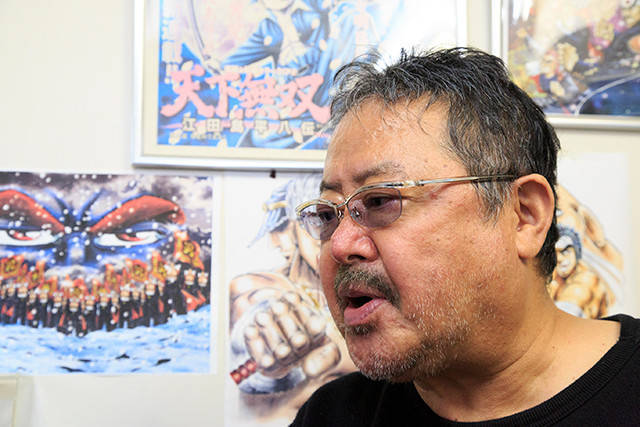
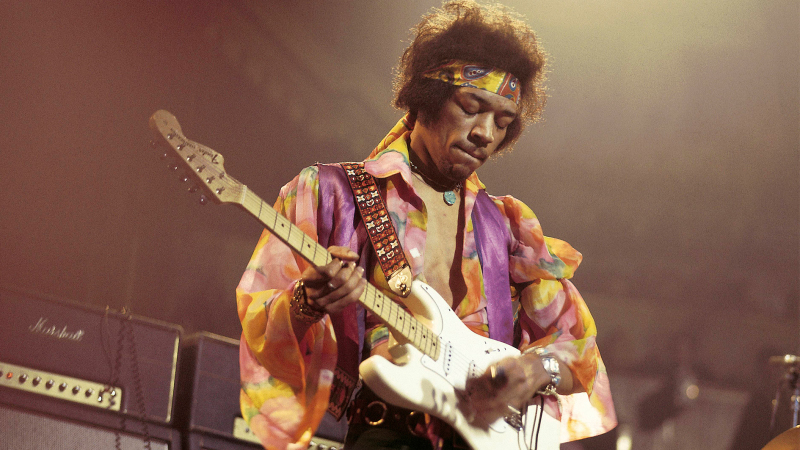
Akira Miyashita is not your typical "Weekly Shonen Jump" manga artist; he is not the embodiment of "early success"—he was already 32 years old when he released his representative work, "Sakigake!! Otokojuku." Furthermore, manga wasn't even his childhood dream career. During high school, Miyashita hoped to become a legendary guitarist, just like the iconic Jimi Hendrix.
Jimi Hendrix Image credit:Guitar World
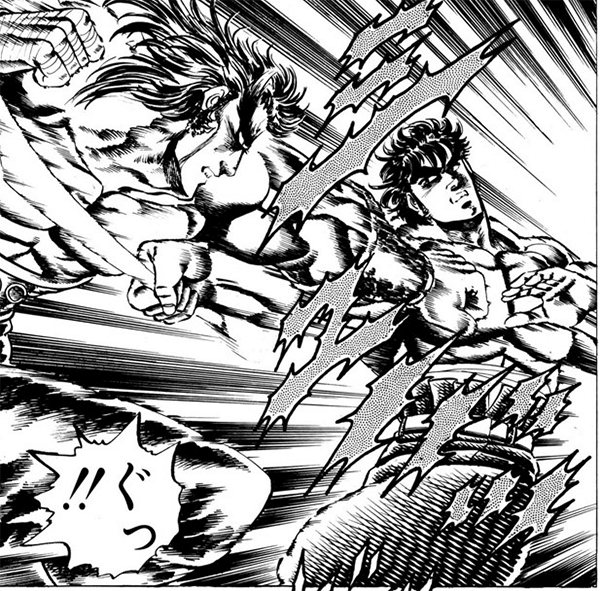
Young friends who love "Sakigake!! Otokojuku" and aspire to emulate Akira Miyashita, hoping to become manga artists whose works sell tens of millions globally in the future, this is not a story you can draw inspiration from: Akira Miyashita, this late-blooming manga artist, had a creative career that defied tradition; words like "rigorous" or "meticulous" are not found in his dictionary. He faced protests from educational institutions, publishers, Taiwanese TV stations (and perhaps a large number of readers crying "we were tricked"), and was criticized for serving imperialism. Miyashita is one of the most groundbreaking manga artists in "Weekly Shonen Jump" history, and other groundbreaking manga artists have not been as successful as he was.
"Sakigake!! Otokojuku" features intense battle scenes Image credit:ebookjapan
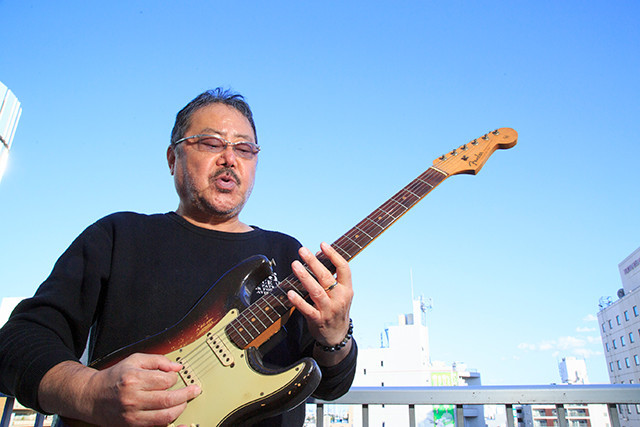
The Rebellious GuitaristHigh school student Akira Miyashita was a student who loved music, especially rock and roll. He admired rock stars like The Rolling Stones, and particularly Jimi Hendrix, who was revered as a god in the rock world. Miyashita was indeed good at drawing as a child, to the extent that he was praised by classmates and teachers. However, for a high school student deeply immersed in rock music, holding a 1968 Fender guitar like the one in Jimi Hendrix's hands was far more appealing than holding a G-pen. After graduation, Miyashita continued on his path to becoming a guitarist, working as an accompanist in small bars in Tokyo.
Miyashita-sensei, skilled in guitar Image credit:excite
Being a bar guitarist was a legitimate job, but not a highly respected one: customers weren't there specifically to hear you play, and they had no interest in your musical taste for the evening; bar managers weren't relying on you to make their business profitable, they cared more about whether you showed up on time; there were many beautiful hostesses, making it seem like a job where you could feast your eyes daily, but almost every hostess had her own life struggles, and getting deeply involved would only lead to trouble. For Miyashita, his most important passion in life was quietly being eroded in such a mixed environment. He occasionally found himself caught up in disputes between patrons, and increasingly felt he couldn't continue with this job.
Miyashita when "Sakigake!! Otokojuku" began serialization Image credit:Ameba
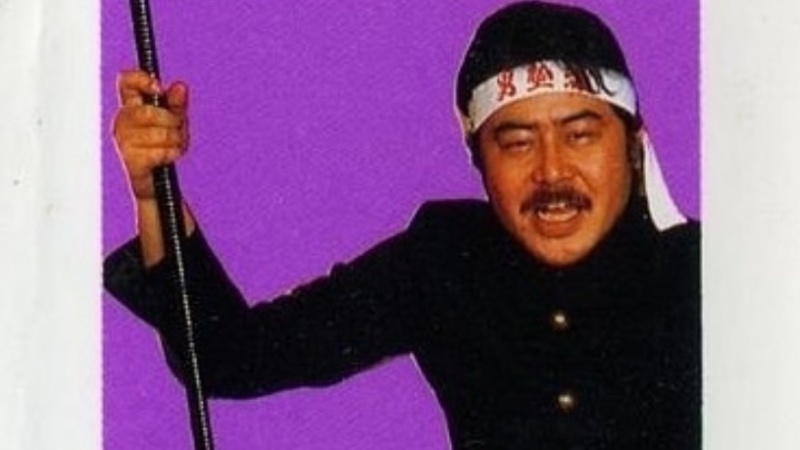
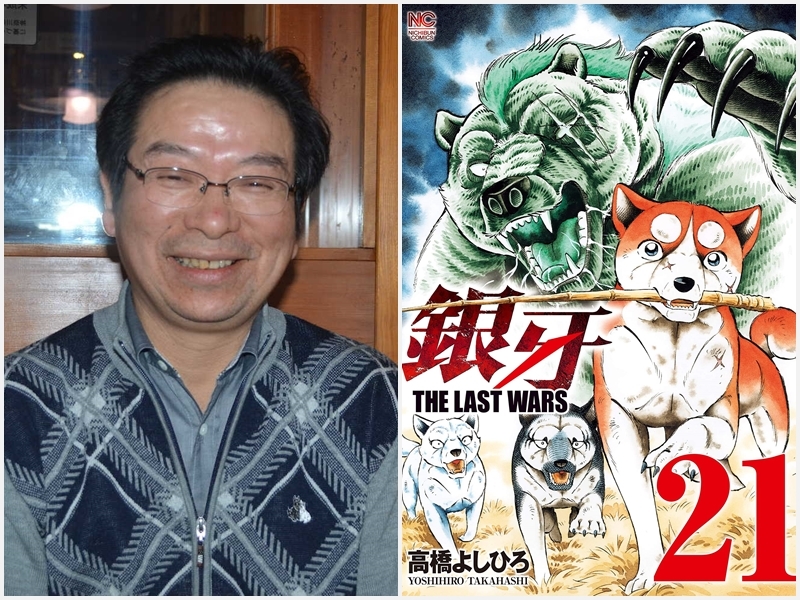
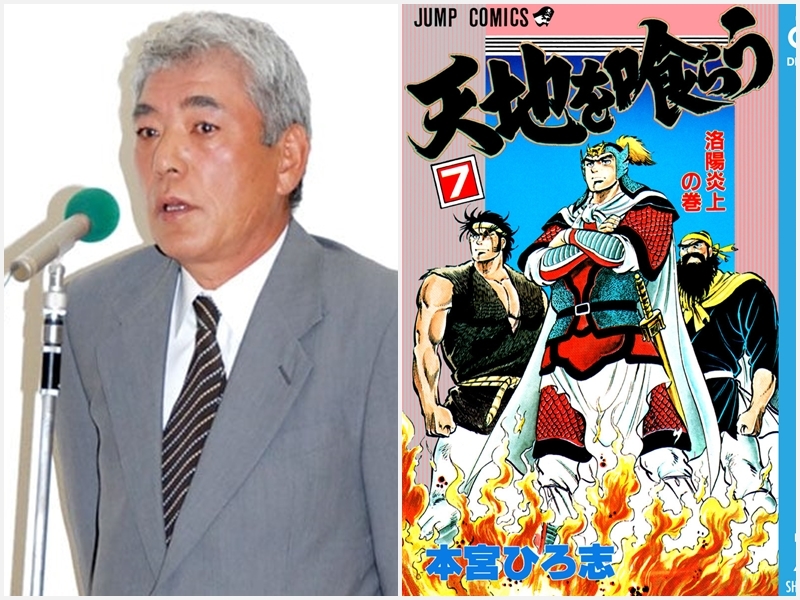
Becoming a manga artist was never Akira Miyashita's first choice in life. Instead, it was a secondary option he pursued after facing career setbacks and realizing his drawing skills might open new opportunities. When Miyashita visited publishers with his portfolio, he unexpectedly became an assistant to other prominent manga artists. However, to say Miyashita then resolved to become a great manga artist would be a stretch. Rather, it's more accurate to say he genuinely admired the two manga artists he worked with at the time, Yoshihiro Takahashi (高橋よしひろ) and Hiroshi Motomiya (本宮 ひろ志), and their works—Takahashi-sensei's works featured fierce, unyielding dogs, while Motomiya-sensei's works depicted indestructible men.
Yoshihiro Takahashi (left) in conversation with his disciple Miyashita Image credit:Manba
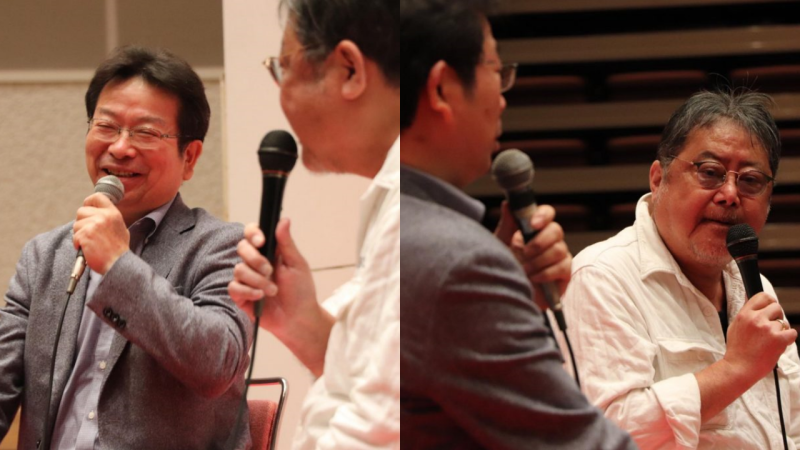
One of the two masters Miyashita assisted: Yoshihiro Takahashi, known for "Ginga: Nagareboshi Gin" Image credit:Goodreads
One of the two masters Miyashita assisted: Hiroshi Motomiya, known for "Tenchi wo Kurau" and "Salaryman Kintaro" Image credit:Manba
The Rebellious Manga Artist Who Faced Protests from Educational InstitutionsChildren who study music don't turn bad; they just might grow up to be adults who appreciate delinquents, brawling, and masculinity. If we put Takahashi-sensei's and Motomiya-sensei's works side-by-side and pick out their common elements, you'd likely find a strong dose of testosterone—after all, Takahashi-sensei was once a disciple of Motomiya-sensei. And this is precisely the most crucial element that Miyashita, a manga assistant who started his career later in life, inherited from these passionate masters. While drawing backgrounds for Takahashi-sensei's classic "Shiroi Majin" (White Demon Dog), Miyashita once depicted all the spectators in a dog-fighting arena as thugs, leading to severe protests from the editor who told him to stop drawing them. However, the editor underestimated Miyashita's delinquent spirit.
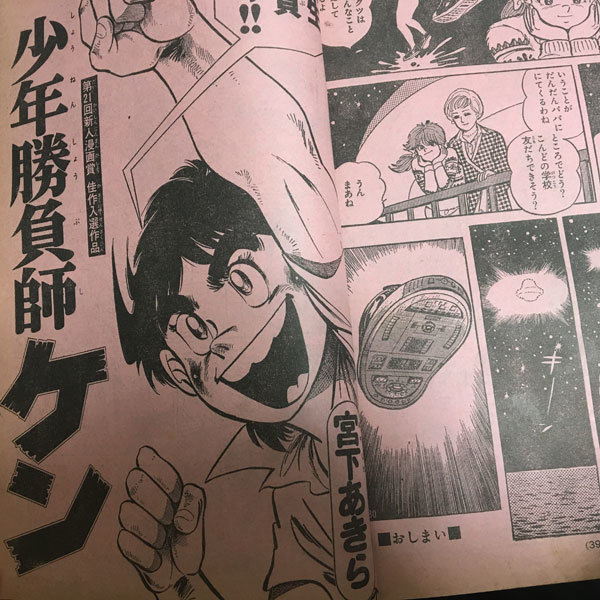
Miyashita's first serialized work in "Weekly Shonen Jump," "Shonen Shobushi Ken" Image credit:Shinra Bansho Dot Com
Miyashita later accepted Motomiya-sensei's introduction and began serializing "Shiritsu Gokudo Koko" (Private Delinquent High School) in "Weekly Shonen Jump." If you haven't read "Shiritsu Gokudo Koko," that's fine, because it's essentially a prequel to "Sakigake!! Otokojuku"—or rather, if "Shiritsu Gokudo Koko" hadn't been canceled, it would have become "Sakigake!! Otokojuku." Like "Sakigake!! Otokojuku," all the characters in "Shiritsu Gokudo Koko" are male high school students even more terrifying than thugs, as this is a specialized training school for yakuza members. Here, teachers and students diligently learn—how to cut down others and assert their masculinity, aspiring to become the greatest human weapons.
"Shiritsu Gokudo Koko" Image credit:Shueisha
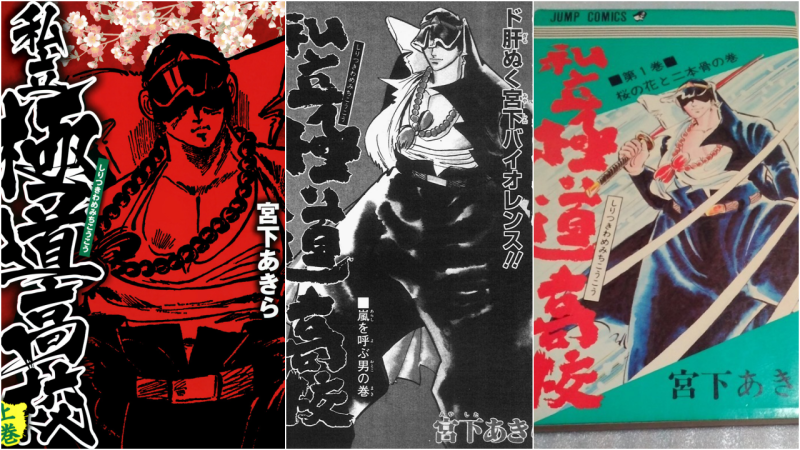
Such manga, naturally, are considered delinquent manga and were already an eyesore for educational institutions in various prefectures—and "Shiritsu Gokudo Koko" was serialized in "Weekly Shonen Jump," beloved by a large number of young readers. To make matters worse, one of Miyashita's assistants, who hailed from Shiga Prefecture, drew the school emblems and student names from schools in Omihachiman City and other locations in Shiga into the manga. Drawing delinquent manga is one thing; drawing manga that uses real institutions and names as its subject matter is a major issue that publishers cannot ignore. "Shiritsu Gokudo Koko" was ultimately abruptly canceled. Ultimately, this wasn't Akira Miyashita's fault, but you can imagine that for the angry teachers in Shiga, Miyashita was the "bad manga artist" who made them "not know how to teach children."
Later, Miyashita-sensei released "Shiritsu Gokudo Koko 2011" Image credit:FC2
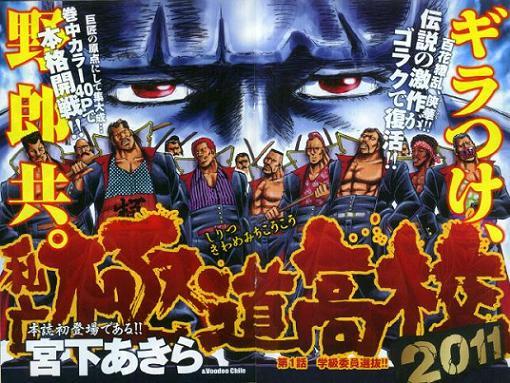
And then, Miyashita's next work still featured delinquent protagonists and plots centered on fierce rivalries... He made no attempt to distance himself from the disdain of the education sector.
The Rebellious MangakaMiyashita's admiration for masculinity might not solely be a legacy from Hiroshi Motomiya-sensei. His father was once a detective in the Metropolitan Police Department, and a single roar from him would make the hot-blooded Akira stand at attention. When Miyashita began serializing "Bogie THE GREAT" in 1983, he used his father as the model for the protagonist detective. Naturally, this tough detective, who disregarded police regulations, fired his gun at will, and forcibly entered private homes, demonstrated the mangaka's respect (and fear) for his father.
"Bogie THE GREAT" Image credit:twitter
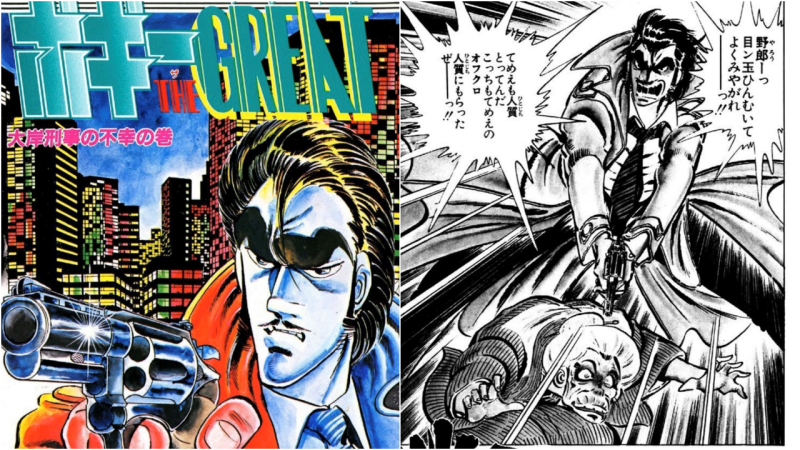
However, in 1983, the same year "Bogie THE GREAT" was serialized, another even more masculine man was born in "Weekly Shonen Jump": from the year 199X! Possessing the secret assassination art passed down through a single heir! Kenshiro had arrived!
Further Reading:
Who Gave Birth to "Fist of the North Star"? The Three God-Tier Men Behind This Legend of the Century's End Savior
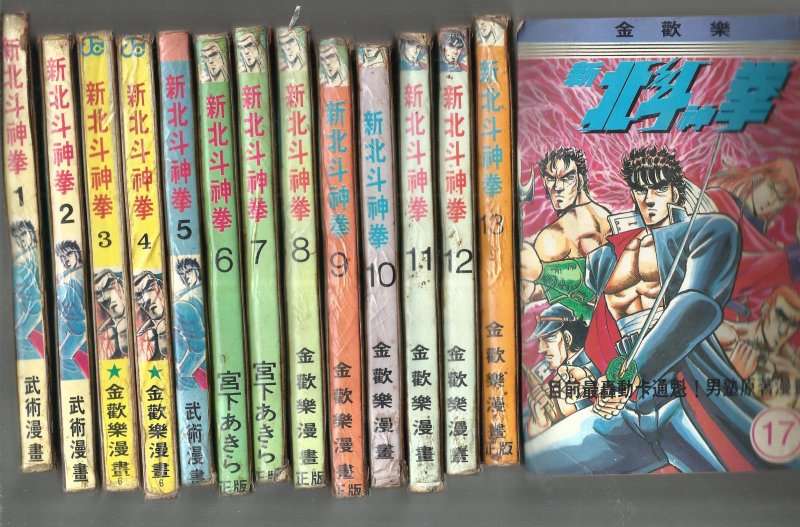
Early Taiwanese pirated publishers even once translated "Sakigake!! Otokojuku" as "New Fist of the North Star" Image credit:Yahoo Auctions
As we mentioned, "Fist of the North Star" established the golden formula for "Weekly Shonen Jump": the original creator provides the plot outline, the scriptwriter offers market-oriented feedback, and then the mangaka integrates the plot and suggestions to draw the final product. This formula showcased Shueisha's editor-led creative approach at the time, and "Fist of the North Star" became immensely popular as soon as it began serialization. Theoretically, all "Weekly Shonen Jump" works should have followed suit. Akira Miyashita, who at the time had not yet created a representative work, had most of his works canceled, and even had special content protested by educational institutions (editors should have fulfilled their duty of content review), seemed like an author who should have particularly adhered to this formula.
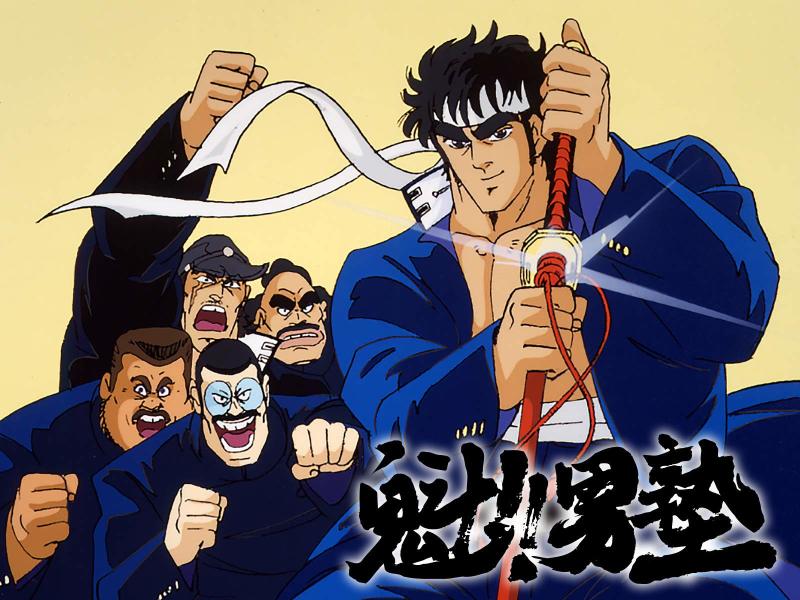
"Sakigake!! Otokojuku" also released an anime adaptation, which removed the politically incorrect plotlines from the manga Image credit:RENOTE
Theoretically, editors should have collected information and provided it to Miyashita weekly for reference; researched how "Sakigake!! Otokojuku" could avoid becoming another canceled work; studied the core plot outline of this manga; helped Miyashita gather information that could serve as inspiration for special moves or weapons; and at the same time, helped Miyashita avoid drawing any more inappropriate content that would infuriate official departments... Theoretically, this should have been the case. Unfortunately, that was only in theory.
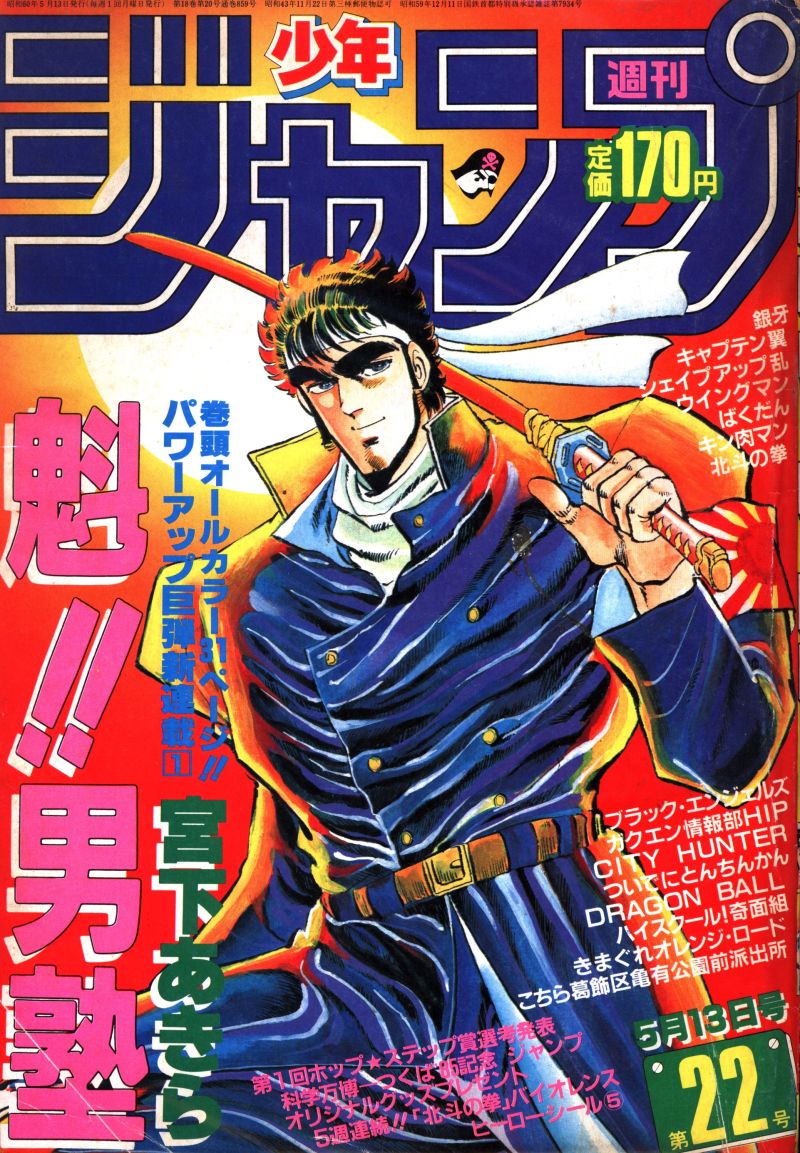
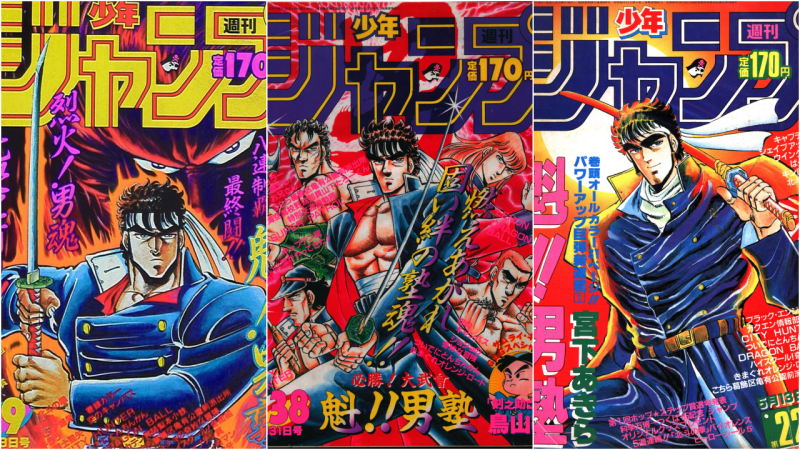
"Weekly Shonen Jump" 1985 Issue 22, featuring the first chapter of "Sakigake!! Otokojuku" Image credit:Mandarake
Miyashita did indeed hold so-called "serialization meetings" with his editors. The first three chapters of "Sakigake!! Otokojuku" were all born from brainstorming sessions between the editor and Miyashita. However, from the fourth chapter until the very last chapter, which concluded the successful serialization of "Sakigake!! Otokojuku," Akira Miyashita drew whatever he wanted. His creative ideas were not pre-approved by editors, nor were his line art drafts subjected to editorial nitpicking (after all, he had been working at "Weekly Shonen Jump" for 5 or 6 years, and the editors trusted his drawing skills). Akira Miyashita became the freest mangaka in "Weekly Shonen Jump," which was gradually becoming Japan's best-selling manga weekly—his famous quote is: "I only think about what the next page's plot will be."
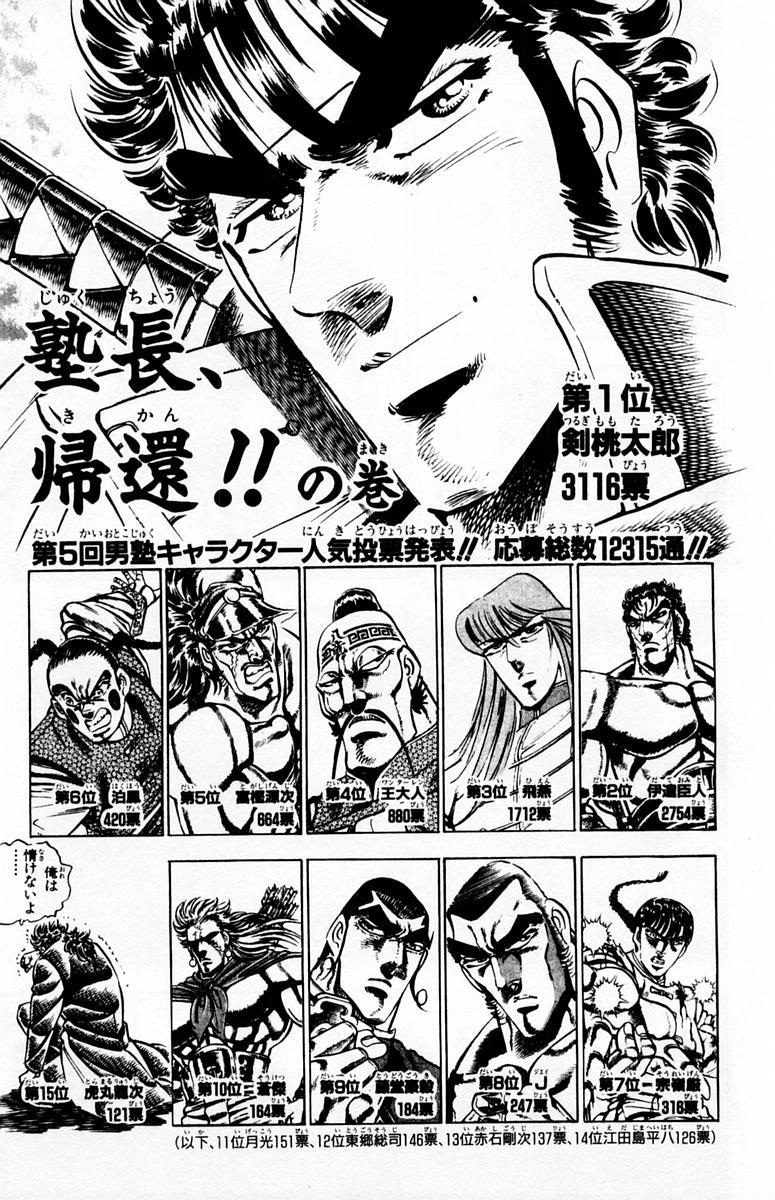
The most popular character in "Sakigake!! Otokojuku" is often Momotaro Tsurugi Image credit:カモのなんでもランキング↝
A Man's Manga That Defies TraditionThe truth is, "Sakigake!! Otokojuku" became the most unrestrained manga in "Weekly Shonen Jump". You don't need to worry about which evil overlord the Otokojuku students will ultimately defeat, nor about the future fate of this superhuman school; you don't even need to painstakingly follow every chapter; half a year later, these superhuman students will still be battling in some remote wilderness under bizarre competition rules; and you certainly don't need to shed tears for characters whose hearts are pierced, who are ground into mincemeat, or who fall into deep ravines; they'll likely reappear full of life a few weeks later, simultaneously thanking Master Wang for his medical skills. "Sakigake!! Otokojuku" always feels like it's about to reach its "final chapter" next, and there's always a new batch of fresh villains waiting for them.
Otokojuku Specialty: Straight-Line March. As the name implies, no matter what obstacles are encountered, one must absolutely not change direction or detour. If necessary, destroy house walls or climb utility poles, proceeding strictly in a straight line. Image credit:Ameba
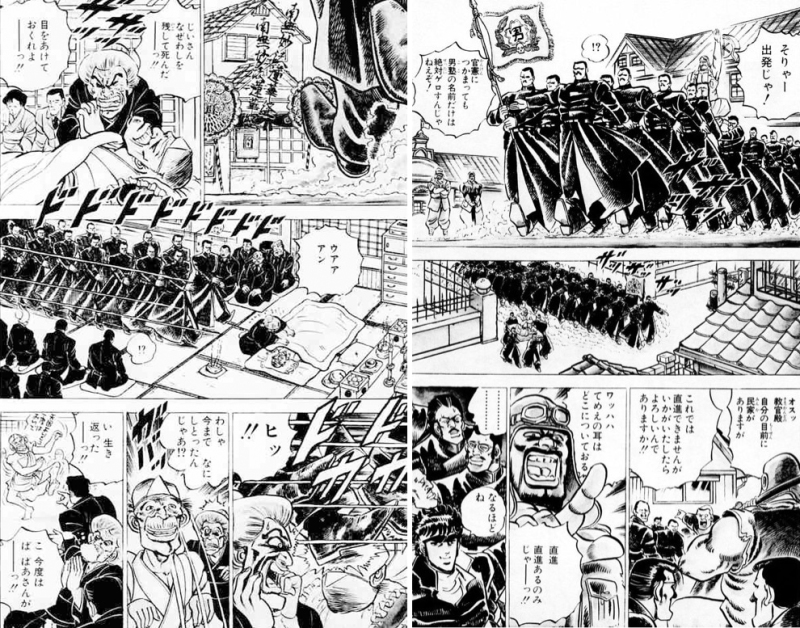
"Sakigake!! Otokojuku" seems to be like "Doraemon" or "Urusei Yatsura," where the entire manga world resets in the next chapter, dead characters revive, and past grievances are all wiped clean, just like Ataru Moroboshi is forever trapped in his second year of high school. However, "Sakigake!! Otokojuku" is not a typical comedy manga (except for the very beginning of its serialization); it's filled with militaristic flavor, with every character constantly bleeding profusely, flesh and blood flying, or enduring various unimaginable tortures, only to have their comrades, full of brotherly affection, die in their stead. Readers are unsure if it's an utterly absurd comedy or an intensely passionate fighting series... or perhaps it's both.
Otokojuku Specialty: Bokushingu. Legend says it was invented by Roman Emperor Nero—don't be fooled. (The Japanese pronunciation of 撲針愚 (ボクシング, bokusingu) is the same as "boxing.") Image credit:twitter
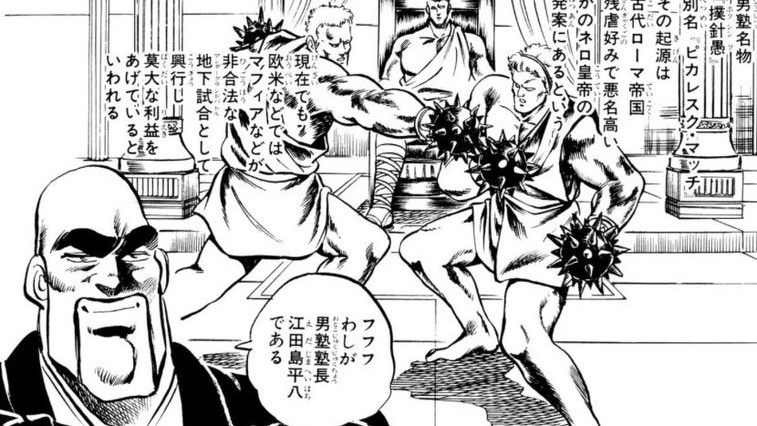
Such a manga, in an era where modern readers demand "complete plots" (meaning readers expect all mysteries to be resolved by the final chapter), might not achieve the same glory it did in the 80s. Conversely, "Sakigake!! Otokojuku" was never considered the flagship title of "Weekly Shonen Jump"; it wasn't the highest-ranked work in the magazine's popularity polls, and few readers would consider "Sakigake!! Otokojuku" the greatest work of their lives. However, while Miyashita's previous works were often canceled prematurely, "Sakigake!! Otokojuku" stood strong, serialized for nearly 6 years, and despite almost the entire story following the same formula, readers did not angrily give it negative reviews.
"Death Confirmed!" Although it's said, no one actually dies. Image credit:twitter
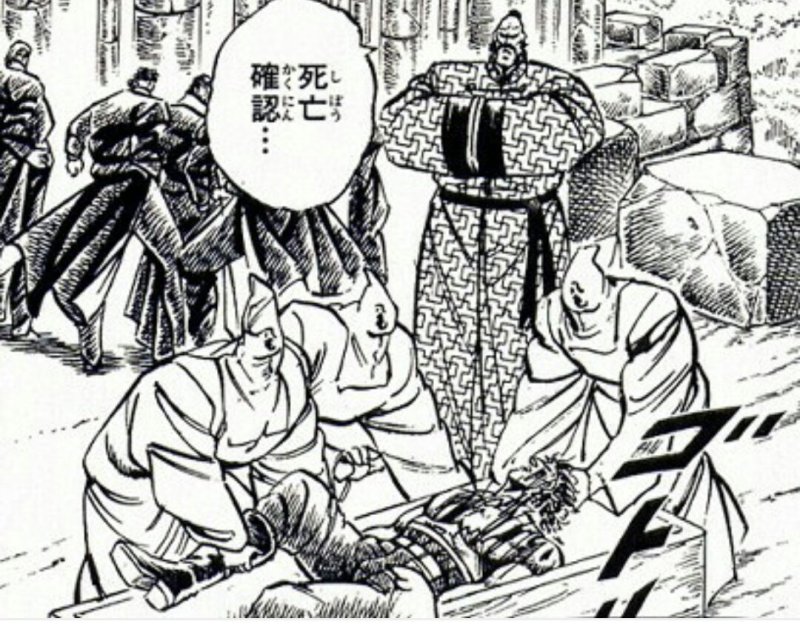
The Manga Artist Who Didn't Seek ProminenceFor most "Weekly Shonen Jump" manga artists, they hope their works will rank high in the reader feedback popularity polls. However, Akira Miyashita, to his core, didn't want to do that. He didn't design shocking plot twists to stimulate readers' morbid curiosity; nor did he create intricate, winding plots to force readers to follow the latest developments. With delinquents, youths, and middle-aged men as its protagonists, "Sakigake!! Otokojuku" was, in a way, like a civil servant of the manga world. They clocked in on time every week, enacting the same plot: "getting beaten senseless → employing a self-mutilating stratagem / comrades sacrificing themselves to save them → using techniques recorded in the Minmei Shobou while covered in blood → achieving a miraculous victory."
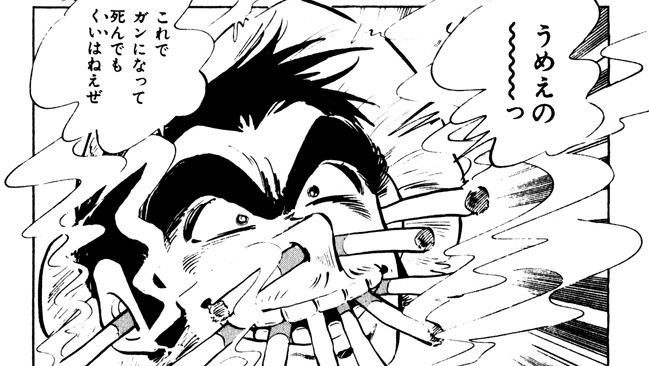
Even being boiled in an oil pot won't kill them (Otokojuku Specialty: Aburafuro!) Image credit:Ameba
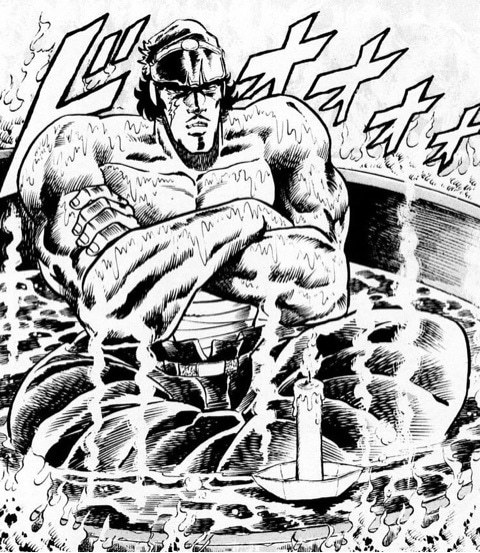
In fact, "Sakigake!! Otokojuku," originally positioned as a gag manga satirizing militarism, later transformed into a fighting manga where there's always a tougher opponent. This wasn't due to Miyashita's unique vision. It was simply because fighting manga like "Dragon Ball" were immensely popular. Miyashita thought this was a good direction, so he immediately changed course, heading down a new path where everyone possessed peerless martial arts skills. You could say "Sakigake!! Otokojuku" was essentially a product of trend-chasing, an act of Miyashita opportunistically taking the easy way out. Of course, if you can draw fighting manga, so can I. No one said you couldn't draw a fighting series in "Weekly Shonen Jump," home to "Dragon Ball" and "Fist of the North Star." However, if you wanted to become a standout artist in "Weekly Shonen Jump," following the trend didn't seem like the best choice.
"Sakigake!! Otokojuku" serialized in "Weekly Shonen Jump" Image credit:MANDARAKE
A Manga Artist with a Very Rebellious Vision
Copying popular elements from others, having a barely-there plot, retconning settings (just look at how Daigoin Jaki was several stories tall when he first appeared), and using tons of repetitive plot devices—"Sakigake!! Otokojuku" seemed extremely uninspired. The truth is, the goal Miyashita pursued was indeed very different from that of other top-tier manga artists. The essence of "Sakigake!! Otokojuku" lies within these infinitely repeating formulas. Although it later transformed into a fist-fighting manga, at its core, "Sakigake!! Otokojuku" remained a gag manga mixed with hot-blooded male camaraderie—a comedic direction Miyashita shifted to in "Geki!! Goku Tora Ikka" after his previous work, "Shiritsu Kiwamemichi Koukou," was canceled.
"Geki!! Goku Tora Ikka" featured more comedic scenes Image credit:SPICE - イープラス
To be more precise, "Sakigake!! Otokojuku" pursues pure "entertainment." It lacks a complex plot and character settings, nor does it have intricate interpersonal relationships. It firmly believes its readers are students exhausted by academics and social pressures, who open "Sakigake!! Otokojuku" simply to enjoy a dozen or so minutes of thrilling excitement. To lay the groundwork for an epic story full of twists, you have to expect readers to remember a plot point from weeks ago and clearly understand the love-hate relationships between characters. Only then can the reader's internally constructed historical perspective appreciate how dramatic the current reversal is.
This isn't rugby, it's the Otokojuku specialty, "Ragubii." (The Japanese pronunciation of 羅惧美偉, "ragubii," is the same as rugby.) Image credit:Twitter
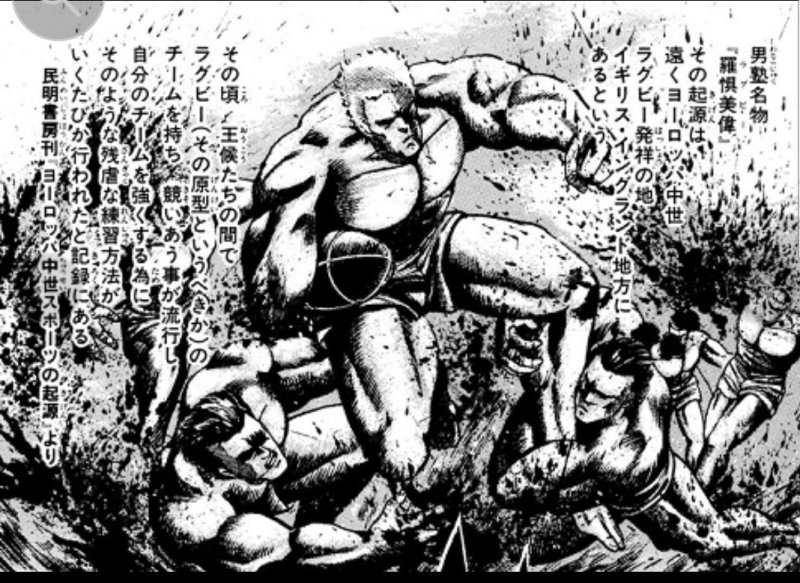
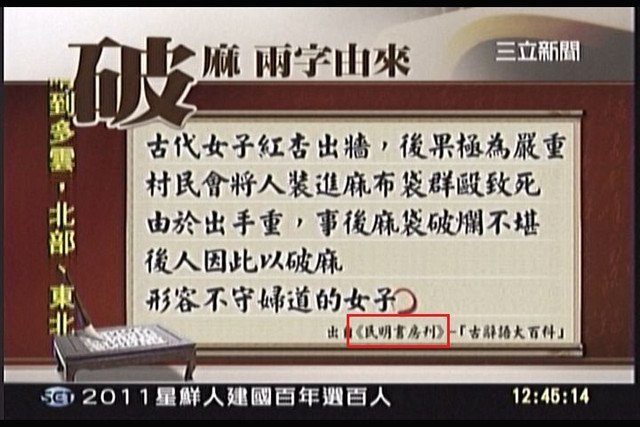
"Sakigake!! Otokojuku" is not that complicated. It doesn't have a complex backstory, nor does it require you to have a deep knowledge of martial arts to understand it. Akira Miyashita fabricated an entire academic background, telling you that a plastic sheet charged with static electricity that can lift hair is actually a mysterious Chinese martial art called "Hatsuraikyou" (Hair Lightning Shock); and that "Seitenkai," the art of freely controlling one's gender, was invented by the mysterious Chinese martial arts master "Ou Kama" (which sounds like the Japanese word for "drag queen"). "Sakigake!! Otokojuku" tells you that all these allusions are recorded in ancient texts published by "Minmei Shobo." In reality, these are all comedic ideas he made up himself—only a Taiwanese TV station would take it as fact and believe Minmei Shobo actually exists.
Sanlih News referencing Minmei Shobo's definition for "pòmá" (a derogatory slang term) Image credit:TWed2k
For an "eternal return" style action-comedy like "Sakigake!! Otokojuku," younger fans might think of "Gintama." However, even "Gintama," which dared to poke fun at Shun Oguri himself, still can't match the sheer insanity of "Sakigake!! Otokojuku." For example, according to Miyashita's recollection, not a single heroic character died by the end of "Sakigake!! Otokojuku"—perhaps the master's memory is failing him, but he at least approached it with the mindset of "not killing a single character." In his view, every character has fans who love them. Even those who die for the sake of the plot, serving as sacrificial lambs for the main villain, are just "in the pit for repairs." One could perhaps say that "Sakigake!! Otokojuku" is one of the Japanese manga closest to the American comic book mentality.
The Mangaka Who Would Never Dare Rebel Against His Father
"I am the headmaster of Otokojuku, Edajima Heihachi!" Image credit:Netorabo - ITmedia
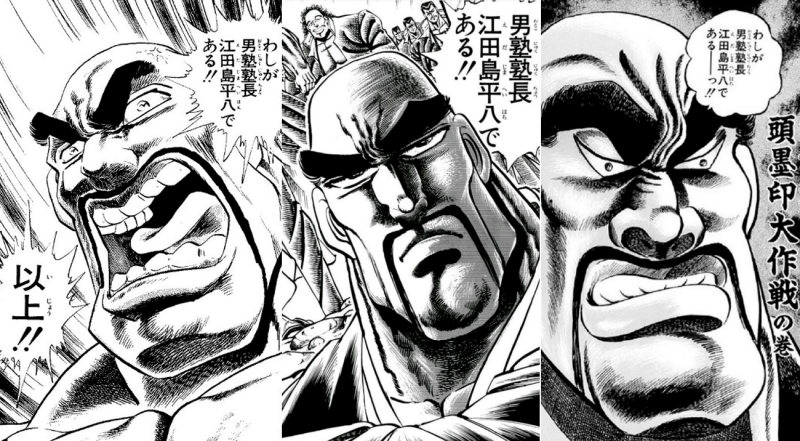
Who is the strongest character in Otokojuku? It's the headmaster, Edajima Heihachi, who has no flashy special moves. This is no coincidence, as the creative model for Edajima was none other than the father Akira Miyashita feared most. The previously mentioned detective manga, "Bogey THE GREAT," was modeled after Miyashita's father, and Edajima Heihachi is another "homage." This tribute wasn't born purely from a son's fear of his father. In fact, when Miyashita won a manga award, as he was about to walk onto the stage, he immediately turned to acknowledge his father behind him. And among the many powerful characters in "Sakigake!! Otokojuku," guess who Miyashita's own favorite character is? The answer is simple.
The headmaster later even got his own dedicated book Image credit:BookLive
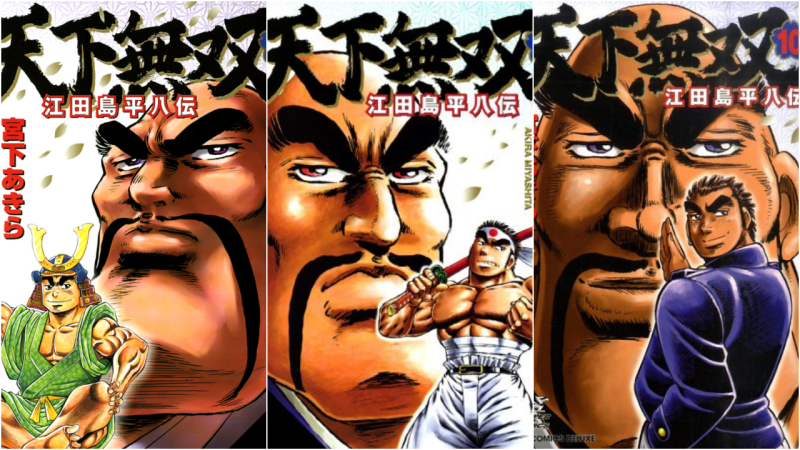
"Of course, it's the headmaster. After all, he's stronger than Daigouin Jaki. He can even survive in the Earth's atmosphere—he's not even human (laughs)."
All Rebellion is in Service to the ReadersFor Miyashita, "Sakigake!! Otokojuku" is the ultimate expression of his service to the readers. Behind those exaggerated and clichéd formulas, behind those "classic texts" from Minmei Shobo, lies Akira Miyashita's dedication.:
Akira Miyashita Image credit:excite
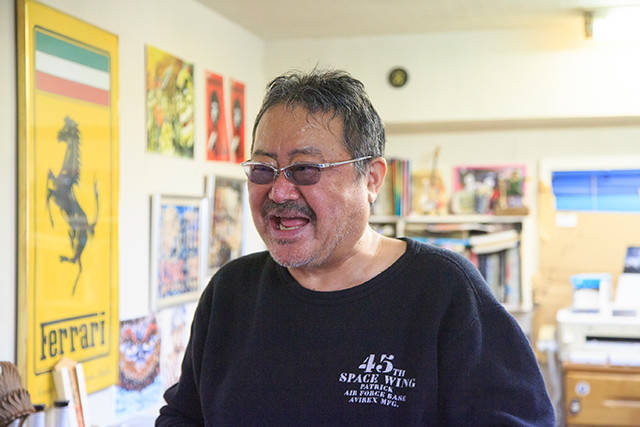
"Ultimately, what I want to hear from readers is, ''Sakigake!! Otokojuku' is so much fun!' To create a world of my own on about 19 blank pages. If this fictional world can make someone feel excited, want to cry, or be moved, then who cares if the plot is complete nonsense? That's satisfying enough for me."
This is Akira Miyashita, one of Weekly Shonen Jump's most rebellious mangaka. Or perhaps we should rephrase that: he is the most dedicated mangaka at Weekly Shonen Jump, with an unparalleled spirit of serving his readers... arguably, without equal.