
The 1979 film "Mad Max" and the 1981 film "Mad Max 2" are among the greatest action stunt film series in cinematic history. They not only made the 1973 Ford Falcon XB GT coupe the dream ride for many 80s kids but also launched Mel Gibson's successful career in Hollywood. In fact, their influence in the East was even more profound: Kenshiro, the protagonist of the manga "Fist of the North Star," looks remarkably similar to Gibson and also adventures in a post-apocalyptic world reminiscent of the "Mad Max" series. The only difference is that Kenshiro doesn't drive a Ford Falcon; he uses a millennia-old Chinese martial art that can turn villains into balloons ready to explode.
Image credit:Mandarake Editorial Department
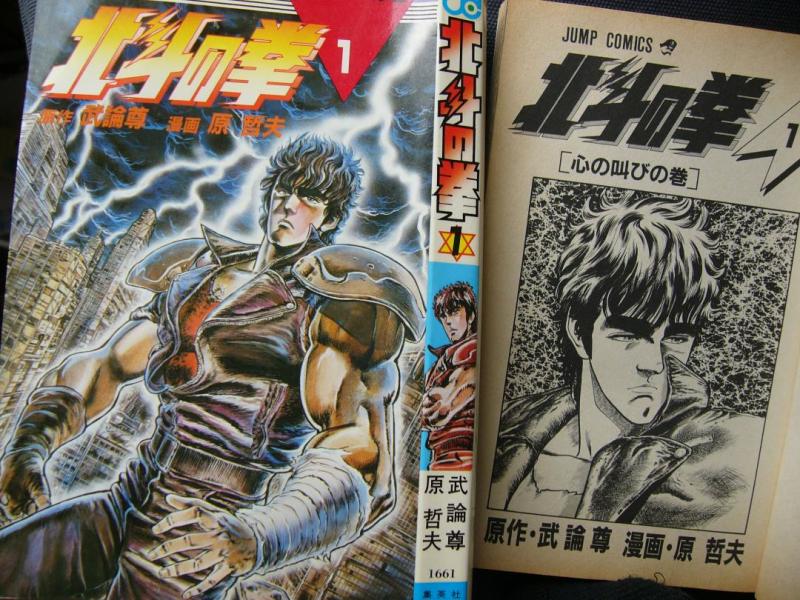
The manga "Fist of the North Star" ran for 5 years, spawned two anime TV series, four animated films, three OVA series, one Hollywood live-action film, countless unofficial live-action films, and various video games, card games, pachinko machines, stage plays, and more. This work, brimming with masculinity, has become an icon of the 80s and an integral part of Japanese social culture. And the birth of "Fist of the North Star" was also very... "masculine"? One could say that "Fist of the North Star" is the crystallization of love, hate, and anger intertwined among three men: a shrewd manga editor, a powerful protégé of a manga industry veteran, and a struggling rookie manga artist, who together forged the most terrifying divine fist master of the apocalypse.
"Mad Max 2" Image credit:What's on TV
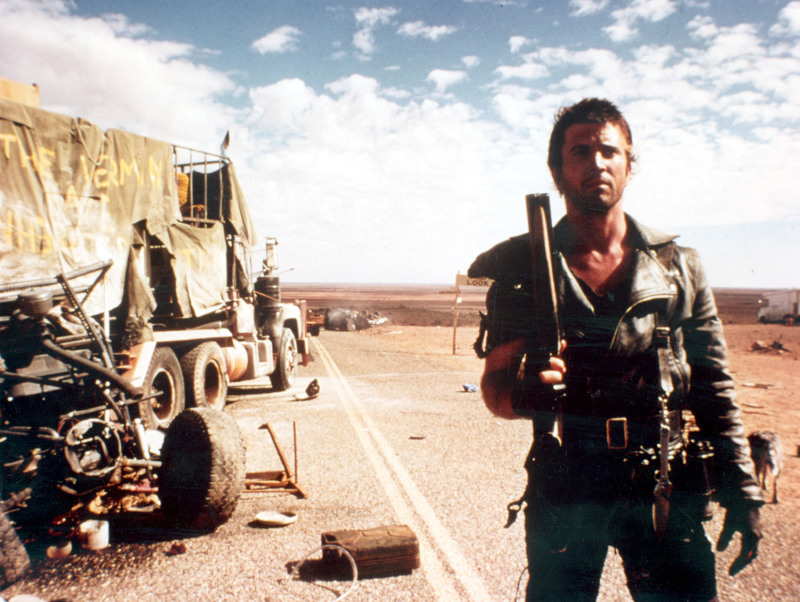
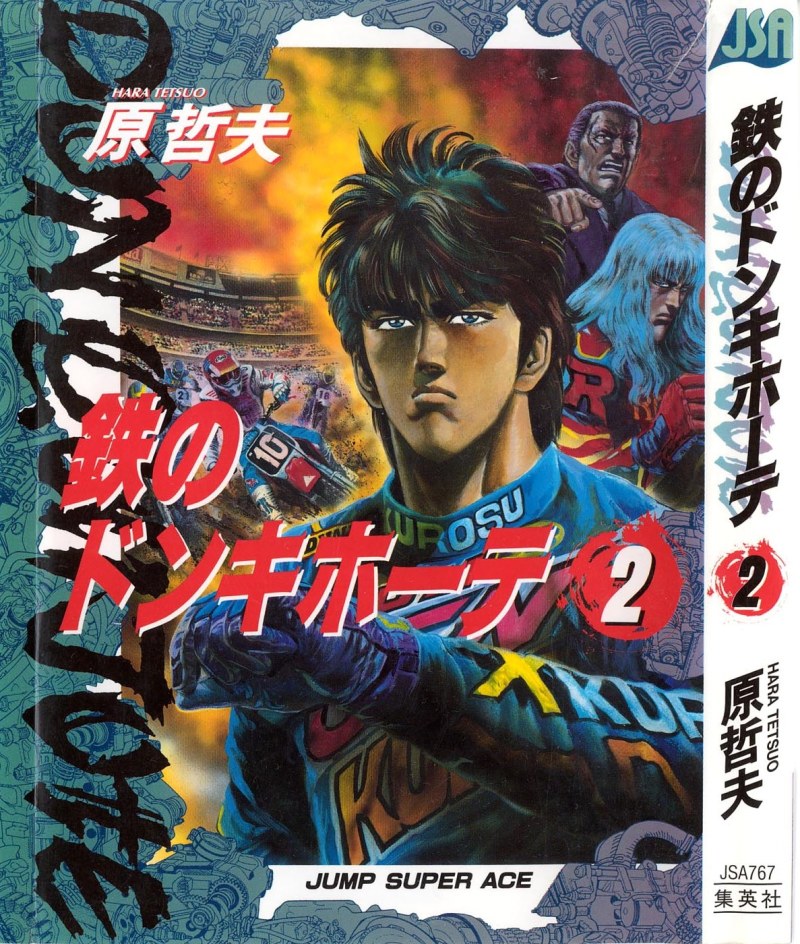
"Mad Max 2" is undoubtedly one of the roots of "Fist of the North Star." This manga heavily borrowed styles from the "Mad Max" series, including costumes, characters, and world-building. However, "Mad Max 2" didn't have divine martial arts – that was mangaka Tetsuo Hara's idea, as he loved Chinese martial arts. In the 70s, there wasn't a Japanese man who didn't like kung fu, thanks to the global kung fu craze sparked by Bruce Lee, and Japanese detective dramas of the 70s further fueled this fervor. Among a group of elite city detectives, there was always one guy who could perform flying kicks and backflips while making Bruce Lee-esque shouts. Tetsuo Hara, a newly debuted mangaka, chose his favorite martial arts theme after his debut work, "Iron Don Quixote," was unfortunately canceled after only ten chapters.
"Iron Don Quixote" Image credit:Tetsuo Hara Official Website
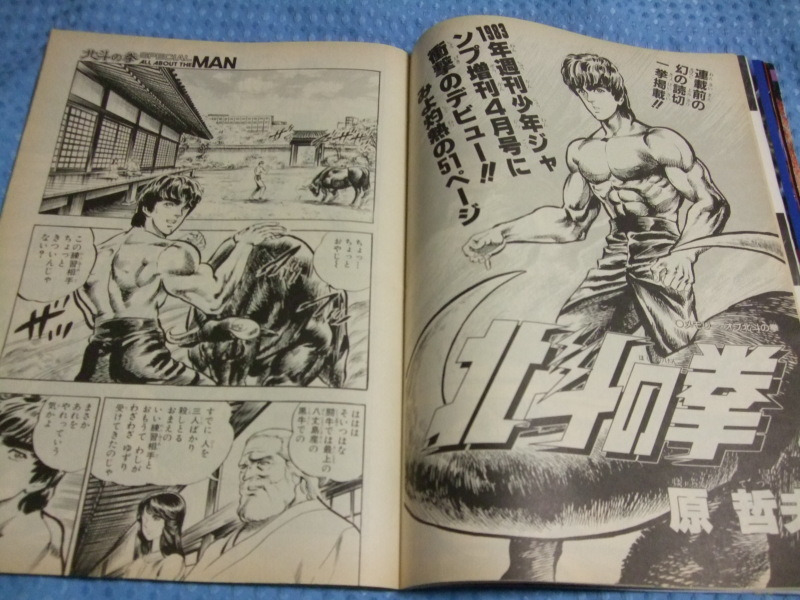
This is not the origin of "Fist of the North Star," because the short series "Hokuto no Ken" that Tetsuo Hara serialized in "Weekly Shonen Jump" at the time had a story vastly different from the later serialization: Kenshiro Kasumi, the 33rd successor of Hokuto Shinken, decided to wage war against an organization because his beloved Yuki was murdered by the enemy's "Taizanji Kenpo." Kenshiro was actually just an ordinary young man; he didn't have seven scars on his chest, nor did he wear a stolen Mel Gibson leather jacket. If we ignore the name "Kenshiro Kasumi," which reminds one of Kenshiro and "Fist of the Blue Sky," and ignore how similar Yuki and Yuria's names are, and further ignore how similar Taizanji Kenpo is to "Devil Rebirth" or "Gazan Gōaku no Ken." Then, the short series "Hokuto no Ken" is very different from "Fist of the North Star"—the setting of "Hokuto no Ken" was not a post-apocalyptic world at all.
The Legendary Short Series "Hokuto no Ken" That Many Loyal Fans Don't Even Know About Image credit:Ameblo
Tetsuo Hara's childhood dream was to serialize his own work in "Weekly Shonen Jump." The key figure who propelled him on his path to becoming a "Weekly Shonen Jump" manga artist was Nobuhiko Horie, an editor at "Weekly Shonen Jump" whom Hara had known since high school. Horie recommended Hara to work as an assistant for other manga artists, suggested he submit to manga awards to build his reputation, and when Hara successfully joined "Weekly Shonen Jump," the choice of the professional motocross world as the subject for his debut work, "Iron Don Quixote," was also due to Horie's influence—Horie had a strong interest in motocross. Under his strong recommendation, Hara chose this field, which he was actually unfamiliar with, to begin his creation.
Short series "Fist of the North Star" Image credit:twitter
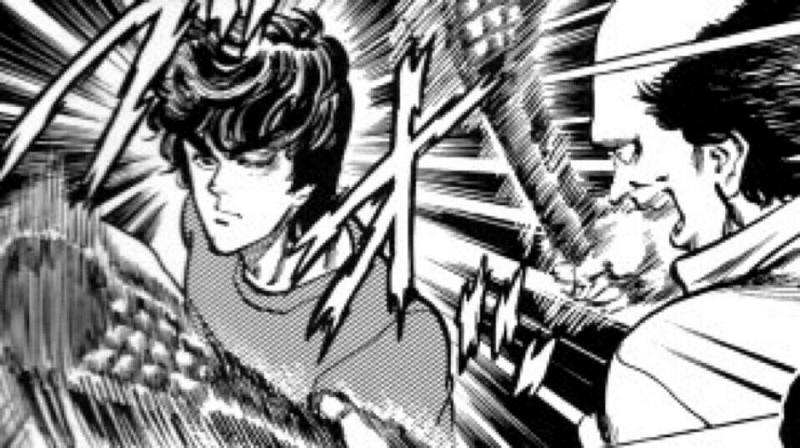
It might sound like it was all Horie's fault, but ultimately, Horie actually served as the creative partner for the inexperienced Tetsuo Hara. For a manga artist who had graduated high school and dropped out of university, there was insufficient social experience and understanding of professional fields. Nobuhiko Horie, who entered society earlier, was like a window for Tetsuo Hara; through Horie's connections and speed in acquiring knowledge, Hara, who was skilled at drawing, had a much easier time—you could say Horie was essentially Hara's manga scriptwriting partner. The origin of "Fist of the North Star" was, of course, also related to Horie: one day, while Horie was browsing in Kanda, Tokyo's famous old book district, he came across a Chinese medical book that described the dangers of acupressure points... if acupressure points were pressed incorrectly, it could potentially cause internal organ damage.
Nobuhiko Horie Image credit:SUUMOタウン
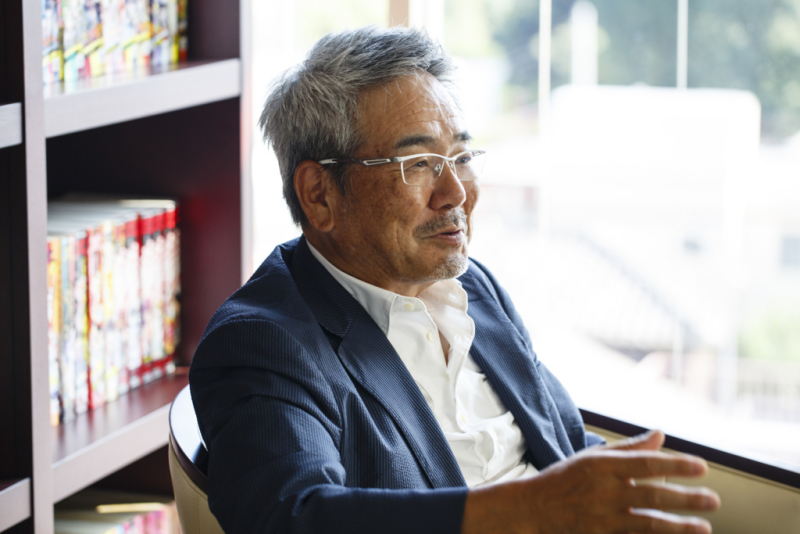
Horie instantly realized he had discovered a major theme... if someone thoroughly understood this system of acupressure points, they could practically kill someone with a mere touch, simply by pressing a few points on their body... He immediately shared this idea with Tetsuo Hara, who was very interested in martial arts (and had not yet found success)... This sounds like the origin of "Fist of the North Star"—but it wasn't. Kenshiro had a name, he had martial arts, he had the divine art of acupressure, but we still needed one last man... he would give Kenshiro a world.
"Fist of the North Star" Movie Version Image credit:東映チャンネル
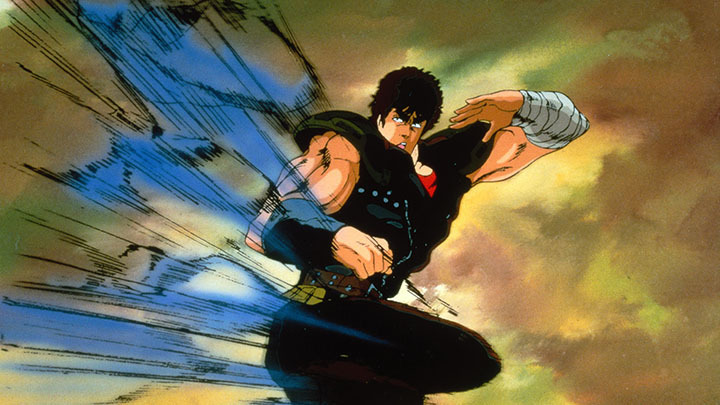
The short series "Fist of the North Star" was released for two chapters in the magazine, and both chapters received enthusiastic reader responses. However, Horie was not entirely satisfied. Drawing a one-shot manga (読み切り) like this didn't require thinking about the work's underlying worldview or the intricate details of character development. For a newcomer, extending "Fist of the North Star" from a bi-monthly publication to a weekly serialized manga would be like asking a 100-meter sprinter to run a marathon—they would quickly run out of breath. Moreover, Tetsuo Hara at this point lacked any confidence or the proper style to manage a long-term serialization. What was even more problematic was that Nobuhiko Horie, skilled at brainstorming plots with manga artists, was not a full-time manga scriptwriter: his editorial position at "Weekly Shonen Jump" was becoming increasingly important, and he was simultaneously handling many prominent authors.
Horie (second from right) set a record for highest sales when he served as Editor-in-Chief of "Weekly Shonen Jump" Image credit:ORICON NEWS
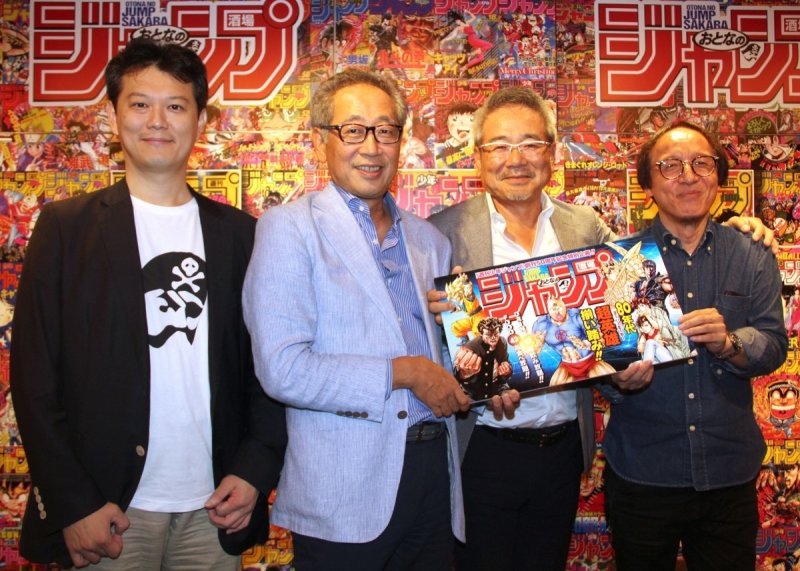
The name Buronson is so incredibly imposing that even super-dominant Hong Kong comics shamelessly borrowed it for character names. And this man was even more imposing than his pen name: he came from the Self-Defense Forces; shortly after leaving, he spent all his retirement money on revelry; he was ambushed by a group of people, then rode his motorcycle, breaking through the encirclement amidst flying bottles and clubs; halfway through a serialization, he ignored the editor's desperate pleas and immediately called a taxi to party at a club; he drank so much he nearly suffered liver failure and was hospitalized, continuing to write scripts from his hospital bed... and then, after being discharged, he continued to drink to his heart's content. It can be said that he infused this unrestrained dominance into the "Fist of the North Star" that Horie was concerned was too pale.
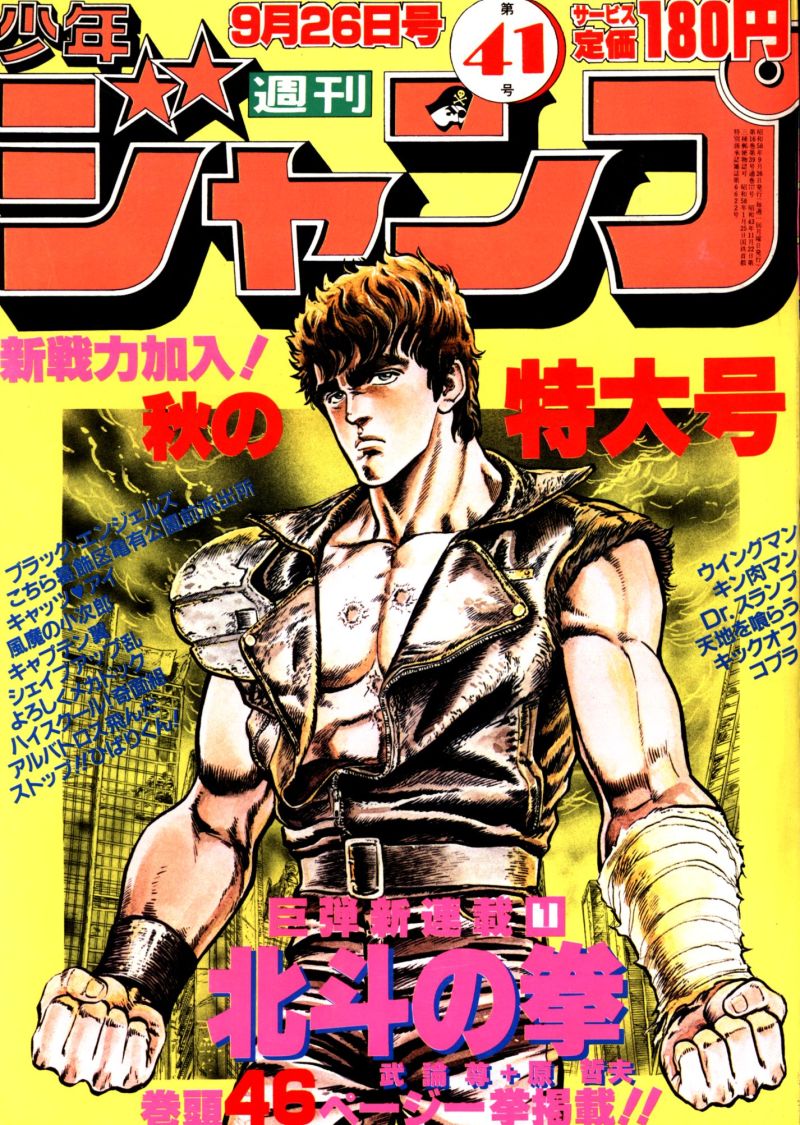
"Fist of the North Star" first appearance, "Weekly Shonen Jump" Issue 41, 1983 (Showa 58). Incidentally, this issue originally cost 180 yen, and its value has now more than doubled to 20,000 yen. Image credit:まんだらけ
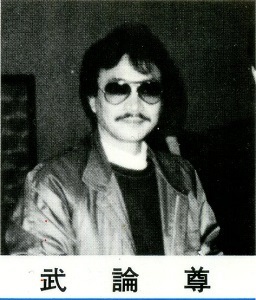
While Tetsuo Hara was still struggling, Buronson was already a top-tier scriptwriter. After retiring from the Self-Defense Forces, Buronson immediately fell on hard times. Fortunately, his former comrade-in-arms—now manga master Hiroshi Motomiya—came to his aid. Motomiya asked him to help with odd jobs for his manga business, clearly out of camaraderie, as Buronson actually knew nothing about drawing manga. He couldn't even help ink backgrounds; he'd immediately cover freshly inked areas with his elbow, making a mess. Even Buronson himself wondered why Motomiya would help someone who was clearly a hindrance. Buronson became an assistant whom even Motomiya's other assistants found bothersome. At most, he was responsible for collecting data or running errands—basically, he was like a mascot for the manga artist, his most important job being to keep the artist happy.
Buronson in his youth Image credit:大悟への道
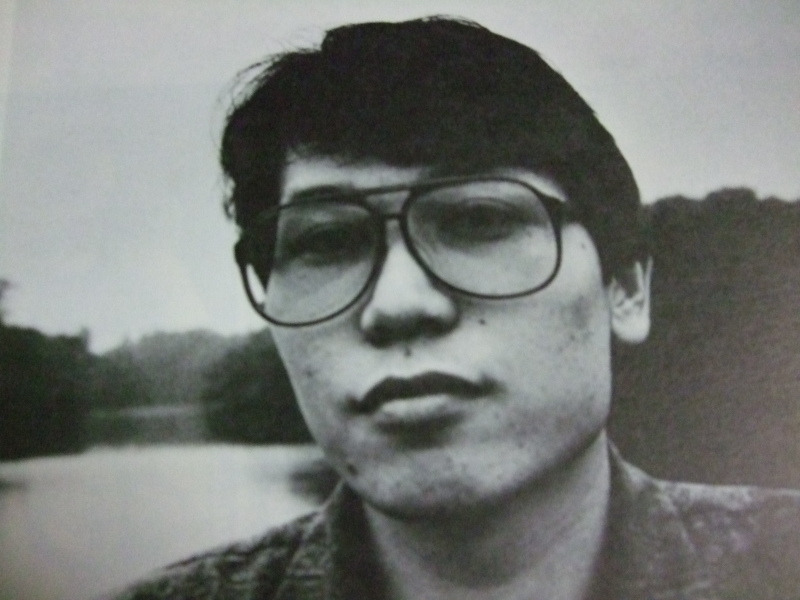
When Motomiya grew tired of his serialization, Buronson would secretly take his boss out for motorcycle rides; when Motomiya wanted to gamble on boat races or horse races, Buronson would take his boss to place bets... This lifestyle of leisure, combined with Buronson's own generous personality, gave him a deep understanding of the unseen, darker side of society. Then, a suggestion from a manga artist, "Why don't you try writing manga scripts?", gave his daily social observations amidst alcohol and gambling an outlet: after striking out on his own, the manga he scripted, "Doberman Cop" (ドーベルマン刑事), a work depicting social violence through an explosive detective, became hugely popular. Buronson, solely as a scriptwriter, earned an annual income of 1.2 million yen. At that time in 1975, an office worker's monthly salary was only 30,000 yen.
Tetsuo Hara in his youth Image credit:アメブロ
Buronson was Horie's new pillar of reliance. He hoped Buronson could make "Fist of the North Star" more appealing—a coming-of-age adventure story about a martial arts teenager seemed a bit too ordinary. The realist Buronson immediately clarified Horie's confusion: no matter how powerful a deadly martial art is, it doesn't fit into modern society with firearms; having teenagers, who should represent innocence, use a martial art that can make heads explode and bodies burst with a single touch, would easily draw criticism; finally, in a modern society that emphasizes the rule of law, casually turning people into pulp seems too far removed from reality? Summarizing these points, Buronson believed that "Fist of the North Star" should retain its bizarre pseudo-Chinese martial arts and explosive human bodies, but it should be given a more "suitable setting"—the new serialization should take place in a lawless era and world where violence speaks loudest.
Just like "Mad Max," which they both loved.
"Fist of the North Star" Image credit:アメブロ
Buronson hadn't just seen "Mad Max"; he had actually visited Cambodia in the 1970s—at that time, Cambodia under the leadership of Khmer Rouge General Secretary Pol Pot was experiencing the most brutal "Khmer Rouge" period in human history. A large number of Cambodian people, due to the Communist Party's political struggles, relocation, and labor policies, died from poverty, disease, assassination, and execution, totaling over 2 million people. Buronson, coming from a country then experiencing rapid economic development, found the scene of human purgatory before him unbelievable—Cambodia had sealed off news of its internal "Great Purge" from the international community, much like their friendly China's attitude towards the Cultural Revolution.
Buronson visiting Cambodia at the time Image credit:Twitter
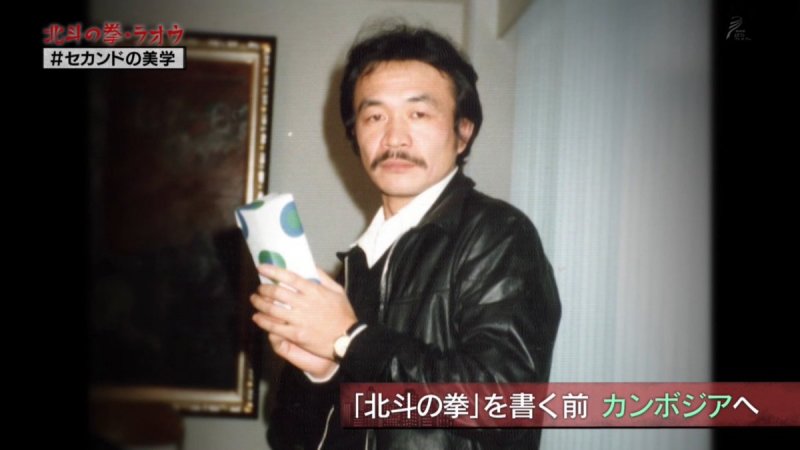
Buronson saw piles of human remains openly displayed on the streets, decaying corpses abandoned in fields, children covering their wounds with mud and weeds... He deeply realized the cruel side of humanity. He later recalled: "This was completely a scene from the end of the century, a world where 'justice' wouldn't work. This is why Raoh absolutely had to use violence to suppress the chaos – the origin of his core philosophy."
Raoh, King of Fists Image credit:Fandom
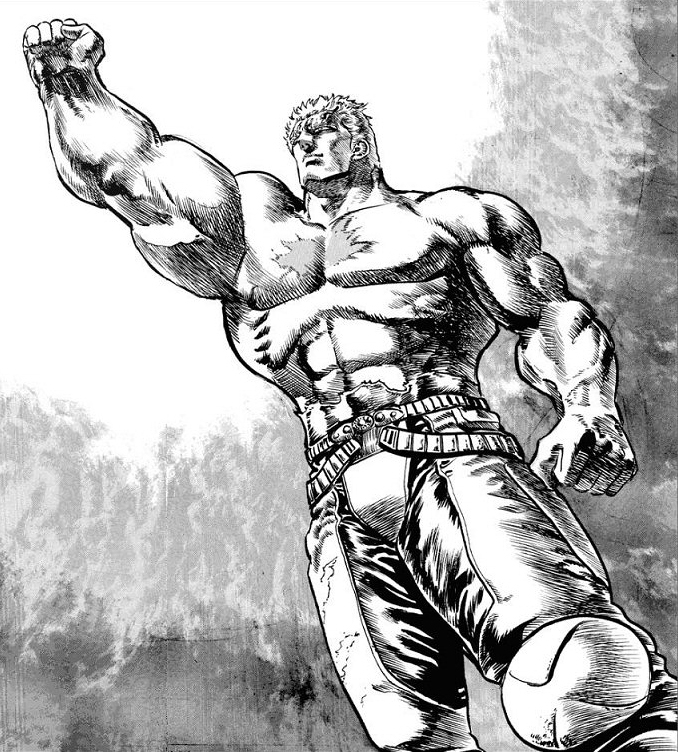
With this, Buronson laid the groundwork for "Fist of the North Star," a post-apocalyptic landscape centered on "cruelty," where there is no tomorrow, no hope, and no one to rely on for help. Hokuto Shinken, a martial art capable of killing with a single touch, would be a severe weapon leading to imprisonment in the real world. Yet, in "Fist of the North Star," it becomes the key to saving the world—because the whole world constantly wants to kill you. Every technique of Hokuto Shinken expresses the anger and resentment of the powerless, and only Kenshiro can bear the heavy burdens on these weak individuals' shoulders, breaking the shackles of being called "weak."
Kenshiro Image credit:J-CAST ニュース
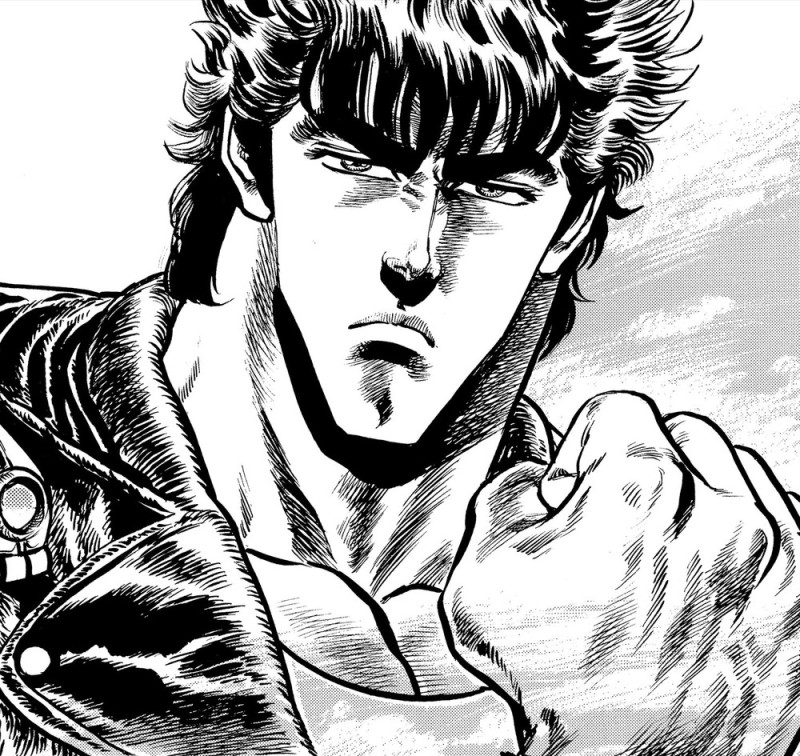
Thus, Kenshiro was born: Buronson was Kenshiro's "brain," responsible for conceiving the entire plotline of "Fist of the North Star" and establishing the core concepts of the work; Tetsuo Hara was Kenshiro's "fist," responsible for drawing the cruel world in Buronson's mind, and through his depictions of grotesque villains, twisted death scenes, and magnificent martial arts techniques, allowing readers to grasp the true meaning within this exaggerated story; and Nobuhiko Horie was Kenshiro's "skeleton," responsible for streamlining unreasonable plot points, determining when the story's rhythm should rise and fall, and feeding reader reactions back to the "brain" and "hand," while also coordinating their collaboration—Tetsuo Hara and Buronson rarely even met, with Horie acting as the intermediary.
Tetsuo Hara (left) and Buronson Image credit:エキサイトニュース
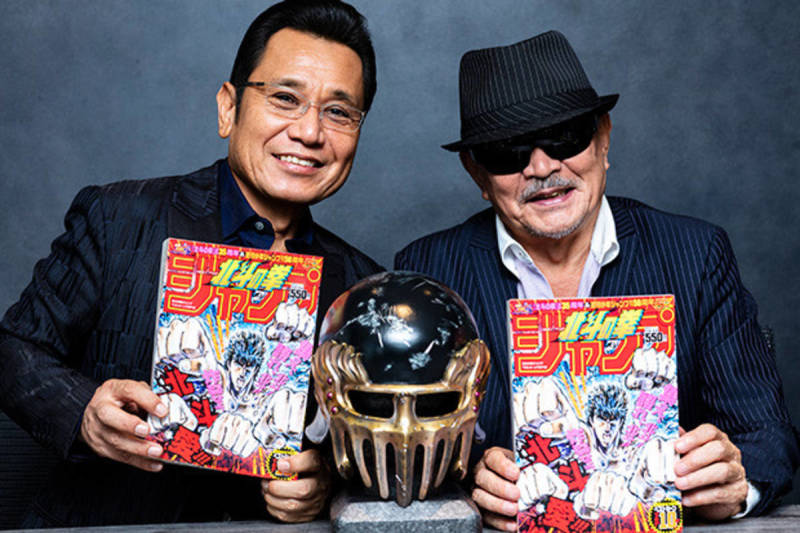
This system of tripartite collaboration is, in fact, a rare creative format in the Japanese manga industry. Most Japanese manga artists are "one-man armies," with "introverted" creators like Takehiko Inoue who delve into their inner selves and personal experiences for creative motivation; and "polymath" authors like Yoshihiro Togashi who draw inspiration from games and films. However, creative partnerships like "Fist of the North Star," composed of a writer, an artist, and an editor who best understands the market, are not common. This three-person army could not only divide labor thoroughly but also cover all bases and complement each other's shortcomings. Buronson never criticized Tetsuo Hara for drawing something different from what he envisioned; and Tetsuo Hara never questioned whether Buronson's stories were fundamentally un-drawable.
Buronson Image credit:manga-gai
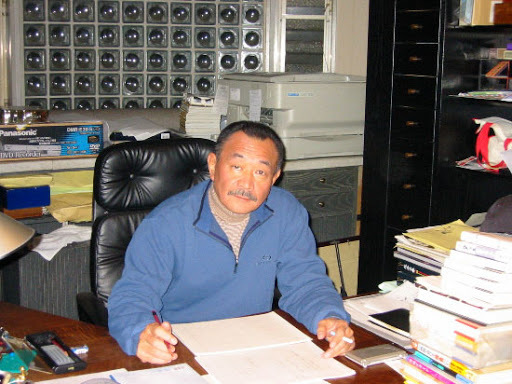
Nobuhiko Horie firmly believed that the second chapter of a manga serialization is the most crucial, because after introducing the protagonist in the first chapter, the second chapter must clearly explain the protagonist's motivations—no matter how many times this motivation needs to be re-emphasized later, the key concept of the manga must be subconsciously embedded in the audience's mind in the very second chapter of the serialization. Horie did not see this crucial element in Tetsuo Hara's manuscript, and he actually tore up the manuscript directly in front of the manga artist—it is said that Tetsuo Hara immediately burst into tears. However, if we look back at the current second chapter of "Fist of the North Star," we can understand Horie's intentions.
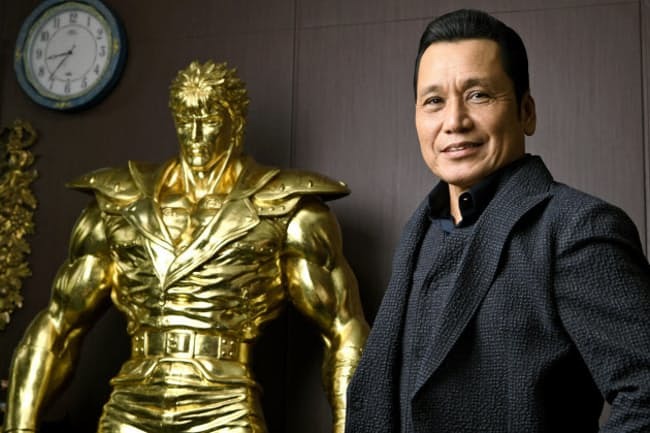
Tetsuo Hara and the golden Kenshiro in his studio Image credit:NIKKEI STYLE
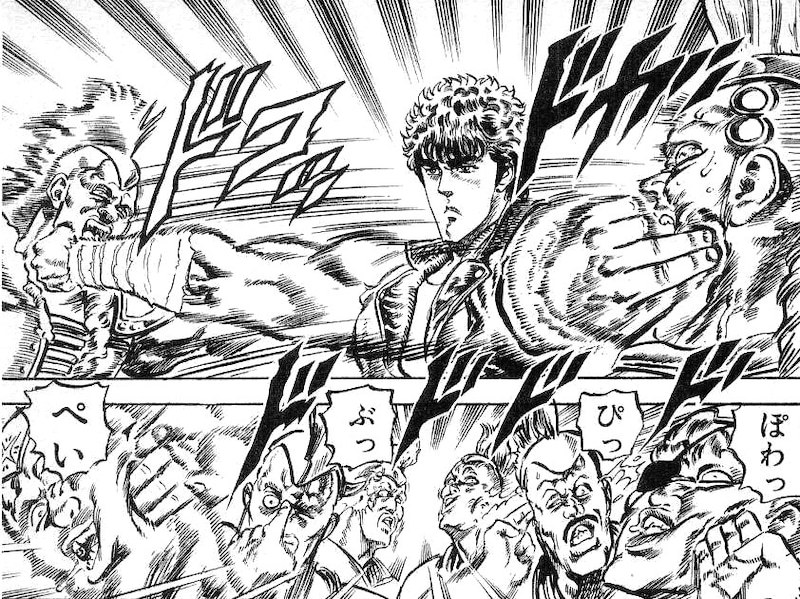
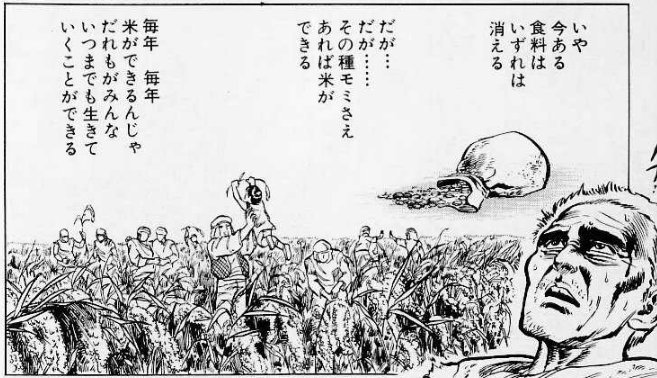
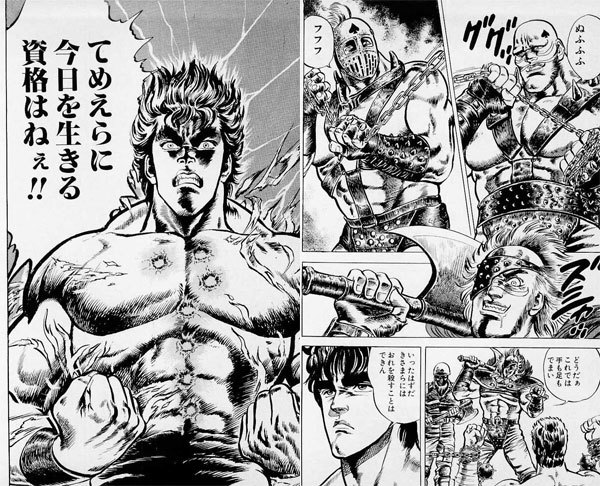
Even though the frail old man was beaten black and blue, he still protected the precious seeds—because seeds would grow crops and solve the village's famine. The old man was killed by the brutal villains; before dying, he struggled to pick up the seeds, only for a villain to stab through his palm. Witnessing this scene, Kenshiro furiously flexed his muscles, even tearing his leather vest... He roared, "You are not fit to live another day!"
We might forget the subsequent 243 chapters of "Fist of the North Star," but you'll find that the essence of "Fist of the North Star" lies in its second chapter—the protagonist of this chapter isn't even Kenshiro, but the old man he first encountered in the wasteland. The old man traveled thousands of miles just to find seeds, but after finding them, he was pursued by villains. Kenshiro, who rescued the old man, understood the old man's words: "Tomorrow is more important than today." Kenshiro even uncharacteristically revealed his thoughts, "It's been a long time since I've met someone like him."
With seeds, there is tomorrow Image credit:ツイコミ
"Fist of the North Star" is set in a post-nuclear war world, where the nuclear war itself is a nightmare from the "past." Those who possess resources from the "past," such as cars and weapons, have become the overlords of this wasteland. They seek to replicate the abundant living standards of the "past" in the "present," plundering all available resources as if forgetting "tomorrow." However, there are also people like the old man searching for seeds, who trust in "tomorrow" rather than the bygone "yesterday." They are even willing to abandon the temporary security of "today" to fully protect an uncertain "tomorrow." Kenshiro, on the other hand, is a different kind of person from "yesterday"; he possesses terrifying power accumulated over a thousand years of history. Yet, what truly attracts him are the people who have the potential to create a "tomorrow" vastly different from the "past."
Therefore, to those despicable "yesterdays," Kenshiro roars, "You are not fit to live another day!"
"You are not fit to live another day!" Image credit:affectionery
Under this fundamental framework, "Fist of the North Star" could realistically have been drawn up until the outbreak of nuclear war: because Kenshiro could continuously encounter people who trust in "tomorrow," and for them (and for his own hatred of "yesterday"), eliminate the scum left behind by "yesterday." Hokuto Hyakuretsu Ken (Hundred Crack Fist) and Hokuto Nishi Shinku Ha (Two-Finger Vacuum Grasp) could be upgraded to Hokuto Senretsu Ken (Thousand Crack Fist) and Goshi Shinku Ha (Five-Finger Vacuum Grasp) in the future; these techniques are merely tools to advance the plot. However, it is the "yesterday vs. tomorrow" framework, as described above, that truly allows "Fist of the North Star" to endure and captivate readers, even ensuring that children who loved the "Fist of the North Star" manga will fondly remember the work long after they've grown up: because we, who were once children anticipating "tomorrow," have now become the "yesterday" for another generation of children.
"Fist of the North Star" Western Edition - "Fist of the North Star" Image credit:affectionery
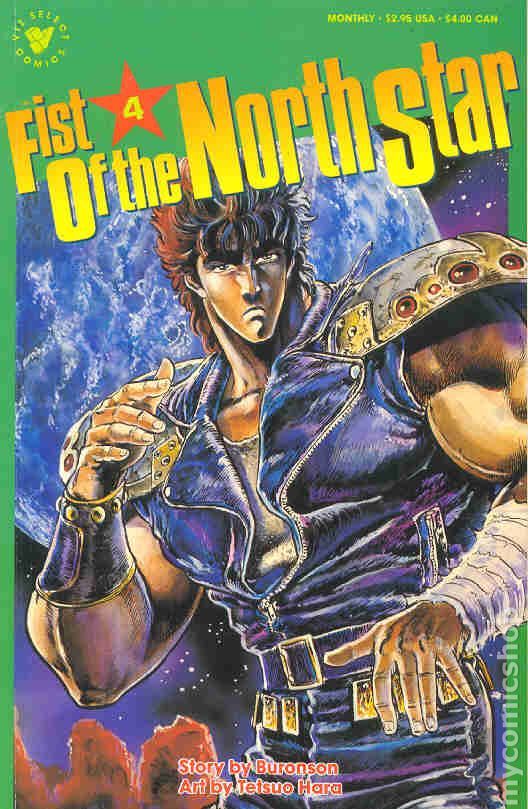
Buronson established this core theme, and Horie firmly believed that it needed to be emphasized from the very beginning of the serialization. Coupled with Tetsuo Hara, who redrew after wiping away his tears, this complementary and mutually supportive trio set "Fist of the North Star" on the correct development path from the start. Conversely, one could jokingly say that this is also why "Fist of the North Star" is vastly different from "Hunter x Hunter"—at least Nobuhiko Horie would not have allowed Yoshihiro Togashi to delay his manuscripts like that. The line "You are already dead" was modified at Horie's request. When Buronson was unable to submit scripts on time due to health reasons, Horie assisted with the writing. Later, both Tetsuo Hara and Buronson publicly stated that Horie was the most crucial contributor to the creation of "Fist of the North Star," and not merely because he was the editor representing "Weekly Shonen Jump."
Tetsuo Hara and Horie later collaborated on other works, but that's another story Image credit:まんが王国
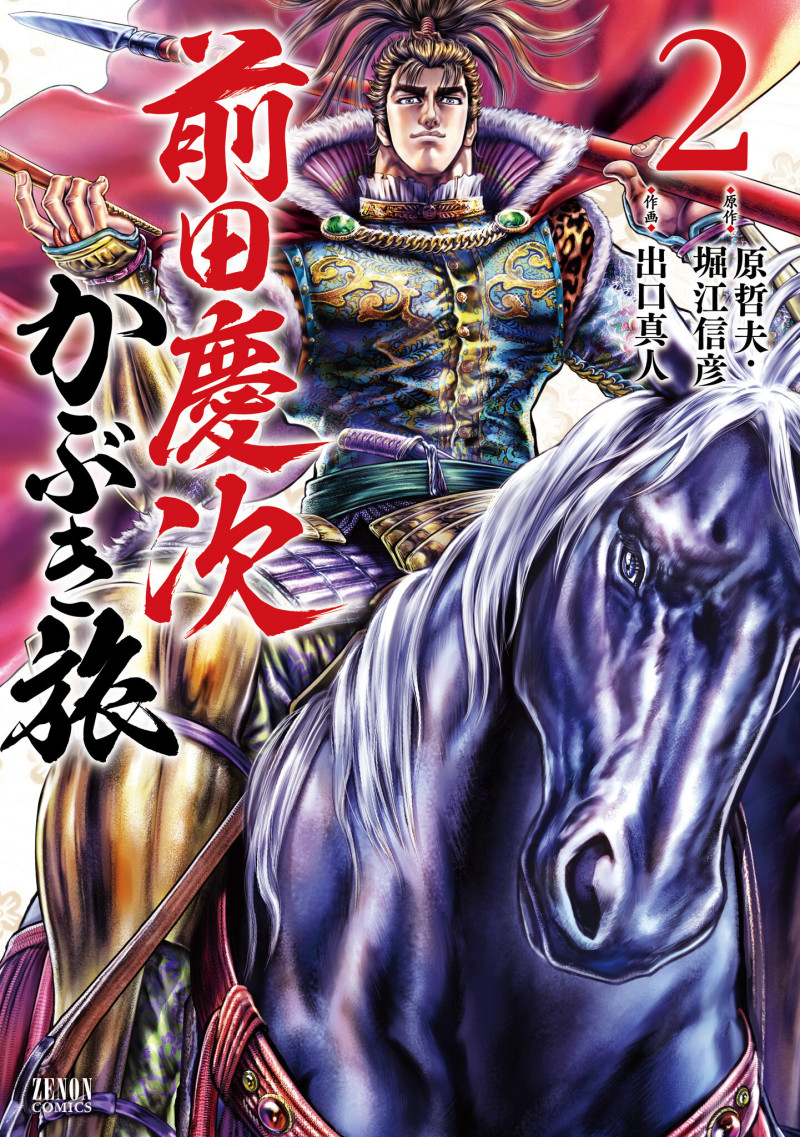
The legends of the Savior of the Century's End are too numerous to recount; in fact, they are endless, and this is merely the origin of "Fist of the North Star." Subsequently, the three-person system of Nobuhiko Horie, Tetsuo Hara, and Buronson underwent various transformations, creating a diverse range of new works. Yet, these works consistently maintained a certain level of quality—even if some experienced delays, they still retained their unique flavor. From this perspective, the Taiwanese title for "Fist of the North Star" is truly excellent: it's not just a "fist," it's truly "divine."